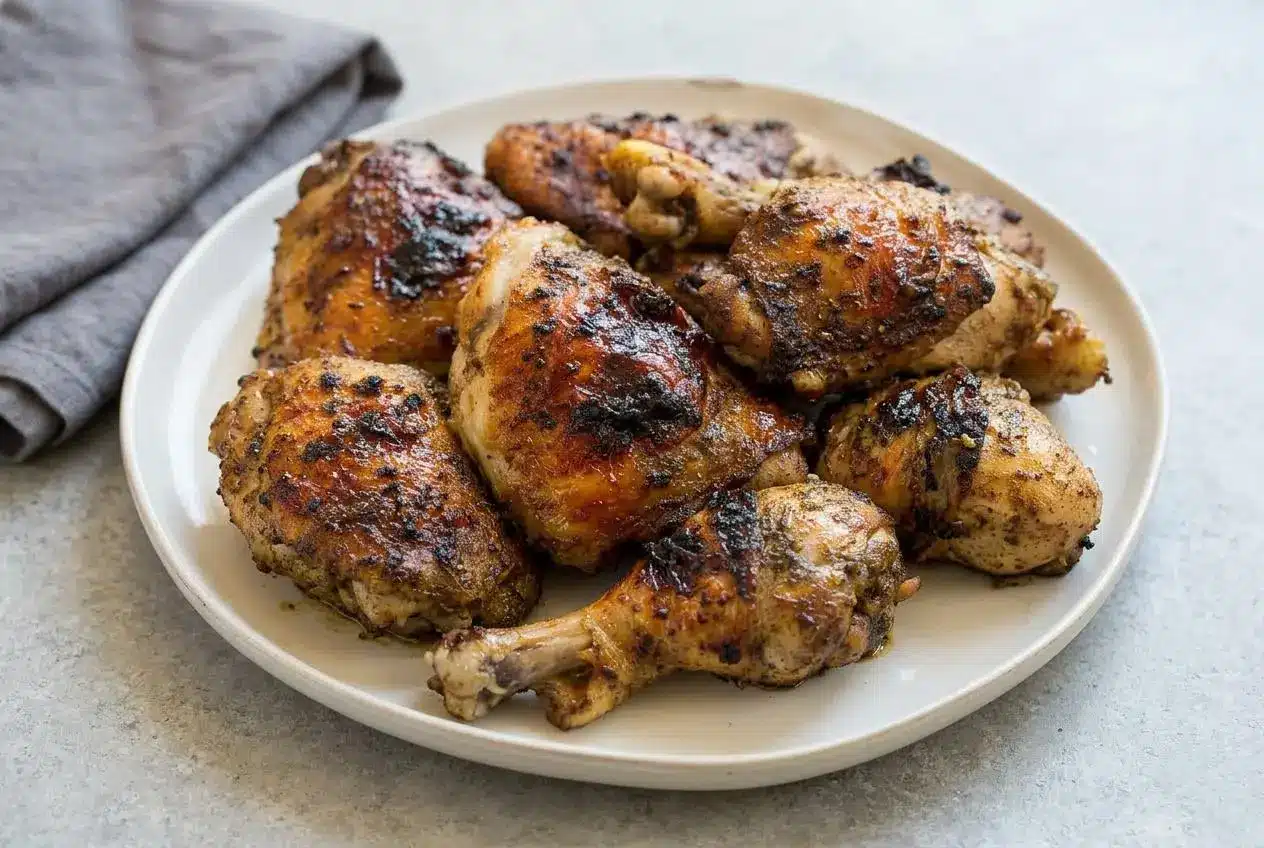
Jerk Chicken Thighs are best when they’re marinated until deeply fragrant, then cooked hot enough to char the edges while keeping the meat juicy. This version gives you a fresh jerk marinade and clear grill, oven, and air fryer options.
These chicken thighs bring classic jerk flavor into a practical home-cook format: spicy, smoky, herby, and bright with lime. You’ll get the main recipe first, then the best ways to cook it depending on your kitchen setup.
If you love crispy edges, juicy meat, and a marinade that smells incredible before it even hits the heat, you’re in the right place.
For the best flavor, start the marinade early so the chicken has time to really absorb it.
Why This Is the Only Jerk Chicken Recipe You’ll Need
This guide covers the full picture instead of leaving you to guess. You’ll get a from-scratch jerk marinade, options for grill, oven, and air fryer cooking, help with bone-in and boneless thighs, and practical fixes for the two biggest issues: too much heat and too much browning.
The Ultimate Jerk Chicken Marinade
A good jerk marinade should taste layered, not just hot. You want warmth from allspice, herbal lift from thyme, sharp freshness from ginger and lime, savory depth from soy sauce, and enough pepper heat to make the whole thing unmistakably jerk.
The texture matters too. Blend it into a slightly coarse paste instead of a perfectly smooth puree so it clings to the chicken and leaves flavorful bits that char well during cooking.
Key Ingredients Explained
Allspice is the backbone here. It gives jerk its signature warm, woodsy flavor, with notes that feel a little like clove, cinnamon, and pepper rolled together.
Fresh thyme brings an earthy, green note that keeps the marinade from tasting heavy. Ginger and garlic sharpen everything up and add that unmistakable savory aroma once the chicken starts cooking.
Habanero or Scotch bonnet peppers bring fruity heat. They don’t just make the marinade spicy. They also give it a bright, almost tropical edge that works beautifully with lime juice and brown sugar.
Green onions add freshness, soy sauce seasons the chicken all the way through, and the cinnamon plus nutmeg round out the spice blend without taking over.
How to Adjust the Spice Level
A lot of home cooks want the flavor of jerk without making everyone at the table reach for a gallon of water. Fair enough.
| Heat level | Pepper choice | What to expect |
|---|---|---|
| Mild | Use jalapeño instead of habanero or Scotch bonnet | More family-friendly, with a gentler finish |
| Medium | Use less hot pepper or remove seeds and membranes | Balanced heat with the classic jerk flavor still intact |
| Hot | Use the full amount of habanero or Scotch bonnet | Bold, fiery, fruity heat |
If you want a milder version, reduce the hot pepper, scrape out the seeds and inner ribs, or swap in jalapeño. The flavor will be a little different, but the marinade will still taste lively and well-rounded.
Marinating longer deepens flavor, but it also lets the heat settle in more. If you’re cooking for spice-sensitive eaters, go lighter on the pepper first.
Ingredients for Jerk Chicken Thighs
Each ingredient has a job here, from building heat and aroma to balancing sweetness, savoriness, and bright acidity so the chicken stays bold and juicy.
- 10 bone-in skin on chicken pieces, thighs and legs (about 3 lbs), trim excess fat and skin
- 6 green onions, cut into 2-inch pieces
- 4 garlic cloves, peeled and smashed
- 2 habanero peppers (or scotch bonnet), stem removed
- 1 1/2 -inch piece ginger, peeled and sliced
- 1/3 cup fresh lime juice
- 1/4 cup soy sauce
- 1 1/2 Tbsp brown sugar
- 1 Tbsp fresh thyme leaves
- 1 tsp freshly ground black pepper
- 1 tsp ground allspice
- 1/2 tsp ground cinnamon
- 1/2 tsp ground nutmeg
I always wear gloves when handling the habanero peppers because their oils cling to your skin and can be surprisingly stubborn; careful handling helps reduce irritation and messy surprises later.
How to Make Jerk Chicken Thighs
- Place the chicken pieces in a gallon-size resealable bag.
The bag should be large enough for the marinade to coat every piece evenly once you massage it in. - Add the green onions, garlic, habanero peppers, ginger, lime juice, soy sauce, brown sugar, thyme, black pepper, allspice, cinnamon, and nutmeg to a food processor, then pulse until a slightly coarse paste forms.
You want the mixture chopped and spoonable, not totally smooth, so it clings well to the chicken. - Pour the marinade into the bag with the chicken, press out the excess air, seal, and rub the mixture all over the pieces.
Refrigerate for 3 to 24 hours so the flavors can settle into the meat.
Oven Instructions
- Heat the oven to 375 °F and line an 18 by 13-inch baking sheet with foil, then coat it with nonstick spray.
The lined pan keeps cleanup easier and helps the sugary marinade from sticking too aggressively. - Lift the chicken from the marinade and space the pieces out on the prepared baking sheet.
Leaving room between the pieces helps them roast instead of steam. - Bake for 45 to 50 minutes, then broil for the last few minutes if you want deeper color.
The chicken should look browned at the edges and cooked through, with darker charred spots on the surface.
Or Grill Instructions
- Preheat a gas grill to medium-high heat, about 400 °F, then clean and lightly oil the grates.
A well-oiled grate helps the marinated chicken release more cleanly once it starts to sear. - Grill the chicken for about 30 minutes, turning occasionally and lowering the heat a bit if the outside darkens too fast.
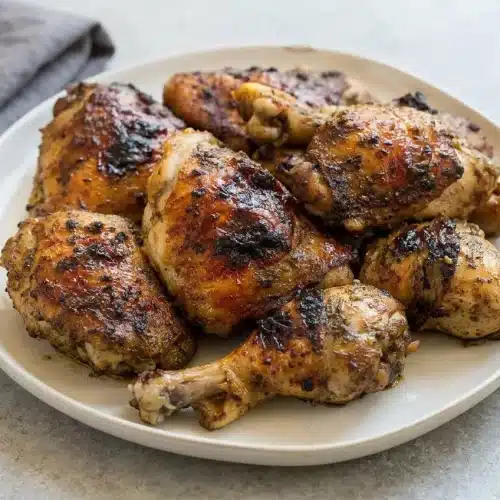
You’re looking for juicy meat, a good char, and skin that looks deep brown rather than burnt black.
Choosing the Best Chicken for This Recipe
Chicken thighs are a great fit for jerk because they stay juicy and take bold seasoning well. Bone-in, skin-on pieces are especially good here because the skin protects the meat while the bone adds flavor during cooking.
If you want something quicker, boneless skinless thighs work too. They cook faster and still stay more forgiving than chicken breast, though they won’t have quite the same rich, roasted finish.
Using Boneless vs. Bone-In Thighs
Bone-in thighs give you the juiciest result and the best char-to-meat contrast. Boneless thighs cook faster, which is handy on busy nights, but they need closer attention so they don’t overshoot.
| Cut | Best for | Cooking notes |
|---|---|---|
| Bone-in, skin-on thighs | Maximum juiciness and flavor | Longer cook time, better char, more forgiving |
| Boneless, skinless thighs | Faster weeknight cooking | Cook more quickly on grill, in oven, and in air fryer |
For boneless thighs, expect a shorter cook time than the main recipe. On the grill they usually finish much sooner than bone-in pieces, in the oven they roast faster, and in the air fryer they can be done surprisingly quickly, so start checking early.
How to Cook Jerk Chicken Thighs (Grill, Oven, & Air Fryer)
Each method gives you something a little different. The grill brings the deepest smoky char, the oven is the easiest for larger batches, and the air fryer is fast with crisp edges and very little fuss.
| Method | Temperature | Time | Best part | Watch for |
|---|---|---|---|---|
| Grill | About 400 °F | About 30 min for bone-in | Best char and smoky flavor | Sugary marinade can darken quickly |
| Oven | 375 °F | 45 to 50 min for bone-in | Easy, steady cooking for a full tray | May need a final broil for color |
| Air fryer | 380 °F | Varies by cut | Fast and nicely crisped edges | Do not overcrowd the basket |
Method 1: Grilling Instructions
Grilling is the classic move when you want that dark, slightly sticky exterior and juicy center. If your grill allows it, set up a hotter side and a cooler side so you can move the chicken if the sugars start catching too fast.
Start the chicken over medium-high heat, then turn it regularly. If the outside gets dark before the center feels ready, shift it to a cooler area and let it finish more gently. A good jerk char looks deep brown with some blackened edges, not fully scorched.
Method 2: Oven-Baking Instructions
The oven method is dependable and easy to scale. Arrange the chicken with space between the pieces so the heat can circulate, and if you like, set the chicken on a wire rack inside the baking sheet for better airflow and crispier skin.
Broiling at the end helps mimic the darker finish you’d get from a grill. Keep a close eye on it, because the marinade has sugar and can go from beautifully browned to too dark in a hurry.
Method 3: Air Fryer Instructions
The air fryer is great when you want jerk chicken fast. Preheat to 380 °F if your machine calls for preheating, then cook the chicken in a single layer so the hot air can move around each piece.
Bone-in thighs generally need longer than boneless thighs. Flip halfway through and keep the thicker pieces toward the hotter part of the basket if your air fryer has hot spots. If you want more general technique help for air fryer chicken thighs, that guide pairs well with this marinade.
Cooking Times for Bone-In vs. Boneless Thighs
Bone-in thighs take longer but stay juicy with less babysitting. Boneless thighs are faster, so check them earlier no matter which method you use.
| Method | Bone-in thighs | Boneless thighs |
|---|---|---|
| Grill | About 30 min | Usually notably quicker |
| Oven | 45 to 50 min at 375 °F | Usually quicker than bone-in pieces |
| Air fryer | Longer than boneless at 380 °F | Usually the fastest option |
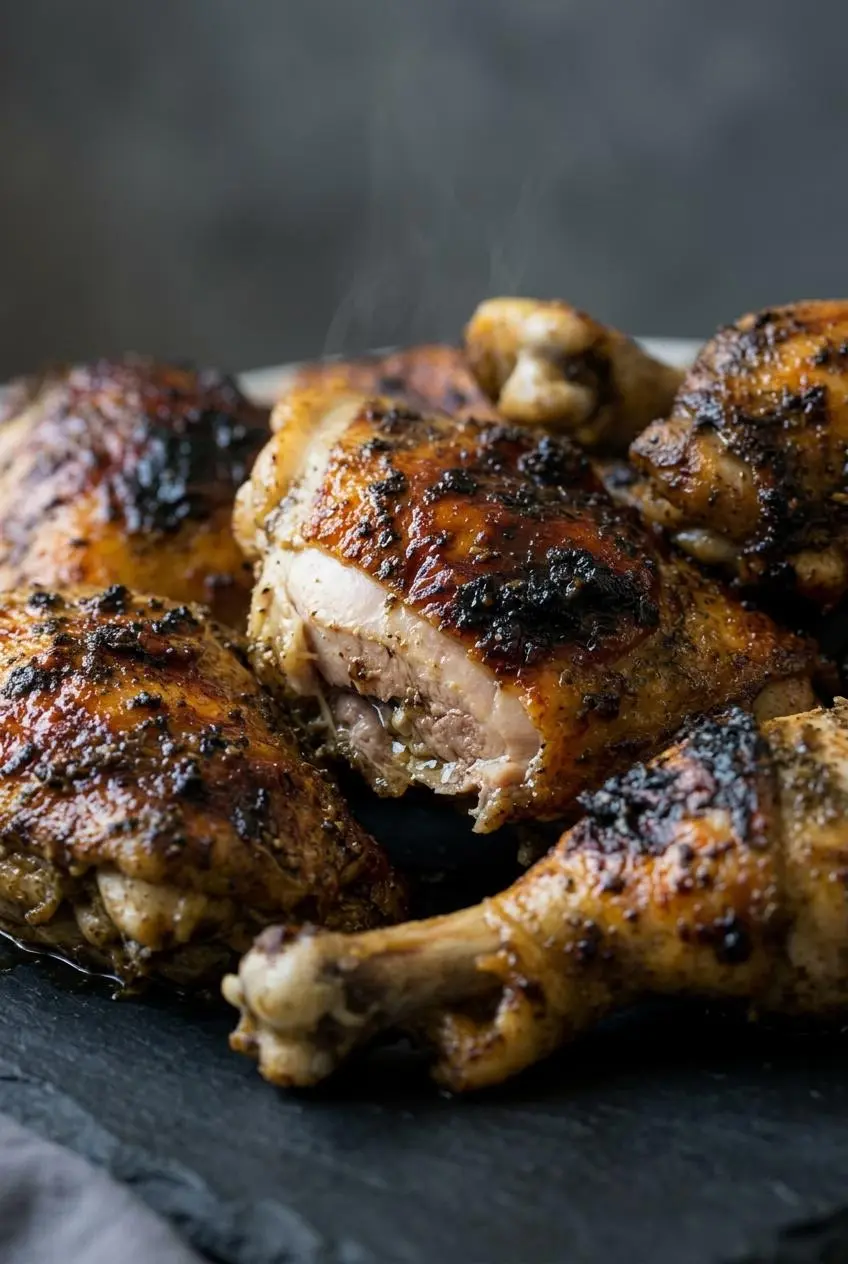
The most useful doneness check is texture. Thigh meat should feel tender, and bone-in pieces should pull away from the bone easily when fully cooked. Many cooks also prefer thighs cooked into the 175 to 185 °F range for their best texture.
Tips for Perfect, Juicy Jerk Chicken
This is where small choices make a big difference. A lot of our readers ask why jerk chicken sometimes turns dry or burnt, and the answer is usually heat control plus marinade handling.
- Marinate for flavor: Give the chicken the full 3 to 24 hours from the recipe if you can. That extra time helps the allspice, thyme, lime, and pepper work their way in.
- Get some marinade under the skin: With skin-on pieces, loosening the skin slightly and rubbing a bit underneath gives the meat more direct flavor.
- Cook to texture, not just the clock: Thighs are especially good when cooked until very tender, often around 175 to 185 °F.
- Handle hot peppers carefully: Gloves are worth it, and keeping good prep habits helps reduce irritation. For storage guidance once the chicken is cooked, follow official guidance that supports keeping leftovers chilled and using them within 3 to 4 days.
- Want more smoke? An optional pinch of smoked paprika or a little orange zest can push the marinade in a smokier or brighter direction. If that flavor profile is your thing, you might also like smoked chicken thighs.
| Problem | Likely cause | Fix |
|---|---|---|
| Outside is burning | Heat is too high for the sugary marinade | Lower the heat or move the chicken to a cooler zone |
| Chicken tastes flat | Marinating time was too short | Let it sit longer next time within the recipe range |
| Chicken is dry | Boneless pieces cooked too long | Start checking earlier and pull when just tender |
| Marinade is too spicy | Too much hot pepper or seeds left in | Use less pepper or swap to jalapeño next time |
What to Serve with Jerk Chicken
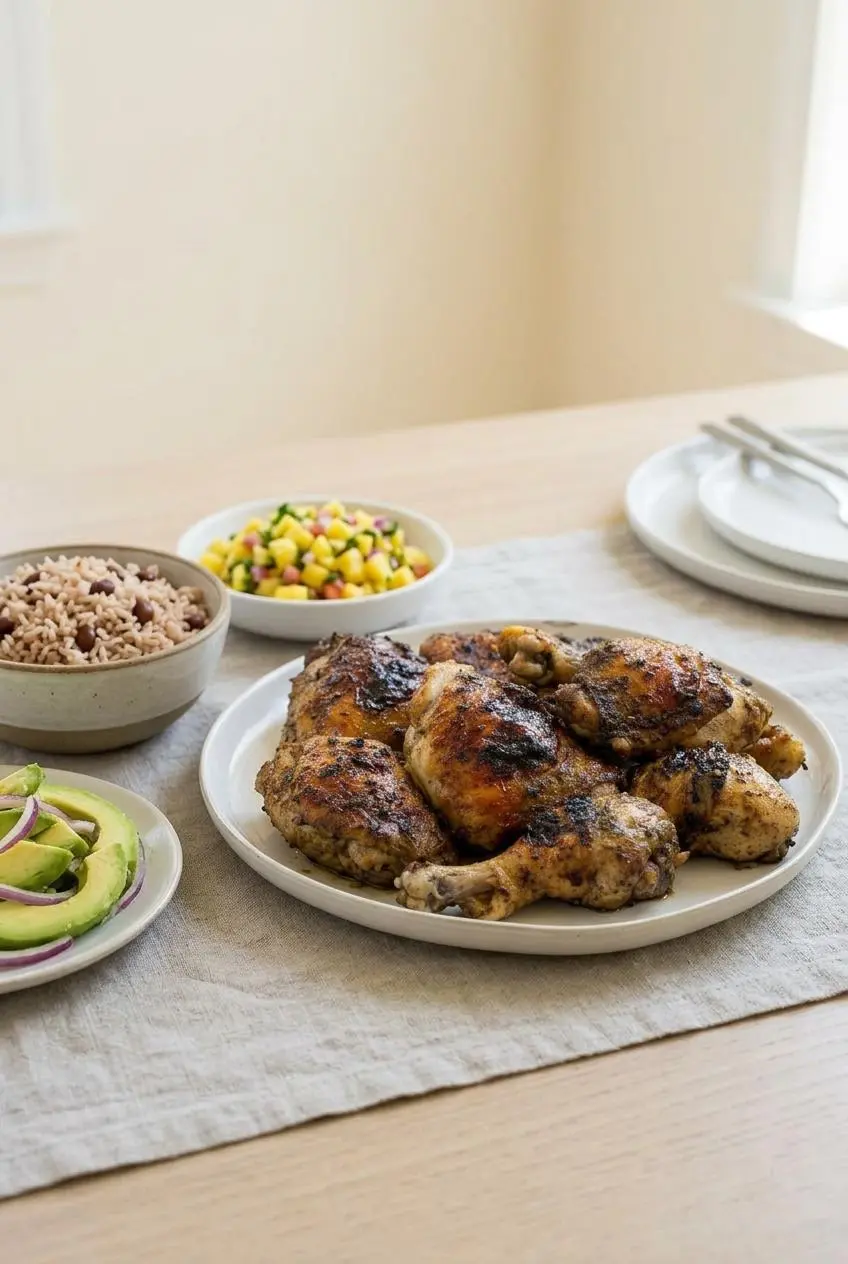
Jerk chicken loves cool, creamy, or gently sweet sides. Rice and peas is the classic pairing, and coconut rice also works beautifully because it softens the edges of the heat without muting the flavor.
For contrast, add something fresh and juicy. Pineapple salsa, mango slaw, papaya salsa, or a simple avocado salad all help balance the spice and char. Grilled corn is another easy win, especially if you’re already using the grill.
If the chicken runs hotter than expected, a crisp slaw or fruit-based side can save the plate fast. Honestly, that sweet-cool contrast does a lot of heavy lifting.
Storage, Freezing, and Reheating
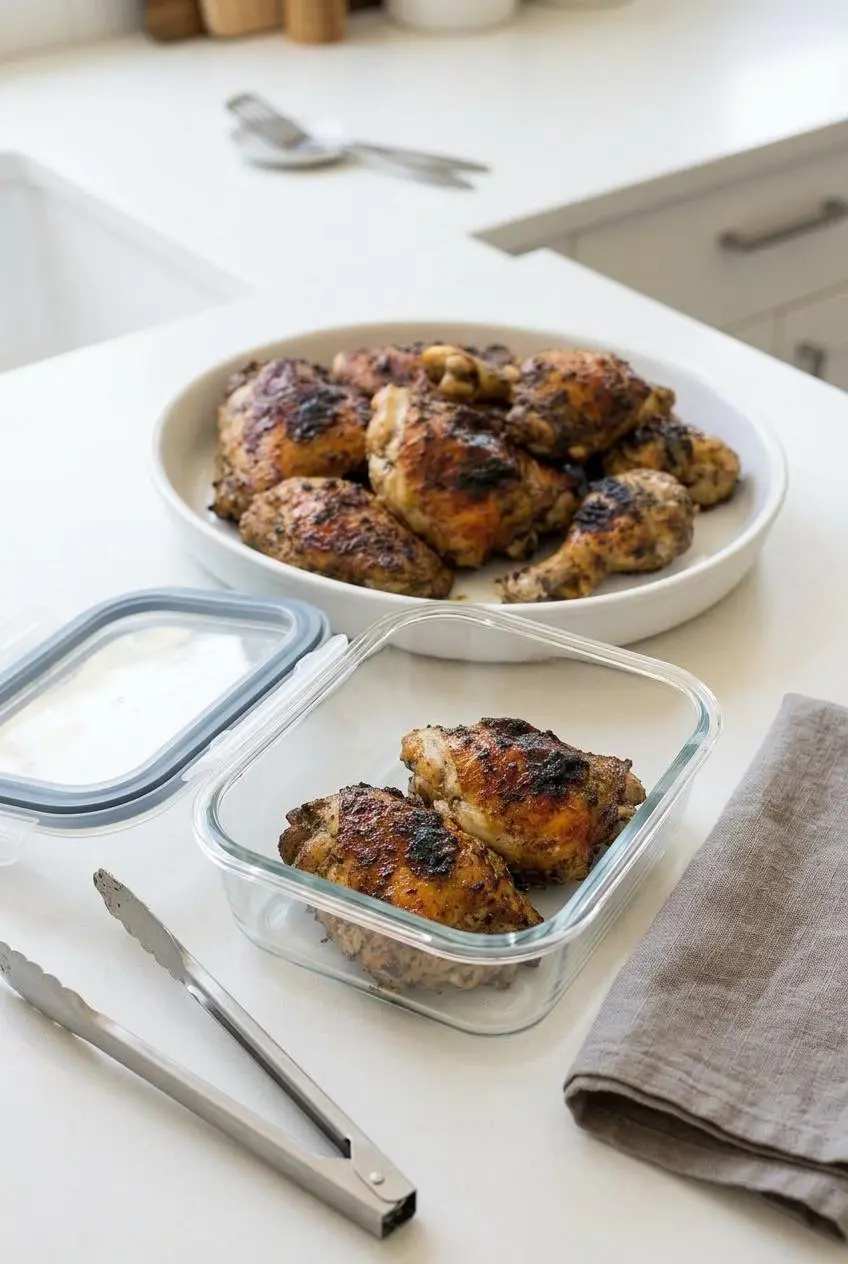
Store leftover cooked chicken in an airtight container once it has cooled, and keep it refrigerated. For cooked leftovers, the same official guidance supports a 3 to 4 day window in the fridge.
If you want to make this ahead, the safest supported timing in the recipe itself is the marinating window: keep the raw chicken in the refrigerator while it marinates for 3 to 24 hours, then cook it as directed.
To reheat without ruining the texture, use the oven or air fryer rather than the microwave when possible. A moderate oven warms the chicken more gently, and the air fryer is especially good for bringing back some crispness to the skin and edges.
Conclusion
This jerk chicken works because the marinade does the heavy lifting, then the cooking method lets you choose your favorite finish. Grill it for char, bake it for ease, or air fry it for speed.
If you remember one thing, make it the marinating time. Give the chicken that rest, and the flavor payoff is huge.
Frequently Asked Questions (FAQ)
What’s the difference between jerk marinade and jerk seasoning rub?
A jerk marinade is wet, so it coats the chicken, carries fresh ingredients like peppers, onions, ginger, and lime, and gives the flavor more time to sink in. A jerk rub is dry and sits mostly on the surface, which creates a stronger crusty exterior. This recipe uses a marinade because it gives the thighs deeper flavor and keeps the texture juicy.
What Is the Best Internal Temperature for Jerk Chicken Thighs?
For the best texture, many cooks prefer chicken thighs in the 175 to 185 °F range. That extra time helps the connective tissue relax so the meat tastes more tender and juicy. If you’re checking with a thermometer, aim for the thickest part without touching bone.
Can I Make Jerk Chicken Ahead of Time?
Yes. The main make-ahead advantage here is the marinade itself, because the recipe already includes a 3 to 24 hour marinating window. You can also cook the chicken in advance and reheat it in the oven or air fryer so it keeps better texture than it would in the microwave.
What Can I Substitute for Scotch Bonnet Peppers?
Habanero is the closest substitute, both in heat and in that fruity pepper flavor jerk is known for. If you want a much milder version, use jalapeño instead. The result will be less fiery and a little less fruity, but still very good.
Can I Use Chicken Breasts with This Recipe?
Yes, but they need a lighter touch. Pound them to an even thickness, marinate for less time than thighs, and watch the cooking closely so they don’t dry out. Thighs are still the more forgiving choice for bold jerk seasoning.
Why Is My Jerk Chicken Burning on the Outside?
The usual culprit is the sugar in the marinade meeting heat that’s too aggressive. On the grill, move the chicken to a cooler zone or lower the flame. In the oven, tent loosely with foil if it darkens too fast, then finish cooking until the meat is tender.
Jerk Chicken Thighs

Equipment
- Food processor
- Gallon-size resealable bag
- Baking Sheet
- Gas grill
Ingredients
- 10 bone-in skin on chicken pieces, thighs and legs (about 3 lbs), trim excess fat and skin
- 6 green onions, cut into 2-inch pieces
- 4 garlic cloves peeled and smashed
- 2 habanero peppers (or scotch bonnet), stem removed
- 1 1/2-inch piece ginger, peeled and sliced
- 1/3 cup fresh lime juice
- 1/4 cup soy sauce
- 1 1/2 Tbsp brown sugar
- 1 Tbsp fresh thyme leaves
- 1 tsp freshly ground black pepper
- 1 tsp ground allspice
- 1/2 tsp ground cinnamon
- 1/2 tsp ground nutmeg
Instructions
- Place the chicken pieces in a gallon-size resealable bag. The bag should be large enough for the marinade to coat every piece evenly once you massage it in.
- Add the green onions, garlic, habanero peppers, ginger, lime juice, soy sauce, brown sugar, thyme, black pepper, allspice, cinnamon, and nutmeg to a food processor, then pulse until a slightly coarse paste forms. You want the mixture chopped and spoonable, not totally smooth, so it clings well to the chicken.
- Pour the marinade into the bag with the chicken, press out the excess air, seal, and rub the mixture all over the pieces. Refrigerate for 3 to 24 hours so the flavors can settle into the meat.
Oven Instructions
- Heat the oven to 375 °F and line an 18 by 13-inch baking sheet with foil, then coat it with nonstick spray. The lined pan keeps cleanup easier and helps the sugary marinade from sticking too aggressively.
- Lift the chicken from the marinade and space the pieces out on the prepared baking sheet. Leaving room between the pieces helps them roast instead of steam.
- Bake for 45 to 50 minutes, then broil for the last few minutes if you want deeper color. The chicken should look browned at the edges and cooked through, with darker charred spots on the surface.
Or Grill Instructions
- Preheat a gas grill to medium-high heat, about 400 °F, then clean and lightly oil the grates. A well-oiled grate helps the marinated chicken release more cleanly once it starts to sear.
- Grill the chicken for about 30 minutes, turning occasionally and lowering the heat a bit if the outside darkens too fast. You’re looking for juicy meat, a good char, and skin that looks deep brown rather than burnt black.