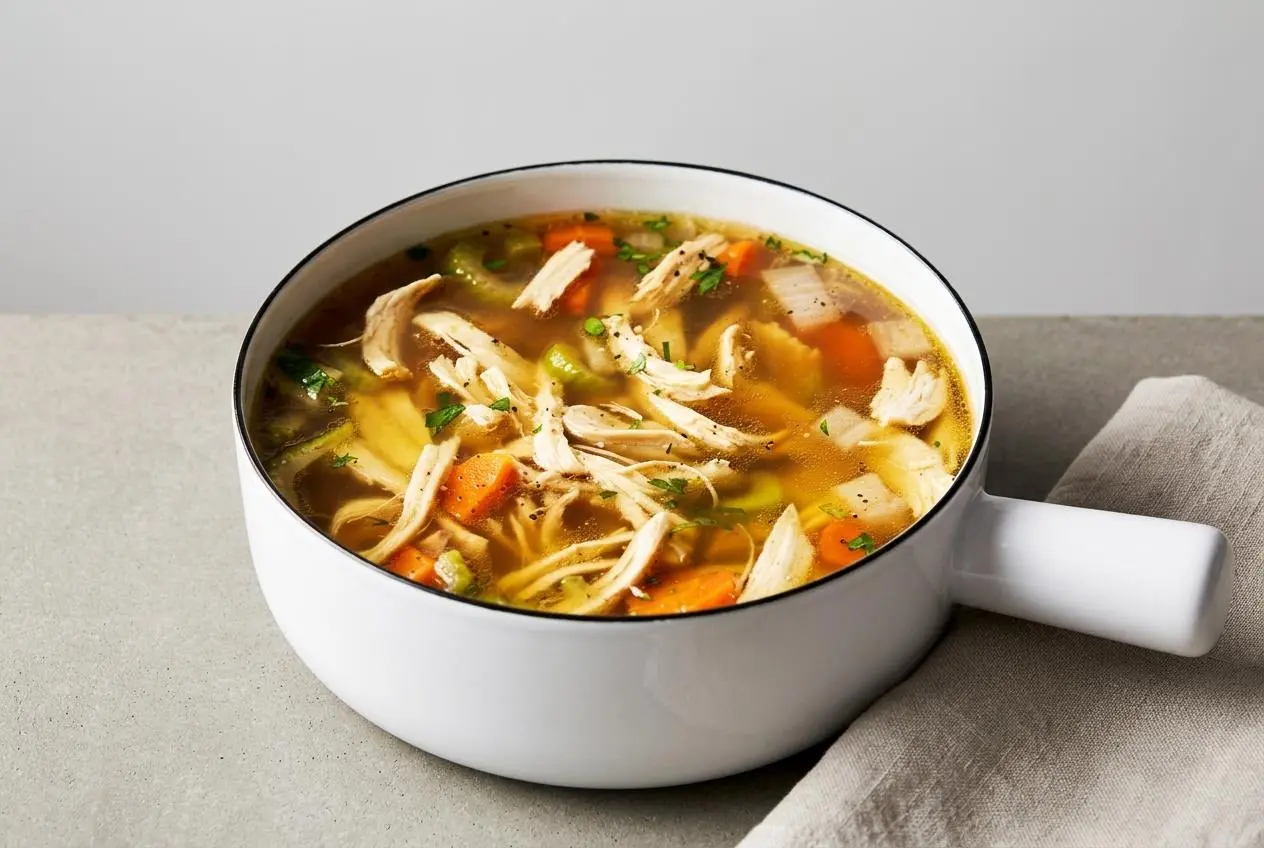
Brown bone-in chicken for deep fond, simmer it gently in stock and herbs, then remove white and dark meat at different times for rich broth and tender shreds.
Homemade Chicken Soup fills the kitchen with the cozy aroma of thyme, chicken, and sweet vegetables while keeping the broth clear and deeply savory. Browning the chicken first gives this pot a full-bodied flavor without an all-day simmer.
The key is treating breasts and thighs differently, so neither has to suffer for the other. Golden broth is waiting.
Use a wide, deep pot so the chicken can sit in one layer and brown rather than steam.
Key Ingredients and Flavor Builders
Each ingredient brings a distinct job: chicken builds body, stock carries savory flavor, vegetables add sweetness and texture, and herbs keep the broth fragrant and balanced.
- 2 tbsp. vegetable oil
- 2 lb. bone-in, skin-on chicken pieces, preferably a mix of thighs and breasts
- 4 tsp. kosher salt, divided
- 8 c. low-sodium chicken stock
- 2 sprigs thyme
- 1 bay leaf
- 1 small yellow onion, coarsely chopped (about 1 1/4 c.)
- 2 stalks celery, sliced 1/8" thick (about 1 1/4 c.)
- 1 large carrot, peeled, halved lengthwise, sliced 1/8" thick (about 1 c.)
- 1 tsp. freshly ground black pepper, plus more
- 1/4 c. finely chopped fresh parsley
Low-sodium stock gives you room to season the finished broth gradually. Fresh parsley adds a clean finish, while black pepper brings gentle warmth without overwhelming the chicken.
I trim away any loose, thick flaps of chicken skin before cooking so the broth gets richness from the rendered skin without becoming overly greasy.
Choosing the Right Poultry Cuts
A mix of bone-in, skin-on breasts and thighs gives this soup its best balance. The bones and skin contribute gelatin and savory depth as they simmer, while the breast meat provides lean, tender shreds.
Thighs can stay in the pot longer because their connective tissue benefits from extended gentle cooking. Breasts need a shorter stay. Pull them once the thickest section reaches 165°F, then let the dark meat continue until it becomes easy to shred.
The Aromatic Mirepoix and Herb Trio
This mirepoix uses yellow onion, celery, and carrot in close proportions, with a little more onion for rounded sweetness. Add it after the chicken cooks so the vegetables retain their shape instead of fading into the broth.
The thin 1/8-inch slices of celery and carrot cook quickly at the end, leaving them crisp-tender rather than soft and tired. Thyme adds woodsy aroma, bay leaf brings quiet depth, and parsley brightens each bowl at the finish.
Essential Secrets for Rich Golden Broth

The fastest route to fuller chicken soup flavor is browning the poultry before adding liquid. Heat the oil well, set the chicken skin-side down, and leave it alone until it releases easily. Moving it too soon tears the skin and prevents a proper crust.
Look for a deep golden layer on the bottom of the pot, not black spots. That browned fond holds concentrated roasted chicken flavor. When stock and water go in, scrape the pot bottom with a spoon to dissolve those flavorful drippings into the broth.
Prepared chicken stock becomes a fortified broth here: it starts with savory backbone, then picks up richness from browned bones, skin, and rendered juices. This is different from a whole-bird stock simmered for hours, but it delivers a satisfying depth in one pot.
Keep the liquid at a bare simmer after it comes up to temperature. You want small, lazy bubbles breaking here and there, not a rolling boil. Hard boiling stirs fat and proteins through the liquid, which makes broth look cloudy and can firm up the chicken.
Season near the end because stock brands vary widely in saltiness. The broth should taste savory before the chicken goes back in, but it should still leave room for the parsley and pepper to come through.
How to Make Tender Homemade Chicken Soup Step by Step
Use an instant-read thermometer for the breasts. Poultry should reach 165°F for proper cooking, as outlined in safe poultry handling and cooking practices.
- Warm the vegetable oil in a large, deep pot over medium-high heat, then season the chicken all over with 2 tsp. kosher salt and arrange it skin-side down in one layer.
Cook for about 5 minutes without shifting the pieces, until the skin is deeply golden, then turn and brown the other side for about 5 minutes. - Pour in the chicken stock and 2 c. water, then add the thyme and bay leaf.
Bring the pot just to a bare simmer, lower the heat to medium-low, and cook for 20 to 25 minutes, stirring occasionally, until a breast reaches 165°F in its thickest part. - Move the chicken breasts to a cutting board and keep the dark meat simmering for about 40 minutes more.
When the thighs are tender, transfer them to the board and let all the chicken cool for about 10 minutes before removing and discarding the skin and bones. - Shred the warm chicken into bite-sized pieces, pulling the meat across the grain rather than chopping it.
The shreds should separate easily and stay moist instead of turning into long, stringy strands. - Discard the thyme and bay leaf, then add the onion, celery, and carrot to the pot over medium-low heat.
Maintain the bare simmer and stir occasionally for 7 to 8 minutes, until the vegetables are tender with a little bite left at the center. - Return the shredded chicken to the broth and stir in the black pepper, then season with the remaining 2 tsp. kosher salt as needed.
Taste after each adjustment so the broth becomes well seasoned without tasting sharply salty. - Ladle the soup into bowls and finish each portion with parsley and more black pepper.
The parsley should stay bright green and fresh against the golden broth.
Pulling the breasts before the thighs is the small timing decision that makes a big difference. The breast meat stays juicy while the dark meat has time to soften and add more body to the pot.
Flavor Variations and Starch Additions

Keep the main pot focused on broth, chicken, and vegetables, then customize individual bowls with starches or bright finishes. This also keeps leftovers from turning thick and starchy.
For a citrusy finish, add finely grated lemon zest and a squeeze of fresh lemon juice right before serving. The acidity lifts the savory broth and pairs especially well with the thyme and parsley. For a more lemon-forward bowl, try Greek lemon chicken soup.
Classic Egg Noodle Addition
For a classic chicken noodle soup, cook wide egg noodles in a separate pot of salted water. Drain them well and add them to serving bowls before ladling in the hot soup.
Cooking noodles separately protects the broth from excess starch and keeps them from soaking up the liquid as the soup sits. Ditalini, pastina, and other small pasta shapes work the same way when cooked outside the soup pot.
Traditional Whole Chicken Method
A whole chicken version offers a more traditional scratch-cooking approach, but it needs a longer gentle simmer to tenderize the bird and draw flavor from the carcass. Partition a 4-pound chicken first so the breast meat can still come out earlier than the thighs and legs.
Brown the pieces when possible, then simmer gently and skim foam from the surface as needed. Remove breast meat when it is cooked through, while the darker pieces stay in the broth until tender. Add the vegetables near the end, just as in this method.
Quick Weeknight Rotisserie and Grain Swaps
- For a rotisserie shortcut, shred cooked chicken and add it near the end. Start with stock, thyme, bay leaf, and the vegetables, then season carefully because rotisserie chicken can already be salty.
- Add cooked long-grain white rice to each bowl for a gluten-free starch option that keeps the main broth clear.
- Use separately cooked ditalini for a heartier, spoonable bowl. Keep the pasta apart until serving for the best texture.
- For a grainier variation, serve the soup alongside cooked wild rice or take inspiration from chicken and wild rice soup.
Common Mistakes and Troubleshooting
Chicken soup is forgiving, but a few small adjustments can rescue flavor and texture before dinner hits the table.
- The broth tastes bland: Add salt in small increments, tasting between additions. If it tastes flat rather than under-salted, finish with a small splash of lemon juice or cider vinegar to wake up the savory notes.
- The broth looks cloudy: Rapid boiling is usually the culprit. Lower the heat until the surface barely trembles, then skim foam or floating solids with a wide spoon.
- The chicken feels dry: White meat likely stayed in the pot too long. Remove breasts as soon as they reach 165°F and reserve the longer simmer for thighs and other dark pieces.
- The vegetables are mushy: They went in too early or cooked at too high a temperature. Add them after the chicken comes out and simmer only until just tender.
- The soup seems greasy: Spoon off excess rendered fat from the surface before returning the shredded chicken. Keep some fat for flavor, but remove enough that the broth still tastes clean.
- The noodles went soft: Keep cooked pasta in a separate container and combine it with hot soup only when serving.
Storing, Freezing, and Reheating

Cool the soup promptly, transfer it to airtight containers, and refrigerate it. This recipe can be made up to 5 days ahead and kept refrigerated in an airtight container.
For longer storage, freeze the broth, chicken, and vegetables without noodles or rice. Portioning them separately makes it easier to thaw only what you need and keeps starches from becoming bloated or mushy.
Reheat gently in a saucepan over medium-low heat until the soup reaches a simmer. Avoid a hard boil, which can soften the vegetables further and make the chicken less tender. Add separately cooked noodles or rice after reheating.
Keep containers chilled promptly and handle cooked poultry with clean utensils to reduce cross-contamination. Clean handling, separation, cooking, and prompt chilling are useful habits for soups and leftovers.
Conclusion
This soup earns its rich golden character from browned chicken, a gently simmered fortified broth, and vegetables added at the right moment. The staggered chicken timing keeps every spoonful tender instead of dry.
Finish with parsley, pepper, and optional lemon zest, then serve it with warm crusty bread for dipping. A calm pot of soup can make dinner feel wonderfully settled.
Frequently Asked Questions
What Is the Best Cut of Chicken for Homemade Chicken Soup?
A mix of bone-in, skin-on breasts and thighs gives the best result. Breasts provide lean, tender shreds when removed at the right time. Thighs bring richer flavor and more body to the broth as they simmer longer. Bones and skin help create a fuller, more satisfying texture.
Why Is My Chicken Soup Broth Cloudy?
Cloudy broth usually means the soup boiled too vigorously. A rolling boil stirs rendered fat and fine proteins into the liquid. Lower the heat until only small bubbles rise occasionally. Skim foam and floating particles from the surface with a wide spoon. Stir gently rather than aggressively while the soup simmers.
Should Noodles Be Cooked in the Soup or Separately?
Cook noodles separately in salted water, then add them to individual bowls. They stay springier, and the broth remains clearer. Pasta cooked in the main pot releases starch into the broth. Noodles also absorb a surprising amount of soup during storage. Keep rice, ditalini, and egg noodles separate for the best leftover texture.
How Long Does Homemade Chicken Soup Last in the Fridge and Freezer?
This soup can be refrigerated in an airtight container for up to 5 days. For longer storage, freeze broth, chicken, and vegetables without noodles or rice, then reheat gently and add freshly cooked starches when serving.

Homemade Chicken Soup

Equipment
- Large, deep pot or Dutch oven
- Instant-read thermometer
- Tongs
- Cutting board
Ingredients
- 2 tbsp. vegetable oil
- 2 lb. bone-in, skin-on chicken pieces, preferably a mix of thighs and breasts
- 4 tsp. kosher salt, divided
- 8 c. low-sodium chicken stock
- 2 sprigs thyme
- 1 bay leaf
- 1 small yellow onion, coarsely chopped (about 1 1/4 c.)
- 2 stalks celery, sliced 1/8″ thick (about 1 1/4 c.)
- 1 large carrot, peeled, halved lengthwise, sliced 1/8″ thick (about 1 c.)
- 1 tsp. freshly ground black pepper, plus more
- 1/4 c. finely chopped fresh parsley
Instructions
- Warm the vegetable oil in a large, deep pot over medium-high heat, then season the chicken all over with 2 tsp. kosher salt and arrange it skin-side down in one layer. Cook for about 5 minutes without shifting the pieces, until the skin is deeply golden, then turn and brown the other side for about 5 minutes.
- Pour in the chicken stock and 2 c. water, then add the thyme and bay leaf. Bring the pot just to a bare simmer, lower the heat to medium-low, and cook for 20 to 25 minutes, stirring occasionally, until a breast reaches 165°F in its thickest part.
- Move the chicken breasts to a cutting board and keep the dark meat simmering for about 40 minutes more. When the thighs are tender, transfer them to the board and let all the chicken cool for about 10 minutes before removing and discarding the skin and bones.
- Shred the warm chicken into bite-sized pieces, pulling the meat across the grain rather than chopping it. The shreds should separate easily and stay moist instead of turning into long, stringy strands.
- Discard the thyme and bay leaf, then add the onion, celery, and carrot to the pot over medium-low heat. Maintain the bare simmer and stir occasionally for 7 to 8 minutes, until the vegetables are tender with a little bite left at the center.
- Return the shredded chicken to the broth and stir in the black pepper, then season with the remaining 2 tsp. kosher salt as needed. Taste after each adjustment so the broth becomes well seasoned without tasting sharply salty.
- Ladle the soup into bowls and finish each portion with parsley and more black pepper. The parsley should stay bright green and fresh against the golden broth.