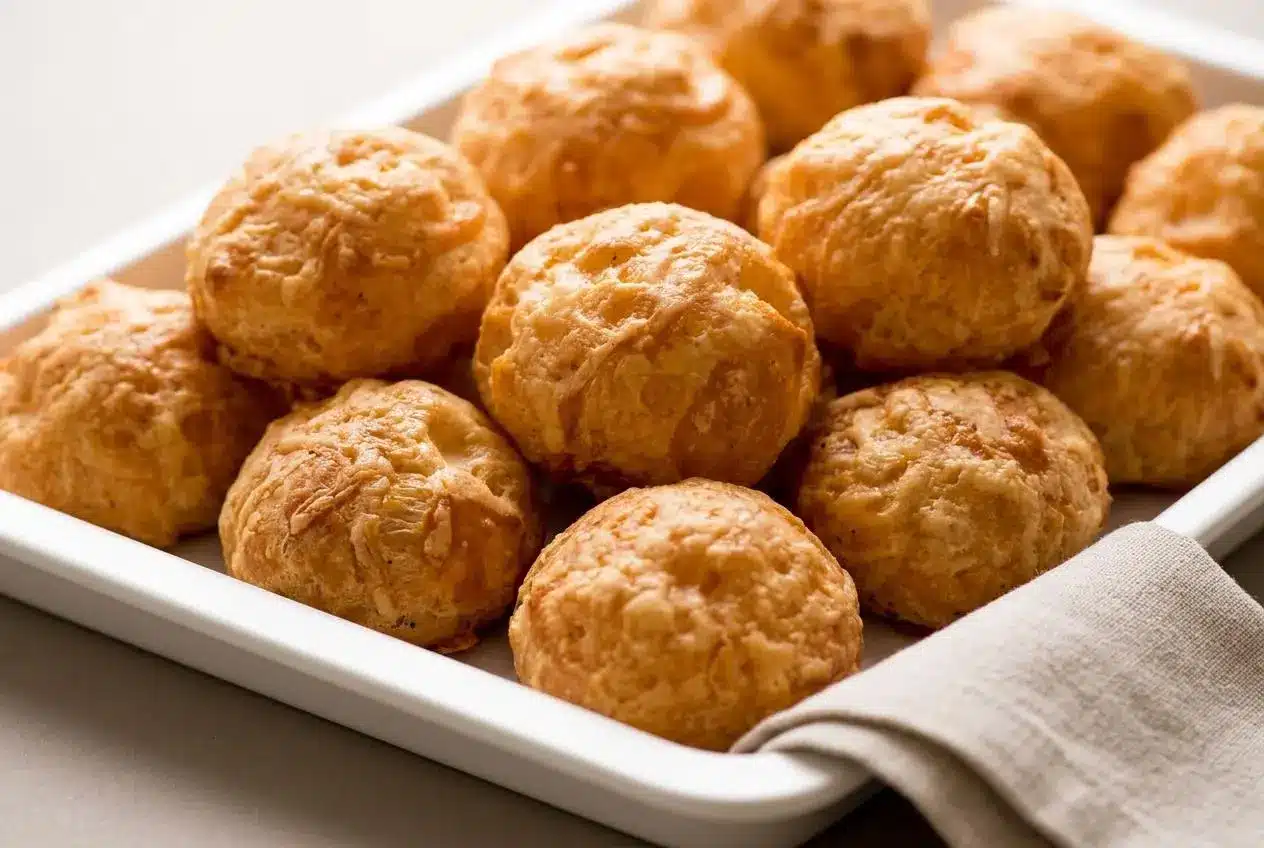
Gougères are savory French choux pastry puffs made with Gruyère cheese. Cook the dough on the stovetop, beat in eggs individually, then bake until golden. Steam creates their airy, hollow centers, while the cheese gives the crisp shells a rich, nutty flavor.
This Gougeres Recipe brings the aroma of toasted cheese and hot butter to your kitchen without kneading or yeast. The dough starts in a saucepan, and a cookie scoop makes shaping the puffs manageable even without a piping bag.
The trick is knowing what the dough should look like before it reaches the oven. Clear cues help you avoid heavy batter and soft shells. Watch for that pale film in the saucepan.
Grate both portions of cheese before heating the water so everything is ready when the dough needs your attention.
Ingredients for Gougères and Cheese Selection
Water supplies steam, butter adds richness, flour builds structure, and eggs help the dough expand and set. Gruyère brings savory depth, salt and spices balance the flavor, and the yolk-and-cheese topping encourages a golden finish.
- 1 cup (250ml) water
- 80g / 5.5 tbsp butter, unsalted, cut into 1.5 cm / 0.5" cubes
- 1 cup (150g) flour, plain / all purpose
- 3/4 tsp salt, kosher/cooking salt
- Pinch nutmeg (powder or freshly grated)
- Pinch black pepper
- 4 eggs (~60 – 65g / 2oz each)
- 200g / 2 cups Gruyère cheese, freshly shredded
Topping
- 50g / 1/2 cup Gruyere cheese, extra, freshly shredded
- 1 egg yolk, for brushing
When flour meets the hot water, its starch absorbs liquid and thickens into a paste. That cooked paste gives expanding steam something to push against. Butter makes the shell richer and more tender; eggs contribute moisture, structure, and a glossy consistency.
Use the listed egg size as well as the egg count. Choux dough responds to moisture, so noticeably different-sized eggs can change how well the mounds hold their shape. Keep the topping cheese separate so it doesn’t accidentally disappear into the saucepan.
I prefer the fine side of a box grater here because smaller cheese shreds mix into the dough without leaving bulky clumps.
The Case for Freshly Grated Gruyère
Gruyère has a firm texture and a nutty flavor that becomes especially fragrant as it browns. It melts through the dough without introducing the excess liquid you’d get from a wet, fresh cheese.
Choose a block and grate it yourself. Packaged shredded cheeses often contain starch or cellulose to prevent clumping, and those coatings can affect melting and dough texture. Fresh grating gives you more control over shred size and more even distribution. It helps, but careful dough preparation still matters most for a good rise.
Flavorful Substitutes: Comté to Sharp Cheddar
If Gruyère isn’t available, choose another firm melting cheese. These are optional swaps, not additions to the ingredient list:
- Comté: A close French alternative with earthy, nutty flavor that suits classic gougères beautifully.
- French Emmental: A milder choice that lets the butter and delicate pastry flavor come through.
- Swiss cheese: A firm block offers a mellow, familiar flavor; grate it fresh rather than using sliced cheese.
- Aged sharp white cheddar: A bolder option with a tangy finish that works particularly well with the black pepper already in the dough.
Avoid fresh mozzarella and other visibly wet cheeses. Cheese that brings excess moisture can leave the puffs heavier or softer, while a very oily cheese may produce greasy bases.
Seasoning with Nutmeg and Cracked Pepper
Nutmeg adds a warm background aroma rather than an obvious spice flavor. Black pepper provides a little contrast to the buttery cheese. Keep both restrained so the Gruyère remains the main flavor.
For an optional aromatic variation, dry mustard powder or finely chopped thyme leaves can add a savory accent. Keep those additions separate from the main recipe, and avoid adding wet seasonings that would loosen the dough.
How to Make Gougères Step by Step
Work through the stovetop stage before thinking about shaping. Once the cooked paste is ready, gradual egg mixing and an undisturbed hot oven do most of the work.
Prep: 15 minutes. Bake: 25 minutes. Cooling: 15 minutes. Yield: 24 puffs.
- Set the oven to 425°F / 220°C, or 200°C fan, and prepare two baking trays with a light coating of grease beneath parchment paper.
The parchment should lie flat so the dough portions sit evenly. - Heat the water, cubed butter, and measured salt in a saucepan over medium-high heat until boiling.
Check that no solid butter remains before adding the flour. - Take the pan off the heat and beat in the flour, nutmeg, and black pepper.
Keep mixing until the dry flour disappears into a cohesive paste. - Cook the paste over low heat for 1 minute, stirring and pressing it around the pan.
A thin pale film on the bottom and dough gathering away from the sides indicate moisture is evaporating. - Move the saucepan off the burner and let the paste cool for 2 minutes.
It should remain warm but no longer be bubbling hot when the eggs go in. - Beat the first egg thoroughly into the warm paste with a wooden spoon or electric beater.
The mixture may look slippery and broken before it becomes cohesive again. - Work in the remaining three eggs individually, fully blending each one before continuing.
The finished dough should look glossy and fall slowly from the spoon in a thick ribbon. - Fold the 2 cups of freshly shredded Gruyère into the dough.
The cheese should spread evenly through the mixture rather than collect in clumps. - Portion tablespoon-sized mounds onto the prepared trays using a small cookie scoop or two spoons, leaving room for expansion.
Aim for matching sizes so the puffs brown at a similar rate. - Apply a light coating of egg yolk with a pastry brush and distribute the reserved topping cheese over the mounds.
Keep the topping on the dough rather than scattered across the parchment, where it can burn. - Bake for 25 minutes, keeping the oven door closed during the first 20 minutes.
Look for puffed, golden shells and a nutty toasted-cheese aroma rather than pale, soft-looking surfaces. - Let the baked puffs cool for 15 minutes before serving warm.
This pause allows the exterior to become crisper as steam escapes from the centers.
Cooking the Panade to Evaporate Moisture
The cooked flour paste is called a panade. Stir it firmly during its low-heat cooking time, scraping the bottom and folding the paste over itself. It should gather into a smooth mass rather than smear like a loose sauce.
A faint flour film often appears on the saucepan bottom. On a nonstick surface, that film may be less obvious, so also watch for the dough pulling together and leaving the sides cleaner. Don’t increase the heat to hurry this stage; scorching the bottom isn’t the same as drying the paste.
Incorporating Eggs for Maximum Volume
Give the paste its cooling pause before adding eggs. Excessive heat can cook the egg on contact, producing bits that won’t blend smoothly into the dough.
The first egg usually makes the mixture look worse before it looks better. It may break into slippery lumps with liquid around them. Keep beating and scraping the pan rather than reaching for extra flour. Once the egg is incorporated, the mixture comes together again.
After the final egg, look for dough that stretches into a thick, slow ribbon. It should be soft enough to scoop but substantial enough to hold a mound. Cheese will make that texture less perfectly smooth, which is normal.
Oven Temperature Control and Steam Management
The hot oven turns dough moisture into steam. That steam expands the puffs while the flour starch and egg proteins form a shell strong enough to hold the hollow center. No baking powder is needed.
Opening the door too soon drops the oven temperature while the shells are still setting. Let the early rise happen uninterrupted. Near the end, check through the oven window if possible: browned cheese on top alone doesn’t tell you whether the pastry underneath has finished baking.
Essential Equipment and Shaping Methods
A saucepan, sturdy spoon, parchment-lined trays, and pastry brush cover the main work. An electric beater is optional if vigorous hand mixing is uncomfortable.
- Small cookie scoop: The easiest way to make consistent portions with less scraping and handling.
- Two spoons: Use a measuring tablespoon to portion the dough and a teaspoon to push it onto the parchment.
- Piping bag with a wide round tip: Useful for neat shapes, although the cheese shreds require a generous opening.
If piping leaves pointed tips, gently pat them down with a damp fingertip before applying the yolk. Tall points brown faster than the rounded body of the puff.
Choose sturdy, rimmed baking sheets and always use the parchment. Bare dark metal can brown the delicate cheese bases too aggressively. Leave space between portions, and avoid positioning a tray so close to another that air cannot circulate around it.
Troubleshooting Common Gougères Mistakes
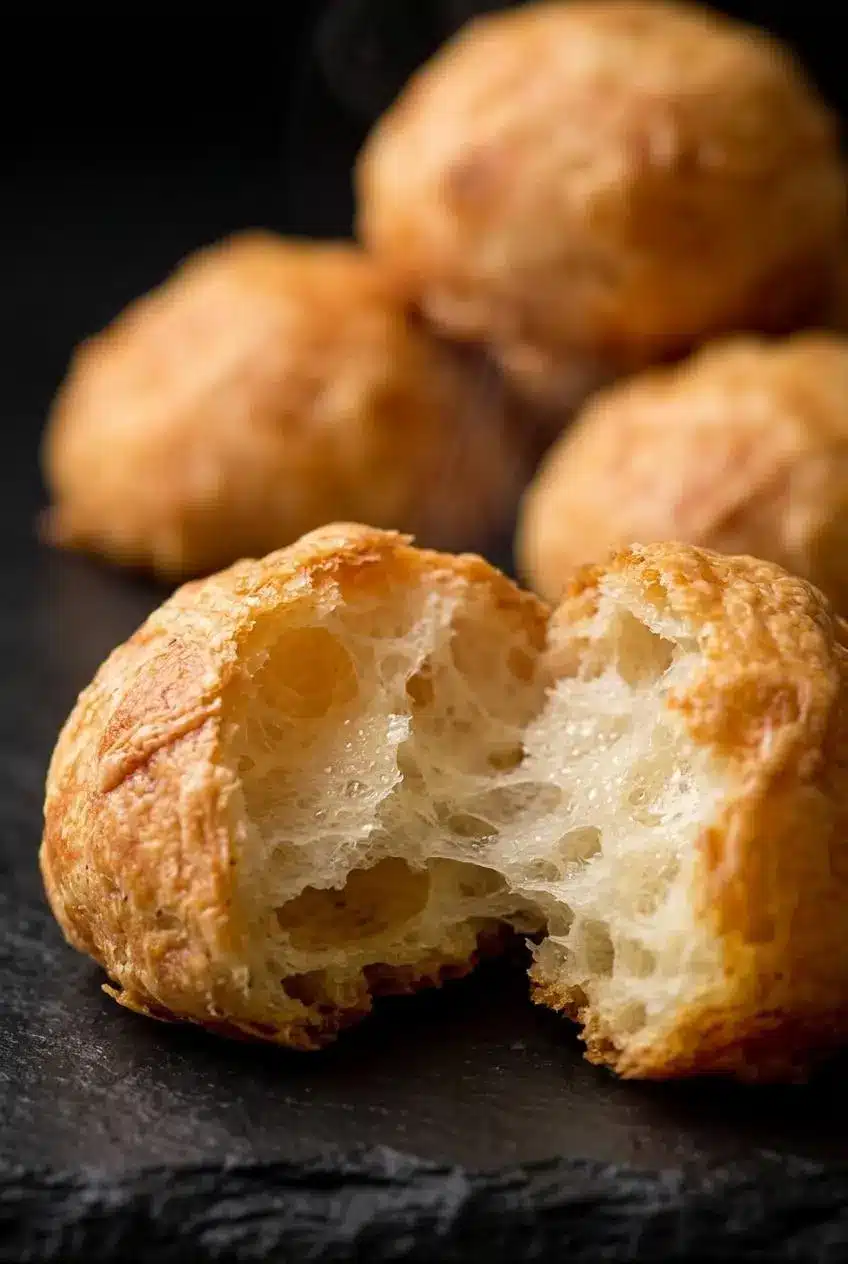
Check dough texture before baking, then judge the finished pastry by its shell rather than its height alone.
- Puffs collapse after baking: Underbaked shells cannot support themselves once the steam cools, and excess dough moisture makes the problem worse. Look for an evenly golden shell, not merely browned topping cheese, and complete the cooling pause before serving.
- Dough looks curdled during mixing: An egg that hasn’t fully blended can make the paste look broken. Keep beating and scraping until the mixture becomes cohesive before adding the next egg.
- Batter seems too stiff: First check that all four listed eggs have gone in and that each has fully incorporated. Use the specified egg size; don’t add water simply because choux dough feels sticky or resistant.
- Batter spreads into puddles: Excess moisture, oversized eggs, or incomplete panade drying may be responsible. Don’t stir raw flour into finished dough or return egg-enriched batter to the burner; neither restores properly cooked choux structure.
- Bottoms feel greasy: Wet or oily cheese can release moisture and fat unevenly. Choose a firm cheese, grate it fresh, and spread it thoroughly through the dough.
- Bases or tips scorch: Bare dark trays, stray topping cheese, and sharp dough peaks brown quickly. Use parchment, smooth pointed tops, and check that the oven setting matches the recipe.
- Centers seem soft rather than hollow: Some tenderness around the cheese is expected, but a wet, paste-like center suggests incomplete baking. Keep portions uniform and allow the baked puffs to release steam during cooling.
Cooling, Storage, and Reheating
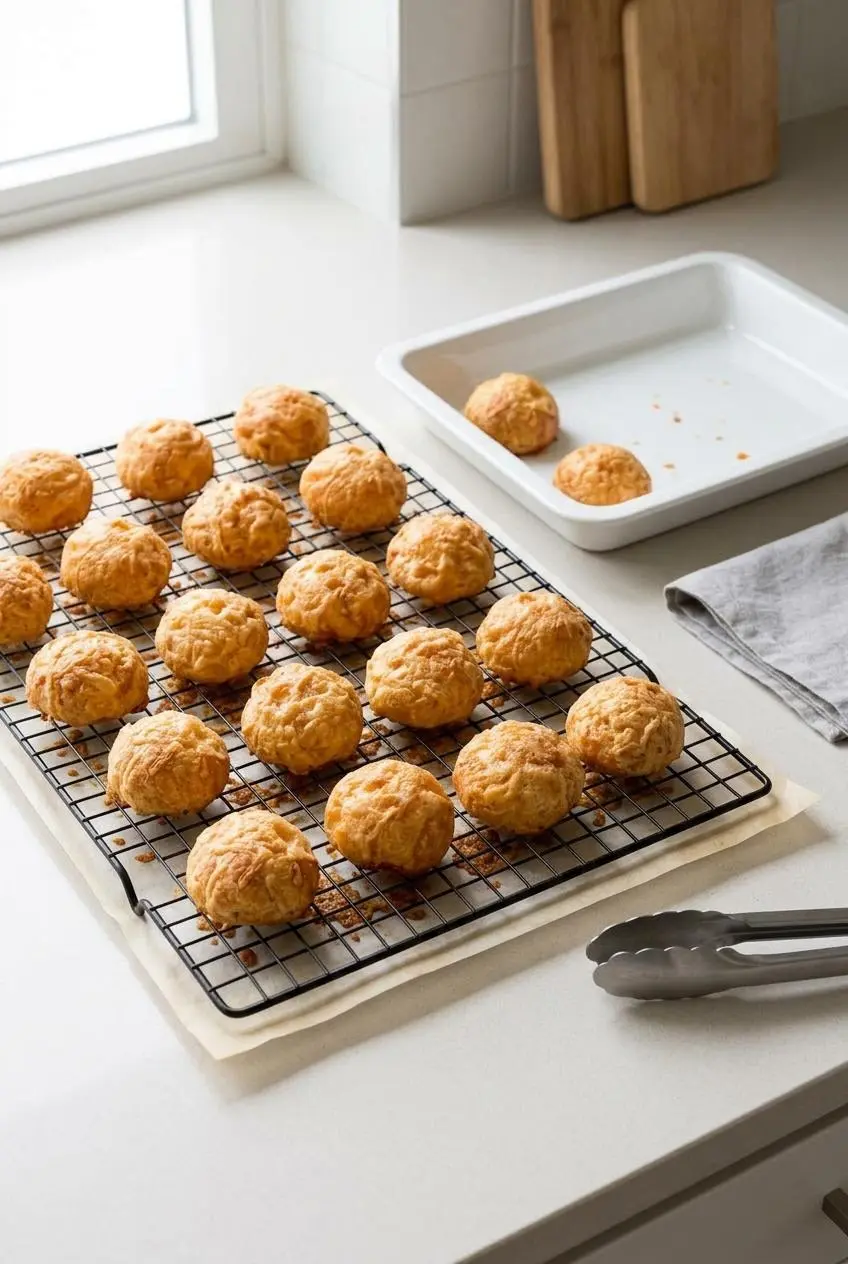
The crisp shell is most appealing warm, so plan serving around the bake and cooling period whenever possible. For leftovers, protect the pastry from trapped condensation.
Cooling Baked Puffs Before Storing
Don’t seal warm gougères inside a container. Escaping steam collects under the lid and softens the shells. Let the puffs cool before covering them, and keep any creamy filling separate from the pastry.
For cautious handling of these egg-and-cheese pastries, refrigerate leftovers rather than leaving them out for prolonged periods. Proper handling, refrigeration, and thorough cooking of egg dishes help reduce foodborne illness risk.
Protecting the Shells from Moisture
Use a closed container once the puffs have cooled, but don’t expect stored pastry to retain its freshly baked crunch. Keep it away from moist toppings and fillings until serving.
If you’re organizing a party, grate the cheese, measure the flour and seasonings, and prepare the trays before cooking. Having those tasks finished keeps the dough-making sequence calm without relying on holding raw batter.
Reviving Soft Baked Puffs
To refresh softened puffs, arrange them in a single layer on a parchment-lined tray and warm them in the oven until the exterior feels crisp again. Leave them uncovered so moisture can escape, and watch the cheese topping for excessive browning.
A microwave warms the center but tends to soften the shell, so the oven is the better choice when crunch matters. Refresh plain puffs before adding chilled fillings.
Serving Ideas and Party Pairings
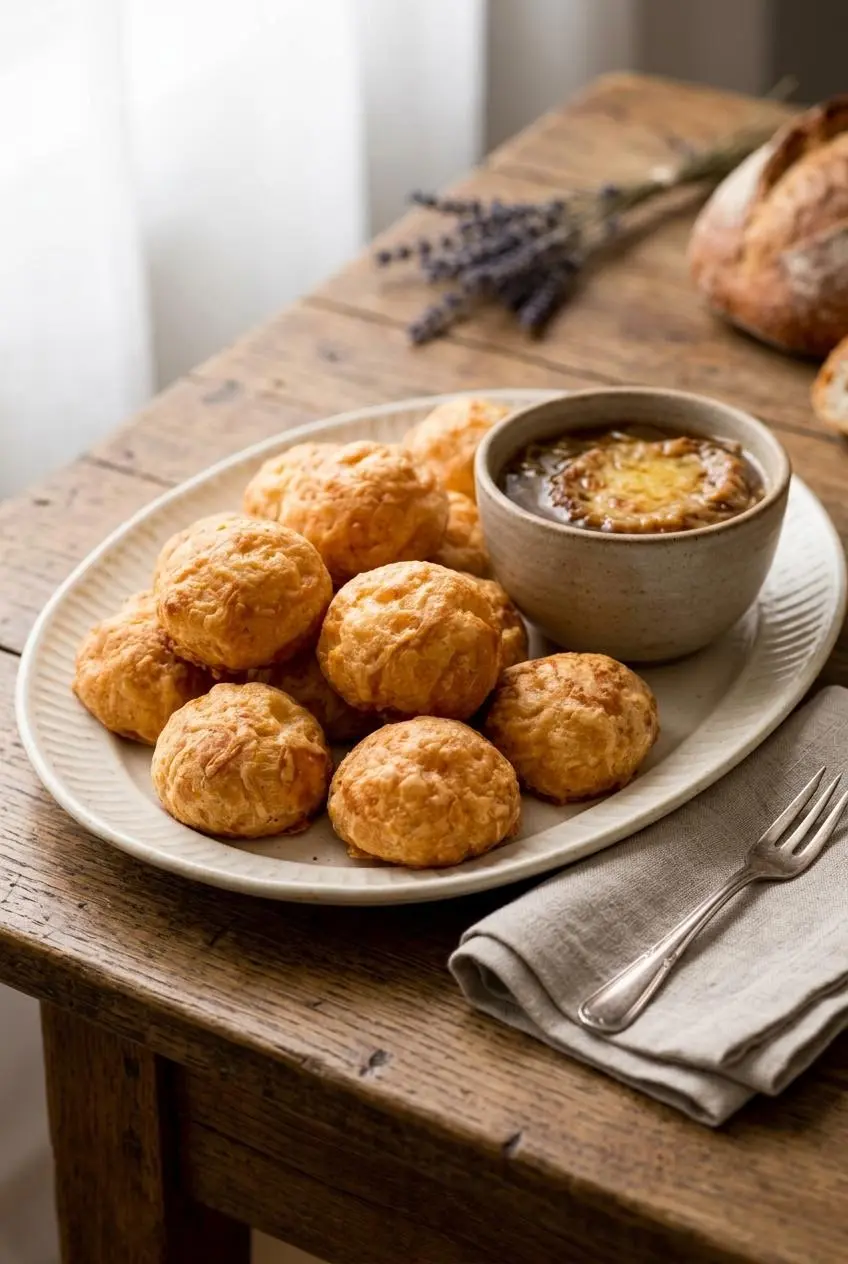
Serve gougères warm, with enough room on the platter that they aren’t piled into a steamy heap. Their savory flavor suits both appetizer spreads and comforting dinners.
- With soup: Offer them beside French onion soup or creamy pumpkin soup as an airy alternative to croutons.
- With a hearty meal: Set them alongside beef stew or a vegetable purée for dipping into the sauce.
- As herb-filled canapés: Split cooled puffs horizontally and add whipped herbed cream cheese, keeping the filling chilled until assembly.
- On an appetizer platter: Add charcuterie and fresh grapes, with nonalcoholic sparkling cider for a bright contrast to the rich cheese.
Fill only what you plan to serve, since creamy fillings gradually soften the pastry. Plain warm puffs need no garnish beyond their golden cheese topping.
Conclusion
Good gougères depend on a well-cooked panade, thoroughly incorporated eggs, and a hot oven left undisturbed during the rise. Those habits give the dough its best chance to form crisp shells around airy centers.
Grate the cheese first, watch the dough rather than rushing it, and leave time for the cooling pause. Bring the puffs to the table warm and enjoy that first crisp bite.
Frequently Asked Questions
Why Did My Gougères Deflate After Coming Out of the Oven?
Underbaking is a common cause: the shell hasn’t set firmly enough to hold its shape. Opening the oven early can interrupt the rise before the structure develops. Excess moisture from insufficient panade drying or wet cheese can leave the interior too heavy.
How Should I Handle Unbaked Gougères Dough?
For this method, portion the finished dough onto prepared trays and continue with the topping and baking. Prepare your cheese, equipment, and measured ingredients first so you don’t need to pause with raw dough waiting.
What Is the Best Cheese Substitute for Gruyère?
Comté is the closest option for a similarly nutty flavor. French Emmental or a firm Swiss cheese gives a milder result. Aged sharp white cheddar adds a tangier flavor; grate every option fresh from a block.
Can Gougères Be Reheated?
Yes, the oven can restore some crunch to softened baked puffs. Arrange them uncovered in a single layer and watch the topping as they warm. Follow the cooling and storage guidance above, and add chilled fillings after refreshing the pastry.
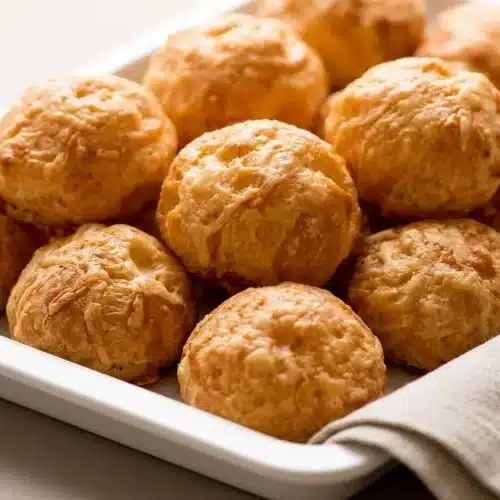
Gougeres Recipe

Equipment
- Saucepan
- wooden spoon or electric beater
- Baking trays
- Parchment Paper
- Pastry brush
Ingredients
- 1 cup (250ml) water
- 80 g butter unsalted, cut into 1.5 cm / 0.5″ cubes (5.5 tbsp)
- 1 cup (150g) flour plain / all purpose
- 3/4 tsp salt kosher/cooking salt
- Pinch nutmeg powder or freshly grated
- Pinch black pepper
- 4 eggs (~60 – 65g / 2oz each)
- 200 g Gruyère cheese freshly shredded (2 cups)
Topping
- 50 g Gruyere cheese extra, freshly shredded (1/2 cup)
- 1 egg yolk for brushing
Instructions
- Set the oven to 425°F / 220°C, or 200°C fan, and prepare two baking trays with a light coating of grease beneath parchment paper. The parchment should lie flat so the dough portions sit evenly.
- Heat the water, cubed butter, and measured salt in a saucepan over medium-high heat until boiling. Check that no solid butter remains before adding the flour.
- Take the pan off the heat and beat in the flour, nutmeg, and black pepper. Keep mixing until the dry flour disappears into a cohesive paste.
- Cook the paste over low heat for 1 minute, stirring and pressing it around the pan. A thin pale film on the bottom and dough gathering away from the sides indicate moisture is evaporating.
- Move the saucepan off the burner and let the paste cool for 2 minutes. It should remain warm but no longer be bubbling hot when the eggs go in.
- Beat the first egg thoroughly into the warm paste with a wooden spoon or electric beater. The mixture may look slippery and broken before it becomes cohesive again.
- Work in the remaining three eggs individually, fully blending each one before continuing. The finished dough should look glossy and fall slowly from the spoon in a thick ribbon.
- Fold the 2 cups of freshly shredded Gruyère into the dough. The cheese should spread evenly through the mixture rather than collect in clumps.
- Portion tablespoon-sized mounds onto the prepared trays using a small cookie scoop or two spoons, leaving room for expansion. Aim for matching sizes so the puffs brown at a similar rate.
- Apply a light coating of egg yolk with a pastry brush and distribute the reserved topping cheese over the mounds. Keep the topping on the dough rather than scattered across the parchment, where it can burn.
- Bake for 25 minutes, keeping the oven door closed during the first 20 minutes. Look for puffed, golden shells and a nutty toasted-cheese aroma rather than pale, soft-looking surfaces.
- Let the baked puffs cool for 15 minutes before serving warm. This pause allows the exterior to become crisper as steam escapes from the centers.