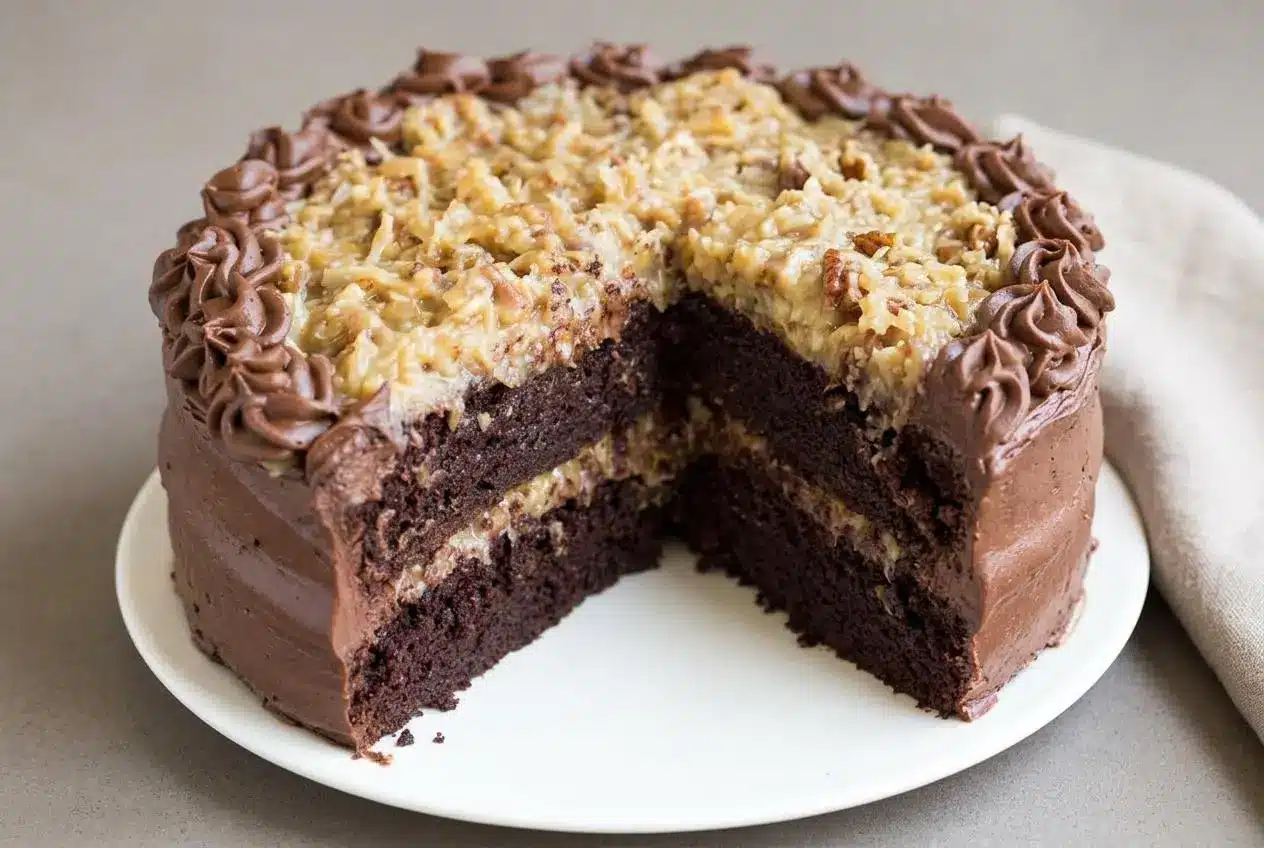
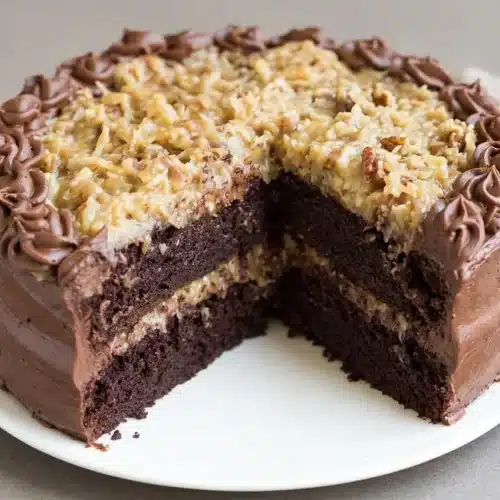
German chocolate cake is an American layer cake with tender chocolate rounds, chocolate buttercream, and a cooked coconut-pecan custard made with evaporated milk and egg yolks.
This german chocolate cake balances a soft buttermilk crumb with a gooey, nutty filling that brings caramel-like richness to every slice.
The key is letting the custard and cake layers cool completely before assembly, so the filling stays lush instead of sliding.
Set out the butter, eggs, and buttermilk before mixing so they combine smoothly with the dry ingredients.
Essential Ingredients and Their Roles
Each ingredient contributes to the cake’s tender structure, deep cocoa flavor, creamy custard, or the coconut-pecan crunch that makes each layer distinctive.
Cake
- 2 cups granulated sugar ((400 g))
- 1 3/4 cups all-purpose flour ((210 g))
- 3/4 cup unsweetened cocoa powder ((75 g))
- 1 1/2 teaspoons baking powder ((6 g))
- 1 1/2 teaspoons baking soda ((7.5 g))
- 1 teaspoon salt ((5 g))
- 2 large eggs
- 1 cup buttermilk ((240 ml))
- 1/2 cup oil ((vegetable or canola oil) (120 ml))
- 2 teaspoons vanilla extract ((10 ml))
- 1 cup boiling water ((240 ml))
German Chocolate Frosting
- 1/2 cup light brown sugar ((100 g))
- 1/2 cup granulated sugar ((100 g))
- 1/2 cup butter ((115 g))
- 3 large egg yolks
- 3/4 cup evaporated milk ((180 ml))
- 1 Tablespoon vanilla extract ((15 ml))
- 1 cup chopped pecans ((120 g))
- 1 cup shredded sweetened coconut ((80 g))
Chocolate Buttercream Frosting
- 1/2 cup butter ((115 g))
- 2/3 cup unsweetened cocoa powder ((65 g))
- 3 cups powdered sugar ((360 g))
- 1/3 cup evaporated milk ((80 ml))
- 1 teaspoon vanilla extract ((5 ml))
The cake uses oil and buttermilk for a moist, tender crumb, while the egg yolks and evaporated milk give the filling its thick, spoonable body. Pecans add crispness, and sweetened coconut brings chew and moisture.
I choose pecans that smell fresh and nutty, never stale or sharply bitter, because their flavor comes through clearly in the custard.
Chocolate and Cocoa Powder Selection
Use natural unsweetened cocoa powder here. Its acidity reacts with the baking soda, helping the cake rise while keeping the chocolate flavor rounded and familiar. Dutch-process cocoa has been neutralized, so it does not behave the same way with baking soda and can leave the layers flatter than intended.
The cocoa also works with the boiling water to form a thin batter. That may look surprising, but it helps create a soft, tender cake rather than a dense one.
The Chemistry of Buttermilk and Leaveners
Buttermilk brings acidity, moisture, and a subtle tang that keeps the sweetness from becoming heavy. It works with baking soda to create lift while helping the flour form a more delicate crumb.
Baking powder provides additional rise, so the layers stay light enough to support the dense coconut-pecan topping. Once the wet and dry mixtures meet, stir only until combined. Extended mixing can make the crumb tougher.
Choosing Coconut and Pecans for Optimal Texture
Sweetened shredded coconut gives the custard its characteristic chew and helps it stay glossy after cooling. Use fresh coconut from a newly opened package when possible, since dried-out flakes can make the filling seem less lush.
Chopped pecans should be crisp and fragrant. For a deeper toasted flavor, toast the pecans and coconut gently in a dry skillet, stirring often, then let them cool before adding them to the custard. A warm, nutty aroma tells you they are ready.
How to Make German Chocolate Cake
Work through the cake, custard, and buttercream in that order so the filling has time to cool while the cake layers bake and cool.
Cake
- Heat the oven to 375°F, then grease two 8 or 9-inch round pans and cover each bottom with parchment paper.
Preparing the pans before mixing helps the batter go straight into the oven without losing its lift. - Whisk the sugar, flour, cocoa powder, baking powder, baking soda, and salt in a large bowl.
The mixture should look evenly dark with no visible pockets of cocoa or leavening. - In a separate bowl, blend the eggs, buttermilk, oil, and vanilla until smooth.
The wet mixture should be uniform before it meets the flour mixture. - Add the wet mixture to the dry ingredients and stir just until combined, then carefully mix in the boiling water.
The batter will be thin and fluid, which is expected for these tender cake layers. - Divide the batter between the prepared pans and bake until a toothpick inserted in the centers comes out clean.
The tops should spring back lightly when touched near the center.
German Chocolate Frosting
- Place the brown sugar, granulated sugar, butter, egg yolks, and evaporated milk in a saucepan over medium heat.
Stir as the butter melts and bring the mixture to a gentle, low boil rather than a hard bubble. - Keep stirring until the custard thickens, then take the pan off the heat and stir in the vanilla, pecans, and coconut.
The filling should look glossy and thick enough to cling to a spoon. - Cool the coconut-pecan frosting completely before using it between the cake rounds.
Cool filling becomes thicker and is much less likely to press out from the layers.
Chocolate Buttercream Frosting
- Melt the butter and stir in the cocoa powder until the mixture is smooth.
The cocoa should look fully moistened with no dry streaks. - Beat in the powdered sugar and evaporated milk gradually until the frosting spreads easily.
It should hold soft swirls while remaining smooth enough for an offset spatula. - Adjust the consistency with a little more evaporated milk to loosen it or more powdered sugar to firm it, then mix in the vanilla.
The finished buttercream should stay on the spatula without feeling stiff or crumbly.
Cake Assembly
- Set one cooled cake round on a serving stand, spread a thin layer of chocolate buttercream over the top, and add half the coconut frosting while leaving a 1/2-inch border.
The uncovered edge gives the filling space when the second layer goes on. - Place the second cake round over the filling, frost the outside with chocolate buttercream, and finish the top with the remaining coconut frosting.
Keep the cake level as you work so the top layer stays centered.
Mastering the Gooey Coconut-Pecan Custard
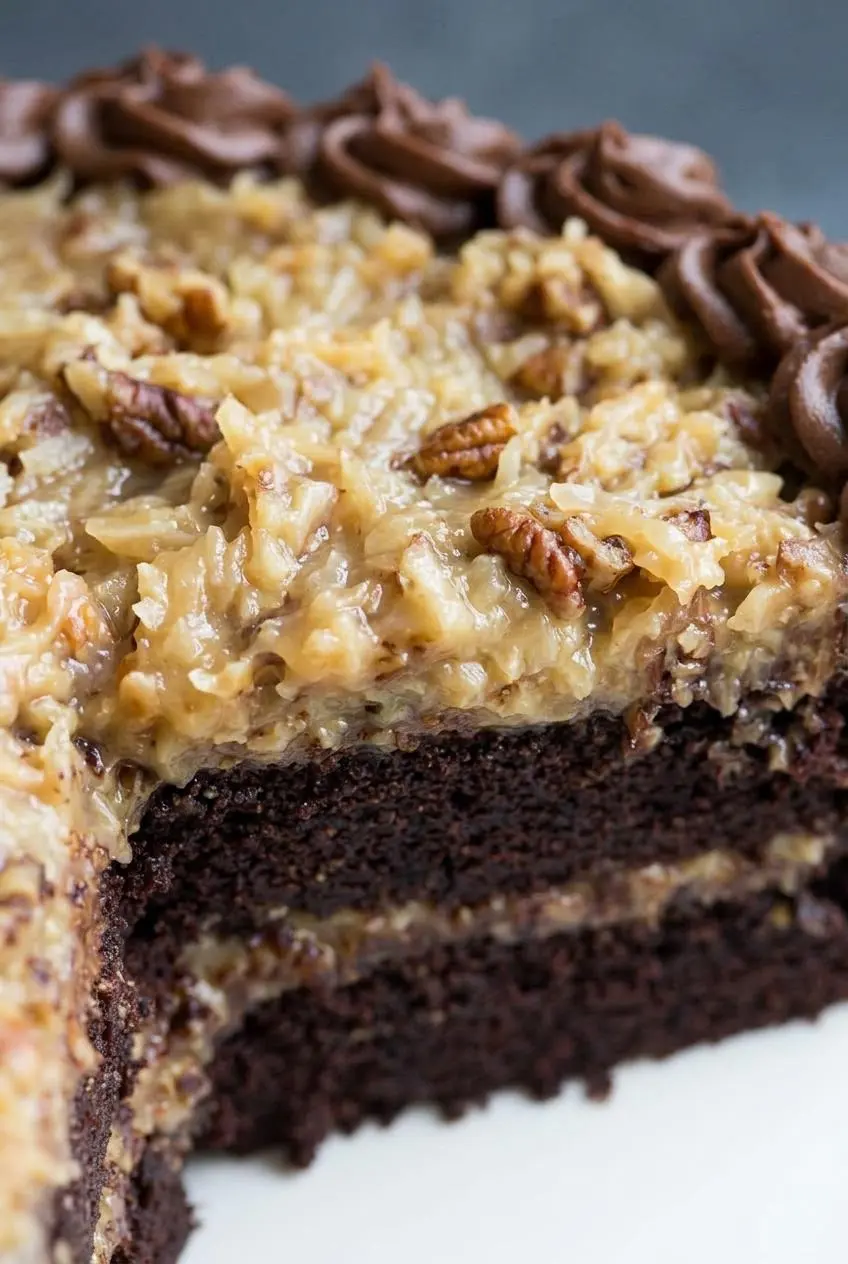
The coconut-pecan filling is the defining part of this cake. It is a cooked custard, not a buttercream, so steady heat and patient stirring matter more than speed.
Combine the sugars, butter, egg yolks, and evaporated milk in the saucepan before heating. Keep the heat around medium-low to medium and scrape the bottom and sides constantly with a heatproof spatula. The egg yolks thicken the mixture as it cooks, while the butter adds a silky finish.
Look for a gentle simmer and a custard that coats the back of a spoon. Run a finger through the coating. If the line stays clear instead of quickly filling in, the filling has thickened enough to support the cake layers.
Stir in the vanilla, pecans, and coconut off the heat. Cooling is part of the thickening process, so resist the urge to spread it warm. A completely cooled filling sits in soft mounds and gives the finished cake clean, defined slices.
Troubleshooting Common Cake and Filling Problems
Most issues come down to temperature, mixing, or assembling before the components have cooled. These direct fixes keep the cake on track.
How to Fix Runny Coconut Pecan Filling
- Likely cause: The custard did not cook long enough to thicken, or it was used before cooling. Fix: Chill it until fully set. If it still pours freely when cool, return it to low heat and whisk continuously until it coats a spoon.
- Likely cause: The mixture boiled too aggressively. Fix: Lower the heat and keep the custard moving across the entire bottom of the pan rather than stirring only in the center.
Preventing Curdled Egg Yolks in the Custard
Egg yolks can curdle when the pan gets too hot or sits unstirred. Use steady, moderate heat and scrape the bottom, corners, and sides of the saucepan continuously. The custard should bubble gently, never surge into a rapid boil.
If tiny cooked egg bits appear, remove the pan from the heat immediately and whisk firmly until the custard smooths out as much as possible. Preventing overheating is much easier than repairing a grainy texture.
Stopping Assembled Cake Layers From Sliding
Cool the cake rounds completely, then chill them briefly if they feel especially soft. Firm layers resist tearing when you spread the dense coconut filling.
For extra insurance, pipe or spread a raised ring of chocolate buttercream around the outer edge of the first layer before adding the coconut filling. This buttercream dam acts as a border and keeps the custard centered when the top layer is added.
Make-Ahead and Storage Guide
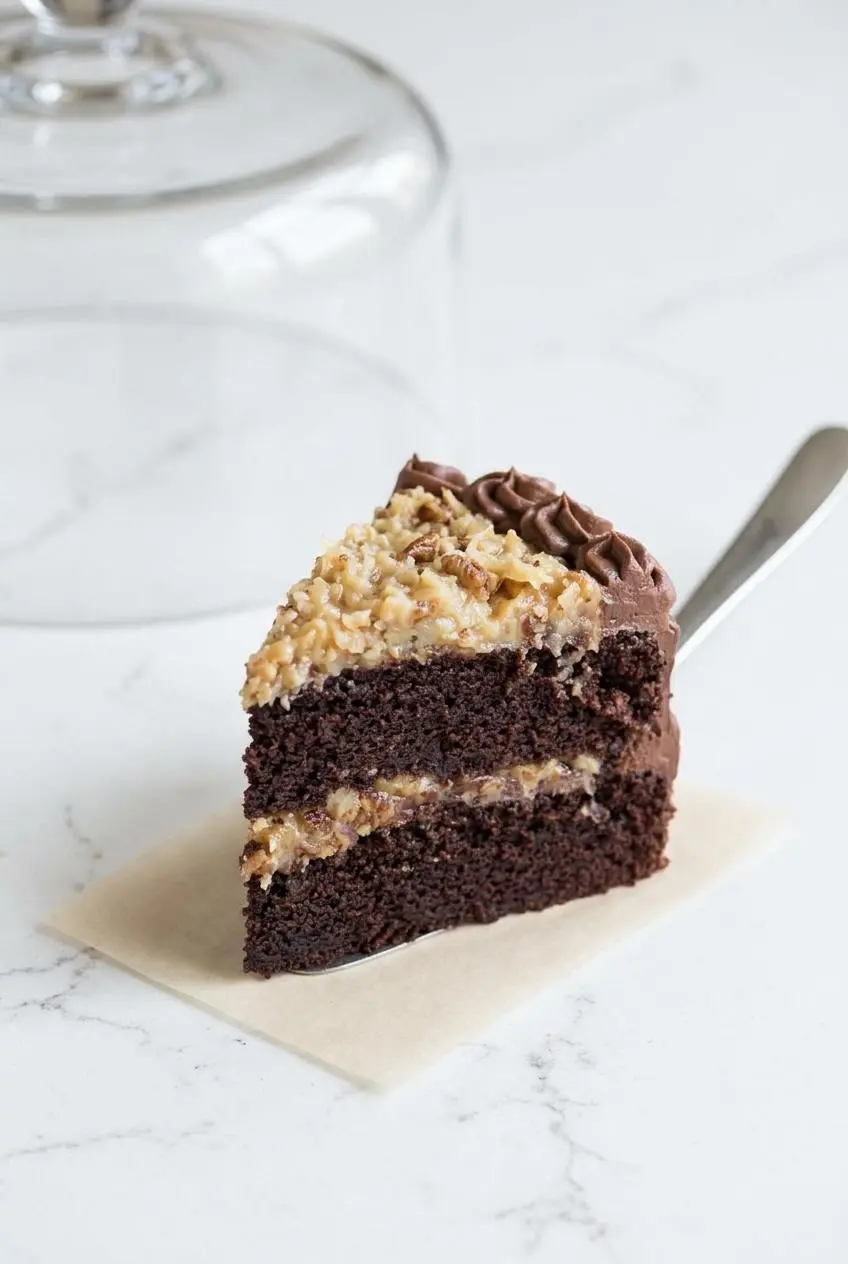
For the cleanest assembly, bake the cake layers and cook the coconut filling separately, then cool everything completely before covering and chilling. Assemble when the filling is thick and the layers feel firm enough to handle without shedding crumbs.
Because the topping contains egg yolks and evaporated milk, keep the finished cake covered and chilled after serving. Cooked custard fillings for cakes should be cooled promptly and refrigerated, as described in safe handling for custard and cream cake fillings.
For serving, let chilled slices stand briefly at room temperature so the chocolate cake softens and the coconut filling becomes pleasantly gooey again. Keep any remaining slices covered to protect the buttercream from drying out.
Serving Suggestions and Variations
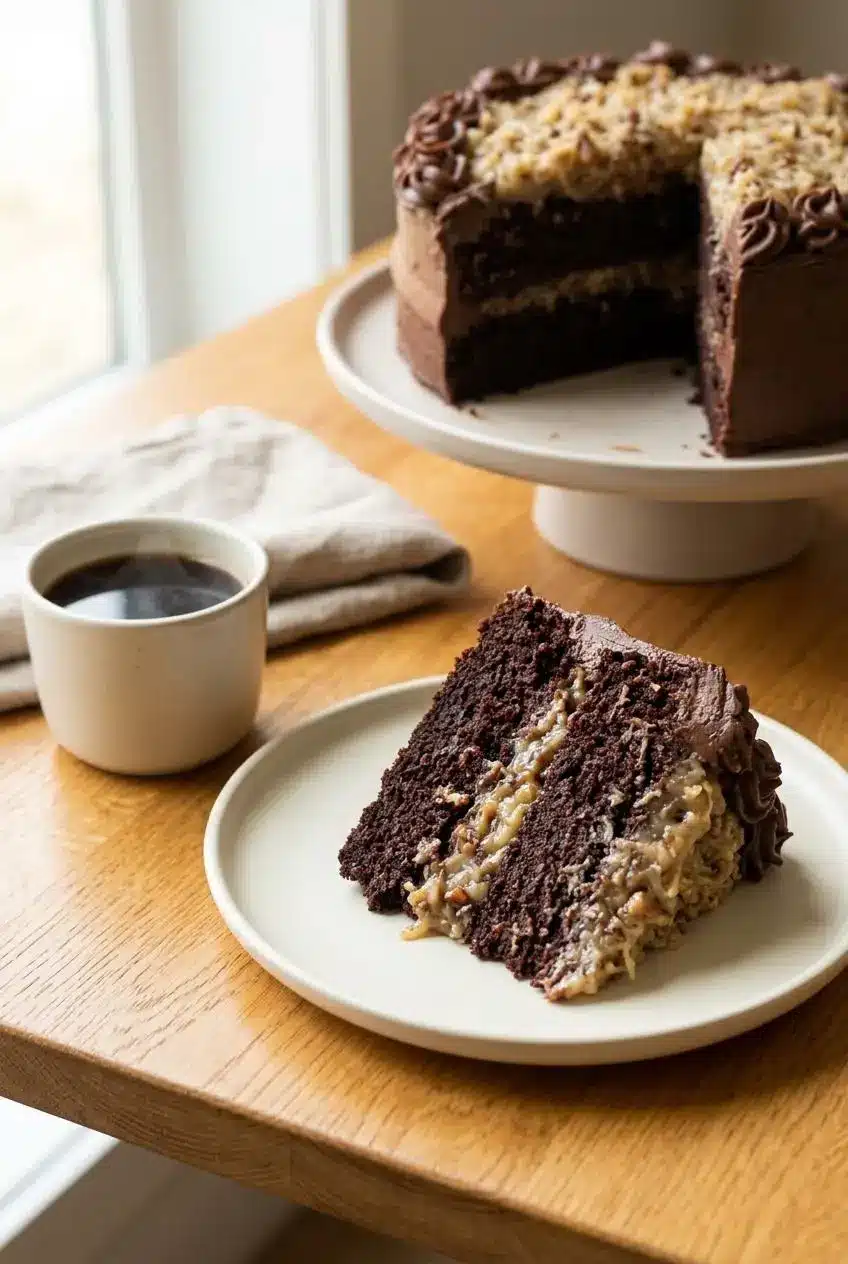
Serve this cake slightly cool or closer to room temperature, when the crumb is soft and the custard has its best chewy texture. A spoonful of unsweetened whipped cream or a cup of strong black coffee balances the sweet, buttery filling nicely.
9×13-Inch Easy Sheet Cake Option
For a more casual dessert, bake the batter in a single 9×13-inch pan and spread the coconut-pecan frosting across the top after the cake has cooled. This presentation skips layer assembly while keeping the classic flavor combination front and center.
If you want another casual format with the same flavor profile, try this german chocolate poke cake.
Naked-Style German Chocolate Cake
For a rustic finish, use chocolate buttercream between the layers and leave the sides exposed. Spread the coconut-pecan filling generously over each layer, letting its toasted pecans and coconut show at the edges.
- Two 9-inch pans: This is the standard format for the batter and creates broad, easy-to-stack layers.
- Three 8-inch pans: Divide the batter evenly for thinner layers and use the coconut filling between the rounds as well as on top.
- Dark chocolate direction: Use a darker cocoa flavor in the buttercream for a more intense contrast with the sweet custard.
- For a dessert table: Slice the cake into modest portions, since the filling is rich and each piece has plenty of texture.
Conclusion
This cake brings together tender chocolate layers, smooth buttercream, and the classic coconut-pecan custard that makes the dessert so memorable.
Cool the filling and layers thoroughly before stacking, and you’ll get neat slices with a soft crumb and a gooey, nutty finish.
Frequently Asked Questions
What Makes German Chocolate Cake Different From Regular Chocolate Cake?
German chocolate cake is defined by its cooked coconut-pecan custard filling. Regular chocolate cake is often finished entirely with chocolate frosting, while this version pairs chocolate layers with a rich topping made from evaporated milk, egg yolks, coconut, and pecans.
Why Is It Called German Chocolate Cake?
The name comes from Samuel German, an American chocolatier who developed German’s Sweet Chocolate in 1852. Despite the name, the cake is an American dessert rather than a traditional cake from Germany.
Can I Make the Coconut Pecan Frosting Ahead of Time?
Yes. Cook the filling, cool it completely, cover it, and keep it chilled until you are ready to assemble the cake. Stir it gently before using if it has become very firm.
Does German Chocolate Cake Need to Be Refrigerated?
Keep the assembled cake covered and chilled because the coconut-pecan filling contains cooked egg yolks and evaporated milk. Let individual slices sit briefly before serving for a softer cake texture and gooier filling.
German Chocolate Cake

Equipment
- 8 or 9-inch round baking pans
- Parchment Paper
- Saucepan
- Stand mixer or handheld mixer
- Offset spatula
Ingredients
Cake
- 2 cups granulated sugar (400 g)
- 1 3/4 cups all-purpose flour (210 g)
- 3/4 cup unsweetened cocoa powder (75 g)
- 1 1/2 teaspoons baking powder (6 g)
- 1 1/2 teaspoons baking soda (7.5 g)
- 1 teaspoon salt (5 g)
- 2 large eggs
- 1 cup buttermilk (240 ml)
- 1/2 cup oil (vegetable or canola oil) (120 ml)
- 2 teaspoons vanilla extract (10 ml)
- 1 cup boiling water (240 ml)
German Chocolate Frosting
- 1/2 cup light brown sugar (100 g)
- 1/2 cup granulated sugar (100 g)
- 1/2 cup butter (115 g)
- 3 large egg yolks
- 3/4 cup evaporated milk (180 ml)
- 1 Tablespoon vanilla extract (15 ml)
- 1 cup chopped pecans (120 g)
- 1 cup shredded sweetened coconut (80 g)
Chocolate Buttercream Frosting
- 1/2 cup butter (115 g)
- 2/3 cup unsweetened cocoa powder (65 g)
- 3 cups powdered sugar (360 g)
- 1/3 cup evaporated milk (80 ml)
- 1 teaspoon vanilla extract (5 ml)
Instructions
Cake
- Heat the oven to 375°F, then grease two 8 or 9-inch round pans and cover each bottom with parchment paper. Preparing the pans before mixing helps the batter go straight into the oven without losing its lift.
- Whisk the sugar, flour, cocoa powder, baking powder, baking soda, and salt in a large bowl. The mixture should look evenly dark with no visible pockets of cocoa or leavening.
- In a separate bowl, blend the eggs, buttermilk, oil, and vanilla until smooth. The wet mixture should be uniform before it meets the flour mixture.
- Add the wet mixture to the dry ingredients and stir just until combined, then carefully mix in the boiling water. The batter will be thin and fluid, which is expected for these tender cake layers.
- Divide the batter between the prepared pans and bake until a toothpick inserted in the centers comes out clean. The tops should spring back lightly when touched near the center.
German Chocolate Frosting
- Place the brown sugar, granulated sugar, butter, egg yolks, and evaporated milk in a saucepan over medium heat. Stir as the butter melts and bring the mixture to a gentle, low boil rather than a hard bubble.
- Keep stirring until the custard thickens, then take the pan off the heat and stir in the vanilla, pecans, and coconut. The filling should look glossy and thick enough to cling to a spoon.
- Cool the coconut-pecan frosting completely before using it between the cake rounds. Cool filling becomes thicker and is much less likely to press out from the layers.
Chocolate Buttercream Frosting
- Melt the butter and stir in the cocoa powder until the mixture is smooth. The cocoa should look fully moistened with no dry streaks.
- Beat in the powdered sugar and evaporated milk gradually until the frosting spreads easily. It should hold soft swirls while remaining smooth enough for an offset spatula.
- Adjust the consistency with a little more evaporated milk to loosen it or more powdered sugar to firm it, then mix in the vanilla. The finished buttercream should stay on the spatula without feeling stiff or crumbly.
Cake Assembly
- Set one cooled cake round on a serving stand, spread a thin layer of chocolate buttercream over the top, and add half the coconut frosting while leaving a 1/2-inch border. The uncovered edge gives the filling space when the second layer goes on.
- Place the second cake round over the filling, frost the outside with chocolate buttercream, and finish the top with the remaining coconut frosting. Keep the cake level as you work so the top layer stays centered.