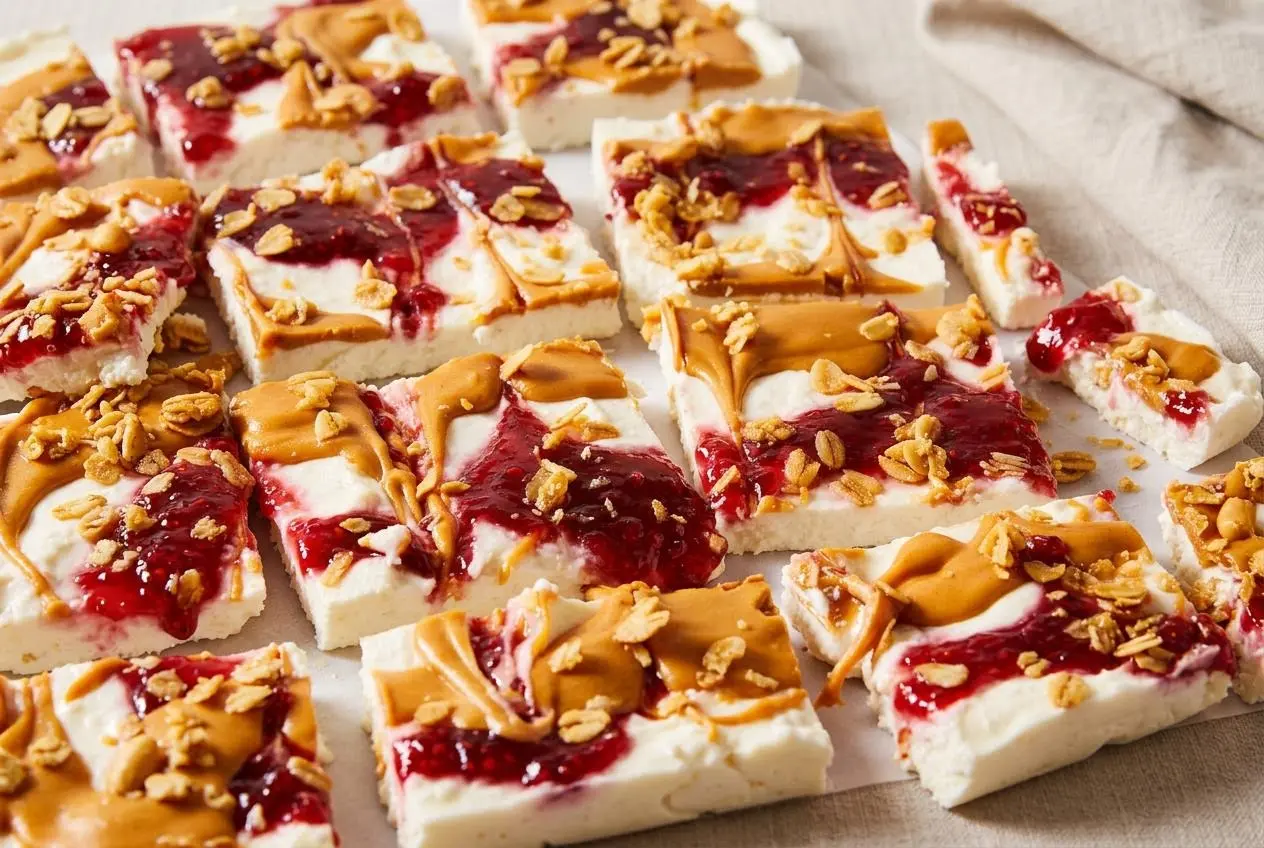
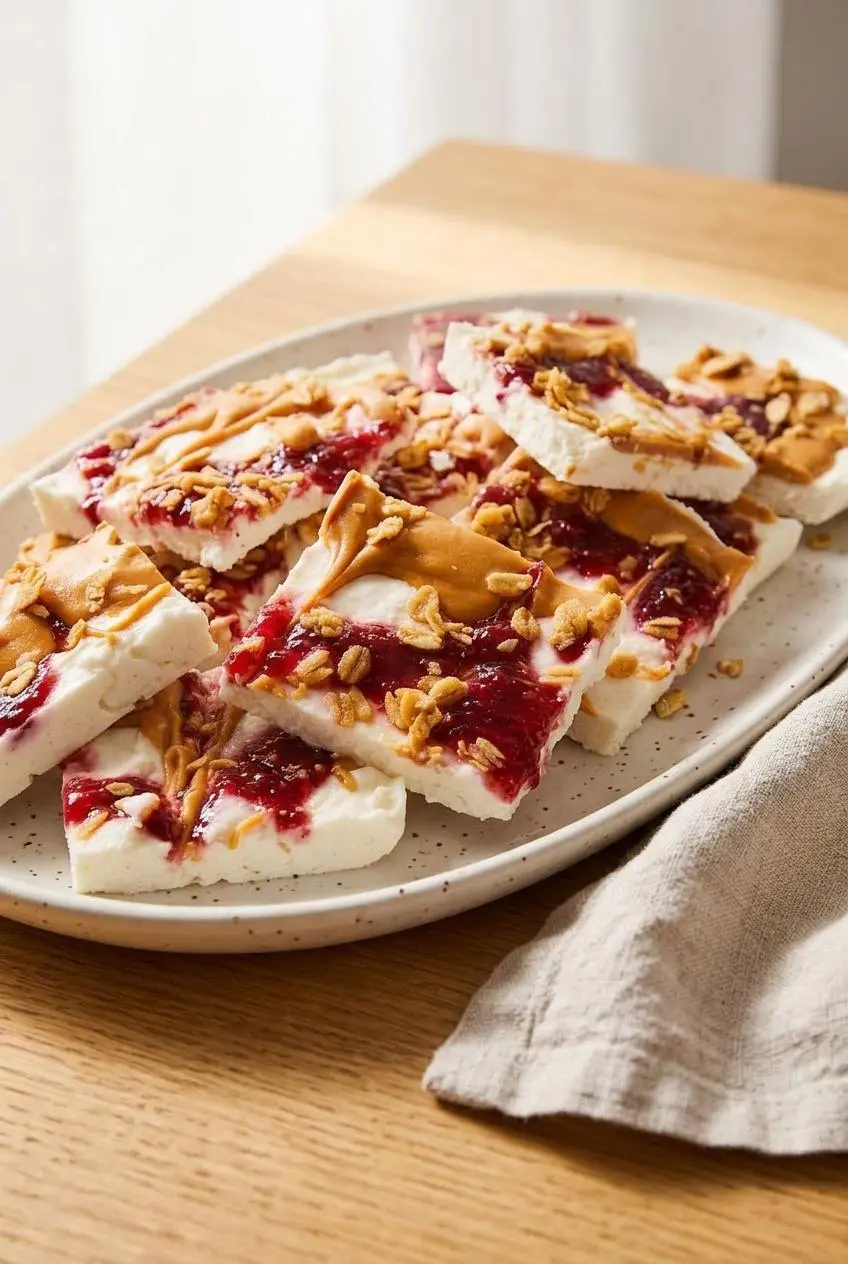
Frozen cottage cheese bark is a chilled snack made by blending cottage cheese with honey, spreading it on parchment, adding toppings, and freezing until firm. This peanut butter and raspberry version combines a creamy dairy layer with fruity ribbons and crunchy granola.
Think of frozen cottage cheese bark as a peanut butter and jelly treat with an ice cream-inspired bite. Blending transforms the curds into a smooth mixture that freezes into pieces you can cut or snap apart.
The salty-sweet peanut butter balances the honey, while raspberry jam adds a bright contrast. You’ll need about 10 minutes of prep, followed by freezer time. The swirl makes every bite a little different.
Clear a flat spot in your freezer before you start so the baking sheet can sit level.
Essential Ingredients and Role Breakdown
Cottage cheese gives the bark its creamy structure, honey sweetens the dairy, and peanut butter adds nutty richness. Raspberry jam brings fruit flavor and color, while granola provides a crisp contrast to the frozen layer.
- 2 (16-oz.) containers cottage cheese
- 6 tbsp. honey
- 1/2 c. smooth peanut butter
- 1/2 c. raspberry jam
- 1/2 c. store-bought or homemade granola
Honey blends into the cottage cheese rather than leaving crunchy sugar grains. Its sweetness also helps balance the dairy’s tang. Peanut butter supplies a richer topping, and raspberry jam keeps that richness from dominating the whole bite.
Choose granola with pieces small enough to scatter evenly. Large clusters can make cutting awkward and leave some pieces without any crunch. Break those clusters apart with your fingers before sprinkling.
I’d spoon off any obvious watery liquid pooled on top of the cottage cheese before blending, rather than stir it into the mixture.
Choosing the Right Cottage Cheese Fat Percentage
Whole-milk cottage cheese labeled 4% is a good choice when creamy texture matters most. The milkfat gives the frozen dairy a richer mouthfeel, although the bark will still feel firm straight from the freezer.
Low-fat and fat-free cottage cheese can work, but expect a leaner, potentially icier bite. Brands vary in moisture and thickness, so fat percentage alone won’t tell you exactly how the mixture will behave.
Blending and fat do different jobs. Blending breaks down the curds so they don’t feel gritty; fat contributes richness. Neither makes the water disappear, so even thoroughly blended cottage cheese can freeze quite hard.
Selecting Natural Sweeteners and Nut Butters
Use honey for this peanut butter and raspberry version. Liquid sweeteners distribute readily through cold dairy, while granulated sugar may need more blending to dissolve completely.
Pure maple syrup is an optional flavor swap, not a required ingredient. It adds a different sweetness and can loosen the mixture, so check its spreadability rather than assuming every liquid sweetener behaves identically. Neither honey nor maple syrup should be treated as a structural binder.
Smooth peanut butter creates cleaner ribbons than chunky peanut butter. If yours has separated, stir it thoroughly before measuring so the topping contains peanut butter rather than mostly oil. Warming it gently should make it pourable, not hot.
How to Make Frozen Cottage Cheese Bark
Prepare a blender or food processor, a small heatproof bowl, and a parchment-lined baking sheet. This recipe makes 12 servings, with about 10 minutes of preparation and a minimum total time of 2 hours 10 minutes.
- Add the cottage cheese and honey to a blender or food processor, then pulse and blend until the curds disappear.
The mixture should look glossy and pudding-thick, with no visible white lumps. - Heat the peanut butter in a small microwave-safe, heatproof bowl using 10-second bursts, stirring after each burst, for about 20 seconds total.
Stop when it flows easily from a spoon without becoming hot or bubbling. - Cover a baking sheet with parchment and spread the blended cottage cheese into an even layer.
A roughly 1/4-inch thickness gives the slab enough body to break into substantial pieces. - Spoon alternating ribbons of raspberry jam and warm peanut butter across the width of the dairy layer.
Leave some exposed cottage cheese between the ribbons so the separate colors remain distinct. - Draw a toothpick or the back of a fork lengthwise through the ribbons, then scatter the granola over the surface.
The topping should offer slight resistance as you pull through it, leaving curved streaks rather than one blended color. - Place the sheet flat in the freezer for at least 2 hours, or leave it overnight, until the entire layer sets.
The center should feel firm rather than soft beneath the toppings. - Lift the firm slab from the parchment and cut it into squares or break it into pieces.
Well-frozen bark should separate cleanly instead of bending or smearing.
Blending Cottage Cheese to Silky Perfection
Start with pulses to move the cottage cheese and honey around the blades. Continue blending as needed, stopping to scrape down the container if curds cling above the mixture. A processor may leave small lumps near the bowl’s edge even when the center looks smooth.
Check the texture, not a fixed blending time. Different machines and cottage cheese brands need different amounts of blending. Spread a little mixture across a spoon: it should form a smooth coating without distinct curds.
There’s no benefit to running the machine long after the mixture becomes smooth. Extended blending can warm the dairy and make it looser. Stop once you reach a glossy, uniform consistency.
Swirling Nut Butter and Jam Cleanly
The easiest way to keep the colors clear is to make the topping ribbons first, then swirl them in the opposite direction. Here, the ribbons run across the sheet’s width, and the toothpick or fork travels along its length.
Use a light hand. Dragging deeply through the dairy can scrape channels into the slab; repeatedly stirring the same area turns the peanut butter and jam into a muddy topping.
If the peanut butter resists pouring, stir it and check whether it needs another brief microwave burst. Don’t try to compensate by pressing harder with the fork. A fluid topping makes a cleaner pattern.
Essential Tips to Avoid Grainy or Icy Texture
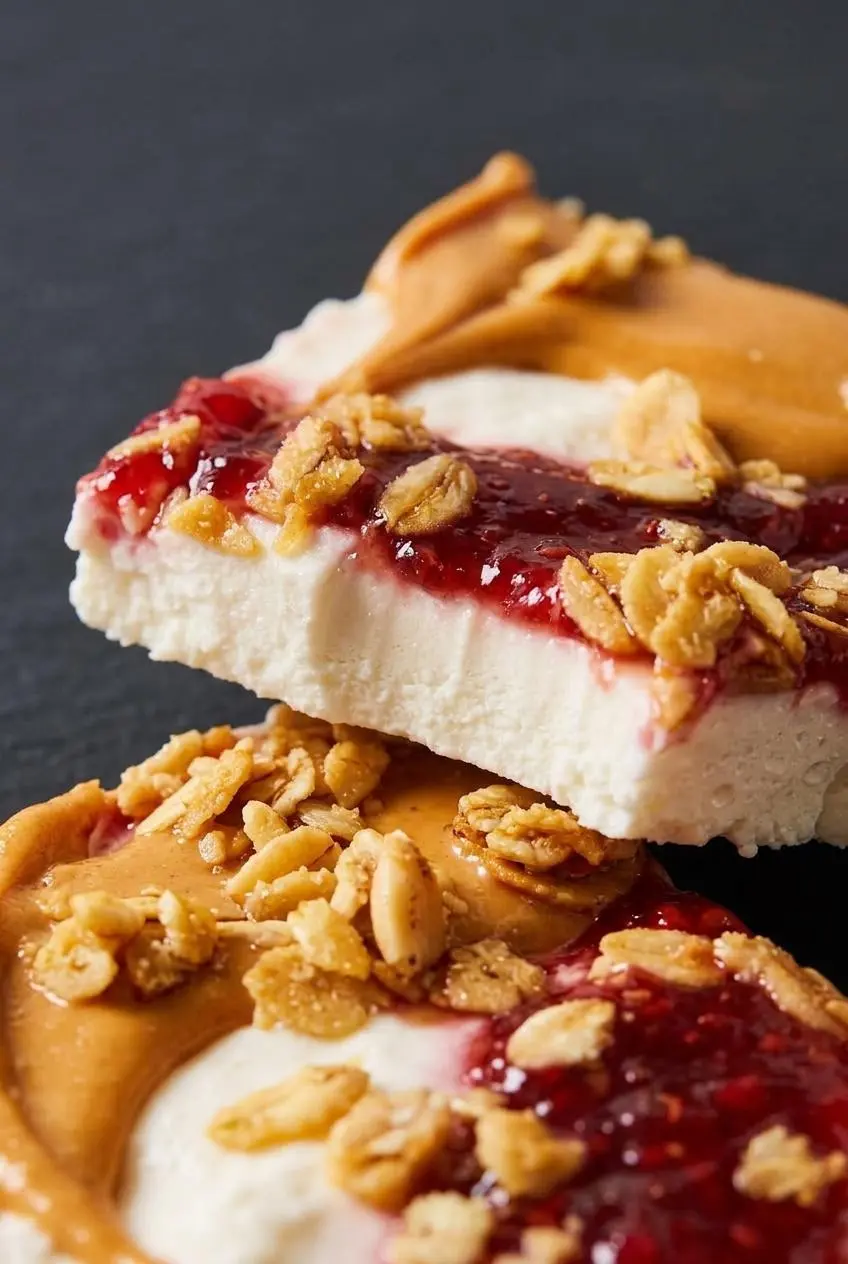
Graininess and iciness aren’t the same problem. Leftover curds cause a gritty bite, while frozen moisture creates a harder texture. Fixing one doesn’t automatically fix the other.
- Visible curds: The mixture hasn’t blended evenly. Scrape the container and continue blending until the surface looks uniform.
- A hard, icy bite: Leaner cottage cheese or excess moisture may contribute. Choose whole-milk cottage cheese for a richer texture and avoid adding unnecessary liquid.
- A mixture that spreads too quickly: Moisture or warmth may have loosened it. Use a rimmed baking sheet, keep it level, and avoid stretching the mixture across more space than it can cover evenly.
- Brittle edges: The perimeter is thinner than the center. Use the back of a spoon or a spatula to even out the layer before adding toppings.
- Frosty fruit toppings: Surface water can freeze around fresh fruit. Thoroughly dry washed berries before adding them.
- Soft granola: Moisture from the dairy and jam can soften the clusters. Keep granola dry before sprinkling, and press it only lightly into the surface.
Aim for an even layer about 1/4 inch thick rather than filling the entire sheet at any cost. The baking sheet provides support; it doesn’t define how far you must spread the mixture.
The same smooth-blending principle applies to a cottage cheese smoothie, but bark needs a thicker consistency. Adding liquid to help the blades move can solve one problem while creating a runny mixture that’s harder to spread.
Flavor Options and High-Protein Variations
Keep these adaptations separate from the peanut butter and raspberry version above. Change the flavor deliberately, and preserve a thick, spreadable cottage cheese mixture.
For another frozen dessert format, try cottage cheese ice cream when you’d rather scoop than snap.
Dark Chocolate Almond Crunch
- Use melted dark chocolate as an optional alternative to the jam ribbons for a more chocolate-forward flavor.
- If needed, stir a little coconut oil into the melted chocolate to help it drizzle; keep the chocolate warm rather than hot.
- Scatter toasted slivered almonds over the dairy for a nutty crunch, using them in place of the granola if preferred.
- Finish with flaky sea salt for contrast, keeping in mind that cottage cheese already contributes saltiness.
Gym-Ready Whey Protein Boost
Vanilla or unflavored whey powder is an optional addition if you want to customize the dairy mixture. Powder brands differ in sweetness, thickening behavior, and serving size, so don’t assume they’re interchangeable.
- Add the powder gradually while blending so it disperses instead of forming dry pockets.
- Check the mixture on a spoon before spreading; it should remain smooth rather than chalky or dough-like.
- If the powder makes it too stiff, blend in milk sparingly until it becomes spreadable, avoiding a pourable consistency.
- Consider optional chocolate chips for crunch, but taste the sweetened mixture before adding more sweet toppings.
Strawberry Blueberry Summer Bark
- Wash sliced strawberries and blueberries, then pat them thoroughly dry before adding them to the spread dairy.
- Press the berries gently into the surface rather than stirring them aggressively through the mixture, which can streak the color.
- Add unsweetened coconut as an optional topping for a chewy contrast to the berries.
- For a tangier variation, blend in Greek yogurt cautiously and check that the mixture still holds a thick layer.
Lemon zest can brighten a berry version without adding fruit juice. Mashed ripe banana is another optional sweetening idea, but it changes both the flavor and consistency, so treat it as a separate variation rather than a direct replacement for the honey.
Freezer Storage and Serving
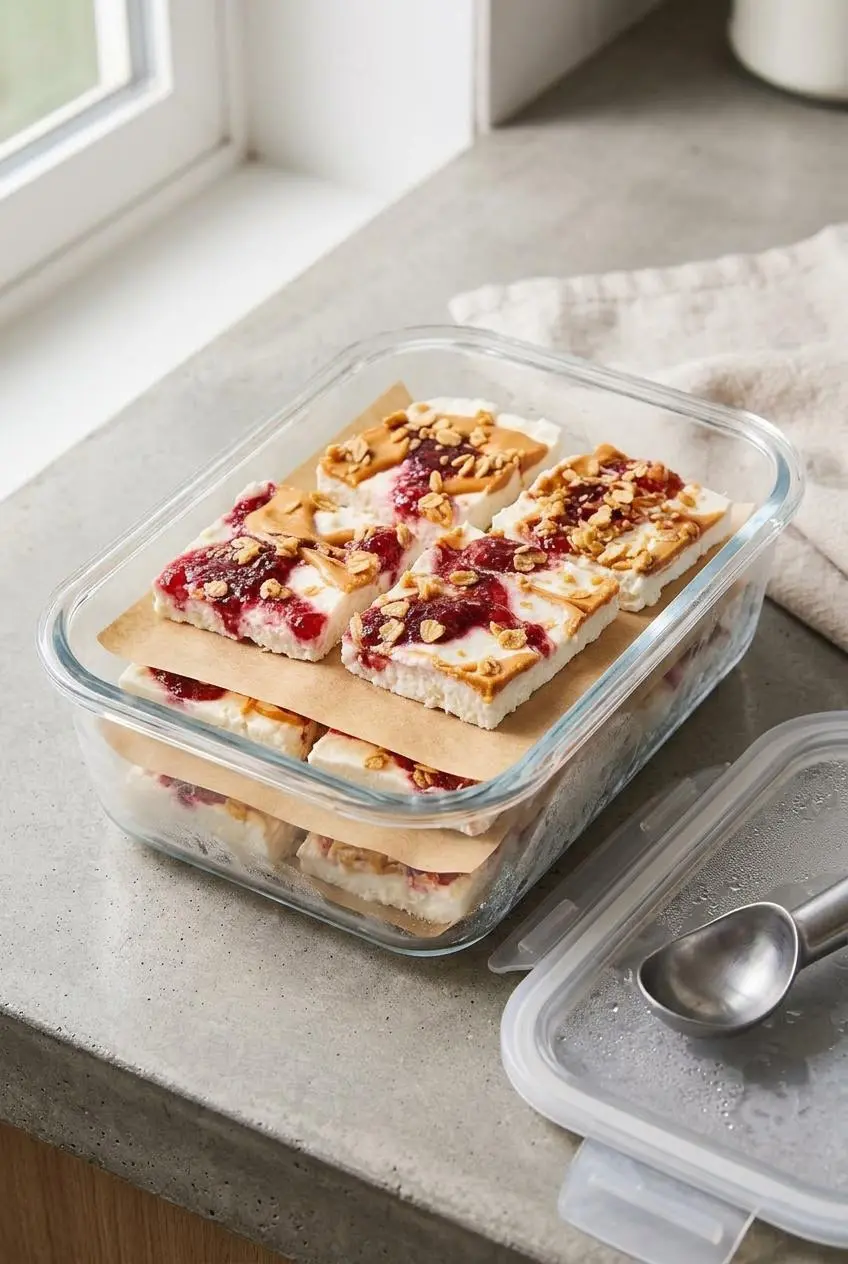
Package the bark while it’s still firm so the pieces keep their shape. Separate cut squares or broken pieces with parchment inside an airtight freezer container.
Parchment keeps adjacent pieces from sticking together. Close the lid snugly to limit exposure to freezer air and odors, and avoid compressing the toppings beneath a heavy stack.
Serve the bark cold. If it’s too hard to bite comfortably, let your portion soften briefly and check it as it rests. Room temperature, piece thickness, and the cottage cheese you used all affect how quickly it softens, so a texture check is more useful than a rigid timer.
Take out only the pieces you plan to eat and keep the rest frozen. This is a sit-down snack rather than a treat to leave on a warm dessert table. Granola may soften against the dairy during storage, even with careful packaging.
Conclusion
This creamy freezer snack pairs blended cottage cheese with familiar peanut butter and raspberry flavors. The most useful success rule is to blend until no curds remain, then spread the mixture evenly.
Keep the swirls light and the crunchy toppings dry. Start with the peanut butter and jam combination, then try a flavor variation that suits your next sweet craving.
Frequently Asked Questions
How Do You Keep Frozen Cottage Cheese Bark From Tasting Icy?
Choose whole-milk 4% cottage cheese for a richer mouthfeel. Blend thoroughly to remove graininess, while remembering that blending doesn’t stop moisture from freezing. Keep the layer even and avoid adding wet toppings or unnecessary liquid.
Can I Use Low-Fat or Fat-Free Cottage Cheese?
Yes, both can work in this method. Expect a leaner, potentially firmer or icier texture than with whole-milk cottage cheese. Let your portion soften briefly if needed, checking the bite rather than following a fixed resting time.
How Long Does Cottage Cheese Bark Need to Freeze?
Allow at least 2 hours, then check that the center has set firmly. An overnight freeze also fits this method. Keep the sheet flat so the mixture doesn’t collect at one end.
Why Does My Cottage Cheese Bark Melt So Quickly?
The frozen dairy layer softens as it warms, especially in thin pieces or a warm kitchen. Serve only the portion you plan to eat and leave the remaining bark in the freezer. Avoid treating it like shelf-stable chocolate bark; it needs to stay cold to hold its shape.
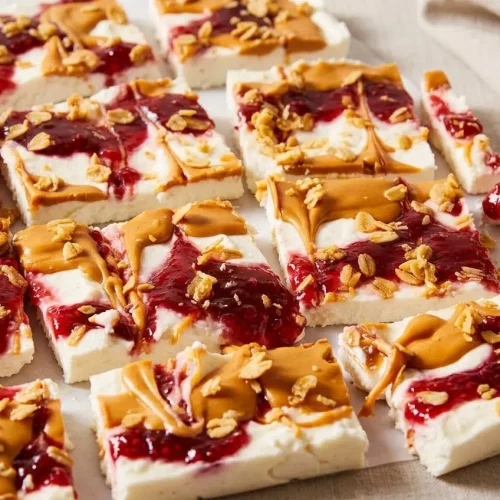
Frozen Cottage Cheese Bark

Equipment
- Food processor or blender
- Parchment-lined baking sheet
- Small heatproof bowl
Ingredients
- 2 containers cottage cheese 16-oz. each
- 6 tbsp. honey
- 1/2 c. smooth peanut butter
- 1/2 c. raspberry jam
- 1/2 c. store-bought or homemade granola
Instructions
- Add the cottage cheese and honey to a blender or food processor, then pulse and blend until the curds disappear. The mixture should look glossy and pudding-thick, with no visible white lumps.
- Heat the peanut butter in a small microwave-safe, heatproof bowl using 10-second bursts, stirring after each burst, for about 20 seconds total. Stop when it flows easily from a spoon without becoming hot or bubbling.
- Cover a baking sheet with parchment and spread the blended cottage cheese into an even layer. A roughly 1/4-inch thickness gives the slab enough body to break into substantial pieces.
- Spoon alternating ribbons of raspberry jam and warm peanut butter across the width of the dairy layer. Leave some exposed cottage cheese between the ribbons so the separate colors remain distinct.
- Draw a toothpick or the back of a fork lengthwise through the ribbons, then scatter the granola over the surface. The topping should offer slight resistance as you pull through it, leaving curved streaks rather than one blended color.
- Place the sheet flat in the freezer for at least 2 hours, or leave it overnight, until the entire layer sets. The center should feel firm rather than soft beneath the toppings.
- Lift the firm slab from the parchment and cut it into squares or break it into pieces. Well-frozen bark should separate cleanly instead of bending or smearing.