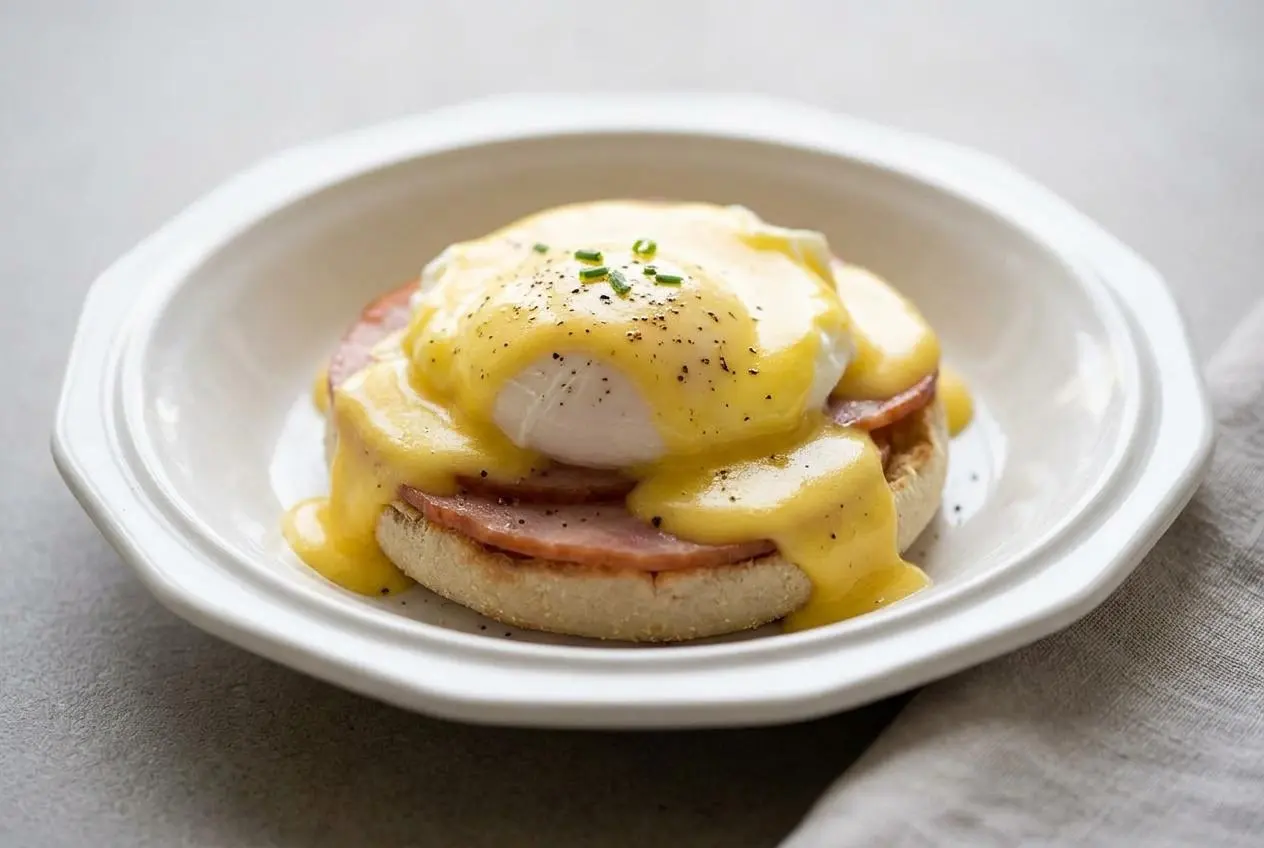
Eggs Benedict is a classic brunch dish made with toasted English muffins, Canadian bacon, poached eggs, and warm hollandaise sauce. This version keeps the method approachable, with clear cues for smooth sauce, tidy eggs, and easy assembly.
Eggs Benedict feels like restaurant brunch, but the parts are very doable once you know what to watch for. The sauce should stay silky, the eggs should hold their shape, and the muffin needs enough toast to support everything.
Get those three things right, and the plate comes together fast. The spoon-coating hollandaise is the fun part.
Warm your plates if you can, because this dish tastes best when every layer stays cozy from first bite to last.
What Is Eggs Benedict?
This American brunch classic is built from four parts: a toasted English muffin half, a slice of Canadian bacon, a poached egg, and hollandaise sauce. Hollandaise is the rich, tangy topping made from egg yolks, butter, acid, and seasoning, and it is what gives the dish its signature creamy finish.
Ingredients for Classic Eggs Benedict
Each ingredient has a real job here, from the rich body of the sauce to the sturdy muffin base and the tender egg that ties everything together.
Hollandaise Sauce
- 4 egg yolks
- 2 teaspoons lemon juice, or lime juice
- 1 Tablespoon heavy whipping cream
- 4 Tablespoons butter
- salt and pepper (to taste)
Poached Eggs
- 4 large eggs
- Vinegar, just a splash
For Assembly
- 2 English muffins
- 4 slices Canadian bacon
Egg yolks and butter create the body of the hollandaise, while lemon or lime keeps it bright instead of heavy. Heavy cream helps the sauce stay smooth. Canadian bacon is the traditional choice because it is lean, already cooked, and naturally fits the round shape of the muffin. English muffins work so well because their nooks catch the sauce instead of letting it slide away.
For the eggs, freshness matters. Fresher whites stay tighter in the water and give you a neater poached shape with less feathery mess.
I always grab the freshest eggs I can for this dish, because the whites hold together much better and make poaching far less fussy.
How to Make Eggs Benedict (Step-by-Step)
This recipe is easiest when you think of it in three parts: make the sauce, poach the eggs, then toast and assemble while everything is still warm.
Step 1: Make the Foolproof Hollandaise Sauce
The key here is gentle heat and slow butter. Go slower than you think you need to. That is what keeps the yolks creamy instead of scrambled.
For the Hollandaise sauce
- Set the butter in a small saucepan over heat and melt it, then whisk the egg yolks in a separate bowl with the lemon or lime juice, heavy whipping cream, and salt and pepper.
The yolk mixture should look smooth and slightly thick before any hot butter goes in. - Drizzle in a small spoonful of the hot butter while whisking, then keep adding the butter a little at a time until the yolks are warmed and loosened.
This tempering step protects the eggs, and the mixture should stay glossy rather than turning grainy. - Pour the tempered mixture back into the saucepan and cook briefly, stirring just until it thickens.
The hollandaise is ready when it coats the back of a spoon, like warm mayonnaise.
If you want a more beginner-friendly option, a stick blender in a tall cup works beautifully. Blend the yolks, juice, cream, and seasoning first, then stream in the melted butter slowly until the sauce turns pale, thick, and smooth. A regular blender does the same job well, while the classic stovetop method gives you the most control if you like a hands-on approach.
For the classic method, tempering simply means warming the yolks gradually with hot butter before they go back on the heat. It sounds fancy, but it is just a slow introduction so the eggs emulsify instead of curdling.
Step 2: Poach the Eggs Perfectly
Poached eggs behave best in calm water. A rolling boil is too rough and tears the whites apart.
To poach the eggs
- Pour about 3 inches of water into a pot, bring it to a boil, then lower the heat until you see a gentle simmer and add a splash of vinegar.
Look for small bubbles coming to the surface, not big bursts of boiling water. - Crack one egg into a small cup, then slide it gently into the simmering water and cook it for 3 to 5 minutes depending on how soft you want the yolk.
The white should set around the yolk and feel firm on the outside while the center stays soft. - Lift the egg out with a slotted spoon and repeat with the remaining eggs.
A finished poached egg should feel delicate but hold together cleanly without ragged strands everywhere.
A splash of vinegar helps the whites set faster and stay more compact. For an even tidier shape, crack each egg into a fine-mesh sieve first and let the thin, watery white fall away before transferring the egg to the cup. It is a small extra step, but it makes a big difference.
If you like a loose, runny yolk, stay near the shorter end of the 3 to 5 minute range. Closer to the middle gives you jammy, and the longer end gives you a more set center. Fridge-cold eggs are especially helpful here because the whites start tighter.
Step 3: Toast and Assemble
Now move quickly so nothing cools down. Warm components make the finished plate feel polished instead of patchy.
To Assemble
- Toast the English muffins and warm the Canadian bacon.
The muffins should be golden and crisp enough to stay sturdy under the sauce. - Place one slice of Canadian bacon on each English muffin half, then set a poached egg on top.
Keep the stack centered so the egg sits securely and the yolk stays intact. - Spoon the hollandaise over each egg and serve right away.
The sauce should drape over the egg in a thick, glossy layer without running off like water.
Tips for Success

These small adjustments prevent the usual Eggs Benedict problems before they start, especially with hollandaise and poached eggs.
Foolproof Blender Hollandaise Method
If hollandaise makes you nervous, use a stick blender or standard blender. It is faster, very forgiving, and especially helpful when you are also trying to poach eggs and toast muffins at the same time.
Start by blending the yolks, citrus juice, cream, and seasoning. Then pour in the melted butter in a very thin stream while blending. If you rush this part, the sauce is more likely to break. If you go slowly, it usually comes together in seconds into a smooth, pale sauce.
A stick blender in a tall jug is my favorite version for home brunch. It keeps the blade fully submerged, which helps the emulsion form quickly and evenly.
For Neater Poached Eggs
Strain each cracked egg through a fine-mesh sieve before poaching. The loose white drops away, leaving the tighter part of the egg behind, which gives you a rounder, cleaner result in the pot.
Also keep the water at a gentle simmer. That calm surface matters more than fancy swirling tricks, especially if you are poaching several eggs. The white should be firm to the touch, but you can still feel the liquid yolk inside.
For Perfectly Toasted Muffins
Toast the English muffins until they are truly golden, not just warmed through. A pale muffin goes soggy fast once the egg and hollandaise land on top.
The crisp edges and deep nooks are part of the appeal here. They catch the sauce and give the rich topping a little structure.
Troubleshooting Common Issues
Most Benedict trouble comes from the sauce, and thankfully it is often fixable instead of ruined.
Hollandaise Sauce Troubleshooting Guide
If the sauce looks off, check the texture first. That usually tells you exactly what went wrong.
| Problem | Likely Cause | How to Fix It |
|---|---|---|
| Broken or split sauce | The butter went in too fast or the heat got too high. | Whisk a fresh egg yolk with 1 teaspoon of hot water in a clean bowl, then very slowly drizzle in the broken sauce while whisking until it comes back together. |
| Too thin | It did not cook quite long enough, or the emulsion never fully formed. | Return it to very low heat and whisk briefly until it thickens, watching closely so it does not curdle. |
| Too thick | It reduced a bit too much or cooled down. | Whisk in a tiny splash of warm water until it loosens to a spoon-coating consistency. |
| Lumpy or grainy | The yolks started to overcook. | Take it off the heat right away and whisk briskly. If needed, press it through a fine sieve to smooth it out. |
Make-Ahead and Storage Guide
If you are making this for guests, the best plan is to prep the parts separately and keep final assembly for the last minute.
Your Brunch Timeline
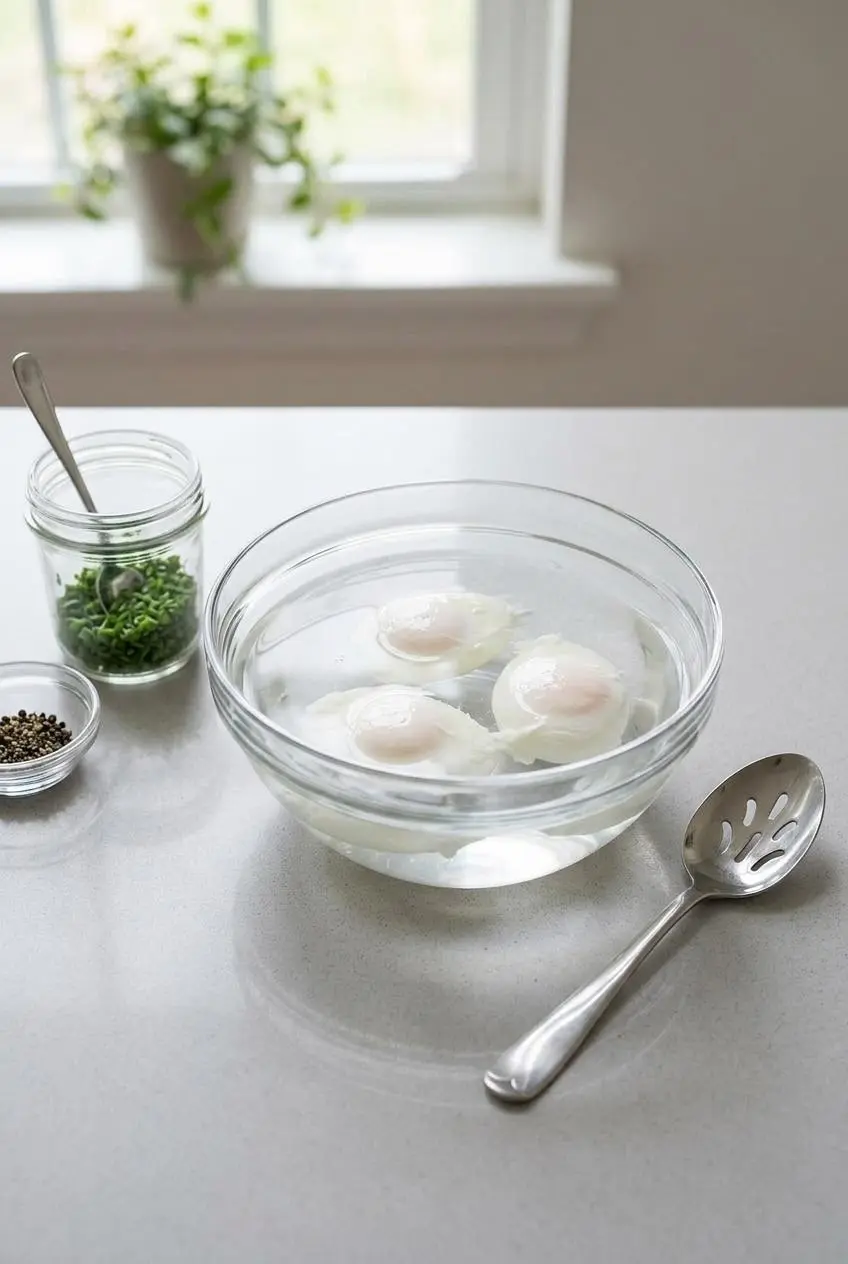
Poached eggs are the easiest part to make ahead. After poaching, move them straight into an ice bath to stop the cooking, then keep them chilled in water in the fridge for up to 2 days. Rewarm them in hot, not boiling, water for 30 to 60 seconds just before serving.
Hollandaise is best fresh, but you can hold it warm for a while in a prewarmed small thermos. You can also keep the bowl over warm water, not simmering water, and stir from time to time so it stays smooth.
Because hollandaise is egg-based, handle leftovers cautiously and keep them chilled promptly. For storage and safe egg handling, follow safe handling, cooking, and storage of shell eggs.
| When | What to Do | Why It Helps |
|---|---|---|
| Earlier prep | Poach the eggs, chill them in ice water, and refrigerate them in water. | This removes the trickiest part from the last minute rush. |
| Before serving | Make the hollandaise and keep it warm in a thermos or over warm water. | The sauce keeps its texture better when it is gently held, not reheated hard. |
| Just before plating | Toast the muffins, warm the Canadian bacon, and reheat the eggs briefly. | Everything lands on the plate hot, which makes the whole dish taste better. |
If you like planning brunch ahead, make-ahead egg muffins are another smart option for the table.
Classic Eggs Benedict Variations
The classic version leads for a reason, but a few well-known swaps fit this format beautifully and still feel true to the spirit of the dish.
| Variation | What to Change | Best For |
|---|---|---|
| Eggs Florentine | Replace the Canadian bacon with cooked, well-drained spinach. | A lighter, classic meat-free option. |
| Eggs Hemingway | Swap in slices of smoked salmon. | A brunch plate with a saltier, more delicate flavor. |
| Vegetarian Benedict | Use ripe tomato, sautéed mushrooms, or avocado instead of meat. | A fresh, modern version with plenty of color. |
Eggs Florentine
For Eggs Florentine, replace the Canadian bacon with a layer of spinach. Cook it first and press out extra moisture so it does not water down the muffin or the sauce.
Eggs Hemingway
This version uses smoked salmon in place of Canadian bacon. Because salmon is already tender and salty, there is no need to cook it hard. Just layer it on while the muffin and egg are warm.
Vegetarian Benedict
Tomato, sautéed mushrooms, and avocado all work well here. Tomato adds acidity, mushrooms bring savory depth, and avocado leans extra creamy. For a more relaxed family-style brunch, some people even use simple scrambled eggs instead of poached eggs, though that is more of a Benedict-inspired plate than the classic version.
What to Serve with Eggs Benedict

Because the plate is rich, the best sides bring crunch or freshness to balance it out.
Crispy breakfast potatoes or hash browns are the classic move if you want something hearty. A lightly dressed green salad also works really well, especially one with a bright vinaigrette. If you want a fresh side with more bite, a simple Greek salad makes a nice contrast to the creamy sauce.
For garnish, fresh chives, dill, parsley, cracked black pepper, or a light dusting of paprika all add color and wake up the richness without stealing the show.
Conclusion
Making Eggs Benedict at home is absolutely manageable when you break it into parts and watch the right cues. Smooth hollandaise, calm poaching water, and well-toasted muffins do most of the heavy lifting.
Once you get the feel for the sauce and the eggs, this dish stops being intimidating and starts being fun. It is a very satisfying brunch to know how to make well.
Frequently Asked Questions
How do you fix hollandaise sauce that has split or broken?
Whisk a fresh egg yolk with 1 teaspoon of hot water in a clean bowl. Then drizzle the broken sauce in very slowly while whisking constantly. If you go gently, it usually comes back into a creamy emulsion.
Can I make poached eggs ahead of time?
Yes. Transfer them to an ice bath right after poaching so they stop cooking. You can keep them chilled in water in the fridge for up to 2 days, then warm them in simmering water for 30 to 60 seconds before serving.
What is the best ham for Eggs Benedict?
Canadian bacon is the traditional choice. It is a lean, cured pork loin that comes in round slices and fits the muffin neatly. If you cannot find it, thick-cut deli ham works well too. It is different from streaky bacon, which is fattier and crispier.
How do I keep my hollandaise sauce from getting cold?
A small prewarmed thermos works surprisingly well and keeps the sauce warm while you finish the eggs and muffins. You can also rest the bowl over warm water and stir now and then. Keep the water warm, not hot, so the sauce stays smooth instead of overcooking.

Eggs Benedict

Equipment
- Small saucepan
- Whisk
- Pot
- Slotted spoon
Ingredients
Hollandaise Sauce
- 4 egg yolks
- 2 teaspoons lemon juice, or lime juice
- 1 Tablespoon heavy whipping cream
- 4 Tablespoons butter
- salt and pepper to taste
Poached Eggs
- 4 large eggs
- Vinegar, just a splash
For Assembly
- 2 English muffins
- 4 slices Canadian bacon
Instructions
For the Hollandaise sauce
- Set the butter in a small saucepan over heat and melt it, then whisk the egg yolks in a separate bowl with the lemon or lime juice, heavy whipping cream, and salt and pepper. The yolk mixture should look smooth and slightly thick before any hot butter goes in.
- Drizzle in a small spoonful of the hot butter while whisking, then keep adding the butter a little at a time until the yolks are warmed and loosened. This tempering step protects the eggs, and the mixture should stay glossy rather than turning grainy.
- Pour the tempered mixture back into the saucepan and cook briefly, stirring just until it thickens. The hollandaise is ready when it coats the back of a spoon, like warm mayonnaise.
To poach the eggs
- Pour about 3 inches of water into a pot, bring it to a boil, then lower the heat until you see a gentle simmer and add a splash of vinegar. Look for small bubbles coming to the surface, not big bursts of boiling water.
- Crack one egg into a small cup, then slide it gently into the simmering water and cook it for 3 to 5 minutes depending on how soft you want the yolk. The white should set around the yolk and feel firm on the outside while the center stays soft.
- Lift the egg out with a slotted spoon and repeat with the remaining eggs. A finished poached egg should feel delicate but hold together cleanly without ragged strands everywhere.
To Assemble
- Toast the English muffins and warm the Canadian bacon. The muffins should be golden and crisp enough to stay sturdy under the sauce.
- Place one slice of Canadian bacon on each English muffin half, then set a poached egg on top. Keep the stack centered so the egg sits securely and the yolk stays intact.
- Spoon the hollandaise over each egg and serve right away. The sauce should drape over the egg in a thick, glossy layer without running off like water.