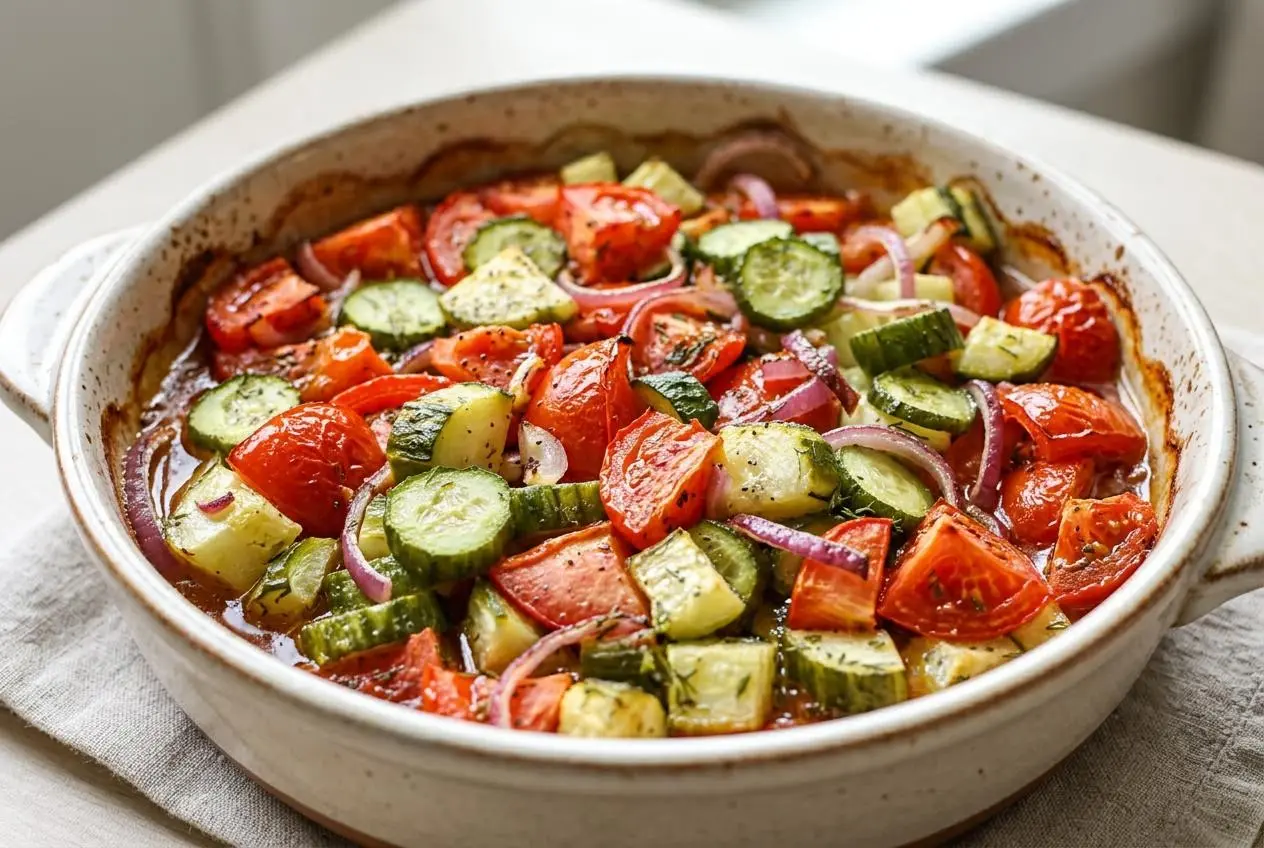
Cucumber tomato salad is a crisp, juicy side dish made with fresh vegetables, olive oil, red wine vinegar, and a short chill so the flavors come together without much work.
This is the kind of simple salad that earns a spot next to almost anything from burgers to grilled fish. Cucumber tomato salad keeps the ingredient list short and the flavor bright, fresh, and tangy.
What makes it especially good is how easy it is to tweak the texture and bite without changing the recipe at all. A few small choices make a big difference.
Slice the onion thinly and keep the cucumber pieces similar in size to the tomatoes so every forkful feels balanced.
Ingredients
You only need a handful of fresh ingredients here, so each one gets a chance to stand out.
- 1 English cucumber sliced
- 2 to 3 large ripe tomatoes diced
- ½ medium red onion thinly sliced
- 1 tablespoon fresh herbs any combination of parsley, basil and/or dill, optional
- 2 tablespoons olive oil
- 1 tablespoon red wine vinegar
- salt and black pepper to taste
Ingredient notes that matter
English cucumber is ideal for this salad because the skin is tender and the seeds are small, so it stays crisp without much fuss. If you use a standard waxy cucumber instead, peeling and seeding usually gives you a better texture and a cleaner flavor.
Large ripe tomatoes give this salad its classic juicy feel, but Roma tomatoes are great when you want a firmer, less watery result. Cherry tomatoes also work well because they hold their shape nicely and bring a sweeter pop in each bite.
Kitchen note
I look for tomatoes that feel heavy for their size and smell a little tomato-y at the stem end. If the red onion tastes too sharp, very thin slices make a huge difference, and dill is my favorite herb here when I want the salad to taste extra fresh.
How to Make cucumber tomato salad
This method is wonderfully simple, and the short chill time does a lot of the heavy lifting for flavor.
- Combine all ingredients in a bowl and toss well. Make sure the olive oil and red wine vinegar coat everything evenly, and break up any clumps of onion as you toss so the sharp flavor spreads out instead of landing in one big bite. I like to keep tossing until the tomatoes look glossy and the herbs, if using, are tucked throughout the bowl.
- Refrigerate at least 20 minutes before serving. That rest gives the cucumber, tomatoes, onion, and dressing time to mingle so the salad tastes brighter and more balanced. When you pull it from the fridge, give it one more gentle toss to redistribute the juices.
Optional flavor tip
If you prefer a milder onion bite, you can let the sliced red onion sit in the vinegar with a little salt before mixing the salad. After a short rest, the onion softens slightly, turns brighter in color, and tastes less harsh. Totally optional, but very nice.
How to keep the salad from getting watery
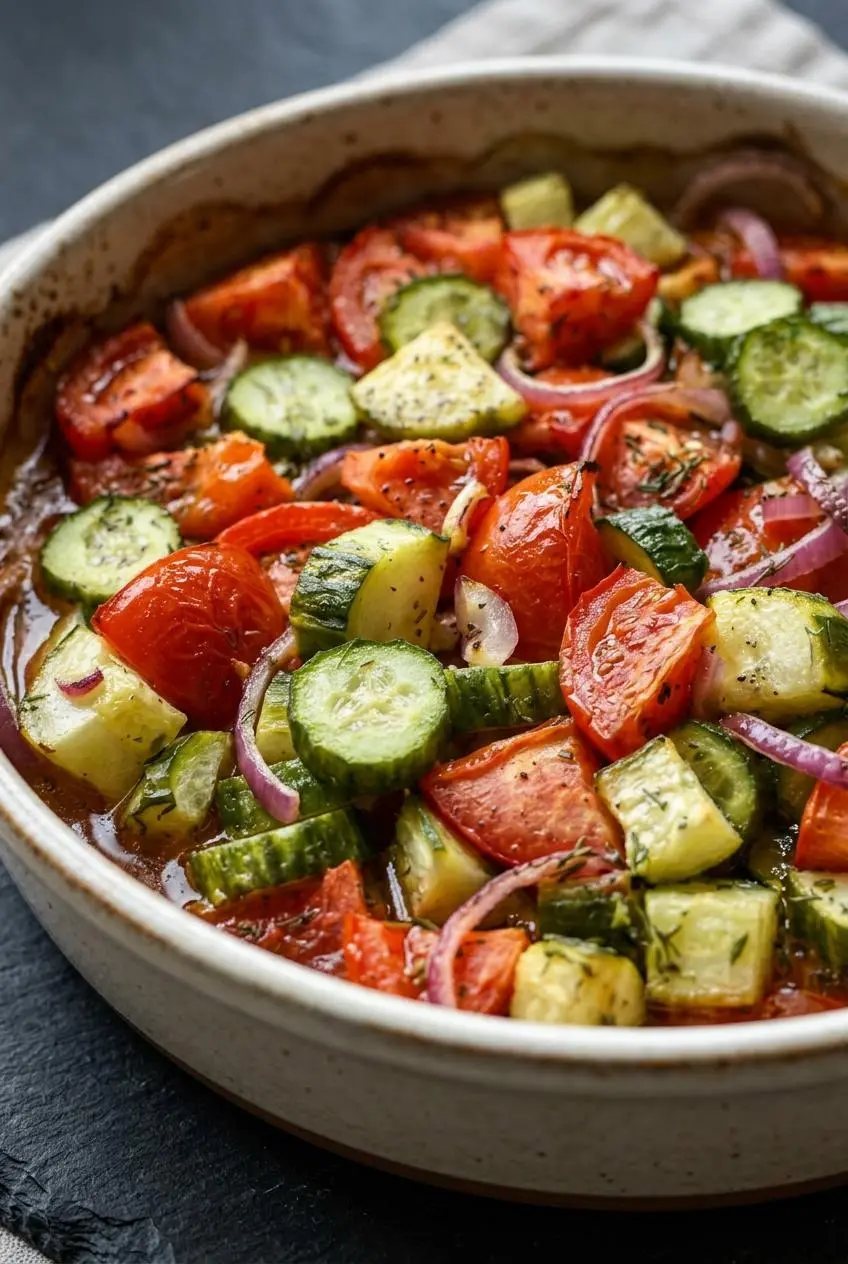
This is the biggest issue home cooks run into, and the fix is simple once you know what causes it. Cucumbers and tomatoes naturally release liquid as they sit, especially after they meet salt and dressing.
If you want the crispest texture, toss the cut cucumbers and tomatoes with a little salt first, let them sit briefly, then drain off the extra liquid before adding the olive oil and herbs. You will usually see a surprising amount of juice collect, and that is exactly what would have ended up watering down the bowl.
Another smart move is timing. Dress the salad close enough to serving that it still tastes lively and crisp, not sloshy and tired.
Why extra liquid happens
Salt pulls moisture out of high-water vegetables. Tomatoes and cucumbers are full of it, so once they are cut and salted, they start shedding juice into the bowl. That is useful for flavor, but if too much liquid stays in the salad, the dressing gets diluted and the vegetables soften faster.
Olive oil also works better after some of that moisture is out of the way. Otherwise the salad can taste more watery than tangy, even if you seasoned it well.
Best timing for serving
This salad tastes best after its short chill, when the vegetables are cold and the dressing has had time to settle in. After that, the texture gradually softens. For the freshest bite, serve it the same day and avoid mixing it too far ahead if you want maximum crunch.
Best ingredients and dressing balance
A salad this simple depends on good produce and a dressing ratio that tastes bright without washing everything out. The balance in this recipe works well because the vegetables already bring plenty of natural juice.
The dressing uses 2 tablespoons olive oil to 1 tablespoon red wine vinegar, which lands close to a gentle vinaigrette. That slightly sharper balance suits a high-water salad like this one because the tomato and cucumber juices mellow the vinegar once everything sits together.
Red onion adds bite, olive oil rounds things out, and the vinegar keeps the salad from tasting flat. Fresh herbs are optional, but they make the whole bowl smell and taste more alive.
Which tomatoes taste best
Large ripe tomatoes are the classic choice here because they give you that juicy, summery texture people expect. The trade-off is that they release more liquid, especially if they are very ripe.
Roma tomatoes are meatier, less seedy, and usually a little less messy in the bowl, so they are great when you want cleaner slices and less runoff. Cherry tomatoes are sweeter and hold their shape especially well, which makes them handy for picnics or potlucks where the salad may sit a bit longer.
Do you need to peel the cucumber
Usually, no. English cucumber has thin skin and mild flavor, so you can slice it and move on. If you are using a thicker-skinned waxy cucumber, peeling it and scooping out the larger seeds can help avoid bitterness and extra water.
Make ahead, storage, and scaling for a crowd
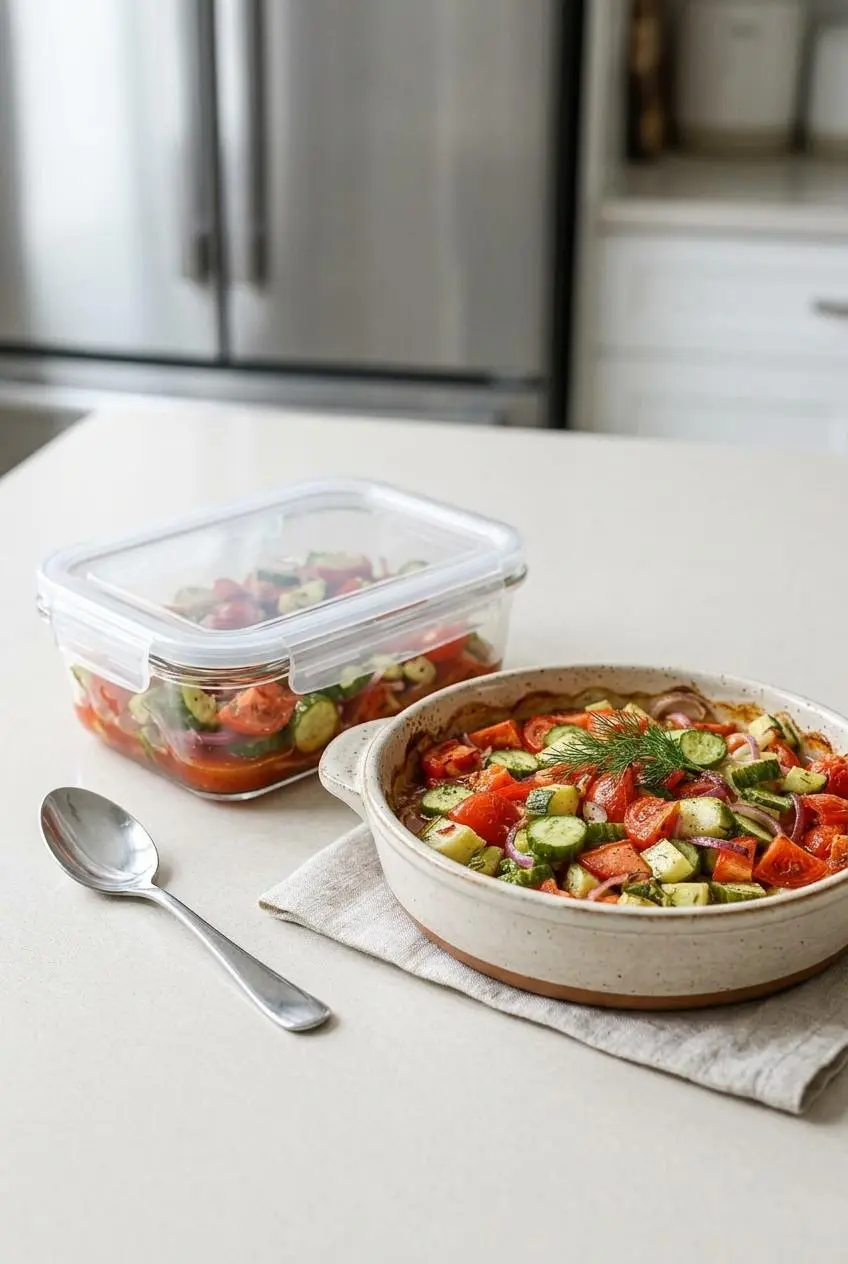
This is an easy make-ahead salad if you keep the moisture under control. The best plan is to prep the vegetables ahead and combine them close to serving time.
For leftovers, texture matters just as much as safety. Day 1 is crispest and brightest. By Day 2, the salad is still usable, but the cucumbers soften, the tomatoes slump a bit, and the bowl collects more liquid. If you want to hold leftovers safely in the fridge, follow university extension guidance for refrigerated fresh produce and salads.
For a crowd, scale the ingredients up in the same general proportion and use a wide bowl instead of a deep one if you can. Bigger batches trap more liquid at the bottom, so tossing gently and draining excess juice before serving can help keep the top from looking perfect while the bottom turns soupy.
How long it lasts in the fridge
Quality is best on the first day. On the second day, the flavor is still pleasant, but the vegetables lose some snap and the dressing tastes more diluted. If you know you will have leftovers, storing the cut vegetables and dressing separately gives you a much better result than storing the fully mixed salad.
Best make-ahead plan for parties
For parties, chop the cucumber, tomatoes, and onion ahead, then refrigerate them separately or together without the dressing. Mix in the oil, vinegar, salt, pepper, and herbs shortly before serving so the salad stays crisp and vibrant. If you want the onion less punchy, that optional vinegar soak is especially helpful for party servings.
Easy variations and serving ideas
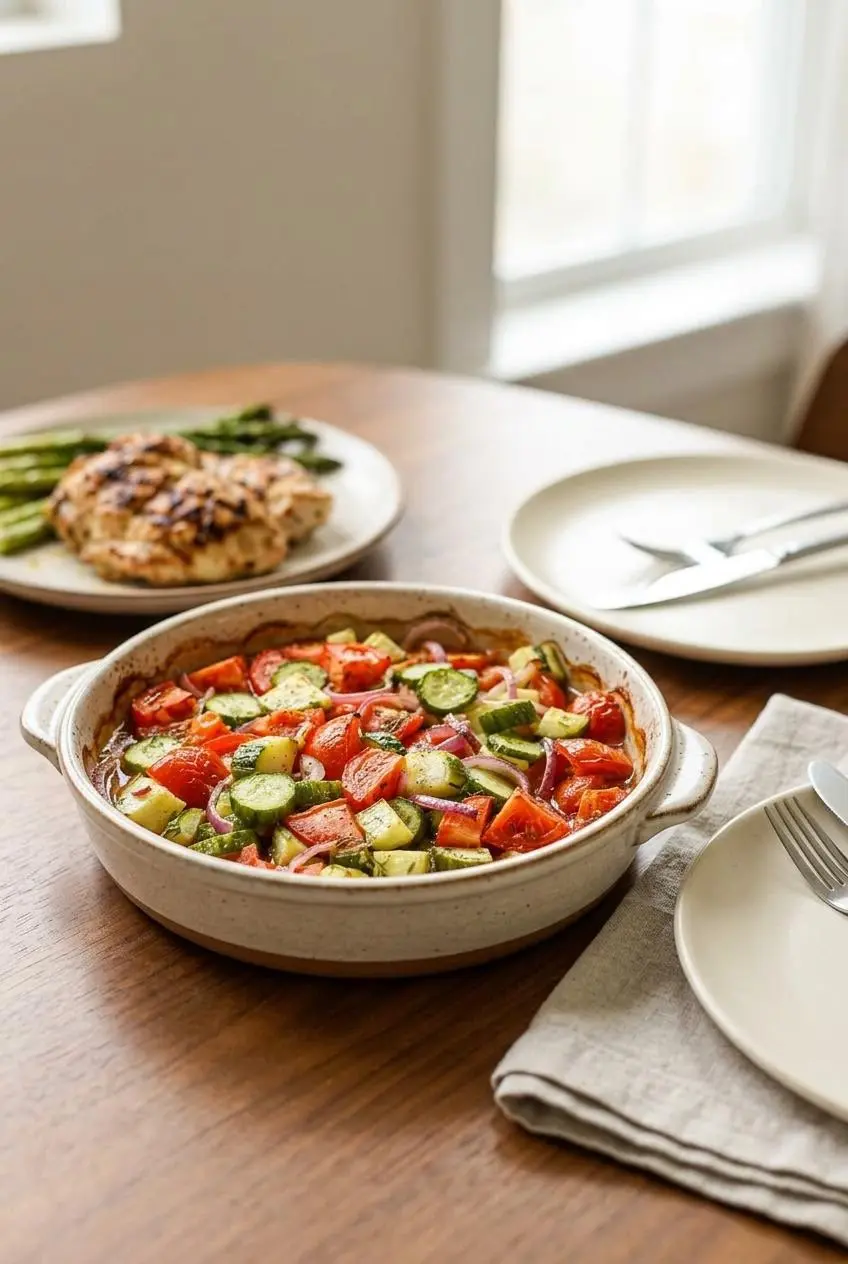
This salad is easy to customize without losing its fresh, simple character. If you want a creamy version, stir a little mayonnaise or Greek yogurt into the dressing just before serving for a softer, richer finish. If that is your style, you might also like this creamy cucumber salad.
Feta cheese, fresh mozzarella, or goat cheese all add a creamy, tangy contrast. Avocado makes it more substantial and silky, while bell peppers and Kalamata olives push it in a Mediterranean direction. Add cubes of stale bread and you have a Panzanella-inspired spin that soaks up all those good juices instead of letting them puddle in the bowl.
Some home cooks also know a similar fresh chopped salad as Kachumber. That version leans more on finely chopped vegetables and a different flavor profile, but the same love of crisp, juicy produce is there.
What to serve with it
Serve it with grilled chicken, steak, burgers, fish, kabobs, pork tenderloin, or pizza. It is also right at home at picnics and potlucks because it is cool, bright, and cuts through richer foods beautifully.
Questions home cooks ask most
A lot of home cooks ask the same smart questions here: why the salad gets watery, whether bitter cucumber skin is the culprit, how far ahead they can prep it, and whether mayonnaise belongs in the dressing. The short answer is yes, mayo can work as a creamy variation, thick cucumber skin can taste bitter, and the best make-ahead strategy is keeping the dressing separate until close to serving.
Cucumber Tomato Salad

Equipment
- Mixing Bowl
- Knife
- Cutting board
Ingredients
- 1 English cucumber sliced
- 2 to 3 large ripe tomatoes diced
- ½ medium red onion thinly sliced
- 1 tablespoon fresh herbs any combination of parsley, basil and/or dill, optional
- 2 tablespoons olive oil
- 1 tablespoon red wine vinegar
- salt and black pepper to taste
Instructions
- Add all ingredients to a large bowl and toss until everything is evenly coated.
- Chill for at least 20 minutes before serving, then toss gently again and serve.
Notes
Conclusion
This salad earns its keep by being crisp, juicy, tangy, and almost absurdly easy to pull together. The biggest win is managing moisture so the vegetables stay fresh-tasting instead of watered down.
If you remember one thing, let it be this: salt and timing matter. And if raw onion tends to boss the whole bowl around, that optional vinegar soak is a very good trick to keep in your back pocket.
FAQ
How do you keep cucumber tomato salad from getting watery?
Salt is the main reason liquid shows up, because it pulls moisture from the cucumbers and tomatoes. For a crisper salad, let the vegetables release some of that liquid first, drain it off, then add the oil and herbs so the dressing stays bright instead of diluted.
What is the best dressing for a simple cucumber and tomato salad?
A light olive oil vinaigrette is the best match for this recipe. The red wine vinegar adds enough tang to wake up the tomatoes and cucumber, while the olive oil keeps the salad rounded and smooth. If you want a richer variation, a little mayonnaise or Greek yogurt works well added just before serving.
Can I make cucumber tomato salad the day before?
Yes, but the best quality comes from prepping the components ahead and mixing them close to serving time. If you fully assemble it the day before, expect softer cucumbers, more liquid in the bowl, and a less punchy dressing by the next day.
What kind of tomatoes are best for this salad?
Ripe tomatoes matter more than any single variety. Large ripe tomatoes give the most classic juicy texture, Roma tomatoes are firmer and less watery, and cherry tomatoes hold their shape especially well while adding a sweeter bite.
Why does my cucumber salad taste bitter?
The skin is usually the reason. Thick, waxy cucumbers can taste bitter and have tougher seeds, so peeling them and removing the larger seeds helps. English cucumber is usually milder, which is why it works so well here.
Can I add mayonnaise to cucumber tomato salad?
Absolutely. It turns the salad in a creamier direction, closer to a deli-style cucumber salad, and softens the sharp edge of the vinegar. Add it right before serving so the texture stays as fresh as possible.