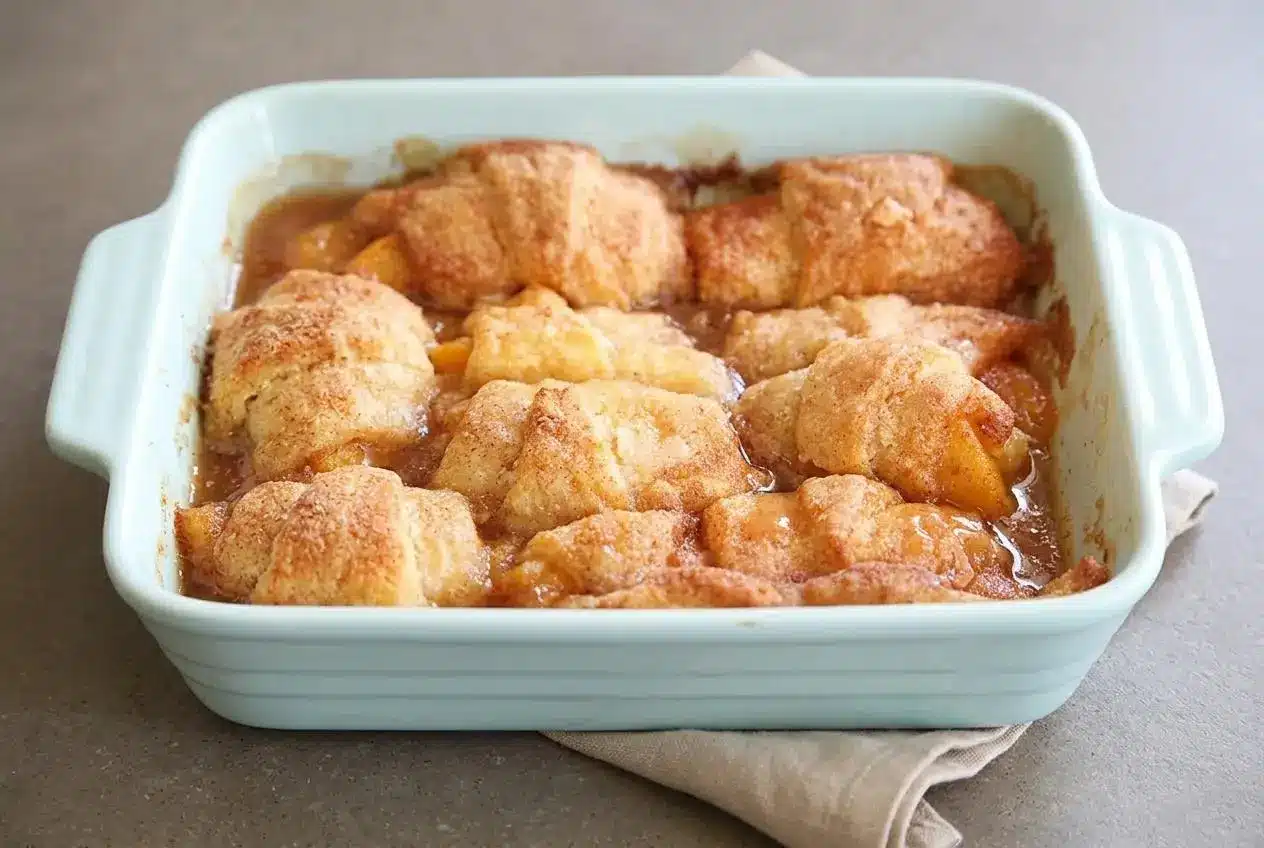
Make crescent roll peach dumplings by wrapping peach wedges in refrigerated crescent dough, adding a cinnamon butter glaze, and baking with lemon-lime soda poured around the pastries. Bake at 350°F for 35 to 40 minutes, until the tops turn golden and the syrup bubbles.
These crescent roll peach dumplings pair buttery pastry with a tender peach center and sweet cinnamon sauce. As they bake, the kitchen fills with warm spice while the glaze and soda become a bubbling syrup around each roll.
You get eight dumplings with about 10 minutes of prep, without making pastry from scratch. The contrast between the golden tops and saucy bottoms makes this dessert especially good served warm. The pouring trick makes the difference.
Dry the peach wedges before wrapping them, and aim the soda between the dumplings rather than over their tops.
Essential Ingredients and Their Roles
Peach brings juicy sweetness, crescent dough forms the pastry layers, and butter adds richness. Sugar and cinnamon flavor the glaze, flour gives the sauce body, and lemon-lime soda supplies liquid and a bright citrus note.
- 1 large peach
- 1 (8-ounce) 8-count tube of refrigerated crescent rolls
- 1/2 cup butter, melted
- 3/4 cup sugar
- 1/2 teaspoon cinnamon
- 1 1/2 tablespoons all-purpose flour
- 3/4 cup lemon-lime soda
Choose the tube with eight perforated crescent triangles. Standard refrigerated crescent rolls, including Pillsbury, suit this method; separate them at the perforations without pulling the dough thin. Each triangle needs enough structure to hold its peach wedge as it bakes.
The butter carries the cinnamon flavor and helps the exposed pastry brown. Granulated sugar gives the sauce its sweetness, while flour thickens the liquid during baking. Keep the flour in the glaze rather than dusting it onto the fruit.
I prefer to gently unroll the dough on parchment and lift each triangle along its perforations, rather than tugging at the pointed end.
Fresh Versus Canned Peaches
A firm-ripe fresh peach gives you wedges that hold their shape but soften in the oven. Look for fruit that yields slightly to gentle pressure. A peach that feels mushy can release extra juice and lose its shape inside the dough.
Canned peach dumplings are a useful year-round option. Choose slices that resemble the size of a fresh peach wedge, drain off the packing liquid, and spread them on paper towels. Blot the tops gently with another towel before rolling. Don’t carry the canning syrup into the baking dish.
Frozen peach slices can work too. Let them thaw completely, drain the released liquid, and blot away surface moisture. Wrapping icy or dripping slices makes it harder for the dough next to the fruit to bake through evenly.
The Chemistry of Butter, Sugar, and Soda
The soda supplies the liquid that turns the butter-sugar coating into a pan sauce. As the dish heats, sugar dissolves, flour thickens the surrounding liquid, and some moisture evaporates. The result is a rich, caramel-style syrup with cinnamon and citrus flavor.
Carbonation isn’t what breaks down the sugar or creates caramel. The soda loses its fizz as it heats; its liquid and sweetness matter more here. Flour adds body, but it doesn’t guarantee that every trace of butter stays blended into the syrup.
Use regular sweetened lemon-lime soda, such as Sprite or 7UP, for the intended balance. Diet soda changes the sugar contribution and may produce a different sauce. The unbaked glaze may look grainy, so don’t keep stirring in pursuit of a perfectly smooth mixture.
How to Make Crescent Roll Peach Dumplings
Use an 8×8-inch glass baking dish so the dumplings and sauce sit at the intended depth. You’ll also need a small bowl for the glaze. Allow about 10 minutes for prep and 35 to 40 minutes for baking.
- Set the oven to 350°F, coat an 8×8-inch glass baking dish lightly with nonstick cooking spray, and peel, pit, and cut the peach into eight wedges.
Aim for similar-sized wedges so the filled rolls bake evenly. - Separate the unrolled crescent dough into eight triangles, wrap a peach wedge from the broad edge toward the point of each triangle, and arrange the rolls seam-side down in the prepared dish.
The dough should cradle the fruit without stretching thin or tearing. - Stir the melted butter, sugar, cinnamon, and flour together in a small bowl just until combined, then distribute the glaze over all eight rolls with a spoon.
A slightly grainy coating is expected, with cinnamon and flour mixed throughout. - Direct the soda into the gaps between the rolls, keeping it off the pastry tops, and bake for 35 to 40 minutes until golden brown.
Look for well-colored tops and bubbling syrup around the perimeter, rather than relying on aroma alone.
Serve the dumplings warm with fresh whipped cream or vanilla ice cream. A spoonful of pan syrup underneath each serving gives you plenty of sauce without soaking the crisp top.
Keys to Avoiding Gummy or Soggy Dough
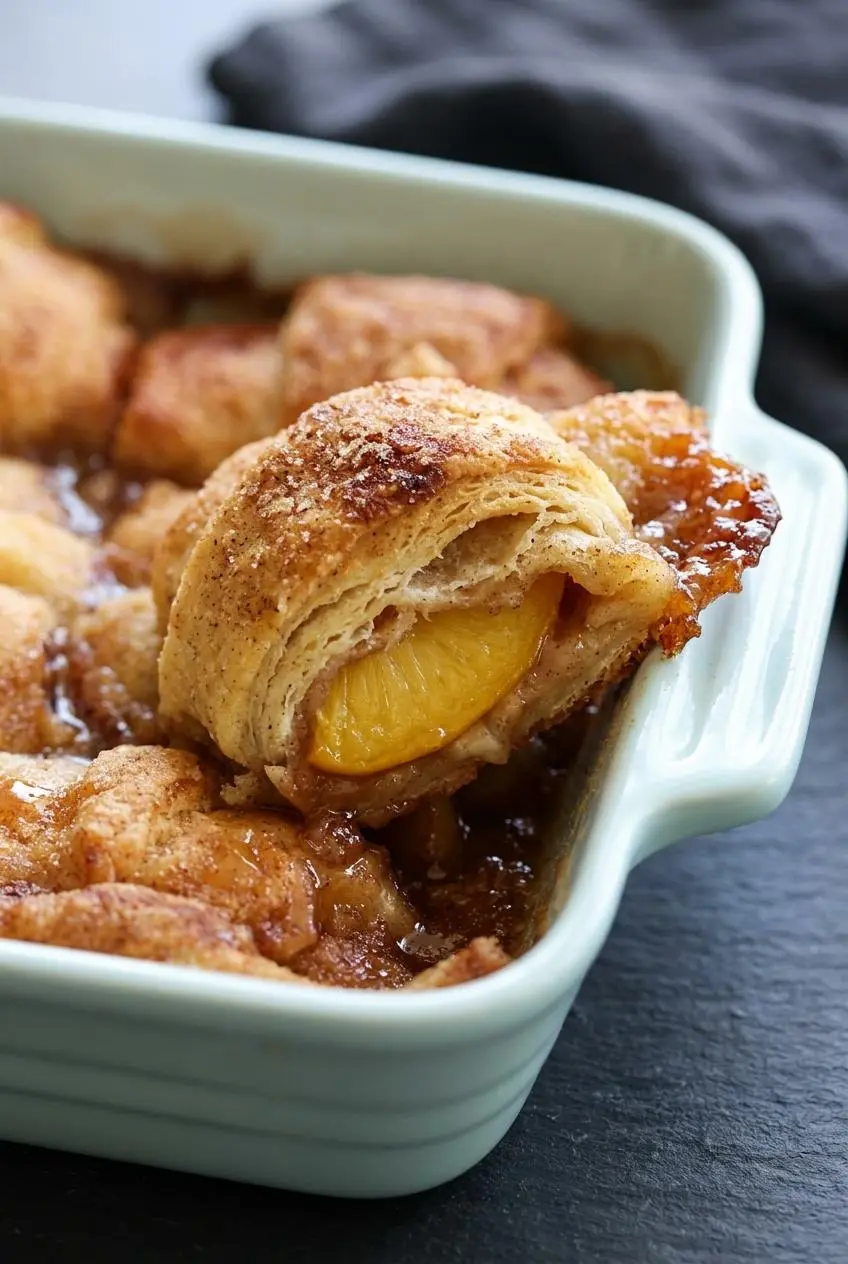
Expect tender, syrup-soaked bottoms rather than an all-over crisp shell. That texture is part of this dessert. Dense, sticky dough wrapped around the peach, however, suggests excess moisture or insufficient baking.
- Pale pastry: The dumplings may need more baking time within the stated range; check for an evenly golden surface before removing the dish.
- Sticky inner layers: Wet fruit or tightly compressed dough can leave a gummy band around the peach; dry the wedges and roll without squeezing the layers together.
- Thin sauce: Extra fruit liquid or omitted flour can dilute the syrup; drain substitute fruit thoroughly and include the measured flour in the glaze.
- Rolls opening up: An exposed seam can lift as the dough expands; tuck the pointed end underneath each dumpling.
Moisture Control and Fruit Prep
Remove surface moisture without crushing the fruit. The peach should still be juicy inside; you’re preventing puddles from going into the dough.
- Fresh peaches: Use firm-ripe fruit, wash and dry it before peeling, and blot any particularly wet cut surfaces.
- Canned peaches: Drain in a strainer, spread the slices apart on paper towels, and blot both sides gently.
- Frozen peaches: After thawing completely, pour away released juice and blot until the slices no longer drip.
- Very soft fruit: Choose sturdier slices instead of trying to squeeze moisture from mushy ones.
Pan Placement and Oven Heat Distribution
Stick with the specified glass dish for the most consistent interpretation of this method. Its clear sides also help you check the pastry near the bottom. Glass doesn’t automatically make a crisper base than metal, and this soda-baked dessert will remain moist underneath.
Dark metal pans can brown the outside faster, while thick ceramic dishes may heat differently. Changing materials can shift when the tops and lower layers finish, so don’t assume identical results from every pan.
The center rack is a sensible starting position. If your oven routinely browns tops too quickly, a slightly lower rack may help balance the heat reaching the dish. Avoid placing it directly on the oven floor. Check both pastry color and bubbling sauce, since a brown top alone doesn’t prove the wrapped layers are done.
Make-Ahead, Storage, and Reheating Instructions
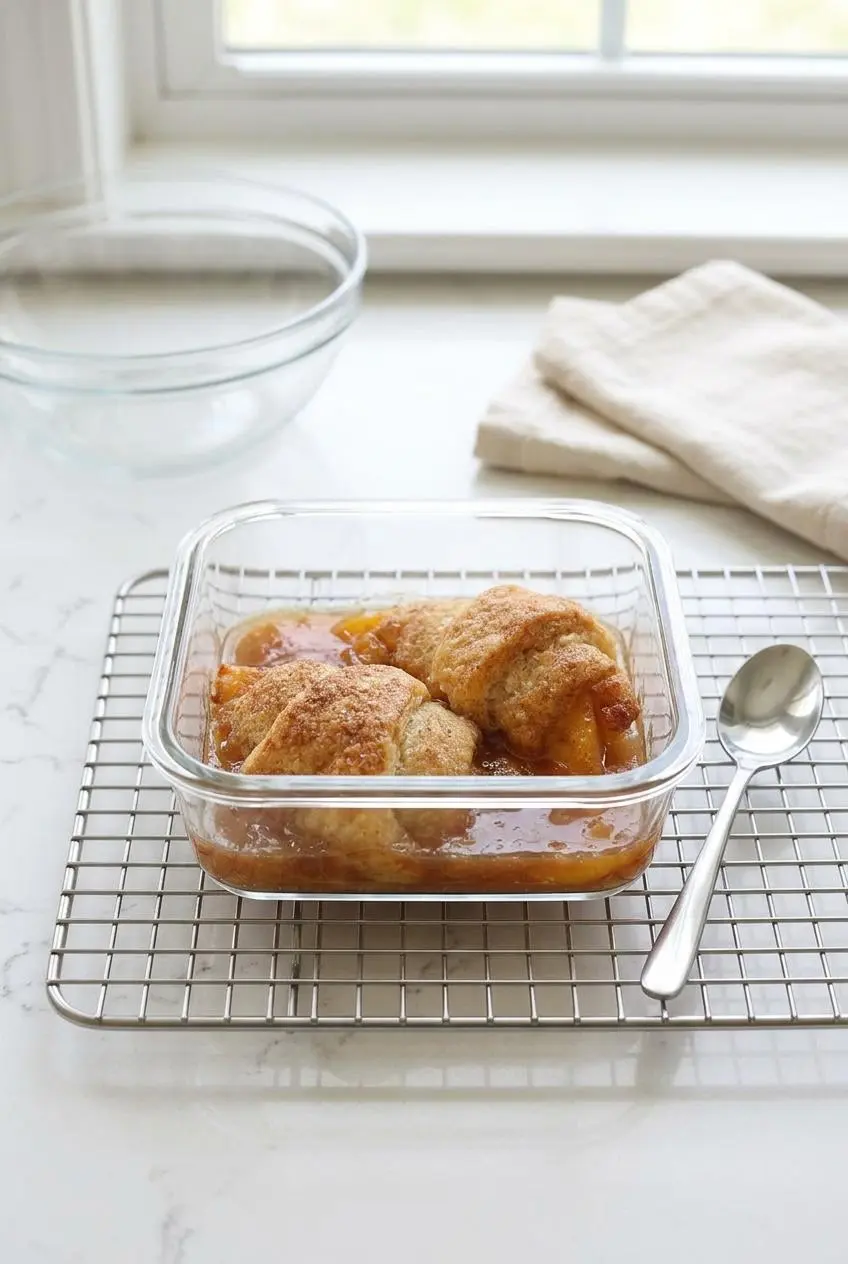
For the best pastry texture, plan to roll, glaze, and bake the dumplings together rather than leaving assembled dough sitting in liquid. You can organize the baking dish, bowl, and measured dry ingredients before starting, then handle the fruit and dough when you’re ready to bake.
Refrigerate leftover dumplings promptly in a shallow, covered container rather than leaving the pan on the counter. Keep the syrup with the dumplings, but avoid pouring it over their tops. Store whipped cream or ice cream separately.
To reheat, transfer a portion to an oven-safe dish with its syrup and warm it gently in the oven until heated through. Leave the pastry exposed so the top can dry and regain some crispness. If it starts browning before the center warms, shield the top loosely with foil.
The microwave is convenient, but it softens the crust and can make the dough chewy. An oven gives a better chance of restoring the contrast between the flaky top and tender center, though leftovers won’t have quite the same texture as freshly baked dumplings.
Delicious Serving Suggestions and Variations
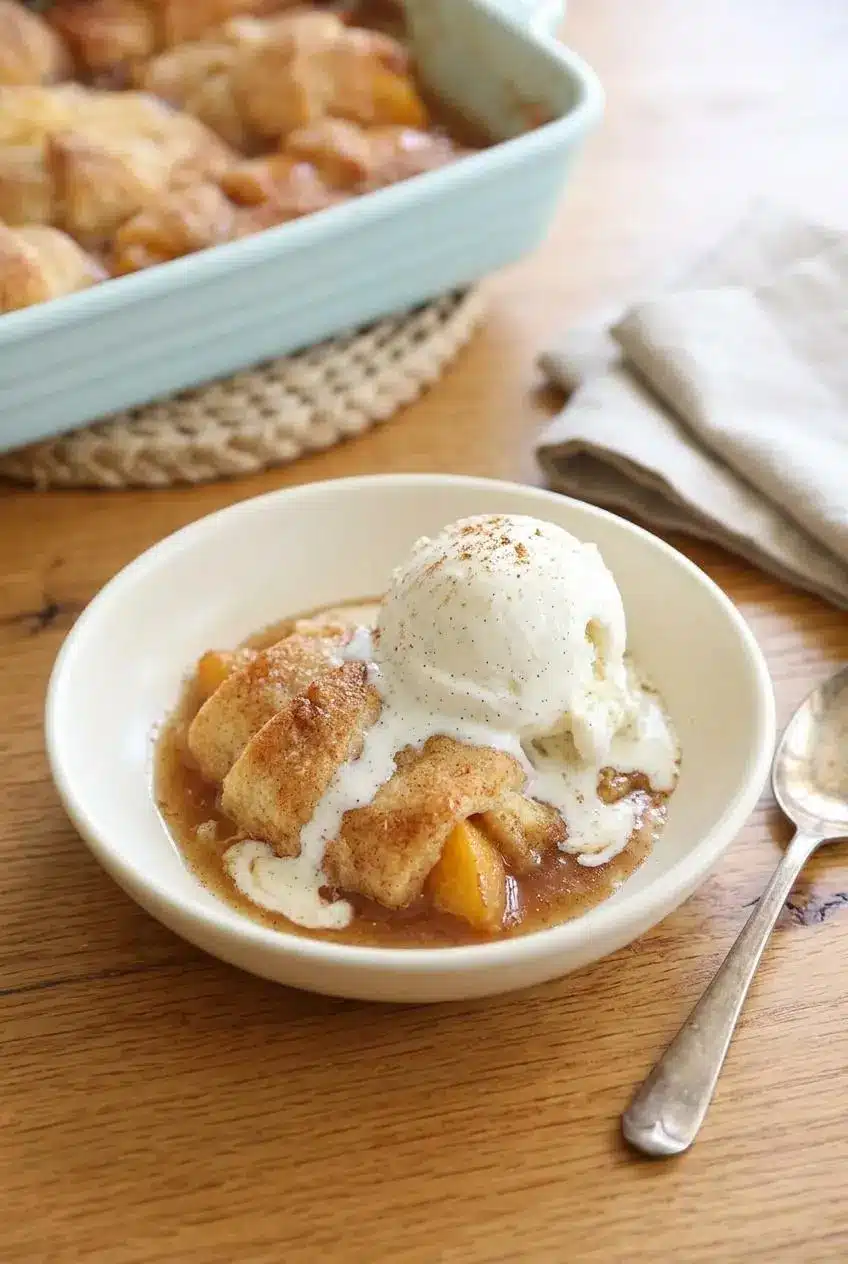
Keep any flavor changes optional and separate from the ingredient list above. The peach, cinnamon, and buttery syrup already work together, so choose a variation that adds contrast rather than competing with the fruit.
Flavor Variations and Soda Swaps
- Ginger ale: Use it as an optional soda swap for a gentle ginger note alongside the cinnamon.
- Cream soda: Try it for a rounder, vanilla-like flavor with less citrus brightness.
- Mountain Dew: This citrus soda offers another optional direction, though its flavor and sweetness differ from lemon-lime soda.
- Light brown sugar: An optional swap for granulated sugar adds molasses flavor and a deeper-colored sauce.
- Lemon zest: Stir it into the glaze for fresh citrus aroma that balances the dessert’s rich sweetness.
For spiced pecan dumplings, scatter chopped toasted pecans over the pastries toward the end of baking and watch that they don’t overbrown. Their crunch contrasts nicely with the soft peach center. If you enjoy that nutty pastry combination, pecan pie crescent rolls offer another dessert using refrigerated dough.
Warm Toppings and Pairings
Vanilla bean ice cream is especially good with the warm cinnamon syrup. Spoon the dumpling and sauce into a shallow bowl, then add the ice cream alongside so some pastry stays exposed.
For a lighter topping, use lightly sweetened whipped cream with a dusting of cinnamon. Keep its sweetness restrained because the dumplings already bring plenty. Add it at serving time so it doesn’t disappear into the warm sauce before reaching the table.
Conclusion
Golden crescent pastry, tender peaches, and cinnamon butter syrup make this a comforting dessert with very little hands-on work. Dry fruit, intact dough triangles, and careful soda pouring help each dumpling bake with the right texture.
Let the pan rest briefly after baking so the bubbling sauce settles and gains a little body. Serve warm, keep the crisp tops above the syrup, and add your favorite creamy topping at the table.
Frequently Asked Questions
Can I Use Canned or Frozen Peaches for These Dumplings?
Yes. Drain canned slices thoroughly and blot both sides with paper towels. For frozen slices, let them thaw completely, drain the released juice, and blot them before wrapping so excess liquid doesn’t soak the dough.
Why Do You Pour Soda Into the Baking Dish?
The soda supplies liquid and sweetness for the pan syrup. It combines with the butter glaze as the flour thickens the sauce during baking. Pour it between the dumplings so their tops can brown without getting drenched.
Can I Assemble Crescent Roll Peach Dumplings Ahead of Time?
For the best texture, assemble them when you’re ready to bake rather than planning on holding the filled rolls. Organize your equipment and measured dry ingredients ahead, then roll the fruit, add the glaze and soda, and bake.
How Should Leftover Peach Dumplings Be Reheated?
Warm them in an oven-safe dish with their syrup, leaving the pastry tops exposed. Shield loosely with foil if they brown before the centers heat through. Microwave reheating works for convenience, but it won’t restore a crisp top.
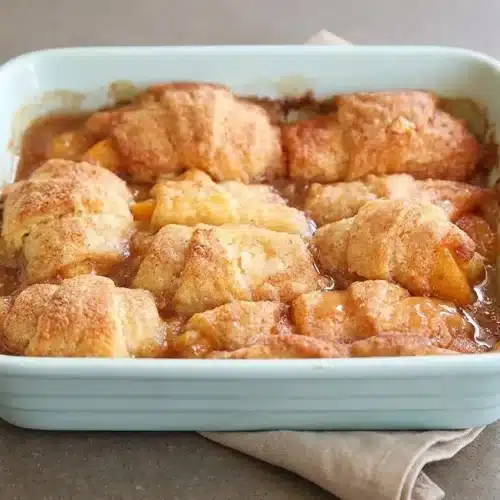
Crescent Roll Peach Dumplings

Equipment
- 8×8-inch glass baking dish
- Small bowl
Ingredients
- 1 large peach
- 1 (8-ounce) 8-count tube refrigerated crescent rolls
- 1/2 cup butter melted
- 3/4 cup sugar
- 1/2 teaspoon cinnamon
- 1 1/2 tablespoons all-purpose flour
- 3/4 cup lemon-lime soda
Instructions
- Set the oven to 350°F, coat an 8×8-inch glass baking dish lightly with nonstick cooking spray, and peel, pit, and cut the peach into eight wedges. Aim for similar-sized wedges so the filled rolls bake evenly.
- Separate the unrolled crescent dough into eight triangles, wrap a peach wedge from the broad edge toward the point of each triangle, and arrange the rolls seam-side down in the prepared dish. The dough should cradle the fruit without stretching thin or tearing.
- Stir the melted butter, sugar, cinnamon, and flour together in a small bowl just until combined, then distribute the glaze over all eight rolls with a spoon. A slightly grainy coating is expected, with cinnamon and flour mixed throughout.
- Direct the soda into the gaps between the rolls, keeping it off the pastry tops, and bake for 35 to 40 minutes until golden brown. Look for well-colored tops and bubbling syrup around the perimeter, rather than relying on aroma alone.