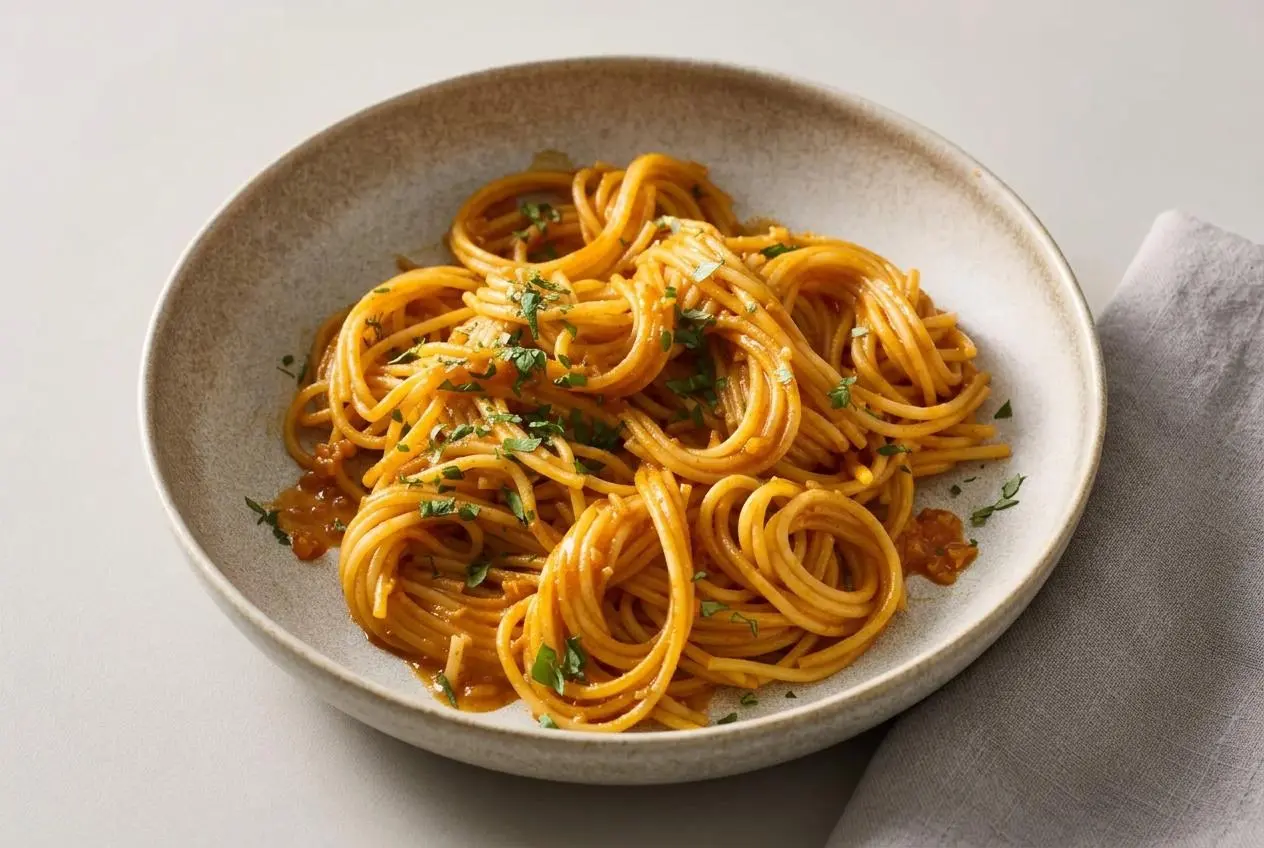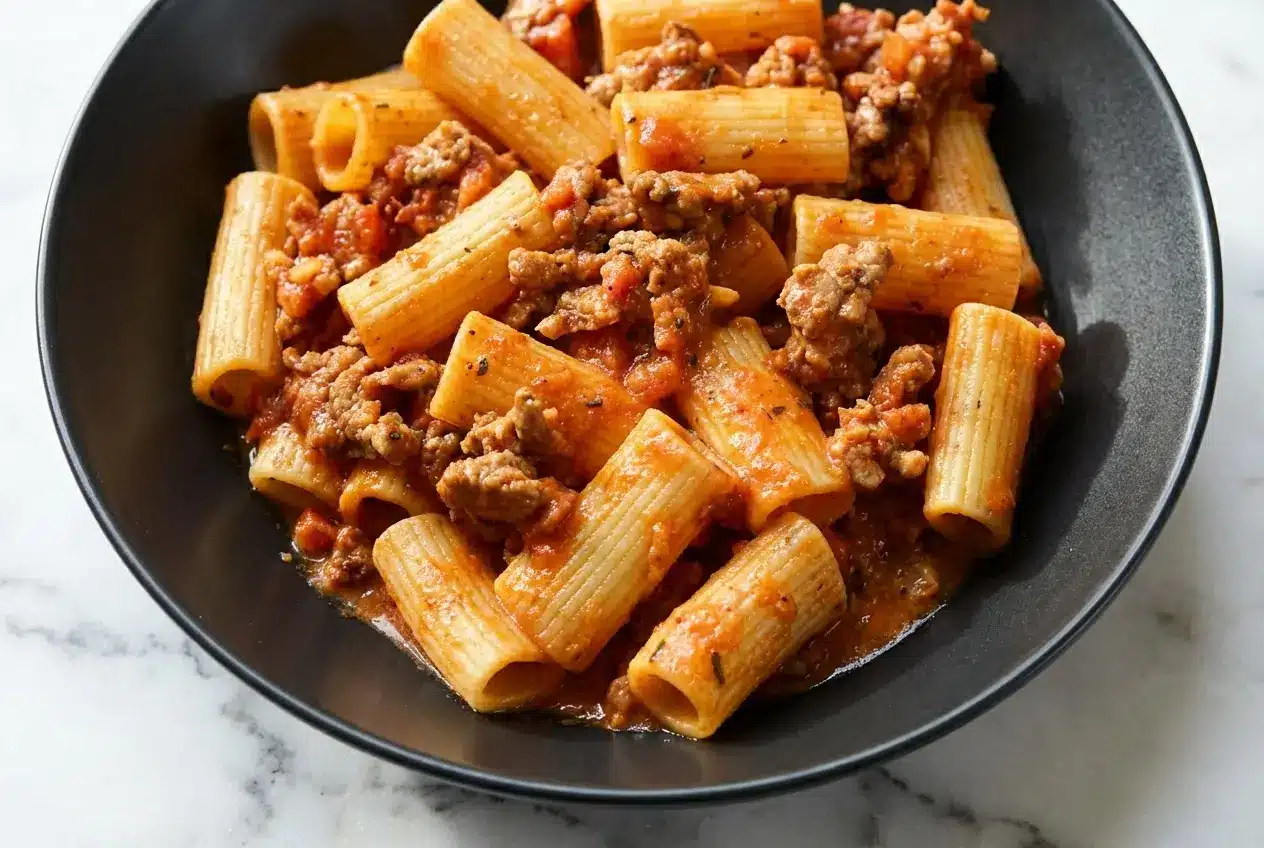
Some nights call for a dinner that feels a little luxurious without asking much from you, and that is exactly where this creamy Italian sausage pasta shines. In my kitchen, it is the kind of weeknight dinner that smells like you have been cooking all afternoon, even though it comes together fast.
The sauce is rich, velvety, savory, and gently spiced, with enough body to rival a restaurant plate. If you love comfort food that tastes layered and polished, this one is worth putting on repeat.
Why You’ll Love This Recipe
Big flavor, fast: This is the sort of pasta I lean on when I want something deeply comforting in under an hour. It gives you the richness of a slow-simmered sauce, but it still fits a busy evening.
The secret twist: In my kitchen, blooming the tomato paste and dried herbs in the rendered fat until everything turns a deep rust color makes a huge difference. That quick step wakes up the tomato paste, coaxes more flavor from the herbs, and builds a stronger base before the liquid ever goes in.
Balanced, not heavy: A splash of dry white wine, 1/4 cup is all you need, lifts the whole pot when you deglaze. It cuts through the richness of the Italian sausage and heavy cream, so the final sauce tastes rounded and bright instead of flat.
Comfort food with polish: Between the beef stock, pasta water, and creamy finish, you get a silky emulsion that clings beautifully to every noodle. It feels special enough for company, but easy enough for a Tuesday.
Ingredients and Substitutions
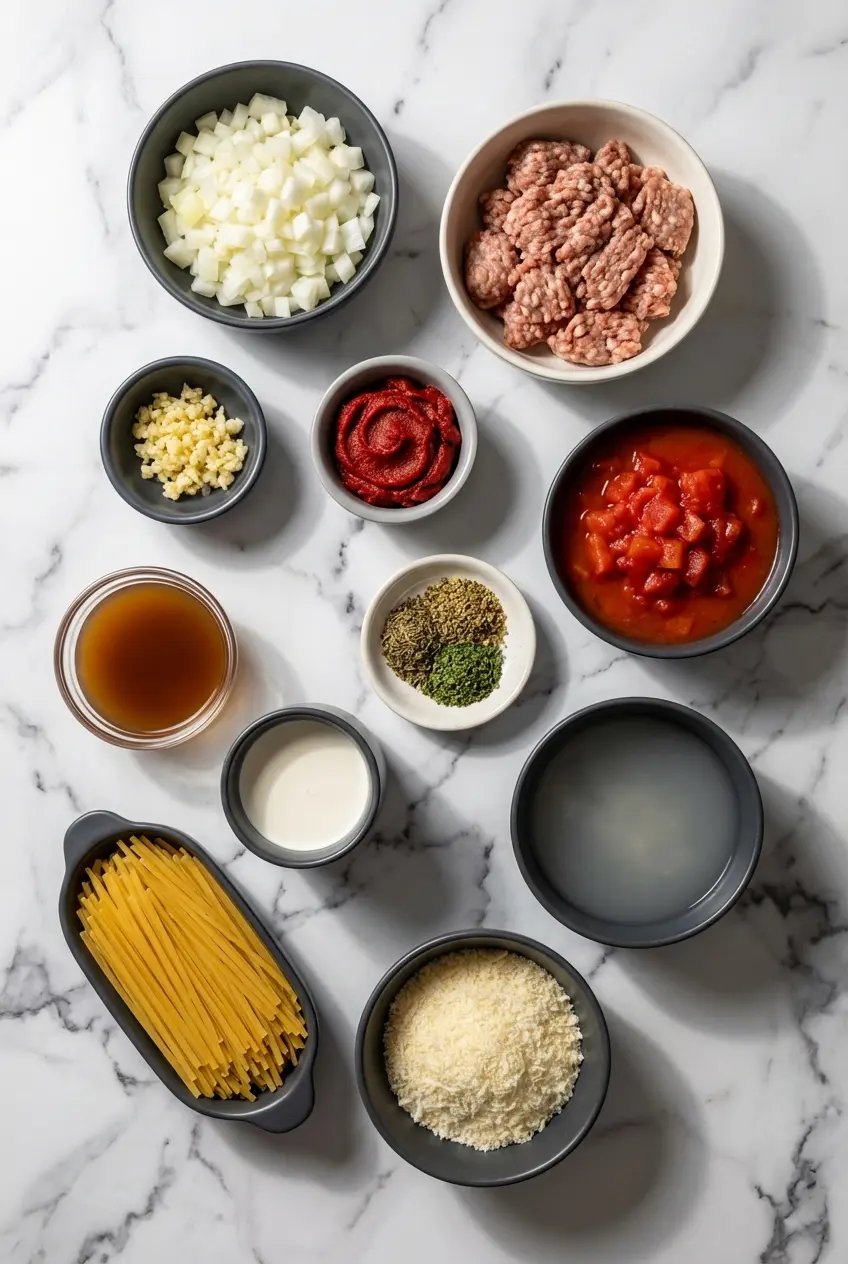
These simple pantry and fridge staples build a sauce with real depth, from savory sausage and beef stock to cream, tomato, and plenty of Parmesan at the end.
Ingredients
- 2 tablespoons olive oil
- 1 small yellow onion, diced
- 1 pound mild Italian sausage
- 3 large garlic cloves, minced (about 1 tablespoon)
- 2 tablespoons tomato paste
- 1, 14 ounce can diced tomatoes (don’t drain)
- 1/2 teaspoon each of dried basil, oregano, and parsley
- 1/2 teaspoon salt
- 1/4 teaspoon crushed red pepper (optional)
- 1/4 teaspoon black pepper
- 1 cup beef stock
- 1/2 cup heavy cream, room temperature (just take out once you begin the cooking process)
- 1 pound favorite pasta
- 1/2 – 1 cup reserved pasta water (after noodles boil, reserve about 1 cup)
- parmesan cheese for serving
Ingredient Notes & Substitutions
Dry white wine: You will also want 1/4 cup of dry white wine, something crisp like Pinot Grigio, for the deglazing step. It is not just for flair, it loosens the browned bits from the pot and brings the acidity that keeps the creamy sauce from tasting too heavy.
Italian sausage: Mild sausage keeps the dish family-friendly, but spicy Italian sausage works beautifully if you want a little extra fire. If you are using links, slip the meat out of the casings first so it browns and crumbles evenly.
Crushed red pepper: Calabrian chili paste is a terrific swap here if you want a deeper, smokier heat with a slightly fruity edge. I use it when I want the sauce to taste a touch more Italian trattoria than weeknight pantry pasta.
Heavy cream: Full-fat cream gives the smoothest finish and the most stable sauce. Half-and-half can work in a pinch, but it needs gentler heat at the end because lower-fat dairy is more likely to split.
Dairy-free option: Full-fat coconut milk is the best substitute if you need to skip dairy. It changes the flavor slightly, but the sauce still stays lush and glossy.
Poultry sausage: Ground turkey or chicken sausage makes this meal a little lighter, though it usually renders less fat than pork. I like to add an extra splash of olive oil so the meat browns properly and the tomato paste still has enough fat to bloom in.
Extra sausage ideas: If you buy a larger pack and have some left over, that is never a bad problem to have. The same savory flavor profile carries nicely into a cozy Italian sausage soup later in the week, especially when the weather turns cool.
How to Make creamy italian sausage pasta
Build the savory base
- Set a large pot over medium heat and pour in the olive oil. Add the sausage and diced onion together, breaking the meat into small crumbles as it cooks, and let it go for about 10 minutes until the sausage is fully cooked and browned in spots and the onion has softened and turned glossy.
- Stir in the minced garlic and cook for 2 more minutes. You are looking for that moment when the garlic smells fragrant and mellow, not sharp, and the bottom of the pot has started collecting flavorful browned bits.
Bloom the paste and deglaze
- Add the dried basil, oregano, parsley, salt, black pepper, optional crushed red pepper, and tomato paste. Stir constantly for a few minutes, scraping the bottom of the pot as you go, until the tomato paste darkens to a deep rust color and the herbs smell toasty and aromatic in the rendered fat.
- Pour in 1/4 cup of dry white wine and immediately scrape up everything clinging to the pan. Let the wine reduce slightly so the harsh edge cooks off, leaving behind a bright, savory backbone.
Simmer the sauce and cook the pasta
- Add the undrained diced tomatoes and beef stock, then stir well to combine. Let the sauce simmer uncovered for 20 to 30 minutes, until it smells rich and settled and the surface looks slightly thickened.
- While the sauce simmers, cook your pasta according to the package directions, aiming for al dente. Before you drain it, reserve 1/2 to 1 cup of the starchy pasta water, because that liquid is what helps pull the sauce into a silky finish later.
Finish with cream and bring it all together
When the sauce has finished simmering, lower the heat and slowly pour in the room-temperature heavy cream, stirring gently so the sauce turns smooth and lightly rosy. Add the cooked pasta and toss until every piece is coated, then loosen with the reserved pasta water a little at a time if needed, until the sauce looks glossy and clings to the noodles. Finish with plenty of Parmesan cheese and serve while it is hot and creamy.
Secrets for a Flawless Cream Sauce
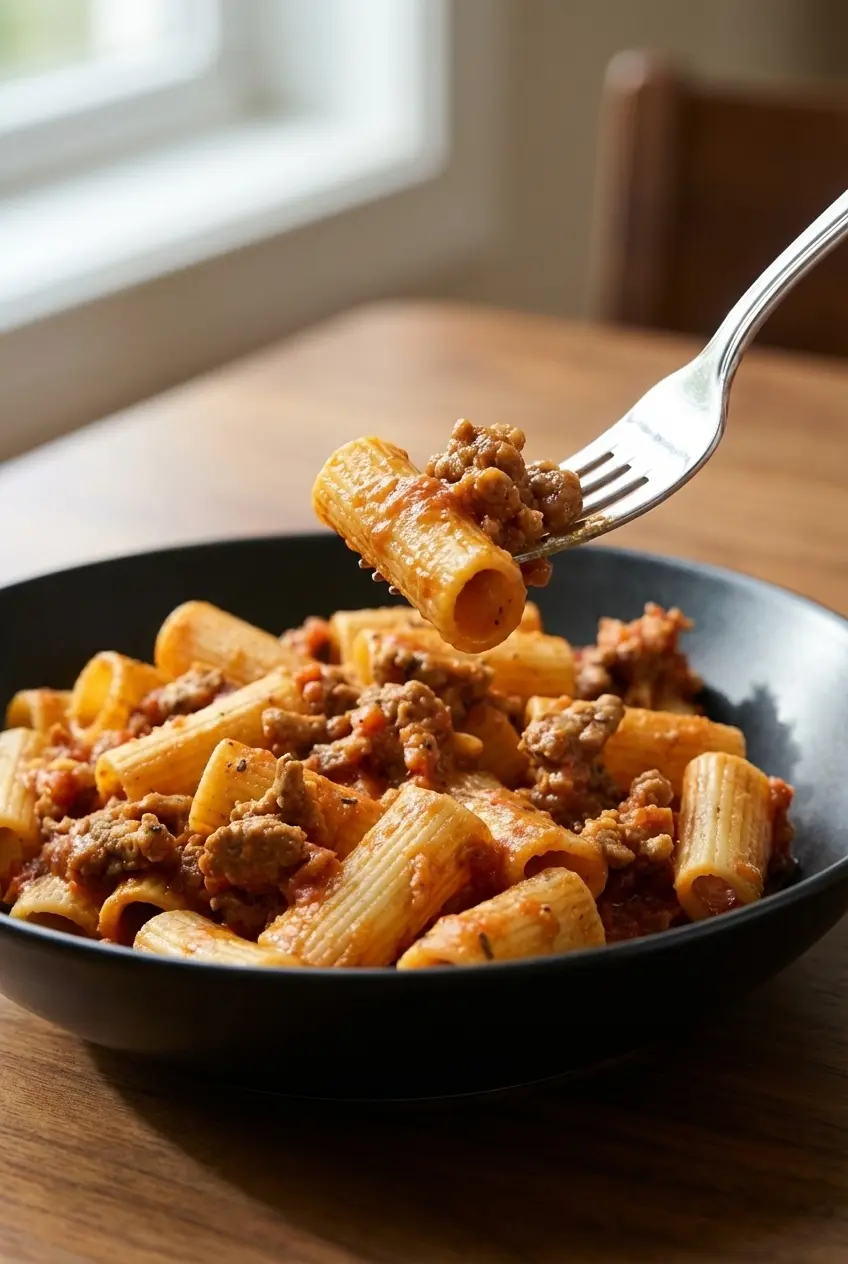
That rust-colored tomato paste stage is where much of the magic happens. As the paste cooks in the rendered fat, its natural sugars caramelize and the flavor becomes deeper, sweeter, and more savory, which is one reason it intensifies umami so effectively in a cream sauce.
Toasting dried herbs in fat matters too. Basil, oregano, and parsley release more aroma when they hit hot fat first, rather than going straight into liquid, so the sauce tastes fuller and more rounded with very little effort.
The white wine deglaze is what keeps this dish balanced. Sausage, cream, and Parmesan bring a lot of richness, and that brief splash of acidity lifts the whole pot so each bite feels lively instead of overly heavy.
Reserved pasta water is the final trick that makes the sauce feel restaurant-ready. The starch helps create an emulsion between the fat, stock, tomato, and cream, giving you a glossy coating instead of a puddle of sauce sitting underneath the pasta.
Choosing The Perfect Pasta Shape
For a thick meat-and-cream sauce like this, I reach for tubular or heavily ridged pasta almost every time. Rigatoni, cavatappi, and even sturdy penne are ideal because the sauce slips inside the tubes and the ridges grab onto every bit of the creamy sausage mixture.
Smoother, delicate noodles can work, but they do not hold this kind of hearty sauce as well. When the sauce is built on Italian sausage, tomato paste, beef stock, and cream, you want a shape with enough structure to carry that weight from plate to fork.
Al dente cooking matters just as much as shape. I like to pull the pasta 1 to 2 minutes before it is fully done, then let it finish in the warm sauce, which is the same smart move used in a classic pasta carbonara when you want the noodles to absorb flavor and stay pleasantly firm.
If you have ever wondered why some pasta shapes just seem to hold sauce better, it comes down to surface area and texture. Ridges and curves give the emulsion more places to cling, which is exactly why ridged cuts are so dependable for creamy, savory sauces like this one.
Pro Tips & Troubleshooting
Pro Tips
- Let the heavy cream come closer to room temperature before it goes into the sauce. That small step helps prevent a sudden temperature shock and makes for a smoother finish.
- Undercook the pasta slightly so it stays al dente after it gets tossed with the hot sauce. One or two minutes shy of fully done is usually just right.
- During the last 2 minutes of cooking, stir in 2 to 3 handfuls of baby spinach or chopped kale if you want some greens tucked into the sauce.
- If you are using sausage links instead of bulk sausage, remove the casings first so the meat can crumble and brown evenly.
Cold dairy meeting a hot acidic sauce is one of the fastest ways to ruin texture. Practical guidance from Kansas State University explains how to prevent the dairy from curdling, and the same principle applies here, warm the cream slightly and keep the heat low once it goes in.
Common Mistakes
- Do not drain the diced tomatoes. Those juices are part of the sauce, and without them the pot loses both flavor and needed volume.
- Do not boil the sauce hard after adding the heavy cream. A gentle low heat keeps the fats from separating and turning the sauce oily.
- Do not forget the pasta water before draining. It is your best insurance policy if the finished sauce needs loosening and shine.
Serving & Storage
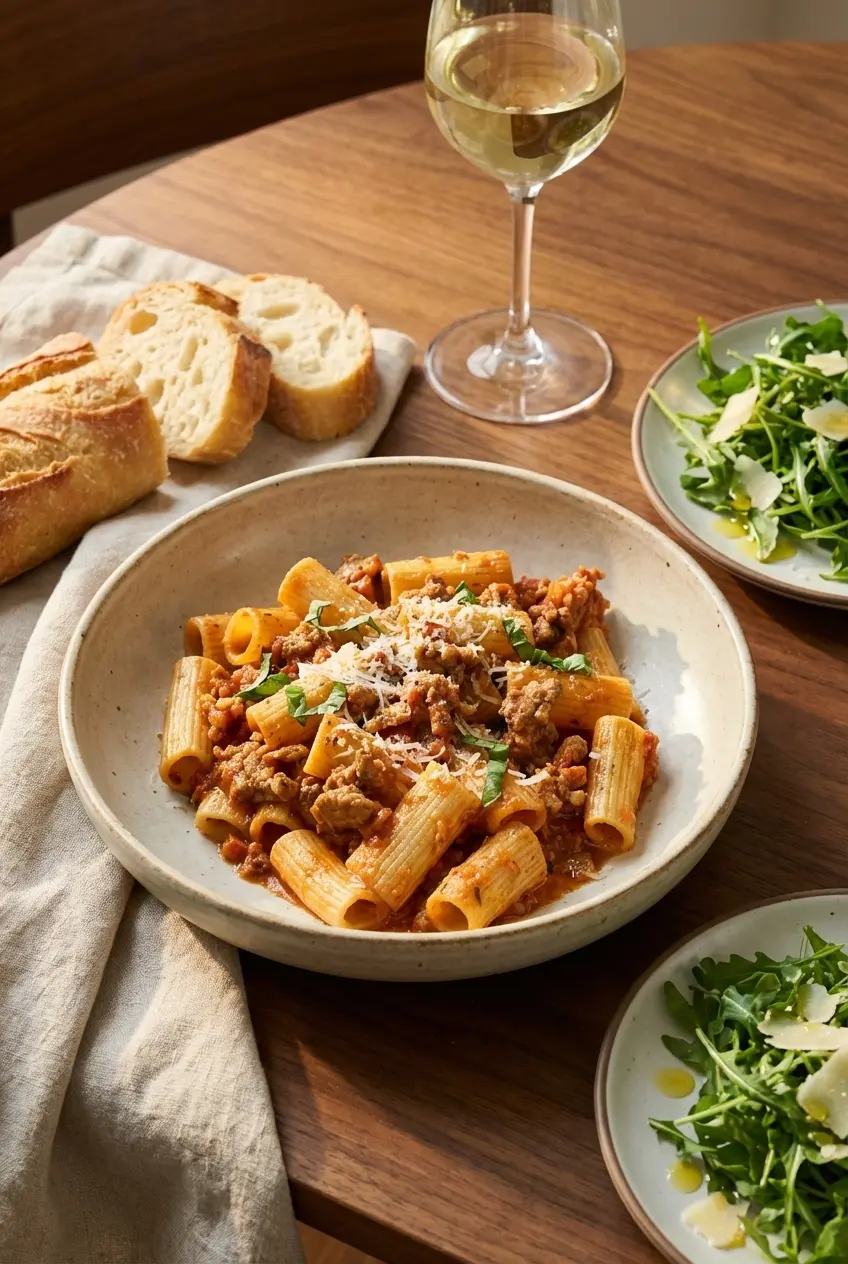
Serving Ideas
This pasta loves something warm and bready on the side. A crusty baguette or a pan of garlic knots is perfect for catching every last swipe of creamy tomato sauce left on the plate.
To balance the richness, I like serving it with a peppery arugula salad tossed in a simple lemon vinaigrette. The sharp greens and bright dressing cut through the cream beautifully and make the whole meal feel less heavy.
Just before serving, add a generous shower of freshly grated Parmigiano-Reggiano and a few torn basil leaves. That last minute finish wakes up the whole bowl and gives it the look and aroma of something from your favorite neighborhood Italian spot.
Storage & Make-Ahead
Leftovers keep well in the refrigerator for about 3 to 4 days in a tightly covered container. When I know I am cooking ahead, I often make the tomato-sausage base first and wait to add the cream until reheating day for the freshest texture.
Freezing is possible, but the best move is to freeze the sauce base before the dairy goes in. Food safety guidance notes that heavy cream does not freeze and thaw well without separating, which is why cream-based pasta sauces can turn grainy or oily after thawing.
That same make-ahead rule applies to other rich sausage dishes too, including a comforting creamy Zuppa Toscana. If you freeze the tomato and sausage base first, you get a much better texture once the dairy is added fresh later.
To reheat leftovers, place them in a skillet or saucepan over low heat and add a small splash of water or broth before stirring. Warm the pasta gently until loosened and creamy again, because rushing it over high heat is what usually causes the sauce to break.
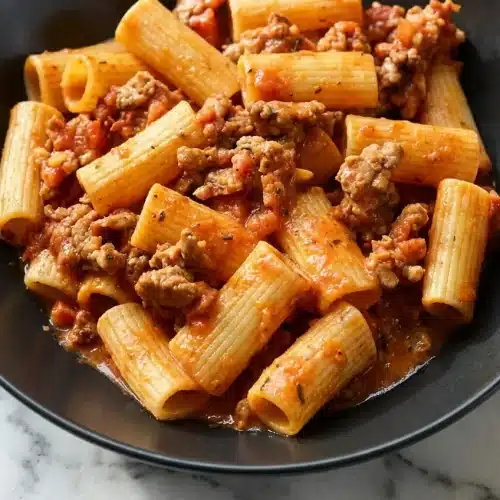
Creamy Italian Sausage Pasta

Equipment
- Large Pot
Ingredients
- 2 tablespoons olive oil
- 1 small yellow onion, diced
- 1 pound mild Italian sausage
- 3 large garlic cloves, minced (about 1 tablespoon)
- 2 tablespoons tomato paste
- 1 14 ounce can diced tomatoes (don’t drain)
- 1/2 teaspoon each of dried basil, oregano, and parsley
- 1/2 teaspoon salt
- 1/4 teaspoon crushed red pepper (optional)
- 1/4 teaspoon black pepper
- 1 cup beef stock
- 1/2 cup heavy cream, room temperature (just take out once you begin the cooking process)
- 1 pound favorite pasta
- 1/2 – 1 cup reserved pasta water (after noodles boil, reserve about 1 cup)
- parmesan cheese for serving
Instructions
Build the savory base
- Set a large pot over medium heat and pour in the olive oil. Add the sausage and diced onion together, breaking the meat into small crumbles as it cooks. Let it cook for about 10 minutes until the sausage is fully cooked and browned in spots, and the onion has softened and turned glossy.
- Stir in the minced garlic and cook for 2 more minutes until it smells fragrant and mellow, and the bottom of the pot starts collecting flavorful browned bits.
Bloom the paste and deglaze
- Add the dried basil, oregano, parsley, salt, black pepper, optional crushed red pepper, and tomato paste. Stir constantly for a few minutes, scraping the bottom of the pot, until the tomato paste darkens to a deep rust color and the herbs smell toasty in the rendered fat.
- Pour in 1/4 cup of dry white wine (if using) and immediately scrape up everything clinging to the pan. Let the wine reduce slightly so the harsh edge cooks off, leaving behind a bright, savory backbone.
Simmer the sauce and cook the pasta
- Add the undrained diced tomatoes and beef stock, then stir well to combine. Let the sauce simmer uncovered for about 20 minutes, until it smells rich and the surface looks slightly thickened.
- While the sauce simmers, cook your pasta according to the package directions, aiming for al dente. Before you drain it, reserve 1/2 to 1 cup of the starchy pasta water to help pull the sauce into a silky finish later.
Finish with cream and bring it all together
- When the sauce has finished simmering, lower the heat. Slowly pour in the room-temperature heavy cream, stirring gently so the sauce turns smooth and lightly rosy.
- Add the cooked pasta and toss until every piece is coated. Loosen the sauce with the reserved pasta water a little at a time if needed, until the sauce looks glossy and clings to the noodles. Finish with plenty of Parmesan cheese and serve hot.
Notes
Nutrition
Conclusion
This creamy Italian sausage pasta earns its place in the weeknight rotation because it tastes far more layered than the short ingredient list suggests. The bloomed tomato paste, toasted herbs, and quick white wine deglaze give the sauce a deep, balanced flavor that makes every forkful feel a little special.
If you give it a try, do not be afraid to make it your own with spinach, kale, a spicier sausage, or a different pasta shape. It is the kind of comforting dinner that rewards small tweaks and still comes out delicious.