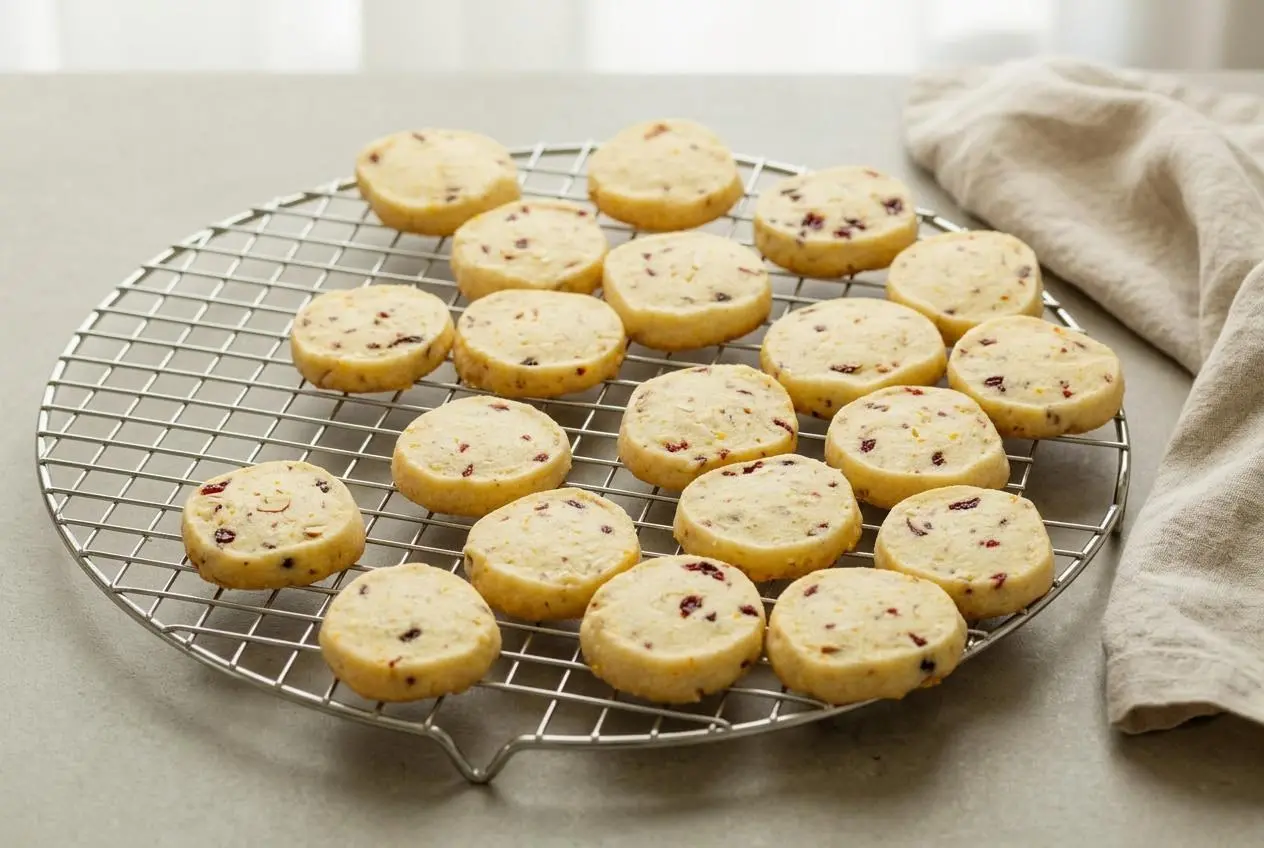
Cranberry orange shortbread cookies are buttery slice-and-bake treats made with softened butter, powdered sugar, orange zest, dried cranberries, and toasted almonds. Shape the dough into a log, chill until firm, then slice and bake at 325°F until the edges turn faintly golden.
These cranberry orange shortbread cookies combine a delicate, buttery crumb with chewy cranberry bits and toasted almond crunch. Fresh orange zest brings a bright fragrance without adding juice to the dough.
The log method gives you evenly portioned cookies without rolling out dough or reaching for cutters. They’re lovely for afternoon tea, holiday trays, and gift tins. The trick is in the clean cut.
Chop the fruit and almonds finely before mixing so the knife can pass through the chilled log without tearing it.
Essential Ingredients for Melt-in-Your-Mouth Shortbread
Butter provides richness, powdered sugar creates a fine crumb, and flour gives the dough structure. Orange zest and almond extract add aroma, salt balances sweetness, and dried cranberries and toasted almonds bring contrasting chew and crunch.
- 1 cup unsalted butter (softened)
- 1 cup powdered sugar
- 3/4 teaspoon almond extract
- 1/2 teaspoon salt
- 2 cups flour
- 1 tablespoon orange zest
- 2/3 cup sliced almonds, toasted
- 1/3 cup dried cranberries
Almond extract reinforces the toasted nuts and complements the orange fragrance. Salt keeps the buttery sweetness from tasting flat, while the flour holds the fruit-and-nut mixture together in sliceable rounds.
I look for butter that takes a gentle fingertip indentation but still holds its shape; a shiny, slumping stick is too soft for this dough.
The Role of Butter and Powdered Sugar
Unsalted butter lets you control the seasoning while keeping the butter flavor prominent. Its fat coats the flour and helps create shortbread’s delicate texture. You don’t need a specialty high-fat butter to make this recipe.
Use softened butter, not melted butter. It should blend smoothly with the sugar without leaving greasy streaks around the bowl. If it looks oily before you begin, let it firm up rather than compensating with extra flour.
Powdered sugar dissolves readily into the butter and gives these cookies a finer crumb than granulated sugar. Most powdered sugar also contains starch, which contributes to tenderness. Granulated sugar isn’t a direct substitute here; it can change the texture and how the dough behaves during baking.
Selecting Cranberries, Citrus, and Nuts
Choose dried cranberries that you can chop easily rather than pieces that feel hard and brittle. Cut through any sticky clumps so the fruit disperses throughout the dough instead of collecting in pockets.
Use sliced almonds as listed, then chop them after toasting and cooling. Thin almond pieces toast quickly, so watch the pan closely. You’re looking for a warm, nutty fragrance, not deep brown color.
Grate only the orange-colored surface of the peel. The white pith underneath can taste bitter. Finely grated zest distributes more evenly than long strips and releases its fragrant oils as it mixes into the dough.
Fresh vs. Dried Cranberries in Shortbread
Dried cranberries are the better choice for this particular slice-and-bake dough. They add chewy, tart-sweet pockets without the moisture of fresh fruit.
Fresh cranberries release juice as they bake, which can create softer spots around the berries and alter the cookie’s structure. They aren’t a direct replacement in this recipe. Stick with dried fruit when you want firm dough logs and crisp-edged rounds.
How to Make the Cranberry Orange Shortbread Cookies
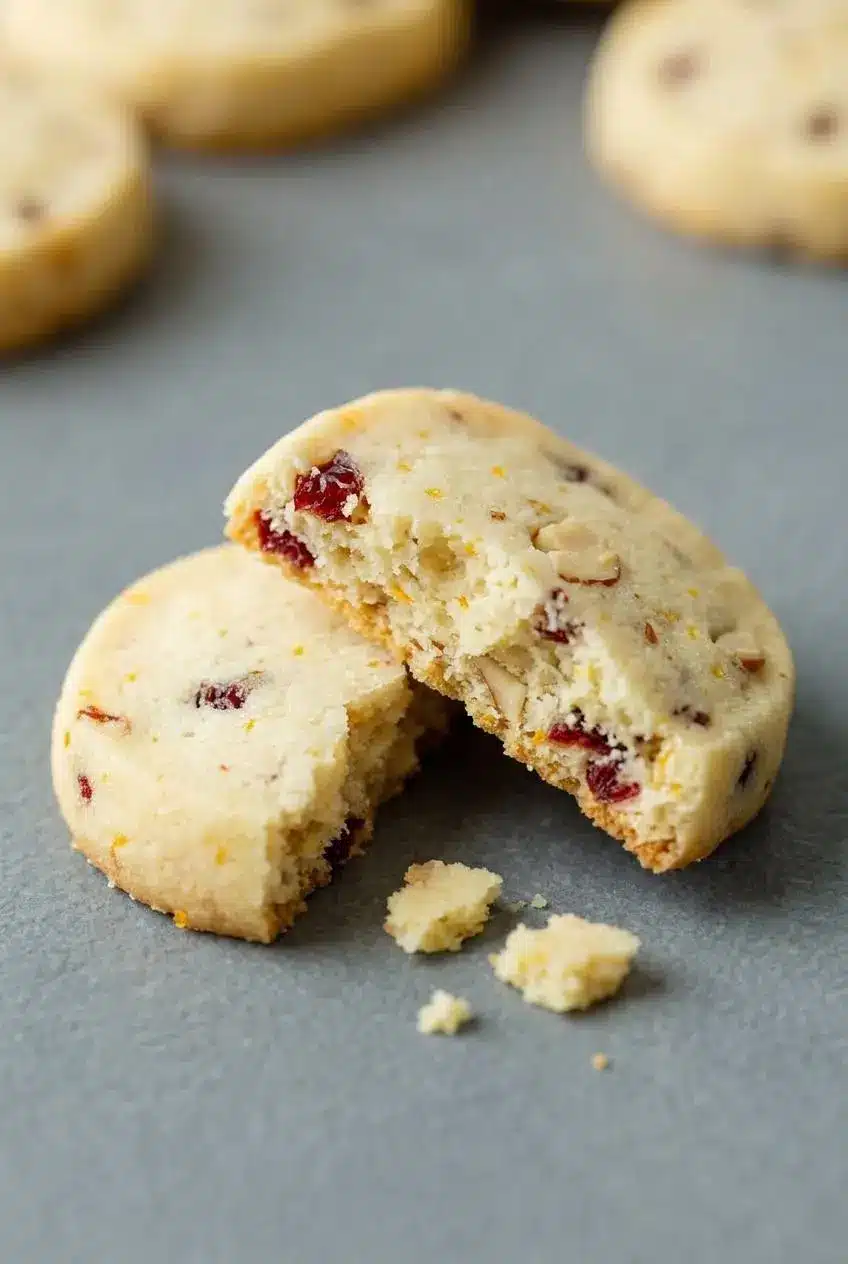
This recipe makes about 36 cookies. Allow about 10 minutes for preparation, at least 30 minutes for chilling, and about 15 minutes for baking, followed by a brief rest on the baking sheet.
- Warm a dry sauté pan over medium-high heat, then toss the almonds in it for about 30 seconds or until aromatic and set them aside to cool.
The nuts should smell toasted without developing dark patches. - Cut the cooled almonds and dried cranberries into small bits, then reserve them for mixing.
Evenly chopped pieces will fit into the dough without creating large breaks in each slice. - Gather the softened butter, powdered sugar, almond extract, and salt in a stand mixer bowl or a large bowl for a handheld mixer.
The butter should hold its shape while yielding easily to pressure. - Begin beating at low speed, then raise the speed gradually to medium and continue for about 3 minutes.
Stop with a smooth, light mixture rather than a heavily whipped, fluffy mass. - Reduce the speed to low and feed in the flour and orange zest gradually, mixing for about 2 minutes or until the dough comes together.
The mixture should gather into a cohesive dough with no loose flour remaining. - Distribute the chopped almonds and cranberries through the dough with about 30 seconds of mixing, then scrape the bowl and transfer the dough to a clean work surface.
The fruit and nuts should appear throughout the mixture rather than in concentrated clumps. - Press the dough into a ball and roll it into an even cylinder about 18 inches long.
A smooth, pliable log without open seams will hold together better during slicing. - Enclose the log snugly in plastic wrap and refrigerate for at least 30 minutes, until firm.
The cylinder should resist gentle pressure instead of flattening beneath your fingers. - Set the oven to 325°F as the chilling period nears its end.
The dough should remain firm while the oven finishes heating. - Unwrap the refrigerated log and cut 1/2-inch-thick rounds with a sharp knife, rotating the log a quarter turn between cuts.
Each slice should offer slight resistance without collapsing or breaking apart. - Arrange the rounds on a non-stick cookie sheet with at least 1 inch between them and bake for about 15 minutes, checking after 10 minutes.
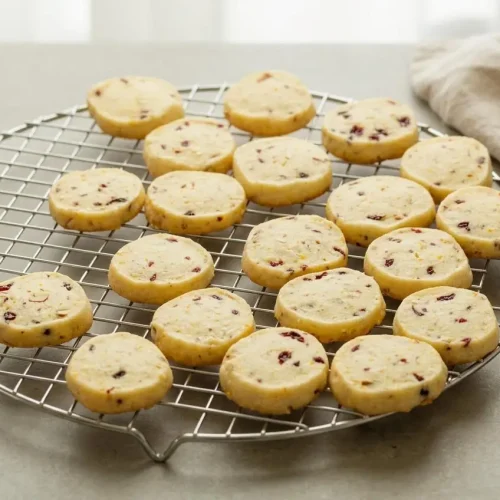
Remove them when the edges first show a faint golden color while the tops remain pale. - Leave the cookies on the sheet for about 5 minutes before carefully moving them to a cooling rack.
The rounds should become sturdy enough to lift without bending or breaking.
Toasting Nuts and Dough Formation
Toasting brings out the almonds’ aroma, but residual heat can soften the butter in the dough. Let the nuts cool before chopping and adding them. If your almonds are already toasted, don’t toast them again.
During creaming, aim for smoothness and lightness rather than maximum volume. Excessive whipping introduces more air than shortbread needs. Once the flour goes in, keep the mixer low and stop when the dough forms.
The finished dough should feel pliable, somewhat like modeling dough, rather than sticky batter. It may look a little crumbly in the bowl before gentle pressure brings it together. Don’t keep beating merely to make it look perfectly polished.
Shaping, Chilling, and Slicing the Log
Press the dough together before rolling it outward. This closes gaps that could become weak spots inside the log. Keep the cylinder reasonably uniform from end to end so the cookies have similar diameters.
Use the plastic wrap to help smooth the surface and contain any small cracks. Wrap snugly without twisting so hard that you squeeze the ends into points. Chilling firms the butter and gives the knife a more stable dough to cut.
A sharp blade needs less downward force. Cut with a gentle, controlled motion rather than pushing hard through the log. Turning it a quarter turn after each slice moves the pressure point around the cylinder, helping prevent a flattened bottom.
Baking Cues and Cooling Protocol
The moderate oven temperature gives these thick rounds time to bake without quickly darkening their edges. Don’t raise the heat to hurry them along; that makes the color harder to control.
Look at the lower rim of a cookie as well as its top. A barely golden edge with a pale, matte top is the cue to stop. Waiting for the whole cookie to turn golden can leave you with a drier, more brittle crumb.
Use the non-stick sheet specified in the method, or a silicone baking mat. Avoid adding a heavy coating of grease. The brief rest on the warm sheet lets the cookies firm up before you lift them.
Troubleshooting Common Shortbread Problems
Most problems start with dough temperature, flour measurement, or the size of the mix-ins. Identify which texture you have before adding anything or mixing longer.
Fixing Crumbly or Dry Dough
- The dough looks sandy in the bowl: Press a portion together with your fingers before deciding it’s too dry. Shortbread can look loose while still forming a cohesive dough under gentle pressure.
- The log has surface cracks: Gently press the seams closed with your palms before wrapping. A little warmth from your hands can help the butter bind the crumbs without adding liquid.
- Slices break around the fruit or nuts: Large pieces catch on the blade and pull through the dough. Press the broken round back together for baking, and chop the mix-ins more finely next time.
- The dough stays powdery under pressure: Too much flour can upset the butter-to-flour balance. For future batches, spoon flour into the measuring cup and level it rather than packing it down.
Don’t add water to repair shortbread. It changes the dough’s moisture balance and encourages gluten development. Avoid kneading it vigorously, too; gentle pressing is enough to bring a workable dough together.
Preventing Spreading and Misshapen Rounds
- The knife squashes the log: The dough is too soft or the blade needs excessive force. Return the wrapped log to the refrigerator until firm, then cut with a sharp knife and a gentle motion.
- The cookies spread more than expected: Overly soft butter or warm dough can lose shape quickly in the oven. Keep the uncut dough chilled and don’t place rounds on a hot baking sheet.
- The rounds develop flat bottoms: Repeated pressure in the same position compresses the cylinder. Rotate the log between cuts rather than slicing the entire length from one side.
- The cookies feel tough: Prolonged mixing after adding flour develops more gluten. Stop when the dough comes together and avoid repeated kneading during shaping.
- The dough sticks during shaping: Warm butter may be the cause. Chill the dough rather than dusting it repeatedly with flour, which can make the finished cookies dry.
Dough Preparation and Storage Guidelines
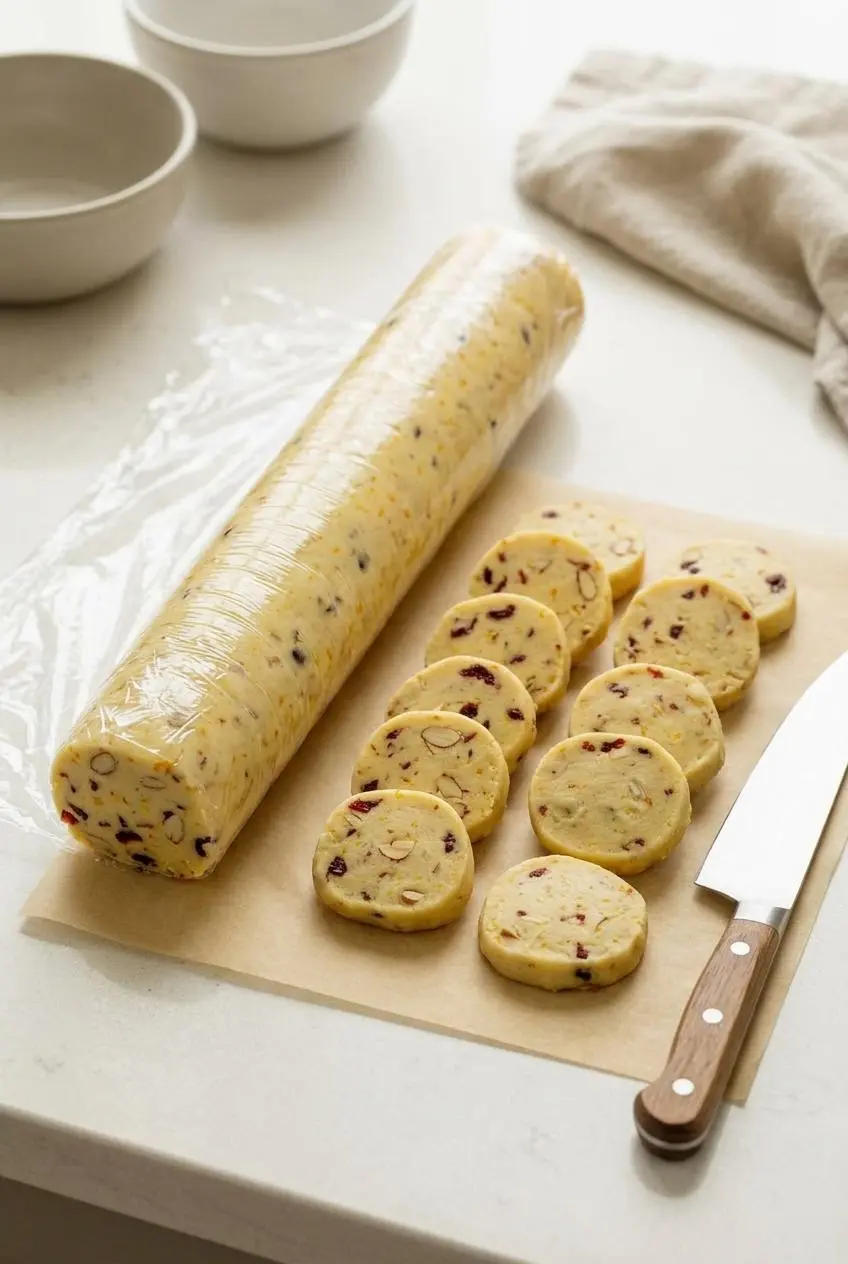
Keep the unbaked log tightly wrapped and refrigerated while you organize the baking sheets and heat the oven. The wrap protects the surface from drying out, while chilling preserves the firm texture needed for clean cuts.
If you bake in batches, keep the remaining dough chilled instead of leaving it beside the warm oven. Let a used baking sheet cool before loading another batch so the butter doesn’t soften before baking begins.
Cool baked cookies completely before putting them in an airtight container. Trapped warmth creates condensation, which works against crisp edges. Separate layers with parchment to protect the delicate rounds.
Store plain shortbread apart from moist or strongly scented treats. For decorated cookies, let the glaze or chocolate set fully before packing, and avoid pressing the finished surfaces against each other. No extended dough-storage limit is specified for this recipe.
Delicious Variations and Decorative Finishes
Choose an optional variation for flavor or decoration while keeping the butter, flour, and sugar proportions unchanged. Add wet finishes only after the cookies cool.
- Pistachio cranberry orange shortbread: Use finely chopped pistachios instead of almonds for a green-flecked round with a different nutty flavor.
- Pecan or walnut variation: Replace the almonds with finely chopped pecans or walnuts for a deeper, earthy flavor, keeping the pieces small enough for clean slicing.
- Orange-glazed rounds: Stir orange juice into powdered sugar gradually until you have a drizzleable glaze, then apply a light coating to cooled cookies.
- Chocolate-dipped cookies: Dip part of each cooled round into melted dark or white chocolate and let the coating set before stacking.
- Sparkling sugar finish: Roll the shaped log in coarse sugar before wrapping and chilling for a decorative, lightly crunchy rim.
- Extra citrus fragrance: As an optional technique, rub the zest into the powdered sugar before creaming, rather than adding the zest with the flour.
For a version without nuts, omit the almonds and almond extract rather than assuming that a seed or oat substitution will behave identically. Expect less crunch. If baking for someone with an allergy, check every ingredient label and prevent cross-contact; ingredient omissions alone aren’t a safety guarantee.
For a decorative citrus finish, scatter finely chopped candied orange peel over the glaze before it sets. Keep the pieces small so they complement the cookie rather than weighing down its delicate surface.
Serving and Holiday Cookie Tray Pairing Ideas

Serve these cookies fully cooled, when the buttery crumb and crisp edges have settled. Hot black tea, Earl Grey, or afternoon coffee balances their sweetness without competing with the orange fragrance.
On a holiday platter, arrange the rounds in overlapping rows rather than a tall pile that can chip their edges. A few chocolate-dipped or glazed cookies among the plain ones add variety without requiring another dough.
For an afternoon tea assortment, pair them with Earl Grey cookies. The tea fragrance complements the orange while giving the tray a second flavor.
Pack gifts in parchment-lined tins with parchment between layers. Keep delicate glazed cookies in a single layer when possible, and label the tin clearly for almonds, dairy, and wheat.
Conclusion
These buttery rounds bring together bright orange zest, chewy cranberries, and toasted almond crunch in a delicate shortbread crumb.
Chill the log until firm, rotate it as you slice, and watch for barely golden edges. Those small habits make the next cookie tray much easier to pull together.
Frequently Asked Questions
Can I Use Fresh Cranberries Instead of Dried in Shortbread?
Dried cranberries are recommended for this dough. Fresh berries release moisture during baking and can create softer spots around the fruit, so they aren’t a direct substitute when you want crisp-edged, sliceable shortbread.
Why Does My Shortbread Dough Crumble When I Slice It?
Large cranberry or almond pieces can catch on the knife and tear the dough. A loosely shaped log or excess flour can also cause crumbling. Use finely chopped mix-ins, press the log together firmly, and slice with a sharp blade.
How Should I Keep the Dough Before Baking?
Keep the log tightly wrapped in the refrigerator until it feels firm enough to slice cleanly. This recipe specifies chilling for shaping and slicing, but doesn’t establish an extended storage duration.
Why Did My Cookies Lose Their Round Shape While Cutting?
The dough may be too warm, or the knife may be pressing it flat. Chill until firm, use a sharp blade with a gentle cutting motion, and rotate the log a quarter turn between slices.
What Is the Secret to a Tender, Melt-in-Mouth Shortbread Texture?
Use powdered sugar, softened but not greasy butter, and restrained mixing after adding flour. Bake only until the edges begin to color; deeply browned cookies lose some of that delicate, buttery tenderness.
Cranberry Orange Shortbread Cookies

Equipment
- dry saute pan
- Stand mixer or handheld mixer
- Plastic wrap
- non-stick cookie sheet or Silpat baking mats
- Sharp knife
Ingredients
- 1 cup unsalted butter softened
- 1 cup powdered sugar
- 3/4 teaspoon almond extract
- 1/2 teaspoon salt
- 2 cups flour
- 1 tablespoon orange zest
- 2/3 cup sliced almonds toasted
- 1/3 cup dried cranberries
Instructions
- Warm a dry sauté pan over medium-high heat, then toss the almonds in it for about 30 seconds or until aromatic and set them aside to cool. The nuts should smell toasted without developing dark patches.
- Cut the cooled almonds and dried cranberries into small bits, then reserve them for mixing. Evenly chopped pieces will fit into the dough without creating large breaks in each slice.
- Gather the softened butter, powdered sugar, almond extract, and salt in a stand mixer bowl or a large bowl for a handheld mixer. The butter should hold its shape while yielding easily to pressure.
- Begin beating at low speed, then raise the speed gradually to medium and continue for about 3 minutes. Stop with a smooth, light mixture rather than a heavily whipped, fluffy mass.
- Reduce the speed to low and feed in the flour and orange zest gradually, mixing for about 2 minutes or until the dough comes together. The mixture should gather into a cohesive dough with no loose flour remaining.
- Distribute the chopped almonds and cranberries through the dough with about 30 seconds of mixing, then scrape the bowl and transfer the dough to a clean work surface. The fruit and nuts should appear throughout the mixture rather than in concentrated clumps.
- Press the dough into a ball and roll it into an even cylinder about 18 inches long. A smooth, pliable log without open seams will hold together better during slicing.
- Enclose the log snugly in plastic wrap and refrigerate for at least 30 minutes, until firm. The cylinder should resist gentle pressure instead of flattening beneath your fingers.
- Set the oven to 325°F as the chilling period nears its end. The dough should remain firm while the oven finishes heating.
- Unwrap the refrigerated log and cut 1/2-inch-thick rounds with a sharp knife, rotating the log a quarter turn between cuts. Each slice should offer slight resistance without collapsing or breaking apart.
- Arrange the rounds on a non-stick cookie sheet with at least 1 inch between them and bake for about 15 minutes, checking after 10 minutes. Remove them when the edges first show a faint golden color while the tops remain pale.
- Leave the cookies on the sheet for about 5 minutes before carefully moving them to a cooling rack. The rounds should become sturdy enough to lift without bending or breaking.