For crispy corned beef hash, parboil and steam-dry diced potatoes, then press them with cooked corned beef and vegetables in a hot skillet until deeply golden.
This corned beef hash turns leftover cooked beef, tender potatoes, onion, pepper, and garlic into a savory skillet breakfast with crisp edges and soft centers.
Butter, caramelized onions, and smoky paprika give every bite real depth, while a section-by-section flip protects the potato cubes from breaking apart. That mahogany crust is worth the wait.
Listen for a steady active sizzle after pressing the hash into the skillet. Quiet steaming means the pan needs more time to evaporate moisture before browning can begin.
Key Ingredients for Authentic Corned Beef Hash
Each ingredient contributes to the skillet: potatoes provide structure, beef brings savory richness, fat promotes browning, and aromatics add sweetness, color, and a fragrant finish.
- 1 pound Yukon Gold potatoes, diced into 1/2-inch pieces
- fine sea salt
- 2 tablespoons butter
- 1 tablespoon olive oil
- 1 medium yellow onion, diced
- 1 small red bell pepper, diced
- 4 cloves garlic, minced
- 2 cups cooked corned beef, diced (about 1/2-inch pieces)
- 1/2 teaspoon freshly cracked black pepper
- 1/2 teaspoon smoked paprika
- optional toppings: fried or poached eggs, chopped fresh parsley and/or scallions, whole-grain Dijon mustard, hot sauce
Yukon Gold potatoes stay intact after parboiling while their creamy interiors soften against the crisp crust. Butter gives the hash a nutty richness, and olive oil helps it brown steadily over medium heat. Onion, red pepper, and garlic create sweet, savory layers that keep cured beef from tasting flat.
I prefer to leave a little marbling on the corned beef cubes because it melts into the skillet and seasons the potatoes as they crisp.
Choosing the Right Potatoes
Yukon Golds are especially well suited to skillet hash because they hold neat cubes while becoming creamy inside. Their thin skins are pleasant enough to leave on if they are well scrubbed, although peeling is fine if that is your preference.
Russet potatoes work too, especially if maximum crunch is the goal. Their starchier surface browns aggressively, but the cubes can break more easily once tender, so handle them gently. Waxy red potatoes tend to soften without developing the same firm crust, making them less reliable for this style of hash.
Corned Beef Selection and Prep
Use cooked corned beef cut into even 1/2-inch cubes. Similar-sized pieces heat and brown at the same pace, so you get distinct beefy bites rather than shredded bits that disappear into the potatoes. Trim away any thick, firm pieces of exterior fat, but keep the finer marbling.
Cold leftover brisket is easiest to dice cleanly. Deli-counter corned beef can also work when it is thick-cut and sturdy enough to cube without tearing. Avoid chopping the meat too finely, since larger pieces develop browned edges and stay pleasantly tender in the center.
Aromatics and Seasoning Balance
Yellow onion supplies sweetness as it softens, while red bell pepper brings a mild fresh flavor and a little color. Add garlic after the vegetables have softened so its aroma blooms without turning bitter in the pan.
Freshly cracked black pepper gives the rich beef a sharp edge, and smoked paprika adds a subtle smoky warmth. Wait until the hash is browned before reaching for more salt. Corned beef varies by brand and preparation, but it is already well seasoned.
How to Make Corned Beef Hash
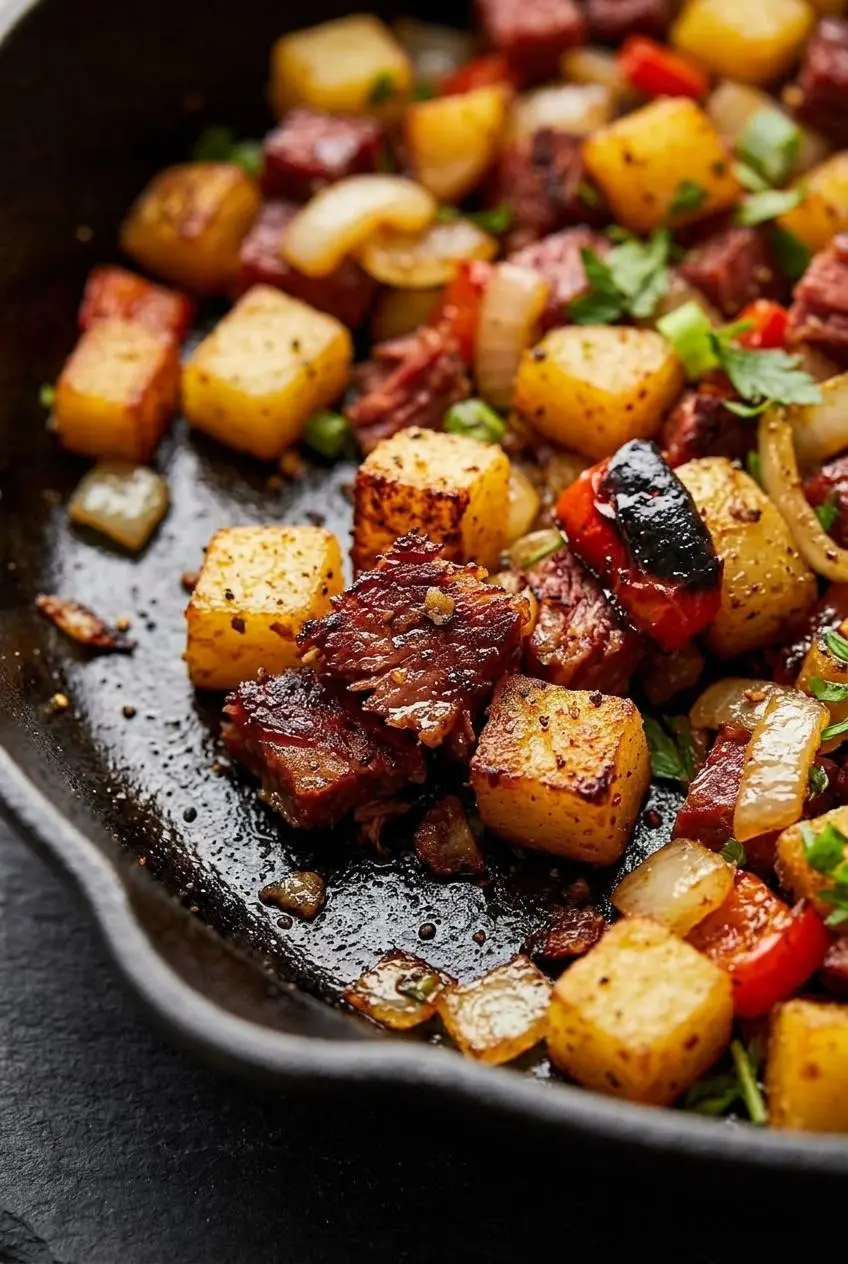
The key is controlling moisture before the potatoes hit the skillet, then giving the hash enough uninterrupted contact with hot fat to brown properly.
- Put the diced potatoes in a saucepan, cover them with cold water by about 1 inch, and season the water generously with salt before bringing it to a boil.
Lower the heat and simmer for 5–6 minutes, until a fork enters with slight resistance and the cubes still hold their edges. - Drain the potatoes thoroughly in a colander and leave them there for a minute or two before cooking.
Steam should fade from the surface, leaving the cubes dry rather than glossy with water. - Warm a large cast-iron or heavy skillet over medium heat, then melt the butter with the olive oil.
The fat should look fluid and lightly shimmering without smoking. - Add the onion and red bell pepper and cook for 5–6 minutes, stirring now and then, then stir in the garlic for 2 minutes.
The vegetables should be soft and lightly golden, with a sweet onion aroma and fragrant garlic. - Fold in the potatoes, diced corned beef, black pepper, and smoked paprika, then use a wide spatula to press everything into one even layer.
Keep the potato cubes intact as much as possible so they can form crisp, distinct edges. - Leave the hash untouched for 4–5 minutes, flip it in broad sections, and press it flat again; repeat this 2–3 more times over 15–20 minutes total.
Serve once deep golden to mahogany patches form and the skillet smells richly browned rather than steamy.
Parboiling and Steam Drying Potatoes
Starting the potatoes in cold salted water helps the cubes cook evenly from their centers outward. Stop after 5–6 minutes, when they are barely fork-tender. If they are fully soft before frying, they are more likely to collapse when flipped.
The steam-dry step matters just as much as parboiling. After draining, leave the potatoes spread in the colander briefly so trapped heat carries off surface moisture. Dry surfaces can brown in the skillet; wet surfaces must steam first, which slows crust formation and can leave the hash soft.
Building Flavor with Sautéed Aromatics
A heavy skillet holds heat well, which helps the vegetables caramelize instead of releasing water and simmering. Let the onion and pepper soften over medium heat until their edges pick up a little color. Stir occasionally, not constantly, so they have contact with the pan.
Garlic needs a shorter turn in the skillet. Add it for the final 2 minutes, when the onion is already sweet and tender. If the garlic begins darkening quickly, lower the heat slightly and move it through the vegetables until its aroma becomes warm and savory.
The Press and Crisp Skillet Method
Once the potatoes and corned beef are in the skillet, use a wide spatula to create a compact, even layer. This gives more food direct contact with the hot pan and makes browning more consistent across the surface.
Do not stir the hash while waiting for the first crust. Give it 4–5 minutes, then peek under one edge. A deep golden underside is the signal to flip. Turn the mixture in sections rather than attempting one large flip, then press each section back down. This approach keeps the cubes intact and creates more crisp surfaces with every turn.
Corned Beef Variations: Leftover Brisket vs Canned
Both leftover brisket and canned corned beef make satisfying hash, but they behave differently in the skillet. Choose the version that fits what you have and adjust your handling rather than changing the main cooking method.
Leftover Corned Beef Brisket Hash
Cold cooked brisket gives the hash defined cubes, a meaty texture, and browned edges that stay separate from the potatoes. Dice it while chilled, aiming for tidy 1/2-inch pieces. For a future supply of tender meat, start with slow cooker corned beef and reserve some after dinner.
Brisket with a little marbling is ideal here. The fat warms in the skillet and adds flavor, while leaner pieces stay tender when they are added with the potatoes rather than cooked for too long on their own.
Pantry Canned Corned Beef Hash
Canned corned beef is a useful shortcut with a softer, more compact texture. Chill the unopened can in the refrigerator for at least 1 hour before opening it. The firmed fat makes the meat easier to slice into cubes instead of crushing it into a paste.
Handle those cubes gently when adding them to the skillet. Press and flip in broad sections, just as with brisket, so the meat can brown in places without losing all texture. Canned beef has its own rich, classic flavor and works especially well when you want a quick, hearty skillet meal.
Corned Beef and Cabbage Hash
For a cabbage variation, fold finely shredded cooked or raw cabbage into the onion and pepper while they sauté. It softens into the aromatics and adds gentle sweetness that balances the salty cured beef. Leftovers from corned beef and cabbage fit naturally here.
- For a sweet potato version, swap half or all of the Yukon Gold potatoes for diced sweet potatoes. Their sweetness pairs nicely with smoked paprika, though they soften more readily, so flip them with extra care.
What to Serve with Skillet Corned Beef Hash
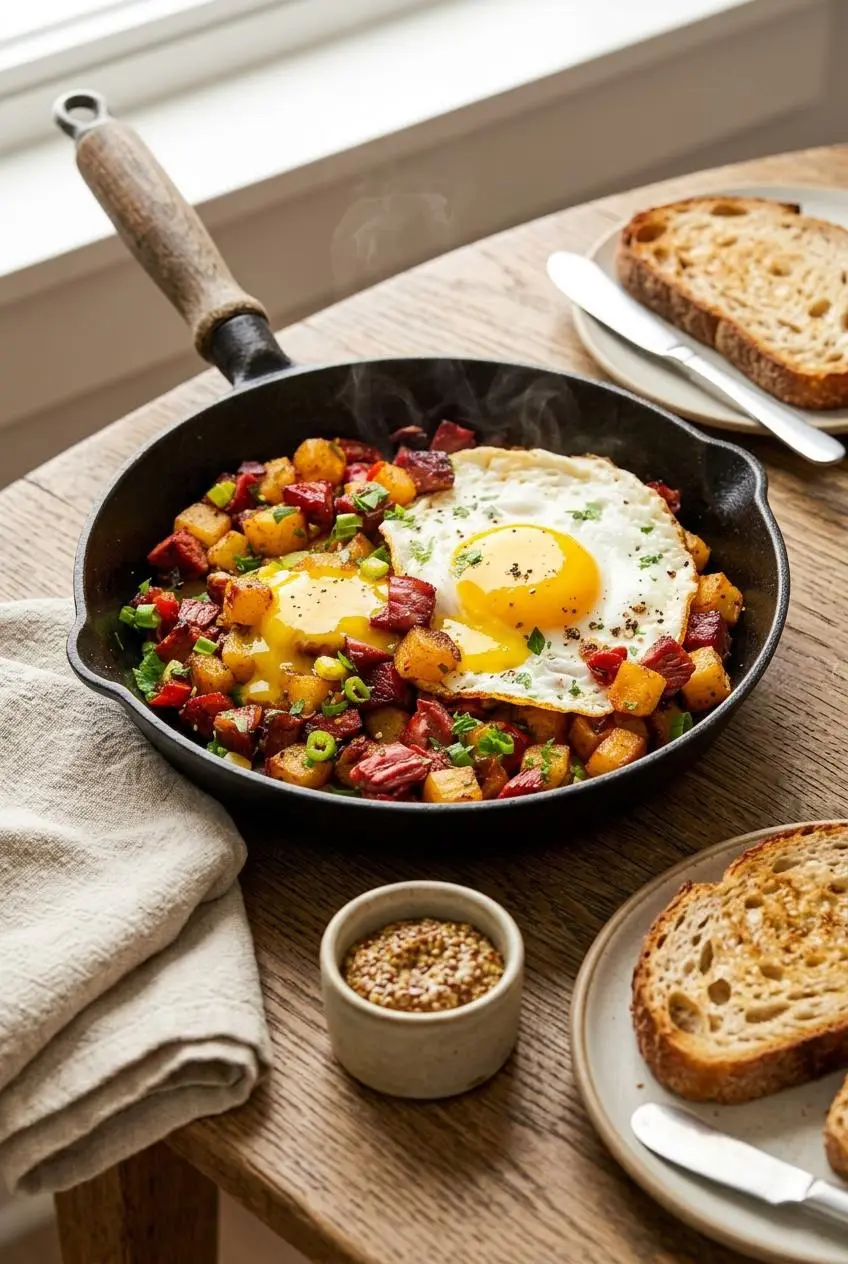
Runny eggs are a classic match for crisp hash. Fry or poach them separately, then place them over the hot skillet mixture so the yolks spill into the browned potatoes like a rich, natural sauce.
- Serve with toasted sourdough for scooping up crisp bits and soft egg yolk.
- Add coarse whole-grain Dijon mustard for tang and a little bite.
- Finish with a dash of vinegar-based hot sauce if you want brightness against the buttery beef.
- For a fresh finish, stir a small splash of apple cider vinegar and chopped thyme into the hash right after it comes off the heat.
Bring the eggs to the table as soon as the hash is ready. The contrast between crunchy potato edges, warm beef, and soft yolk is the whole point.
Troubleshooting Common Hash Mistakes
- Soggy hash: Wet potatoes trap steam and cannot brown properly. Drain them thoroughly after parboiling, let surface steam disappear, and avoid stirring once the mixture is pressed into the skillet.
- Potatoes breaking apart: Overcooking during parboiling makes the cubes fragile. Simmer only until barely tender, then flip the hash in broad sections with a wide spatula.
- Hash sticking to cast iron: The skillet likely was not fully heated or the fat was not hot enough. Preheat over medium heat, melt the butter and oil completely, then wait for an active sizzle before adding the potatoes.
- Garlic tasting bitter: Garlic scorches faster than onion and pepper. Add it only after the vegetables are softened, and keep it moving during its brief cook time.
- Overly salty flavor: Cured corned beef carries substantial seasoning. Taste the browned hash at the end, then add fine sea salt only if it truly needs it.
- Pale patches with no crust: The skillet may be crowded or the hash may be too loose. Press it into an even layer and give each side a full 4–5 minutes before turning.
Storing and Reheating Leftovers
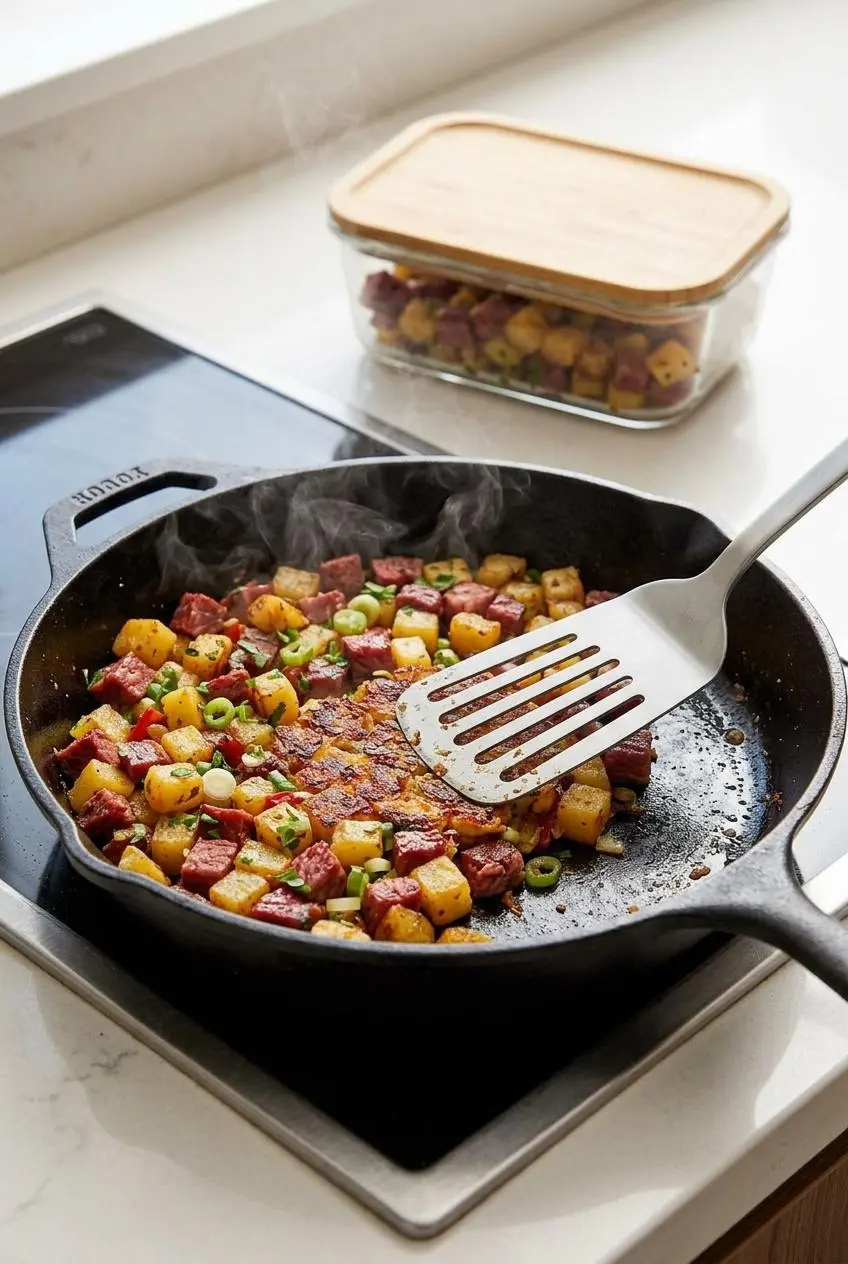
Cool leftover hash promptly and transfer it to an airtight container. Keep it refrigerated within 2 hours and use it within 4 days for safe leftover storage.
For the best texture, reheat portions in a hot buttered skillet over medium heat. Press the hash into a thin layer and let it brown before turning it in sections. A microwave can warm the center, but a skillet finish is what restores the crisp exterior.
If preparing components before cooking, keep the potatoes and cooked corned beef chilled separately until you are ready to use them. Avoid holding parboiled potatoes in water, since excess moisture works against a crisp finish.
Conclusion
Great skillet hash comes down to three habits: parboil the potatoes just until tender, let them steam dry, and leave the pressed mixture alone long enough to form a real crust.
Serve it hot with a fried or poached egg, then break the yolk over those golden potato edges. Breakfast is better when the skillet does the hard work.
Frequently Asked Questions
What Kind of Potatoes Work Best for Corned Beef Hash?
Yukon Gold potatoes offer the best balance of creamy centers and crisp fried edges. They hold their shape well after parboiling, which makes them especially dependable for a section-by-section flip. Russets can produce even more exterior crunch because of their starchier surface. Handle them gently, since they soften and break more easily than Yukon Golds.
Can I Make Corned Beef Hash With Canned Corned Beef?
Yes. Canned corned beef works well when chilled before opening, which firms the fat and helps you cut cleaner cubes. Add it gently and avoid aggressive stirring. Pressing and flipping broad sections gives it a chance to brown without dissolving into the potatoes.
Why Is My Homemade Corned Beef Hash Soggy Instead of Crispy?
Excess moisture is usually the problem. Parboiled potatoes need to drain and steam dry before they enter the skillet. Low heat and frequent stirring also prevent browning. Use a properly heated heavy skillet, press the mixture flat, and wait 4–5 minutes before checking underneath.
What Is the Best Way to Reheat Leftover Corned Beef Hash?
Use a medium-hot skillet with a little butter or oil. Press the hash into a thin layer and let it brown before turning it in sections. This brings back crisp edges far better than reheating it only in the microwave. Heat it thoroughly before serving.

Corned Beef Hash

Equipment
- Cast Iron Skillet
- Non-Toxic Cutting Board
Ingredients
- 1 pound Yukon Gold potatoes diced into 1/2-inch pieces
- fine sea salt
- 2 tablespoons butter
- 1 tablespoon olive oil
- 1 medium yellow onion diced
- 1 small red bell pepper diced
- 4 cloves garlic minced
- 2 cups cooked corned beef diced (about 1/2-inch pieces)
- 1/2 teaspoon freshly cracked black pepper
- 1/2 teaspoon smoked paprika
- optional toppings: fried or poached eggs, chopped fresh parsley and/or scallions, whole-grain Dijon mustard, hot sauce
Instructions
- Put the diced potatoes in a saucepan, cover them with cold water by about 1 inch, and season the water generously with salt before bringing it to a boil. Lower the heat and simmer for 5–6 minutes, until a fork enters with slight resistance and the cubes still hold their edges.
- Drain the potatoes thoroughly in a colander and leave them there for a minute or two before cooking. Steam should fade from the surface, leaving the cubes dry rather than glossy with water.
- Warm a large cast-iron or heavy skillet over medium heat, then melt the butter with the olive oil. The fat should look fluid and lightly shimmering without smoking.
- Add the onion and red bell pepper and cook for 5–6 minutes, stirring now and then, then stir in the garlic for 2 minutes. The vegetables should be soft and lightly golden, with a sweet onion aroma and fragrant garlic.
- Fold in the potatoes, diced corned beef, black pepper, and smoked paprika, then use a wide spatula to press everything into one even layer. Keep the potato cubes intact as much as possible so they can form crisp, distinct edges.
- Leave the hash untouched for 4–5 minutes, flip it in broad sections, and press it flat again; repeat this 2–3 more times over 15–20 minutes total. Serve once deep golden to mahogany patches form and the skillet smells richly browned rather than steamy.