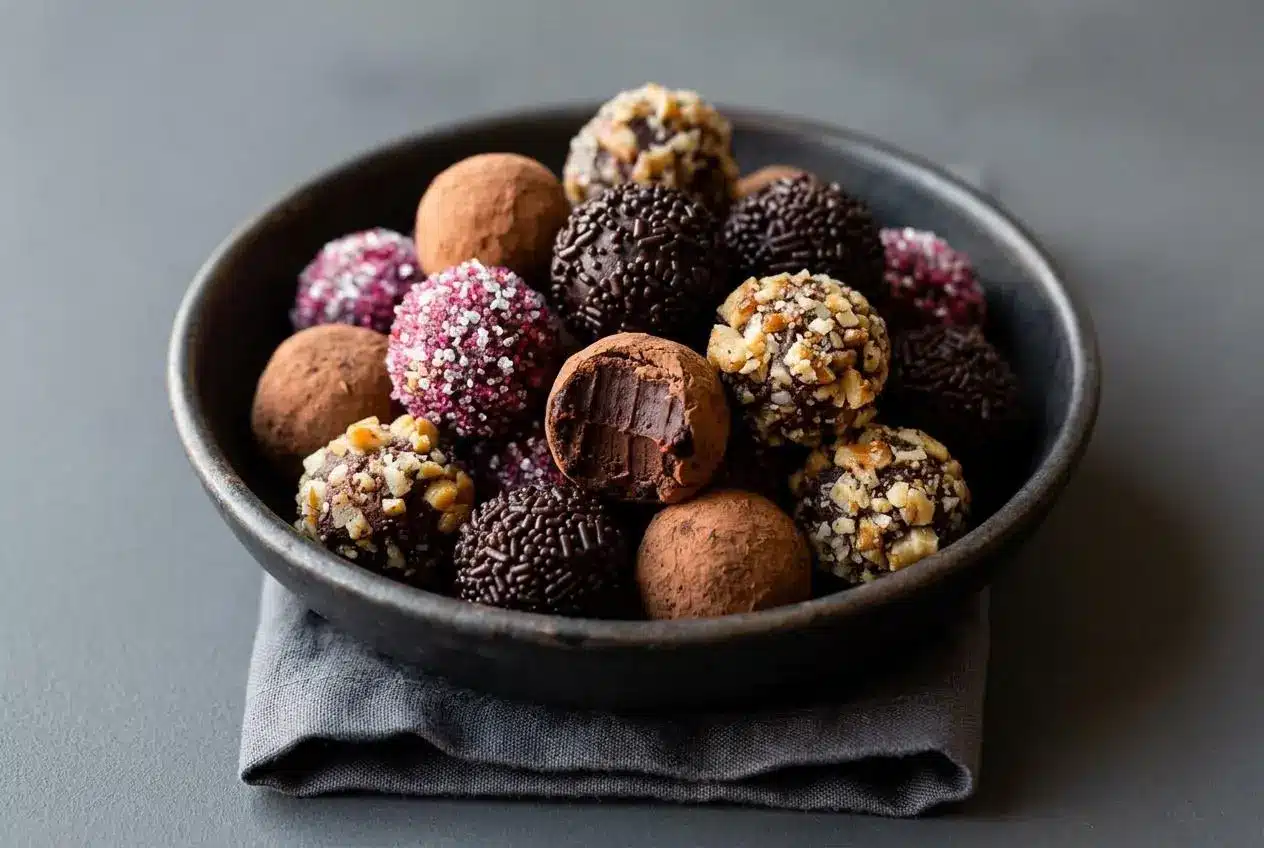
Classic chocolate truffles start with hot heavy cream poured over finely chopped chocolate and butter, then rest for 5 minutes before stirring into a glossy ganache. Chill until firm, roll into balls, and coat for a rich, velvety finish.
This chocolate truffles recipe makes deeply chocolaty candies with a smooth center that softens beautifully at room temperature. The key is gentle heat, fine chopping, and giving the ganache time to set.
Use quality chocolate bars, keep your hands cool, and you’ll get polished little truffles instead of a melted chocolate scramble. That five-minute rest changes everything.
Set out a heatproof bowl, a shallow dish, and a small cookie scoop before you begin so the shaping stage goes smoothly.
Essential Ingredients and Ganache Ratios
Chocolate creates structure and flavor, cream forms the smooth emulsion, butter adds sheen, vanilla rounds out the cocoa, and toppings provide contrast in texture, color, or crunch.
- two 4-ounce quality semi-sweet or bittersweet chocolate bars (226g), very finely chopped
- 2/3 cup (160ml) heavy cream
- 1 Tablespoon (14g) unsalted butter, softened to room temperature
- 1/2 teaspoon pure vanilla extract
- toppings: unsweetened cocoa powder, sprinkles, crushed nuts, melted or tempered chocolate
The chocolate’s cocoa butter gives the ganache its firm yet yielding structure once chilled. Heavy cream brings enough richness to make the center soft and spreadable rather than brittle. Softened butter blends in smoothly for a silkier mouthfeel and a subtle glossy finish, while vanilla softens the sharper edges of dark cocoa.
I chop the bars into tiny, even pieces so the warm cream reaches every bit of chocolate at the same pace and leaves no stubborn lumps behind.
Choosing the Right Chocolate
Choose quality semi-sweet or bittersweet baking bars, ideally in the 60 to 70 percent cacao range. This range gives you a deep chocolate flavor while still melting smoothly into the cream. Finely chopped bars melt evenly because their exposed cocoa butter can blend readily with the warm dairy.
Chocolate chips can work in a pinch, but they are less dependable for truffles. Many contain stabilizers designed to help them keep their shape in cookies, which can make ganache thicker, less fluid, or slightly waxy instead of satiny. Baking bars give the cleanest melt and the most reliable texture.
Dark chocolate generally needs more cream than milk chocolate because it contains more cocoa solids and less milk content. Milk chocolate has more sugar and milk solids, so swapping it into this formula without adjusting the cream can leave a softer ganache that struggles to hold a round shape.
The Crucial Role of Heavy Cream and Butter
Use heavy cream, not half-and-half or low-fat milk. The richer dairy fat helps the chocolate and cream come together into an emulsion, while lower-fat dairy can make the mixture loose and more likely to separate or stay soft after chilling.
Keep the butter softened rather than cold. It melts into the warm chocolate without abruptly lowering the mixture’s temperature, helping the ganache stay smooth. Avoid boiling the cream hard. Bring it only to a simmer, then pour it over the chocolate right away.
How to Make Chocolate Truffles
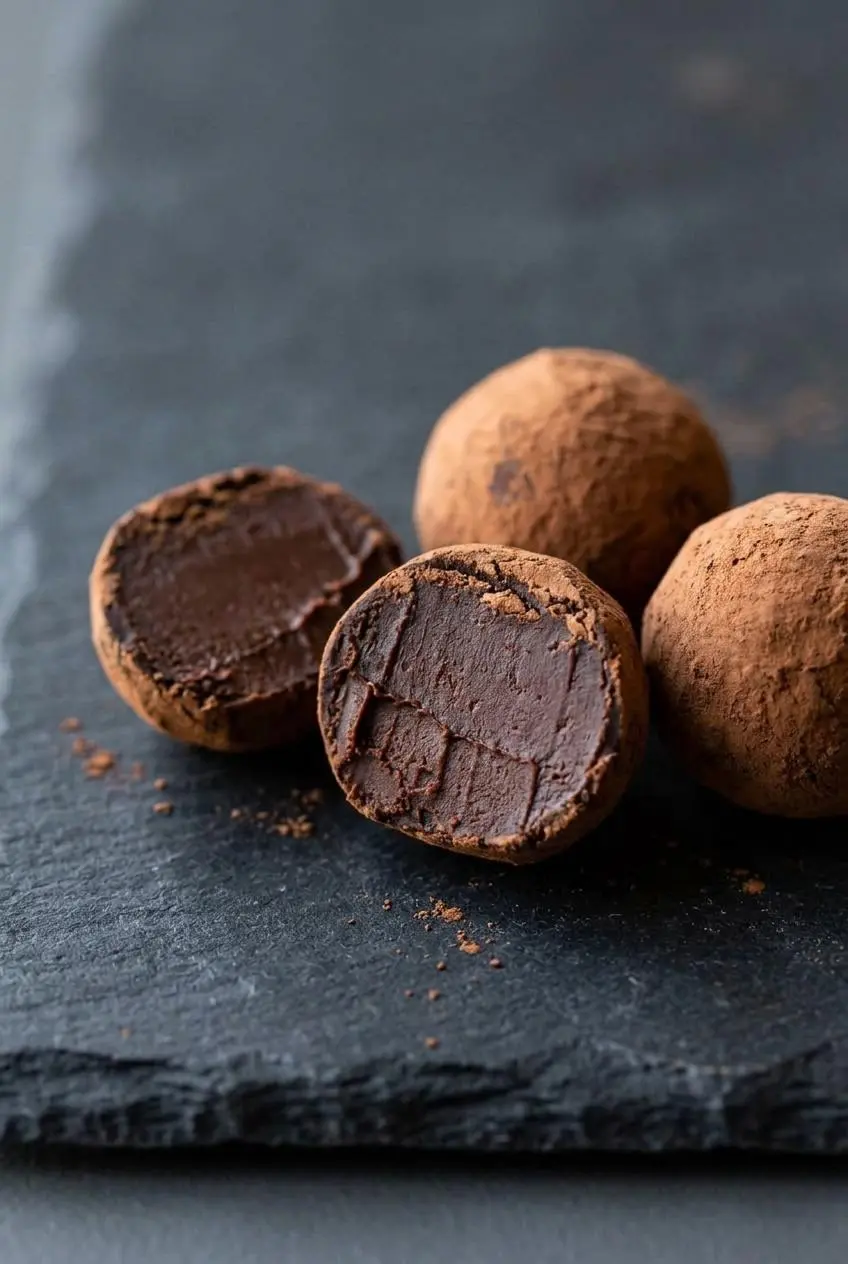
Work slowly at the beginning, then quickly once the ganache is firm enough to shape. The finished mixture should look dark, glossy, and completely uniform before it goes into the refrigerator.
- Put the finely chopped chocolate in a heatproof bowl and add the softened butter.
The smaller chocolate pieces should form an even layer so the cream can melt them consistently. - Warm the heavy cream on the stove or in the microwave until it reaches a gentle simmer.
Look for steam and small bubbles around the edges rather than a vigorous boil. - Pour the hot cream evenly over the chocolate and butter, then leave it untouched for 5 minutes.
The resting time softens the chocolate from the center outward and prevents a grainy mixture. - Add the vanilla extract and stir slowly in small circles from the center until the ganache is completely smooth.
It should change from streaky and speckled to thick, dark, and glossy. - Press plastic wrap directly against the ganache surface and refrigerate it for 1-2 hours, preferably in an 8-inch square baking pan.
The chilled ganache should feel firm but pliable, similar to soft playdough when pressed with a spoon. - Scoop the chilled ganache into 2 teaspoon-sized portions, or use 1 Tablespoon portions for larger truffles, then roll into balls.
Work quickly enough that the outside stays cool and holds its shape. - Roll each truffle in toppings, if desired, and let the finished truffles stand at room temperature before serving.
A slight outer tackiness helps cocoa powder and other coatings cling evenly. - Cover the truffles tightly and keep them at room temperature for 3-4 days or in the refrigerator for up to 2 weeks.
Bring chilled truffles toward room temperature before serving for the softest center.
Melting and Emulsifying the Ganache
The five-minute pause is doing real work. The heat from the cream gradually loosens the chopped chocolate and cocoa butter, so gentle stirring can pull the ingredients into one smooth mixture. Stir from the center and widen the circles as the dark pool becomes glossy.
Don’t whisk aggressively or beat air into the ganache. Slow stirring creates a dense, creamy center rather than a bubbly texture. Stop once there are no visible flecks of chocolate or oily streaks around the bowl.
Chilling and Pre-Portioning
A shallow 8-inch square pan gives the ganache more surface area than a deep bowl, helping it chill more evenly. Pressing plastic wrap directly on the surface helps prevent moisture droplets from forming and dulling the smooth finish.
Once the ganache reaches a firm playdough texture, use a small cookie scoop to portion it. If the room is warm, place the scooped mounds on a parchment-lined baking sheet and return them to the refrigerator briefly before rolling. This keeps the centers compact and easier to handle.
Rolling and Shaping Without Sticky Hands
Warm palms are the main reason truffles turn sticky. Rinse and dry your hands with cool water between a few truffles, chill your hands briefly with an ice pack, or use powder-free food-safe gloves. Roll each portion with quick, light movements instead of pressing it firmly.
If you would rather skip rolling, make rustic square truffles. Chill the ganache in the shallow pan, lift it out once firm, and slice it into neat cubes with a warm, dry knife. Dust the cut sides with cocoa powder for an intentionally handmade look.
Troubleshooting Common Truffle Mistakes
Ganache can look dramatic when it misbehaves, but most problems respond well to a small, calm correction. Focus on the texture in front of you rather than rushing to start over.
How to Rescue Split or Oily Ganache
If a slick of oil appears on top or the ganache looks grainy, the emulsion has separated. This usually happens when the cream got too hot, the chocolate overheated, or the mixture lost too much moisture.
- Warm the bowl gently just until the ganache loosens enough to stir.
- Add warm water one teaspoon at a time, stirring firmly after each addition.
- Continue only until the oily streaks pull back into the chocolate and the ganache turns glossy again.
Use restraint with the water. The goal is to bring the fat and liquid back together, not to make the ganache thin. If you need to melt added chocolate while adjusting a soft ganache, use these tips for melting chocolate gently to avoid scorching it.
What to Do When Ganache Is Too Soft or Too Hard
- Too soft to roll: Refrigerate the ganache longer, especially if your kitchen is warm. If it remains loose after chilling, gently melt in finely chopped dark chocolate a little at a time until it becomes firmer.
- Too hard to scoop: Let the chilled ganache sit on the counter until a spoon can press into it without cracking the surface. It should yield slowly, not feel rock solid.
- Sticky during rolling: Chill the portioned mounds again and cool your hands before continuing. Cocoa powder can hide a little stickiness, but the ganache should still hold a smooth sphere.
- Grainy texture: Stir gently while the chocolate is still warm enough to melt fully. Tiny unmelted pieces can leave the finished center rough rather than velvety.
Creative Coatings and Flavor Variations
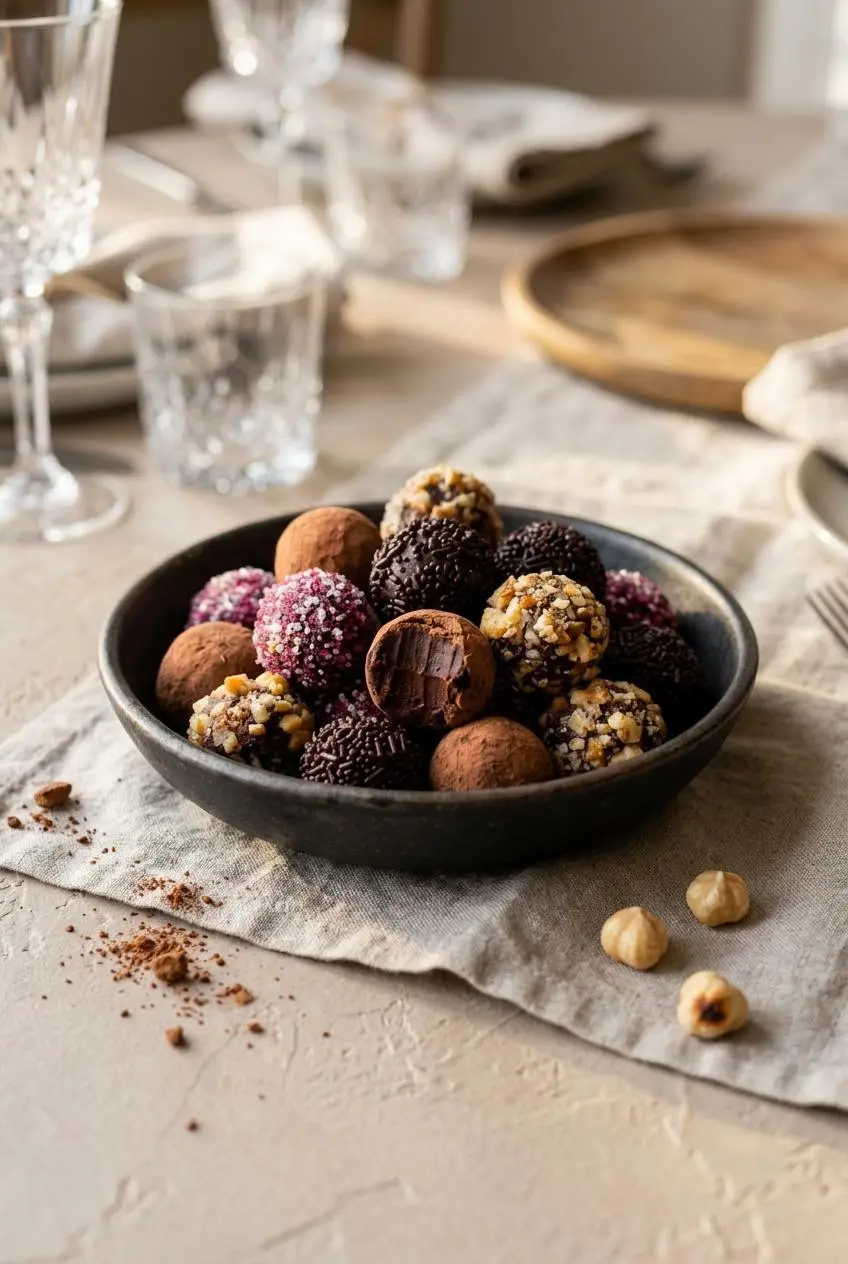
Keep the chocolate center as written, then use coatings and infusions to build contrast. A mix of finishes makes one batch look festive without changing the truffle method.
Cocoa Dusting and Crushed Nut Coatings
- Dutch-process cocoa powder: Gives the classic bittersweet finish and balances the rich center.
- Powdered sugar: Adds a sweet, snowy contrast that works well with bittersweet chocolate.
- Toasted crushed hazelnuts: Bring a deep, roasted crunch that pairs naturally with dark chocolate.
- Finely chopped pistachios: Add color and a fresh, nutty bite.
- Shredded coconut: Creates a softer, chewy coating with a lightly tropical flavor.
- Melted or tempered chocolate: Forms a crisp shell around the softer ganache center.
For an assorted gift box or dessert platter, pair these truffles with salted caramel truffles for a sweet-and-salty contrast.
Botanical and Citrus Infusions
Infuse the cream before pouring it over the chocolate, then strain out any solids. This adds aroma without adding watery liquid directly to the ganache.
- Steep fresh orange or lemon zest in the simmering cream for a bright citrus lift that cuts through the richness.
- Warm lightly crushed whole cardamom pods in the cream for a floral, gently spiced truffle.
- Use a split vanilla bean in the cream for a rounder, more fragrant vanilla flavor.
- Finish coated truffles with a tiny pinch of sea salt flakes for a sharper chocolate profile.
Storage and Gifting Guide
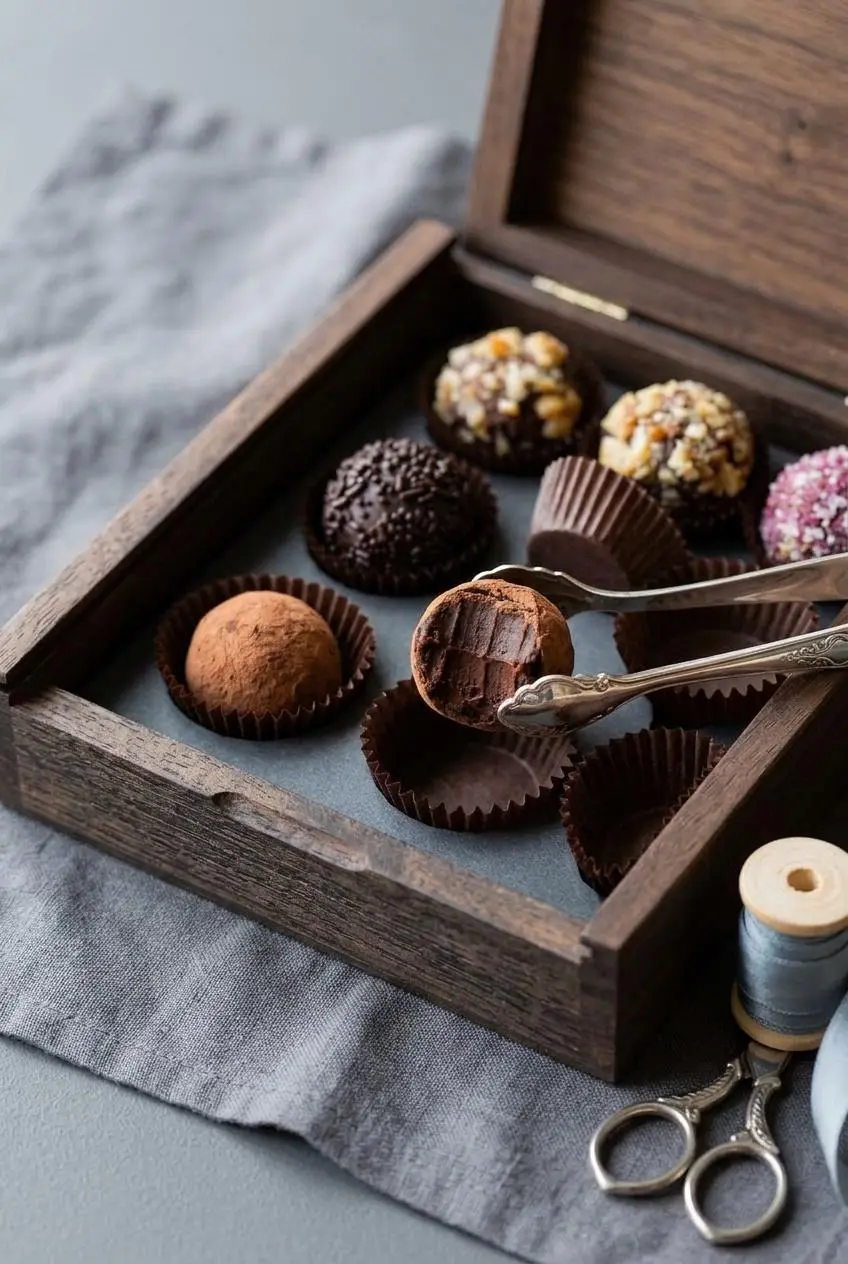
Keep finished truffles tightly covered to protect their smooth texture and prevent them from picking up refrigerator odors. The recipe keeps them at room temperature for 3-4 days or refrigerated for up to 2 weeks.
For serving, let refrigerated truffles sit out until the center loses its firm chill and becomes soft and creamy again. Avoid trapping condensation in the container, especially after moving truffles between cool and warm spaces. Keep the lid closed until the truffles have settled to their new temperature.
For gifting, place each truffle in a fluted mini paper candy cup and arrange them in a small box with a snug lid. Choose one or two coatings per box so the flavors stay distinct and the cocoa powder does not transfer onto lighter toppings.
Conclusion
Quality chocolate, gently simmered cream, and a patient five-minute rest create truffles with a glossy ganache center and a luxurious melt. Finely chopped chocolate and cool hands make the process much easier.
Finish with cocoa powder, toasted nuts, or a bright citrus infusion to match the occasion. Serve them slightly softened for the richest bite.
Frequently Asked Questions
Why Are My Chocolate Truffles Too Soft to Roll?
The ganache may need more time in the refrigerator, particularly in a warm kitchen. It should feel firm and pliable before shaping. If it still will not hold its shape after chilling, the mixture may contain too much liquid for the chocolate used. Gently melt in finely chopped dark chocolate a little at a time until the ganache thickens enough to scoop cleanly.
Can I Fix a Broken or Greasy Ganache?
Yes. Warm the ganache gently, then stir in hot water one teaspoon at a time until the separated fat blends back into a smooth, glossy mixture. Stop as soon as the ganache becomes cohesive. Too much water can make the mixture loose and may require additional chopped chocolate to restore a rollable texture.
Can I Use Chocolate Chips Instead of Chocolate Bars?
Chocolate bars are strongly recommended for the smoothest truffles. Chips often include stabilizers that help them retain their shape during baking, which can interfere with a silky ganache texture. If chips are your only option, chop them finely and expect the mixture to be less fluid than ganache made with baking bars.
How Long Do Homemade Chocolate Truffles Stay Fresh?
Keep truffles tightly covered and protect them from heat and moisture. Refrigeration helps maintain their texture when your kitchen is warm. For the softest center, allow chilled truffles to sit at room temperature before serving rather than eating them straight from the refrigerator.
What Is the Best Chocolate Percentage for Truffles?
Dark chocolate in the 60 to 70 percent cacao range gives a balanced result. It has enough cocoa depth for a grown-up chocolate flavor while still melting smoothly with the cream. Very dark chocolate can taste more intense and may set firmer, while lower-percentage chocolate tends to produce a sweeter, softer center.
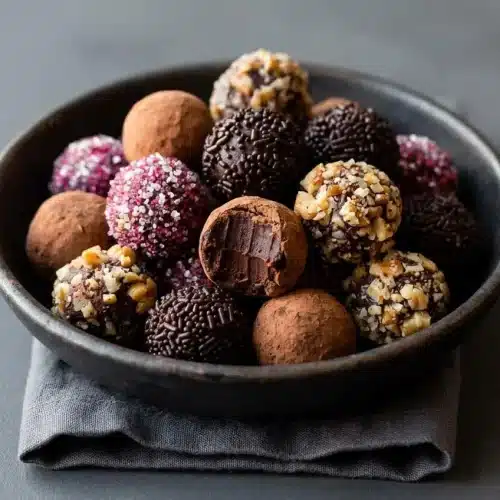
Chocolate Truffles Recipe

Equipment
- Glass Mixing Bowl
- Small cookie scoop
- 8-inch Square Pan
Ingredients
- 2 4-ounce bars quality semi-sweet or bittersweet chocolate (226g), very finely chopped
- 2/3 cup heavy cream (160ml)
- 1 Tablespoon unsalted butter (14g), softened to room temperature
- 1/2 teaspoon pure vanilla extract
- toppings: unsweetened cocoa powder, sprinkles, crushed nuts, melted or tempered chocolate
Instructions
- Put the finely chopped chocolate in a heatproof bowl and add the softened butter. The smaller chocolate pieces should form an even layer so the cream can melt them consistently.
- Warm the heavy cream on the stove or in the microwave until it reaches a gentle simmer. Look for steam and small bubbles around the edges rather than a vigorous boil.
- Pour the hot cream evenly over the chocolate and butter, then leave it untouched for 5 minutes. The resting time softens the chocolate from the center outward and prevents a grainy mixture.
- Add the vanilla extract and stir slowly in small circles from the center until the ganache is completely smooth. It should change from streaky and speckled to thick, dark, and glossy.
- Press plastic wrap directly against the ganache surface and refrigerate it for 1-2 hours, preferably in an 8-inch square baking pan. The chilled ganache should feel firm but pliable, similar to soft playdough when pressed with a spoon.
- Scoop the chilled ganache into 2 teaspoon-sized portions, or use 1 Tablespoon portions for larger truffles, then roll into balls. Work quickly enough that the outside stays cool and holds its shape.
- Roll each truffle in toppings, if desired, and let the finished truffles stand at room temperature before serving. A slight outer tackiness helps cocoa powder and other coatings cling evenly.
- Cover the truffles tightly and keep them at room temperature for 3-4 days or in the refrigerator for up to 2 weeks. Bring chilled truffles toward room temperature before serving for the softest center.