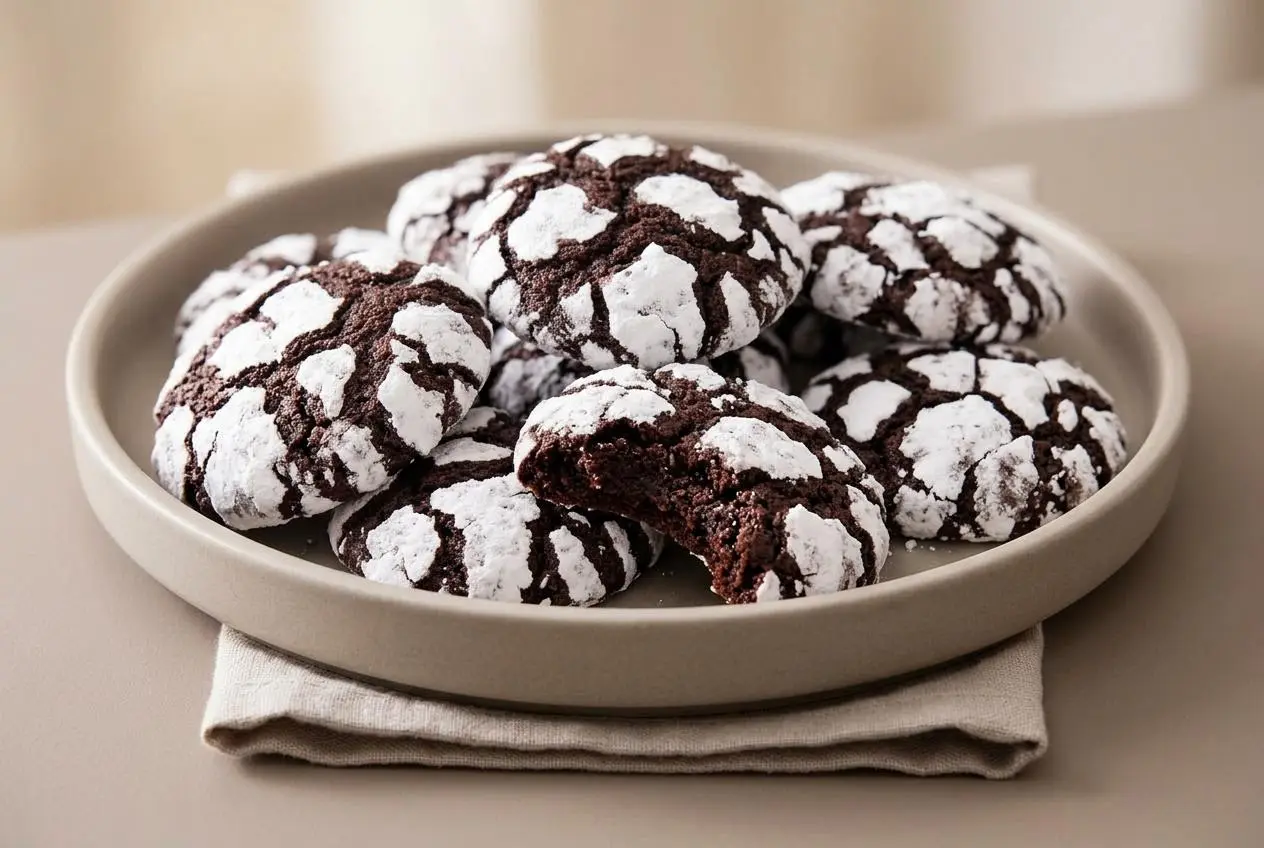
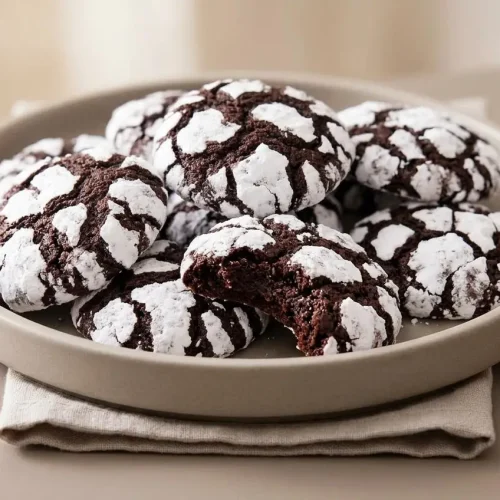
Chocolate crinkle cookies are cocoa-rich cookies coated in powdered sugar that split as they bake, revealing fudgy, brownie-like centers beneath a crisp snowy crust.
This chocolate crinkle cookies recipe makes deeply chocolatey cookies with firm edges, soft centers, and the signature white crackles everyone reaches for first.
Fresh cocoa aroma fills the kitchen while the cookies puff and crack in the oven. The double-sugar trick makes those snowy fissures pop.
Keep the dough chilled while each tray bakes so the remaining cookies stay tall rather than spreading too soon.
Ingredients for Chocolate Crinkle Cookies
Each ingredient contributes to the cookies’ deep cocoa flavor, glossy dough, tender crumb, lift, and bright sugar-coated finish.
- 1 cup unsweetened cocoa powder ((100g))
- 1¾ cups granulated sugar ((350g))
- ½ cup vegetable oil ((120mL))
- 4 large eggs (room temperature)
- 2 teaspoons vanilla extract
- 2 cups all-purpose flour ((240g))
- 2 teaspoons baking powder
- ¾ teaspoon salt
- 1 cup powdered sugar ((120g))
Unsweetened cocoa powder gives the dough its dark color and bold chocolate flavor. Granulated sugar sweetens the cocoa and helps create a shiny dough, while eggs provide structure and richness. Flour holds the cookies together, baking powder lifts them, and salt keeps the sweetness from tasting flat. Powdered sugar forms the pale, crackled shell.
I use room-temperature eggs because they blend into the cocoa mixture more smoothly and help the dough turn glossy before the flour goes in.
How to Make Chocolate Crinkle Cookies
The dough starts out much softer than ordinary cookie dough. Expect something closer to thick, sticky brownie batter before chilling, then a firm dough that can be rolled into neat balls.
- Beat the granulated sugar, cocoa powder, and vegetable oil in a large bowl with a hand mixer or paddle-equipped stand mixer on medium speed.
Stop when the mixture looks evenly blended, dark, and shiny with no dry cocoa pockets. - Beat in the eggs one at a time, mixing well after each addition, then blend in the vanilla extract.
The mixture should become glossy and fluid-looking before the dry ingredients are added. - Stir the flour, baking powder, and salt together in a separate medium bowl, then mix them into the cocoa mixture on low speed just until no flour streaks remain.
The finished dough will be thick and sticky, which is exactly what creates a fudgy center after chilling. - Cover the dough with plastic wrap and refrigerate for at least 4 hours or up to overnight.
After chilling, it should feel firm enough to scoop and roll without flowing across your hands. - Heat the oven to 350°F, line two large baking sheets with parchment paper, and place the powdered sugar in a small bowl.
Let the oven fully preheat so the chilled dough gets the quick heat it needs to rise and crack. - Scoop the chilled dough with a small ice cream scoop or tablespoon, roll it into roughly one-inch balls, coat each ball well in powdered sugar, and arrange them about 2 inches apart on the prepared sheets.
Coat only the dough balls that fit on the current sheets, keeping the rest chilled until it is time to bake them. - Bake for 10 to 12 minutes, then leave the cookies on the sheets for a few minutes before moving them to a wire rack to cool completely.
Pull them when the edges are firm and the puffed centers still look slightly wet through the cracks.
As the cookies cool, their domes settle a little. That gentle deflating is normal and helps establish the dense, fudgy middle.
Key Ingredients and Their Functional Roles
Understanding how the cocoa dough behaves makes it much easier to protect that classic contrast between a crisp coating and a soft chocolate center.
Cocoa Selection: Natural vs. Dutch Process
Natural unsweetened cocoa powder has a sharper, more acidic chocolate profile. Dutch-process cocoa is treated to taste milder and usually produces a darker-looking dough. This dough uses baking powder, which supplies its own leavening power, so either cocoa can provide lift, but the final flavor and color will shift.
Choose natural cocoa when you enjoy a brighter, more pronounced cocoa taste. Choose Dutch-process cocoa for a deeper color and smoother chocolate character. Either way, sift or whisk out stubborn cocoa lumps before mixing so the finished cookies taste evenly chocolatey.
The Role of Oil in Creating Brownie Fudginess
Vegetable oil stays liquid after the cookies cool, helping the crumb remain dense, moist, and chewy rather than turning firm and cakey. Butter can taste wonderful, but its solid fat structure sets more firmly at room temperature and changes the texture.
That oil-based richness is what gives these cookies the familiar chew of chocolate brownie cookies while still allowing the baking powder to create a little lift. Measure the flour carefully, especially when using cups, because excess flour can overpower that fudgy texture.
Optional Flavor Enhancers
Keep the main dough as written, or try one of these optional flavor directions when you want a different kind of chocolate cookie:
- Espresso crinkles: Add 1 teaspoon of instant espresso powder to the cocoa mixture for a darker, more intense chocolate flavor without making the cookies taste strongly like coffee.
- Double chocolate chip crinkles: Fold mini chocolate chips into the finished dough for small melted pockets throughout the fudgy centers.
- Peppermint crinkles: Add a drop of peppermint extract with the vanilla for a cool holiday flavor that pairs beautifully with rich cocoa.
Use a light hand with extracts. Chocolate should remain the main flavor, with espresso or peppermint acting as a background accent.
Essential Techniques for Dramatic Crinkles
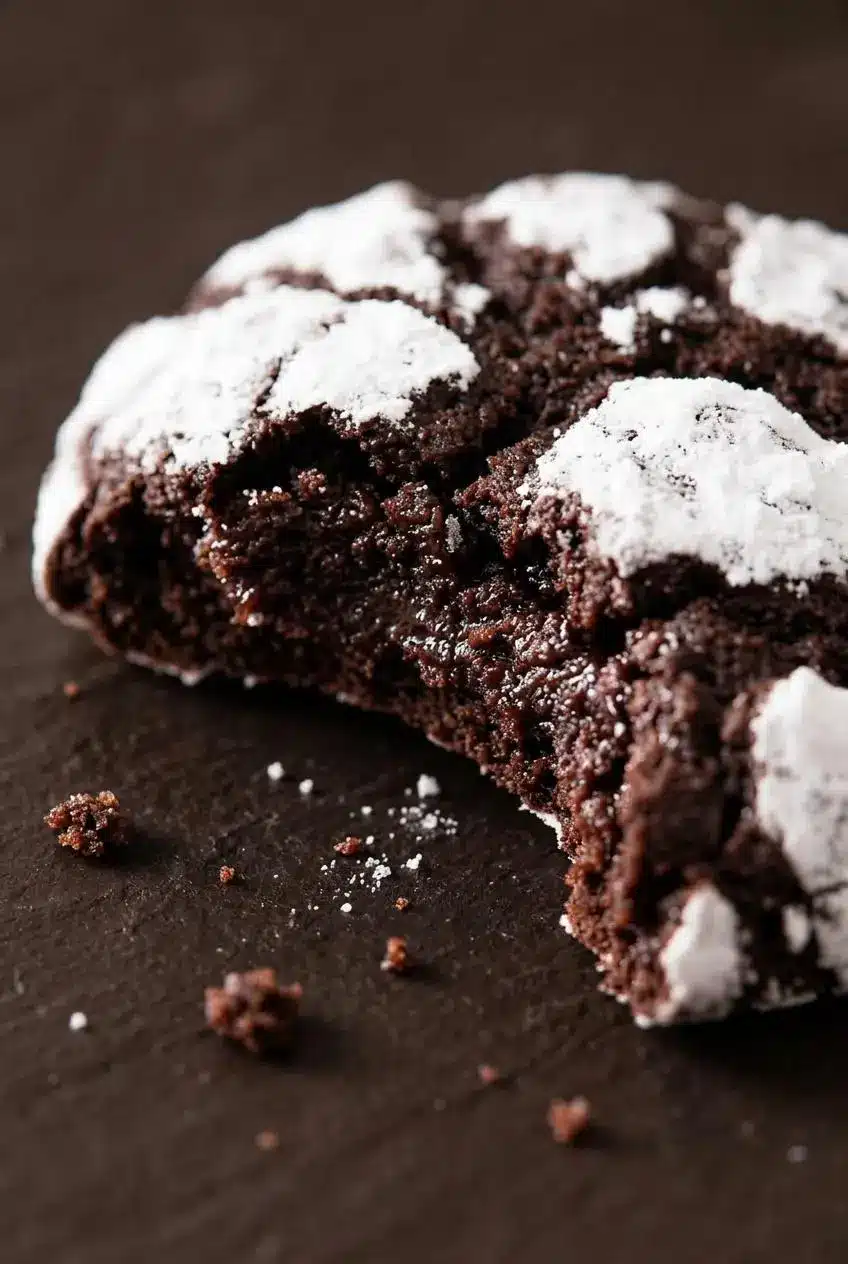
Distinct crinkles come from cold dough, a properly heated oven, and sugar applied at the right moment.
The Dual Sugar Rolling Secret
For especially bold white cracks, use an optional two-stage coating: roll each chilled dough ball in granulated sugar first, then give it a generous coating of powdered sugar. The granulated sugar creates a dry barrier between the moist dough and the powdered sugar, so the outer coating is less likely to dissolve during baking.
Do this right before baking rather than coating every ball at once. The longer powdered sugar sits against damp dough, the more likely it is to fade into the surface. This same approach also works well for ube crinkle cookies, where a bright coating makes the color underneath stand out.
Chilling Discipline and Temperature Control
The 4-hour chill is a structural step, not a convenience. Before chilling, the dough is glossy, sticky, and difficult to shape. Afterward, the cocoa mixture becomes firm enough to roll, while the cold oil slows spreading in the oven.
Return unbaked dough to the refrigerator between batches, particularly in a warm kitchen. Warm dough spreads before the crust can split, leaving wide, thin cookies instead of thick crinkles.
Oven Temperature and Spacing Dynamics
Use parchment-lined baking sheets and leave 2 inches between the dough balls. That space allows heat to circulate and gives the cookies room to spread without joining together at the edges.
An oven thermometer can be helpful when crinkles repeatedly bake pale or fail to split. At 350°F, the cold dough rises quickly, the sugar crust dries, and the expanding center pushes through in dramatic fissures. Bake on a middle rack to encourage even top cracking without overly dark bottoms.
Troubleshooting Common Baking Problems
Most crinkle cookie problems come down to dough temperature, flour measurement, or leaving the cookies in the oven too long.
Why Cookies Spread Flat
- The dough was too warm: Refrigerate it until firm before rolling, and keep the remaining portion chilled while a tray bakes.
- The flour was measured lightly: Spoon flour into the measuring cup and level it rather than scooping directly from the bag, which can leave the dough too loose.
- The baking sheet was still hot: Start each batch on a cool parchment-lined sheet so the dough does not melt before it reaches the oven.
Why Powdered Sugar Absorbs and Fades
- The dough balls sat coated for too long: Roll them in powdered sugar immediately before baking.
- The dough was not cold enough: Chilled dough releases moisture more slowly, helping the sugar remain bright.
- The coating needed a barrier: Try the optional granulated sugar layer beneath the powdered sugar for more defined white crackles.
Humidity can also soften the coating before baking. Work with small batches rather than lining up every dough ball long before the oven is ready.
How to Avoid Dry and Cakey Centers
- The cookies baked too long: Remove them at 10 to 12 minutes when the edges are set but the cracked centers still look puffed and slightly glossy.
- The dough contained too much flour: Use the listed 240g measurement when possible for the most consistent brownie-like interior.
- The cookies were moved too soon: Let them rest on the hot baking sheet for a few minutes, where the centers finish setting without becoming dry.
Dark cookies can look underdone even when they are ready. Focus on the edge texture and the soft sheen in the center rather than waiting for visible browning.
Advance Prep and Storage
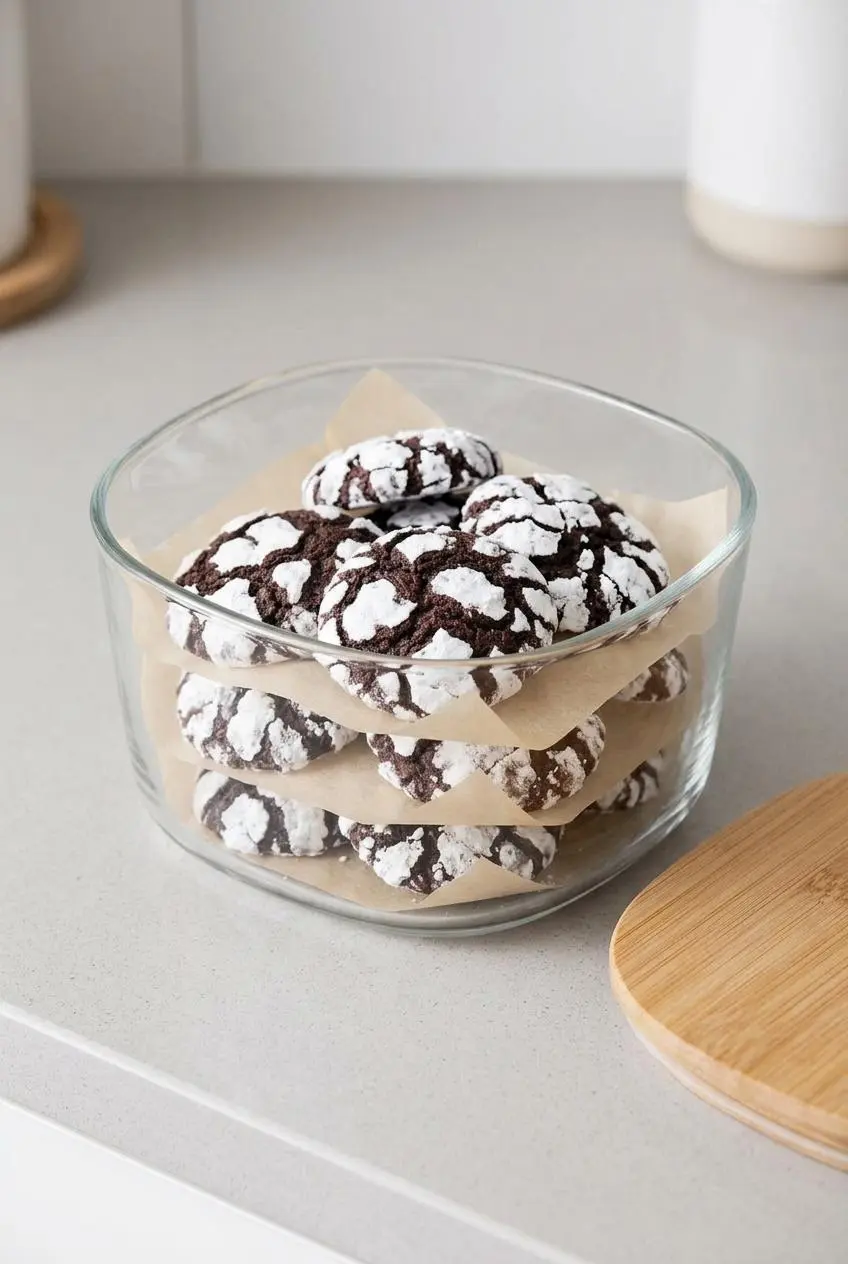
A little planning keeps the cookie coating bright and the centers tender, especially when baking several trays for a holiday gathering.
Holding Dough for Later Baking
Prepare the dough, cover it tightly, and refrigerate it for at least 4 hours or up to overnight before shaping. Portion and coat the dough only when the oven is hot and the baking sheets are ready, which helps prevent the sugar from melting into the dough.
This method provides a reliable refrigerator rest for advance prep. A freezer method is not included here, so use the chilled dough approach when planning ahead.
Storing Baked Crinkle Cookies
Cool the cookies completely before placing them in an airtight container at room temperature. Arrange parchment between layers to protect the powdered sugar crust and limit moisture transfer between cookies.
Keep the container away from steam, direct sunlight, and humid spots in the kitchen. The coating stays prettiest when the cookies are handled gently and covered only after they have fully cooled.
Serving Ideas for Holiday Platters
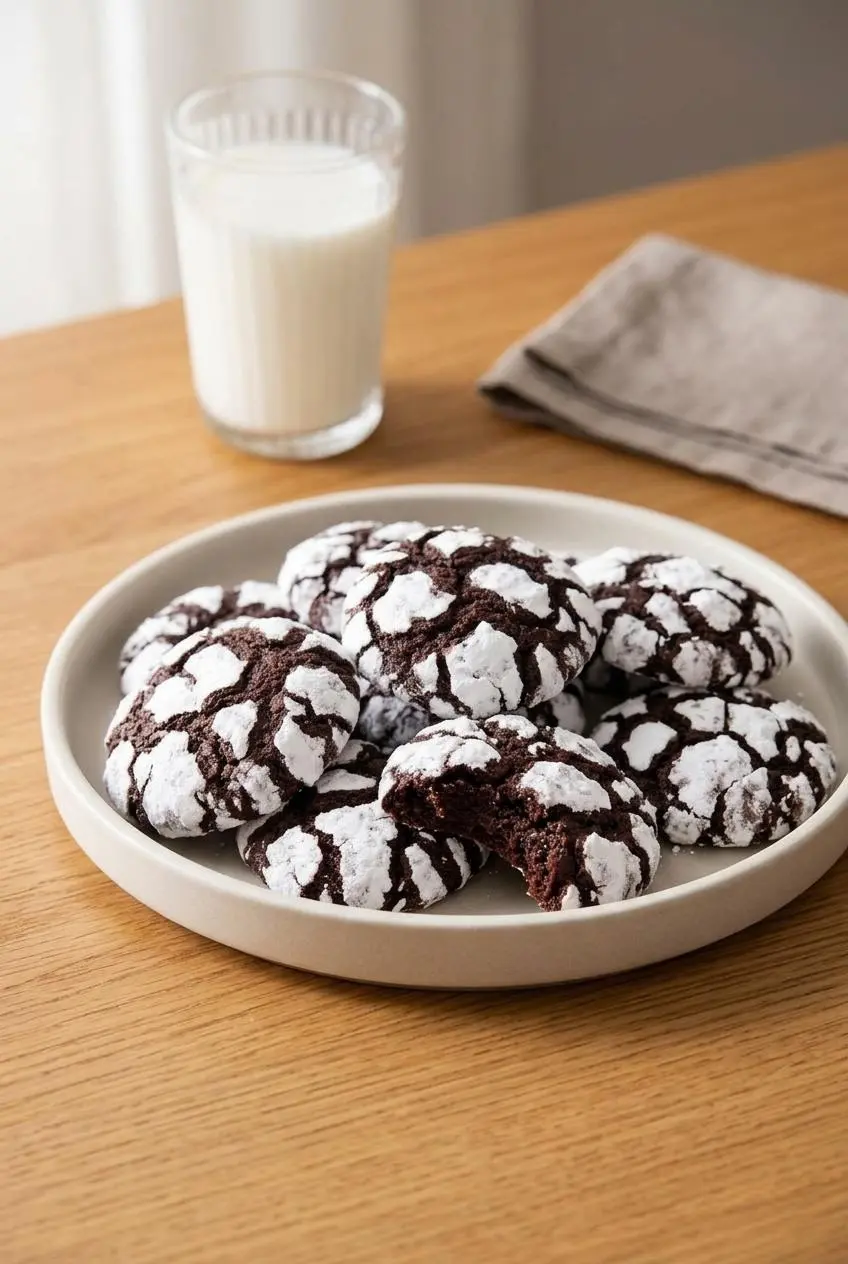
These cookies bring contrast to a holiday dessert platter because their snowy tops stand out beside golden shortbread, spiced cookies, and dark chocolate treats.
- Arrange them in a single layer on a cookie tray so the powdered coating stays intact.
- Serve them slightly warm with a cold glass of whole milk for a classic brownie-and-milk pairing.
- Offer hot espresso or a spiced latte alongside the cookies when you want the cocoa flavor to feel deeper and less sweet.
- Pack them in paper-lined boxes for cookie swaps, keeping the layers separated so the white coating remains clear.
Conclusion
Chilled dough, a generous sugar coating, and a short bake are the three details that give these cookies their crisp snowy exterior and fudgy center.
Pull them while the middles still look slightly soft, then let the baking sheet finish the job. They are made for holiday trays, warm drinks, and the first cookie grabbed from the plate.
Frequently Asked Questions
What Is the Secret to Distinct Crinkles?
Chill the dough for at least 4 hours so it stays thick as it begins to bake. Roll cold dough balls generously in powdered sugar right before baking. For the strongest white contrast, use the optional granulated sugar layer before the powdered sugar.
Why Did My Powdered Sugar Disappear During Baking?
Warm dough can absorb the powdered sugar before the crust has time to set. Coating dough balls too far ahead gives moisture time to dissolve the sugar. Chill the dough well and coat only the cookies that are going straight into the oven.
How Do I Know When Chocolate Crinkle Cookies Are Finished Baking?
Look for firm edges and a puffed center with cracks that still appear slightly glossy. Remove the cookies at 10 to 12 minutes rather than waiting for the center to look dry. Let them sit on the hot baking sheet for a few minutes so the fudgy center can finish setting.
Can I Freeze Chocolate Crinkle Cookie Dough?
This recipe provides a refrigerator chilling method rather than a freezer method. For advance prep, cover the dough tightly and refrigerate it for at least 4 hours or up to overnight, then roll and coat it shortly before baking.
Can I Substitute Melted Butter for the Vegetable Oil?
Melted butter can be used, but expect a firmer, slightly more cakey cookie after cooling. Vegetable oil is the better choice when you want the dense, moist, brownie-like texture that defines these crinkles.
Chocolate Crinkle Cookies Recipe

Equipment
- Mixing Bowls
- Electric hand or stand mixer
- Baking Sheets
- Parchment Paper
- Cookie Scoop
Ingredients
- 1 cup unsweetened cocoa powder ((100g))
- 1¾ cups granulated sugar ((350g))
- ½ cup vegetable oil ((120mL))
- 4 large eggs room temperature
- 2 teaspoons vanilla extract
- 2 cups all-purpose flour ((240g))
- 2 teaspoons baking powder
- ¾ teaspoon salt
- 1 cup powdered sugar ((120g))
Instructions
- Beat the granulated sugar, cocoa powder, and vegetable oil in a large bowl with a hand mixer or paddle-equipped stand mixer on medium speed. Stop when the mixture looks evenly blended, dark, and shiny with no dry cocoa pockets.
- Beat in the eggs one at a time, mixing well after each addition, then blend in the vanilla extract. The mixture should become glossy and fluid-looking before the dry ingredients are added.
- Stir the flour, baking powder, and salt together in a separate medium bowl, then mix them into the cocoa mixture on low speed just until no flour streaks remain. The finished dough will be thick and sticky, which is exactly what creates a fudgy center after chilling.
- Cover the dough with plastic wrap and refrigerate for at least 4 hours or up to overnight. After chilling, it should feel firm enough to scoop and roll without flowing across your hands.
- Heat the oven to 350°F, line two large baking sheets with parchment paper, and place the powdered sugar in a small bowl. Let the oven fully preheat so the chilled dough gets the quick heat it needs to rise and crack.
- Scoop the chilled dough with a small ice cream scoop or tablespoon, roll it into roughly one-inch balls, coat each ball well in powdered sugar, and arrange them about 2 inches apart on the prepared sheets. Coat only the dough balls that fit on the current sheets, keeping the rest chilled until it is time to bake them.
- Bake for 10 to 12 minutes, then leave the cookies on the sheets for a few minutes before moving them to a wire rack to cool completely. Pull them when the edges are firm and the puffed centers still look slightly wet through the cracks.