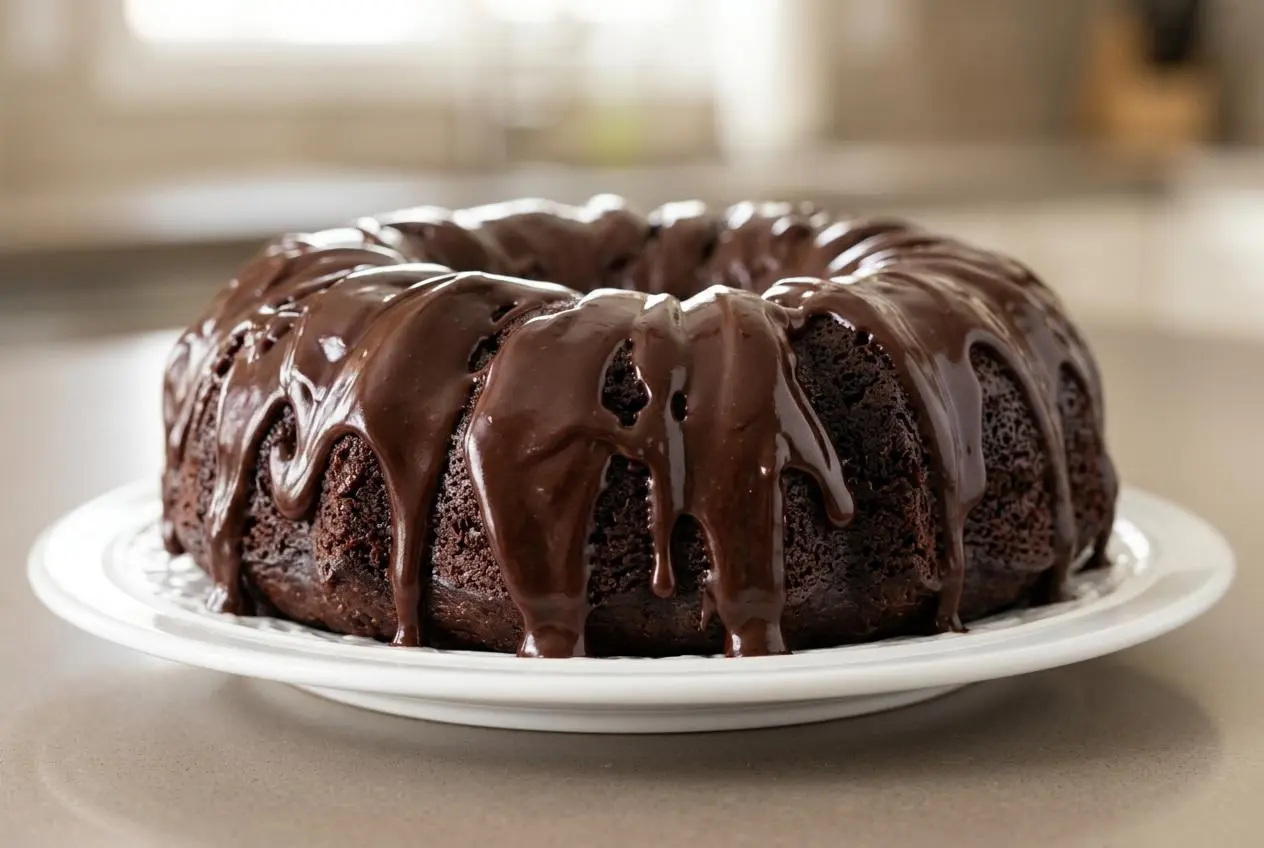
This chocolate bundt cake is rich, moist, and deeply chocolaty, with a tender crumb and a glossy ganache glaze. The key is blooming the cocoa, using sour cream for moisture, and preparing the bundt pan thoroughly so the cake releases cleanly.
This is the kind of cake that feels a little special without being fussy. You get bold chocolate flavor from scratch, a beautiful shape straight from the pan, and a texture that stays soft slice after slice.
It’s also a very doable bake, even if bundt pans have betrayed you before. The batter tells you what it needs, and the glaze comes together in minutes.
Grease and flour every curve of the bundt pan before you start mixing the batter, because that one step does more for success than anything else.
Why You’ll Love This Chocolate Bundt Cake Recipe
If you want a dependable chocolate cake that looks impressive and tastes even better, this one checks every box.
- It has deep chocolate flavor without being heavy or overly sweet.
- The crumb stays moist and tender thanks to sour cream and the hot cocoa mixture.
- The method is straightforward and fully from scratch, with no complicated mixing tricks.
- The bundt shape gives you that classic, beautiful finish with very little effort.
- The chocolate ganache glaze sets with a smooth shine and drips perfectly over the ridges.
- It has the satisfying richness of a classic pound cake, but with a softer, more chocolate-forward bite.
Key Ingredients for a Perfect Chocolate Bundt Cake
Each ingredient earns its place here, building chocolate flavor, a soft crumb, clean structure, and a glaze with just the right shine.
For the cake
- 1 cup unsalted butter, plus more for the pan
- 1/3 cup cocoa powder, we use Dutch process
- 1 teaspoon kosher salt
- 1 cup water
- 2 cups all-purpose flour, plus more for the pan
- 1 3/4 cups granulated sugar
- 1 1/2 teaspoons baking soda
- 2 large eggs
- 1/2 cup sour cream, or plain Greek yogurt
- 1 teaspoon pure vanilla extract
For the chocolate glaze
- 4 ounces bittersweet chocolate, finely chopped
- 1 1/2 tablespoons corn syrup
- 1/2 cup heavy cream
- 1 1/2 tablespoons granulated sugar
The Role of Sour Cream for Moisture
Sour cream does a lot of work in this cake. Its fat adds richness, while its acidity helps keep the crumb tender instead of dry or tough. That tang also sharpens the chocolate flavor a bit, which makes the whole cake taste fuller.
Plain full-fat Greek yogurt is the best swap if you don’t have sour cream. It gives you a similar thickness and tang, so the batter still bakes up soft and moist. Buttermilk can help with moisture too, but it’s looser, so Greek yogurt is the closer match here.
Choosing Your Cocoa Powder
Dutch-process cocoa gives this cake a darker color and a smoother, rounder chocolate flavor. It’s less acidic than natural cocoa, so the result tastes deeper and a little more mellow.
If you love that dark cocoa profile, a rich black velvet cake leans into a similar mood. For this bundt cake, Dutch-process cocoa is especially nice because it pairs beautifully with the bittersweet glaze.
Why We Bloom the Cocoa
Blooming cocoa means stirring it with hot liquid so it fully dissolves and opens up its flavor. In this recipe, the cocoa melts with butter, salt, and water on the stove, which helps the chocolate taste richer and more pronounced all the way through the cake.
It’s a small step with a big payoff. Instead of tasting flat or dusty, the cocoa becomes darker, smoother, and more aromatic.
I always reach for full-fat sour cream when I want the richest crumb, but full-fat Greek yogurt works well when that’s what’s in the fridge.
How to Make Chocolate Bundt Cake Step-by-Step
This method is simple, but a few details make the difference between a good cake and one that comes out beautifully every time.
1. Prepare the Bundt Pan Don’t Skip This!
The pan prep matters because bundt cakes have so many edges and curves. If even one area is missed, the cake can catch there and tear when you turn it out.
For the Cake
- Set a rack in the center of the oven and heat it to 350 °F, then butter and flour a 10 or 12-cup Bundt pan.
Coat every groove and center tube well so the flour clings in a thin, even layer with no bare shiny spots. - Put the butter, cocoa powder, salt, and water in a small saucepan and warm over medium heat, stirring until everything melts together.
The mixture should look smooth, fluid, and evenly dark with no dry cocoa pockets left behind. - Whisk the flour, sugar, and baking soda in a large bowl, then whisk in half of the warm chocolate mixture until blended before adding the rest.
The batter will be thick after the first addition of the chocolate mixture, but it will smooth out once the remaining mixture goes in. - Whisk in the eggs one at a time, then add the sour cream and vanilla and whisk just until the batter is smooth.
Stop when the batter looks glossy and uniform, with no streaks of egg or pockets of sour cream. - Scrape the batter into the prepared pan and bake for 40 to 45 minutes.
The cake is ready when a toothpick comes out clean and the edges have started to pull slightly away from the sides of the pan. - Cool the cake in the pan for 15 minutes, then invert it onto a rack and let it cool completely.
This short rest helps the cake set so it releases more cleanly and doesn’t break while still too soft.
2. Make the Chocolate Cake Batter
This batter comes together by whisking, not creaming, which keeps the process easy and the crumb tight but tender. Once the dry ingredients meet the warm cocoa mixture, don’t worry if it looks extra thick at first. That’s normal.
After the rest of the chocolate mixture, eggs, and sour cream go in, the batter becomes much smoother. That change is a helpful sign that everything is properly combined without needing heavy mixing.
3. Bake and Cool the Cake
Start checking near the lower end of the baking time. A clean toothpick is a strong cue, but don’t ignore the sides of the cake. When they pull away slightly from the pan, that usually means the crumb has set.
Letting the cake sit in the pan for 15 minutes is important. Turn it out too soon and it may split. Wait too long and it can hold onto the pan more stubbornly. Bundt cakes like a little patience, but not a nap.
4. Whip Up the Chocolate Ganache Glaze
Make the glaze while the cake cools so it’s ready to drizzle once the cake is fully cool. If the cake is still warm, the glaze can melt right off instead of setting into those pretty drips.
For the Glaze and Assembly
- Place the chopped chocolate and corn syrup in a medium bowl, then heat the cream and sugar in a small saucepan over medium heat until the sugar dissolves and the cream is hot.
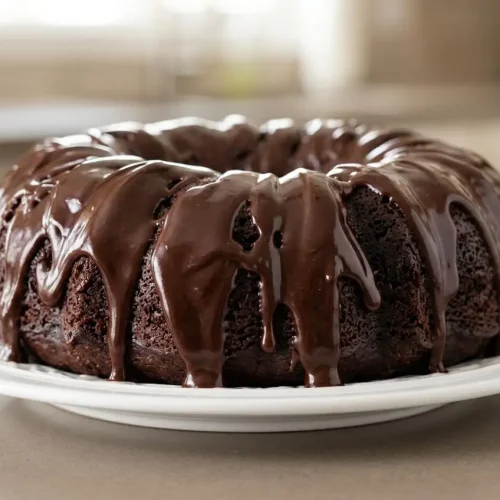
Pour the hot cream over the chocolate and whisk until the glaze is perfectly smooth and has a glossy sheen. - Drizzle the glaze generously over the cooled cake and let it drip down the sides before slicing.
The glaze should flow easily but still cling to the ridges instead of running off in a thin puddle.
Baker’s Tips for Success
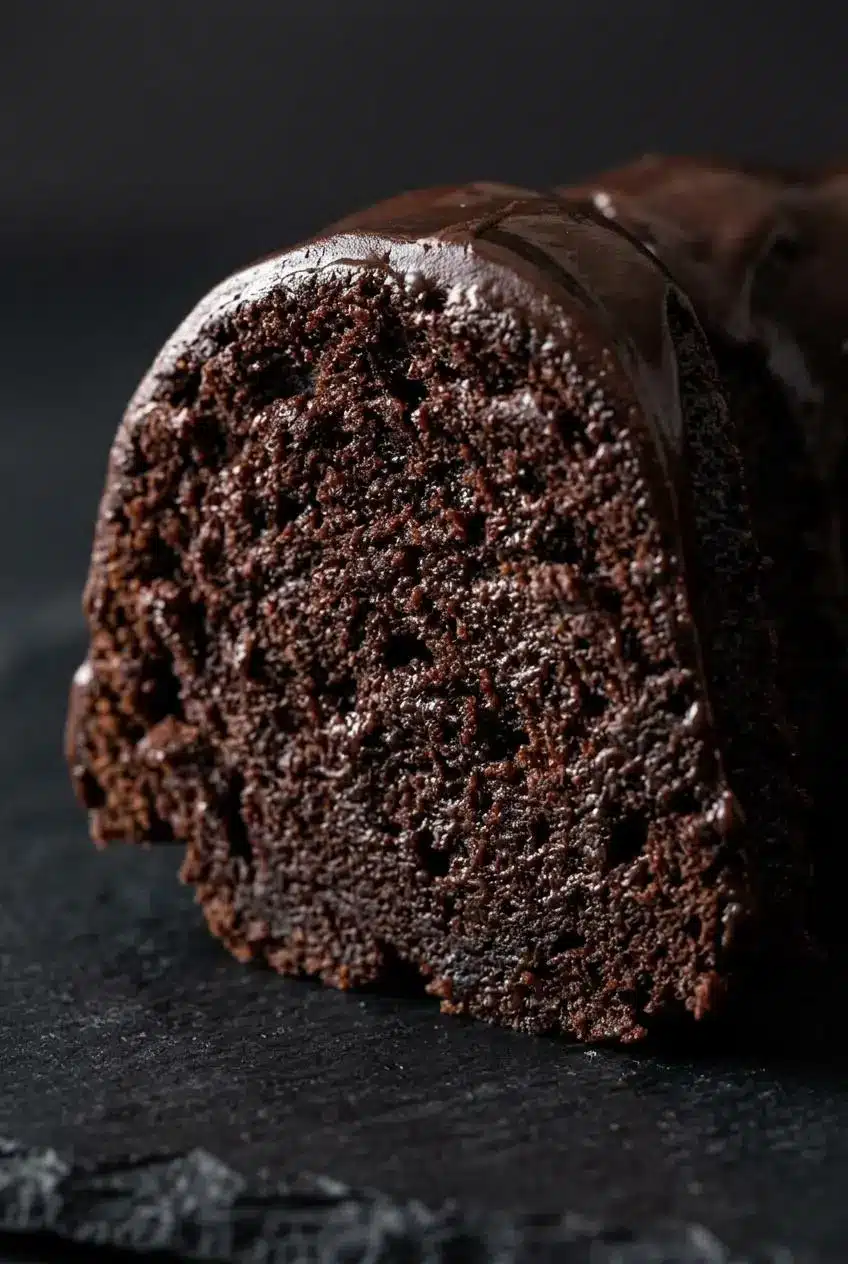
These small choices help this cake stay moist, release cleanly, and finish with a smooth glaze.
- The Coffee Secret: If you want even deeper chocolate flavor, whisk 1 to 2 teaspoons of instant espresso powder into the hot butter mixture. It won’t make the cake taste like coffee, but it will make the cocoa taste bigger.
- Room Temperature Ingredients: Let the eggs and sour cream sit out a bit before mixing. They blend into the batter more smoothly and help prevent a lumpy texture.
- Don’t Overmix: Once the batter looks smooth, stop whisking. Extra mixing can make the crumb less tender.
- Pan Size Matters: Use a 10 or 12-cup bundt pan as written. A smaller pan can overflow, and a much larger one can leave you with a cake that bakes too shallow.
- Cool Before Glazing: Wait until the cake is completely cool before adding the ganache. Warm cake and warm glaze are a messy pair.
- Use Good Chocolate for the Glaze: Because the glaze has only a few ingredients, the flavor of the chocolate really shows. Bittersweet gives the cleanest contrast to the sweet cake.
Variations and Customizations
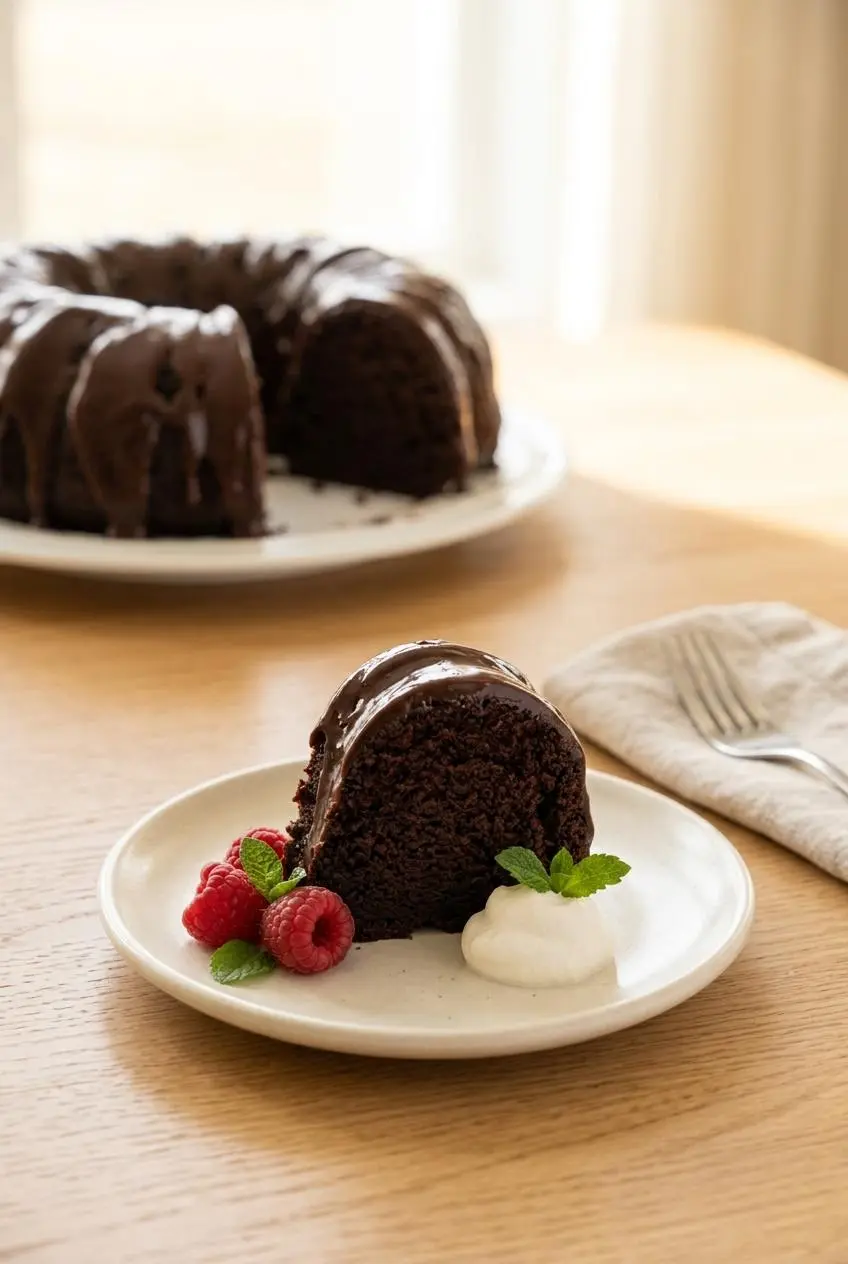
This cake is flexible, as long as the official recipe stays your starting point and the add-ons stay optional.
- Triple Chocolate Chip: Fold 1 cup of mini chocolate chips into the batter before baking if you want little melted chocolate pockets throughout.
- Simple Dusting: Skip the ganache and finish the cooled cake with powdered sugar for a lighter look and less richness.
- Garnish Ideas: Fresh raspberries or strawberries brighten the deep chocolate flavor, and a dollop of whipped cream makes each slice feel a bit more dressed up. If you love that fruit-and-cake combination, white chocolate raspberry cake is another lovely direction to bake next.
- No Bundt Pan: If the flavor sounds right but you don’t own the pan, it may be more helpful to make a classic chocolate cake instead of forcing a bad pan swap.
Troubleshooting Common Bundt Cake Issues
Most bundt cake problems come down to a handful of small things. Here’s how to fix the usual suspects.
Why Is My Cake Dry?
- The most common cause is overbaking. Check the cake at 40 minutes so it doesn’t stay in the oven longer than needed.
- If the crumb feels dry even with good timing, the batter may have been overmixed. Whisk just until smooth once the eggs and sour cream are added.
- Using low-fat dairy can also make the texture less rich. Full-fat sour cream or Greek yogurt gives the best result here.
Help! My Cake Stuck to the Pan.
- Usually the pan missed a few crevices. Next time, use softened butter or shortening and get into every detail before dusting with flour.
- If the cake is already stuck, let it cool fully, then loosen the edges gently with a thin spatula. Work slowly around the center tube too.
- If a chunk tears off, don’t panic. Set it back in place and cover the rough spot with glaze. Chocolate is very forgiving.
Why Did My Cake Sink in the Middle?
- If the center drops, the cake may have been underbaked. Look for both a clean toothpick and edges pulling slightly from the pan.
- Opening the oven too early can interrupt the rise before the structure sets. Try to wait until the cake is close to done before checking.
- Old baking soda can weaken the lift. If yours has been sitting around for ages, it may be time for a fresh box.
- If your glaze is too thin, it may still be too warm. Let it stand briefly so it thickens before drizzling.
- If your glaze is too thick, whisk in a tiny splash of warm cream until it loosens enough to flow over the cake.
Storage, Make-Ahead, and Freshness Guide
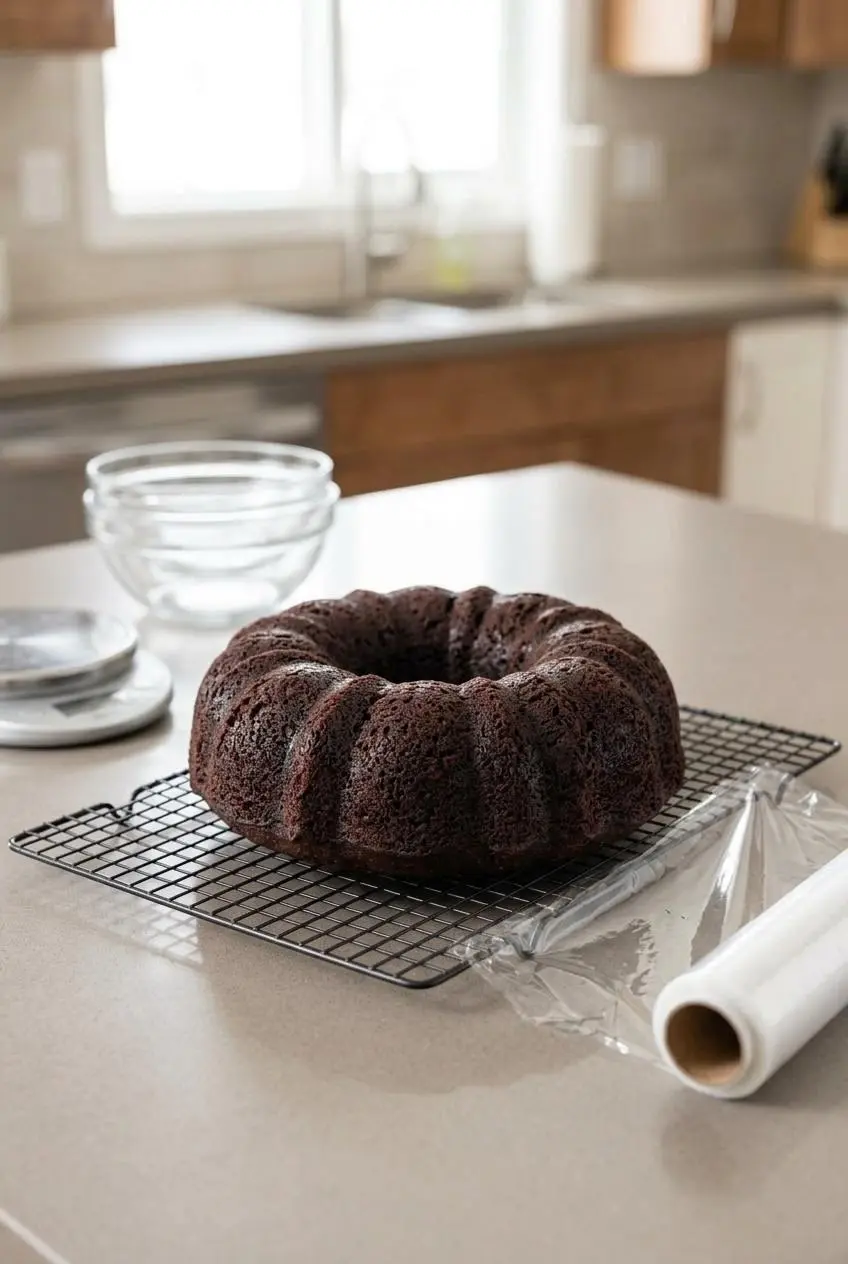
This cake holds well, especially if you protect it from air and wait to glaze until close to serving.
Storing at Room Temperature
Once the cake is completely cool, keep it covered or in an airtight container at room temperature. A dome, cake keeper, or well-wrapped plate works better than leaving cut edges exposed, which dry out first.
If the cake is already glazed, let the glaze set before covering so it stays neat. For the best texture, keep it away from heat and direct sun.
How to Keep a Bundt Cake Fresh Longer
If you want to hold the cake for later, store it unglazed and wrap it well once fully cool. You can also slice only what you need and keep the rest covered so the interior stays softer.
For longer storage, bundt cake is usually best kept tightly wrapped to protect the crumb, but exact freezer timing isn’t included here. If you do choose to freeze it, many bakers prefer freezing the cake without glaze and adding the ganache after thawing for the best finish.
Make-Ahead Instructions
This is a great cake to bake ahead because the flavor settles in nicely as it rests. For the cleanest presentation, bake the cake, cool it fully, keep it wrapped, and add the glaze closer to serving time.
You can also make the ganache after the cake has cooled and finish the cake the same day you plan to serve it. That keeps the glaze glossy and the drips well defined.
Conclusion
This cake delivers exactly what most people want from a chocolate bundt cake: rich flavor, a moist crumb, and a finish that looks polished without extra fuss.
If you remember one thing, make it the pan prep. Grease every curve well, give the cake its 15-minute rest, and you’ll be in very good shape.
Frequently Asked Questions
How do I prevent my bundt cake from sticking to the pan?
Coat every detail of the pan well before adding batter. A pastry brush helps spread softened fat evenly into the grooves and around the center tube. After greasing, dust the pan with flour or cocoa powder and tap out the excess. Then let the baked cake rest in the pan for 15 minutes before inverting so it can set up a bit.
What can I substitute for sour cream in this recipe?
Full-fat plain Greek yogurt is the closest substitute. It gives similar thickness, tang, and moisture. Buttermilk can work too, but it is thinner, so the texture may be a little lighter. If you have the choice, Greek yogurt is the better match.
Can I make this chocolate bundt cake in advance or freeze it?
Yes, it’s a good make-ahead cake. It keeps its texture well when baked, cooled completely, and stored wrapped before glazing. Freezing can work best when the cake is unglazed, but exact freezer timing isn’t provided here. If you go that route, wrap it very well and glaze after thawing for the nicest finish.
Why is my chocolate glaze too thin or too thick?
If the glaze is too thin, it’s usually too warm. Let it stand for a bit and whisk again before pouring. If it turns too thick, loosen it with a very small amount of warm cream, whisking after each addition until it reaches an easy drizzling consistency.
Chocolate Bundt Cake

Equipment
- Bundt Pan
Ingredients
For the cake
- 1 cup unsalted butter, plus more for the pan
- 1/3 cup cocoa powder, we use Dutch process
- 1 teaspoon kosher salt
- 1 cup water
- 2 cups all-purpose flour, plus more for the pan
- 1 3/4 cups granulated sugar
- 1 1/2 teaspoons baking soda
- 2 large eggs
- 1/2 cup sour cream, or plain Greek yogurt
- 1 teaspoon pure vanilla extract
For the chocolate glaze
- 4 ounces bittersweet chocolate, finely chopped
- 1 1/2 tablespoons corn syrup
- 1/2 cup heavy cream
- 1 1/2 tablespoons granulated sugar
Instructions
For the Cake
- Set a rack in the center of the oven and heat it to 350 °F, then butter and flour a 10 or 12-cup Bundt pan. Coat every groove and center tube well so the flour clings in a thin, even layer with no bare shiny spots.
- Put the butter, cocoa powder, salt, and water in a small saucepan and warm over medium heat, stirring until everything melts together. The mixture should look smooth, fluid, and evenly dark with no dry cocoa pockets left behind.
- Whisk the flour, sugar, and baking soda in a large bowl, then whisk in half of the warm chocolate mixture until blended before adding the rest. The batter will be thick after the first addition of the chocolate mixture, but it will smooth out once the remaining mixture goes in.
- Whisk in the eggs one at a time, then add the sour cream and vanilla and whisk just until the batter is smooth. Stop when the batter looks glossy and uniform, with no streaks of egg or pockets of sour cream.
- Scrape the batter into the prepared pan and bake for 40 to 45 minutes. The cake is ready when a toothpick comes out clean and the edges have started to pull slightly away from the sides of the pan.
- Cool the cake in the pan for 15 minutes, then invert it onto a rack and let it cool completely. This short rest helps the cake set so it releases more cleanly and doesn’t break while still too soft.
For the Glaze and Assembly
- Place the chopped chocolate and corn syrup in a medium bowl, then heat the cream and sugar in a small saucepan over medium heat until the sugar dissolves and the cream is hot. Pour the hot cream over the chocolate and whisk until the glaze is perfectly smooth and has a glossy sheen.
- Drizzle the glaze generously over the cooled cake and let it drip down the sides before slicing. The glaze should flow easily but still cling to the ridges instead of running off in a thin puddle.