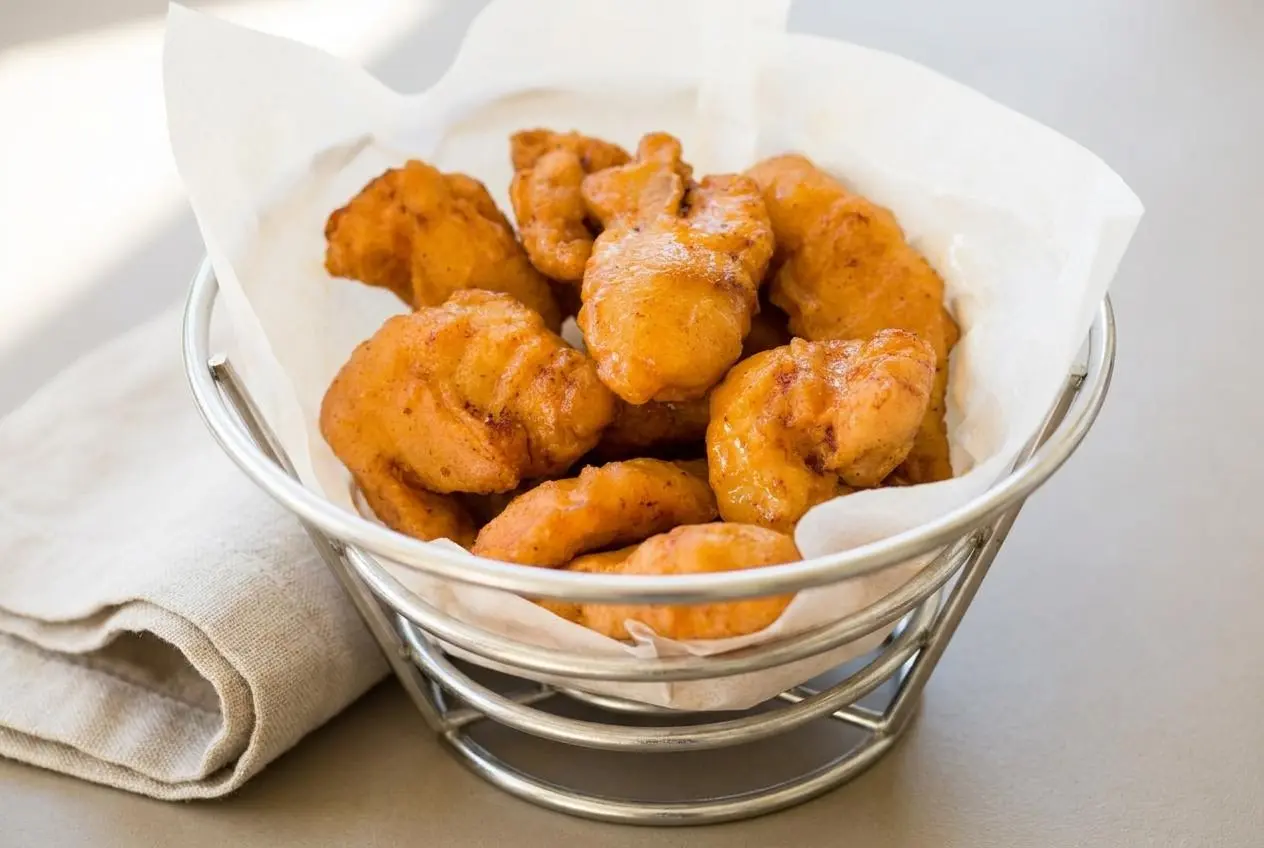
These takeout-style chicken strips use a carbonated flour batter that fries into a puffy, golden shell around tender chicken.
Chinese Chicken Fingers are a classic American-Chinese appetizer, especially familiar on East Coast takeout menus. Thin chicken breast strips get coated in a thick seltzer batter, then fried until the crust is airy, crisp, and deeply golden.
The batter looks pale at first, but patience turns it into that unmistakable takeout-style crunch. The sweet and sour dip seals the deal.
Keep the chicken from sitting ice-cold before frying so it does not pull too much heat from the oil.
What Are Takeout Style Chinese Chicken Fingers?
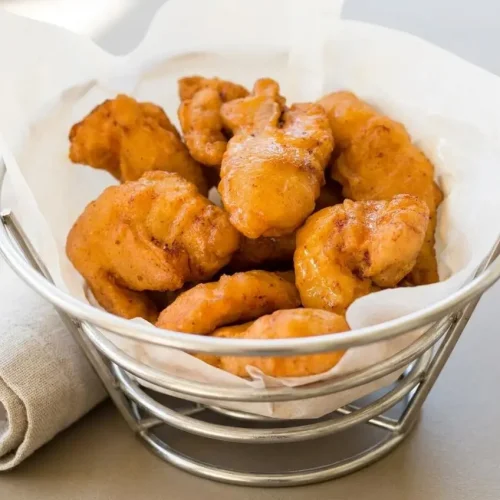
Chinese chicken fingers are puffy fried chicken strips rather than breaded chicken tenders. They are often called takeout chicken tenders or puffy fried chicken strips, and they are especially popular at Chinese-American restaurants throughout New England and the East Coast.
The signature crust comes from a wet flour-and-cornstarch batter, not breadcrumbs. It fries into an irregular, bubbly shell with craggy edges that catch plenty of dipping sauce. Unlike a heavy egg wash or a crunchy breadcrumb coating, this batter stays light around the chicken when the oil is hot and the pieces are not crowded.
They fit right in beside other Chinese-American favorites, from glazed teriyaki chicken to fried rice and noodle dishes. The appeal is simple: a crisp exterior, juicy chicken, and a bright sauce for dipping.
Ingredients for Puffy Chinese Chicken Fingers
Each ingredient supports the result: chicken provides tenderness, flour and cornstarch build the shell, seltzer creates lift, and salt and sugar balance the savory fried crust.
- 2 boneless/skinless chicken breasts
- 1/2 cup self-rising flour
- 1/2 cup cornstarch
- 1.5 teaspoons salt
- 1/2 teaspoon sugar
- 1/2 cup Seltzer water
- 1 quart canola oil
Self-rising flour supplies the leavening that helps the coating expand. If using all-purpose flour for a different version, it needs baking powder to replace that built-in lift. Cornstarch is essential here because it helps the crust fry crisp rather than bready.
Cold seltzer water is the real character actor. Its bubbles create small airy pockets as the batter hits the hot oil, giving the crust its puffed look. Ice water can thin batter, but it does not bring the same carbonation.
For a little extra savory depth, add a pinch of white pepper and onion powder to the dry mixture. Keep it subtle so the coating stays pale before frying and turns a clean golden brown.
I keep the seltzer water ice-cold until the moment it goes into the bowl because warm, flat seltzer makes a noticeably less lively batter.
How to Make Chinese Chicken Fingers Step-by-Step
Even-sized chicken strips and a batter with the texture of a thick pancake batter are the two biggest keys to an even fry. Use a deep fryer or a Dutch oven with enough room for the oil to bubble without crowding.
- Sift the self-rising flour, cornstarch, salt, and sugar into a large bowl, then whisk until the dry mixture looks evenly blended.
Sifting breaks up clumps so the finished batter fries into a smoother, lighter shell. - Pour in the Seltzer water gradually while whisking until the batter is slightly thicker than pancake batter.
It should slowly coat a spoon; stir in a little more seltzer if it feels too stiff or flour if it runs off too quickly. - Cut the chicken breasts into even strips, about 1/2 inch thick, and season the pieces with salt.
Uniform strips cook at a similar pace and help prevent the outside from darkening before the centers are done. - Coat each chicken strip completely in batter just before frying.
The chicken should disappear under the batter with no dry patches showing through. - Lower the coated strips carefully into preheated oil and fry for about 10 minutes until rich golden brown.
The batter may remain pale and white-looking during the early minutes, then deepen in color as the sizzling softens slightly near the end.
Cook in batches so the oil can keep bubbling steadily around each strip. Transfer the fried chicken to a wire rack set over a baking sheet instead of paper towels, which can trap steam under the crust.
For careful poultry handling, keep raw chicken separate from ready-to-eat foods, refrigerate it promptly, and use a thermometer to cook poultry to 165°F at the thickest part.
Easy Homemade Sweet and Sour Dipping Sauce
A bright red sweet and sour sauce brings the familiar takeout contrast to the rich fried crust. Make it as an optional dip rather than tossing it with the chicken, since coating the fingers too early softens their crisp shell.
Combine ketchup, brown sugar, white vinegar, and pineapple or lychee juice in a small saucepan. Warm the mixture over low heat, stirring until the sugar dissolves and the sauce tastes tangy, fruity, and sweet.
Whisk cornstarch with a little cold water in a separate cup, then stir that slurry into the simmering sauce. Keep stirring just until it lightly coats a spoon. Stop before it becomes thick and jelly-like, because the sauce should still dip and drizzle easily.
For a more tart dip, lean toward vinegar. For a fruitier takeout-style sauce, use pineapple or lychee juice. Duck sauce and Chinese hot mustard are also great choices when you want a sharper or spicier bite.
Pro Tips for Golden, Non-Greasy Chicken Fingers
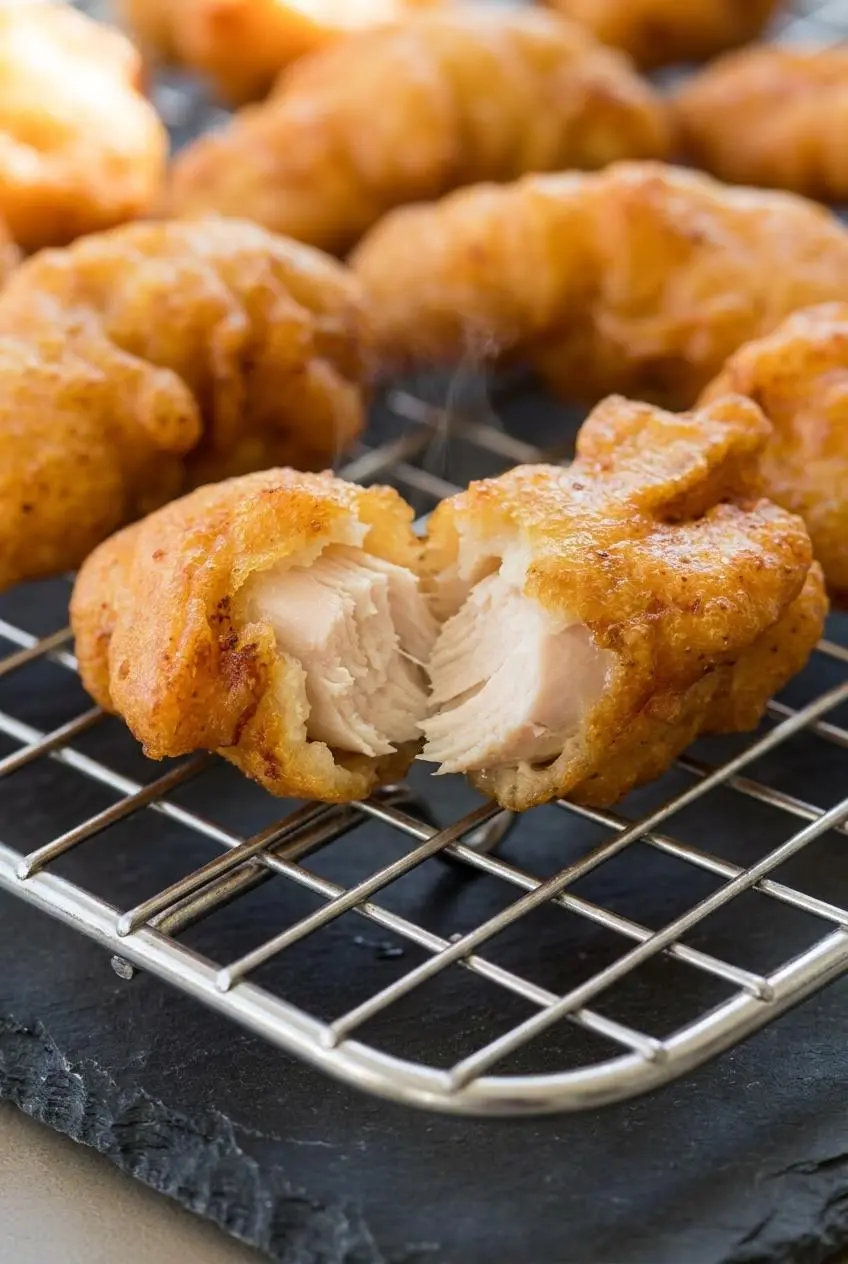
Most batter problems come down to consistency, oil heat, or crowding. These small adjustments help the coating stay puffed instead of oily or limp.
- Thin batter: Whisk in a little flour until it clings to the chicken instead of sliding off. A watery coating will not build the characteristic puffy shell.
- Overly thick batter: Add cold seltzer gradually. The batter should coat the chicken generously without forming a dense blanket.
- Pale, soft crust: Give the chicken time. The coating can look almost white early in the fry, then gains color as moisture escapes.
- Greasy fingers: Fry fewer strips at a time. A crowded pot drops the oil heat quickly, leaving the batter heavy before it has a chance to set.
- Soggy undersides: Drain every batch on a wire rack over a baking sheet. Air circulation keeps steam from softening the bottom crust.
- Overbrowned chicken: Cut strips evenly and avoid thick chunks. Thick pieces need longer cooking, which can push the exterior too far.
Canola oil works well for this method because its neutral flavor lets the seasoned batter and dipping sauce stand out. Let the oil recover between batches before adding more chicken, and never leave hot oil unattended.
Lighter Cooking Alternatives
The deep-fried version delivers the classic puffy takeout texture, but there are other ways to get a crisp chicken dinner when that is not what you want.
Air Fryer Adaptation
Raw wet batter does not work well in an air fryer basket because it drips before it can set. Instead, use the air fryer for cooked chicken fingers that need their crust refreshed, arranging them in a single layer so hot air can reach every side.
For raw chicken, choose a dry coating such as the panko version below. If you enjoy a sauce-forward crispy chicken appetizer with a different flavor direction, try bang bang chicken.
Oven-Baked Panko Alternative
For an optional baked variation, coat chicken strips in seasoned flour, then egg wash, then panko breadcrumbs. Bake the strips on a wire rack set over a baking sheet at 400°F until the crumbs are golden and the chicken is cooked through.
This version will not create the same bubbly seltzer crust, but panko gives it a dry, crunchy texture with less frying oil. Keep the sweet and sour sauce on the side so the coating stays crisp.
Storage and Air Fryer Reheating
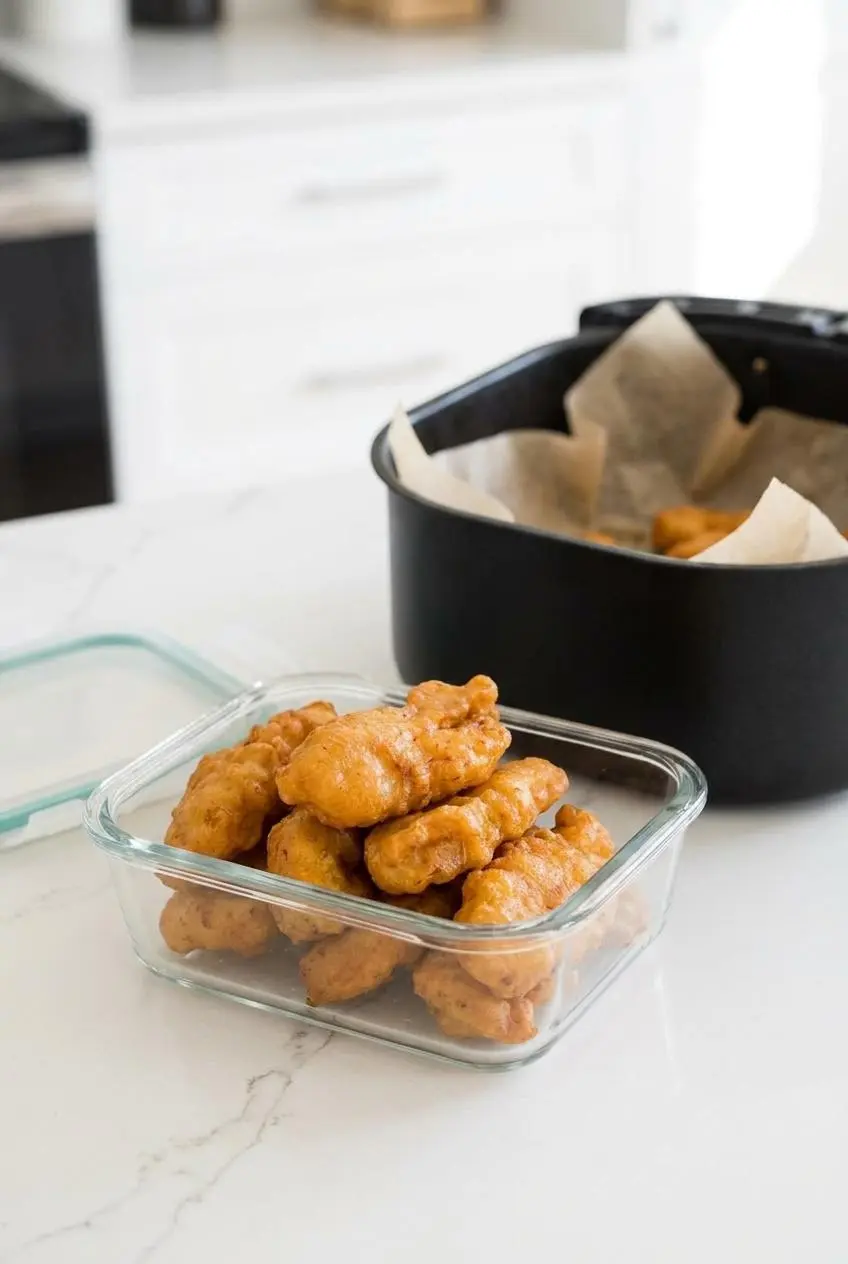
Cool leftover chicken fingers before placing them in an airtight container, and keep the dipping sauce in a separate container. Separating the sauce is the easiest way to protect the crust from turning damp.
Reheat only the portion you plan to eat in an air fryer or a hot oven until the coating is crisp and the chicken is heated through. Avoid the microwave for battered chicken fingers, since its trapped steam quickly makes the crust soft.
Use clean containers, keep leftovers chilled promptly, and avoid cross-contact with raw chicken. These safe handling and chilling practices for poultry are especially useful when packing away a fried batch after dinner.
What to Serve with Chinese Chicken Fingers
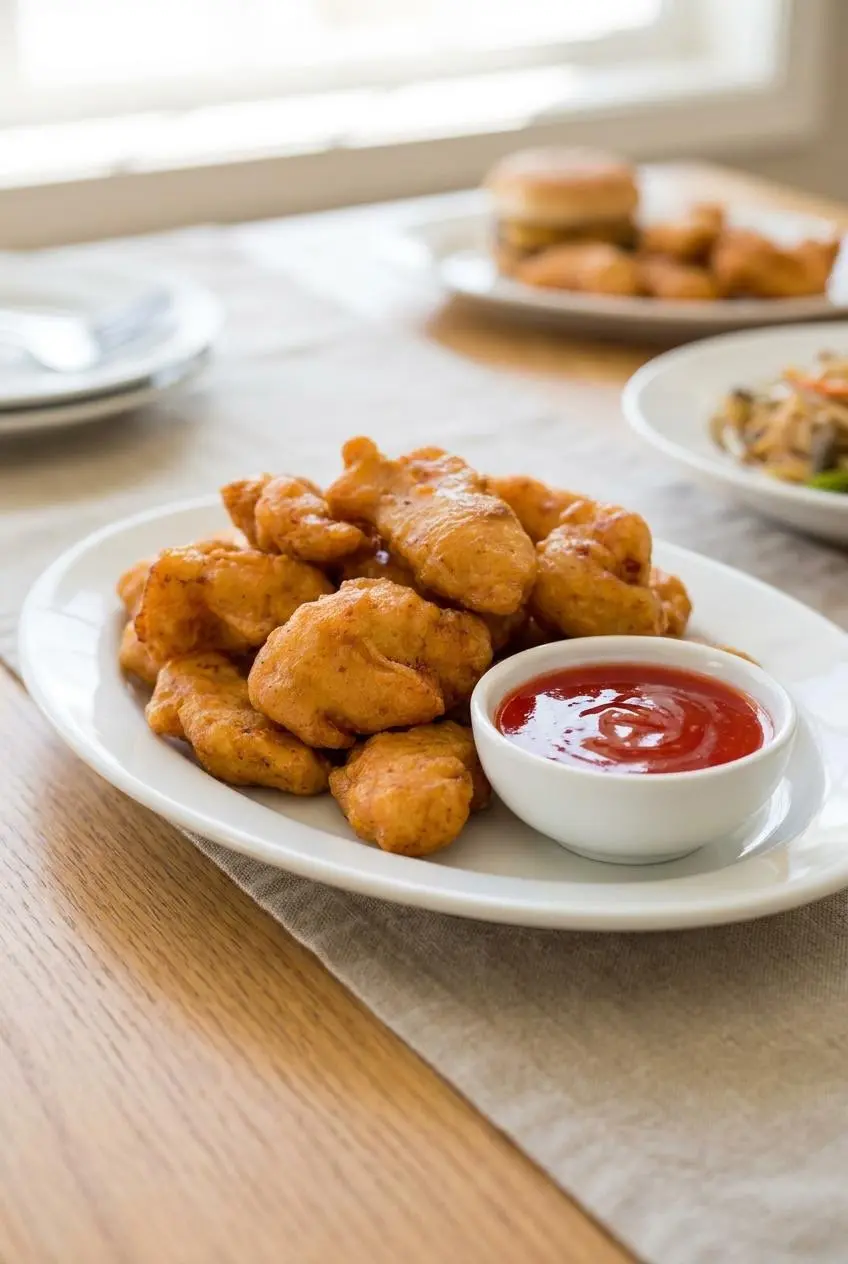
Turn these chicken fingers into a full Chinese-American takeout spread with a few contrasting sides.
- Pork fried rice adds savory richness and makes the meal more filling.
- Vegetable chow mein brings soft noodles and a little freshness beside the crisp chicken.
- Crab rangoon adds another crunchy appetizer for a shareable dinner.
- Duck sauce and Chinese hot mustard give everyone a second dipping option.
- For a larger meal, serve orange peel chicken alongside the fingers, then add rice and vegetables to balance the table.
Serve the chicken hot, with the dipping sauce nearby rather than poured over the top. That first crackly bite is the whole point.
Conclusion
These chicken fingers bring the puffy, golden crunch of Chinese-American takeout into your own kitchen. Cold seltzer, a balanced flour-and-cornstarch batter, and patient frying create the light shell that makes them so recognizable.
Keep the sauce on the side, drain each batch on a rack, and bring them to the table while the crust is still crackling. A warm plate and a bright sweet-and-sour dip make a very good evening.
Frequently Asked Questions
What Gives Chinese Chicken Fingers Their Signature Puffy Texture?
The puff comes from self-rising flour and cold carbonated seltzer water. The leavening in the flour helps the coating expand. Seltzer bubbles create airy pockets as the batter fries. Cornstarch keeps that expanded crust crisp rather than dense.
What Dipping Sauce Comes With Classic Chinese Chicken Fingers?
Bright red sweet and sour sauce is the familiar pairing. It combines ketchup, brown sugar, white vinegar, fruit juice such as pineapple or lychee, and a cornstarch slurry for a lightly thickened finish.
Can I Air Fry Takeout-Style Puffy Chicken Fingers?
Raw wet batter is not a good fit for an air fryer because it drips before it sets. Use the air fryer to refresh cooked chicken fingers, or make the optional panko-breaded version for raw air-fried chicken.
How Do I Keep Fried Chicken Fingers Crispy While Cooking in Batches?
Place finished pieces in a single layer on a wire rack set over a baking sheet. Keep them in a low warm oven while you finish frying, rather than stacking them or placing them on paper towels, which traps steam against the crust.
Chinese Chicken Fingers

Equipment
- deep fryer or dutch oven
- Oil Thermometer
- Large Mixing Bowl
- Sifter
- Wire cooling rack
Ingredients
- 2 boneless/skinless chicken breasts
- 1/2 cup self-rising flour
- 1/2 cup cornstarch
- 1.5 teaspoons salt
- 1/2 teaspoon sugar
- 1/2 cup Seltzer water
- 1 quart canola oil
Instructions
- Sift the self-rising flour, cornstarch, salt, and sugar into a large bowl, then whisk until the dry mixture looks evenly blended. Sifting breaks up clumps so the finished batter fries into a smoother, lighter shell.
- Pour in the Seltzer water gradually while whisking until the batter is slightly thicker than pancake batter. It should slowly coat a spoon; stir in a little more seltzer if it feels too stiff or flour if it runs off too quickly.
- Cut the chicken breasts into even strips, about 1/2 inch thick, and season the pieces with salt. Uniform strips cook at a similar pace and help prevent the outside from darkening before the centers are done.
- Coat each chicken strip completely in batter just before frying. The chicken should disappear under the batter with no dry patches showing through.
- Lower the coated strips carefully into preheated oil and fry for about 10 minutes until rich golden brown. The batter may remain pale and white-looking during the early minutes, then deepen in color as the sizzling softens slightly near the end.