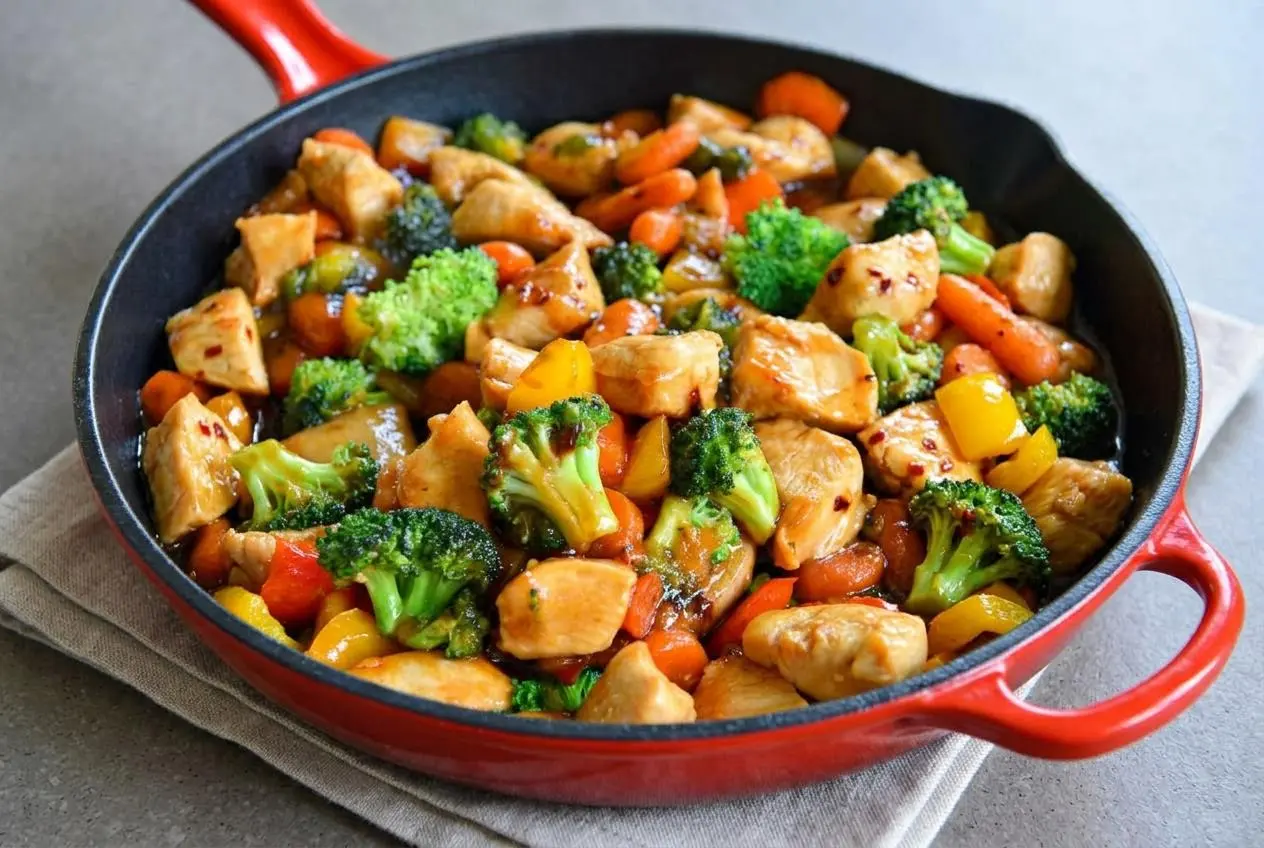
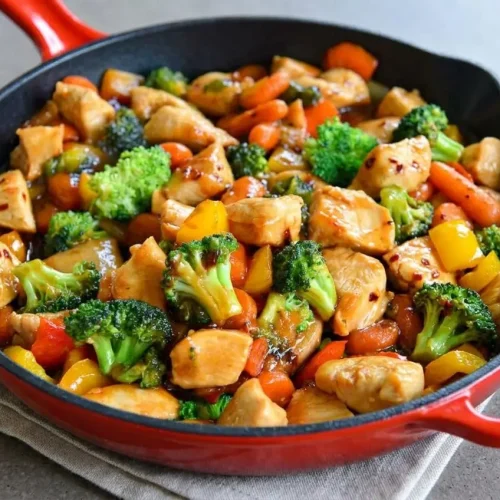
This chicken stir fry combines bite-sized chicken breast, broccoli, peppers, carrots, and a honey soy sauce in one hot skillet. With the ingredients prepped first, it cooks in under 20 minutes and delivers tender chicken with crisp-tender vegetables.
This chicken stir fry recipe is built for the kind of evening when dinner needs to move quickly without tasting rushed. The chicken should hit the pan with a loud sizzle, while the vegetables stay bright and snappy.
The sauce brings savory depth, gentle sweetness, and a glossy finish without weighing down the vegetables. That one-minute boil makes all the difference.
Set out the sauce, vegetables, and chicken before heating the skillet, because stir-frying moves fast once the oil is hot.
Ingredients for Chicken Stir Fry
Each ingredient contributes something useful: chicken provides hearty texture, vegetables bring color and crunch, and the sauce layers savory, sweet, nutty, and gently spicy flavors.
Chicken and Vegetables
- 1 lb boneless, skinless chicken breast (cut into 1 inch cubes)
- salt and pepper (to taste)
- 2 tbsp olive oil (divided)
- 2 cups broccoli florets
- 1/2 yellow bell pepper (cut into 1 inch pieces)
- 1/2 red bell pepper (cut into 1 inch pieces)
- 1/2 cup baby carrots (sliced )
- 2 tsp minced ginger
- 2 garlic cloves (minced)
Stir Fry Sauce
- 1 tbsp corn starch
- 2 tbsp cold water
- 1/4 cup low sodium chicken broth
- 3 tbsp low sodium soy sauce
- 1/4 cup honey
- 1 tbsp toasted sesame oil
- 1/2 tsp crushed red pepper flakes
Low-sodium soy sauce gives the pan sauce its savory backbone while leaving room for the flavor to concentrate. Honey rounds out the saltiness and helps the glaze cling to the chicken and vegetables. Broth keeps the sauce fluid, toasted sesame oil adds warmth, and red pepper flakes bring a background tingle.
I cut the chicken into evenly sized cubes so every piece reaches doneness at the same pace and none of the smaller pieces dry out first.
How to Make Chicken Stir Fry
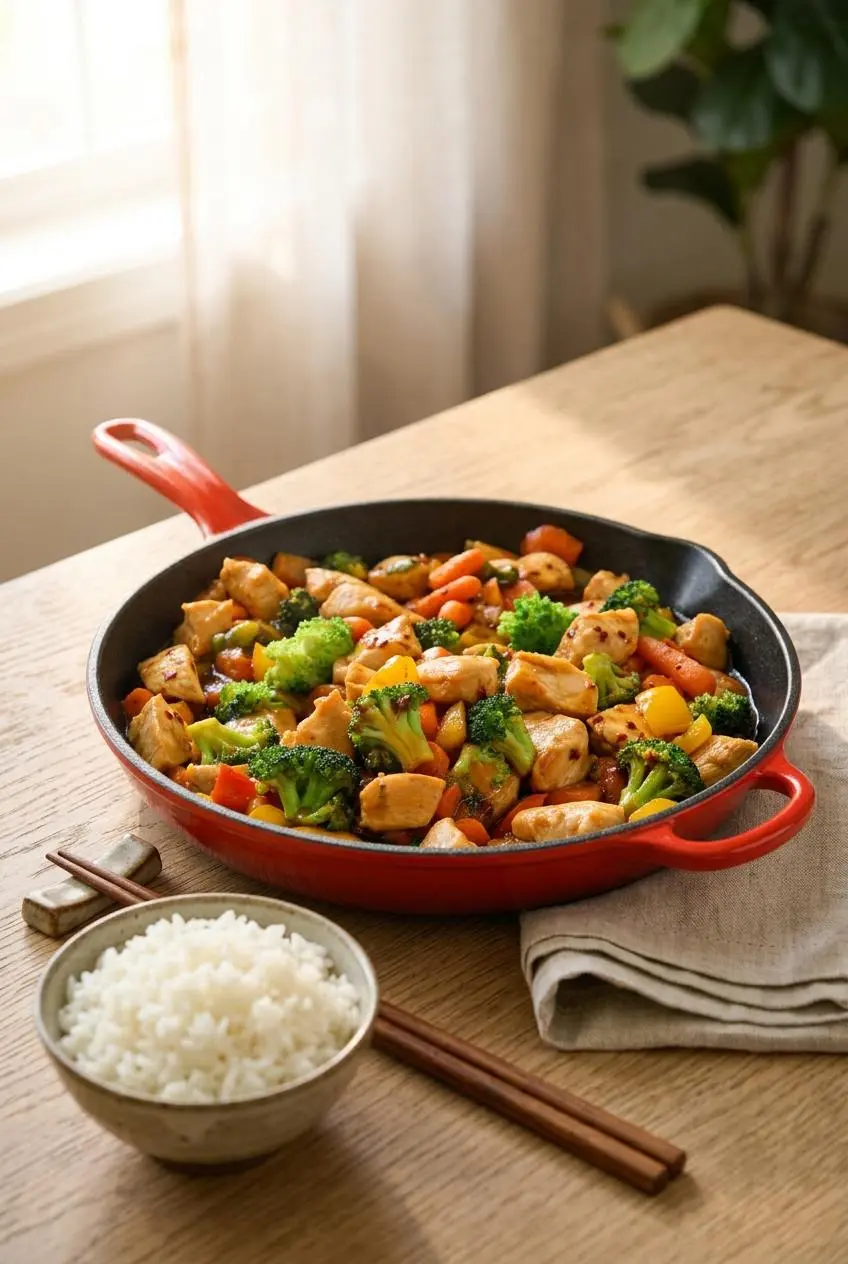
Keep a food thermometer nearby if you have one. Chicken is done when the thickest pieces reach 165°F at the center.
Preparation and Cooking
- Whisk the corn starch and cold water in a medium bowl until completely smooth, then whisk in the chicken broth, soy sauce, honey, toasted sesame oil, and crushed red pepper flakes.
The mixture should look even and pourable, with no dry cornstarch clumps at the bottom of the bowl. - Heat 1 tablespoon of olive oil in a large skillet or wok over medium-high heat.
The oil should shimmer across the pan before the chicken goes in. - Season the chicken with salt and pepper, then add it in batches if needed and cook for 3 to 5 minutes.
Leave the pieces undisturbed for the first minute so they develop golden color instead of releasing moisture and steaming. - Move the cooked chicken to a plate and lower the heat to medium, then add the remaining 1 tablespoon of olive oil.
The pan should remain hot but no longer aggressively smoking. - Add the broccoli, bell peppers, and carrots and cook, stirring occasionally, until crisp-tender.
The broccoli will turn brighter green, and the peppers should soften slightly while still holding their shape. - Stir in the ginger and garlic and cook for 1 minute.
A warm, fragrant aroma should bloom quickly without the garlic turning brown. - Return the chicken to the skillet and fold it through the vegetables.
Distribute the chicken evenly so every piece can catch some of the sauce. - Whisk the sauce once more, pour it into the skillet, and stir gently to coat everything.
The liquid will begin bubbling around the vegetables almost immediately. - Bring the sauce to a boil and cook for 1 minute, stirring occasionally.
The sauce should turn glossy and lightly coat a spoon as it thickens. - Serve with rice and/or chow mein if desired.
The warm grains or noodles catch the extra honey soy glaze.
Essential Ingredients and Homemade Sauce Breakdown
The sauce works because each component has a separate job. Cornstarch thickens, broth provides moisture, soy sauce brings salt and savoriness, honey creates balance, and sesame oil leaves a toasted finish. The same sweet-savory balance is what makes homemade teriyaki chicken so satisfying, though this skillet sauce is brighter with ginger and red pepper flakes.
Start the cornstarch with cold water, never hot liquid. Cold water disperses each particle before heat activates it, which prevents pale lumps from forming in the finished glaze. Whisk the bowl again just before pouring because cornstarch naturally settles as it sits.
The Perfect Honey Soy Sauce Balance
Low-sodium soy sauce matters here because the sauce reduces during its one-minute boil. Regular soy sauce can become overly salty as moisture cooks away. Honey softens that intensity and gives the sauce a smooth sheen, while chicken broth keeps the flavor from becoming too concentrated.
Toasted sesame oil is potent, so its measured amount is enough to add nutty aroma without taking over. Crushed red pepper flakes bring gentle heat that lingers after the sweetness. For a different finish, stir in a squeeze of fresh lime juice or scatter toasted sesame seeds over individual servings. Both are optional finishing touches, not part of the main ingredient list.
Fresh Aromatics vs Ground Spices
Fresh ginger and garlic give this dish a sharper, cleaner fragrance than ground versions. Ginger adds a bright, peppery lift, while garlic brings savory warmth that makes the sauce smell fuller as soon as it hits the pan.
Add both only after the vegetables are nearly crisp-tender. Garlic can scorch quickly in a hot skillet, and burned garlic tastes bitter. A single minute is enough time for the aromatics to release their oils while staying fresh and fragrant.
Mastering the High-Heat Stir Fry Technique
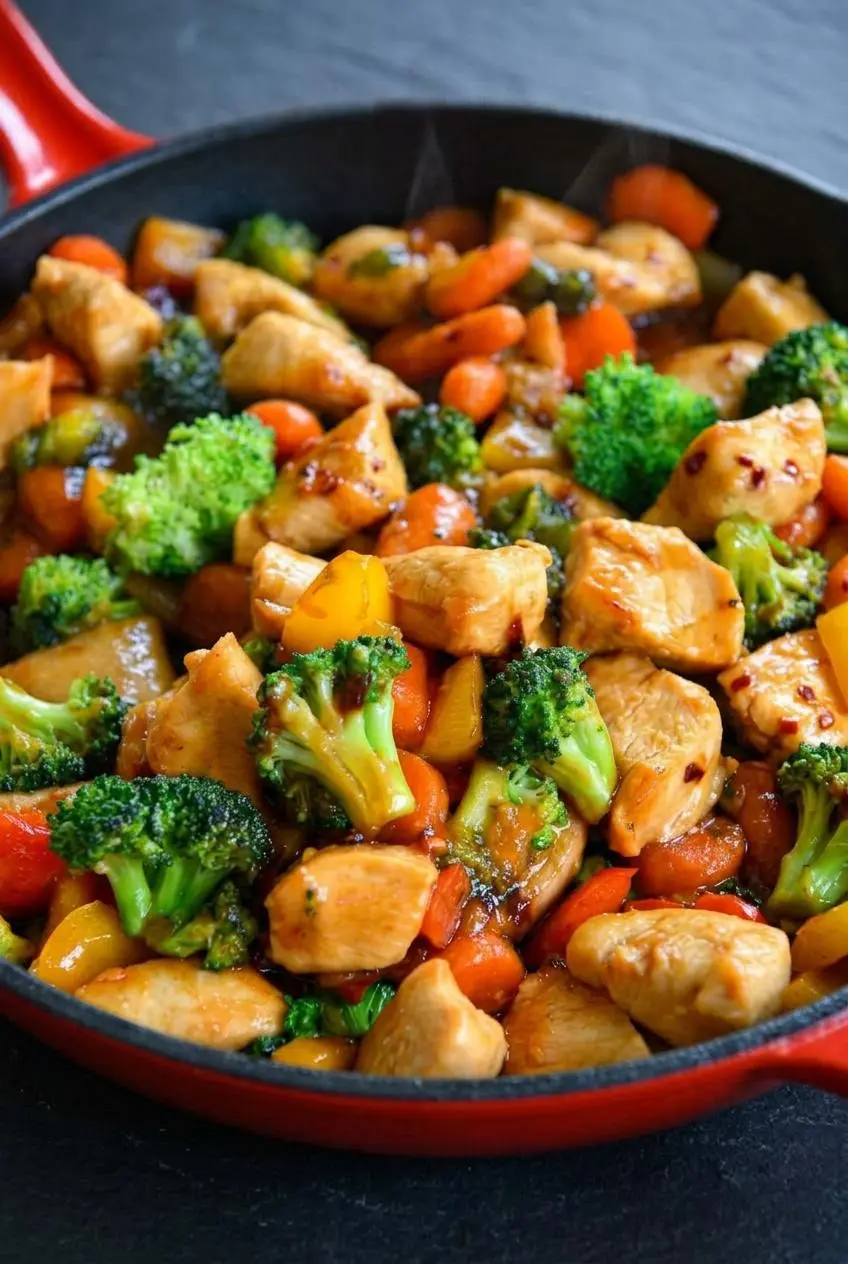
A hot skillet is the difference between golden chicken and pale chicken sitting in its own liquid. Give the pan time to heat, then spread the chicken into one layer. If the skillet looks crowded, cook in batches. Space lets moisture evaporate and helps the chicken brown.
Vegetables benefit from a simple density order:
- Broccoli and carrots: These firmer vegetables need the most pan time, so add them first.
- Bell peppers: Add them with the broccoli and carrots, but watch closely because they soften faster.
- Ginger and garlic: Add during the final minute, when the vegetables are already nearly done.
Keep the vegetables moving occasionally rather than constantly. Frequent stirring stops scorching, but a little contact with the skillet gives broccoli browned edges and peppers a lightly blistered surface. The goal is crisp-tender, not soft.
If the skillet becomes watery, the pan likely cooled from overcrowding or wet vegetables. Let excess moisture cook off before adding the sauce. Once the sauce goes in, let it reach a true boil for the full minute so the cornstarch can create that spoon-coating glaze.
- Chicken looks pale: The pan was likely too crowded. Brown smaller batches with space around the pieces.
- Sauce looks thin: Let it come back to a steady boil. If needed, add a little extra cornstarch mixed thoroughly with cold water.
- Sauce tastes too salty: Add a small splash of low-sodium chicken broth to soften the concentration.
- Vegetables turn soft: Pull them from the heat as soon as they are crisp-tender, since the hot sauce continues cooking them briefly.
Easy Variations and Smart Substitutions
The skillet method stays the same even when you change the protein or vegetables. Keep any swaps optional, and adjust the order in which ingredients enter the pan so tender items do not overcook.
Chicken Breast vs Chicken Thighs
Chicken breast gives you a leaner bite and cooks quickly, but it benefits from careful timing. Remove it promptly once it is cooked through, then return it only long enough to coat in sauce.
Boneless chicken thighs are an optional substitute when you want a richer texture. They stay forgiving in the skillet and may need a little more time than breast pieces, so judge by doneness rather than color alone. Cut either option into uniform pieces for even cooking.
Stir Fry with Noodles or Grains
Serve the stir fry over steamed jasmine rice or brown rice to catch the glossy sauce. Chow mein also works well, and cooked lo mein noodles can be tossed into the skillet at the end until coated.
- Noodle stir fry: Use cooked ramen or lo mein noodles and toss gently after the sauce thickens so they stay springy rather than soggy.
- Cauliflower rice: Use it as a lighter base when you want the sauce and vegetables to take center stage.
- Cashew variation: Add toasted whole cashews during the final toss for buttery crunch against the crisp vegetables.
For a fresh, crunchy contrast alongside this warm skillet dinner, try a crisp Asian chicken salad.
Dietary Swaps for Gluten-Free and Low-Carb
For a gluten-free version, replace soy sauce with gluten-free tamari or coconut aminos. Tamari stays closer to the savory soy flavor, while coconut aminos taste milder and slightly sweeter. Check labels on chicken broth as well.
Arrowroot powder can replace cornstarch when needed, but mix it with cold liquid before it reaches the skillet. For a lower-sugar direction, use a sweetener that can handle heat in place of honey, knowing that the sauce may lose some of honey’s distinctive shine and cling.
Storage, Reheating, and Meal Prep Solutions
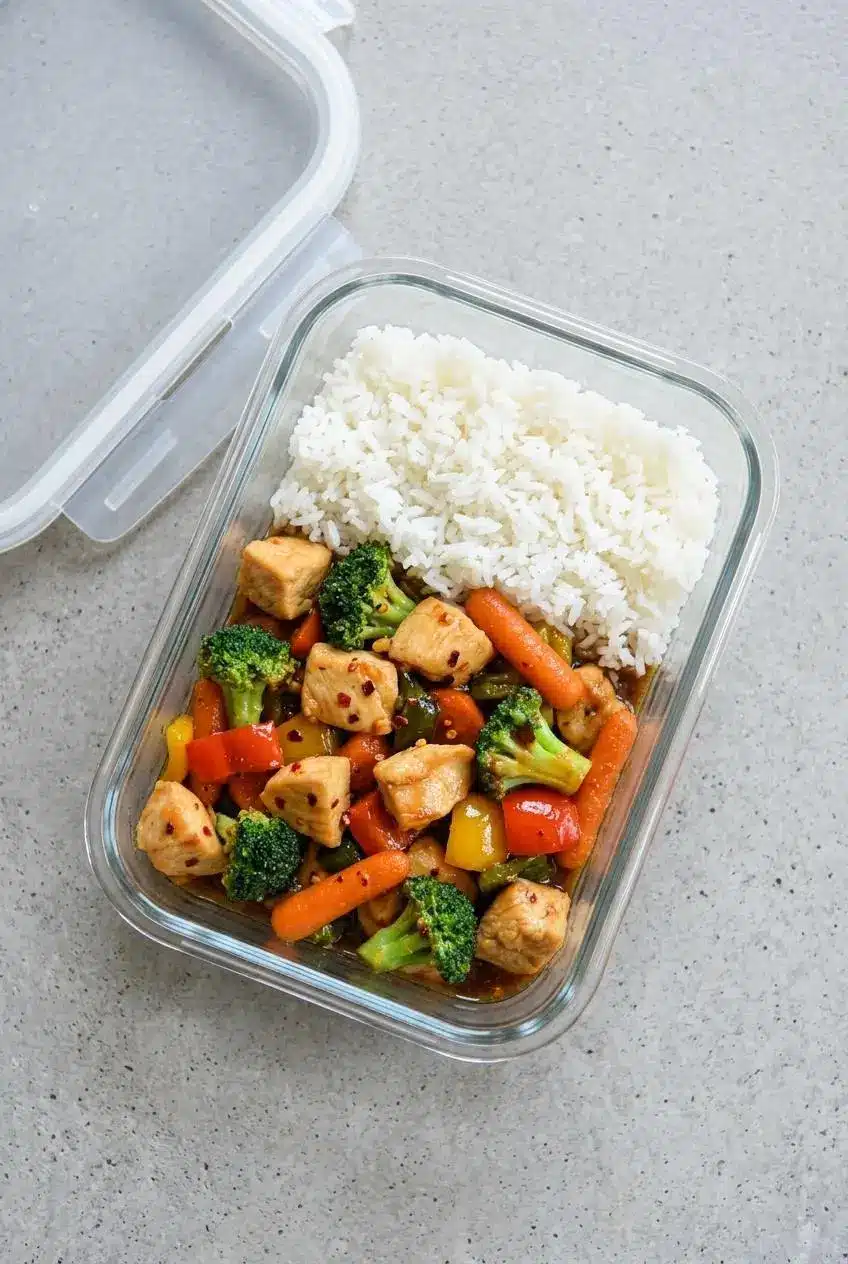
Cool leftovers, transfer them to an airtight container, and keep them chilled. For the best vegetable texture, avoid storing the stir fry under a heavy layer of sauce if you are packing individual portions with rice.
Reheat a portion in a hot skillet with a small splash of water or low-sodium chicken broth. Stir just until the chicken is hot and the sauce loosens again. This revives the glaze while keeping the broccoli and peppers from becoming overly soft.
For meal prep, pack rice or noodles separately when possible, then warm them before serving. The vegetables retain more bite when they are not sitting in absorbed sauce for too long.
Conclusion
This fast skillet dinner brings together golden chicken, bright vegetables, and a savory honey soy glaze with minimal cleanup. The preparation is quick, but the layered ginger, garlic, sesame, and pepper flavors make it feel complete.
Keep the pan hot, give the chicken room to brown, and boil the sauce for the full minute. Those small details turn a busy-night meal into something you’ll want to make again.
Frequently Asked Questions
What Is the Secret to Keeping Chicken Tender in a Stir Fry?
Cut the chicken into evenly sized pieces so it cooks at the same pace. Sear it over high heat in batches rather than crowding the skillet, then remove it as soon as it is cooked through. Returning it only for the sauce keeps it from spending extra time over the heat.
Can I Use Frozen Vegetables Instead of Fresh for Stir Fry?
Yes. Add frozen vegetables directly to a very hot skillet without thawing them first. Cook off the released moisture before adding the sauce, or the extra water can dilute the glaze and make the vegetables softer.
How Do I Make Stir Fry Sauce Thicker or Thinner?
For a thicker sauce, stir in a small amount of cornstarch fully mixed with cold water, then bring the sauce back to a boil. For a thinner consistency, whisk in a little low-sodium chicken broth until the sauce reaches the texture you like.
How Long Does Leftover Chicken Stir Fry Last in the Fridge?
Store leftovers in an airtight container and keep them chilled. Reheat only the portion you plan to eat in a hot skillet with a small splash of liquid, which helps restore the sauce and keeps the vegetables from turning mushy.
Chicken Stir Fry Recipe

Equipment
- large skillet or wok
- medium size bowl
- Whisk
Ingredients
Chicken and Vegetables
- 1 lb boneless, skinless chicken breast (cut into 1 inch cubes)
- salt and pepper (to taste)
- 2 tbsp olive oil (divided)
- 2 cups broccoli florets
- 1/2 yellow bell pepper (cut into 1 inch pieces)
- 1/2 red bell pepper (cut into 1 inch pieces)
- 1/2 cup baby carrots (sliced )
- 2 tsp minced ginger
- 2 garlic cloves (minced)
Stir Fry Sauce
- 1 tbsp corn starch
- 2 tbsp cold water
- 1/4 cup low sodium chicken broth
- 3 tbsp low sodium soy sauce
- 1/4 cup honey
- 1 tbsp toasted sesame oil
- 1/2 tsp crushed red pepper flakes
Instructions
Preparation and Cooking
- Whisk the corn starch and cold water in a medium bowl until completely smooth, then whisk in the chicken broth, soy sauce, honey, toasted sesame oil, and crushed red pepper flakes. The mixture should look even and pourable, with no dry cornstarch clumps at the bottom of the bowl.
- Heat 1 tablespoon of olive oil in a large skillet or wok over medium-high heat. The oil should shimmer across the pan before the chicken goes in.
- Season the chicken with salt and pepper, then add it in batches if needed and cook for 3 to 5 minutes. Leave the pieces undisturbed for the first minute so they develop golden color instead of releasing moisture and steaming.
- Move the cooked chicken to a plate and lower the heat to medium, then add the remaining 1 tablespoon of olive oil. The pan should remain hot but no longer aggressively smoking.
- Add the broccoli, bell peppers, and carrots and cook, stirring occasionally, until crisp-tender. The broccoli will turn brighter green, and the peppers should soften slightly while still holding their shape.
- Stir in the ginger and garlic and cook for 1 minute. A warm, fragrant aroma should bloom quickly without the garlic turning brown.
- Return the chicken to the skillet and fold it through the vegetables. Distribute the chicken evenly so every piece can catch some of the sauce.
- Whisk the sauce once more, pour it into the skillet, and stir gently to coat everything. The liquid will begin bubbling around the vegetables almost immediately.
- Bring the sauce to a boil and cook for 1 minute, stirring occasionally. The sauce should turn glossy and lightly coat a spoon as it thickens.
- Serve with rice and/or chow mein if desired. The warm grains or noodles catch the extra honey soy glaze.