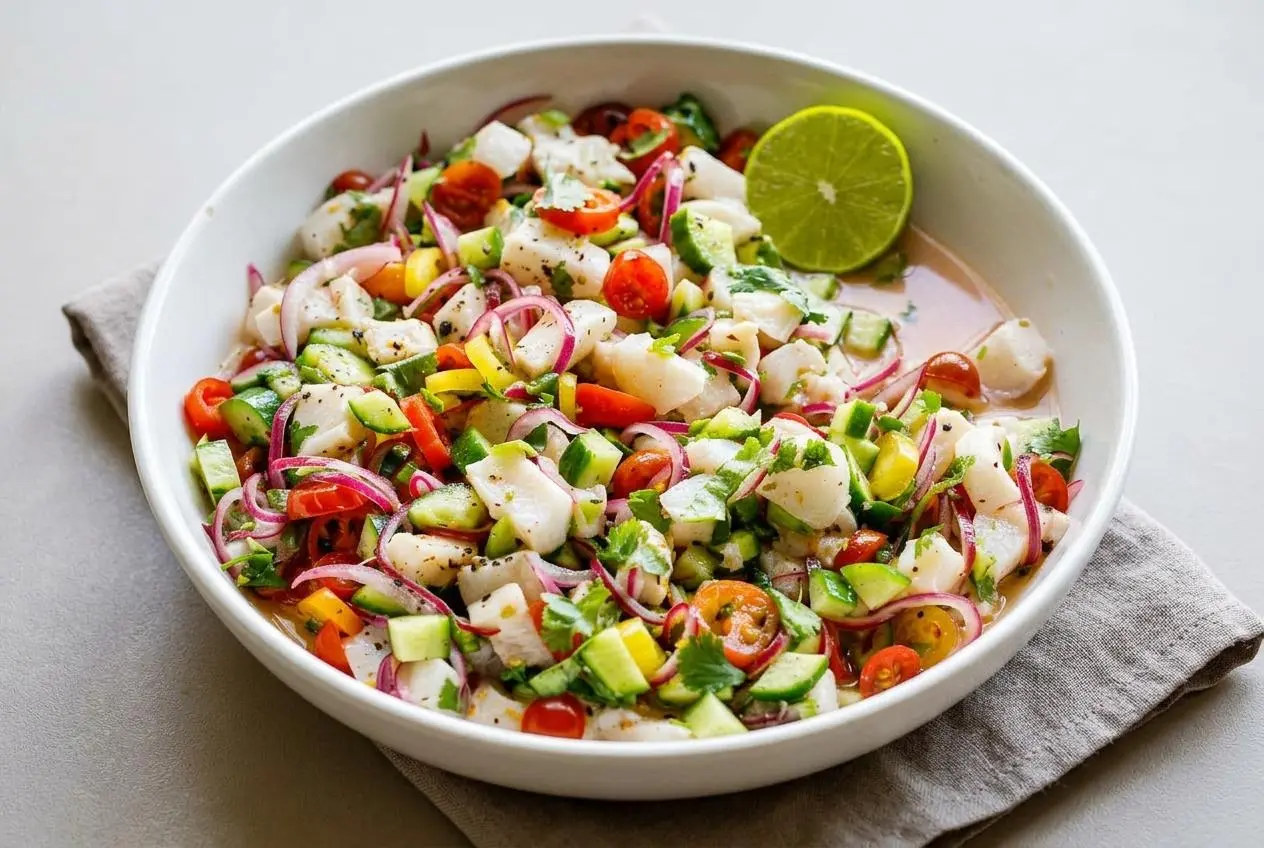
Classic ceviche cures fresh raw ocean fish in lime juice until opaque, then combines it with crisp vegetables, chili, and cilantro for a chilled, tangy dish.
This ceviche recipe balances tender lime-cured fish with juicy tomatoes, cool cucumber, red onion, and a clean hit of fresh chili. The key is cold fish, freshly squeezed lime juice, and evenly cut pieces.
Each bite is bright, crisp, and refreshing, with just enough heat to wake up the citrus. Watch for the milky opaque center.
Set a glass or ceramic mixing bowl in the refrigerator while you prep so the fish stays cold from the first toss onward.
The Best Fish for Ceviche and How to Choose It
Choose firm, lean ocean fish that stays neatly cubed as the lime juice firms its proteins. Red snapper, sea bass, halibut, mahi-mahi, corvina, and dorado are especially good choices because they have a clean flavor and a substantial, tender texture.
- Red snapper: Mild, firm, and slightly sweet, with cubes that hold their shape well.
- Sea bass: Buttery and delicate, best when exceptionally fresh and cut with a sharp knife.
- Halibut: Dense and lean, with a pleasantly substantial bite after curing.
- Mahi-mahi: Mild and firm, with a texture that works well for a citrus-forward preparation.
- Corvina: A classic choice with clean flavor and a tender but resilient texture.
Buy fish from a counter you trust and ask for fish intended for raw preparation. Keep it well chilled, work quickly, and use it the day you purchase it. Fresh fish should smell clean and mild, not strongly fishy, and the flesh should look moist and glossy rather than dull or dry.
Freshwater fish is a poor choice for this style of dish because it can carry different parasite concerns. Very oily fish can also soften quickly in citrus and lose the clean, firm texture that makes ceviche so appealing. Raw or undercooked seafood dishes, including ceviche, can carry a higher foodborne illness risk, particularly for older adults and people with greater susceptibility.
Cut the fish into uniform 1/2 inch cubes. Uneven pieces cure unevenly, leaving small pieces firm before larger pieces have reached the same opaque finish.
Essential Ingredients for Fresh Ceviche
Each ingredient brings a distinct job: lime firms the fish, onion and chili add bite, herbs add aroma, and cucumber and tomatoes keep every spoonful juicy and crisp.
Ceviche
- ½ a red onion, thinly sliced, with the grain.
- 1- 1 ½ teaspoon kosher salt, start with 1, add more to taste
- ¼ teaspoon black pepper
- ¾ cup fresh lime juice (4-6 limes) freshly squeezed ( try to use ripe limes)
- 1-2 garlic cloves very finely minced (use a garlic press)
- 1 fresh serrano or jalapeño chili pepper seeded and very finely chopped. Start conservatively, more to taste.
- 1 pound fresh fish- sea bass, red snapper, corvina, halibut, dorado, escolar, mahi-mahi, tilapia, or hamachi – diced into 1/2 inch cubes.
- ¼-½ cup fresh cilantro, chopped
- 1 cup grape or cherry tomatoes, sliced or cut in half (or 1 cup diced tomatoes)
- 1 cup diced cucumber
- 1 tablespoon olive oil (optional)
- optional: 1 semi-firm Avocado, diced, or make the Avocado Sauce
Optional Avocado sauce
- ⅔ cup Avocado
- ⅓ cup cilantro
- 2/3 cup water- plus more as needed
- 1 tablespoon olive oil
- ½ teaspoon kosher salt
- 1 teaspoon coriander
- 2 tablespoons lime juice
- 1 garlic clove
- cracked pepper to taste
Lime juice changes the structure of the fish proteins, turning the surface from translucent to opaque and firm. Red onion gives the ceviche sharpness and color, while tomatoes and cucumber bring juicy crunch. Cilantro lifts the aroma, and optional olive oil softens the lime’s sharper edges.
I squeeze limes by hand immediately before mixing, pressing gently so the juice stays bright and bitter rind oils stay out of the bowl.
The Role of Fresh Citrus Juice
Fresh lime juice gives ceviche its clear, floral tartness and enough acidity to firm the fish. Choose limes with smooth, thin skins that yield slightly under gentle thumb pressure. Those limes are generally juicier than hard, thick-skinned fruit.
Skip bottled lime juice here. Its flavor can taste flat or harsh, and it lacks the fresh aroma that carries through the fish, cilantro, and vegetables. Juice the limes just before assembling the ceviche, then strain out seeds without pressing them through the strainer.
Aromatics and Crisp Vegetables
Slice the onion with the grain so the strands stay crisp instead of collapsing into soft fragments. Starting the onion in salted lime juice takes the aggressive raw sulfur edge down while preserving its crunch and bright purple color.
Garlic should be minced very finely so it blends into the citrus rather than landing in sharp chunks. Seed the serrano or jalapeño before chopping, then add it carefully. Cilantro gives a clean green lift, cucumber cools the chili, and tomatoes add a juicy pop that keeps the ceviche from tasting one-note sour.
How to Make Ceviche
Use a non-reactive glass or ceramic bowl for the acidic lime mixture. A reactive metal bowl can leave an unpleasant metallic taste, while a chilled glass bowl keeps the fish cold and the flavor clean.
Ceviche Preparation
- Place the sliced red onion in a chilled glass or ceramic bowl, then coat it with the kosher salt, black pepper, and fresh lime juice.
Let the onion strands soften slightly while remaining crisp and brightly colored. - Add the diced fish, minced garlic, and chopped serrano or jalapeño, then fold gently until the lime juice reaches every cube.
The fish should remain intact, with each piece evenly coated rather than broken up. - Stir in the tomatoes, cucumber, cilantro, and optional olive oil, then refrigerate the ceviche for at least 30 minutes before serving.
After 45 to 60 minutes, the fish should look milky white and feel firm yet tender when pressed gently with a fork. - Taste the chilled ceviche and adjust the salt and chili to suit your preference, then fold in the optional avocado just before serving.
The avocado should stay in distinct creamy pieces, and the final mixture should taste lively rather than overly salty or aggressively sour.
Optional Avocado Sauce
- Blend all of the avocado sauce ingredients until completely smooth, adding more water or olive oil only as needed to help the blender move.
The finished sauce should pour easily and look pale green with flecks of cilantro.
Keep the bowl refrigerated throughout the curing period. Lime juice changes the fish texture, but it does not replace careful cold handling. The most useful doneness cue is the center of each cube: it should shift from glassy and translucent to opaque, pale, and gently springy.
Ceviche Curing Times and Texture Guide
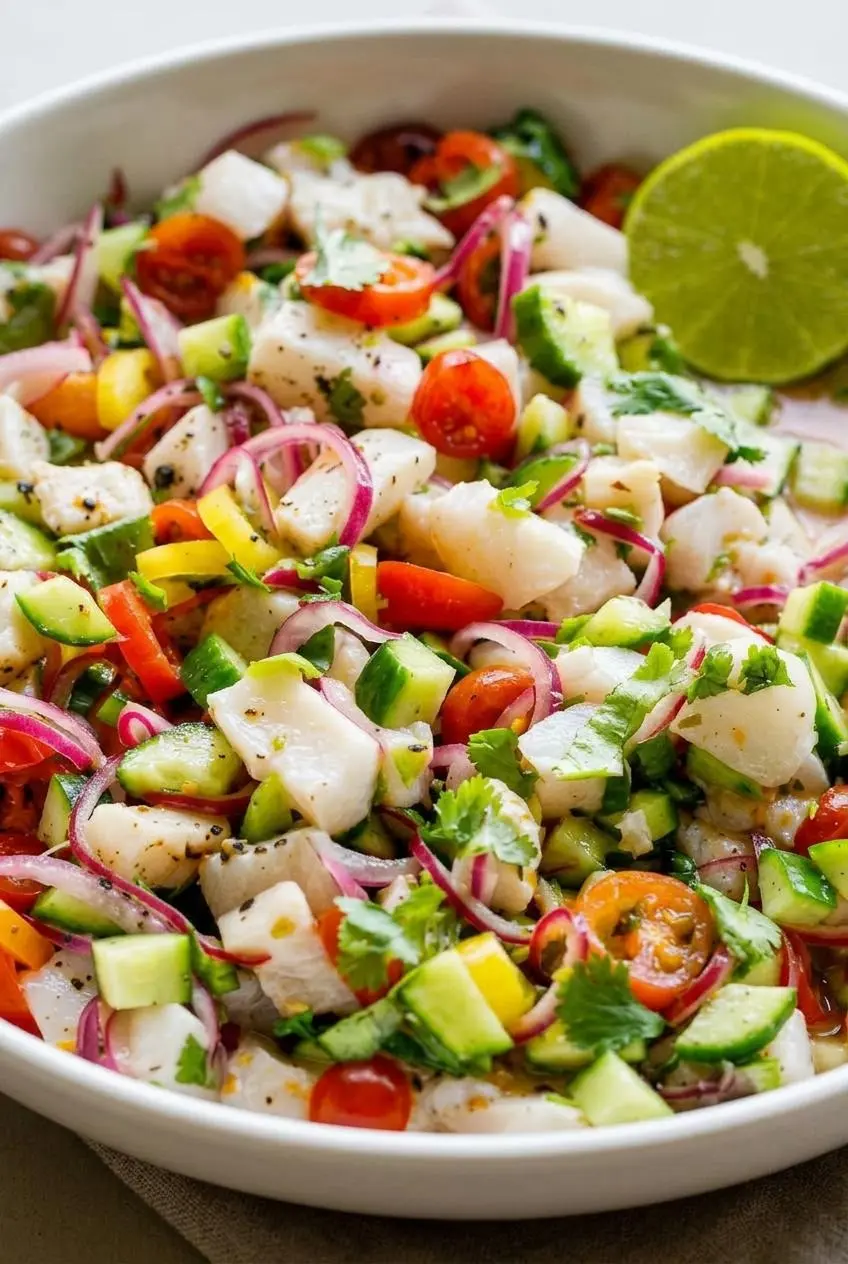
Curing time determines whether the fish feels tender and fresh or chalky and rubbery. Use the clock along with the appearance of the fish, especially if your cubes are slightly larger or smaller than 1/2 inch.
- At 15 minutes: The outer edges begin to turn opaque, while the centers still look translucent. The fish remains soft and mostly raw in texture.
- At 30 minutes: Most cubes look pale around the edges and firmer throughout. This is a good point for a softer, more delicate ceviche.
- At 45 minutes: The fish should be opaque through the center, tender, and lightly springy. This is the sweet spot for evenly cut 1/2 inch cubes.
- At 90 minutes: The fish becomes much firmer and can start to feel dry or chalky. Its clean, tender bite begins to fade.
If the ceviche tastes too sharp, fold in the optional diced avocado or add more cucumber to soften the impression of acidity. A small splash of freshly squeezed orange juice can also round out lime’s edge with natural sweetness. Keep it optional, and add it slowly so the ceviche stays citrusy rather than sweet.
- Fish feels rubbery: It spent too long in the lime juice. Serve it right away with avocado, cucumber, or tostadas to balance the firmer texture.
- Ceviche tastes watery: The vegetables released excess liquid. Use firm tomatoes, seed very juicy tomatoes if needed, and stir gently rather than crushing the ingredients.
- Flavor tastes flat: It usually needs another small pinch of salt before it needs more lime. Salt sharpens the fish, cilantro, and chile flavors together.
- Heat feels too strong: Add more cucumber or avocado rather than more lime. Both cool the chile without making the ceviche more sour.
Popular Variations and Serving Suggestions
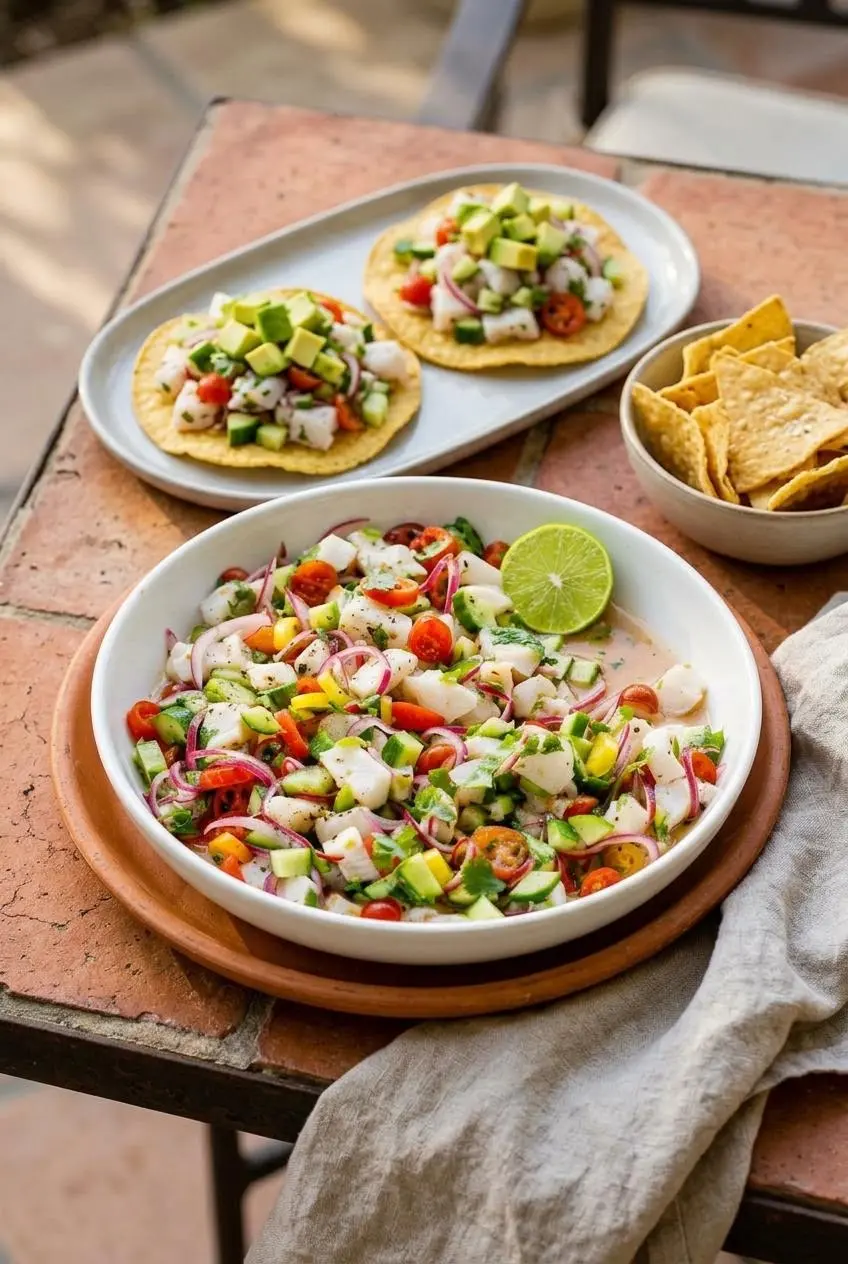
Serve ceviche very cold, with something crisp alongside it. Spoon it over crispy corn tostadas, offer thick tortilla chips for scooping, or layer it into chilled cocktail glasses for a neat appetizer portion.
For a casual spread, pair the ceviche with Mexican street corn. The creamy, smoky corn makes a satisfying contrast to the cold lime-cured fish and crunchy vegetables.
For a gentler citrus profile, soak the red onion in lime juice with a touch of fresh orange juice. The orange adds soft sweetness that works especially well with serrano heat, cucumber, and ripe avocado.
Mexican Style Shrimp Ceviche
For an optional Mexican-style variation, replace the fish with diced shrimp. Use shrimp that is very fresh and properly chilled, or briefly blanch it first for a firmer, cooked texture. Add diced Roma tomatoes, cucumber, jalapeño, and spicy vegetable juice or hot sauce to create a bolder, coastal flavor.
Strain excess liquid before piling shrimp ceviche onto tostadas so the shell stays crisp. A spoonful of avocado and a side of tortilla chips make the heat and acidity feel balanced rather than heavy.
Traditional Peruvian Inspirations
Peruvian-style ceviche often leans into a more intense citrus mixture known as leche de tigre. Ají amarillo brings fruity warmth, while thin red onion adds bite and color. Serve it with sliced sweet potato and large-kernel choclo corn for a contrast of creamy sweetness and chewy texture.
Keep these regional touches separate from the main preparation. They change the flavor direction without needing to alter the fish, lime, cucumber, tomato, cilantro, and chili method above.
Storage and Make-Ahead Guidelines
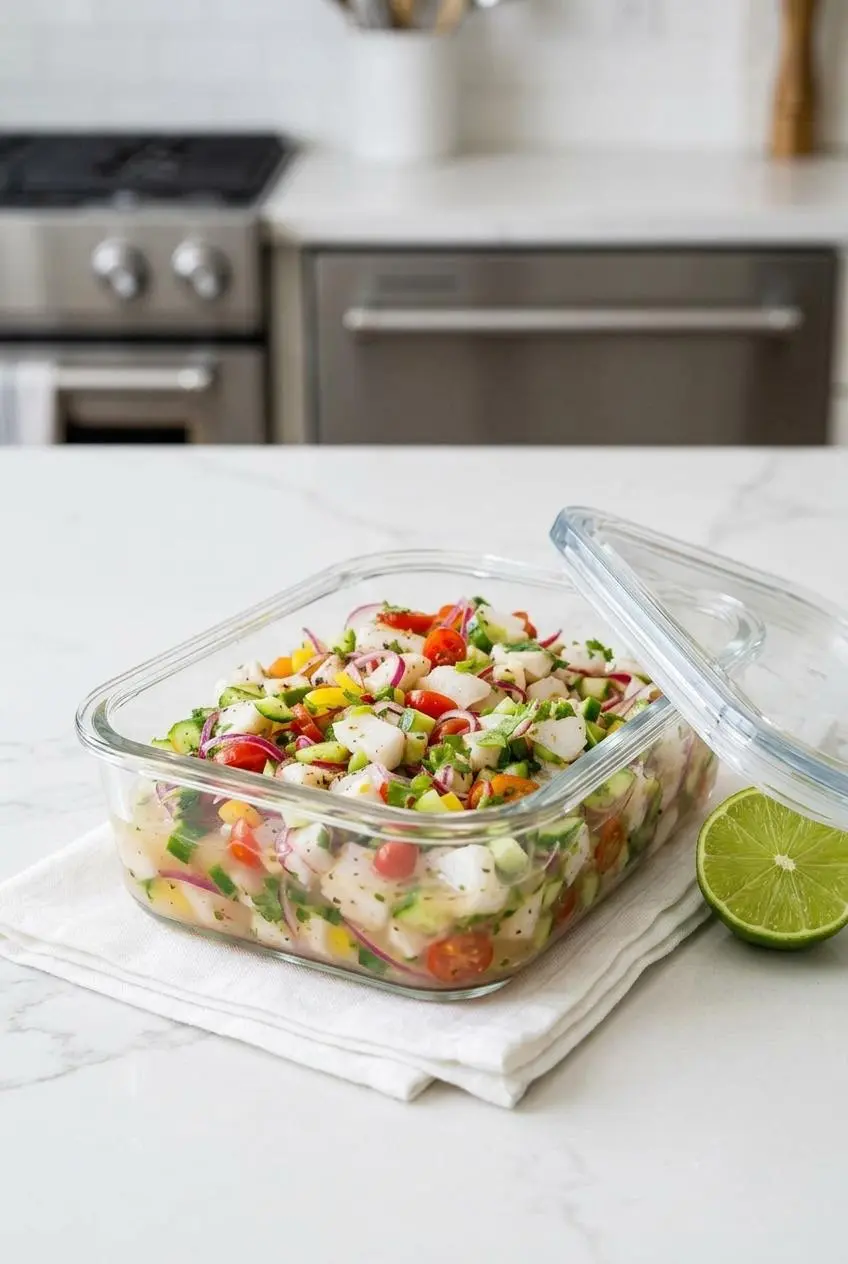
Ceviche has its best texture shortly after the fish turns opaque. Prepare the onion, cucumber, tomatoes, cilantro, garlic, and chile ahead if needed, but keep the fish separate and chilled until you are ready to add the lime juice.
Once assembled, keep ceviche covered in an airtight glass container in the refrigerator. The fish continues to firm in the lime juice as it sits, so leftovers will have a denser texture and less of the tender bite that makes freshly made ceviche special.
For serving, hold back the optional avocado until the last moment. It stays greener, creamier, and more distinct in the finished dish when it is folded in right before the ceviche reaches the table.
Conclusion
Bright lime, tender ocean fish, cooling cucumber, juicy tomatoes, and fresh cilantro make this ceviche feel vibrant from the first bite. Start with very fresh fish, ripe limes, and tidy 1/2 inch cubes for the most even cure.
Keep the bowl cold and aim for the tender opaque stage rather than pushing the fish too long in citrus. Serve it chilled with something crisp, and enjoy that clean, zesty contrast.
Frequently Asked Questions
What Is the Best Type of Fish for Making Ceviche?
Firm, lean white ocean fish such as sea bass, red snapper, halibut, mahi-mahi, and corvina work especially well. These fish hold their shape and develop a tender, clean texture in lime juice. Avoid freshwater fish and very oily fish, which are less suited to this preparation.
How Does Lime Juice Cure Raw Fish in Ceviche?
Citric acid changes the structure of proteins in the fish. As the proteins change, the flesh turns from translucent to opaque and becomes firmer. The lime changes texture without applying heat, so careful cold handling still matters.
How Long Should You Marinate Ceviche Before Serving?
For 1/2 inch fish cubes, refrigerate the ceviche for 30 to 45 minutes for the best tender-opaque texture. At 30 minutes, the fish stays softer and more delicate. Past 2 hours, it can become firm, chalky, and rubbery.
Can You Make Fresh Ceviche Ahead of Time?
Prep the vegetables, cilantro, garlic, chile, and lime juice ahead, keeping everything chilled. Combine the fish with the lime juice 30 to 45 minutes before serving. Fold in avocado only at the end so it stays creamy and fresh-looking.
Ceviche Recipe

Equipment
- Garlic Press
- Blender
- Glass Mixing Bowl
Ingredients
Ceviche
- 1/2 red onion thinly sliced, with the grain
- 1-1 1/2 teaspoon kosher salt start with 1, add more to taste
- 1/4 teaspoon black pepper
- 3/4 cup fresh lime juice (4-6 limes) freshly squeezed (try to use ripe limes)
- 1-2 cloves garlic very finely minced (use a garlic press)
- 1 fresh serrano or jalapeño chili pepper seeded and very finely chopped. Start conservatively, more to taste.
- 1 pound fresh fish sea bass, red snapper, corvina, halibut, dorado, escolar, mahi-mahi, tilapia, or hamachi, diced into 1/2 inch cubes
- 1/4-1/2 cup fresh cilantro chopped
- 1 cup grape or cherry tomatoes sliced or cut in half (or 1 cup diced tomatoes)
- 1 cup diced cucumber
- 1 tablespoon olive oil (optional)
- 1 semi-firm Avocado optional, diced, or make the Avocado Sauce
Optional Avocado sauce
- 2/3 cup Avocado
- 1/3 cup cilantro
- 2/3 cup water plus more as needed
- 1 tablespoon olive oil
- 1/2 teaspoon kosher salt
- 1 teaspoon coriander
- 2 tablespoons lime juice
- 1 clove garlic
- cracked pepper to taste
Instructions
Ceviche Preparation
- Place the sliced red onion in a chilled glass or ceramic bowl, then coat it with the kosher salt, black pepper, and fresh lime juice. Let the onion strands soften slightly while remaining crisp and brightly colored.
- Add the diced fish, minced garlic, and chopped serrano or jalapeño, then fold gently until the lime juice reaches every cube. The fish should remain intact, with each piece evenly coated rather than broken up.
- Stir in the tomatoes, cucumber, cilantro, and optional olive oil, then refrigerate the ceviche for at least 30 minutes before serving. After 45 to 60 minutes, the fish should look milky white and feel firm yet tender when pressed gently with a fork.
- Taste the chilled ceviche and adjust the salt and chili to suit your preference, then fold in the optional avocado just before serving. The avocado should stay in distinct creamy pieces, and the final mixture should taste lively rather than overly salty or aggressively sour.
Optional Avocado Sauce
- Blend all of the avocado sauce ingredients until completely smooth, adding more water or olive oil only as needed to help the blender move. The finished sauce should pour easily and look pale green with flecks of cilantro.