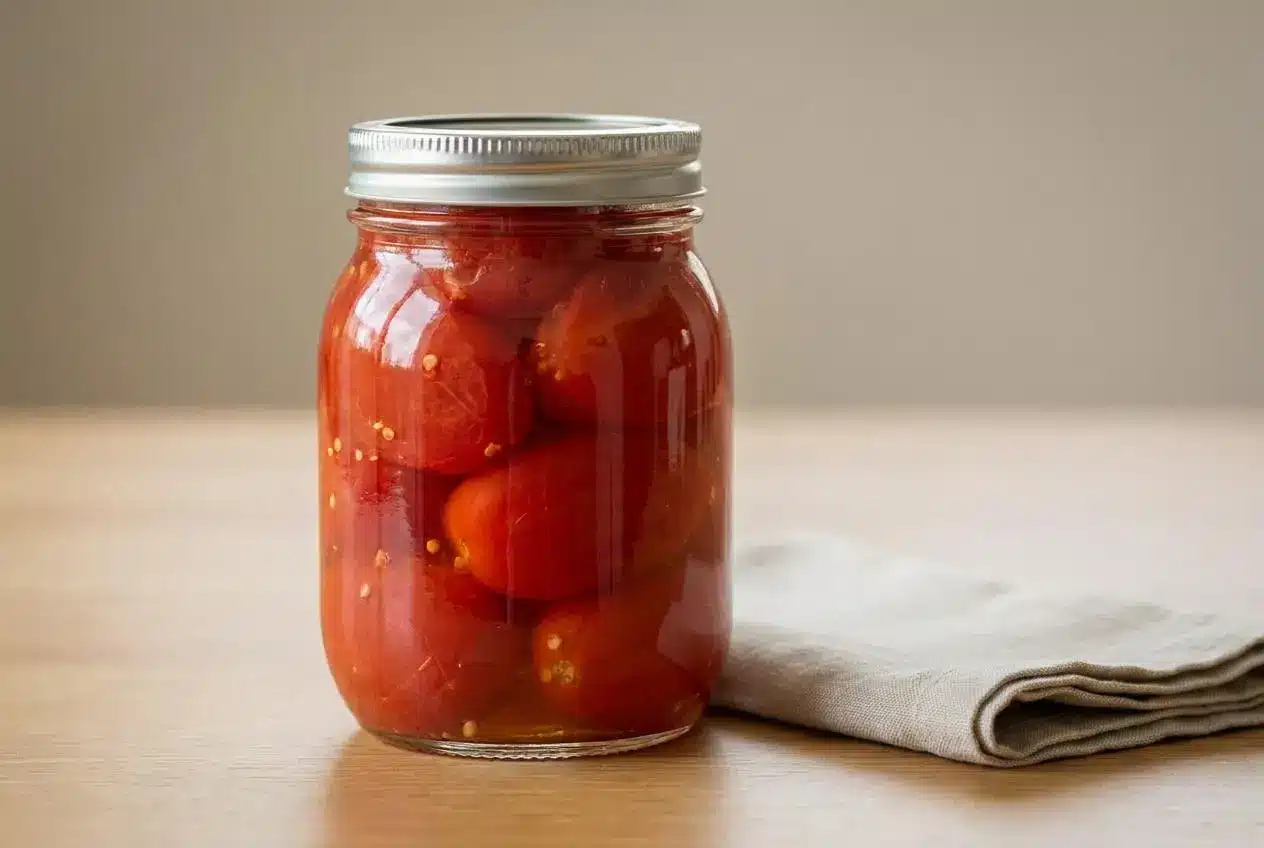
Preserve whole tomatoes by peeling firm plum tomatoes, acidifying every jar, and processing them in a boiling water canner for the specified time. Careful headspace, clean rims, and a full cooling period help the jars seal properly.
Canned Tomatoes capture that sweet, vibrant tomato flavor for soups, sauces, and cozy dinners when fresh tomatoes are at their peak.
Whole peeled tomatoes stay especially useful because you can leave them intact or crush them as a dish cooks. The satisfying part comes when the lids settle into their seals.
Check every jar rim for tiny chips or nicks before filling, since even a small flaw can interfere with lid contact.
Key Ingredients and Roles for Canned Tomatoes
Tomatoes provide body and rich flavor, boiling water fills the jars around the fruit, and citric acid supplies the acidity needed for this preservation method.
- Whole tomatoes (Roma or San Marzano)
- Boiling water
- Citric Acid
Choose fully ripe, firm red tomatoes with unblemished flesh. Avoid fruit from damaged, diseased, dead, or frost-affected vines, and save unripened garden tomatoes for fried green tomatoes instead.
I prefer tomatoes that feel heavy and firm rather than very soft, because they hold their shape more neatly after peeling and processing.
Plum Tomatoes: Roma vs San Marzano
Roma and San Marzano tomatoes are paste-style varieties with dense flesh, fewer watery seed pockets, and a balanced sweet-tart flavor. Their sturdy texture makes them a strong choice for whole jars, where delicate slicing tomatoes can collapse into a looser pack.
Wash the tomatoes well under running water before blanching. Clean handling helps keep the prep area tidy and limits unwanted residue on produce.
Selecting Acidification: Citric Acid vs Bottled Lemon Juice
This method uses Citric Acid, which dissolves easily and adds acidity with little change to tomato flavor. Add it directly to the jar before packing the tomatoes so it disperses through the contents as the jar fills.
Bottled lemon juice is the alternative commonly used for tomato canning because its acidity is standardized. Fresh lemon juice is not a reliable substitute for preservation, since its acidity can vary from fruit to fruit. Vinegar may also change the flavor noticeably, so it is not part of this method.
Essential Acidification and Canning Safety Guidelines
Acidification is a required part of this method because tomatoes can vary in natural acidity. Tomatoes with a pH above 4.6 need added lemon juice or citric acid before boiling-water processing; properly acidified tomatoes can then be processed as an acid food in a boiling-water canner. Tomatoes may need acidification to reach a pH of 4.6 or lower.
For the jars in this recipe, add ½ tsp. Citric Acid to each jar before the tomatoes go in. Do not treat the acid as optional, and do not skip it because the tomatoes taste tart. Flavor does not reliably show acidity level.
Start with clean canning jars, bands, and lids. Inspect jars for cracks, rim damage, or worn threads, then keep the jars hot until filling time. Use a fresh lid for each jar and wipe the rim clean before applying it, because tomato pulp on the glass can prevent a good seal.
Boiling-water canning is appropriate here only when the tomatoes are acidified and processed as directed. Keep the canner at a steady boil once processing begins, and use a canner that holds the jars upright without crowding.
Step-by-Step Instructions for Canning Whole Tomatoes
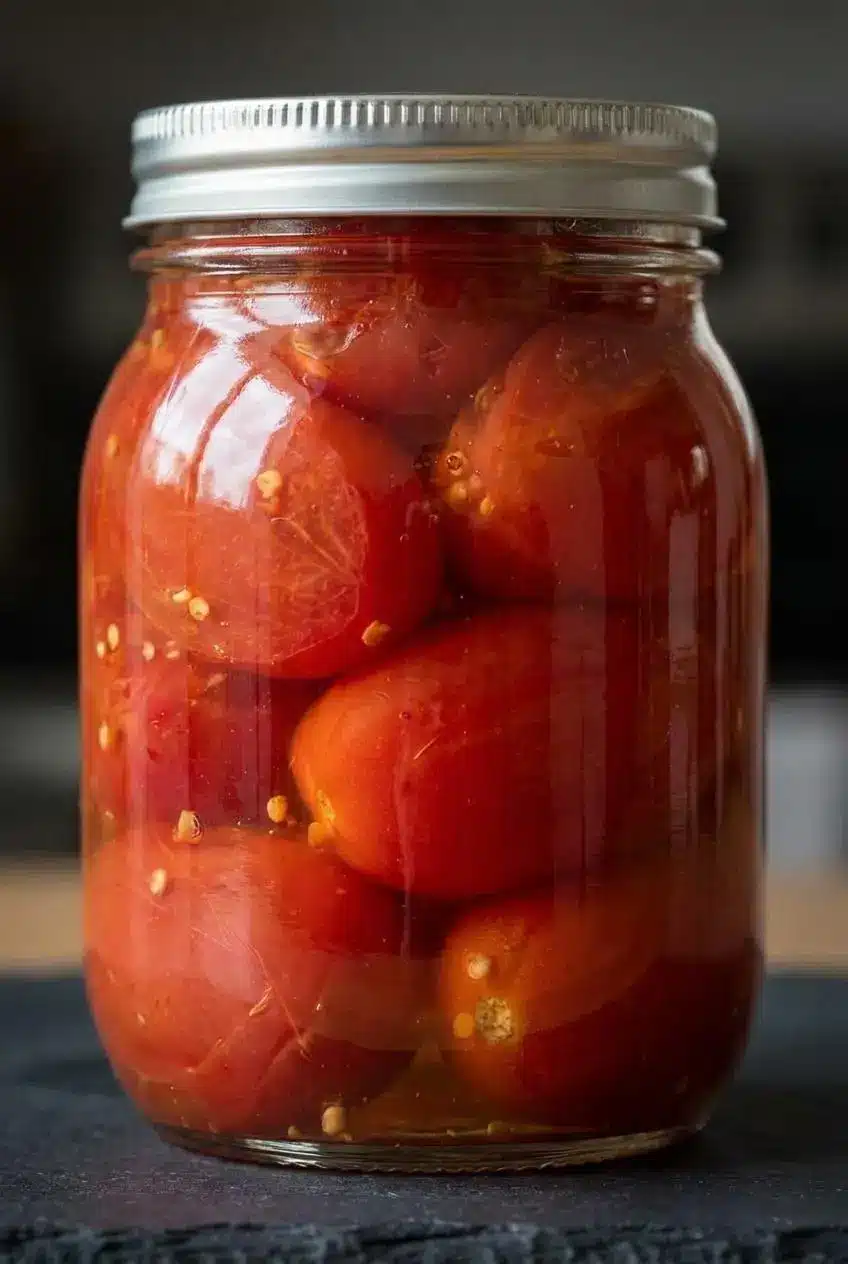
Work in an orderly flow: prepare the jars, loosen and remove the skins, pack while everything is hot, then process the filled jars without rushing the cooling stage.
Blanching and Peeling the Tomatoes
A brief dip in boiling water loosens the skin without turning the tomato flesh mushy. Look for the peel to split or wrinkle, especially around the stem end, before removing the tomatoes.
Packing Jars and Adjusting Headspace
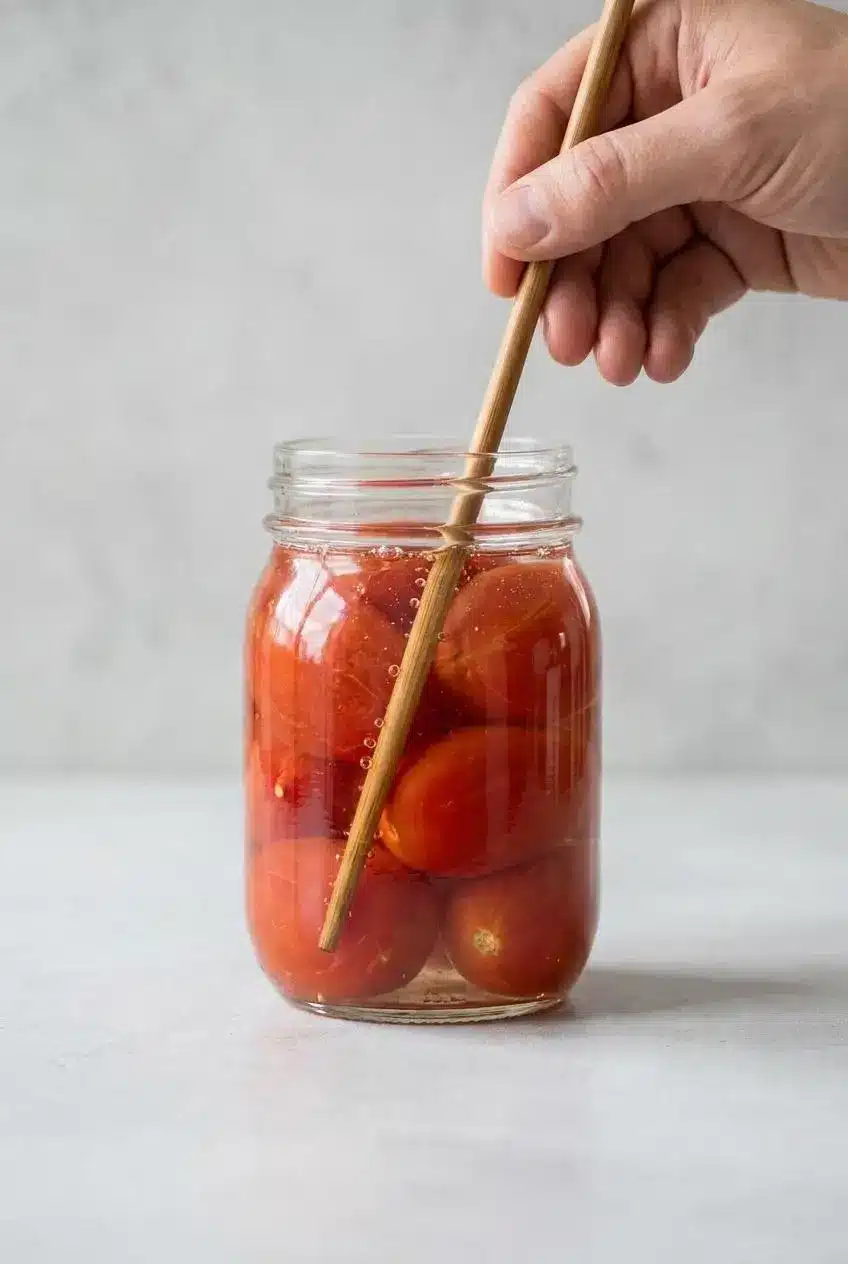
Raw-pack the peeled tomatoes after adding Citric Acid to each jar. Cover them with boiling water, release trapped air with a non-metal utensil, and maintain the exact ½ inch of headspace so the contents have room during processing.
Boiling Water Bath Processing
Set the filled jars in a boiling-water canner with water covering the lids by at least 1 inch. Begin timing only after the water returns to a full boil.
- Wash and sterilize the jars, bands, and lids, then keep them hot while preparing the tomatoes.
Warm jars are ready to fill without sitting out and cooling before the canning work begins. - Lower the tomatoes into a large pot of boiling water for 1 to 2 minutes.
Remove them when the skins begin to crack or pull away from the flesh. - Put ½ tsp. Citric Acid in each jar, pack in the peeled tomatoes, and pour in boiling water while leaving ½ inch of headspace.
Run a chopstick or butter knife through the jar to release bubbles, then check the headspace again before closing. - Place the jars in the boiling-water canner and process pint jars for 40 minutes or quart jars for 45 minutes.
Keep the water actively boiling and covered over the jar lids throughout the timed processing period. - Lift the jars out carefully and leave them undisturbed for 24 hours before storing them in a cool, dry place.
As the jars cool, you may hear a small ping as lids flex downward and form their vacuum seals.
Variations for Home Preserved Tomatoes
These options change the texture or flavor direction, but they are separate from the whole peeled tomato method above. Keep the required acidification and tested processing approach in place whenever adapting tomato canning.
Crushed Tomatoes Packed in Juice
For a sauce-ready texture, crush peeled tomatoes and warm them in their own juices before packing. The result is thicker and more uniform than whole tomatoes, making it convenient for simmered marinara, ragù, or pizza sauce.
Small cherry tomatoes are better suited to a quick fresh preparation such as marinated cherry tomatoes than this whole peeled canning style.
Hot Pack Method for Canned Tomatoes
A hot pack starts by simmering the prepared tomatoes before they go into jars. This helps expel some trapped air, creates a denser pack, and can reduce the tendency for tomatoes to float above their liquid after processing.
If you choose a seasoned tomato project, dried herbs are more predictable than fresh leaves for preservation. A pinch of sea salt, basil, oregano, or garlic may sound tempting, but additions can affect flavor and processing needs, so keep them out of this whole-tomato method unless using a separately tested formula.
Troubleshooting and Canning Success Tips
A few small checks prevent most canning frustrations, especially around jar seals, headspace, and tomato movement in the jar.
- Liquid siphons from the jar: This often follows overfilling, trapped air, or sudden temperature changes. Leave ½ inch of headspace, debubble carefully, and let the jars cool undisturbed.
- Tomatoes float near the top: Raw-packed fruit naturally contains air, and very soft tomatoes float more easily. Pack firmly without crushing and consider a hot pack next time for a denser jar.
- A lid did not seal: After the 24-hour cooling period, check that the lid center is concave and does not flex or pop when pressed. A jar that remains unsealed should not join the shelf-stable jars.
- A lid seals poorly: Check for food residue on the rim, a nicked jar edge, or a lid that was not centered. Replace questionable equipment rather than trying to force a seal.
- Liquid looks cloudy or the jar leaks: Do not use jars with suspicious changes, a bulging lid, broken seal, or unusual appearance. When in doubt, discard the contents.
Remove the ring bands after the jars have sealed and cooled. Storing bands separately makes it easier to notice a failed lid or residue around the rim later.
Storage and Using Opened Jars
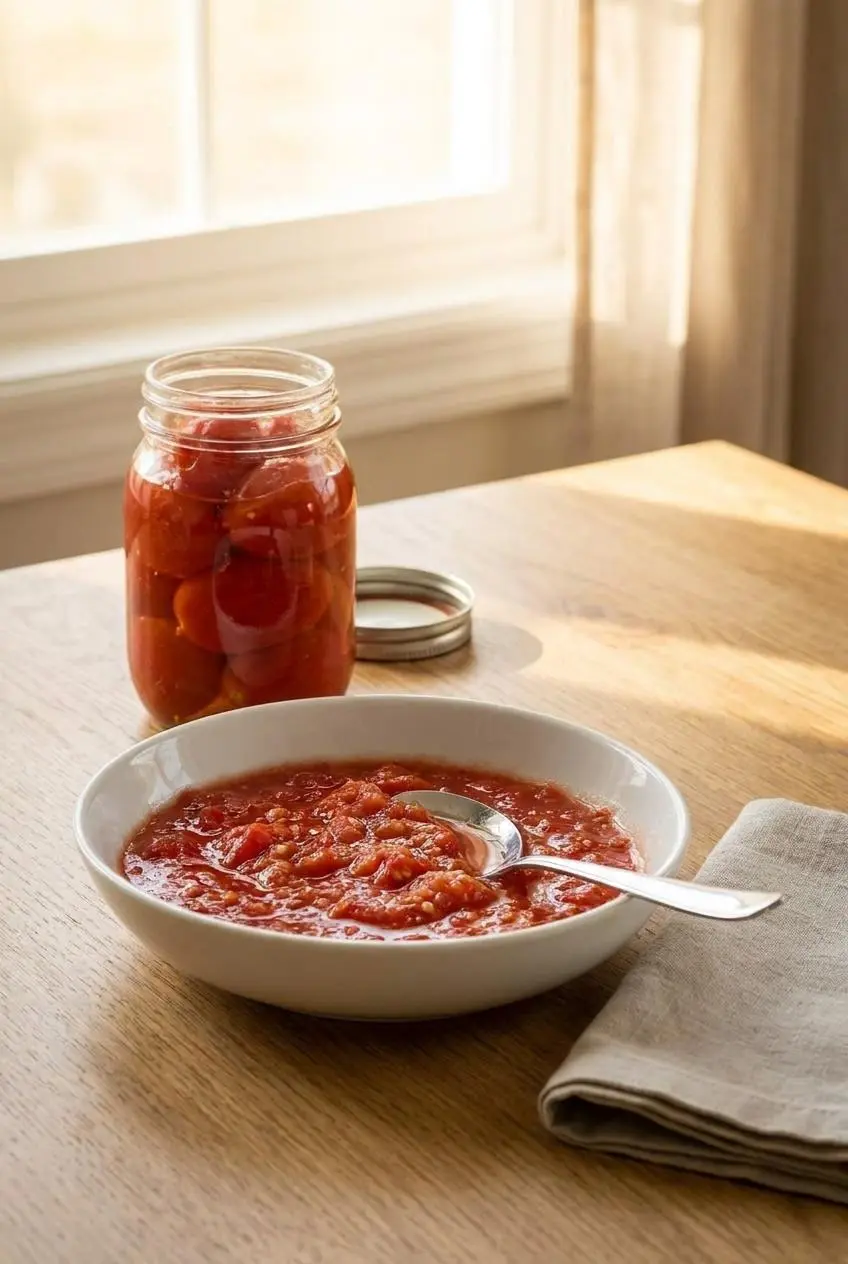
Store sealed jars in a cool, dry, dark pantry and use them within 12 months, as directed for this recipe. Keep jars away from heat, direct sun, and damp shelving, which can affect lid condition and tomato quality.
Before opening a jar, inspect the lid and contents. Once opened, refrigerate the tomatoes in a covered container and use them promptly. Warm only the amount needed for your dish, then gently crush the tomatoes into a pasta sauce, braise, or hearty cowboy soup.
For quick dinners, break up the softened whole tomatoes with a spoon as they cook, then fold them into an easy taco pasta. Their bright acidity adds depth without requiring a separate sauce.
Conclusion
Home-canned whole tomatoes bring sweet summer flavor to the pantry in a form that is flexible, rich, and ready for everyday cooking.
Choose firm tomatoes, add the required Citric Acid to every jar, and give the filled jars the full processing and cooling time. Those careful details make each jar more dependable when dinner needs a boost.
Frequently Asked Questions
Why Do I Need to Add Lemon Juice or Citric Acid to Canned Tomatoes?
Tomatoes can vary in acidity, even when they taste bright and tangy. Citric acid or bottled lemon juice lowers the acidity level for boiling-water canning. This method uses ½ tsp. Citric Acid in each jar. Fresh lemon juice is not a dependable substitute because its acidity varies.
How Long Should I Process Pint and Quart Jars in a Boiling Water Bath?
Process pint jars for 40 minutes and quart jars for 45 minutes. Keep the jars covered by at least 1 inch of boiling water. Start the timer when the canner returns to a full boil. Use the jar size that matches the stated processing time.
What Type of Tomatoes Are Best Suited for Home Canning?
Firm plum tomatoes, including Roma or San Marzano, are well suited to whole jars. They have dense flesh and less excess liquid than many slicing tomatoes. Their skins slip off neatly after blanching. Choose ripe red fruit with no obvious damage or soft decay.
How Do I Know If My Canned Tomato Jars Have Sealed Properly?
Allow the jars to cool undisturbed for 24 hours, then check each lid. The center should curve slightly downward. It should not pop or flex when pressed. Remove the ring band for storage and recheck the lid before using the jar.
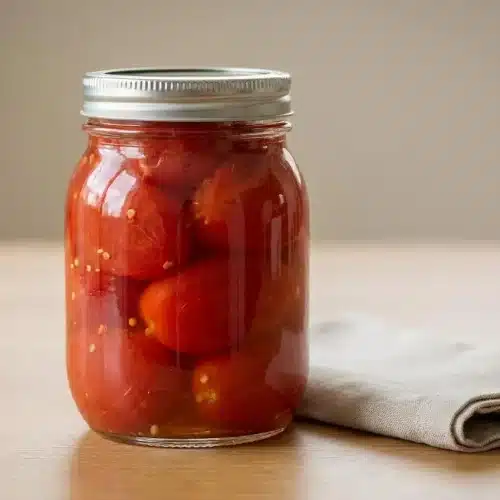
Canned Tomatoes

Equipment
- Canning jars
- Bands and lids
- Water bath canner
- Large Pot
- Chopstick or butter knife
Ingredients
- Whole tomatoes (Roma or San Marzano)
- Boiling water
- Citric Acid
Instructions
- Wash and sterilize the jars, bands, and lids, then keep them hot while preparing the tomatoes. Warm jars are ready to fill without sitting out and cooling before the canning work begins.
- Lower the tomatoes into a large pot of boiling water for 1 to 2 minutes. Remove them when the skins begin to crack or pull away from the flesh.
- Put ½ tsp. Citric Acid in each jar, pack in the peeled tomatoes, and pour in boiling water while leaving ½ inch of headspace. Run a chopstick or butter knife through the jar to release bubbles, then check the headspace again before closing.
- Place the jars in the boiling-water canner and process pint jars for 40 minutes or quart jars for 45 minutes. Keep the water actively boiling and covered over the jar lids throughout the timed processing period.
- Lift the jars out carefully and leave them undisturbed for 24 hours before storing them in a cool, dry place. As the jars cool, you may hear a small ping as lids flex downward and form their vacuum seals.