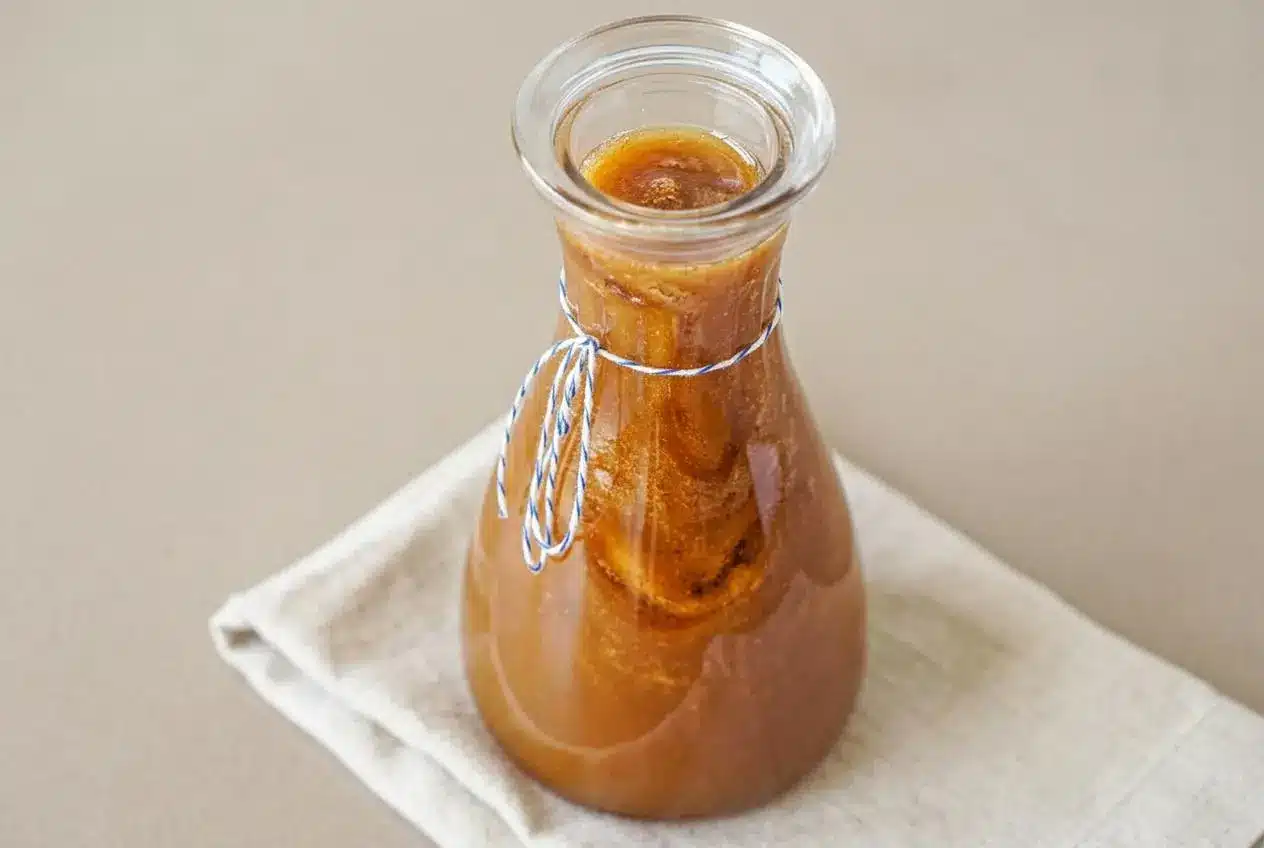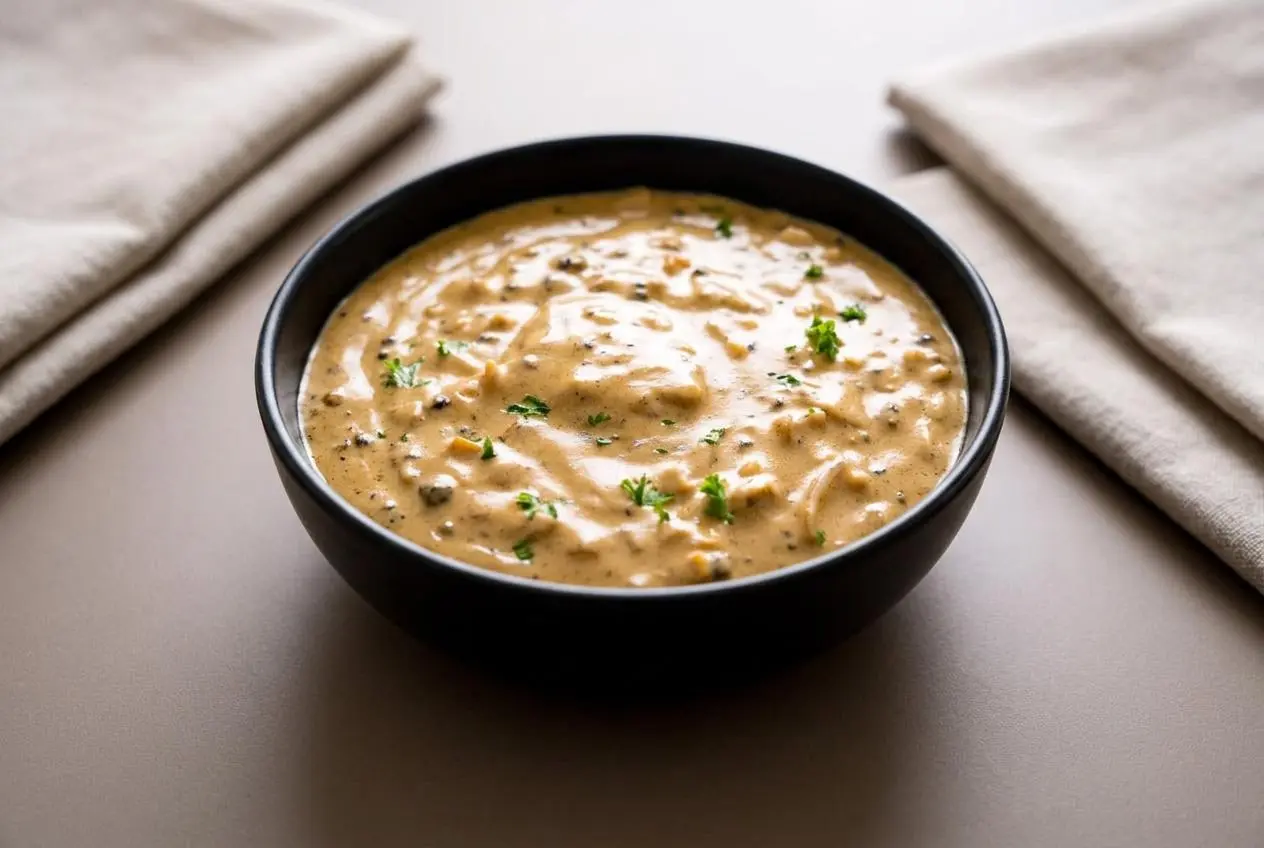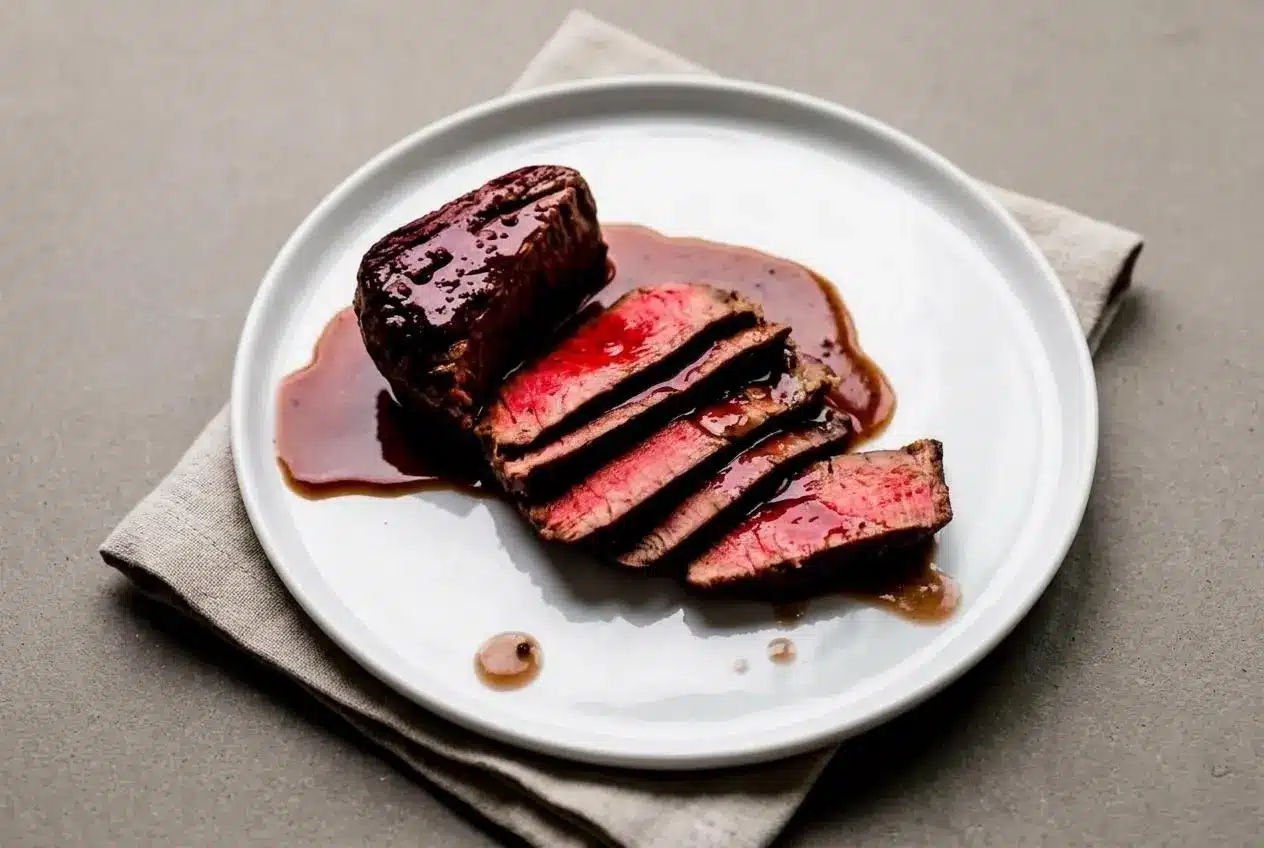
Bordelaise sauce is a classic French brown sauce made by reducing dry red wine, shallots, and herbs with rich beef broth, then finishing it with butter for body and shine.
This bordelaise sauce recipe turns a small saucepan of wine, shallots, and broth into a deep, savory glaze with real steakhouse character. The aroma alone, all warm wine and herbs, makes dinner feel special.
The key is patience during the two reductions, followed by a brisk whisking for a velvety finish. Watch for the spoon-coating gloss.
Use a small saucepan with enough surface area for steady evaporation, and keep the heat at a lively simmer rather than a hard, splattering boil.
Essential Ingredients for Classic Bordelaise
Each ingredient builds a different layer: wine brings brightness, shallots add gentle sweetness, broth supplies savory body, and the butter-flour mixture gives the finished sauce its smooth, clingy texture.
- 1 cup dry red wine
- ½ cup minced shallots ((1 large or 2 medium shallots))
- ¼ tsp dried thyme ((or ½ teaspoon fresh thyme) )
- 1 bay leaf
- 2 cups beef bone broth or stock
- 1 tbsp melted butter
- 1 tbsp all-purpose flour
- kosher salt and pepper, to taste
Dry red wine forms the backbone of bordelaise, bringing fruit, acidity, and structure once reduced. Minced shallots soften into the sauce more delicately than yellow onions, which can taste too assertive here. Thyme and bay leaf add an herbal background without stealing focus from the beef.
Bone broth or a well-made beef stock gives the sauce its savory foundation. Broth with natural gelatin makes the reduction feel fuller on the tongue, while the melted butter and flour combine into a smooth thickener that helps the sauce reach a light nappe texture, meaning it coats the back of a spoon.
I choose a dry red wine I would happily pour with dinner, because cooking wine can leave an overly salty or harsh taste after reduction.
Choosing the Right Red Wine
Choose a dry, medium- to full-bodied red with enough fruit to stand up to beef. Cabernet Sauvignon, Bordeaux blends, Merlot, and Pinot Noir all work well. Cabernet and Bordeaux bring darker berry notes and firmer structure, while Merlot is rounder and Pinot Noir gives a softer, brighter result.
Avoid sweet reds and heavily oaked bottles. As liquid evaporates, sugar and oak tannins become more concentrated, which can push the sauce toward bitterness. The wine does not need to be expensive, but it should taste balanced in the glass.
Beef Stock, Bone Broth, and Demi-Glace Options
Beef stock and bone broth make this version approachable at home. Stock tastes clean and meaty, while bone broth may offer more gelatin and therefore a slightly more luxurious mouthfeel after reducing.
Demi-glace is more concentrated than either stock or broth. It is traditionally made by reducing brown stock with a brown sauce until intensely savory and naturally thick. That depth is wonderful, but it is not required here because the broth reduction and butter-flour finish create satisfying body.
Quick Weeknight Demi-Glace Shortcut
For an optional shortcut, use a prepared veal or beef demi-glace concentrate mixed with water as directed on its package in place of the broth. It creates a darker, more intense sauce with less reduction time, so taste before adding salt. This is a variation, not a change needed for the main method.
How to Make Bordelaise Sauce
The method follows two reductions: first, wine and aromatics develop concentrated flavor; then broth deepens the color and savory character. Straining keeps the finished sauce refined instead of chunky.
Reducing the Wine and Aromatics
Keep the wine mixture at a steady medium-heat simmer. A gentle simmer concentrates flavor while protecting the finely minced shallots from catching on the bottom of the pan.
Simmering with Rich Beef Broth
The second reduction should look noticeably darker and smell more savory than the wine stage. Follow the level of the liquid as well as the clock, since saucepan shape can affect evaporation.
Straining and Finishing with Butter
A fine-mesh strainer removes the shallots, thyme, and bay leaf for a satin-smooth texture. Press the aromatics lightly with the back of a spoon to collect their flavorful liquid, but do not force fibrous bits through the mesh.
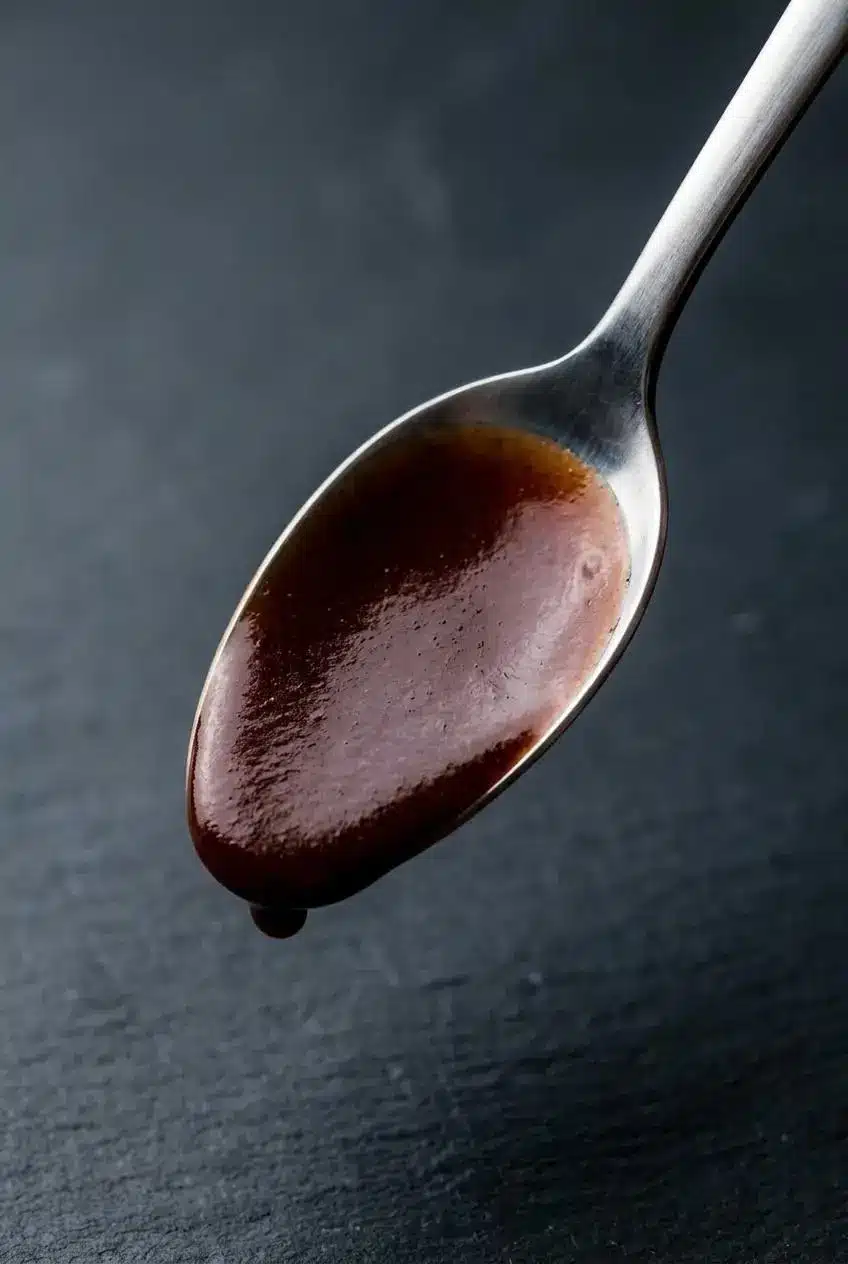
The melted butter and flour make a smooth paste that thickens the strained reduction. Whisk steadily over medium-low heat until the sauce looks glossy and flows slowly from a spoon. Once it thickens, do not let it boil aggressively.
Authentic Bone Marrow Option
For a traditional optional finish, poach beef bone marrow in lightly salted water until tender, then dice it. Fold the pieces into the completed sauce just before serving. The marrow adds a rich, silky depth and should remain an accent rather than turning the sauce greasy.
- Combine the dry red wine, shallots, thyme, and bay leaf in a small saucepan and bring them to a boil over medium heat; cook for about 10 minutes, until reduced by half.
The bubbles will become smaller and more syrupy, and the pan will smell fragrant with wine and herbs. - Pour in the beef bone broth or stock, return the pan to a boil, and cook for 15 to 20 minutes, until the liquid has reduced by half again.
The sauce will turn a deeper brown and taste more concentrated as the broth reduces. - Pass the sauce through a fine-mesh strainer, discard the solids, and return the strained liquid to the saucepan over medium-low heat.
The strained sauce should look clear and smooth, without visible shallot pieces or herb fragments. - Stir the melted butter and flour together in a small bowl, then whisk the mixture into the warm sauce until thickened; season with kosher salt and pepper to taste.
The finished sauce should have a glossy sheen and coat the back of a spoon in a thin, even layer.
Troubleshooting and Chef Tips for Perfect Consistency
Bordelaise is forgiving when you address the texture at the right moment. Most problems come from reducing too quickly, overconcentrating the wine, or overheating the butter finish.
How to Fix a Thin or Watery Sauce
- Likely cause: The broth has not reduced enough. Fix: Return the strained sauce to a gentle simmer and let more moisture cook off until it lightly coats a spoon.
- Likely cause: The reduction is properly flavored but still loose. Fix: Stir together a little additional melted butter and flour until smooth, then whisk it in gradually over low heat.
- Likely cause: The sauce looks thin immediately after whisking. Fix: Give it a brief moment over gentle heat, as the flour needs time to hydrate and thicken the liquid.
Correcting an Overly Acidic Reduction
Wine that reduces too far can taste sharp rather than lively. Whisk in a small extra bit of butter to round the edges, then taste again. If it still feels aggressively tart, a tiny pinch of brown sugar can soften the acidity without making the sauce sweet.
Salt should be the final adjustment. Broth and reduction both become more concentrated as they cook, so seasoning early can leave the finished sauce saltier than expected.
Rescuing a Split or Broken Sauce
If the surface looks oily or the sauce separates after thickening, the pan was likely too hot. Remove it from the heat and whisk vigorously with a small splash of cold broth or water until the sheen returns.
Keep the repaired sauce warm over very low heat instead of boiling it. The goal is a unified, glossy glaze, not a bubbling cauldron with an attitude problem.
Bordelaise vs Other Classic Steak Sauces
Bordelaise is a dark red wine and beef broth reduction with a savory, concentrated finish. It belongs beside beef because its tannic wine notes and meaty depth complement a well-seared steak without covering the flavor of the meat.
Classic Bearnaise sauce is very different: it is a warm yellow emulsion made with butter, egg yolks, tarragon, and an acidic vinegar reduction. It tastes creamy, herbal, and bright, while bordelaise tastes darker, wine-forward, and beefy.
Marchand de vin is the closest relative, since it also leans on red wine and shallots. A red wine jus is usually thinner and less thickened, relying mainly on reduced stock and meat juices. Bordelaise sits in the middle: concentrated enough to cling to steak, yet fluid enough to spoon neatly over the plate.
Storing and Reheating Bordelaise Sauce
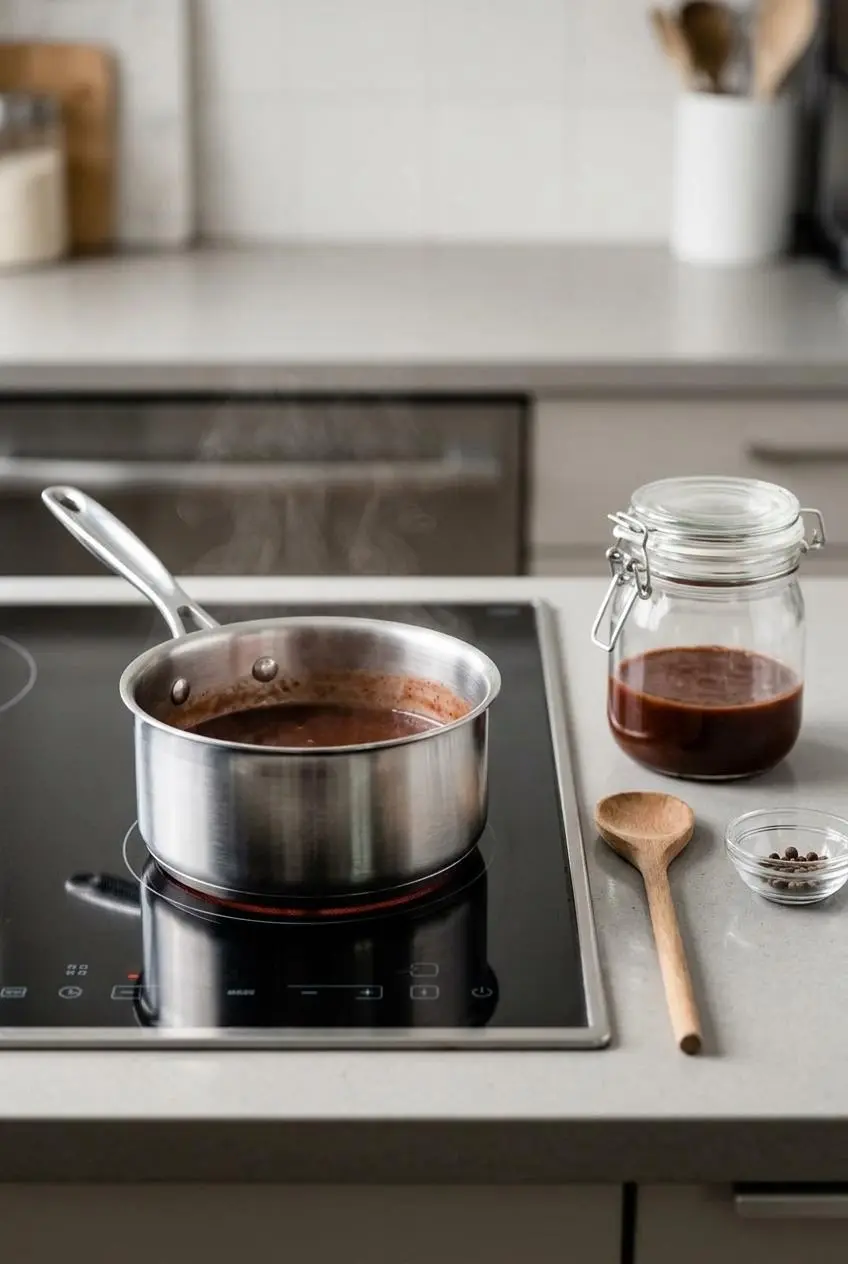
For dinner planning, make the sauce close to serving whenever possible because its glossy texture is at its best fresh. If you have leftovers, let the sauce cool, transfer it to an airtight container, and keep it chilled.
Rewarm only the portion you plan to serve in a small saucepan over low heat. Add a small splash of broth or water if it tightens, and stir gently until smooth. For leftover sauces containing beef broth, reheat leftovers to 165°F before serving.
Avoid high microwave power, which can heat the sauce unevenly and encourage the butter finish to separate. Gentle stovetop heat gives you more control and makes it easier to restore the sauce’s silky flow.
Best Ways to Serve Bordelaise Sauce
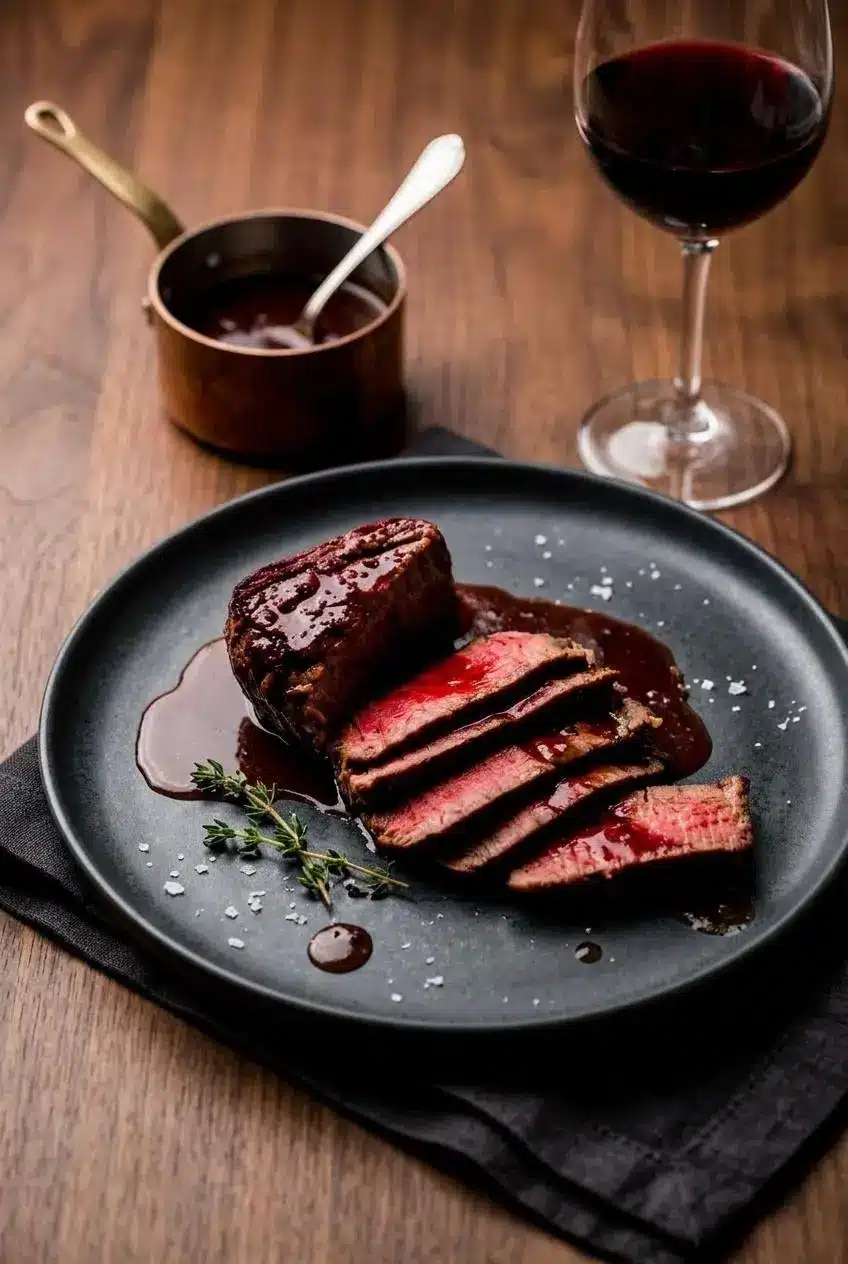
Bordelaise shines with richly flavored roasted or grilled meats, but it also brings a welcome savory finish to hearty vegetables and starches.
- Filet mignon: Spoon the sauce over a rested filet for a classic steakhouse-style plate.
- Ribeye or prime rib: The wine reduction cuts through the richness of well-marbled beef.
- Beef tenderloin: Serve bordelaise alongside roasted tenderloin when you want a polished dinner-party main course.
- Rack of lamb: Its herb and wine notes are especially good with rosy roasted lamb.
- Garlic mashed potatoes or polenta: Both give the sauce somewhere delicious to settle.
- Roasted asparagus or mushrooms: Their earthy flavors balance the sauce’s deep beefiness.
For an optional mushroom bordelaise, sauté cremini mushrooms with shallots separately and stir them into the finished sauce. Their earthy flavor works especially well over roasted meats, mashed potatoes, or soft polenta.
A small spoonful of roasted garlic paste is another optional finishing touch for mellow sweetness. If you want a brighter herb-forward topping for another steak night, fresh chimichurri sauce offers a lively contrast to bordelaise’s deep wine flavor.
Conclusion
Homemade bordelaise delivers the kind of deep, glossy flavor that makes a simple steak or roast feel thoughtfully finished. The technique is straightforward: reduce patiently, strain carefully, and whisk until smooth.
Keep the simmer controlled and taste before the final seasoning. That little bit of attention gives you a sauce with real French steakhouse character.
Frequently Asked Questions
What Is Bordelaise Sauce Made Of?
Bordelaise sauce is made with dry red wine, minced shallots, thyme, bay leaf, and beef stock or bone broth. This version finishes with melted butter and flour for a smooth, thickened glaze. Salt and pepper bring the final flavors into balance.
What Is the Difference Between Bordelaise and Bearnaise Sauce?
Bordelaise is a dark brown reduction based on red wine and beef stock. Bearnaise is a warm yellow sauce made by emulsifying butter and egg yolks with tarragon and vinegar. Bordelaise is savory and wine-forward, while Bearnaise is creamy and herbal.
What Is the Best Red Wine for Bordelaise Sauce?
Use a dry red wine such as Cabernet Sauvignon, Merlot, Pinot Noir, or a Bordeaux blend. Choose one with balanced fruit and moderate oak. Sweet wines and heavily oaked reds can become bitter or cloying once reduced.
Can I Make Bordelaise Sauce Without Bone Marrow?
Yes. Bone marrow is a traditional optional addition, but it is not necessary for a rich result. The beef broth reduction and butter-flour finish give the sauce plenty of body, shine, and savory flavor without marrow bones.
Bordelaise Sauce Recipe

Equipment
- Small saucepan
- mesh strainer
Ingredients
- 1 cup dry red wine
- ½ cup minced shallots (1 large or 2 medium shallots)
- ¼ tsp dried thyme (or ½ teaspoon fresh thyme)
- 1 bay leaf
- 2 cups beef bone broth or stock
- 1 tbsp melted butter
- 1 tbsp all-purpose flour
- kosher salt and pepper to taste
Instructions
- Combine the dry red wine, shallots, thyme, and bay leaf in a small saucepan and bring them to a boil over medium heat; cook for about 10 minutes, until reduced by half. The bubbles will become smaller and more syrupy, and the pan will smell fragrant with wine and herbs.
- Pour in the beef bone broth or stock, return the pan to a boil, and cook for 15 to 20 minutes, until the liquid has reduced by half again. The sauce will turn a deeper brown and taste more concentrated as the broth reduces.
- Pass the sauce through a fine-mesh strainer, discard the solids, and return the strained liquid to the saucepan over medium-low heat. The strained sauce should look clear and smooth, without visible shallot pieces or herb fragments.
- Stir the melted butter and flour together in a small bowl, then whisk the mixture into the warm sauce until thickened; season with kosher salt and pepper to taste. The finished sauce should have a glossy sheen and coat the back of a spoon in a thin, even layer.