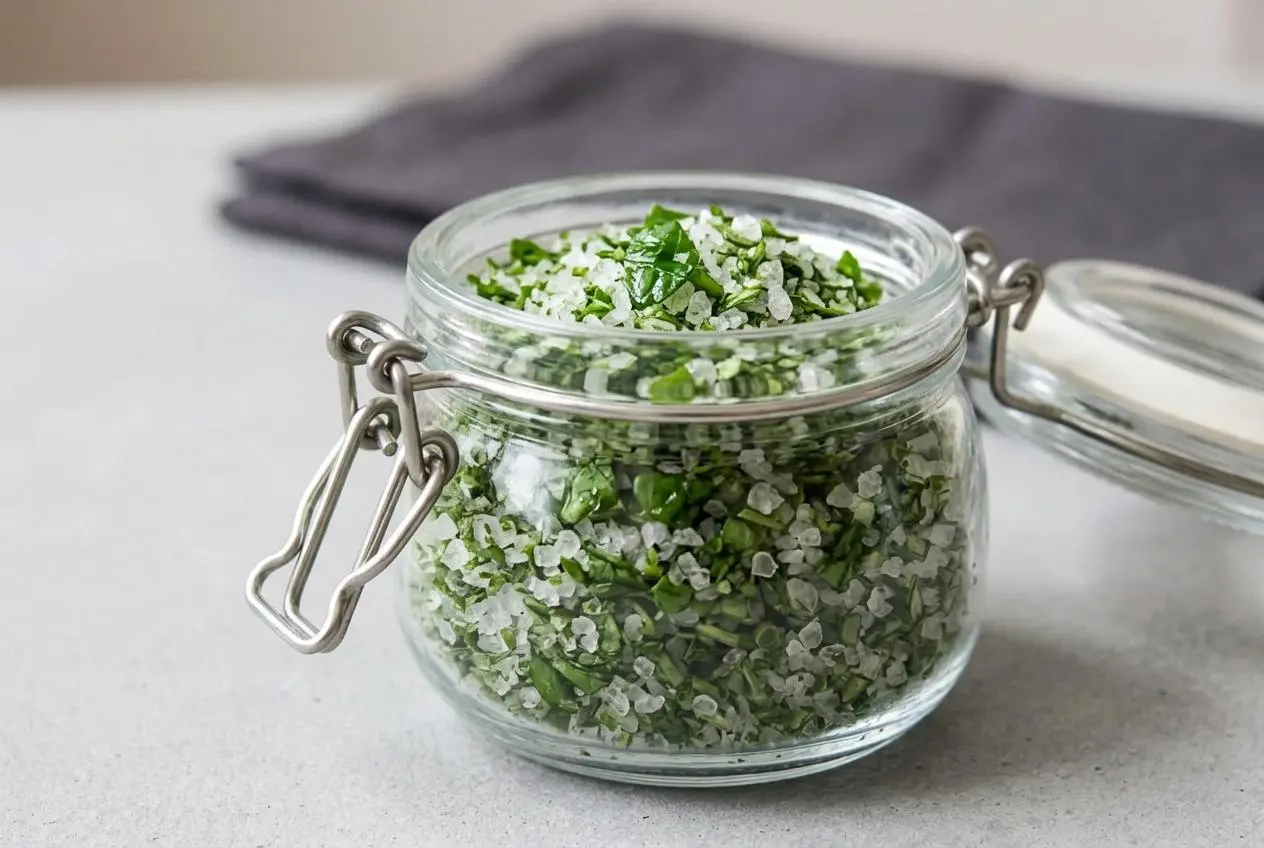
Blend fresh basil with salt, dry the mixture at 250 °F for about 25 minutes, then pulse it again for a bright, fragrant finishing salt with a fine, pourable texture.
This basil salt recipe turns fresh leaves into a savory seasoning that captures basil’s warm, peppery aroma. The first pulse releases an intense green fragrance that makes the whole kitchen smell like summer.
Drying is the key to a loose, crisp texture instead of a damp herb paste. The final pulse makes every sprinkle neat and even.
Pat the basil completely dry before it reaches the food processor, especially around the leaf veins and stems where water likes to hide.
Why This Basil Salt Uses the Oven Method
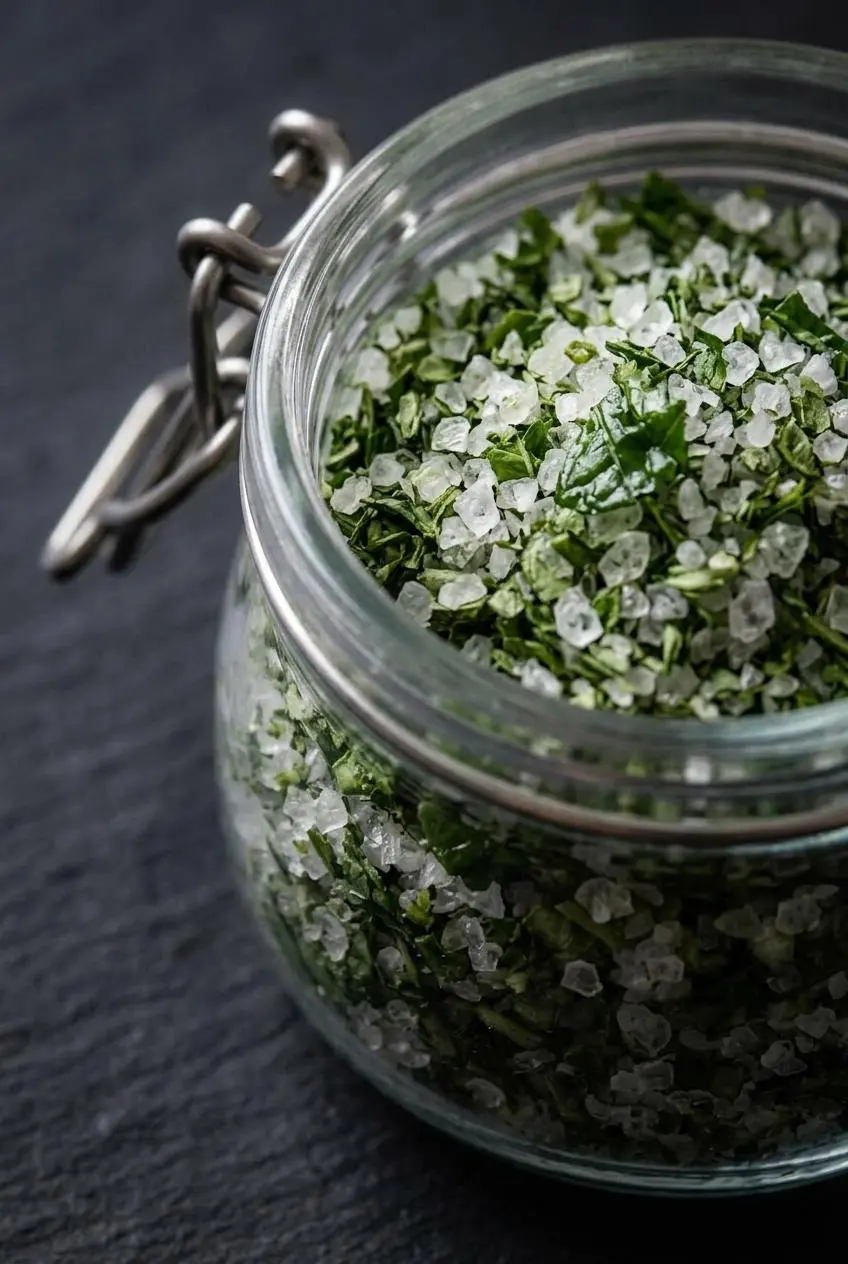
The oven method quickly dries the basil-and-salt mixture while keeping the heat gentle enough to protect its color and aroma. Freshly blended basil salt is damp and sandy, so it needs drying before it can become a reliable finishing seasoning.
Raw basil salt can be used right away on food, but it remains moist and tends to pack together. Baking at a low temperature removes that moisture so the salt becomes loose and easy to shake from a jar. Keep the oven at 250 °F or lower, since hotter heat can cook the basil rather than dry it.
Choosing Your Ingredients
Fresh basil supplies vivid color and aroma, while salt draws that flavor through the blend and provides the crisp structure that makes this seasoning easy to sprinkle.
- 1 cup packed fresh basil
- 1/2 cup salt ((I just use table salt))
Use leaves that look perky and green, then remove all stems. Stems bring extra moisture and can leave the blend with a rougher texture and harsher herbal edge. If you have a large basil harvest, making basil pesto is another flavorful way to use the leaves.
The recipe uses table salt, which gives a fine, even seasoning after the final pulse. Kosher salt or coarse sea salt also work, but their larger crystals take up more space by volume and create a chunkier finishing-salt texture. For the stated 1 cup basil to 1/2 cup salt ratio, table salt gives the most concentrated, finely textured result.
I discard even the tender-looking stems because clean, dry leaves give the finished salt a fresher aroma and a smoother shake.
How to Make Basil Salt Step-by-Step
This method has three useful stages: blend until the basil is evenly distributed, dry the mixture without browning it, then pulse once more for a polished texture.
1. The First Blend
Process the basil and salt until the leaves disappear into the crystals. The mixture should look bright green and feel like damp sand, with a strong basil aroma, before it goes onto the baking sheet.
2. The Drying Process
Spread the mixture in the thinnest, most even layer you can manage. Low oven heat dries the basil rather than roasting it, and an even layer prevents damp patches from lingering in the center.
3. The Final Pulse
Once dried, a quick second pulse breaks up any firm bits and gives the salt a fine, pourable finish. Make sure the food processor bowl and blade are completely dry first, or moisture can undo the texture you just created.
- Heat the oven to 250 °F.
Keep the temperature low so the basil dries gently instead of taking on a brown, cooked appearance. - Wash the basil, pat it dry thoroughly, and pull the leaves away from the stems.
The leaves should feel dry to the touch with no visible droplets before processing. - Put the basil leaves and salt in a food processor and process until finely combined.
The salt will turn green and form a moist, sandy mixture with a pronounced basil scent. - Line a baking sheet with parchment paper and spread the basil salt across it in a thin, even layer.
A flat layer helps the moisture escape evenly during drying. - Bake for about 25 minutes.
The salt should feel dry and separate easily rather than sticking together in wet clumps. - Return the dried mixture to a clean, fully dry food processor and pulse again.
The final texture should be fine, loose, and easy to pour. - Transfer the basil salt to a clean spice jar.
Close the jar tightly once the salt has cooled and feels completely dry.
Troubleshooting Common Issues
- The salt is wet or sticky: The basil likely carried excess water, or the layer on the baking sheet was too thick. Spread it thinner and continue drying only until the crystals feel dry and separate.
- The salt formed hard clumps: The food processor may have held moisture during the final pulse. Dry the bowl and blade completely, then pulse the cooled salt again to loosen it.
- The basil salt turned brown: The oven was likely too hot, or the salt dried in direct light after baking. Keep the oven at 250 °F or lower and store the finished seasoning away from sunlight.
- The flavor seems weak: Basil loses its character when leaves are old or bruised. Use fragrant, vibrant leaves and pulse only until the mixture looks evenly green.
Popular Flavor Variations
Keep the main batch pure if you want the cleanest basil flavor, then try these additions in a separate optional batch.
- Lemon basil salt: Blend in fresh lemon zest for a citrusy lift that brightens basil’s earthy, peppery notes. It is especially good on tomatoes, fish, and summer vegetables.
- Garlic basil salt: Add dried minced garlic before processing for a deeper, savory flavor. Dried garlic works better than fresh here because it does not add extra moisture.
How to Use Basil Salt
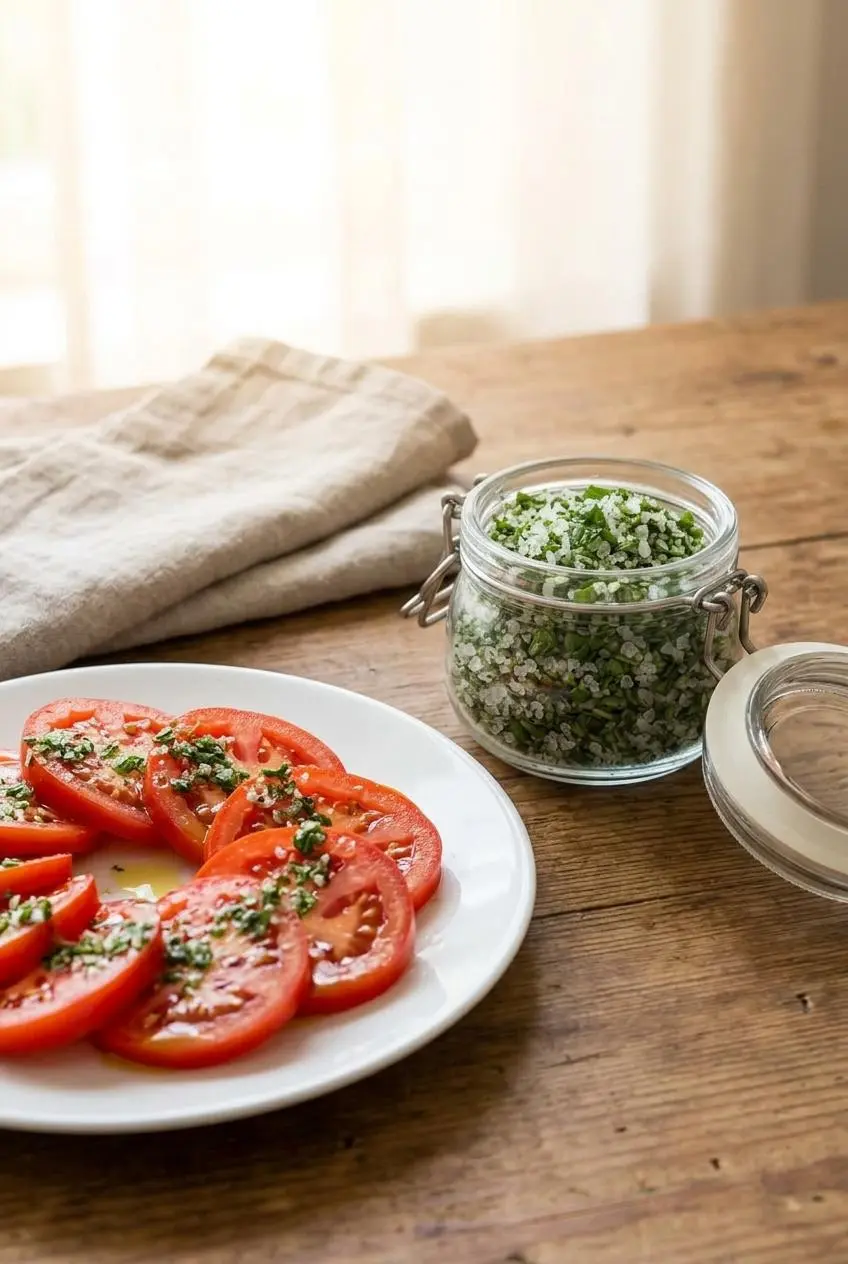
Use this as a finishing salt, adding it near the end so its herbal aroma stays noticeable. A small pinch delivers more character than a heavy shower.
- Sprinkle it over sliced ripe tomatoes with olive oil, or finish a caprese salad just before serving.
- Dust it over garlic bread after baking for a fragrant, savory crust.
- Use it to finish roasted vegetables, especially zucchini, eggplant, bell peppers, and potatoes.
- Rub it onto grilled chicken or steak before cooking for a basil-forward savory crust.
- Stir a pinch into salad dressing, or use it as the last seasoning on warm tomato-based dishes.
Storage and Shelf Life
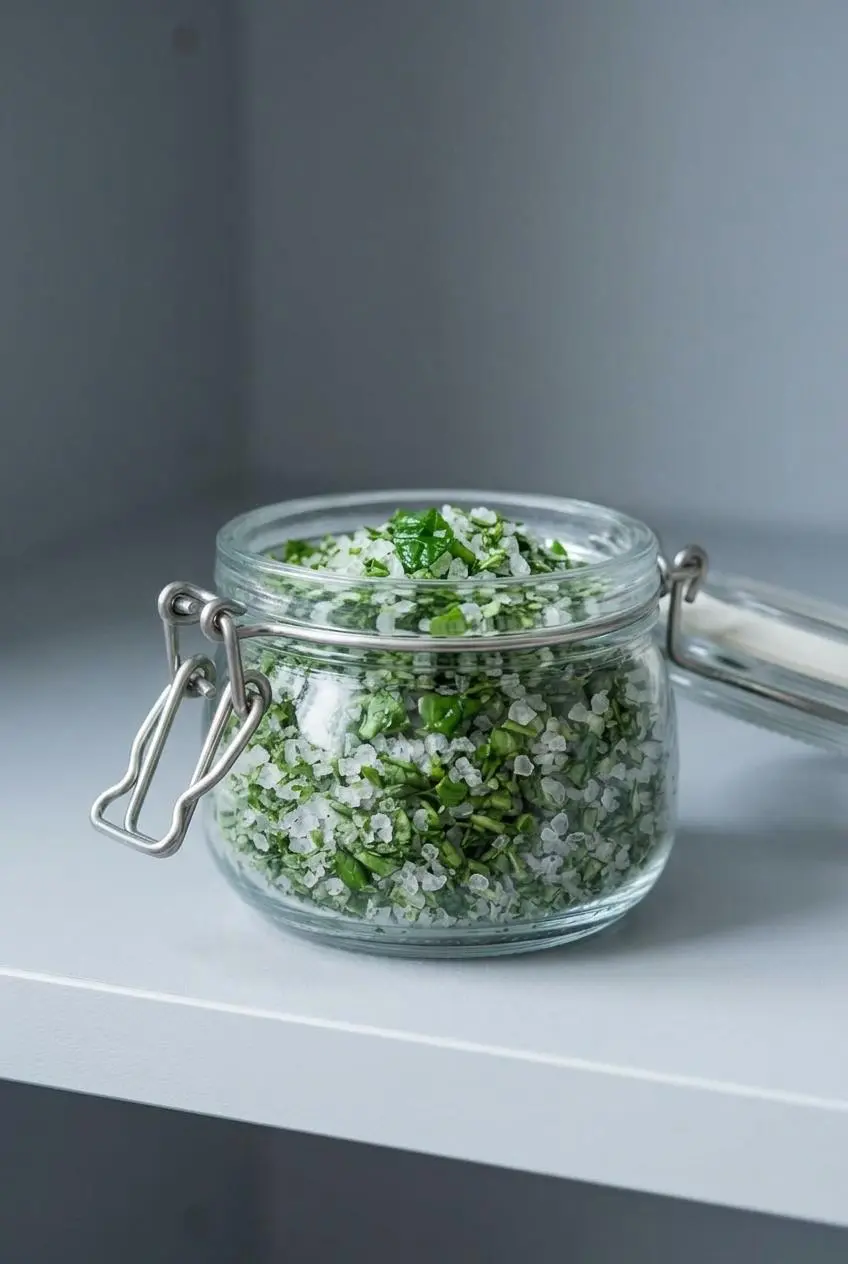
Store fully dried basil salt in an airtight glass mason jar in a cool, dark pantry. Light gradually fades the bright green color, so a cabinet is a better home than an open counter or sunny shelf.
The flavor and color are at their best while the seasoning remains dry, fragrant, and free-flowing. If the salt begins to feel damp or packed together, spread it out, dry it again gently, and pulse it in completely dry equipment before returning it to the jar.
Conclusion
Basil salt is a practical way to turn fresh basil into a seasoning that adds green color and savory fragrance to everyday meals. The gentle oven drying gives it the loose texture that makes it useful at the table.
Keep the heat low, spread the mixture thinly, and dry the processor before the final pulse. That small bit of care makes each pinch bright and fragrant.
FAQ
How Long Does Homemade Basil Salt Last?
Keep fully dried basil salt tightly sealed in a dark, cool pantry. Its quality depends on keeping moisture and light away, so check that it stays dry, loose, and aromatic.
What Is the Best Salt to Use for Basil Salt?
Table salt works well for the fine texture in this recipe. Kosher salt or coarse sea salt creates a more rustic finishing salt, but its larger crystals change the volume and final texture.
Do I Have to Bake the Basil Salt?
Baking is the best choice when you want a dry, pourable seasoning for a jar. You can use freshly blended basil salt immediately, but it will be moist and more likely to clump.
Why Did My Basil Salt Turn Brown?
High heat is the usual culprit. Keep the oven at 250 °F or lower, and store the finished salt away from direct sunlight to help preserve its green color.
What Would I Use Basil Salt For?
Use it as a finishing seasoning for tomatoes, salads, garlic bread, roasted vegetables, grilled chicken, and steak. It is also a quick way to add basil flavor to dressings and warm tomato dishes.
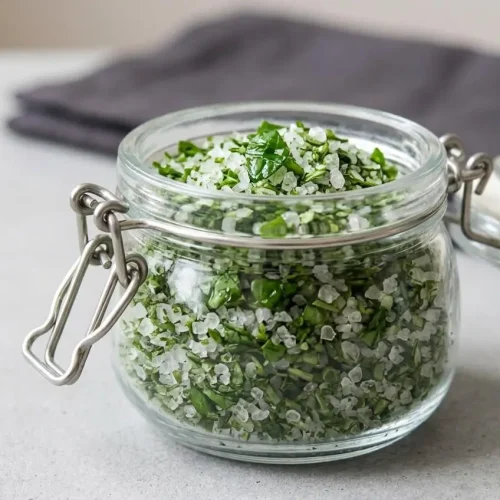
Basil Salt Recipe

Equipment
- Food processor
- Baking Sheet
- Parchment Paper
Ingredients
- 1 cup packed fresh basil
- 1/2 cup salt ((I just use table salt))
Instructions
- Heat the oven to 250 °F. Keep the temperature low so the basil dries gently instead of taking on a brown, cooked appearance.
- Wash the basil, pat it dry thoroughly, and pull the leaves away from the stems. The leaves should feel dry to the touch with no visible droplets before processing.
- Put the basil leaves and salt in a food processor and process until finely combined. The salt will turn green and form a moist, sandy mixture with a pronounced basil scent.
- Line a baking sheet with parchment paper and spread the basil salt across it in a thin, even layer. A flat layer helps the moisture escape evenly during drying.
- Bake for about 25 minutes. The salt should feel dry and separate easily rather than sticking together in wet clumps.
- Return the dried mixture to a clean, fully dry food processor and pulse again. The final texture should be fine, loose, and easy to pour.
- Transfer the basil salt to a clean spice jar. Close the jar tightly once the salt has cooled and feels completely dry.