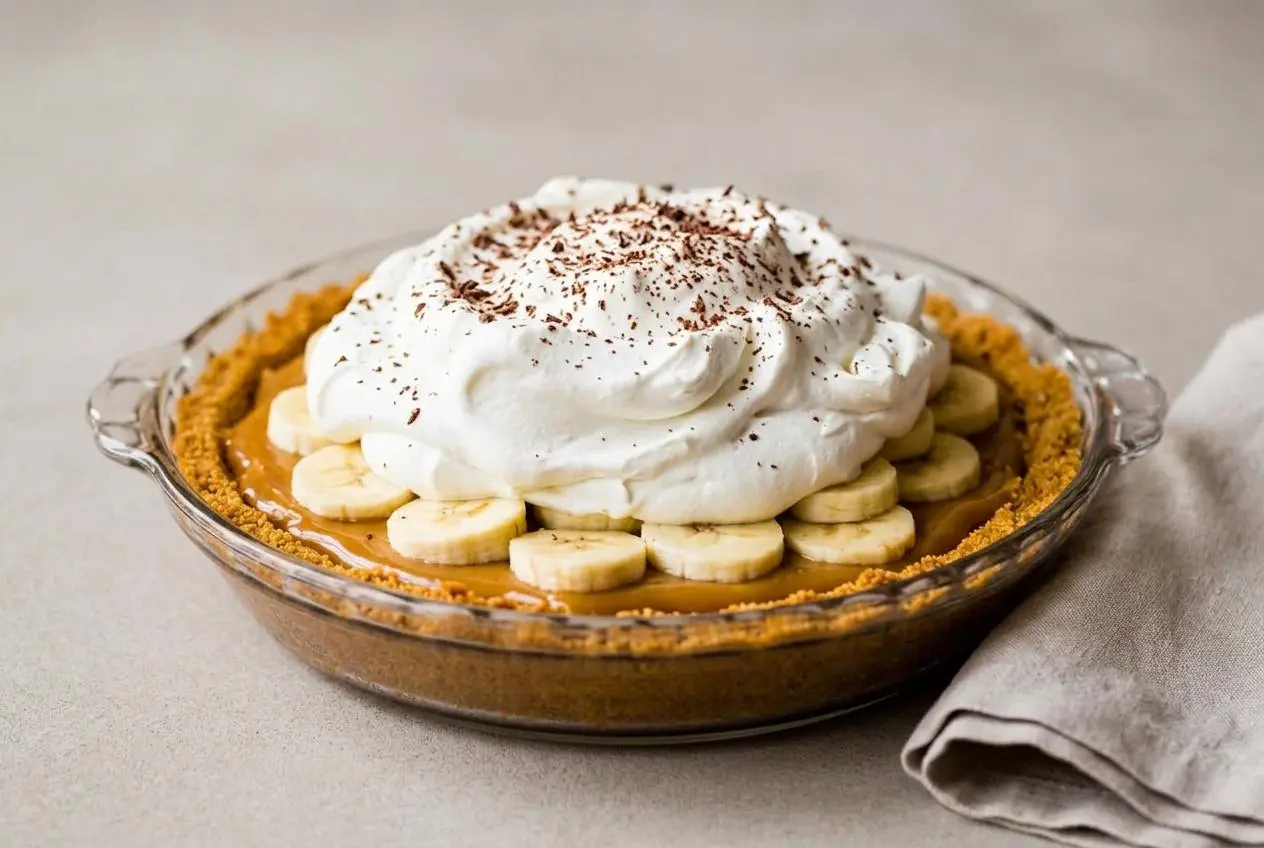
Banoffee pie is a chilled dessert with a buttery biscuit crust, thick dulce de leche, sliced bananas, and whipped cream. A brief bake and a full chill create crisp, cleanly cut layers.
This banoffee pie balances toasted graham crumbs, golden caramel, and soft fruit under a cloud of vanilla cream. The contrast between the crisp base and silky filling makes every forkful feel complete.
The key is keeping the caramel cool and the cream softly structured before the layers meet. That two-hour chill does the quiet heavy lifting.
Use a 9-inch pie dish with a deep enough rim to hold the cream without crowding the top.
What Is Authentic Banoffee Pie?
Banoffee pie began at The Hungry Monk restaurant in East Sussex, England, in 1971. Its name combines “banana” and “toffee,” which neatly explains its two defining flavors.
The earliest versions leaned into a sweet, buttery filling balanced by bananas, whipped cream, and subtle coffee flavor. A whisper of espresso keeps caramel from tasting flat, but it should support the toffee rather than take over the dessert.
Traditional British versions may use a pastry shell or a crushed digestive biscuit base. In the United States, a graham cracker crust brings a similar honeyed crunch and holds up especially well after a short bake. For a full British-inspired meal, this makes a fitting finish after a classic cottage pie.
Authenticity is less about one rigid crust and more about the balance: firm banana slices, rich caramel, cool cream, and enough contrast to keep each bite from becoming overly sweet.
Essential Ingredients and Their Roles
Each ingredient supports a distinct layer: crumbs and butter create structure, dulce de leche brings caramel depth, bananas add freshness, and whipped cream gives the pie its soft finish.
Crust
- 1 and 1/2 cups (180g) graham cracker crumbs (about 12 full sheet graham crackers)
- 1/4 cup (50g) granulated sugar
- 6 Tablespoons (85g) unsalted butter, melted
Filling
- 1 and 1/4 cups dulce de leche
- 2 large bananas, sliced
Whipped Cream
- 2 cups (480ml) cold heavy cream or heavy whipping cream
- 1/4 cup confectioners’ sugar or granulated sugar
- 1 teaspoon pure vanilla extract
- optional toppings: chocolate shavings, chopped nuts, or toffee bits for garnish
The melted butter binds the crumb layer while sugar encourages a lightly crisp finish. Dulce de leche has the thick, spreadable body needed to hold banana slices in place. Cold heavy cream with at least 36% milk fat whips into stable billows, while confectioners’ sugar helps the foam keep its shape. Vanilla rounds out the dairy flavor without competing with the caramel.
I chill the mixing bowl and whisk before whipping cream because cold equipment gives the cream more time to build smooth, sturdy peaks.
Crust Foundations: Graham Crackers vs Digestives
Graham crackers make a slightly sweeter, honeyed crust with a sandy crunch. Digestive biscuits taste toastier and more wheaty, with a gentle saltiness that can make the caramel seem less intense.
Either option needs enough melted butter to coat the crumbs and enough pressure to form a unified shell. Press with a flat-bottomed measuring cup until the base resists lightly under your fingertips, then stop. Heavy packing creates a crust that is difficult to cut.
Baking the crumb shell forms a firmer moisture barrier beneath the dulce de leche. The crust should smell buttery and toasted after baking, with a dry-looking surface rather than a greasy sheen.
Selecting the Right Toffee or Dulce de Leche
Prepared dulce de leche is the most dependable choice for this pie because it is already thick, smooth, and easy to spread. Look for a golden-amber color and a nutty caramel aroma. It should drag gently across the crust instead of pouring like sauce.
Homemade dulce de leche from sweetened condensed milk develops a deeper cooked-milk flavor, while stovetop butter toffee made with sugar and condensed milk tastes more like classic caramel candy. Stovetop toffee needs careful heat control because undissolved sugar can turn grainy, and excess cooking can make the layer too firm to slice neatly.
If making stovetop toffee separately, dissolve the sugar fully before it reaches a boil. A temperature of 220°F produces a thicker caramel layer, but allow it to cool completely before using it in the pie. Never try to caramelize sealed cans of condensed milk at home.
Banana Ripeness and Whipped Cream Stability
Choose firm yellow bananas with no brown speckling and, ideally, a faint green cast near the stem. Their slices should have a slight glossy sheen and hold their shape. Very ripe bananas soften quickly, release moisture, and can make the filling watery.
Whip the cream only to medium peaks. When you lift the whisk, the peak should stand up briefly, then bend at the tip. This texture spreads smoothly across the fruit and stays airy, while stiff peaks can become grainy and move toward butter.
How to Make Banoffee Pie Step by Step
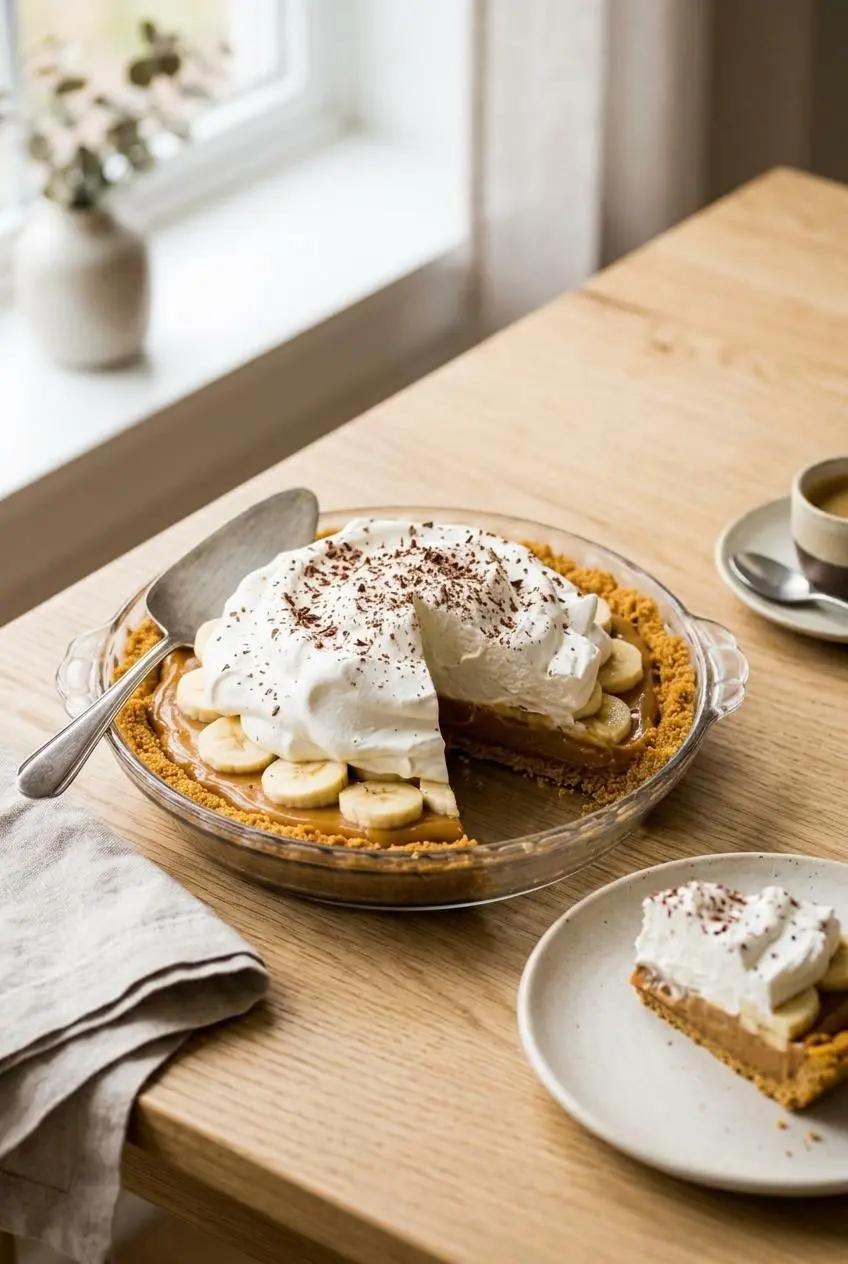
Build the pie in cool, steady stages. A properly shaped crust, cooled caramel layer, and medium-peak cream give the finished dessert enough structure to slice without losing its soft, luxurious texture.
- Heat the oven to 350°F (177°C).
The oven should be fully hot before the crumb crust goes in so it bakes evenly. - Process full graham crackers into fine crumbs if needed, then combine the crumbs and granulated sugar in a medium bowl before mixing in the melted butter.
The finished mixture should look evenly moistened and sandy, without large dry pieces. - Transfer the crumbs to an ungreased 9-inch pie dish and press them across the bottom and up the sides with moderate pressure.
Use a flat-bottomed measuring cup to level the base, and smooth the inner corner with a spoon so the crust has a rounded edge instead of a weak sharp angle. - Bake the crust for 15 minutes, then let it cool for 15 minutes.
The crust should smell toasted and feel firm enough to support filling without shifting. - Beat the cold heavy cream, sugar, and vanilla with a hand mixer or a stand mixer fitted with a whisk attachment on medium-high speed for 3 to 4 minutes.
Stop at medium peaks, when the cream holds soft mounds and the lifted whisk leaves a peak with a curled tip. - Spread the dulce de leche over the cooled crust, arrange the banana slices in 1–2 layers, and cover them with the whipped cream.
Keep the banana layer even and spread the cream all the way to the crust edge for a tidy finish. - Refrigerate the pie uncovered for at least 2 hours and up to 1 day, then add toppings before serving, if desired.
The filling should feel firm beneath the cream and hold upright when cut. - Cover leftover pie and store it in the refrigerator for up to 5 days.
Keep cut surfaces covered to limit drying and preserve the cream’s smooth texture.
Critical Success Tips and Troubleshooting
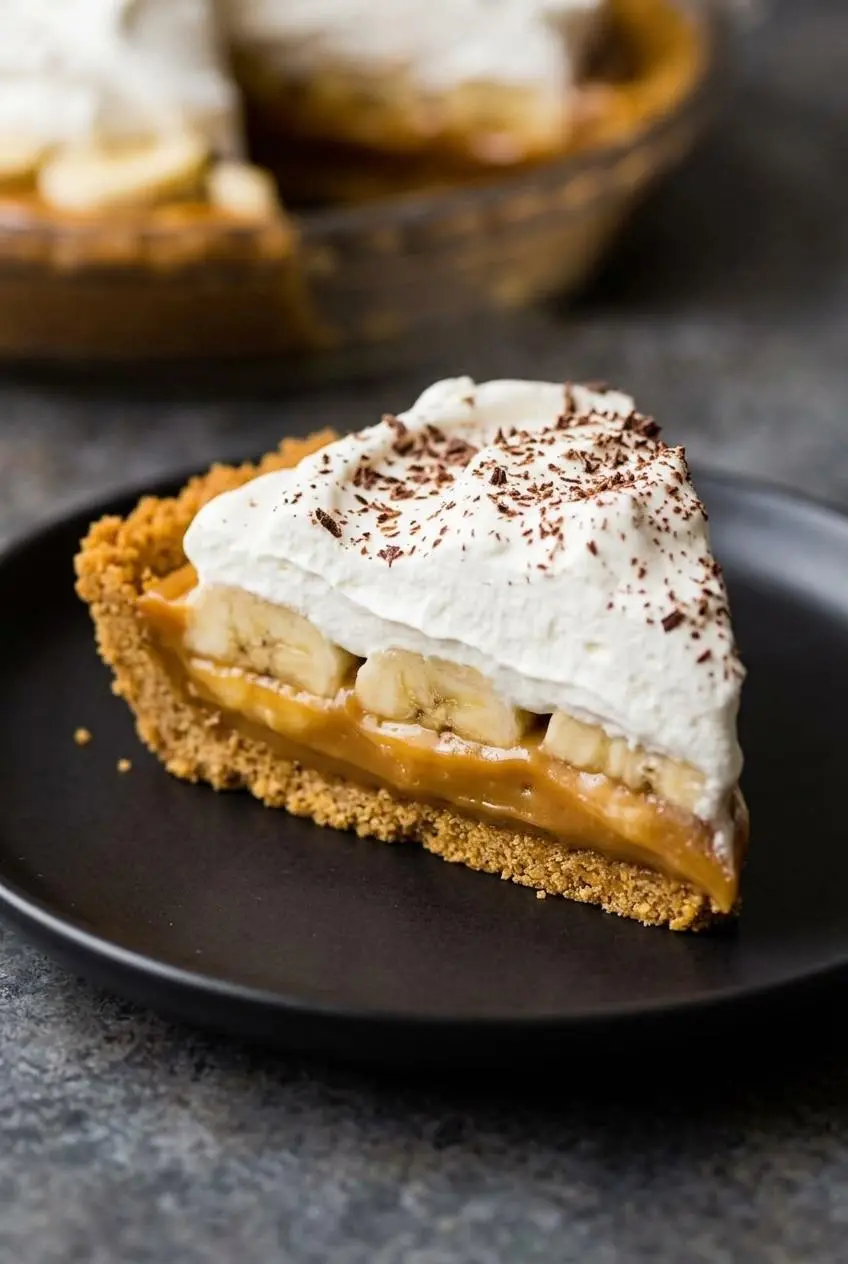
Most banoffee pie problems come down to heat, moisture, or overworked cream. These fixes keep the crust crisp, the toffee thick, and the banana layer fresh-looking.
Preventing Sogginess and Crust Crumbling
- Problem: The crust falls apart when sliced. Press the crumb mixture firmly enough to unite it, especially where the base meets the sides. A spoon rounded along that inner corner prevents a fragile break line.
- Problem: The bottom turns soft. Bake the crust for the full 15 minutes, then cool it for 15 minutes before adding dulce de leche. Warm filling can soften the butter in the crust and weaken its structure.
- Problem: The crust is hard to cut. Avoid pounding the crumbs into a dense slab. Moderate, even pressure gives support without turning the base rock-hard.
A clean slice starts before chilling. The crust must be cool, the dulce de leche must be thick, and the fruit should sit in an even layer rather than a loose pile.
Fixing Runny or Grainy Toffee
- Problem: Homemade toffee feels thin or watery. It likely did not cook long enough to thicken. For a stovetop version, fully dissolve the sugar before boiling and cook until it reaches 220°F.
- Problem: The caramel tastes gritty. Sugar crystals formed because sugar remained undissolved before the mixture boiled. Start again with gentle stirring over lower heat until the mixture looks smooth.
- Problem: The toffee separates into a greasy layer. High heat can push the fat out of the mixture. Remove it from the heat, stir gently until smooth if it comes back together, and let it cool before assembling.
- Problem: The caramel is too firm. Overcooking concentrates it too far. Let it soften slightly at room temperature before spreading, but do not use it warm enough to melt the crust butter.
Store-bought dulce de leche avoids most of these stovetop variables. If it seems too stiff to spread, let it sit briefly until pliable, then smooth it gently over the cooled crust.
Airtight Banana Sealing Technique
Bananas brown when cut surfaces meet air, and very ripe fruit can also release liquid as it sits. Arrange firm slices close together over the dulce de leche, then spread the whipped cream from edge to edge so no fruit remains exposed.
A light toss with a few drops of lemon juice can add extra protection if the pie will sit before serving, though too much lemon can introduce a sour note. The cream seal is usually the better choice because it protects the fruit without changing the dessert’s flavor.
For especially neat portions, chill the assembled pie for the full 2 hours before cutting. A warm, clean chef’s knife works well: wipe it between slices so caramel and cream do not drag across the next piece. If you enjoy chilled, layered desserts with the same clean-cut goal, try this chilled eggnog pie.
Make-Ahead and Storage Guidelines
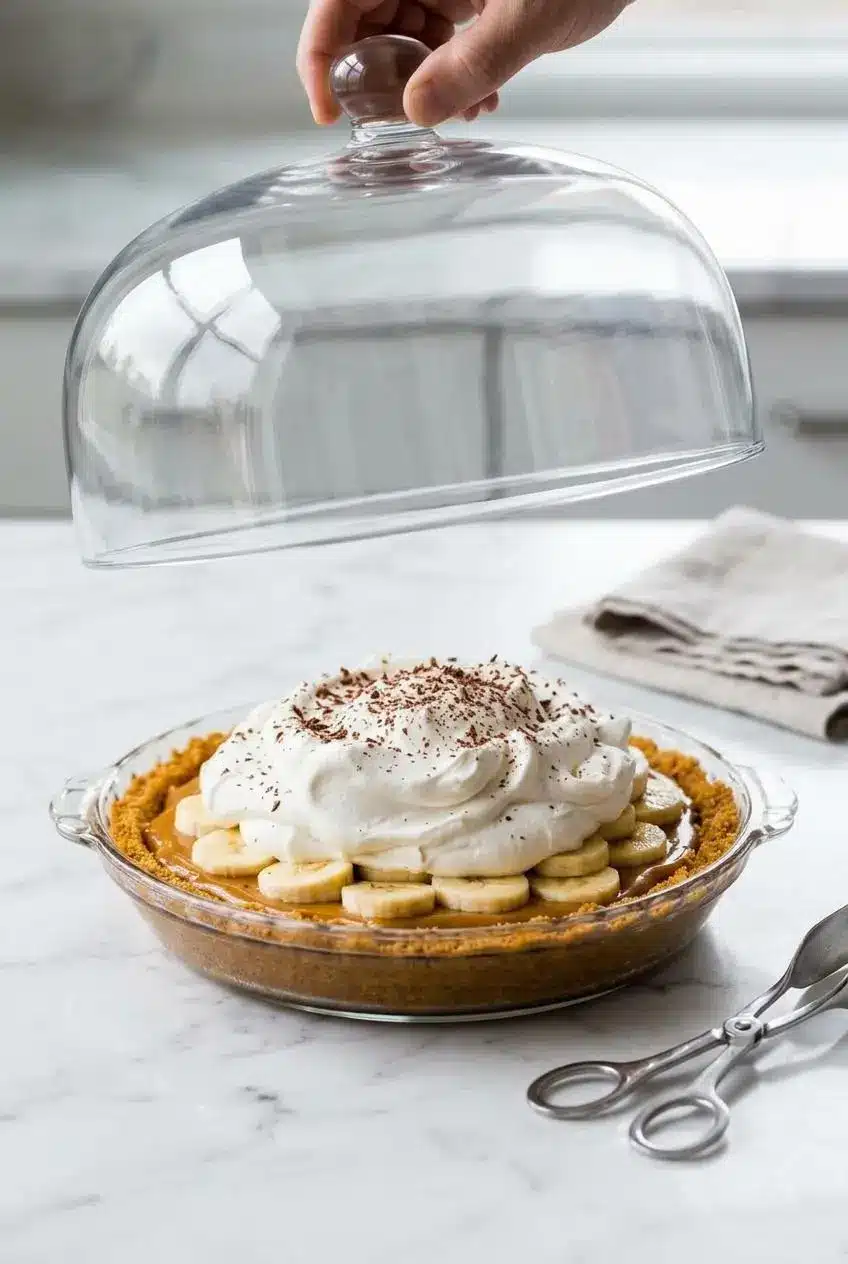
You can assemble the pie up to 1 day before serving. Keep it chilled so the dulce de leche stays firm and the whipped cream remains structured, then add chocolate shavings, nuts, or toffee bits close to serving time for the best texture.
For planning ahead, bake and cool the crust before your gathering, then keep the final pie refrigerated once assembled. Cover leftovers and store them in the refrigerator for up to 5 days. The banana slices will gradually soften and darken, so the pie is at its prettiest and crispest soon after it has set.
Keep cut edges covered, especially where bananas are exposed. This limits air contact and helps the fruit stay pale while the cream retains its smooth finish.
Delicious Variations and Crust Swaps
Keep the main version as written, then use these optional changes when you want a different balance of sweetness, bitterness, or biscuit flavor.
Traditional British Digestive Biscuit Crust
For a more traditional British profile, replace the graham cracker crumbs with 180 grams of finely crushed digestive biscuits. Combine them with the melted butter in the same way, press into the dish, and bake as directed. Digestives create a less sweet, toastier crust that lets the banana and caramel flavors stand out.
Flavor Tweaks and Bittersweet Contrasts
- Espresso-infused cream: Add 1/2 teaspoon of dissolved espresso powder to the cream before whipping for a subtle coffee note that sharpens the caramel flavor.
- Dark chocolate wafer crust: Substitute chocolate wafer cookies for the graham crackers when you want a bittersweet cocoa base beneath the dulce de leche.
- Salted toffee finish: Sprinkle flaky sea salt across the dulce de leche before adding the bananas for a savory edge that balances the sweetness.
- Biscoff crust: Use crushed Biscoff cookies for a warmly spiced, caramel-forward base with a slightly deeper brown sugar flavor.
For another dessert built around chocolate and caramel contrast, a layered Twix cake offers a richer, more chocolate-forward direction.
Conclusion
Banoffee pie works because every layer has a job: a crisp buttery crust, a thick caramel center, firm banana slices, and cream whipped just enough to stay lofty. Give the pie its full two-hour chill for clean, upright slices.
Finish with optional cocoa, dark chocolate shavings, or a gentle espresso note if you want extra contrast. Serve it cold, slice it cleanly, and enjoy that first crack through the crust.
Frequently Asked Questions
Can I Make Banoffee Pie Ahead of Time?
Yes. Assemble the pie up to 1 day before serving and keep it refrigerated. Bake and cool the crust before assembling. Add optional crunchy garnishes close to serving time. Keep the finished pie chilled so the caramel and cream stay firm.
How Do I Prevent Bananas From Turning Brown in the Pie?
Cover the banana slices completely with whipped cream, spreading it all the way to the crust edges. Use firm yellow bananas without brown speckles. Arrange slices closely so there are fewer exposed surfaces. For extra protection, toss the slices lightly with a few drops of lemon juice before layering.
Can I Use Store-Bought Dulce de Leche Instead of Making Toffee?
Yes. Store-bought dulce de leche is a reliable shortcut and works especially well for a smooth, thick filling. Choose one with a spreadable, golden-amber consistency. Let it soften slightly if it is too firm to spread. Apply it only after the baked crust has cooled.
Why Is My Toffee Layer Runny or Watery?
A homemade stovetop toffee may be undercooked, or the pie may not have chilled long enough to set. Dissolve sugar fully before boiling homemade toffee. Cook stovetop toffee to 220°F for a thicker result. Chill the assembled pie for at least 2 hours before slicing.
How Do You Get Clean Slices Without the Filling Collapsing?
Chill the pie fully, then cut with a sharp chef’s knife warmed under hot water and wiped dry. Wipe the knife clean between cuts. Use firm bananas and medium-peak cream for stronger layers. Cut straight down through the crust instead of sawing back and forth.
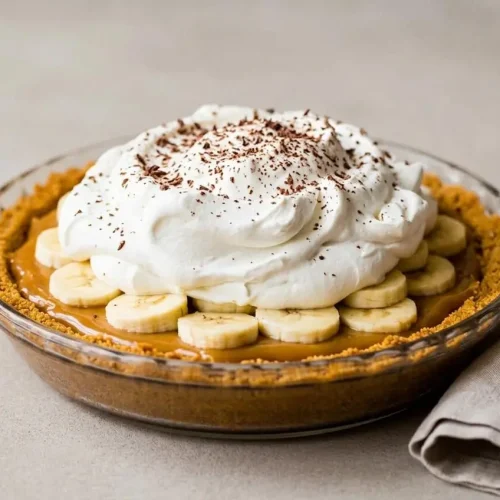
Banoffee Pie

Equipment
- Food processor
- Glass Mixing Bowl
- 9-inch Pie Dish
- Electric Mixer
Ingredients
Crust
- 1 and 1/2 cups graham cracker crumbs (180g) (about 12 full sheet graham crackers)
- 1/4 cup granulated sugar (50g)
- 6 Tablespoons unsalted butter (85g), melted
Filling
- 1 and 1/4 cups dulce de leche
- 2 large bananas sliced
Whipped Cream
- 2 cups cold heavy cream or heavy whipping cream (480ml)
- 1/4 cup confectioners’ sugar or granulated sugar
- 1 teaspoon pure vanilla extract
- optional toppings: chocolate shavings, chopped nuts, or toffee bits for garnish
Instructions
- Heat the oven to 350°F (177°C). The oven should be fully hot before the crumb crust goes in so it bakes evenly.
- Process full graham crackers into fine crumbs if needed, then combine the crumbs and granulated sugar in a medium bowl before mixing in the melted butter. The finished mixture should look evenly moistened and sandy, without large dry pieces.
- Transfer the crumbs to an ungreased 9-inch pie dish and press them across the bottom and up the sides with moderate pressure. Use a flat-bottomed measuring cup to level the base, and smooth the inner corner with a spoon so the crust has a rounded edge instead of a weak sharp angle.
- Bake the crust for 15 minutes, then let it cool for 15 minutes. The crust should smell toasted and feel firm enough to support filling without shifting.
- Beat the cold heavy cream, sugar, and vanilla with a hand mixer or a stand mixer fitted with a whisk attachment on medium-high speed for 3 to 4 minutes. Stop at medium peaks, when the cream holds soft mounds and the lifted whisk leaves a peak with a curled tip.
- Spread the dulce de leche over the cooled crust, arrange the banana slices in 1–2 layers, and cover them with the whipped cream. Keep the banana layer even and spread the cream all the way to the crust edge for a tidy finish.
- Refrigerate the pie uncovered for at least 2 hours and up to 1 day, then add toppings before serving, if desired. The filling should feel firm beneath the cream and hold upright when cut.
- Cover leftover pie and store it in the refrigerator for up to 5 days. Keep cut surfaces covered to limit drying and preserve the cream’s smooth texture.