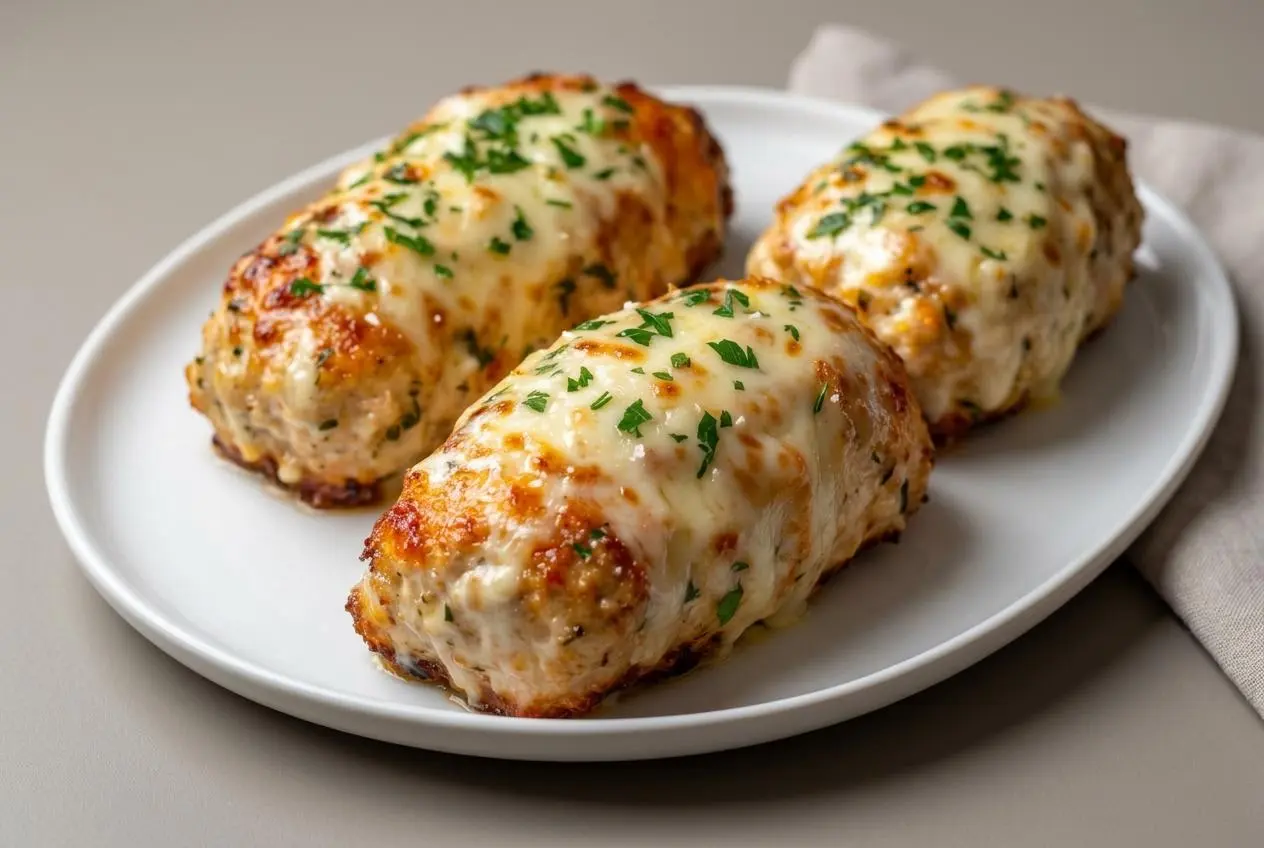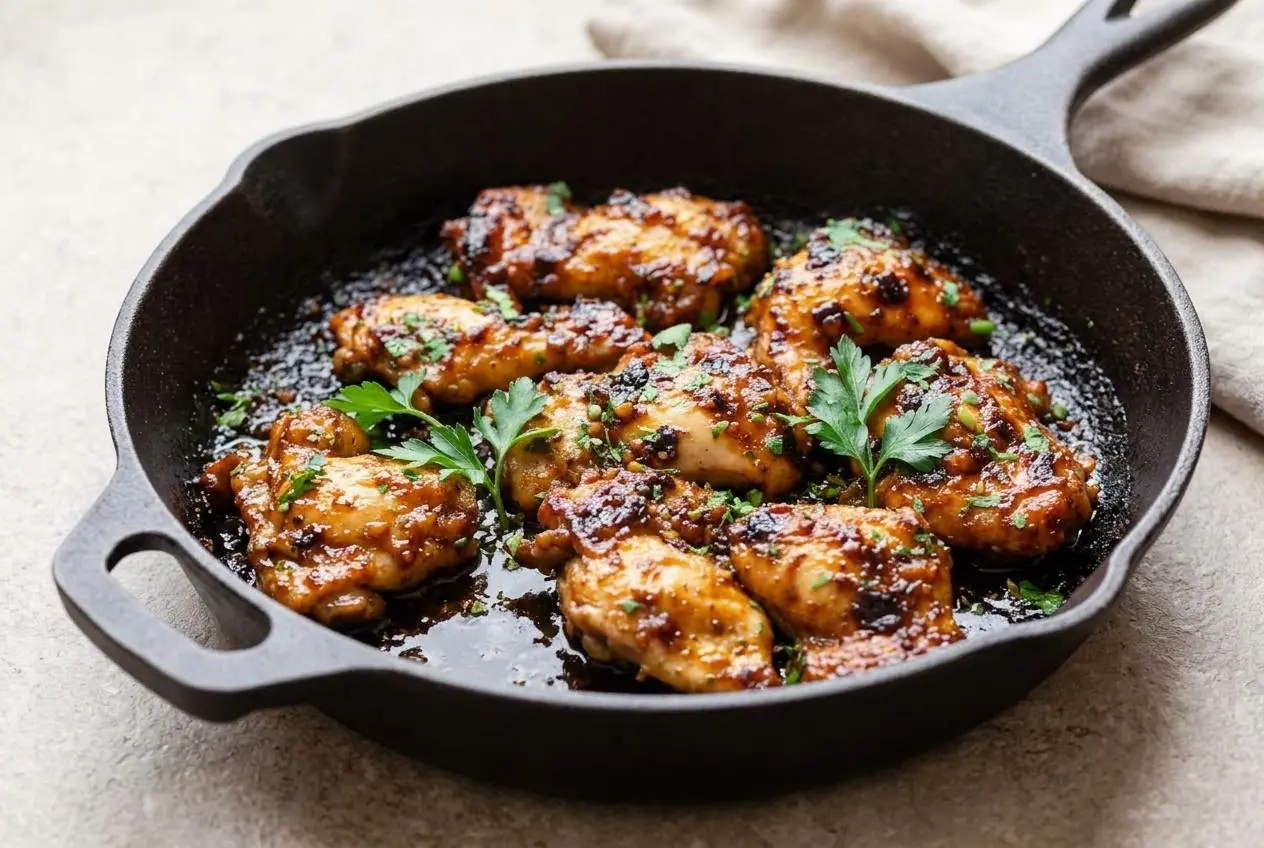
Balsamic Chicken is an easy baked chicken dinner with juicy meat and a tangy sweet glaze. It comes together with simple prep, cooks in about 30 minutes, and works especially well for busy weeknights.
Balsamic Chicken uses boneless skinless thighs coated in a bold mix of balsamic glaze, olive oil, garlic, lemon, honey, and herbs. The oven does most of the work, and the sauce turns glossy and sticky as it bakes.
You get big flavor without a long marinade, and chicken thighs stay tender even if dinner gets a little hectic. If you want a reliable chicken recipe that still feels a little special, this is a good one.
Pat the chicken dry well before it hits the marinade so the glaze clings instead of sliding off.
Ingredients
These ingredients keep the flavor punchy and balanced, with enough sweetness to round out the tang of the balsamic glaze.
Balsamic chicken marinade
- ¼ cup extra virgin olive oil
- 3 tablespoon balsamic glaze, store-bought is fine
- 1 tablespoon tomato paste
- 1 teaspoon honey
- 1 lemon, juice of
- 4 to 5 large garlic cloves, minced
- 1 tablespoon fresh thyme
- 1 teaspoon dried oregano
- ½ teaspoon sweet paprika
For the chicken
- 8 boneless and skinless chicken thighs, (about 1 ½ pounds)
- Kosher salt and black pepper
Ingredient notes that matter
Each part of the marinade has a job. The balsamic glaze brings the signature sweet tang and gives the sauce its sticky finish. Tomato paste adds body and a savory backbone, so the glaze tastes deeper instead of one-note. Honey softens the sharp edges, while lemon juice brightens everything so the chicken doesn’t feel heavy.
Garlic gives the marinade that big savory aroma you smell as soon as the pan comes out of the oven. Fresh thyme and dried oregano keep the flavor herby and Mediterranean, and paprika adds a gentle warmth and richer color.
I usually reach for a decent store-bought balsamic glaze here instead of the cheapest bottle on the shelf. A thicker glaze makes the sauce cling better, and with chicken thighs, a little extra trimming of loose fat keeps the finished dish from getting greasy.
Balsamic glaze vs balsamic vinegar
This recipe uses balsamic glaze, not regular balsamic vinegar, and that difference matters. Glaze is thicker, sweeter, and already reduced, so it helps create that shiny coating on the chicken. Regular balsamic vinegar is thinner and sharper, which can leave the sauce looser and more acidic.
If all you have is balsamic vinegar, you can reduce it on the stove until it becomes syrupy and more glaze-like, then use it as an optional workaround. For this baked version, though, using actual balsamic glaze gives the most reliable texture.
How to Make Balsamic Chicken
This method is simple, but a few small details make the difference between good chicken and glossy, juicy chicken.
- Whisk the olive oil, balsamic glaze, tomato paste, honey, and lemon juice in a large mixing bowl until smooth. Add the minced garlic, thyme, oregano, and sweet paprika, then whisk again so the marinade is evenly combined.
- Pat the chicken dry, then season both sides generously with kosher salt and black pepper.
- Add the chicken thighs to the bowl and toss until they are well coated in the balsamic marinade. Let them sit for a few minutes while the oven heats, or cover and refrigerate for a couple of hours if you have extra time.
- Heat the oven to 425 degrees F and place a rack in the middle position.
- Arrange the chicken in a baking dish or heat-safe skillet and bake on the center rack for about 25 to 30 minutes, until the chicken is cooked through. The thickest part should register 165 degrees F.
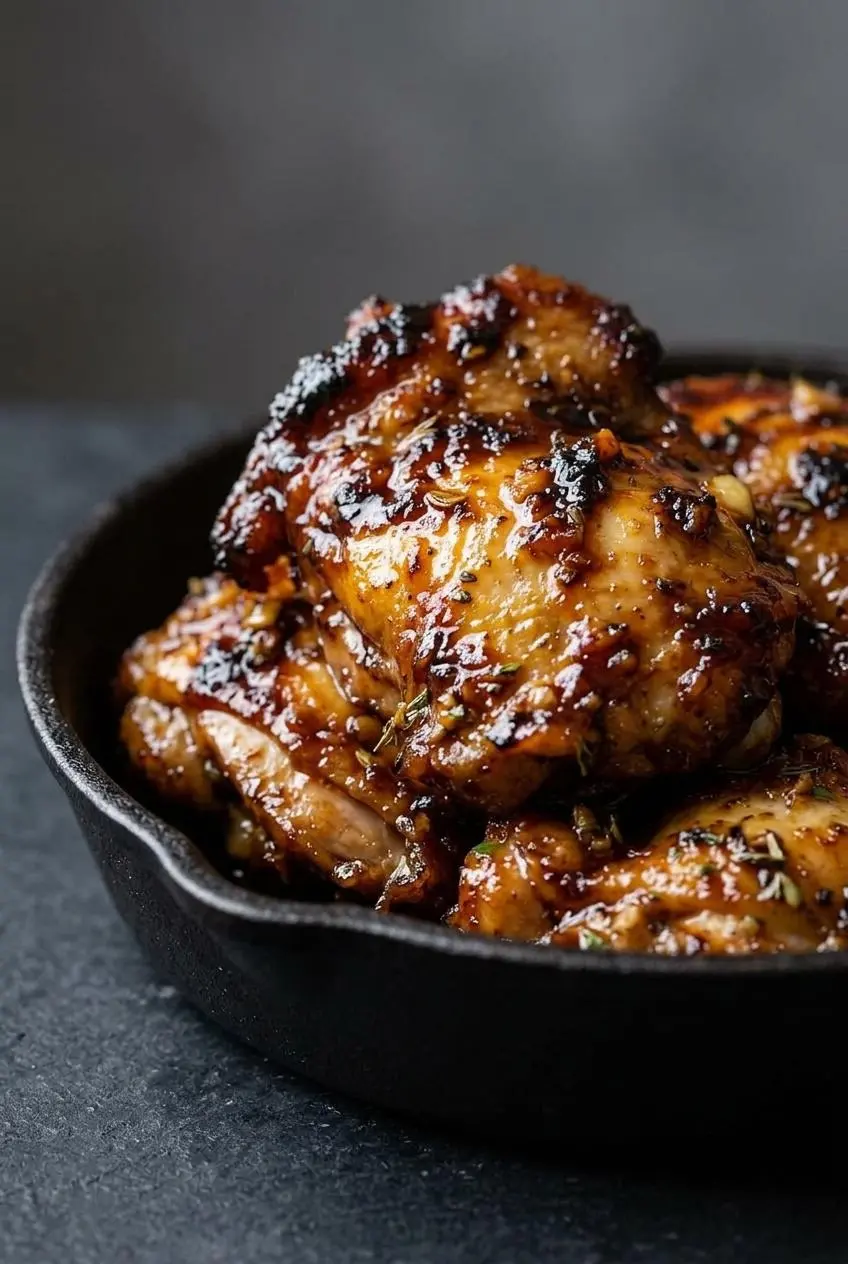
As it bakes, the sauce should darken, bubble around the edges, and smell garlicky and slightly sweet. Give the chicken a short rest before serving so the juices settle back into the meat.
Optional richer pan sauce
If you want a fuller sauce, spoon the pan drippings into a small skillet and simmer them briefly until they thicken enough to coat the back of a spoon. This is completely optional, but it makes the glaze feel a little more dinner-party and a little less Tuesday.
Chicken cuts and cooking options
A lot of home cooks ask whether this works with other cuts, and the short answer is yes. The texture and margin for error just change a bit.
| Chicken cut | Best for | How it cooks | What to watch |
|---|---|---|---|
| Boneless skinless thighs | Juicy weeknight baking | Great baked, grilled, or pan-seared | Most forgiving and stays tender |
| Boneless skinless breasts | Leaner option | Bake, grill, or skillet cook | Cooks faster and can dry out more easily |
| Bone-in pieces | Deeper flavor | Best baked or grilled | Usually takes longer and browns more deeply |
Thighs are the easiest choice if you want reliable results. Breasts absorb the marinade nicely, but they benefit from being pounded to an even thickness so one end doesn’t dry out while the thicker end catches up.
Can you use chicken breasts instead of thighs?
Yes, you can. Chicken breasts work well with the same flavor profile, but they are less forgiving than thighs and tend to dry out faster if left in the oven too long.
If you’re using breasts, pounding them to an even thickness helps them cook more evenly. Expect a firmer texture and keep a closer eye on doneness. Thighs stay juicier and are the safer pick if you want a low-stress dinner.
Can you make it on the stovetop or grill?
Yes, both methods work as optional variations. On the stovetop, cook the chicken in a skillet over moderate heat so the sugars in the glaze have time to caramelize without burning. On a grill, the marinade picks up a smoky edge that works really well with the sweet tangy sauce.
For either method, cooking time depends on the cut and thickness, so use the same doneness check you would use in the oven. Bone-in pieces usually need more time, while breasts usually need less.
Fix common Balsamic Chicken problems
This recipe is straightforward, but a sticky glaze can go sideways fast if the heat or ingredient choice is off.
| Problem | Likely cause | Simple fix |
|---|---|---|
| Sauce is too thin | Used vinegar instead of glaze, or the juices did not reduce enough | Use balsamic glaze and simmer pan juices a bit longer if needed |
| Sauce tastes burnt | Heat was too high and sugars darkened too quickly | Lower the heat and watch skillet cooking closely |
| Chicken turns out dry | Overcooked, especially with breasts | Check doneness early and choose thighs for more forgiveness |
Sauce is too thin
The biggest reason for a loose sauce is using regular balsamic vinegar instead of balsamic glaze. Glaze is already reduced, so it starts thicker and sticks better. Tomato paste also helps give the marinade some body.
If the chicken is done but the pan juices still look watery, pour them into a skillet and reduce them briefly over the stove. A good glaze should look glossy and lightly syrupy, not soupy.
Sauce tastes burnt
Balsamic and honey both darken quickly, especially in a skillet. If the heat is too aggressive, the sauce can go from caramelized to bitter in a hurry.
For stovetop versions, keep the heat moderate and scrape up browned bits gently before they scorch. Dark brown and sticky is great. Black and sharp-tasting is the line you don’t want to cross.
Chicken turns out dry
Dry chicken usually comes down to overcooking or using a lean cut without adjusting your timing. Thighs naturally stay juicier, while breasts need more attention.
A lot of our readers ask about the best way to avoid this, and the answer is simple: use a meat thermometer and pull the chicken as soon as it’s done. For official food safety guidance, chicken should reach a safe minimum internal temperature of 165 degrees F.
Make ahead, store, and reheat
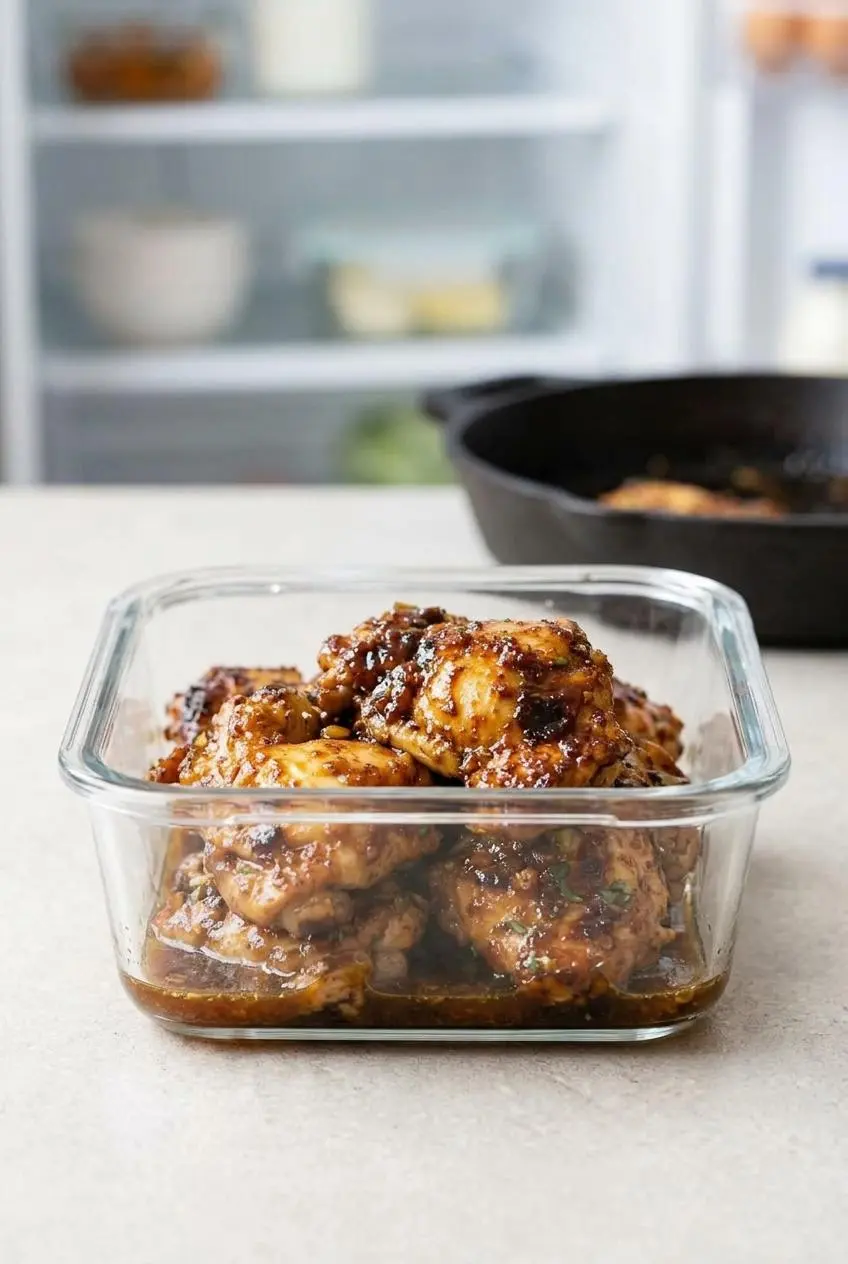
This recipe is meal-prep friendly, especially because the marinade comes together fast and the chicken reheats well if you warm it gently.
How long should you marinate it?
The recipe works with a very short marinade, which is great when dinner needs to happen now. Even a few minutes while the oven heats will season the surface and get the glaze started.
If you want more flavor, you can marinate the chicken in the refrigerator for a few hours. I wouldn’t push it too far ahead with an acidic marinade, because the texture can start to get a little too soft.
How to store and freeze leftovers?
Let the chicken cool, then refrigerate leftovers in a covered container. Since exact storage timing is not always handled the same way in every kitchen, use your best judgment and reheat while the chicken is still at its best quality.
You can also freeze cooked portions for a future meal. Thaw in the refrigerator before reheating, and warm the chicken gently with some of its sauce so the glaze loosens up instead of tightening into a sticky patch.
How to scale the recipe?
You can halve the ingredients for a smaller dinner or double them for a crowd. The main thing is to use a baking dish large enough to keep the chicken in a single layer so it roasts instead of steams.
If you scale up, expect the pan to hold more juices. That can mean a slightly looser sauce at first, so reducing the pan drippings at the end can help if you want a thicker finish.
What to serve with Balsamic Chicken
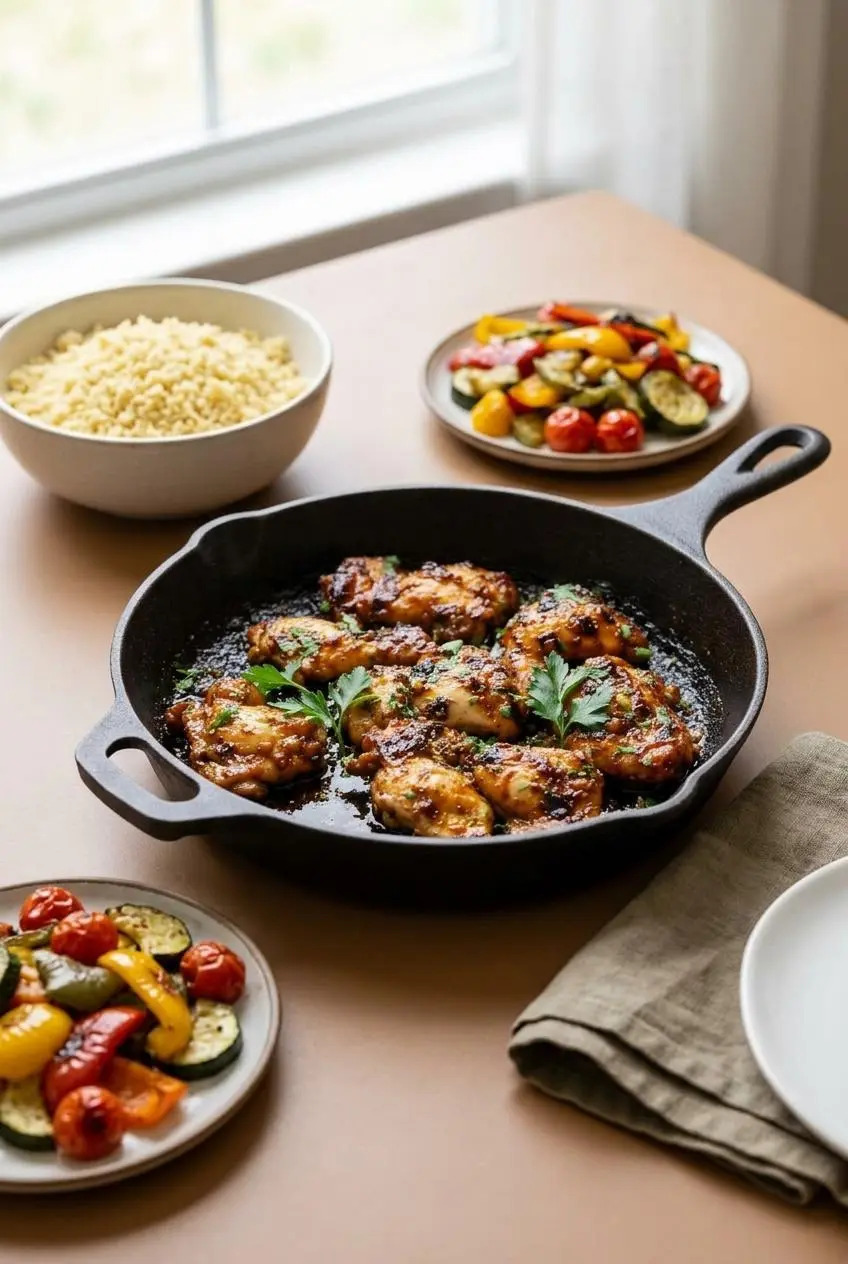
The sweet tangy glaze loves sides that can catch every last bit of sauce, plus something fresh to keep the plate balanced.
Best side dishes for the sauce
For grains, couscous, rice, and quinoa are all great because they soak up the glaze beautifully. Mashed potatoes and egg noodles do the same job if you want something a little cozier.
For vegetables, roasted Brussels sprouts, mixed roasted vegetables, or cauliflower mash all fit nicely. If you want contrast, add a crisp green salad or a Caprese-style side. If those flavors are your thing, this Chicken Caprese recipe is a great next dinner to try.
Low-carb options like cauliflower rice work especially well when you want the chicken and sauce to stay center stage. Fresh salads are also handy when the glaze is extra sticky and rich.
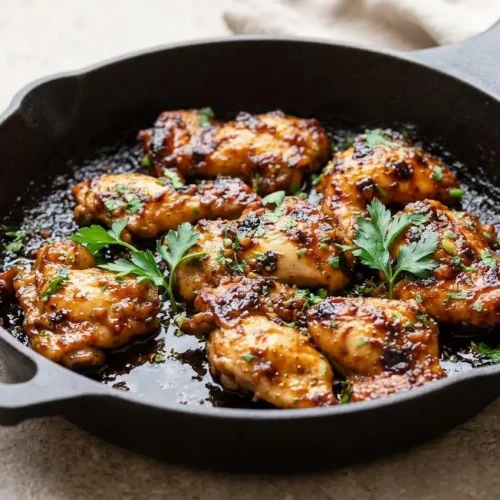
Balsamic Chicken

Equipment
- Large Mixing Bowl
- Whisk
- Baking dish or heat-safe skillet
- Oven
- Meat Thermometer
Ingredients
Balsamic chicken marinade
- ¼ cup extra virgin olive oil
- 3 tablespoon balsamic glaze, store-bought is fine
- 1 tablespoon tomato paste
- 1 teaspoon honey
- 1 lemon, juice of
- 4 to 5 large garlic cloves, minced
- 1 tablespoon fresh thyme
- 1 teaspoon dried oregano
- ½ teaspoon sweet paprika
For the chicken
- 8 boneless and skinless chicken thighs, (about 1 ½ pounds)
- Kosher salt and black pepper
Instructions
- In a large mixing bowl, whisk the olive oil, balsamic glaze, tomato paste, honey, and lemon juice until smooth. Add the garlic, thyme, oregano, and sweet paprika, then whisk again to fully combine.
- Pat the chicken dry well, then season both sides generously with kosher salt and black pepper.
- Add the chicken to the bowl and turn to coat it evenly in the balsamic marinade. Let it sit for a few minutes while the oven heats, or cover and refrigerate for a couple of hours if you have extra time.
- Heat the oven to 425 degrees F with a rack positioned in the middle.
- Transfer the chicken to a baking dish or heat-safe skillet. Bake on the center rack for about 25 to 30 minutes, until the chicken is fully cooked and the thickest part reaches 165 degrees F.
Notes
Nutrition
Conclusion
This is the kind of chicken dinner that earns a regular spot in the rotation: juicy thighs, bold garlic-herb flavor, and a tangy sweet glaze that tastes like more effort than it takes.
The best tip is simple: check for doneness so the chicken stays tender, then spoon over the pan juices or reduce them for a richer finish. Dinner gets easier when a recipe pulls its weight.
FAQ
What’s the difference between using balsamic vinegar and balsamic glaze?
Balsamic glaze is thicker and sweeter, while balsamic vinegar is thinner and sharper. This recipe uses glaze because it creates a stickier coating and a more balanced sauce. If needed, vinegar can be reduced on the stove until syrupy, but glaze is the easier choice here.
How can I make my balsamic sauce thicker and stickier?
Start with balsamic glaze, not regular vinegar. If the sauce still seems thin after baking, reduce the pan juices briefly on the stove until glossy. Too much extra liquid in the pan can also keep the sauce from tightening up.
Can I use chicken breasts for this recipe? What’s the best way to cook them?
Yes. Chicken breasts work, but they cook faster and dry out more easily than thighs. Pound them to an even thickness, then bake, grill, or pan-sear while watching closely for doneness. If you want the most forgiving option, stick with thighs.
What are the best side dishes to serve with balsamic chicken?
The best sides are ones that catch the sauce well, like couscous, rice, quinoa, mashed potatoes, or egg noodles. Roasted vegetables are a great match, and a fresh salad adds contrast if you want the plate to feel lighter.
How do I store leftover balsamic chicken and for how long?
Store leftovers in a covered container in the refrigerator once they have cooled. Reheat gently with a little of the sauce or pan juices to help the chicken stay juicy. If you want to keep it longer, freezing cooked portions works well too.
Is it possible to make this recipe on the grill or in a skillet?
Yes, both methods work. A skillet gives you great browning and easy sauce reduction, while the grill adds a smoky flavor that pairs really well with the balsamic glaze. Cooking time will vary by cut and thickness, so check for doneness rather than relying on one fixed time.