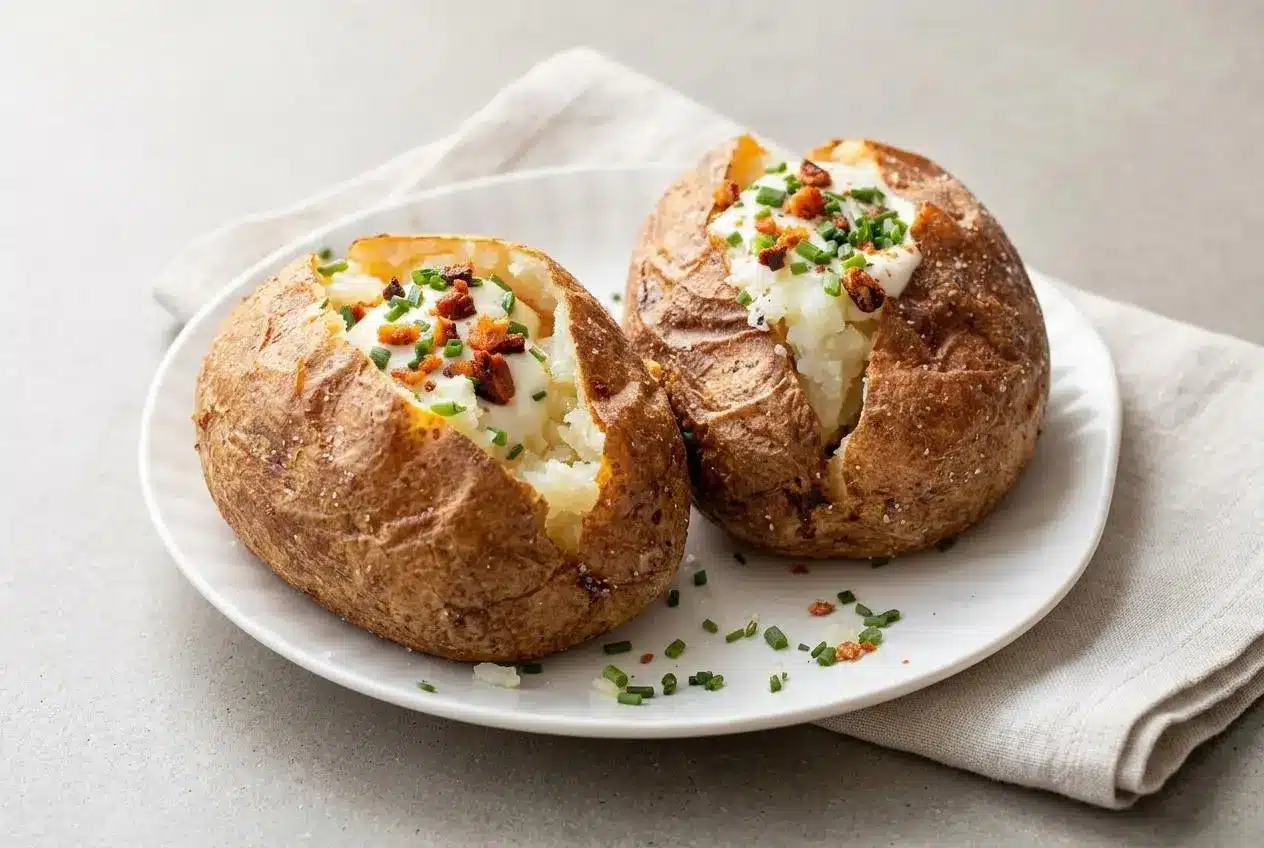
Bake unpeeled, fork-pierced Russet potatoes at 425°F for 45 to 60 minutes, uncovered, until the skins are crisp and the centers are fork-tender. Finish by splitting and fluffing them while hot.
This baked potato recipe delivers the contrast everyone wants: a crackly, salty jacket around a piping-hot, soft center that welcomes butter and toppings.
The method is wonderfully straightforward, but drying, seasoning, and opening the potatoes at the right moment make a real difference. That first puff of fragrant steam is the payoff.
Choose potatoes that are similar in size so they finish baking at about the same time.
Why This Baked Potato Method Works
A hot 425°F oven dries the potato’s surface while the inside cooks through, which is the combination that gives you crisp skin and tender flesh. The olive oil helps the skin brown and turn lightly golden, while sea salt adds a savory crust with a pleasant crunch.
As the potato heats, moisture inside turns to steam and loosens the starchy flesh. That is why a properly baked Russet feels gently soft when squeezed with an oven mitt and sounds slightly hollow when tapped. The skin should look a little puffed and dry rather than shiny or damp.
Skip aluminum foil for this style of potato. Foil holds steam against the skin, so the exterior becomes soft instead of roasted and crisp. Bake the potatoes uncovered for the best contrast between the shell and the fluffy middle.
Key Ingredients and Equipment for Success
Russet potatoes create the fluffy interior, olive oil encourages even browning, and sea salt builds a crisp, savory exterior that seasons every bite.
- 4 medium russet potatoes
- Extra-virgin olive oil
- Sea salt
I scrub the skins thoroughly, then pat them completely dry before adding oil and salt because moisture is the fastest route to a less-crisp finish.
Use enough olive oil to lightly coat the skin all over, then season generously with sea salt. Coarse sea salt or kosher salt gives the outside a more noticeable crunch than fine table salt, though the official sea salt works beautifully here.
The Importance of High-Starch Russets
Russet Burbank potatoes are the classic choice for baking because their dry, starchy flesh separates into soft flakes as it cooks. Red potatoes and Yukon Golds are delicious, but their waxier texture stays creamier and denser, making them better suited to roasting, boiling, or mashing.
Look for firm Russets with intact skins and no soft spots. Medium potatoes work especially well because the skin can crisp before the center becomes overly dry.
Essential Equipment for Even Airflow
The lined baking sheet in the method keeps cleanup easy and catches any salt that falls away. For even more airflow, set a wire rack inside a rimmed baking sheet and place the potatoes on top. Hot air can circulate underneath, helping prevent a damp bottom skin.
An instant-read thermometer can be useful when a potato looks done but still feels questionable in the center. The most dependable everyday cue remains a fork that slides through the middle without resistance.
Step-by-Step Instructions for the Ultimate Baked Potato
Dry skins, steam vents, and a hot oven do the heavy lifting here. Keep the potatoes unwrapped so the exterior can roast instead of steam.
- Heat the oven to 425°F and cover a baking sheet with parchment paper.
Have the baking sheet ready before seasoning so the potatoes can go straight into the hot oven. - Prick each potato several times with a fork, arrange them on the prepared baking sheet, then coat them with olive oil and sea salt.
Bake for 45 to 60 minutes, until the skins are crisp and a fork enters the center easily. - Split each hot potato lengthwise and pull the cut sides apart with a fork.
Fluff the flesh right away so steam escapes and the center stays light instead of compact.
The fork holes give internal steam an escape route while the potatoes bake. Do not make deep cuts before baking, since large openings can dry the flesh too quickly. Small punctures are enough.
Expert Tips for Crispy Skin and Fluffy Centers
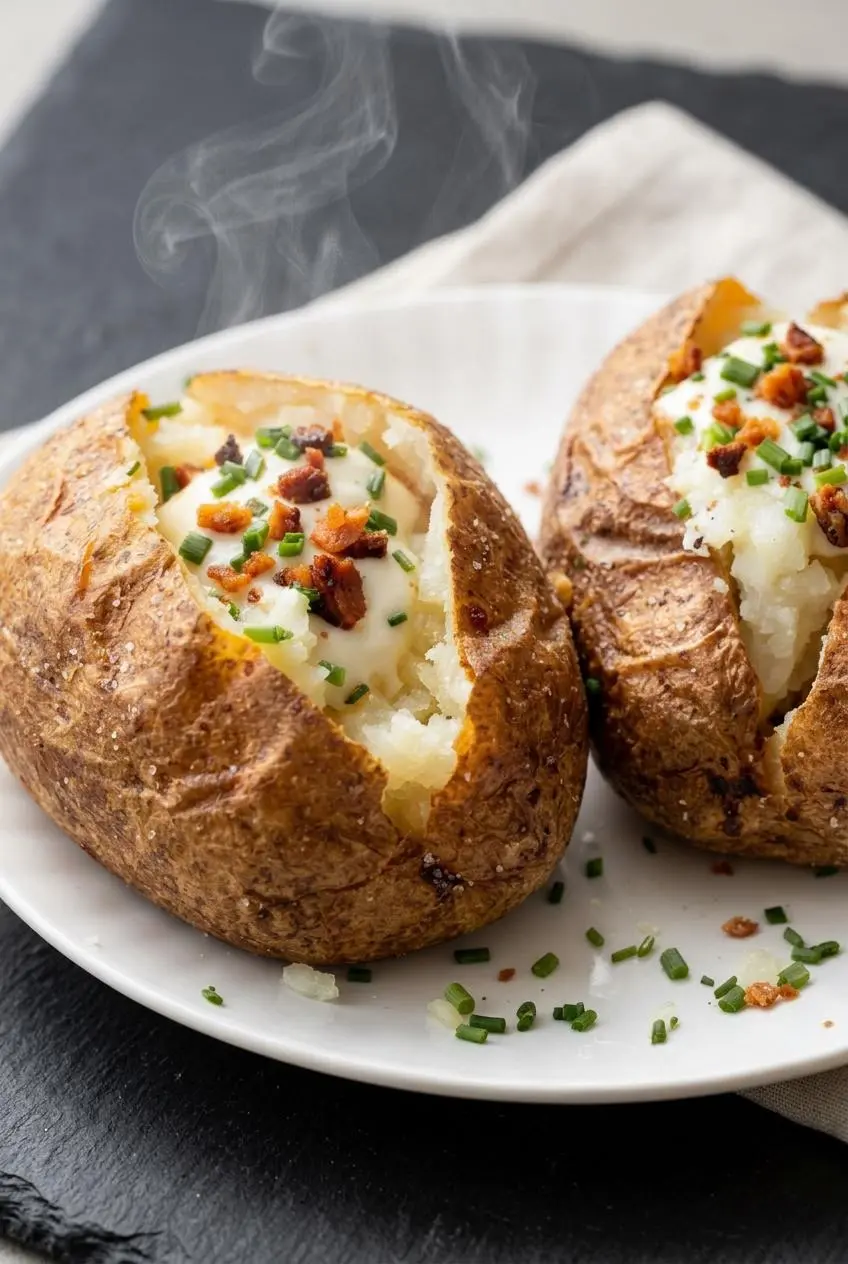
Small adjustments can rescue a potato that is dense, pale, or less crisp than you hoped. Focus on the skin first, then use the center’s texture as your final doneness check.
- The skin is soft: The potatoes were likely damp before baking, crowded together, or wrapped in foil. Dry them carefully, leave space around each potato, and bake uncovered.
- The center is firm: Return the potato to the oven until a fork reaches the middle without resistance. A crisp outside does not always mean the center has finished cooking.
- The flesh seems dry: Open the potato as soon as it comes out of the oven and fluff it with a fork. The escaping steam keeps the interior from settling into a heavy mass.
- The potato tastes bland: Salt the entire oiled skin, not just the top. The seasoned skin is part of the meal, not a wrapper to discard.
- You want more aroma: During the final stretch of baking, brush the skin with garlic-infused olive oil and add coarse salt. Keep this optional finishing touch outside the main method.
Let the potatoes sit briefly before handling, then cut them open while they are still very hot. The interior should release a burst of steam and break apart easily with a fork.
Delicious Topping Ideas and Meal Variations
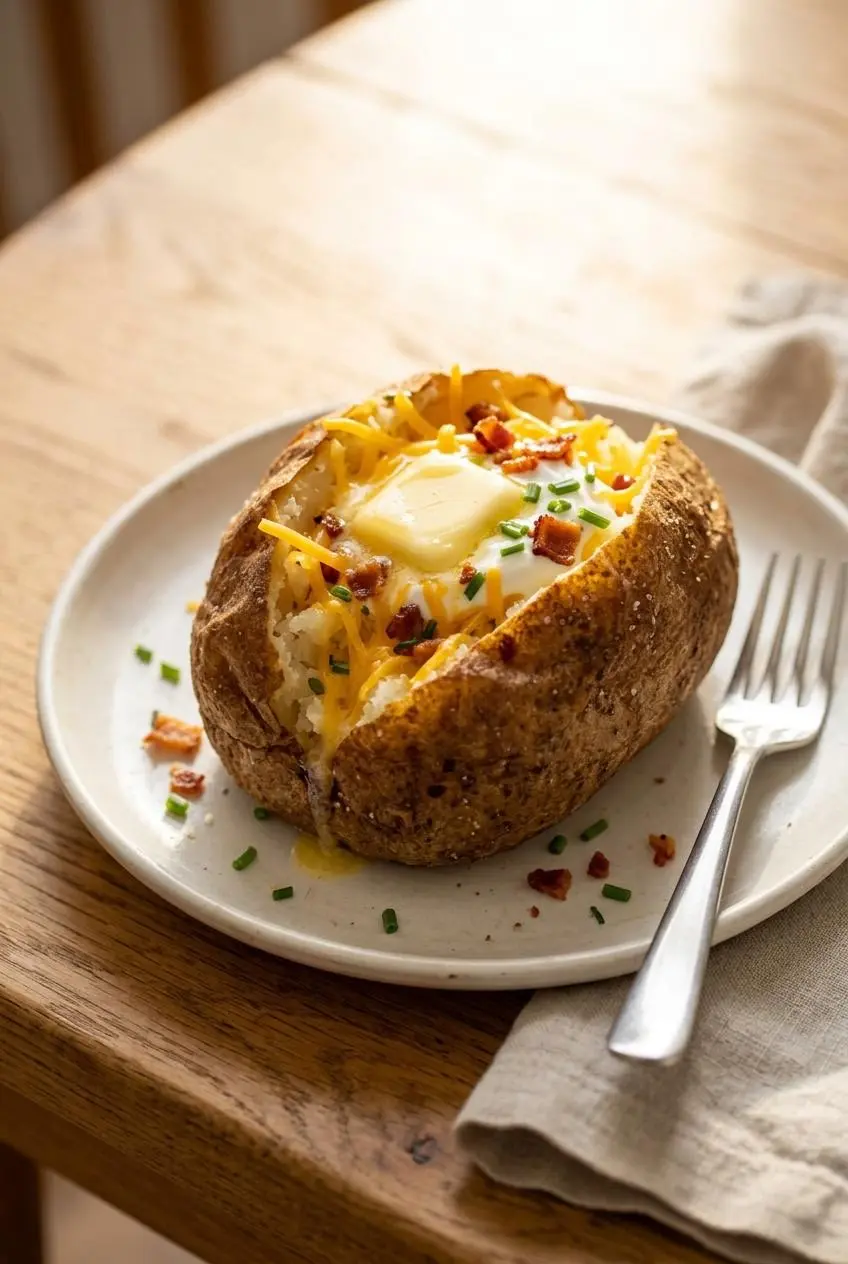
A well-baked potato can stay a side dish or become dinner with a few optional toppings. Add toppings after fluffing so they melt into the hot center instead of sitting on top.
Classic Loaded Steakhouse Combinations
For a classic loaded potato, start with salted butter, sharp cheddar, sour cream, chives or scallions, and crisp bacon bits. Add each topping while the potato is hot enough to melt the cheese.
- Broccoli cheddar: Spoon warm cheese sauce over steamed broccoli florets for a comforting stuffed potato with color and crunch.
- Vegetarian chili: Add bean chili and shredded cheddar for a hearty meatless dinner that needs little else alongside it.
- Lighter herb topping: Use Greek yogurt instead of sour cream, then finish with chives, dill, parsley, or scallions for brightness.
- Twice-baked direction: Scoop out the fluffy center, season it with your preferred fillings, and rebake it for creamy twice-baked potatoes.
Serve loaded potatoes beside grilled steak, roasted chicken, or a crisp green salad. For a casual dinner, put out toppings separately and let everyone build their own.
Air Fryer Baked Potato Alternative
For an air fryer baked potato, prick, oil, and salt the Russets as directed, then cook them in a single layer with room for air to circulate. Turn them partway through cooking so the skins brown evenly on all sides.
Check doneness by sliding a fork into the center. The air fryer produces a particularly crisp skin, though cooking time will vary with the potato size and the capacity of the appliance.
Storage and Reheating Guide
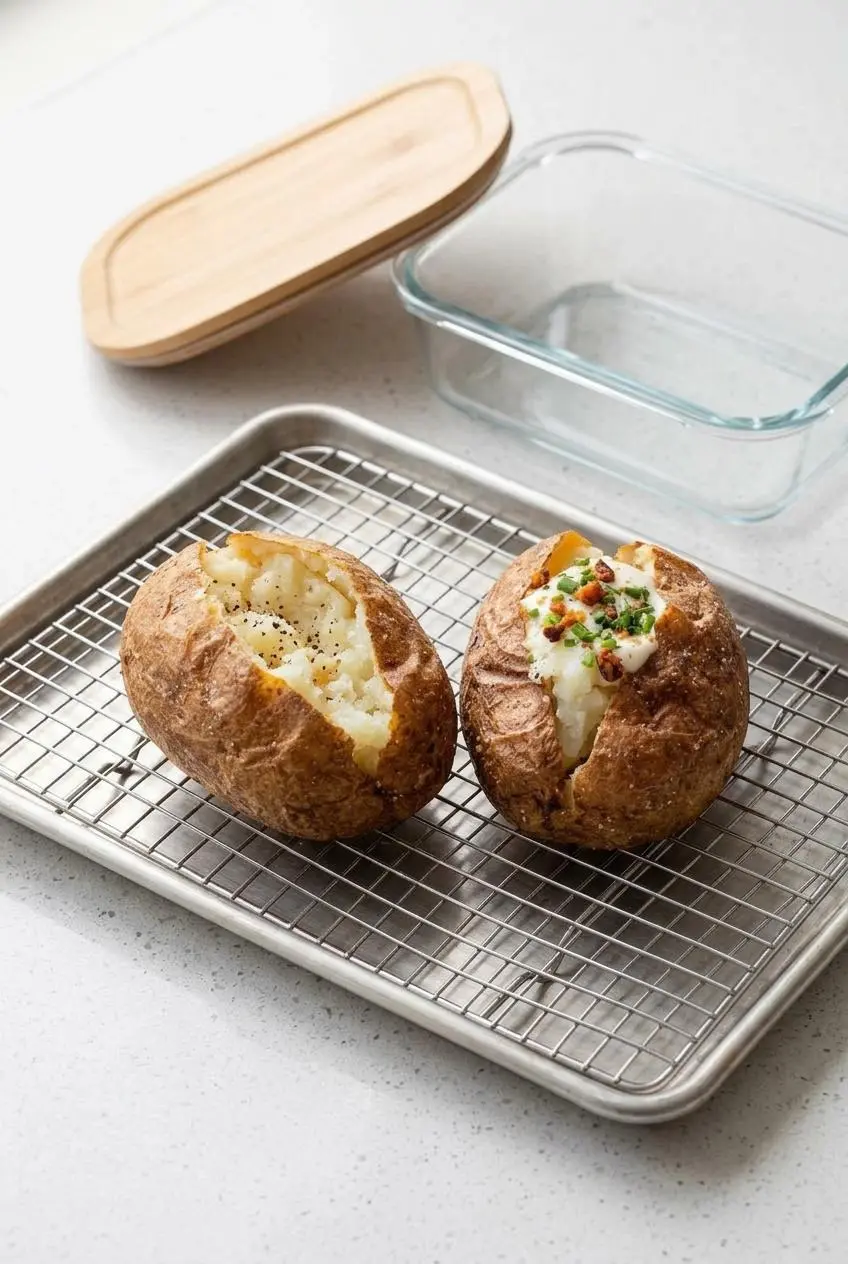
For leftovers, allow baked potatoes to cool before sealing them in an airtight container and refrigerating them. Avoid holding warm potatoes wrapped in foil, since trapped steam quickly softens the skin and leaves the texture less appealing.
To bring back some crunch, reheat a potato in a hot oven or air fryer until the center is hot and the skin feels dry and crisp again. Place it directly on a rack when possible so hot air can reach the underside.
A microwave is convenient for warming the center, but it softens the skin. If speed matters, warm the potato briefly in the microwave and finish it in the oven or air fryer for a firmer exterior.
Conclusion
For crisp skin and a soft, fluffy center, bake Russets uncovered at high heat, dry them thoroughly, and season the skins well with olive oil and sea salt.
Check for a fork-tender middle, split the potatoes while hot, and fluff the flesh before adding toppings. A great baked potato is comfort food with a satisfying crunch.
Frequently Asked Questions
What Is the Best Oven Temperature for Baking Potatoes?
425°F is an excellent temperature for baked potatoes. It gives the skin enough heat to turn crisp while allowing a medium Russet to cook through in about 45 to 60 minutes. A lower oven temperature can work, but it usually produces a softer skin. A hotter oven may brown the outside too quickly before the center becomes fully tender.
How Do You Know When a Baked Potato Is Done?
A baked potato is done when a fork slides into the center with almost no resistance. The potato should give slightly when pressed with an oven mitt, and the skin should feel dry and crisp. If the fork catches or the center feels firm, keep baking. Potatoes of different sizes can finish at different times, so check each one individually.
Why Should You Not Bake Potatoes in Aluminum Foil?
Foil traps steam against the potato skin. That moisture softens the exterior, leaving it more leathery than crisp. For a roasted, salty skin, bake potatoes uncovered. The dry oven heat can then brown and crisp the surface properly.
How Do You Reheat a Baked Potato and Keep the Skin Crispy?
Reheat the potato in a hot oven or air fryer, preferably on a rack so air can circulate around the skin. Heat it until the center is hot and the exterior turns crisp again. Microwaving warms the center quickly but softens the skin. Use the microwave only as a first warming step if needed, then finish with dry heat.
Baked Potato Recipe

Equipment
- Baking Sheets
- Parchment Paper
Ingredients
- 4 medium russet potatoes
- Extra-virgin olive oil
- Sea salt
Instructions
- Heat the oven to 425°F and cover a baking sheet with parchment paper. Have the baking sheet ready before seasoning so the potatoes can go straight into the hot oven.
- Prick each potato several times with a fork, arrange them on the prepared baking sheet, then coat them with olive oil and sea salt. Bake for 45 to 60 minutes, until the skins are crisp and a fork enters the center easily.
- Split each hot potato lengthwise and pull the cut sides apart with a fork. Fluff the flesh right away so steam escapes and the center stays light instead of compact.