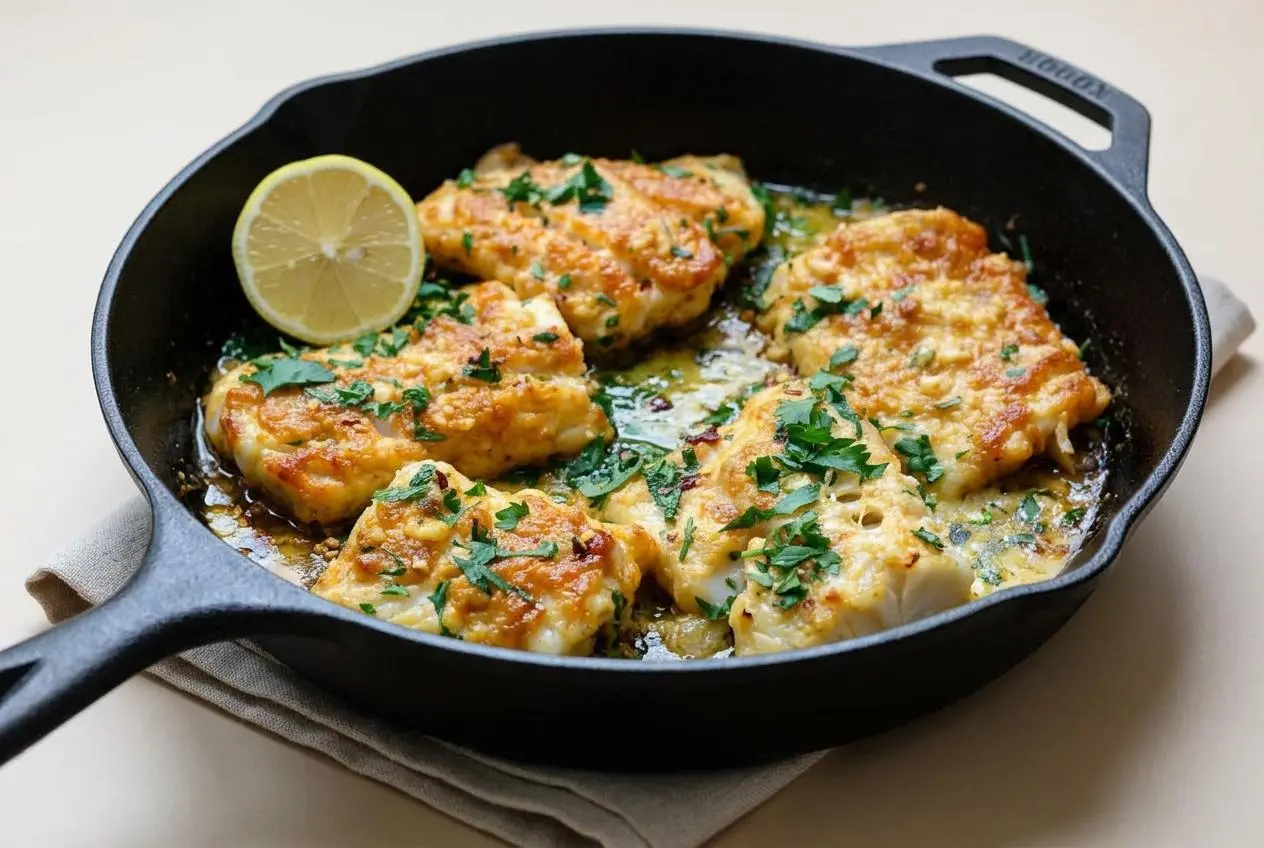
Bake cod at 400°F for about 10 to 12 minutes after a quick skillet sear, until it turns opaque, flakes easily, and reaches 145°F in the thickest portion.
This baked cod recipe pairs a warmly spiced coating with bright lemon, melted butter, and plenty of garlic. A fast sear gives the outside a golden finish before the oven gently cooks the center.
The skillet fills with the savory aroma of garlic and lemon as the fish bakes. The trick is knowing when to pull it.
Bring the cod out while you prepare the coating so it is not ice-cold, then pat every surface dry before dipping.
Essential Ingredients for Flavorful Baked Cod
Each ingredient earns its place: cod brings delicate flakes, flour helps the spices cling, and the lemon sauce adds richness, brightness, and moisture during baking.
- 1.5 lb Cod fillet pieces, (4-6 pieces)
- 1/4 cup chopped fresh parsley leaves
Lemon Sauce
- 5 tbsp fresh lemon juice
- 5 tbsp extra virgin olive oil
- 2 tbsp melted butter
- 5 garlic cloves, (minced)
For Coating
- 1/3 cup all-purpose flour
- 1 tsp ground coriander
- 3/4 tsp sweet Spanish paprika
- 3/4 tsp ground cumin
- 3/4 tsp salt
- 1/2 tsp black pepper
Choosing the Best Cod Fillets
Choose fillets that are similar in thickness so they finish at the same time. Thick center-cut pieces stay especially succulent, while thin tail pieces cook faster and need closer attention. Cod has a clean, mild flavor and separates into large, tender flakes when handled gently.
I always blot cod thoroughly with paper towels before coating it because a dry surface helps the seasoned flour stick evenly instead of turning pasty in the pan.
The Mediterranean Spice Blend
Coriander, sweet Spanish paprika, and cumin give the flour coating a warm, earthy character without overwhelming the fish. Paprika contributes color, coriander adds a lightly citrusy edge, and cumin adds depth. Salt and black pepper sharpen the whole flavor profile.
The flour is intentionally light rather than heavy. It creates a delicate exterior that takes on color in the skillet and gives the lemon sauce something to cling to.
Garlic Lemon Butter Emulsion
Fresh lemon juice cuts through the richness of olive oil and butter, keeping the finished fish lively rather than heavy. Add the garlic after the initial dipping stage so it stays in the sauce that goes over the fish before baking, where its aroma can bloom without scorching in the skillet.
Use fresh lemon juice here. Its clean acidity makes the mild cod taste fuller and keeps the buttery pan juices from feeling greasy.
How to Make Baked Cod Step by Step
This sear-and-bake approach gives cod a golden exterior while protecting its delicate center. Keep the skillet hot enough to color the coating, but do not wait for the oil to smoke.
- Heat the oven to 400°F while you prepare the sauce and coating.
The oven should be fully hot before the fish goes in so the fillets finish evenly after searing. - Whisk the lemon juice, extra virgin olive oil, and melted butter together in a shallow bowl, leaving out the garlic for now.
The mixture should look glossy and lightly blended, with butter and oil floating in small streaks. - Combine the flour, coriander, paprika, cumin, salt, and black pepper in a second shallow bowl.
Stir until the spices are evenly distributed and no darker clumps of seasoning remain. - Dry the cod, coat each piece first in the lemon mixture, then in the seasoned flour, and shake away loose excess.
A thin, even coating should cover the fish without forming thick patches that can fall away in the pan. - Warm 2 tbsp olive oil in a cast iron skillet or other oven-safe pan over medium-high heat, then sear the cod for about 2 minutes per side.
The oil should shimmer, and the coating should turn pale golden while the centers remain undercooked. - Stir the minced garlic into the reserved lemon mixture and spoon it over the seared fillets.
The garlic will release a noticeable savory aroma when it meets the warm pan and sauce. - Transfer the skillet to the oven and bake for about 10 minutes, checking early for doneness.
The cod is ready when the flesh is opaque and separates into tender flakes with gentle pressure from a fork; scatter with parsley and serve immediately.
Why This Sear-and-Bake Method Works
A brief skillet sear develops browned flavor before the fish enters the oven. That first burst of heat sets the seasoned coating and gives the fillets a more appealing finish than direct baking alone.
The 400°F oven then cooks the center with steadier heat while the lemon butter gathers around the fish. Avoid flipping the fillets aggressively after searing. A thin fish spatula slides underneath cleanly and helps preserve those large flakes.
Expert Tips for Tender and Flaky Fish

Cod cooks quickly, so small details matter more than fancy technique. These fixes prevent the usual problems: watery pan juices, broken fillets, and dry, rubbery fish.
- Watery pan juices: Excess moisture usually comes from wet fillets. Dry the fish well before coating, especially if it was previously frozen.
- Coating that slips off: Shake off excess flour before searing. A light coating browns better and stays attached.
- Broken fillets: Use a flexible fish spatula and wait until the first side releases easily before turning.
- Uneven cooking: Place thick pieces near the center of the skillet and keep thin tail portions where you can check them sooner.
- Flat flavor: Spoon some of the garlicky lemon butter over each portion at the table so every bite gets acidity and richness.
Baking Fresh vs Frozen Cod Fillets
Fresh or fully thawed cod works best for the skillet method because it sears more evenly and releases less water. Thin tail sections can finish in about 8 to 10 minutes in the oven, while thick center loins may need 12 to 14 minutes after the sear.
If cooking cod from frozen, skip the skillet sear and bake the fillets on an oiled pan at 425°F for about 20 to 25 minutes. Brush away ice crystals, pat the surface dry as much as possible, and use oil to help the seasoning adhere. Check the thickest part before serving.
Avoiding Overcooking and Dry Texture
Cod moves quickly from translucent to done. Watch for the flesh to shift from glossy and translucent to milky white and opaque. When gently pressed with a fork, it should offer slight resistance before opening into clean flakes.
Use an instant-read thermometer in the thickest section rather than relying on the clock alone. Pull the fish when it reaches 145°F, then serve it promptly while the lemon butter is still warm and fluid.
Flavor Variations and Topping Ideas
These are optional directions for changing the flavor or texture while keeping the main method intact. Choose one approach at a time so the cod remains the star.
Crispy Panko Parmesan Baked Cod
For a crunchier finish, toss panko breadcrumbs with grated Parmesan, olive oil, and lemon zest. Press the mixture over seasoned fillets before baking. The topping turns golden and crisp while the fish underneath stays tender.
This version works best as a direct-bake option on a lined sheet pan rather than with the flour coating and skillet sear.
Oven Baked Cod in Foil Packets
Place seasoned cod on parchment or foil with cherry tomatoes, capers, and garlic lemon butter, then seal the packet tightly before baking. The enclosed steam keeps the fish delicate and gives you flavorful juices for spooning over rice or vegetables.
Open the packet carefully because hot steam escapes quickly. This method produces a softer finish than a skillet sear, but cleanup is especially easy.
Spicy Garlic Butter With Capers
For a bolder version, stir red pepper flakes, brine-rinsed capers, and fresh oregano into warm garlic butter. The capers bring a salty pop, while the pepper flakes add heat that stands up well to the lemon.
Add this as an optional finishing butter over cooked cod rather than mixing it into the main ingredient list. A little goes a long way with mild white fish.
Storage and Reheating Instructions

Cool leftover cod, then place it in an airtight glass container and keep it chilled. For seafood handling and cooking practices that include fish cooked to 140 to 145°F, see safe seafood storage and cooking practices.
Reheat only the portion you plan to eat, using a low oven or a loosely covered microwave at reduced power. Gentle heat protects the fish better than a hot blast, which can make the flakes tighten and dry out. Add a small spoonful of the pan juices, olive oil, or lemon butter before warming if the fish looks dry.
Serving Suggestions for a Complete Dinner

The lemon garlic pan juices are made for something that can soak them up. Build a relaxed Mediterranean-style plate with one grain or potato side, one green vegetable, and something crisp and fresh.
- Serve the cod over Lebanese rice or lemon herb rice pilaf to catch the buttery citrus sauce.
- Roast asparagus at the same oven temperature, or quickly sauté spinach with garlic while the fish finishes.
- Pair it with a chopped cucumber, tomato, and olive salad dressed with herbs and lemon.
- For a crisp vegetable side, try baked zucchini fries alongside the tender cod.
- For a heartier dinner, twice baked potatoes bring a comforting contrast to the bright fish.
If you want a rice-based plate with extra texture, serve the cod over homemade fried rice and spoon the lemon garlic juices over the top.
Conclusion
This fast cod dinner brings together a golden spice coating, bright lemon garlic butter, and tender flakes in about 20 minutes. The quick sear gives the fish color, while the oven finishes it gently.
Keep an eye on the thickest portion and pull the fish when it reaches 145°F. With that one habit, dinner stays moist, flaky, and full of flavor.
Frequently Asked Questions
What Is the Best Temperature to Bake Cod Fish in the Oven?
For this skillet-to-oven method, bake cod at 400°F. Standard fillets typically need about 10 to 12 minutes after searing. A 425°F oven works well for direct-baked or frozen fillets, but thinner pieces need close attention because they can overcook quickly.
How Do You Know When Baked Cod Is Fully Cooked?
Cod is done when the center turns milky white and opaque rather than translucent. It should separate easily into tender flakes when tested with a fork. For the most dependable check, test the thickest part with an instant-read thermometer and look for 145°F.
Can You Bake Cod Directly From Frozen?
Yes. Bake frozen cod at 425°F for about 20 to 25 minutes rather than using the skillet sear method. Brush off ice crystals, dry the surface as much as possible, coat with oil, and check the thickest portion before serving. Frozen fillets may release more liquid, so leave space between them on the pan.
How Do You Keep Baked Cod From Drying Out?
Coat the fish with olive oil, butter, and lemon sauce, then avoid baking past doneness. Start checking standard fillets around the 10-minute mark. Choose similarly sized pieces and remove thin tail sections first if they finish ahead of thick center cuts. Gentle heat and an early check make all the difference.

Baked Cod Recipe

Equipment
- Shallow bowl
- Cast Iron Skillet
Ingredients
- 1.5 lb Cod fillet pieces (4-6 pieces)
- 1/4 cup chopped fresh parsley leaves
Lemon Sauce
- 5 tbsp fresh lemon juice
- 5 tbsp extra virgin olive oil
- 2 tbsp melted butter
- 5 garlic cloves (minced)
For Coating
- 1/3 cup all-purpose flour
- 1 tsp ground coriander
- 3/4 tsp sweet Spanish paprika
- 3/4 tsp ground cumin
- 3/4 tsp salt
- 1/2 tsp black pepper
Instructions
- Heat the oven to 400°F while you prepare the sauce and coating. The oven should be fully hot before the fish goes in so the fillets finish evenly after searing.
- Whisk the lemon juice, extra virgin olive oil, and melted butter together in a shallow bowl, leaving out the garlic for now. The mixture should look glossy and lightly blended, with butter and oil floating in small streaks.
- Combine the flour, coriander, paprika, cumin, salt, and black pepper in a second shallow bowl. Stir until the spices are evenly distributed and no darker clumps of seasoning remain.
- Dry the cod, coat each piece first in the lemon mixture, then in the seasoned flour, and shake away loose excess. A thin, even coating should cover the fish without forming thick patches that can fall away in the pan.
- Warm 2 tbsp olive oil in a cast iron skillet or other oven-safe pan over medium-high heat, then sear the cod for about 2 minutes per side. The oil should shimmer, and the coating should turn pale golden while the centers remain undercooked.
- Stir the minced garlic into the reserved lemon mixture and spoon it over the seared fillets. The garlic will release a noticeable savory aroma when it meets the warm pan and sauce.
- Transfer the skillet to the oven and bake for about 10 minutes, checking early for doneness. The cod is ready when the flesh is opaque and separates into tender flakes with gentle pressure from a fork; scatter with parsley and serve immediately.