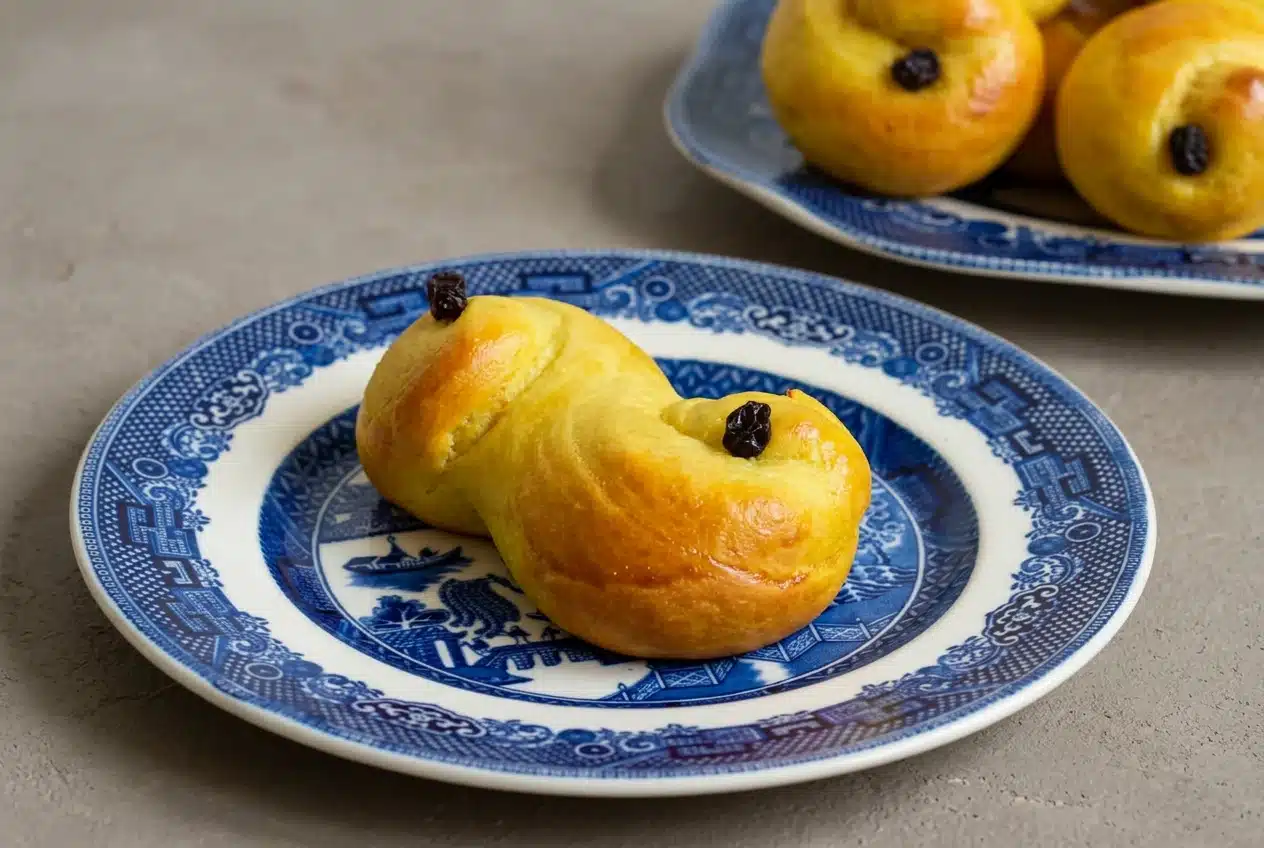
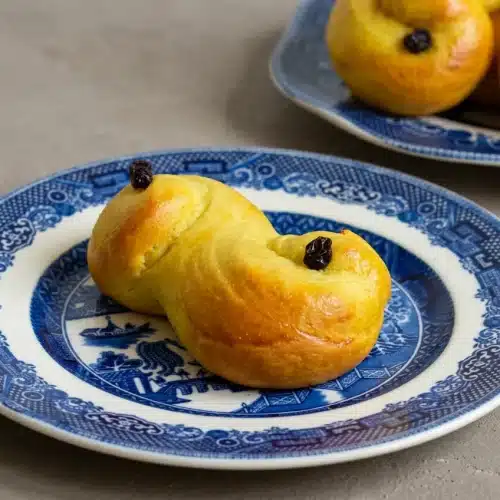
This saffron buns recipe makes Swedish-style mini St. Lucia buns, or lussekatter. They’re soft and buttery with a gently floral aroma, and each golden S has a dried currant tucked into both curls.
These are the little Swedish holiday rolls with fruit at the ends, rather than filled knots or Cornish buns with currants throughout. The dough gets its color and flavor from saffron warmed in milk.
The mini size makes them easy to pass around at breakfast or over afternoon coffee. The first hint of what’s coming is the milk turning gold.
Set out an instant-read thermometer before heating the milk so you can check when it’s cool enough to add the yeast.
Ingredients for Saffron Buns
Each ingredient has a job: saffron brings color and aroma, the flour blend gives the curls structure, and milk, butter, and eggs enrich the crumb. Sugar and salt balance the flavor, yeast lifts the dough, and dried currants add a chewy bite.
- ¾ cup whole milk
- 1 tsp saffron strands
- ¼ cup sugar (caster sugar or superfine granulated sugar)
- 2¼ tsp dry active yeast
- ¼ cup unsalted butter, softened
- 2½ cups all purpose or plain flour
- ¾ cup strong bread flour
- 1 tsp salt
- 2 eggs (+1 for egg wash)
- 2 tbsp quark or cream cheese (optional)
- 48 dried currants
Look for saffron threads in the spice aisle and packets labeled active dry yeast in the baking aisle. The saffron colors and perfumes the milk. The yeast goes into that milk once it cools, so you can see it foam before it ever touches the flour.
Use all-purpose flour for a tender crumb and bread flour for enough strength to roll the dough into ropes. Quark is a soft, mildly tangy fresh dairy product; use it or softened cream cheese for a little extra richness, or leave both out. The dough eggs go into the mixer, while the extra egg is for brushing the tops.
I’d look for dried baking currants near the raisins, not fresh currants in the produce aisle. The dried ones are tiny, so they sit neatly inside the spirals.
How to Make the Saffron Buns
Prep: 30 minutes. Cook: 12 minutes. Yield: 24 mini buns.
The dough rises twice, and each rise has a different cue. Look for the whole batch to double in the bowl, then look for the individual curls to puff on the baking sheets.
- Set a small saucepan over medium heat and bring the milk, saffron, and 1 teaspoon of the sugar to a gentle simmer, about 5 minutes.
Take the pan off the heat once the milk looks golden and give it about 5 minutes to cool to 113°F (45°C). - Scatter the yeast over the cooled saffron milk, stir it in, and let the mixture stand for about 10 minutes.
Look for a layer of foam on the surface before adding the mixture to the dough. - Fit a stand mixer with its dough hook and briefly stir the two flours, the rest of the sugar, and the salt in the mixer bowl while the yeast stands.
Mix just enough to distribute the sugar and salt through the flour. - Add the foamy milk to the bowl, followed right away by the dough eggs, softened butter, and quark or cream cheese if using.
Keep the egg for the wash aside until the buns are ready to finish. - Knead with the dough hook on medium-low for about 15 minutes.
The dough should come together and start peeling away from the sides of the bowl as the hook turns. - Put the dough in a buttered bowl, cover it with plastic wrap, and set it in a warm spot for about 2 hours.
Move on to shaping when the dough has doubled in size. - Gently press down the risen dough to release the gas, then turn it out onto a clean work surface.
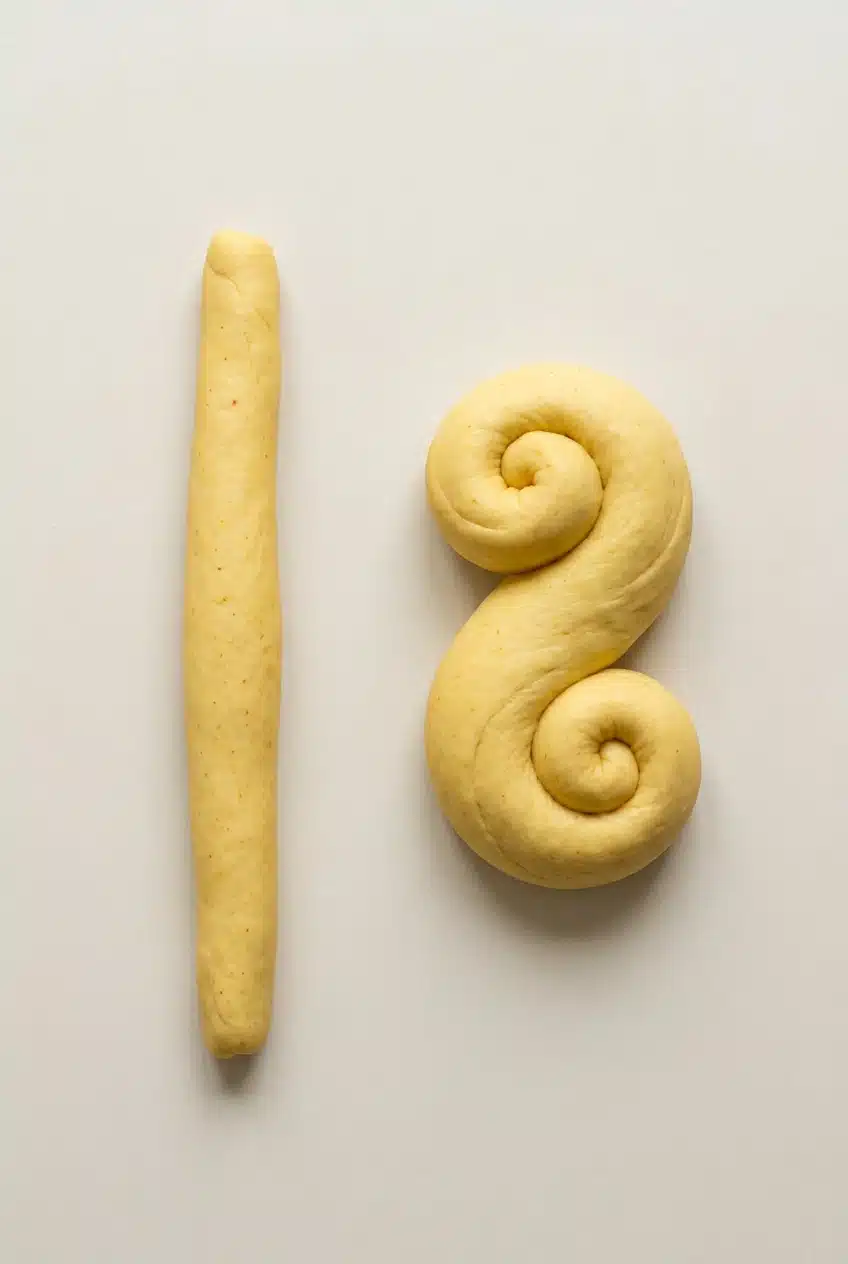
The dough will settle as the larger pockets of air deflate. - Cut the dough into 24 pieces with a dough cutter, roll each into an even rope about 12 inches long, and wind the ends inward in opposite directions.
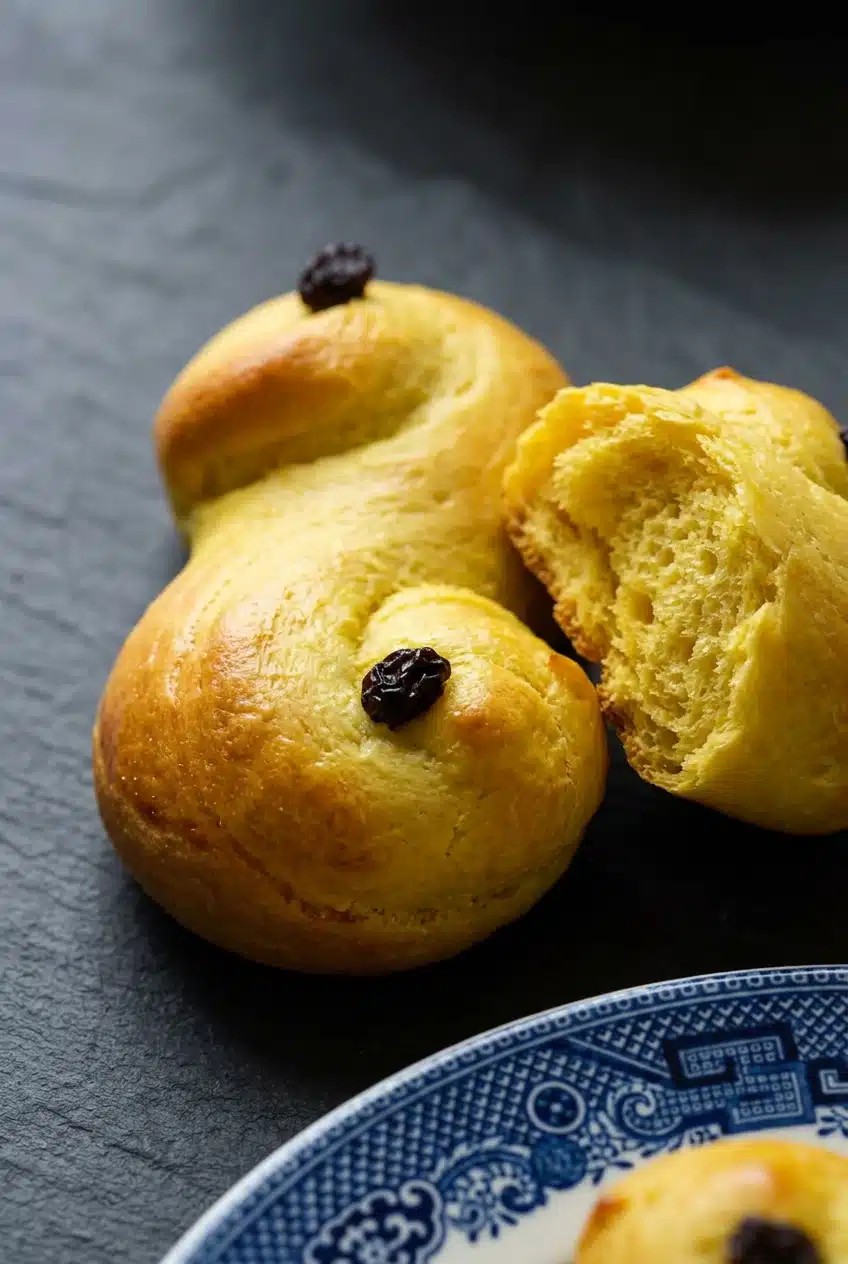
Each rope should make an S with two distinct spirals and a small center in each for the fruit. - Space the curls well apart on lined baking sheets, cover with clean kitchen towels, and let them rise for about 30 minutes while the oven heats to 350°F (175°C conventional or 155°C fan).
The buns should look puffy, with the two spirals still easy to make out. - Brush the risen buns with the beaten egg, then gently press a dried currant into the middle of each spiral.
The fruit should sit snugly in the dough rather than perch on top. - Bake on the center rack for 10 to 12 minutes, then transfer the buns to a wire rack to cool.
Look for golden tops and clearly defined S curls before taking them out.
Troubleshooting Saffron Bun Dough
Use the cue for the stage you’re at. Yeast foam tells you something about the yeast; a dough that pulls away from the bowl tells you about kneading.
- No foam in the milk: Check whether the milk cooled to the specified temperature before you stirred in the yeast. If the mixture stays flat, check the yeast’s freshness and restart the milk mixture rather than mixing it into the flour.
- Dough still clinging to the bowl: Give the dough hook time to do its work before reaching for more flour. A dough that gathers around the hook and clears the sides can still feel tacky. A dough that smears along the sides hasn’t reached the same stage.
- The rise looks slow: Check whether the bowl or tray is sitting in a draft. In the bowl, you’re looking for a clear change in volume. On the tray, look for plumper ropes and rounder spirals rather than waiting for each bun to double.
- The curls loosen: Check that the rope is evenly thick from end to end. A skinny end makes a smaller curl that can lose definition as the dough rises. Curl one end toward you and the other away from you, then check the shape before covering the tray.
Swedish and Cornish Saffron Buns
Shape and fruit placement are the easiest ways to tell these styles apart. The mini lussekatte has an S shape with a piece of dried fruit at each end. A filled Swedish knot is a different bun, shaped around a filling rather than finished with fruit in open spirals.
Raisin-Decorated S Curls
Raisins are an optional swap for the dried currants on top. They give the ends a larger, chewier accent without changing the dough or the shape.
Cornish Fruit-Studded Rounds
- Cornish buns: These are typically round, with currants mixed through the dough. Some versions add citrus peel or zest, so the fruit and citrus can come through in every bite.
- Swedish St. Lucia buns: These have an S shape and fruit only at the ends, leaving the middle to taste of saffron and butter.
Make-Ahead and Storage
For a holiday breakfast, plan backward from serving and leave room for both rises and cooling. You can set out the pans and measure the dry ingredients before mixing. Once the dough is underway, follow the rise cues here rather than borrowing a cold-proof schedule from a filled bun or another dough.
For baked buns you’re saving, let them cool completely on the rack before closing them in an airtight container. Keep them plain and add any serving finish at the table.
Serving Saffron Buns
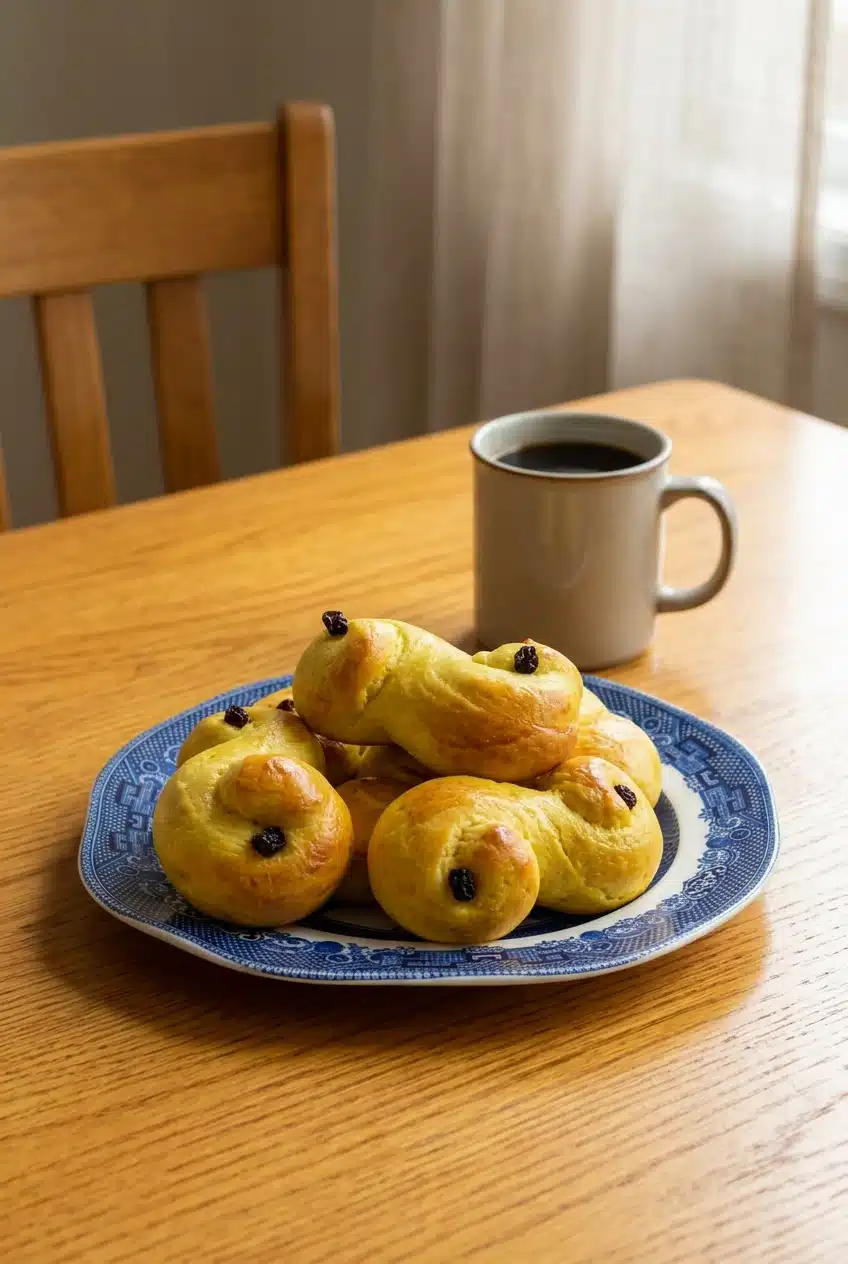
- For a St. Lucia breakfast, serve the mini buns with coffee.
- With afternoon tea, set out homemade peach jam for anyone who wants to split a plain bun and add a spoonful.
- With hot chocolate, offer softened butter on the side for spreading.
Optional Sugared Finish
Leave some curls plain if you want the saffron to stand out, and give others a sweeter finish. The choice happens at serving, so there’s no need to change the dough or divide up the batch before baking.
Butter and Sugar on Baked Buns
A butter-and-sugar topping gives the baked buns a lightly crunchy surface against the soft crumb. It’s a good option for anyone who likes a little extra sweetness with coffee.
Ready to Bake?
The essentials are golden saffron milk, two ends curled in opposite directions, and enough time on the tray for the spirals to look puffy.
Use the ingredient list and numbered steps above to guide your batch. Once the buns are on the rack, put the coffee or tea on.
Frequently Asked Questions
What Do Saffron Buns Taste Like?
They’re soft and buttery, with a gentle floral aroma that can be a little hay-like. The dried currants add concentrated sweetness and chew at the ends.
How Do I Make the Classic S Shape?
Roll an even rope and curl the ends inward in opposite directions. Leave a distinct center in each spiral for the dried fruit.
How Are Swedish Saffron Buns Different From Cornish Saffron Buns?
Swedish St. Lucia buns have dried fruit at the ends of an S. Cornish buns are round, with currants mixed into the dough.
Can I Use Raisins Instead of Dried Currants?
Yes. Raisins make a larger garnish in the curls, but you don’t have to change how you shape or bake the buns.
Do the Buns Need to Be Served Warm?
No. The buns can cool on the rack before serving. If you’re setting them out later, leave them whole until serving so the cut sides don’t dry out.
Saffron Buns Recipe

Equipment
- Small saucepan
- Instant-read thermometer
- Stand mixer with dough hook
- Mixing Bowl
- Dough cutter
- Baking Sheets
- Pastry brush
- Wire rack
Ingredients
- ¾ cup whole milk
- 1 tsp saffron strands
- ¼ cup sugar (caster sugar or superfine granulated sugar)
- 2¼ tsp dry active yeast
- ¼ cup unsalted butter softened
- 2½ cups all purpose or plain flour
- ¾ cup strong bread flour
- 1 tsp salt
- 2 eggs (+1 for egg wash)
- 2 tbsp quark or cream cheese (optional)
- 48 dried currants
Instructions
- Set a small saucepan over medium heat and bring the milk, saffron, and 1 teaspoon of the sugar to a gentle simmer, about 5 minutes. Take the pan off the heat once the milk looks golden and give it about 5 minutes to cool to 113°F (45°C).
- Scatter the yeast over the cooled saffron milk, stir it in, and let the mixture stand for about 10 minutes. Look for a layer of foam on the surface before adding the mixture to the dough.
- Fit a stand mixer with its dough hook and briefly stir the two flours, the rest of the sugar, and the salt in the mixer bowl while the yeast stands. Mix just enough to distribute the sugar and salt through the flour.
- Add the foamy milk to the bowl, followed right away by the dough eggs, softened butter, and quark or cream cheese if using. Keep the egg for the wash aside until the buns are ready to finish.
- Knead with the dough hook on medium-low for about 15 minutes. The dough should come together and start peeling away from the sides of the bowl as the hook turns.
- Put the dough in a buttered bowl, cover it with plastic wrap, and set it in a warm spot for about 2 hours. Move on to shaping when the dough has doubled in size.
- Gently press down the risen dough to release the gas, then turn it out onto a clean work surface. The dough will settle as the larger pockets of air deflate.
- Cut the dough into 24 pieces with a dough cutter, roll each into an even rope about 12 inches long, and wind the ends inward in opposite directions. Each rope should make an S with two distinct spirals and a small center in each for the fruit.
- Space the curls well apart on lined baking sheets, cover with clean kitchen towels, and let them rise for about 30 minutes while the oven heats to 350°F (175°C conventional or 155°C fan). The buns should look puffy, with the two spirals still easy to make out.
- Brush the risen buns with the beaten egg, then gently press a dried currant into the middle of each spiral. The fruit should sit snugly in the dough rather than perch on top.
- Bake on the center rack for 10 to 12 minutes, then transfer the buns to a wire rack to cool. Look for golden tops and clearly defined S curls before taking them out.