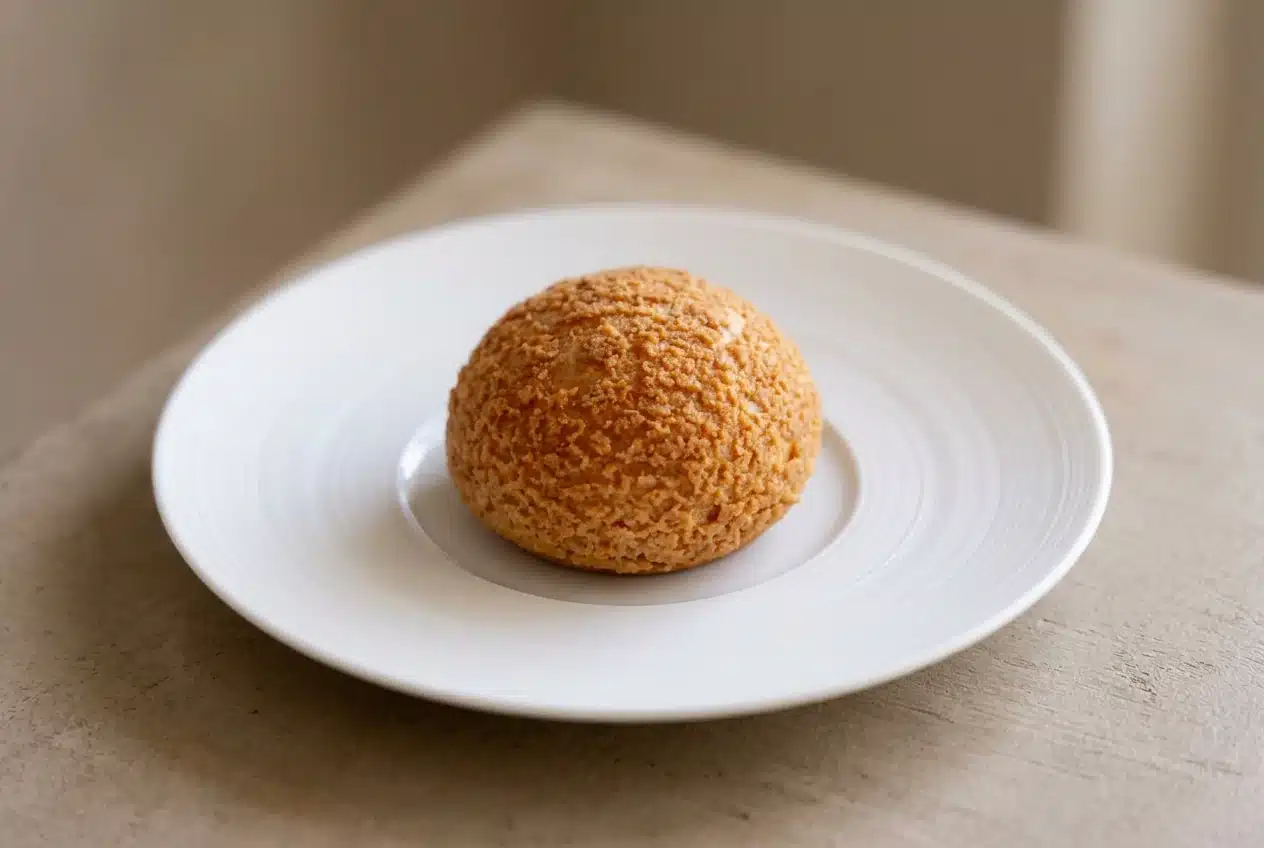
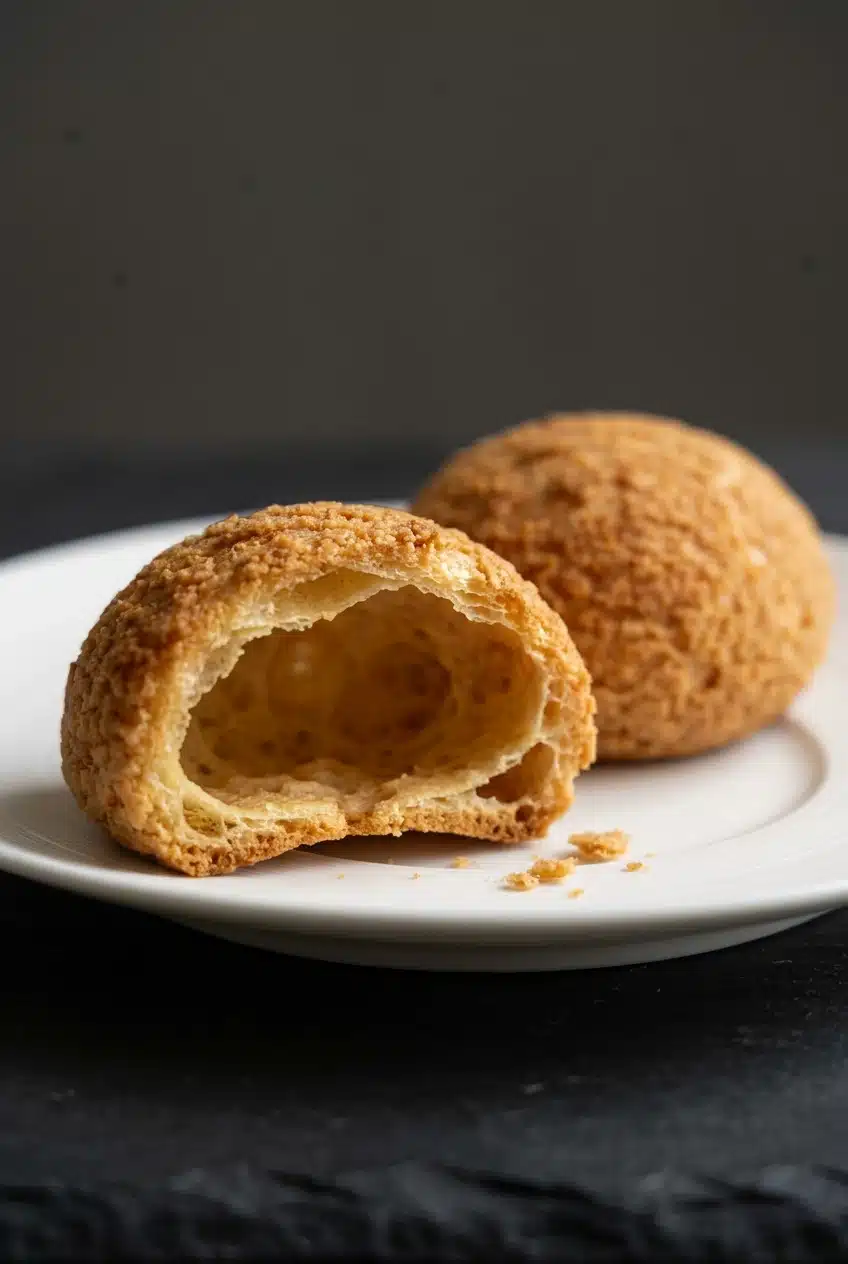
Unlike a plain cream puff, choux au craquelin has a thin round of sweet cookie dough baked onto the shell. The topping cracks as the pastry expands, giving each hollow puff a buttery crunch.
To make choux au craquelin from scratch, start with the cookie dough so it has time to firm up before you make the stovetop pastry dough. The two come together when you cap each piped mound with a chilled round.
These puffs have enough flavor to eat unfilled, but the hollow center leaves plenty of room for cream. The first bite is all about that crackle.
Keep the cut rounds in the fridge until the choux mounds are piped and ready for their tops.
Ingredients for the Craquelin and Choux
Each ingredient has a job: flour gives both doughs structure, butter adds richness, and sugar sweetens and crisps the topping. In the choux, water and milk provide moisture, whole egg helps set the shell, and salt balances the flavor.
- 100 g flour
- 100 g sugar
- 80 g butter
- 100 g water
- 100 g milk
- 5 g sugar
- 5 g salt
- 100 g butter
- 120 g flour
- 200 g whole egg
The first three entries make the craquelin. The flour holds the buttery dough together so you can cut it into rounds, and the sugar gives the baked topping its cookie-like snap.
Use the remaining entries for the choux. Moisture in the dough turns to steam and expands the puffs, while the flour and egg help the walls hold that shape once baked. Weigh the whole egg without the shells rather than estimating by egg count. This recipe makes unfilled shells.
How to Make the Choux au Craquelin Shells
Look for a different cue at each stage: a cookie round that lifts cleanly, a cooked flour mixture with a sheen, and piped choux that stands in a mound. All three are easier to check before the tray goes into the oven.
Make and Chill the Craquelin
Craquelin Disc
- Work the flour, sugar, and butter together, then knead them into a cohesive dough.
Stop when the dough feels firm and even, with no dry patches or streaks of butter. - Sandwich the dough between two silicone sheets and roll it to about 3 to 4 millimeters thick.
The sheets keep the soft dough from sticking to the pin and help you roll it into an even layer. - Slide the dough, still between the sheets, onto a cutting board or tray and refrigerate it for 1 to 2 hours.
The flat surface keeps the dough level as it firms up. - Peel back the top sheet, stamp out discs with a round cutter, and return them to the refrigerator.
A firm disc should lift without stretching or folding over your fingers.
I’d check the thickness at the edges as well as in the center before chilling the sheet. An uneven round is harder to center and may sit tilted on the choux.
Cook and Pipe the Choux
Choux Batter
- Put the water, milk, sugar, salt, and butter in a saucepan over medium-high heat.
The mixture is ready for the flour when the last pieces of butter have melted. - Stir as soon as the flour goes in, then reduce the heat to medium and keep stirring for 3 to 4 minutes.
The mixture should come together in a smooth mass and develop a light sheen. - Take the pan off the burner and let the flour mixture cool for 5 minutes.
This pause takes some of the heat out of the dough before the egg goes in. - Work in the measured whole egg in stages, fully blending each addition before adding the next.
The mixture may look slippery at first, but it should come back together without streaks before you continue. - Spoon the choux into a piping bag fitted with a round tip and pipe small mounds onto a silicone baking mat, holding the bag upright.
The mounds should stay rounded, and a small turn of the tip as you finish can keep a tall point from forming.
The cooked flour mixture is called a panade. Its sheen is the cue before you add the egg. Afterward, check how the choux behaves on the mat: it should be soft enough to pipe but still hold its height when you pull the bag away.
Top, Bake, and Dry the Shells
- Take the chilled discs out in batches and center one on each mound.
Set the disc down lightly so it lies flat without squashing the choux. - Bake at 190 °C for 30 minutes with the oven door closed throughout.
The puffs should expand and develop browned, crackled tops as the shells set. - At the end of the bake, leave the shells in the oven for another 10 minutes with the door slightly ajar.
The opening lets moisture escape from the baked shells.
The closed-door bake gives the puffs time to rise and set. The drying stage starts after that, when the shells have enough structure to hold their shape as moisture escapes. A browned topping is a useful cue, but it isn’t a reason to open the door early.
Troubleshooting Flat or Collapsed Choux
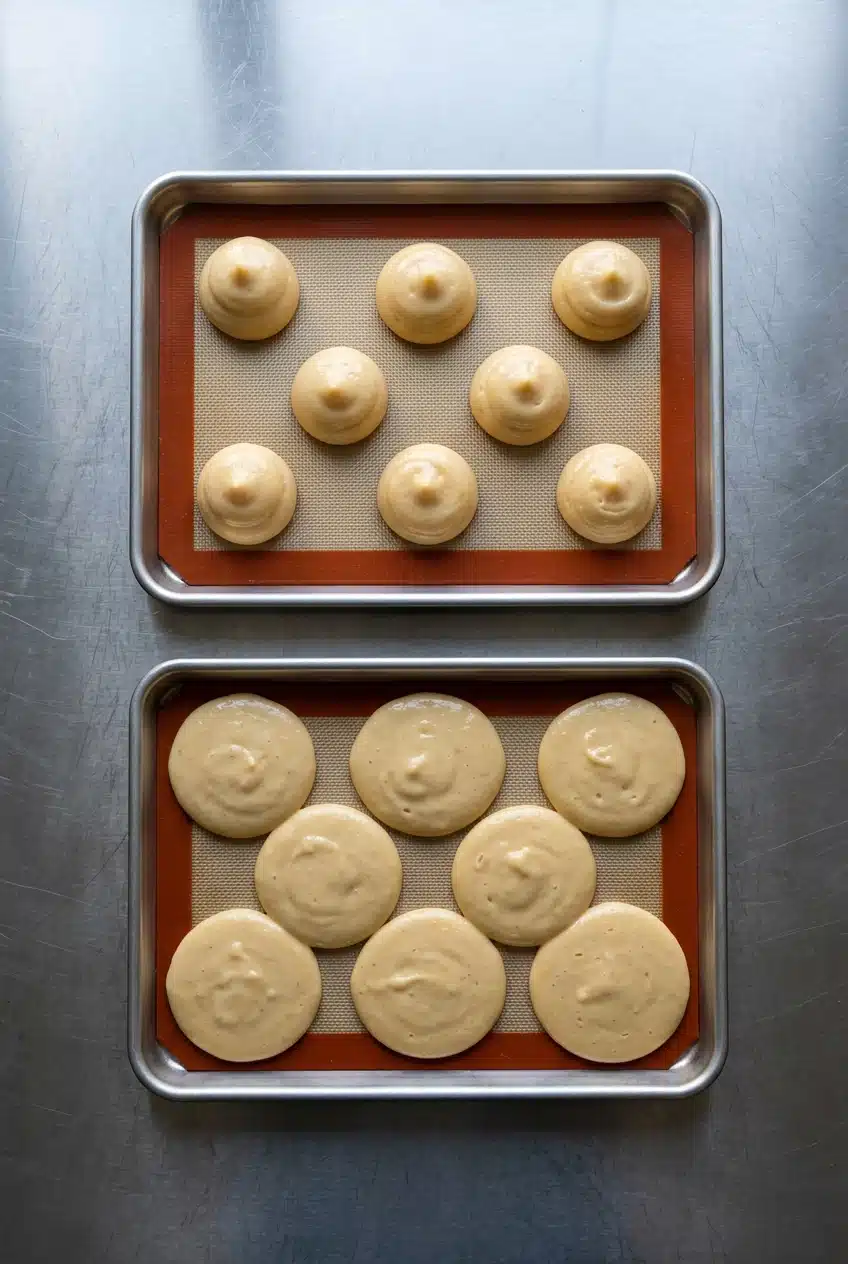
Pinpoint when the shape changed. A mound that flattens on the mat has a different problem from a puff that rises in the oven and then sinks.
When the Topping or Batter Won’t Hold Its Shape
- The discs bend or stick when lifted. The topping has likely warmed up. Return the rounds to the fridge until they lift cleanly, then bring out only what you’re ready to use.
- A disc tilts or hangs over one side. Check whether the round is evenly rolled and the mound is upright. Center the topping without pressing it down, and hold the bag straight up when piping the next mound.
- The choux spreads before it goes into the oven. Look at the batter rather than the topping. Next time, check for a cohesive, lightly glossy panade before taking it off the heat, and mix each addition of egg in fully before adding more.
When the Puffs Rise and Then Sink
- The puffs sink during the bake. If you opened the oven early, the shells may not have set enough to support themselves. Keep the door closed for the full initial bake on the next batch.
- The shells lose height after baking. Check whether they had the full drying stage. Pulling the tray out as soon as the tops brown skips the chance for moisture to escape from the shells.
Filling Ideas for Craquelin-Topped Choux
Choose an optional filling by the contrast you want with the crisp shell: light and whipped, or smooth and custardy.
Whipped Cream-Style Filling
- Vanilla cream cheese whipped filling: This stays airy like vanilla whipped cream but adds a gentle tang that balances the sweet cookie top.
Pastry Cream or Diplomat Cream Filling
- Pastry cream: Choose it for a smooth, substantial custard center that contrasts with the delicate shell.
- Salted caramel diplomat cream: Diplomat cream combines pastry cream with whipped cream, so it’s lighter than straight custard while still tasting custardy. Salted caramel adds toasted sweetness and a salty edge.
Make-Ahead and Storage Planning
Plan around three separate components so the shells stay dry until you’re ready to fill them.
- Raw craquelin: Roll and chill it flat, then keep the cut rounds refrigerated until you’re ready to top the piped dough.
- Baked, unfilled shells: Let them cool completely before covering them so warmth doesn’t get trapped inside the container. Keep them dry and separate from the filling.
- Filling and filled pastries: Keep cream fillings chilled separately and follow the storage directions for the filling you choose. For the crispest bite, fill only the shells you plan to serve and save assembly for just before serving.
How to Fill and Serve the Puffs
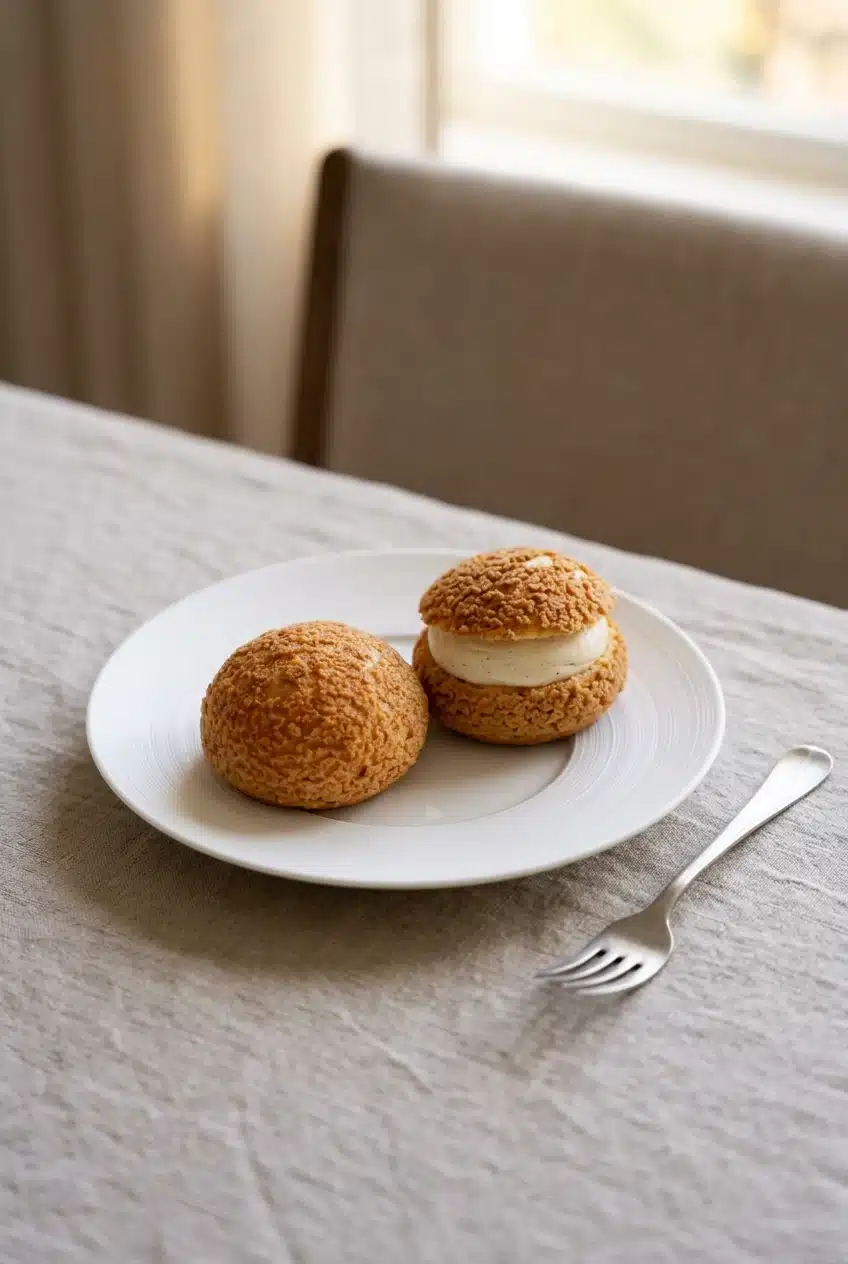
To keep the crackled top intact, make a small opening in the underside of a cooled puff. Pipe the filling through the opening and stop when the shell feels fuller in your hand, before the cream pushes back out.
If you want the filling to show, slice the cooled puff across the middle with a serrated knife and use the crackled top as a lid. This presentation also works for spoonable fillings such as cannoli dip, without needing a piping bag.
The Keys to Crisp, Crackled Choux
Pipe even mounds and give the shells both stages in the oven: a closed-door bake to set their shape, then a separate stage to dry them.
Before you top the tray, lift one chilled round. If it comes away cleanly and sits flat on the mound, it’s ready to bake.
Frequently Asked Questions
What Is Choux au Craquelin?
It’s a hollow choux puff baked with a cookie dough cap. The cap breaks into a crisp crust as the puff expands, giving it a crunch that a plain cream puff doesn’t have.
Is Choux au Craquelin Hard to Make?
It’s a little more involved than plain choux because you make the topping separately. The main skills are rolling the craquelin evenly, piping mounds that stand up, and waiting until the shells set before opening the oven.
What Can You Fill Choux au Craquelin With?
Try vanilla whipped cream for a light center or pastry cream for a richer custard bite. Diplomat cream falls between the two in texture, and the shells are good without a filling, too.
What Does Craquelin Taste Like?
Craquelin tastes like a buttery sugar cookie. It’s sweeter than the pastry beneath it, with a crisp bite against the airy shell.
Why Did My Choux au Craquelin Collapse?
If the puffs rose and then sank, the shells may not have set before the oven door opened. If the mounds were already flat before baking, check the batter consistency instead.
Can I Make Choux au Craquelin Ahead?
Yes, you can prep the craquelin and bake the empty shells separately from the filling. Keep the cooled shells dry and add the filling just before serving to preserve the crunch.
Choux au Craquelin

Equipment
- Kitchen scale
- Rolling Pin
- Silicone sheets
- Baking tray
- Round cutter
- Saucepan
- Piping bag with round tip
- Silicone Baking Mat
Ingredients
- 100 g flour
- 100 g sugar
- 80 g butter
- 100 g water
- 100 g milk
- 5 g sugar
- 5 g salt
- 100 g butter
- 120 g flour
- 200 g whole egg
Instructions
Craquelin Disc
- Work the flour, sugar, and butter together, then knead them into a cohesive dough. Stop when the dough feels firm and even, with no dry patches or streaks of butter.
- Sandwich the dough between two silicone sheets and roll it to about 3 to 4 millimeters thick. The sheets keep the soft dough from sticking to the pin and help you roll it into an even layer.
- Slide the dough, still between the sheets, onto a cutting board or tray and refrigerate it for 1 to 2 hours. The flat surface keeps the dough level as it firms up.
- Peel back the top sheet, stamp out discs with a round cutter, and return them to the refrigerator. A firm disc should lift without stretching or folding over your fingers.
Choux Batter
- Put the water, milk, sugar, salt, and butter in a saucepan over medium-high heat. The mixture is ready for the flour when the last pieces of butter have melted.
- Stir as soon as the flour goes in, then reduce the heat to medium and keep stirring for 3 to 4 minutes. The mixture should come together in a smooth mass and develop a light sheen.
- Take the pan off the burner and let the flour mixture cool for 5 minutes. This pause takes some of the heat out of the dough before the egg goes in.
- Work in the measured whole egg in stages, fully blending each addition before adding the next. The mixture may look slippery at first, but it should come back together without streaks before you continue.
- Spoon the choux into a piping bag fitted with a round tip and pipe small mounds onto a silicone baking mat, holding the bag upright. The mounds should stay rounded, and a small turn of the tip as you finish can keep a tall point from forming.
Top, Bake, and Dry the Shells
- Take the chilled discs out in batches and center one on each mound. Set the disc down lightly so it lies flat without squashing the choux.
- Bake at 190 °C for 30 minutes with the oven door closed throughout. The puffs should expand and develop browned, crackled tops as the shells set.
- At the end of the bake, leave the shells in the oven for another 10 minutes with the door slightly ajar. The opening lets moisture escape from the baked shells.