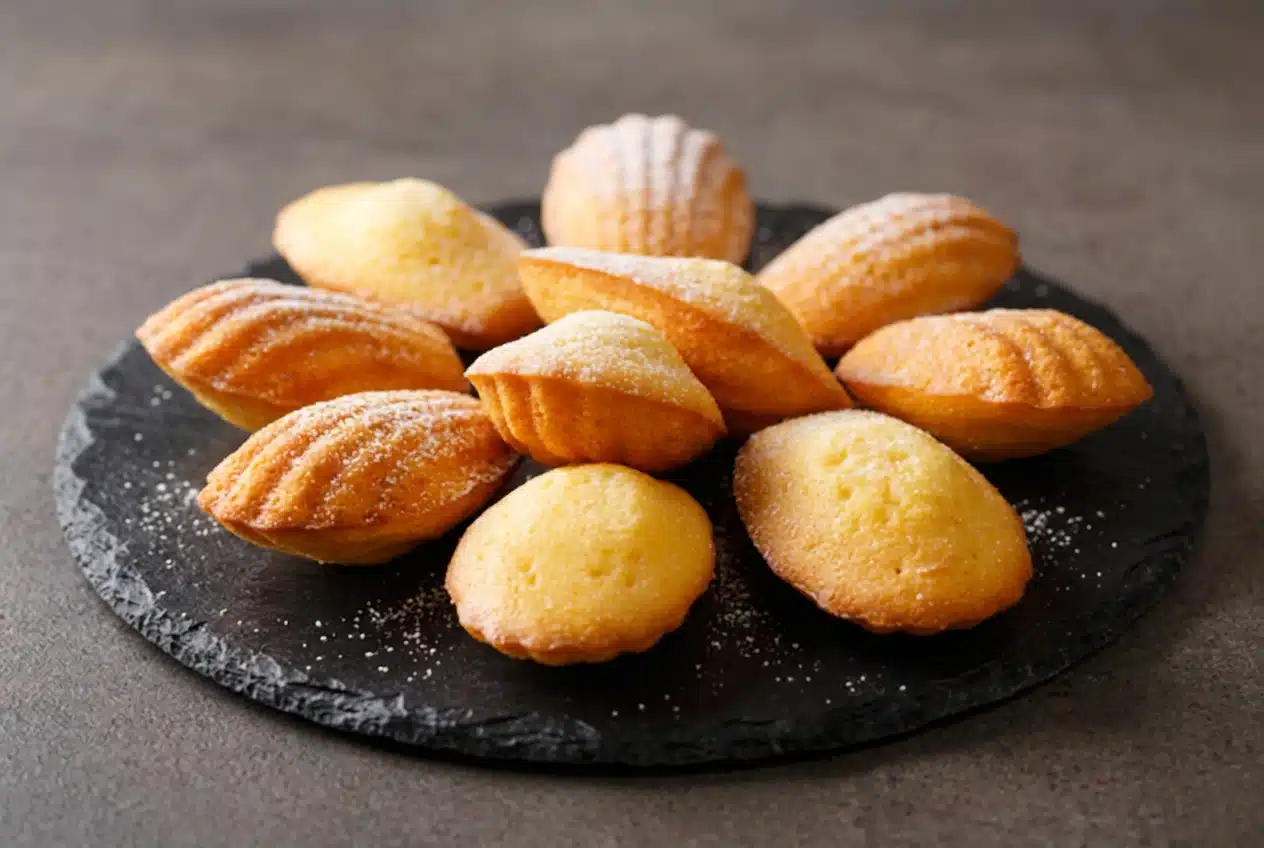
This madeleines recipe makes tender French butter cakes with golden edges, nutty browned butter, and bright lemon zest. Use a scalloped madeleine pan for the shell shape, and plan for the required batter chill before baking.
Madeleines are about the size of cookies, but they have a soft cake crumb. The scalloped pan gives each one a ridged underside while the exposed center rises into a little dome.
Vanilla rounds out the lemon without taking away its brightness. Break one open while it’s warm and smell the brown butter.
Before you start, check that the bowl you’ll use for the batter fits in the refrigerator.
Madeleine Ingredients and Pan
Each ingredient has a job: butter brings richness, lemon zest and vanilla add fragrance, and salt balances the sugar. Whipped eggs and baking powder help the cakes rise, flour gives them structure, and the optional confectioners sugar adds a sweet finish.
- 1 stick (4 ounces) unsalted butter, melted until browned
- 2 teaspoons vanilla
- 1 1/2 teaspoons lemon zest, finely grated
- 1 cup all-purpose flour
- 1 1/4 teaspoons baking powder
- 1/4 teaspoon salt
- 3 large eggs, room temperature
- 3/4 cup sugar
- 1/2 cup confectioners sugar, sifted, optional
The nutty flavor comes from the browned milk solids, so pour those golden flecks into the bowl along with the melted butter. The scalloped wells shape the shells as the cakes bake. Coat the grooves as carefully as the rims so the ridges come out intact.
I’d grate just the yellow surface of the lemon. The white pith underneath can add bitterness.
How to Make Madeleines
Yield: 12 madeleines. Prep: . Bake: . Total before rests: .
Before folding in the flour, look for a pale, thick egg mixture. If you’re unsure, lift the whisk: the mixture should fall back in a broad ribbon that leaves a trail on the surface for a moment. The goal when folding is to keep that air in the batter without leaving pockets of flour or streaks of butter.
- Melt the butter slowly in a small saucepan, then lower the heat and let it brown, about 10 minutes.
Watch the bottom of the pan for solids that have settled and turned golden brown. - Transfer the browned butter to a small bowl and mix in the vanilla and lemon zest.
Set the bowl aside so the fragrant butter mixture can cool before it goes into the batter. - Whisk the flour, baking powder, and salt together in a separate bowl.
Distribute the baking powder evenly through the flour, then set the bowl aside. - Fit a stand mixer with the whisk attachment and start beating the eggs on medium speed.
Add the sugar gradually while the whisk is running, until all of it is in the bowl. - Switch to medium-high and whip for about 3 to 4 minutes.
The mixture should look pale and very thick rather than runny. - Stop the mixer and fold in the dry mixture in three portions.
Use gentle strokes and stop as soon as the flour disappears. - Fold the cooled butter mixture into the batter without beating it.
Stop once you no longer see streaks of butter. - Cover the bowl and chill the batter for at least 4 hours.
Keep it covered throughout this rest. - Heat the oven to 375 °F and generously butter the scalloped wells of a madeleine pan.
Dust the wells lightly with flour, shake out the excess, and set the pan aside. - Take the batter out of the refrigerator and let it stand for 20 to 30 minutes at room temperature.
This rest takes some of the chill off before you portion the batter. - Use a medium 1 3/4-ounce cookie scoop to portion the batter.
Place one level scoop in the center of each well. - Bake for 12 minutes, using color and shape to judge when to pull the pan.
Look for golden brown cakes with risen centers. - Take the pan out of the oven and let the cakes cool slightly in their wells.
If an edge catches, ease it loose with a small knife. - Dust the cakes with the sifted confectioners sugar if desired.
A light coating leaves the shell ridges visible.
Madeleine Troubleshooting
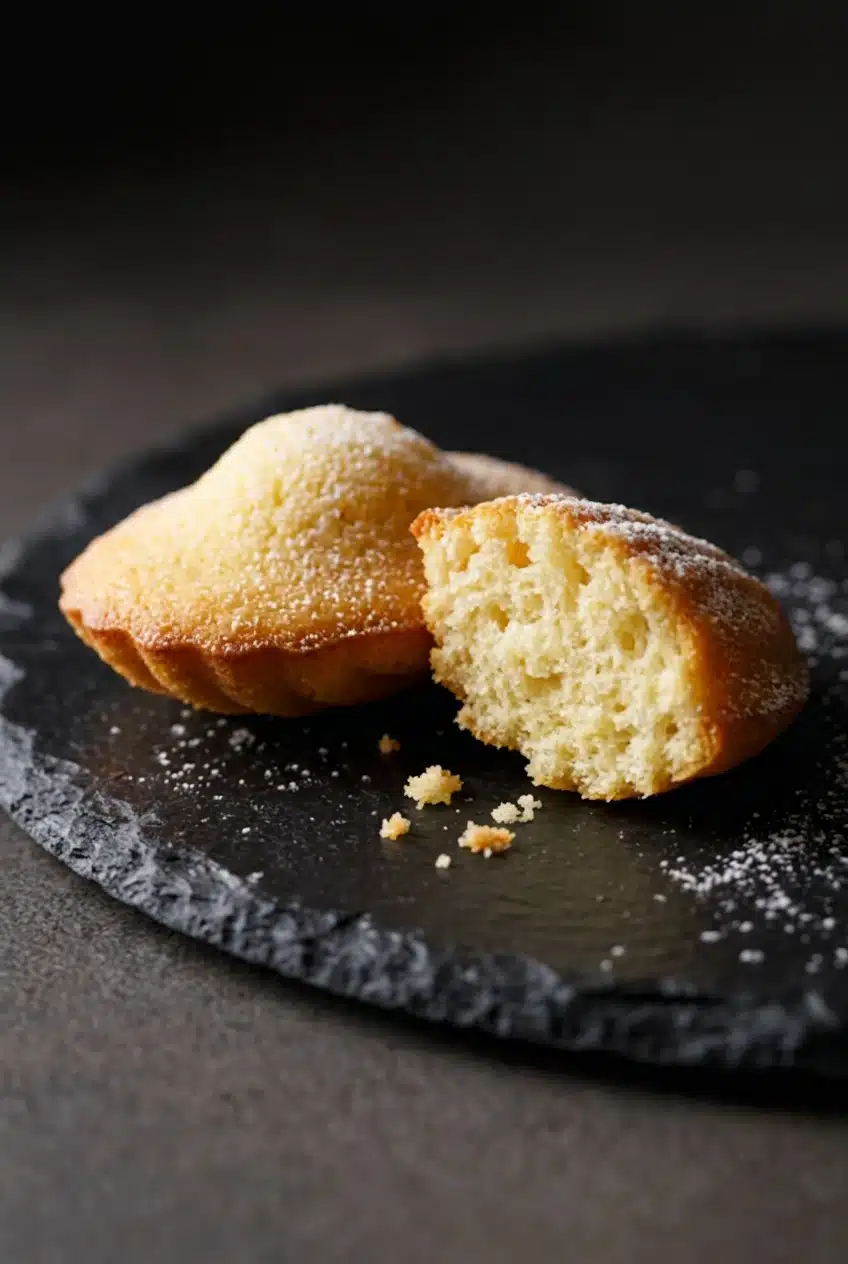
Judge the bake by the color and set of the cakes before worrying about the size of the hump.
A Small Hump or Dense Crumb
- Small hump: A low dome is fine when the edges are golden and the center looks set. A wet-looking center is a better reason to check for underbaking than a modest hump.
- Dense crumb: The eggs may have needed more whipping, or the batter may have lost air during folding. Wait for the eggs to look thick and pale, then fold only until the flour and butter are incorporated.
Madeleines Sticking to the Pan
- Torn ridges: Look for bare spots in the grooves when you butter and flour the pan. Let the cakes cool slightly before lifting them, and loosen any caught edges instead of pulling harder.
Madeleine Flavor Variations
Citrus Madeleines: Lemon and Orange
Lemon zest gives these cakes a bright finish against the toasted butter. For a sweeter citrus aroma, try orange zest in place of lemon as an optional variation. If it’s the lemon you’re after, try this lemon loaf recipe for another citrus bake.
Planning the Bake and Storing Madeleines
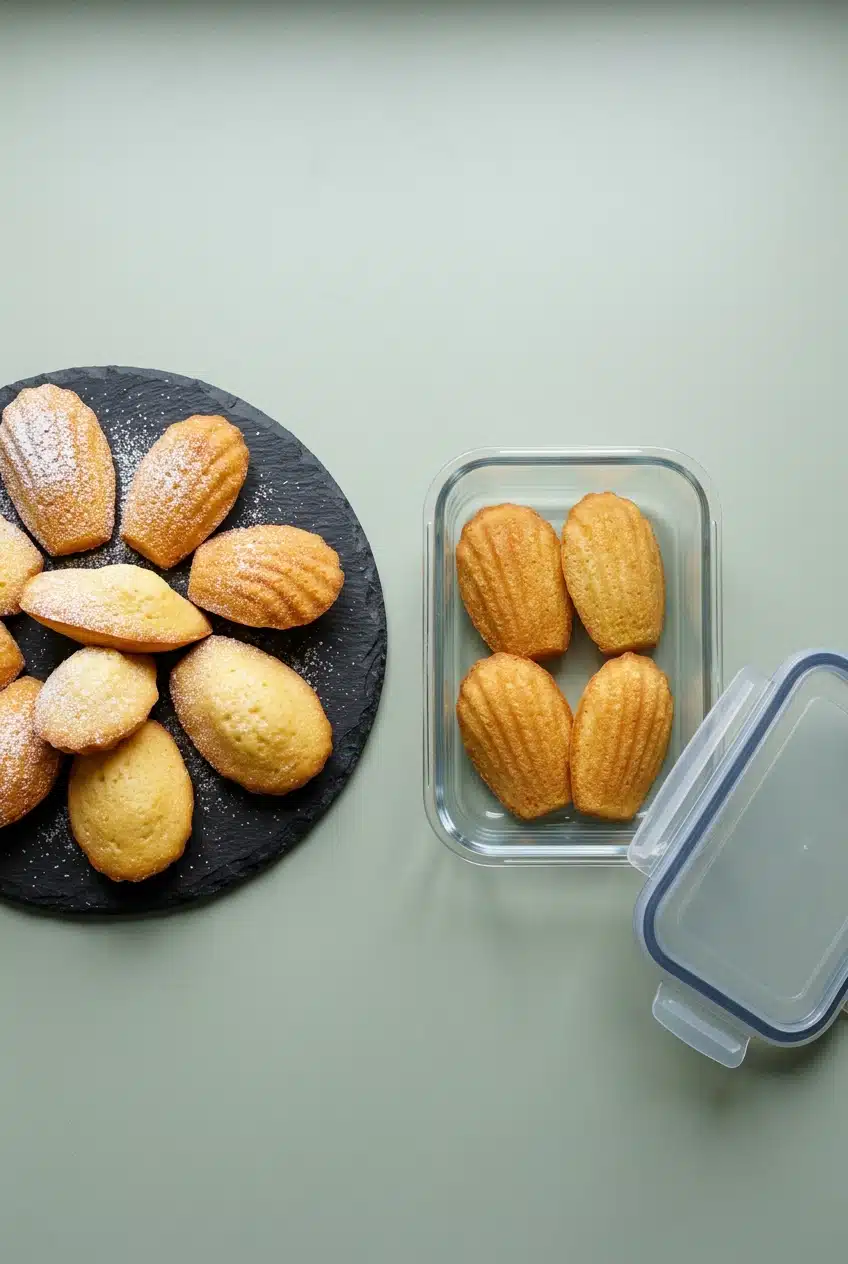
Count backward from when you want to serve the madeleines, leaving room for both the covered refrigerator rest and the time the batter stands before scooping. Treat that chill as part of the bake rather than a plan for holding raw batter until another day.
For baked leftovers, let the cakes cool completely before packing them in an airtight container so you don’t trap steam.
How to Serve Madeleines
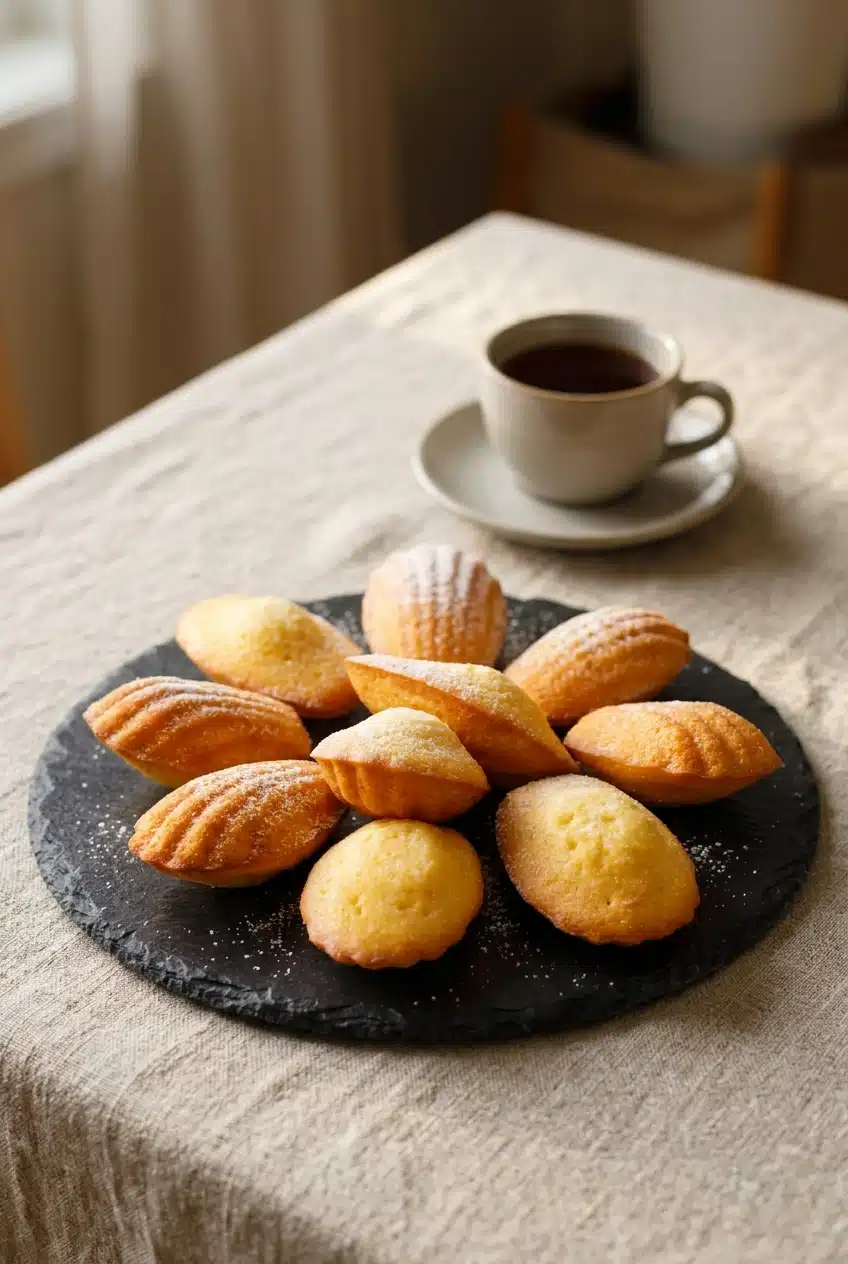
Serve the madeleines warm and plain if you want the browned butter to stand out, or give them a light dusting of confectioners’ sugar. Black tea goes nicely with the lemon, while coffee brings out the toasted flavor of the butter.
Conclusion
The scalloped pan makes the shells, and a gentle fold helps keep the crumb tender. Stop folding as soon as the batter looks even.
Build the batter rest into your plans so you can bring the madeleines to the table while they’re still warm.
Madeleine FAQs
Are Madeleines Cookies or Little Cakes?
They’re little French butter cakes with a tender crumb. They’re often called cookies because of their size and shape.
Do I Need a Madeleine Pan for the Shell Shape?
Yes, use a scalloped madeleine pan for the classic shell shape. A smooth mold won’t give the cakes those distinctive ridges.
Do I Need to Chill the Batter?
Yes, the covered chill is part of the method. Allow for the room-temperature rest after chilling, too.
Why Didn’t My Madeleines Develop a Hump?
There isn’t always one clear cause. Check the egg whipping, the gentleness of your folding, the batter rest, and whether the oven was fully preheated.
How Do You Store Madeleines?
Keep cooled, baked madeleines in an airtight container. If you plan to dust them with confectioners’ sugar, wait until serving so the finish stays dry.
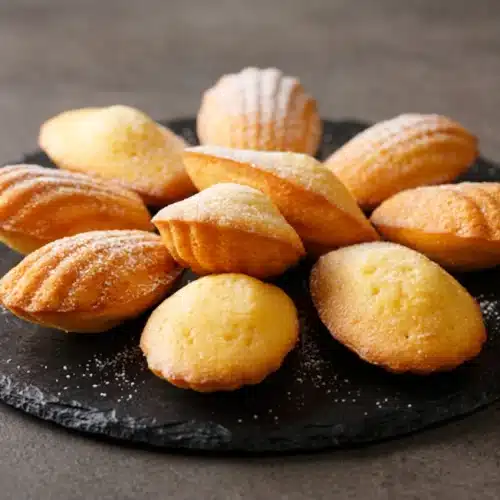
Madeleines Recipe

Equipment
- Small saucepan
- Mixing Bowls
- Whisk
- Stand mixer with whisk attachment
- Scalloped madeleine pan
- Medium 1 3/4-ounce cookie scoop
Ingredients
- 1 stick (4 ounces) unsalted butter melted until browned
- 2 teaspoons vanilla
- 1 1/2 teaspoons lemon zest finely grated
- 1 cup all-purpose flour
- 1 1/4 teaspoons baking powder
- 1/4 teaspoon salt
- 3 large eggs room temperature
- 3/4 cup sugar
- 1/2 cup confectioners sugar sifted, optional
Instructions
- Melt the butter slowly in a small saucepan, then lower the heat and let it brown, about 10 minutes. Watch the bottom of the pan for solids that have settled and turned golden brown.
- Transfer the browned butter to a small bowl and mix in the vanilla and lemon zest. Set the bowl aside so the fragrant butter mixture can cool before it goes into the batter.
- Whisk the flour, baking powder, and salt together in a separate bowl. Distribute the baking powder evenly through the flour, then set the bowl aside.
- Fit a stand mixer with the whisk attachment and start beating the eggs on medium speed. Add the sugar gradually while the whisk is running, until all of it is in the bowl.
- Switch to medium-high and whip for about 3 to 4 minutes. The mixture should look pale and very thick rather than runny.
- Stop the mixer and fold in the dry mixture in three portions. Use gentle strokes and stop as soon as the flour disappears.
- Fold the cooled butter mixture into the batter without beating it. Stop once you no longer see streaks of butter.
- Cover the bowl and chill the batter for at least 4 hours. Keep it covered throughout this rest.
- Heat the oven to 375 °F and generously butter the scalloped wells of a madeleine pan. Dust the wells lightly with flour, shake out the excess, and set the pan aside.
- Take the batter out of the refrigerator and let it stand for 20 to 30 minutes at room temperature. This rest takes some of the chill off before you portion the batter.
- Use a medium 1 3/4-ounce cookie scoop to portion the batter. Place one level scoop in the center of each well.
- Bake for 12 minutes, using color and shape to judge when to pull the pan. Look for golden brown cakes with risen centers.
- Take the pan out of the oven and let the cakes cool slightly in their wells. If an edge catches, ease it loose with a small knife.
- Dust the cakes with the sifted confectioners sugar if desired. A light coating leaves the shell ridges visible.