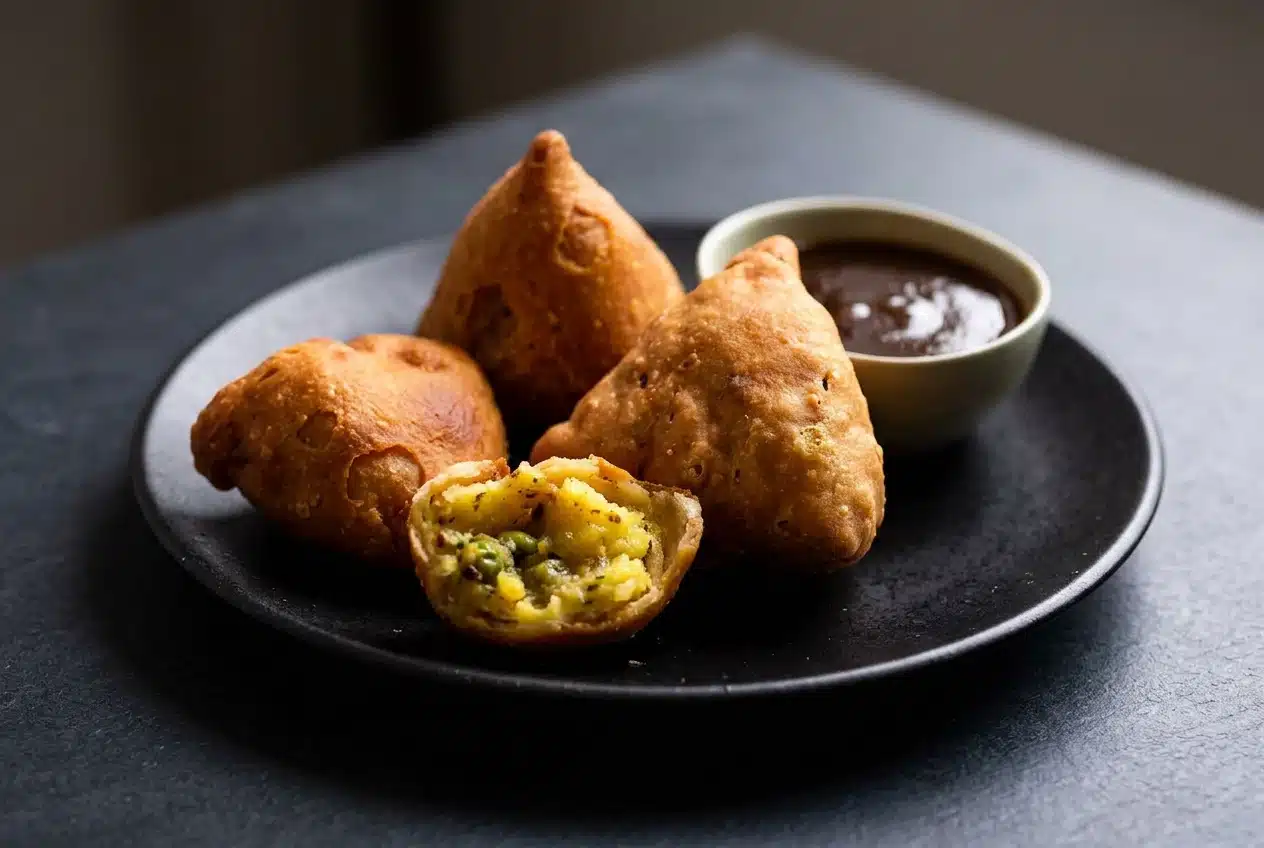
This samosa recipe wraps warmly spiced potatoes and peas in homemade pastry. Shape the dough into cones, pinch both seams closed, and fry in two stages: first to set the shell, then at higher heat for a crisp, golden finish.
The filling is a rough mash, with bites of tender potato and sweet green peas. Cumin and coriander seeds go into the skillet first, so their aroma carries through the filling.
The pastry is thin enough to crackle but sturdy enough to scoop up tamarind chutney. That crunch starts with the flour and fat.
Set out the parchment before you divide the dough so you can roll it without dusting the counter with extra flour.
Samosa Ingredients
Flour and water give the pastry structure, ghee or oil helps it flake, and ajwain perfumes the shell. Potatoes hold the filling together, while peas, spices, and cilantro bring sweetness, warmth, and freshness. Tamarind sauce adds a sweet-tart finish.
- 1 1/2 cups flour (, plain/all purpose)
- 1 tsp ajwain seeds)
- 1/2 tsp salt (, cooking/kosher)
- 4 tbsp ghee ((melted and cooled) or oil (any vegetable)
- 6 tbsp water ((cold tap water))
- 500g/1 potatoes (, starchy/all-rounder)
- 2 tbsp vegetable/canola oil
- 1 tsp cumin seeds
- 1/4 tsp black mustard seeds
- 1/2 tsp coriander seeds
- 1 tbsp fresh ginger (, finely grated)
- 1 tbsp green chilli (, finely chopped (serrano or cayenne))
- 1/2 cup frozen green peas ((thawed))
- 1 tsp garam masala
- 1/4 tsp amchur
- 1/2 tsp asafoetida
- 1/4 tsp cumin powder
- 1/2 tsp turmeric powder
- 1 tsp salt (, kosher/cooking)
- 2 tbsp coriander/cilantro leaves (, finely chopped)
- Vegetable/Canola oil for frying ((at least 1 litre/1 quart))
- Tamarind Dipping Sauce (- see separate recipe card below)
For the pastry: Maida is a finely milled refined wheat flour commonly used in Indian cooking. The dough here uses all-purpose flour. Ajwain, also sold as carom seeds, gives the shell a punchy, thyme-like aroma. Ghee adds a buttery flavor; vegetable oil lets the ajwain stand out a little more.
For the filling: Use the 500 g measure for the potatoes. Choose a starchy potato that breaks up easily with a fork, so the mash holds together without losing all its chunks. Amchur is dried green mango powder and gives the potatoes a tart edge without adding liquid. Asafoetida, also called hing, smells sharp in the jar but lends a savory, onion-like flavor once it hits the skillet.
For frying and dipping: The oil in the skillet carries the toasted spice flavors through the potato mixture. The oil listed near the end is for deep-frying, and the tamarind sauce stays on the side.
How to Make Samosas
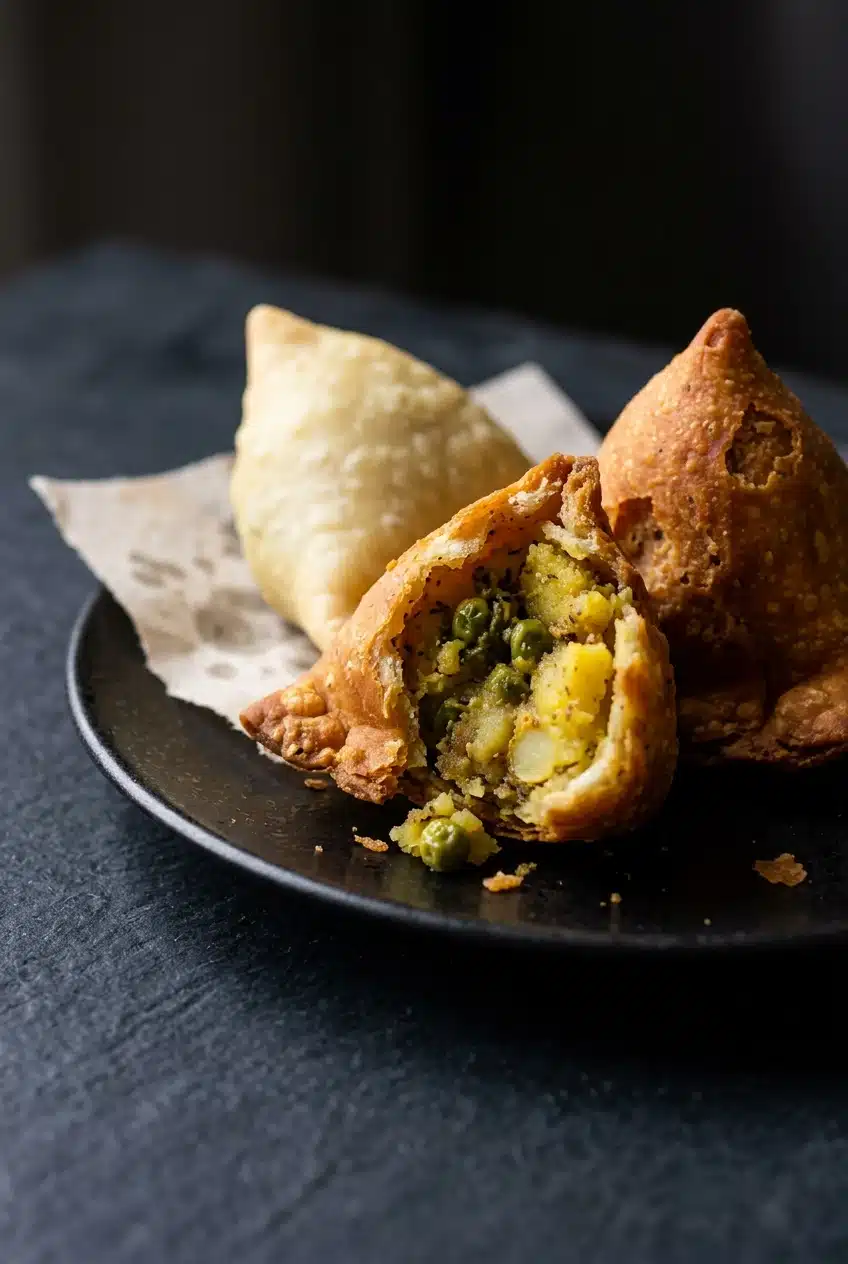
Start with the filling so it has time to cool while you make the pastry. This recipe makes 12 samosas.
Make the Potato and Pea Filling
Potato Filling
- Put the peeled, halved potatoes in a pot of cold water, then bring the water to a boil.
Cook for about 10 minutes, until a fork slides through the potatoes without resistance. - Lift the potatoes onto a plate and break them up with a fork.
Stop while there are still some large pieces surrounded by softer mash. - Set a large skillet over medium heat, warm the oil, and stir in the cumin, black mustard, and coriander seeds.
Give the seeds about 30 seconds to release their aroma without letting them scorch. - Stir the ginger, green chili, and peas into the skillet.
Keep everything moving for about a minute, until the chopped chili softens. - Scatter the garam masala, amchur, asafoetida, ground cumin, turmeric, and salt over the peas and stir.
Cook for another 30 seconds, just until the spices smell fragrant. - Fold the potatoes into the spiced peas and stir gently for about 1 minute.
Look for an even coating of spices while the larger pieces of potato are still intact. - Take the skillet off the heat, mix in the cilantro, and spread the filling across a plate.
Wait until the center as well as the edges have cooled completely before filling the pastry.
Make the Pastry
Samosa Dough
- Stir the flour, salt, and ajwain together in a bowl.
Distribute the seeds throughout the flour so they don’t end up concentrated in one part of the dough. - Work the cooled melted ghee or the oil into the flour with your fingertips.
Stop when the mixture looks like coarse crumbs rather than loose flour. - Pour in the water and gather the mixture into a ball.
The dough should feel soft and bend without clinging to your fingers. - Cover the bowl with plastic wrap and rest the dough for 30 minutes.
Keep the wrap in place so the surface stays pliable instead of forming a dry skin.
Shape and Seal the Cones
Check two separate closures: the overlap that forms the cone and the rim you pinch shut after filling. A neat rim won’t help if there’s still a hole at the tip.
Making the Samosas
- Divide the dough into 6 equal pieces, roll them into balls, and put them on a plate under plastic wrap.
Keep the pieces you’re not rolling covered so they’ll still bend easily when it’s their turn. - Flatten one ball on a sheet of parchment and lay a second sheet on top.
Use the paper rather than flour to prevent sticking without drying out the dough. - Roll the dough into a disk about 6.5 inches (16 cm) across and about 1/10 inch (2 mm) thick.
Check the perimeter as you roll so the edges are as thin as the middle. - Slice straight through the center of the disk.
Each of the two half circles will make one cone. - Dampen the cut edge with water and bring its ends together, overlapping the dough by about 2/5 inch (1 cm).
Press along the overlap all the way to the tip so the seam has no gaps. - Support the cone in a ring made with your thumb and index finger, then spoon in about 2 tbsp of filling and settle it lightly.
Leave enough bare pastry at the mouth for the two sides to meet without catching any potato. - Moisten the open rim and pinch it shut, then set that seam against the work surface and press down to fold it.
Trim any excess pastry, tuck in the corners, and pinch the top into a point. - Repeat with the remaining dough and filling to make 12 samosas.
Check each parcel for a closed tip and an unbroken seam along the mouth.
Fry Until Golden
The first fry sets the pastry, so don’t wait for it to turn golden. The hotter second fry gives the set shell its color and crunch.
Frying
- Heat 2 inches (5 cm) of oil in a deep pan or pot to 320 °F (160 °C).
Start the first batch at this lower temperature so the pastry can firm up before it browns. - Carefully lower 3 to 4 samosas into the oil and fry for 3 minutes, nudging them occasionally.
The shells should look pale and set, and moving them keeps the spots touching the bottom from browning too quickly. - Lift the samosas onto paper towels, then give the remaining batches their first fry.
Finish setting every batch before turning up the heat. - Bring the oil to 375 °F (190 °C).
Wait for it to reach the higher temperature before putting the samosas back in. - Return 3 to 4 samosas at a time to the oil for 1 1/2 to 2 minutes, then drain them on paper towels and repeat.
Look for a deep golden color before lifting each batch out.
Troubleshooting Samosa Pastry
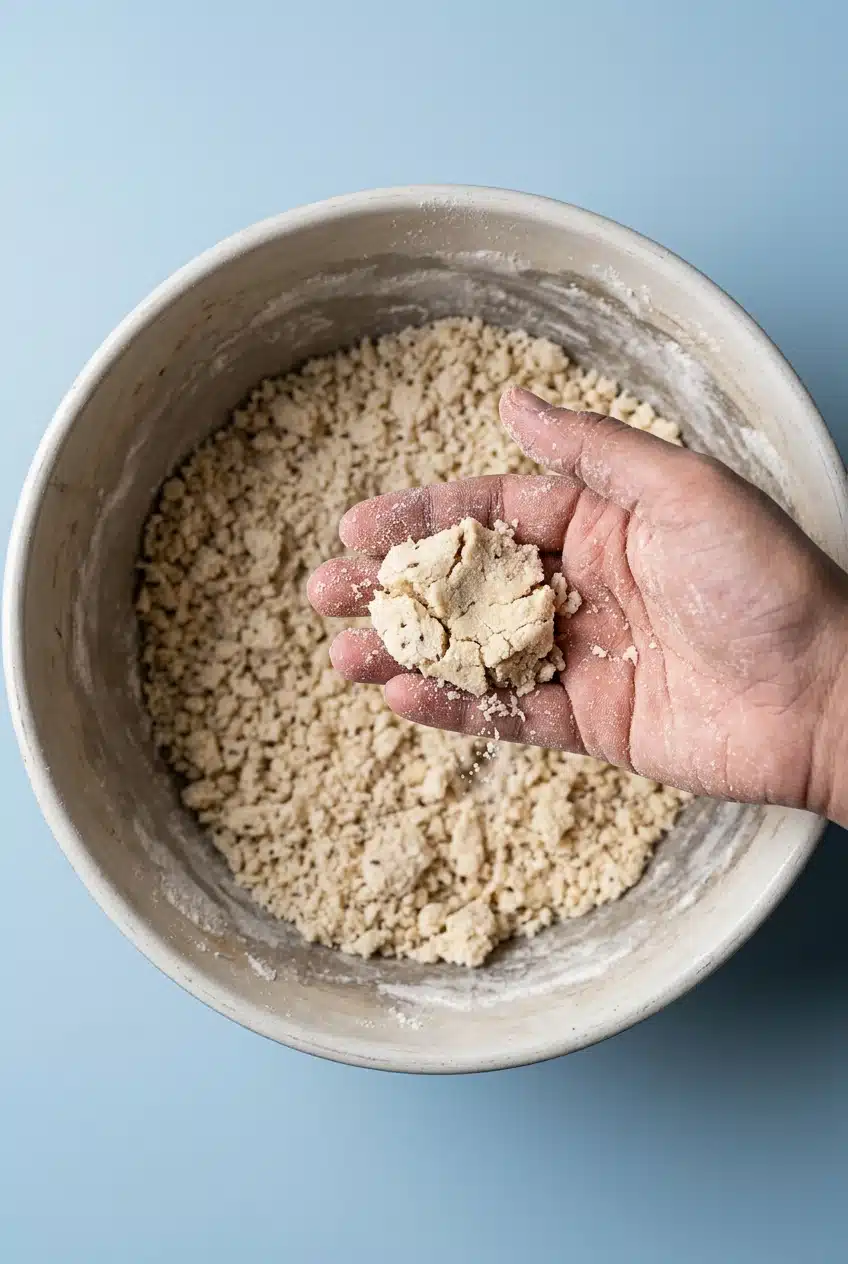
Start with when the problem showed up. A thick rim starts at the rolling pin; rapid browning is a reason to check the frying oil.
- Hard pastry: Check how evenly you rubbed in the fat before adding water. If only the edges are hard, check the thickness there on the next disk; a thick rim makes an even bulkier seam when folded.
- Large blisters or early browning: If the pastry swells into big bubbles or colors before it sets, check the oil temperature before adding another batch. Save the higher heat for the finishing fry.
- Split seams: A leak near the point usually sends you back to the cone overlap. If it opens at the mouth, look for potato caught between the edges or a rim stretched tight by too much filling.
I’d use a quick squeeze to check the flour and fat: the crumbs should briefly hold together in your hand, then break apart. That’s before the water goes in. Once hydrated, the dough should bend as a single piece.
Baked, Air-Fryer, and Shortcut Variations
Keep the potato and pea filling if you like, but choose an adaptation designed for the wrapper and cooking method you want to use.
Oven-Baked Samosas
Use a recipe designed for baking rather than transferring the frying temperatures to the oven. A baked shell can be crisp, but expect a drier bite and less of the delicate flake you get from deep-frying.
Air-Fryer Samosas
Choose an air-fryer version if you want to skip the pot of oil. The moving hot air can crisp the outside, though the shell may color more on exposed areas than along the folds.
Store-Bought Pastry Shortcuts
Ready-made filo saves you from mixing and rolling dough, but it changes the shape as well as the bite. Filo works as folded triangles rather than sturdy cones, with thin, shattering layers instead of the firmer crunch of the homemade shell.
Make-Ahead and Leftover Planning
If you want to split up the work, make the filling first and save the assembly and frying for when you want to serve the samosas.
- Cooked filling: Keep it covered and refrigerated if you’re not shaping right away. Store it separately from the pastry so the dough doesn’t sit against the moist filling.
- Shaped, uncooked samosas: Arrange them so they don’t press against each other while you finish the batch. Check the first ones again before frying in case a seam has pulled apart.
- Fried leftovers: Refrigerate them separately from the chutney. Add the dip at the table so it doesn’t soften the pastry in storage.
What to Serve with Samosas
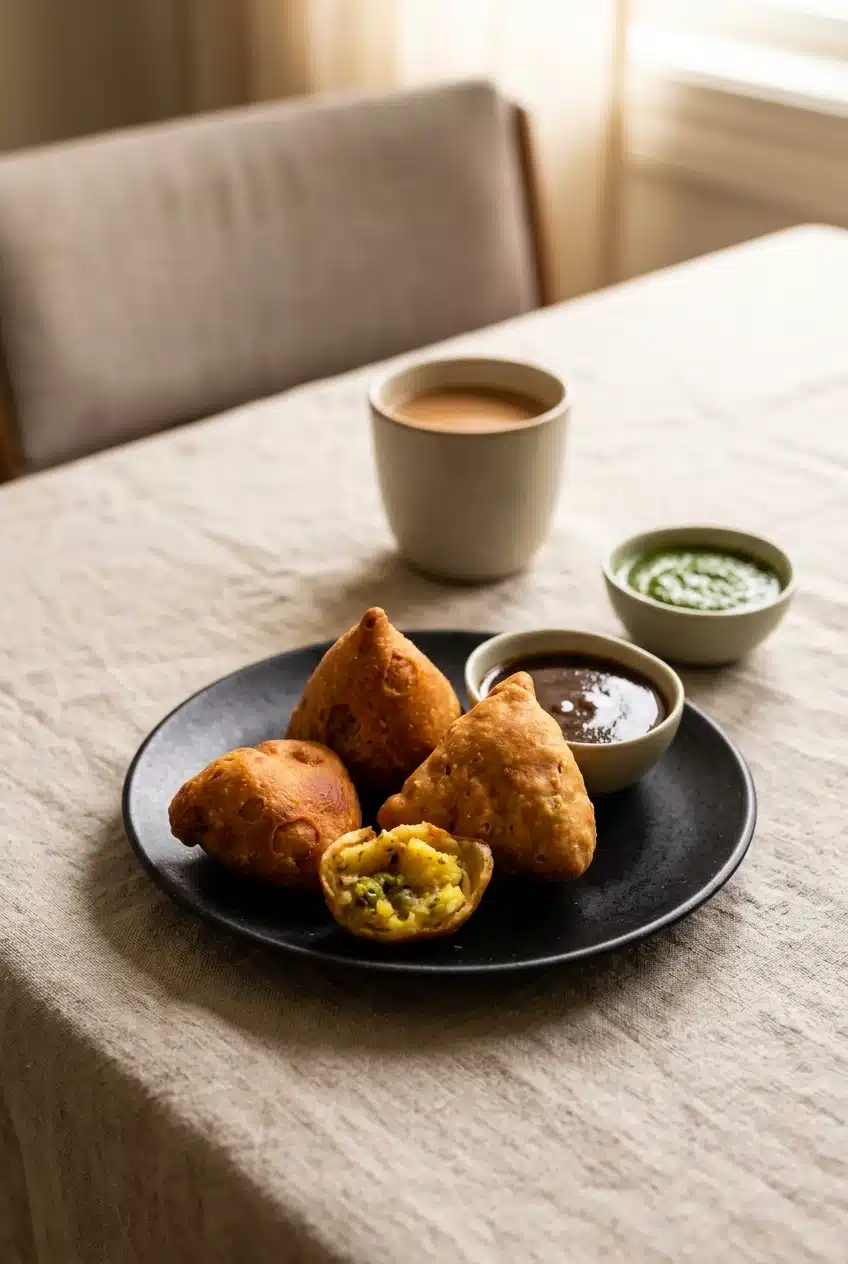
Serve the samosas hot and keep the dips on the side so each bite stays crisp until you dunk it.
- For dipping: Sweet-tart tamarind chutney brings out the warmth of the spices. Mint-cilantro chutney adds a fresh, herbal contrast, while mint raita makes a creamy dip.
- For a snack: Serve a samosa with masala chai. The warm spices in the tea sit nicely alongside the ginger and cumin in the filling.
- For samosa chaat: Break a samosa open, spoon on chickpeas and chutneys, and scatter crunchy sev over the top just before serving.
The Key to a Crisp Samosa
Start with a dough that bends without sticking, and check the cone tip and mouth before each parcel goes into the oil. The first fry should leave the pastry firm but still pale.
Save the deep golden color for the hotter finish. Once the last batch is drained, bring the chutney to the table and enjoy that first crisp bite.
Samosa FAQs
What Are the Main Ingredients in Samosas?
These samosas have a flour pastry wrapped around potatoes and peas. Ginger, green chili, and spices season the filling, and tamarind chutney is served alongside.
What Is Samosa Dough Made Of?
The dough uses all-purpose flour, ajwain seeds, salt, melted and cooled ghee or vegetable oil, and cold water. Rub the fat into the flour before adding the water.
What Is the Secret to Perfect Samosas?
Roll the dough evenly and give the shell time to set before the hotter fry. An evenly rolled wrapper is less likely to leave you with a tough rim and a thin, fragile center.
How Do I Seal Samosas So They Don’t Open During Frying?
Moisten and press the cone overlap from the top all the way down to the point. After filling the cone, clear any potato from the rim, dampen it, and pinch it closed from end to end.
Can I Bake Samosas Instead of Frying Them?
Yes, use a baked adaptation rather than the frying directions here. Even with the same filling, the oven gives the shell a different bite. If you choose filo, you’ll also get a folded triangle instead of a cone.
Should I Shape Samosas Right Before Frying?
For this recipe, plan to shape the full batch before you start frying. If you want to break up the prep, make the filling first and leave the rolling and sealing for cooking time.
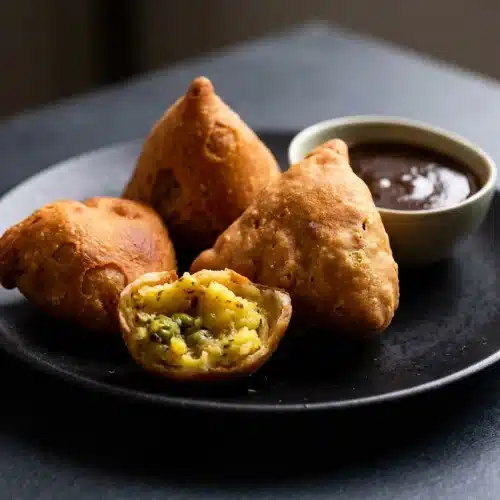
Samosa Recipe

Equipment
- Deep pot
- Large Skillet
- Mixing Bowl
- Fork
- Rolling Pin
- Knife
- Parchment Paper
- Deep-fry thermometer
- Slotted spoon
Ingredients
- 1 1/2 cups flour (, plain/all purpose)
- 1 tsp ajwain seeds
- 1/2 tsp salt (, cooking/kosher)
- 4 tbsp ghee ((melted and cooled) or oil (any vegetable)
- 6 tbsp water ((cold tap water))
- 500g/1 potatoes (, starchy/all-rounder )
- 2 tbsp vegetable/canola oil
- 1 tsp cumin seeds
- 1/4 tsp black mustard seeds
- 1/2 tsp coriander seeds
- 1 tbsp fresh ginger (, finely grated)
- 1 tbsp green chilli (, finely chopped (serrano or cayenne))
- 1/2 cup frozen green peas ((thawed))
- 1 tsp garam masala
- 1/4 tsp amchur
- 1/2 tsp asafoetida
- 1/4 tsp cumin powder
- 1/2 tsp turmeric powder
- 1 tsp salt (, kosher/cooking)
- 2 tbsp coriander/cilantro leaves (, finely chopped)
- Vegetable/Canola oil for frying ((at least 1 litre/1 quart))
- Tamarind Dipping Sauce (- see separate recipe card below)
Instructions
Potato Filling
- Put the peeled, halved potatoes in a pot of cold water, then bring the water to a boil. Cook for about 10 minutes, until a fork slides through the potatoes without resistance.
- Lift the potatoes onto a plate and break them up with a fork. Stop while there are still some large pieces surrounded by softer mash.
- Set a large skillet over medium heat, warm the oil, and stir in the cumin, black mustard, and coriander seeds. Give the seeds about 30 seconds to release their aroma without letting them scorch.
- Stir the ginger, green chili, and peas into the skillet. Keep everything moving for about a minute, until the chopped chili softens.
- Scatter the garam masala, amchur, asafoetida, ground cumin, turmeric, and salt over the peas and stir. Cook for another 30 seconds, just until the spices smell fragrant.
- Fold the potatoes into the spiced peas and stir gently for about 1 minute. Look for an even coating of spices while the larger pieces of potato are still intact.
- Take the skillet off the heat, mix in the cilantro, and spread the filling across a plate. Wait until the center as well as the edges have cooled completely before filling the pastry.
Samosa Dough
- Stir the flour, salt, and ajwain together in a bowl. Distribute the seeds throughout the flour so they don’t end up concentrated in one part of the dough.
- Work the cooled melted ghee or the oil into the flour with your fingertips. Stop when the mixture looks like coarse crumbs rather than loose flour.
- Pour in the water and gather the mixture into a ball. The dough should feel soft and bend without clinging to your fingers.
- Cover the bowl with plastic wrap and rest the dough for 30 minutes. Keep the wrap in place so the surface stays pliable instead of forming a dry skin.
Making the Samosas
- Divide the dough into 6 equal pieces, roll them into balls, and put them on a plate under plastic wrap. Keep the pieces you’re not rolling covered so they’ll still bend easily when it’s their turn.
- Flatten one ball on a sheet of parchment and lay a second sheet on top. Use the paper rather than flour to prevent sticking without drying out the dough.
- Roll the dough into a disk about 6.5 inches (16 cm) across and about 1/10 inch (2 mm) thick. Check the perimeter as you roll so the edges are as thin as the middle.
- Slice straight through the center of the disk. Each of the two half circles will make one cone.
- Dampen the cut edge with water and bring its ends together, overlapping the dough by about 2/5 inch (1 cm). Press along the overlap all the way to the tip so the seam has no gaps.
- Support the cone in a ring made with your thumb and index finger, then spoon in about 2 tbsp of filling and settle it lightly. Leave enough bare pastry at the mouth for the two sides to meet without catching any potato.
- Moisten the open rim and pinch it shut, then set that seam against the work surface and press down to fold it. Trim any excess pastry, tuck in the corners, and pinch the top into a point.
- Repeat with the remaining dough and filling to make 12 samosas. Check each parcel for a closed tip and an unbroken seam along the mouth.
Frying
- Heat 2 inches (5 cm) of oil in a deep pan or pot to 320 °F (160 °C). Start the first batch at this lower temperature so the pastry can firm up before it browns.
- Carefully lower 3 to 4 samosas into the oil and fry for 3 minutes, nudging them occasionally. The shells should look pale and set, and moving them keeps the spots touching the bottom from browning too quickly.
- Lift the samosas onto paper towels, then give the remaining batches their first fry. Finish setting every batch before turning up the heat.
- Bring the oil to 375 °F (190 °C). Wait for it to reach the higher temperature before putting the samosas back in.
- Return 3 to 4 samosas at a time to the oil for 1 1/2 to 2 minutes, then drain them on paper towels and repeat. Look for a deep golden color before lifting each batch out.