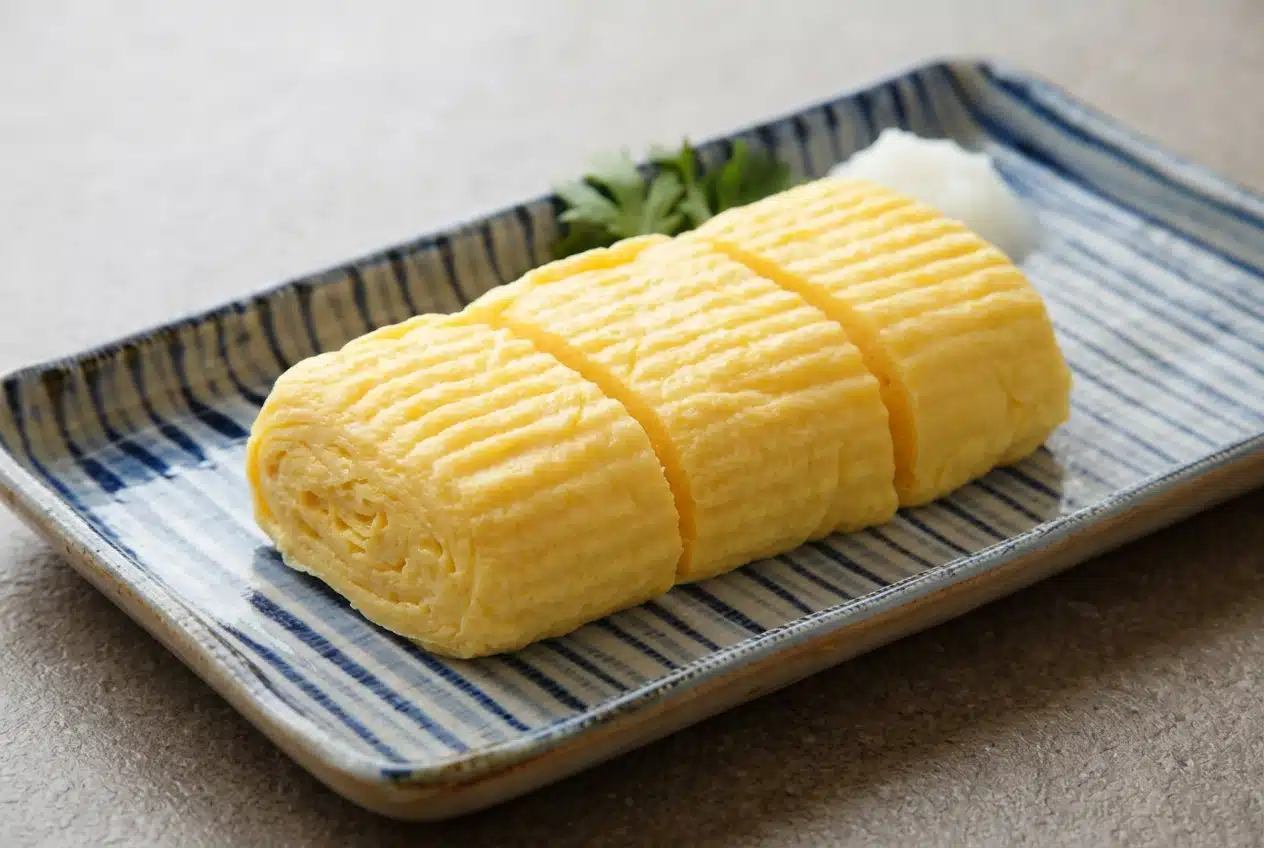
Tamagoyaki is a Japanese rolled omelet made by rolling thin sheets of seasoned egg into a sliceable log. A small nonstick skillet works well. Start rolling when the edge lifts easily and the surface still shines but has no puddles.
This tamagoyaki recipe seasons the eggs with soy sauce, sugar, and dashi, a Japanese stock. The omelet tastes gently sweet and savory, and you can use water in place of the stock for a milder roll.
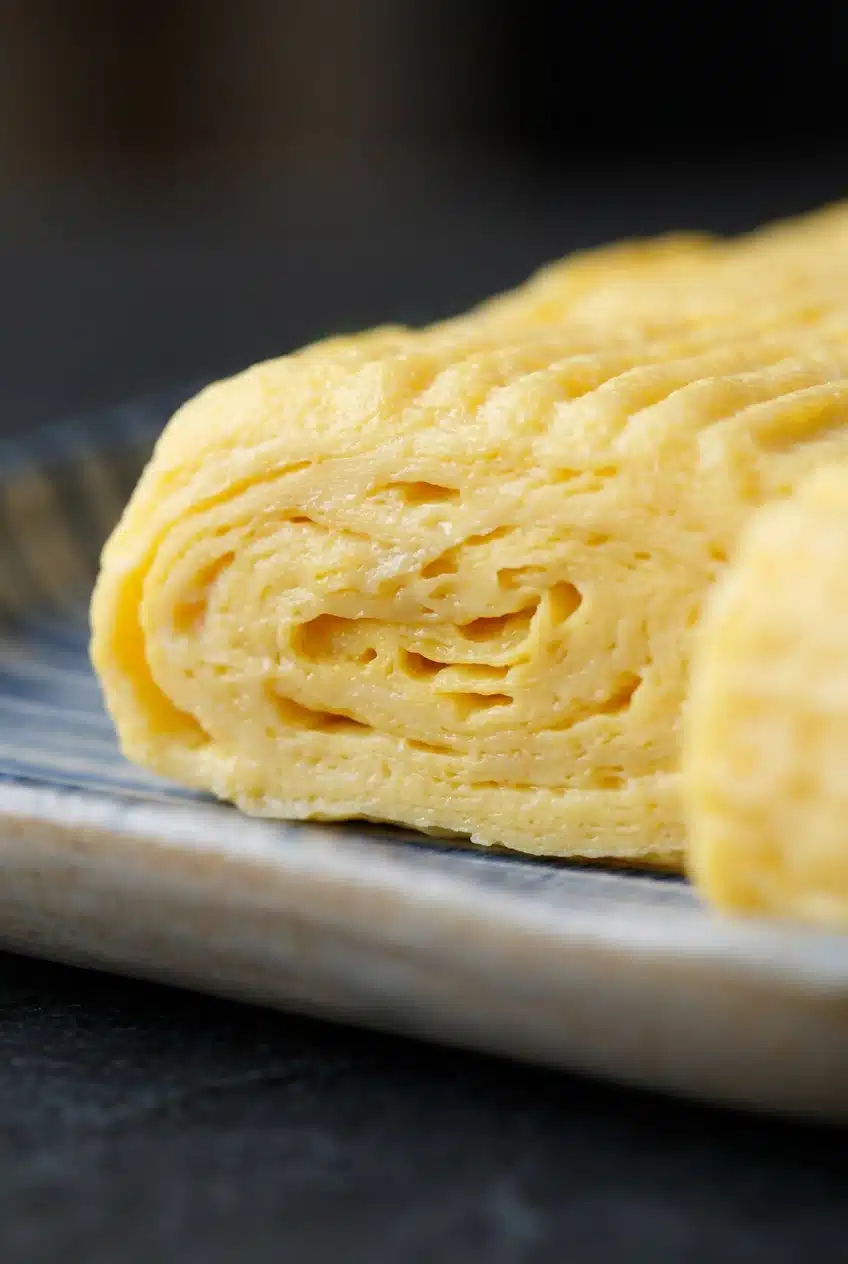
Cut into the warm omelet and you’ll see tender layers tucked inside each slice. The first fold can look rough and still make a lovely spiral.
Set a spatula next to the stove before you pour the eggs so you can lift the first edge as soon as it releases.
Tamagoyaki Ingredients
The eggs set into flexible sheets, soy sauce adds salt and savoriness, and sugar rounds out the seasoning. Dashi brings savory depth, while water adds moisture without the stock flavor. Oil helps each sheet release cleanly.
- 3 large eggs
- 1 tbsp soy sauce
- 1 tbsp sugar
- 2 tbsp dashi (or water)
- 1 tsp oil (for cooking)
Use prepared dashi rather than undiluted concentrate when measuring the stock. This omelet has no filling to compete with the seasoning, so the difference between stock and water comes through in every bite.
How to Make Tamagoyaki
Prep: 5 min · Cook: 10 min · Total: 15 min · Servings: 3
- Beat the eggs in a bowl with a whisk, adding the soy sauce, sugar, and your choice of dashi or water.
Keep whisking until the color is even and no thick streaks of egg white remain. - Set a tamagoyaki pan or small nonstick skillet over medium-low heat and slick the cooking surface with oil.
Look for a light sheen across the bottom rather than a puddle. - Add enough beaten egg to skim the bottom, then tip the pan to guide it across the surface.
A thin, even film is easier to fold than a layer that gathers thickly at one end. - Lift the starting edge with chopsticks or a spatula and fold the sheet over itself toward the far side of the pan.
The egg should hold together when lifted but still bend without cracking. - Settle the roll against one side of the pan and pour more egg onto the open surface.
The fresh egg should spread into a thin sheet beside the roll. - Turn the existing roll across the fresh sheet as soon as the sheet sets enough to fold, then repeat with the remaining egg mixture.
The roll should get thicker with each pass as the new sheet wraps around it. - Take the pan off the burner and give the omelet a minute to settle.
The layers should hold together when you move the roll for slicing. - Cut straight across the roll to make even slices.
Keep the pieces a similar width and serve them warm.
Rectangular Pan or Round Skillet?
A rectangular pan gives you a straight edge to fold from and straight sides to guide the roll. In a small round nonstick skillet, start at the curved edge and fold toward the widest part of the pan. The ends may taper because the first fold is narrower than the middle. That changes the shape of the end slices, not the layers you’ll see across the center.
When to Start Rolling
Slip the spatula under the edge and lift gently. The sheet is ready to fold when the edge comes up in one piece and the top looks glossy without any egg running across it. If liquid collects when you tilt the pan, give the layer more time to set. This cue tells you when the sheet will bend; it isn’t a check for final doneness.
I’d start with the spatula if the first fold feels awkward. Its wide face supports more of the egg sheet than chopsticks do.
Tamagoyaki Troubleshooting
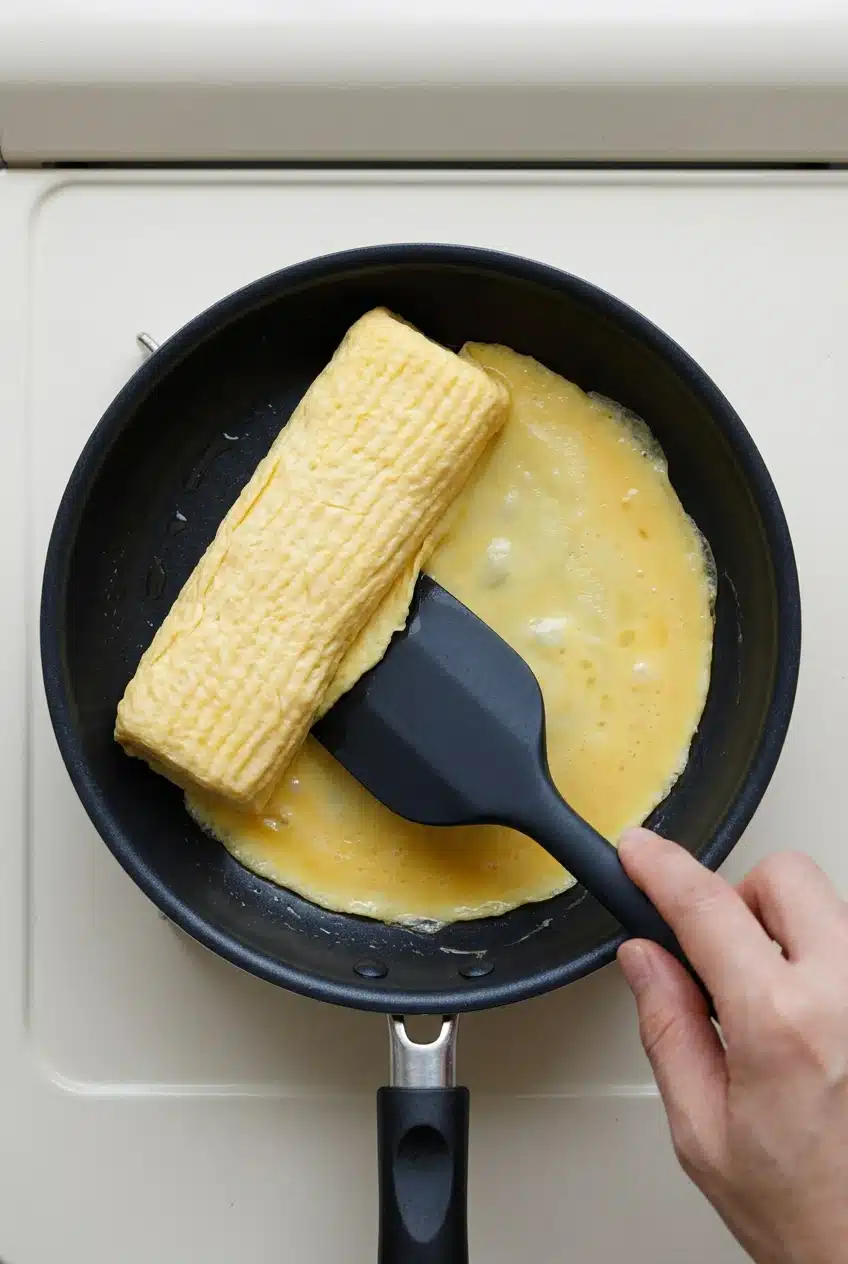
- The first fold looks ragged. A soft sheet can tear if you lift it from one spot. If it still holds together loosely, support it from underneath with the spatula and keep it as the center. Later layers can cover the rough edge.
- The egg catches on the pan. The exposed surface may have lost its light coating of oil. Give that area a thin sheen before the next pour.
- The bottom browns while the top still pools. Check that the burner is still at medium-low. If the next pour collects in a thick patch, tilt the pan right away so the egg sets more evenly.
- The new sheet peels away from the roll. Look at the seam underneath. When the fresh sheet meets the underside of the roll and lifts with it, the layers have joined. If the sheet stays behind, check for a gap where the two meet.
Sweet and Savory Tamagoyaki Variations
Choose your liquid based on how much you want the stock flavor to come through. Filled rolls are another option, but they’re a departure from this plain, layered omelet.
Water Instead of Dashi
Use the listed water option if you don’t have dashi or want a gentler flavor. The omelet still has the sweet and salty balance of sugar and soy sauce, with more of the egg flavor coming through.
Dashi-Forward Savory Style
For an omelet where the stock is the main flavor, try dashimaki tamago. It’s a more dashi-forward style to seek out if you prefer a pronounced savory finish. The measurements above are for the gently sweet roll.
Making Tamagoyaki Ahead
If you have leftover slices, keep them covered in the refrigerator. For another meal, dice them and fold them into fried rice at the end so the pieces keep their shape.
For a bento, plan for the omelet to stay chilled during transport as well as before you leave. If you won’t be able to keep the lunch cold, save the tamagoyaki for a meal at home.
How to Serve Tamagoyaki
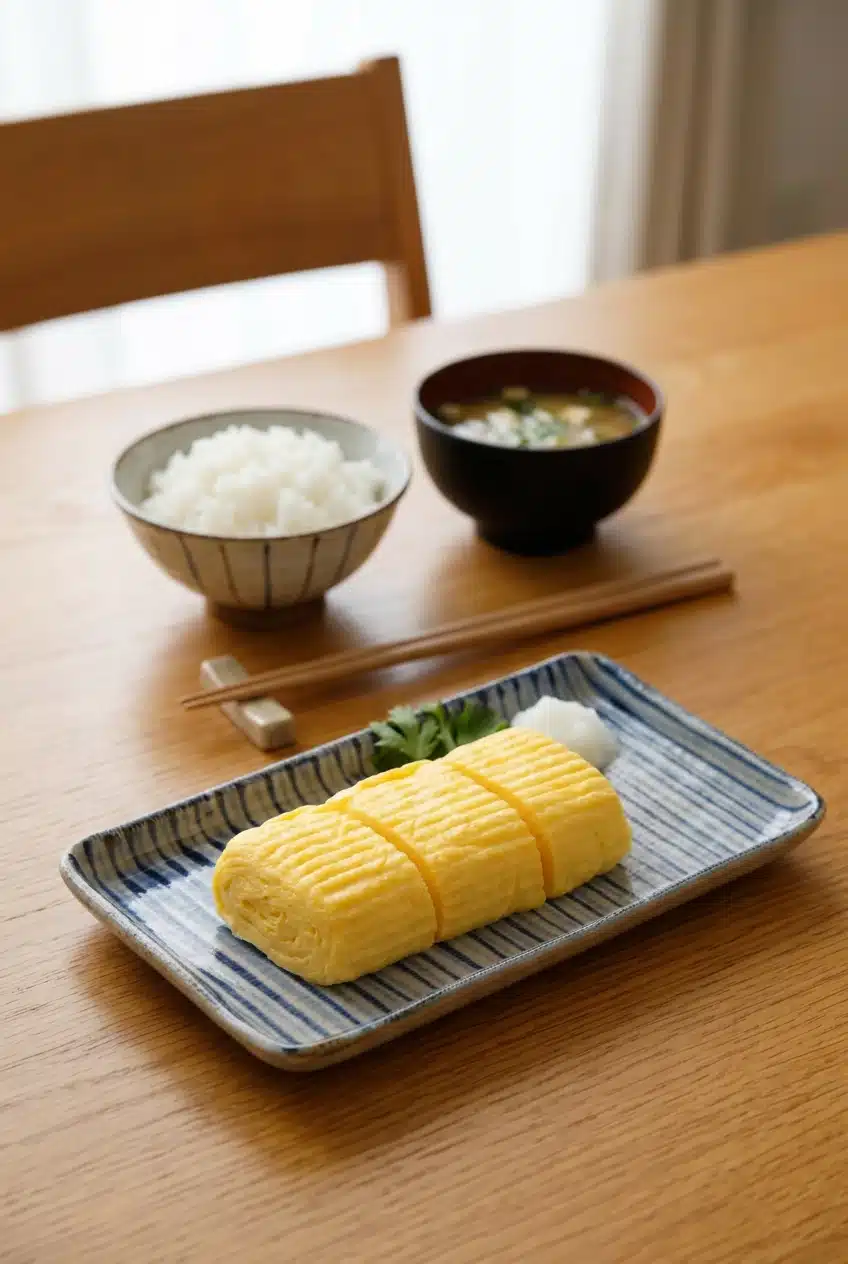
- For breakfast: Serve warm slices with steamed rice and a bowl of miso soup. The savory broth balances the omelet’s gentle sweetness.
- In a bento: Tuck slices alongside pickled vegetables for a crisp, tangy contrast to the soft egg.
- Over sushi rice: Lay a slice on a small mound of seasoned rice for a tamago nigiri-style bite.
Conclusion
Thin sheets make a tender roll, whether you cook in a rectangular pan or the small skillet you already own.
Don’t fuss over the first fold. Keep the next layer thin and let the roll take shape as you go.
Frequently Asked Questions
Do I Need a Rectangular Tamagoyaki Pan?
No. A small nonstick skillet works. The rectangular pan mainly helps you get straighter sides.
What Makes Tamagoyaki Tender and Layered?
The texture comes from rolling thin sheets of seasoned egg while they’re still flexible. Each sheet wraps around the last, creating the spiral you see when you slice it.
What if the First Layer Tears?
If the torn sheet still folds into a loose roll, keep it as the center. Use a spatula to support it until the next sheet wraps around it.
Can I Make Tamagoyaki Without Dashi?
Yes. Use the water option in the ingredient list. The roll will taste milder, but the soy sauce and sugar still give it a savory-sweet finish.
Can I Make Tamagoyaki Ahead for a Bento?
Only plan on packing it ahead if you can keep it chilled until lunch. If that’s not practical, serve the omelet at home instead.
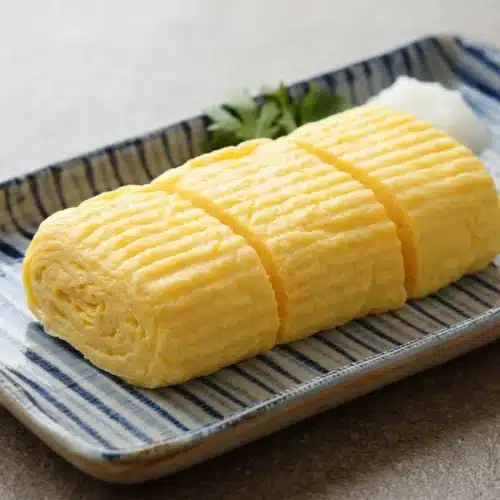
Tamagoyaki Recipe

Equipment
- Mixing Bowl
- Whisk
- Tamagoyaki pan or small nonstick skillet
- Spatula or chopsticks
- Knife
Ingredients
- 3 large eggs
- 1 tbsp soy sauce
- 1 tbsp sugar
- 2 tbsp dashi (or water)
- 1 tsp oil (for cooking)
Instructions
- Beat the eggs in a bowl with a whisk, adding the soy sauce, sugar, and your choice of dashi or water. Keep whisking until the color is even and no thick streaks of egg white remain.
- Set a tamagoyaki pan or small nonstick skillet over medium-low heat and slick the cooking surface with oil. Look for a light sheen across the bottom rather than a puddle.
- Add enough beaten egg to skim the bottom, then tip the pan to guide it across the surface. A thin, even film is easier to fold than a layer that gathers thickly at one end.
- Lift the starting edge with chopsticks or a spatula and fold the sheet over itself toward the far side of the pan. The egg should hold together when lifted but still bend without cracking.
- Settle the roll against one side of the pan and pour more egg onto the open surface. The fresh egg should spread into a thin sheet beside the roll.
- Turn the existing roll across the fresh sheet as soon as the sheet sets enough to fold, then repeat with the remaining egg mixture. The roll should get thicker with each pass as the new sheet wraps around it.
- Take the pan off the burner and give the omelet a minute to settle. The layers should hold together when you move the roll for slicing.
- Cut straight across the roll to make even slices. Keep the pieces a similar width and serve them warm.