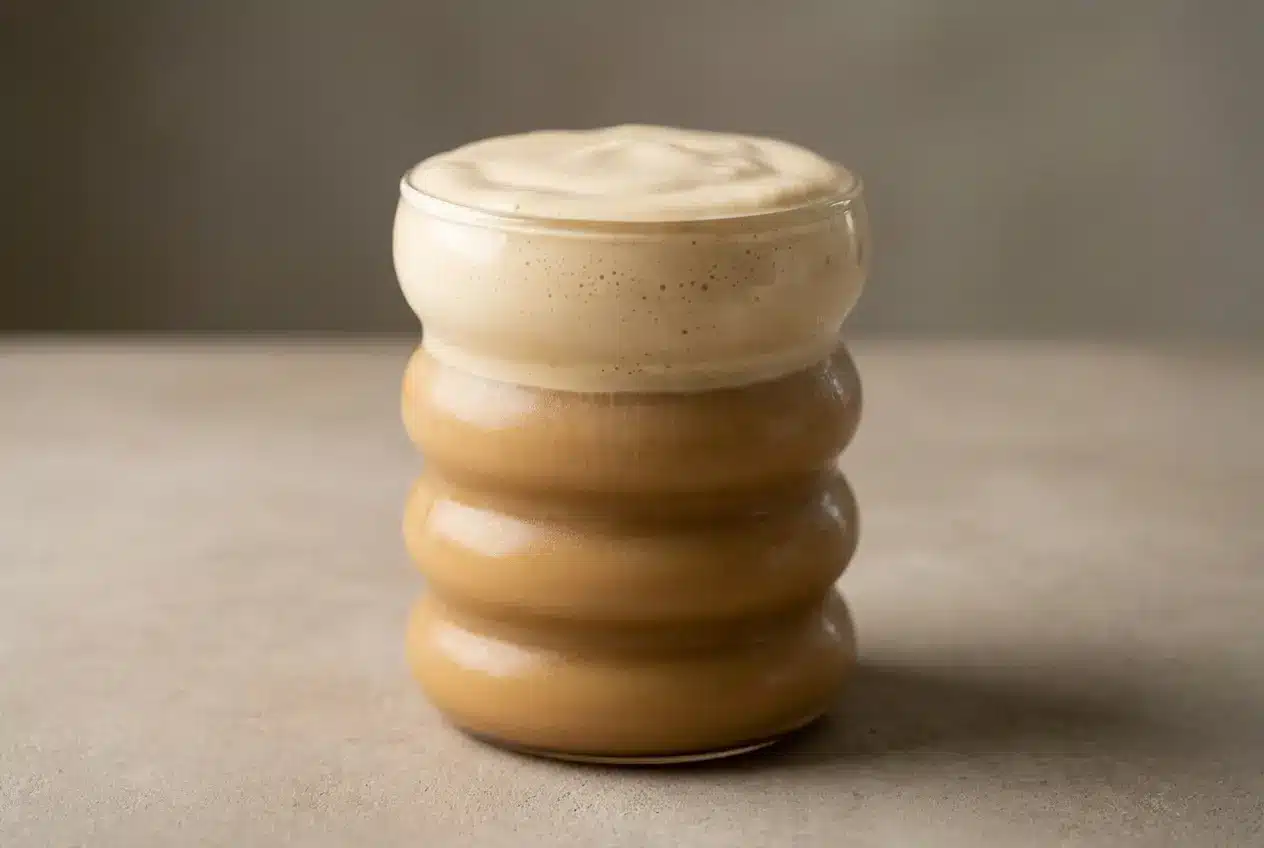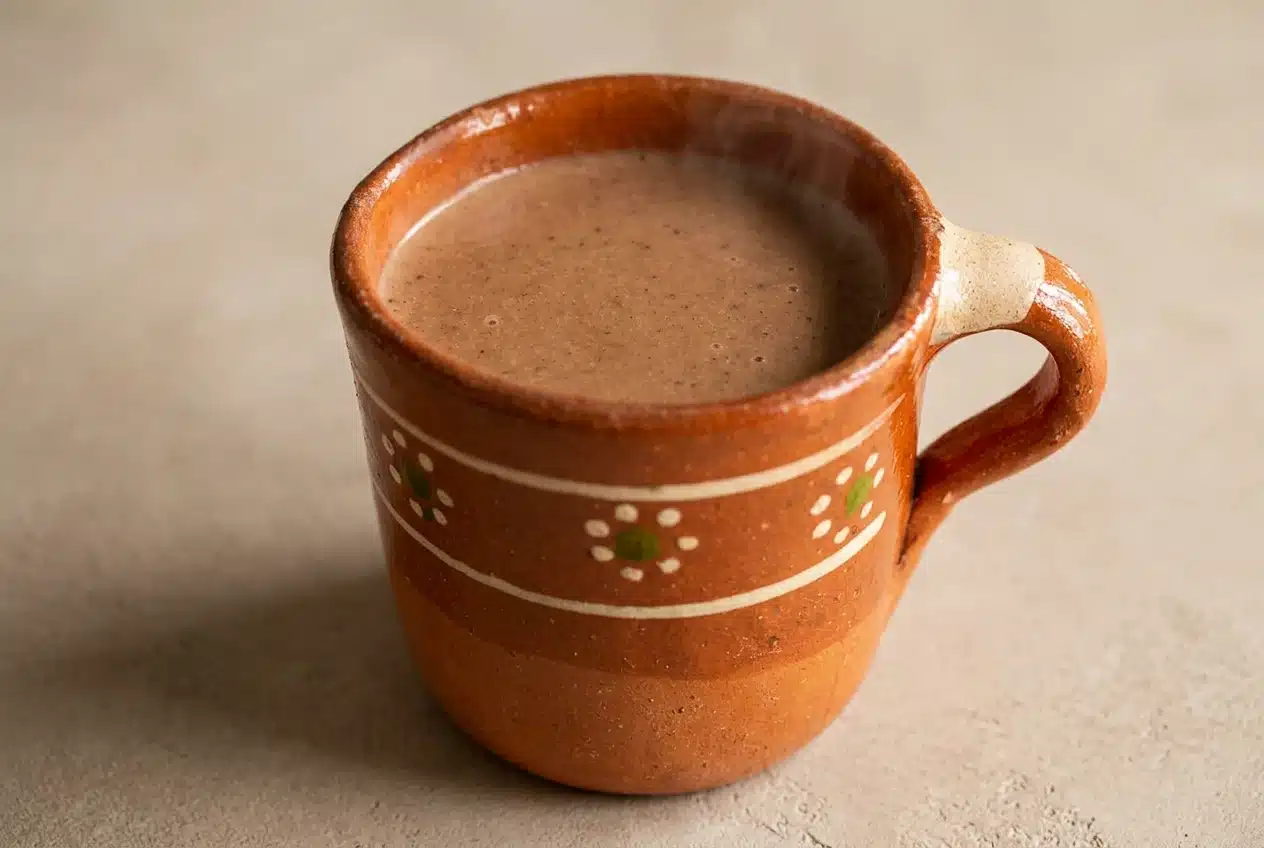
Champurrado is a thick Mexican chocolate atole. This champurrado recipe gets its velvety texture from masa harina, its caramel sweetness from piloncillo, and its warmth from cinnamon. Toast the masa until it smells like a warm tortilla, then blend it with water before whisking it into the chocolate.
Whole or 2% milk mellows the cacao, and evaporated milk gives each sip a creamy finish. Even with all that chocolate, you can still taste the toasted corn.
The pot makes 12 cups, enough to ladle out alongside breakfast tamales or set out with sweet bread for a holiday gathering. Save a concha for dipping.
I set aside the water for the blender before turning on the stove so it doesn’t all end up in the pot.
Key Ingredients and Authentic Substitutions
Water carries the cinnamon and dissolves the piloncillo; the two milks soften the chocolate’s intensity. Masa harina gives the drink both its toasted flavor and the body that makes it cling to a spoon.
- 1/2 cup masa harina
- 8 cups water (divided)
- 6 ounce piloncillo cone (or 4 small ones)
- 1 Ceylon cinnamon stick
- 1 Mexican chocolate disc (or 2 depending on how chocolatey you prefer)
- 2 cups milk (whole or 2%)
- 12 ounces evaporated milk
Atole, Champurrado, and Mexican Chocolate
Atole is a family of warm Mexican drinks often thickened with corn. Fruit, nuts, and spices can flavor an atole; chocolate is what makes this one champurrado. Mexican drinking chocolate typically comes in discs of ground cacao, sugar, and cinnamon. Melt a disc into milk and you have spiced hot chocolate. Cook in the masa and the drink takes on a thicker, distinctly corn-flavored body.
Piloncillo, Masa Harina, and Pantry Swaps
- Masa harina: Look for finely ground nixtamalized corn flour, the kind used for tortillas. Regular cornmeal can leave a gritty texture. Cornstarch can thicken the drink in a pinch, but it won’t give you the toasted tortilla flavor.
- Ceylon cinnamon: Often sold as canela, it has a delicate aroma that complements the cinnamon in the chocolate. A cassia stick will work, though its sharper flavor stands out more.
- Evaporated milk: Choose unsweetened evaporated milk rather than sweetened condensed milk. If you don’t have it, additional whole milk gives a lighter finish while the masa still provides thickness.
Piloncillo vs. Brown Sugar and Mexican vs. Dark Chocolate
Piloncillo is unrefined cane sugar pressed into cones. Dark brown sugar comes closest to its caramel flavor, with a more noticeable molasses note. For a less sweet, more cacao-forward cup, use chopped bittersweet chocolate in place of the Mexican disc. The cinnamon stick will still perfume the drink even if the bar contains no spice.
How to Make Traditional Mexican Champurrado
Prep: 10 minutes. Cook: 20 minutes. Total: 30 minutes. Yield: 12 cups.
- Spread the dry masa harina across a medium pan and stir it over low heat, sweeping from the edges to the center.
Once it turns pale gold and smells like toasted tortillas, take it off the heat and let it cool. - Bring 6 1/2 cups of the water to a boil in a large pot, then add the piloncillo and cinnamon stick and lower the heat to medium.
Let them simmer until the water is amber and a spoon swept along the bottom meets no pieces of sugar. - Stir one Mexican chocolate disc into the cinnamon water, using the second disc if you prefer a stronger chocolate flavor.
Look along the rim and bottom for unmelted pieces before adding the dairy. - Pour in the milk and evaporated milk, stirring across the bottom occasionally as the mixture returns to a slow simmer.
Watch for steam and small bubbles around the edge rather than bubbles rolling across the surface. - Blend the cooled masa harina with the remaining 1 1/2 cups of warm water.
The mixture should pour freely with no dry pockets. - Whisk the simmering chocolate continuously as you pour in the blended masa in a thin stream.
Each addition should disappear into the chocolate without forming little knots of dough. - Keep the pot over low heat for about 10 minutes, whisking across the bottom every couple of minutes.
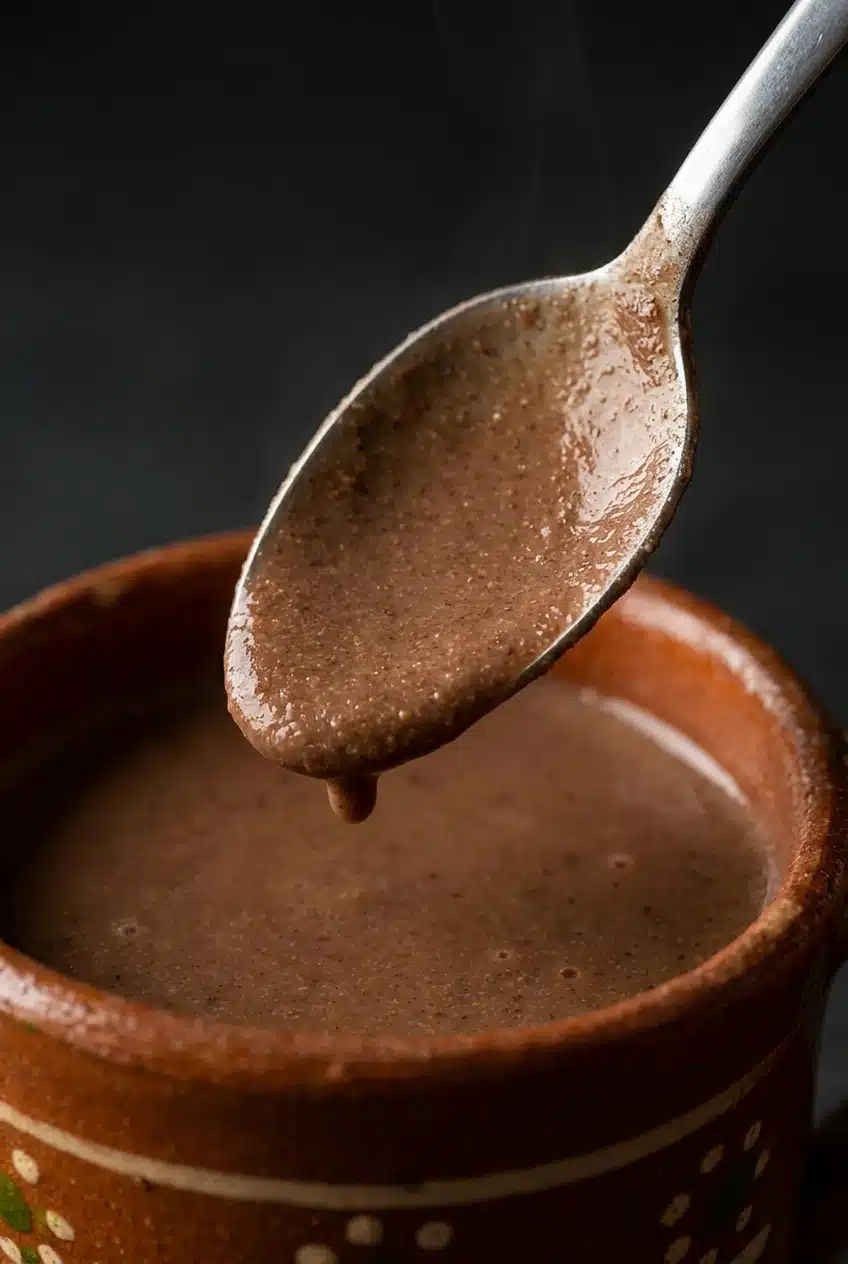
The champurrado is ready when it leaves a smooth coat on the back of a spoon but still flows easily. - Lift out and discard the cinnamon stick, then ladle the hot champurrado into mugs.
It should pour in a smooth, glossy stream.
Texture, Thickness, and Anti-Scorching Tips
- Lumps in the slurry: Dry masa can hide in the corners of the blender. Blend until evenly moistened. For a silkier cup, pour the slurry through a fine-mesh strainer as you whisk it into the pot; skip the strainer if you enjoy a little corn texture.
- Milk catching on the bottom: If the whisk starts to drag, lower the heat and sweep it around the bottom edge of the pot. If you smell scorching, pour the unstuck portion into a clean pot without scraping up the browned layer.
- Too thin: Give the masa its full simmer before judging the thickness. If it still runs off a spoon like milk, continue over gentle heat, stirring and checking again rather than adding dry flour.
- Too thick: Whisk in a splash of warm milk or water. Stop as soon as it pours the way you like; it will thicken a little more in the mug.
Champurrado Variations
Dairy-Free Champurrado With Almond or Coconut Milk
Replace both dairy milks with unsweetened almond milk for a lighter cup with a nutty finish. Coconut milk adds a more noticeable flavor and, depending on the variety, a richer body. Choose a dairy-free chocolate disc or bar as well.
Water vs. Milk for Champurrado
- Water: Traditional water-based champurrado lets the corn and cacao come through most clearly. The cooked masa still gives it body without milk.
- Milk: The combination of regular and evaporated milk gives the chocolate a rounder, creamier finish. Bittersweet chocolate is a good option if you want the cacao to stand out against that richness.
Spiced Champurrado With Cayenne, Cloves, or Citrus
- Choose a touch of cayenne for gentle heat that lingers after the chocolate.
- Try cloves for a deeper spice aroma, using a light hand so the cinnamon still comes through.
- Add orange peel for a bright citrus fragrance against the cacao.
- Choose vanilla for a softer finish or almond extract for a more pronounced nutty aroma.
Serving Spiced Champurrado From a Slow Cooker
For a gathering, cook the champurrado on the stove, remove any whole spices or peel, and use a slow cooker to hold the finished drink hot for serving. Stir before ladling so the first and last mugs have a similar consistency.
Dietary Adaptations and Ingredient Considerations
For a vegan version, unsweetened oat milk is another option for replacing both milks. Check the chocolate label for milk ingredients even if the package says dark chocolate. If gluten or an allergy is a concern, check the masa harina, chocolate, and milk alternative for relevant labeling and cross-contact information.
Traditional Pairings and How to Serve
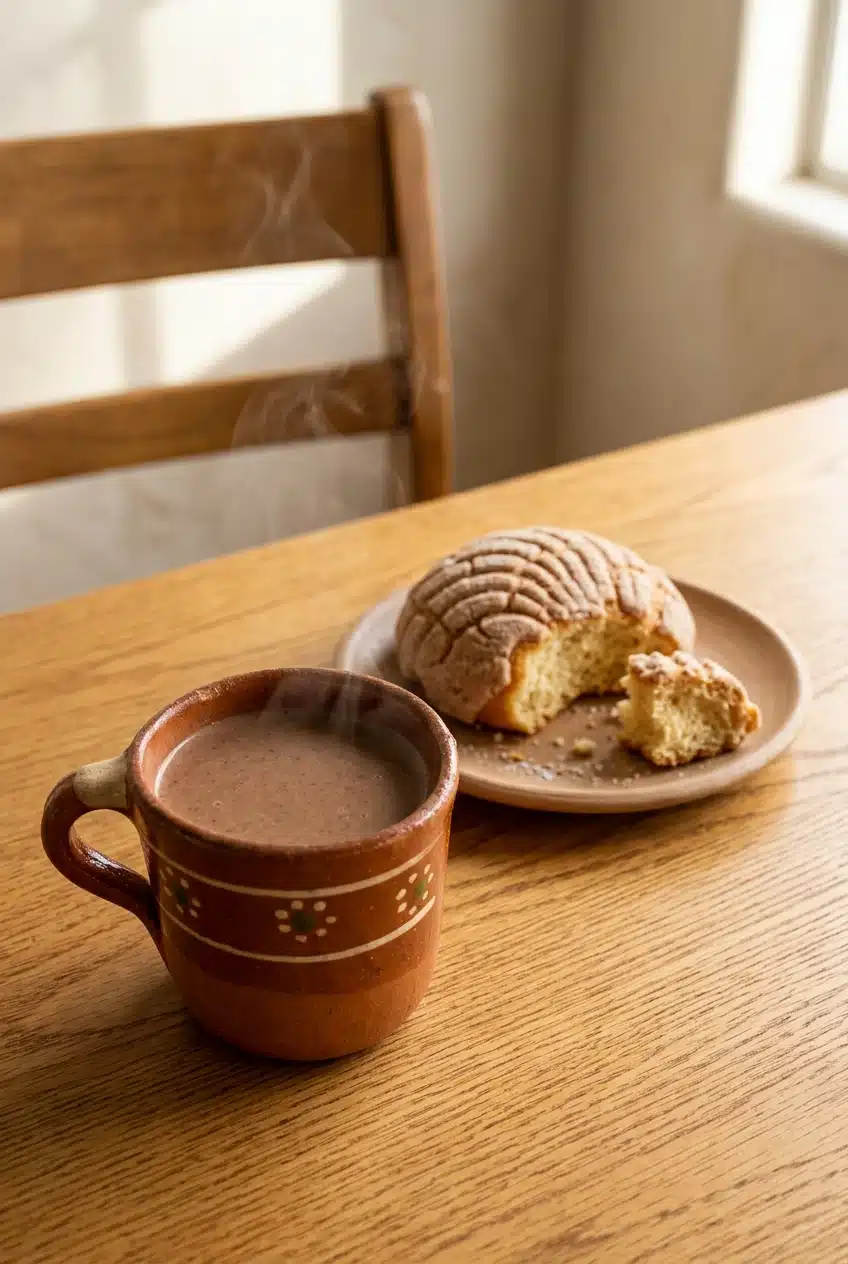
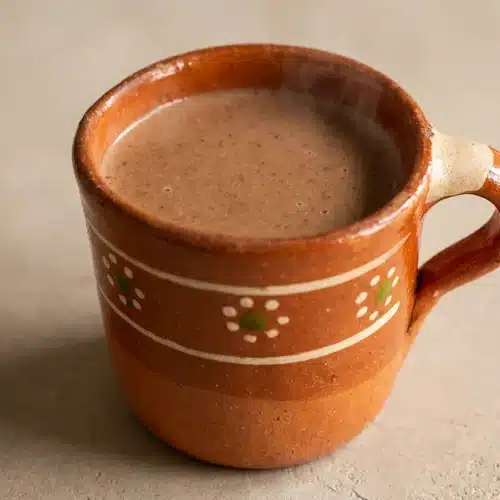
Serve the champurrado hot in warmed mugs. Savory tamales make a good breakfast pairing: the corn flavors echo each other while the filling contrasts with the sweet drink. For dipping, offer soft pan dulce like conchas or crisp cinnamon-sugar churros.
For a frothy top, roll the handle of a wooden molinillo between your palms with its head in the hot drink. Ladle right away to catch the foam, or finish each mug with chocolate shavings.
Storing and Reheating Champurrado
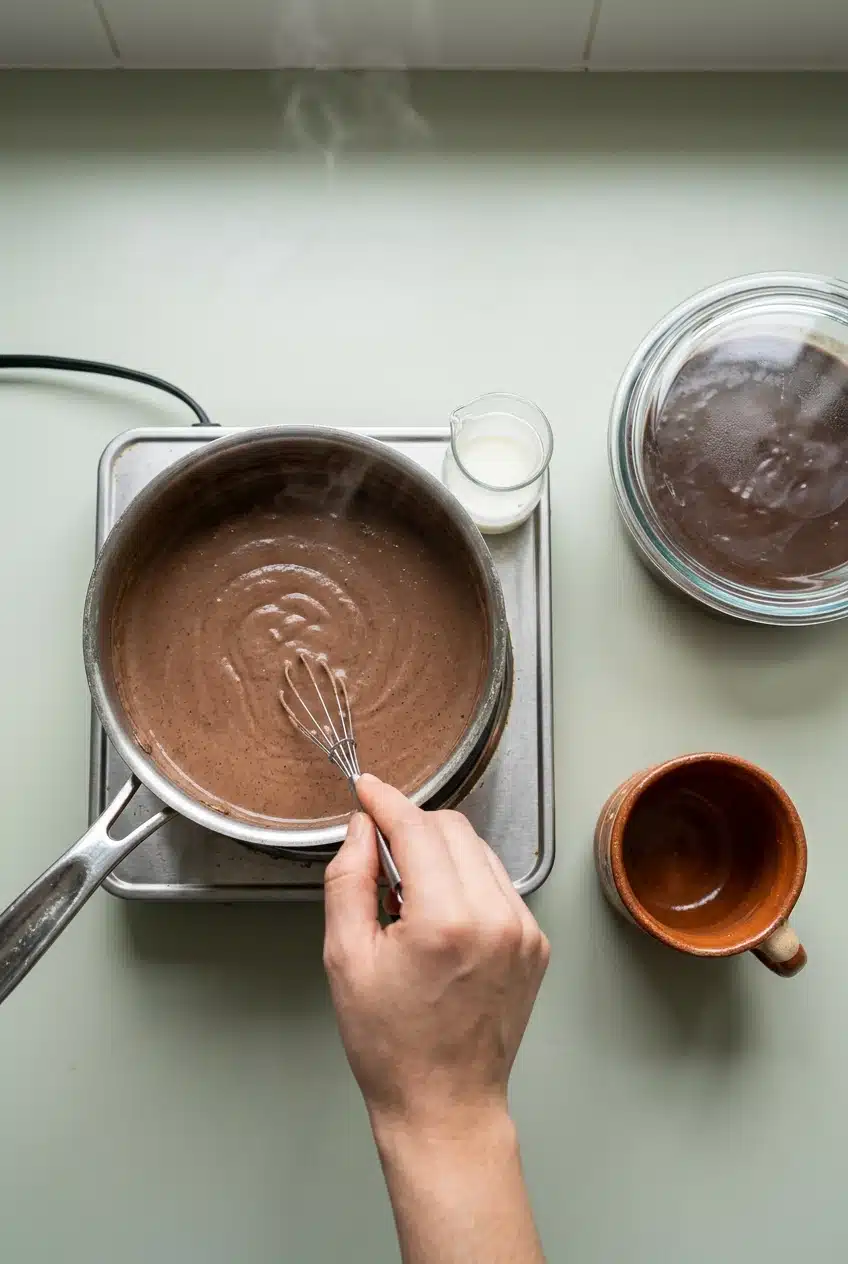
For leftovers or a batch you plan to serve later, divide the drink among shallow containers for quicker cooling, refrigerate promptly, and keep it covered. Expect a thicker consistency once chilled.
Reheat the portion you need gently on the stove, whisking in a splash of milk or water to loosen it. For a single mug, use the microwave and pause to stir from the bottom so the drink heats evenly throughout.
Bringing Comforting Champurrado to Your Table
Measure the water in its two portions before you start, then give the masa time to toast. That warm corn aroma is worth keeping even when you prefer an extra-chocolatey cup.
At the final simmer, let the spoon guide you. When it comes out with a velvety coat and the chocolate still pours easily, bring the mugs to the table.
Frequently Asked Questions
What Is the Difference Between Atole and Champurrado?
Champurrado is a chocolate atole. Other atoles can share its warm, corn-thickened texture but taste of fruit, nuts, or spices instead.
What Makes Mexican Hot Chocolate Different From Regular Hot Cocoa?
Mexican hot chocolate often starts with a sweetened, cinnamon-spiced cacao disc rather than cocoa powder. The disc provides chocolate flavor; in champurrado, masa provides the thickness.
Do You Need Evaporated Milk for Champurrado?
No. It adds creaminess, but you can use more whole milk instead or choose a lighter, water-based version.
Can I Make Champurrado Without Masa Harina or Dairy?
Yes. Plant milk and dairy-free chocolate let you keep the characteristic masa flavor without dairy. Cornstarch can replace masa as a thickener, but the drink will lack its toasted-corn taste.
How Do You Keep Champurrado From Getting Lumpy or Scorching?
Blend the masa with warm water before whisking it slowly into the pot. Keep the simmer low and run the whisk along the bottom rather than stirring only at the surface.
How Should Leftover Champurrado Be Stored and Reheated?
Refrigerate leftovers promptly in covered containers. Reheat gently, stirring until hot throughout and adding milk or water as needed to restore a pourable texture.
Champurrado Recipe

Equipment
- Medium pan
- Large Pot
- Spoon
- Blender
- Whisk
- Ladle
- Mugs
Ingredients
- 1/2 cup masa harina
- 8 cups water (divided)
- 6 ounce piloncillo cone (or 4 small ones)
- 1 Ceylon cinnamon stick
- 1 Mexican chocolate disc (or 2 depending on how chocolatey you prefer)
- 2 cups milk (whole or 2%)
- 12 ounces evaporated milk
Instructions
- Spread the dry masa harina across a medium pan and stir it over low heat, sweeping from the edges to the center. Once it turns pale gold and smells like toasted tortillas, take it off the heat and let it cool.
- Bring 6 1/2 cups of the water to a boil in a large pot, then add the piloncillo and cinnamon stick and lower the heat to medium. Let them simmer until the water is amber and a spoon swept along the bottom meets no pieces of sugar.
- Stir one Mexican chocolate disc into the cinnamon water, using the second disc if you prefer a stronger chocolate flavor. Look along the rim and bottom for unmelted pieces before adding the dairy.
- Pour in the milk and evaporated milk, stirring across the bottom occasionally as the mixture returns to a slow simmer. Watch for steam and small bubbles around the edge rather than bubbles rolling across the surface.
- Blend the cooled masa harina with the remaining 1 1/2 cups of warm water. The mixture should pour freely with no dry pockets.
- Whisk the simmering chocolate continuously as you pour in the blended masa in a thin stream. Each addition should disappear into the chocolate without forming little knots of dough.
- Keep the pot over low heat for about 10 minutes, whisking across the bottom every couple of minutes. The champurrado is ready when it leaves a smooth coat on the back of a spoon but still flows easily.
- Lift out and discard the cinnamon stick, then ladle the hot champurrado into mugs. It should pour in a smooth, glossy stream.