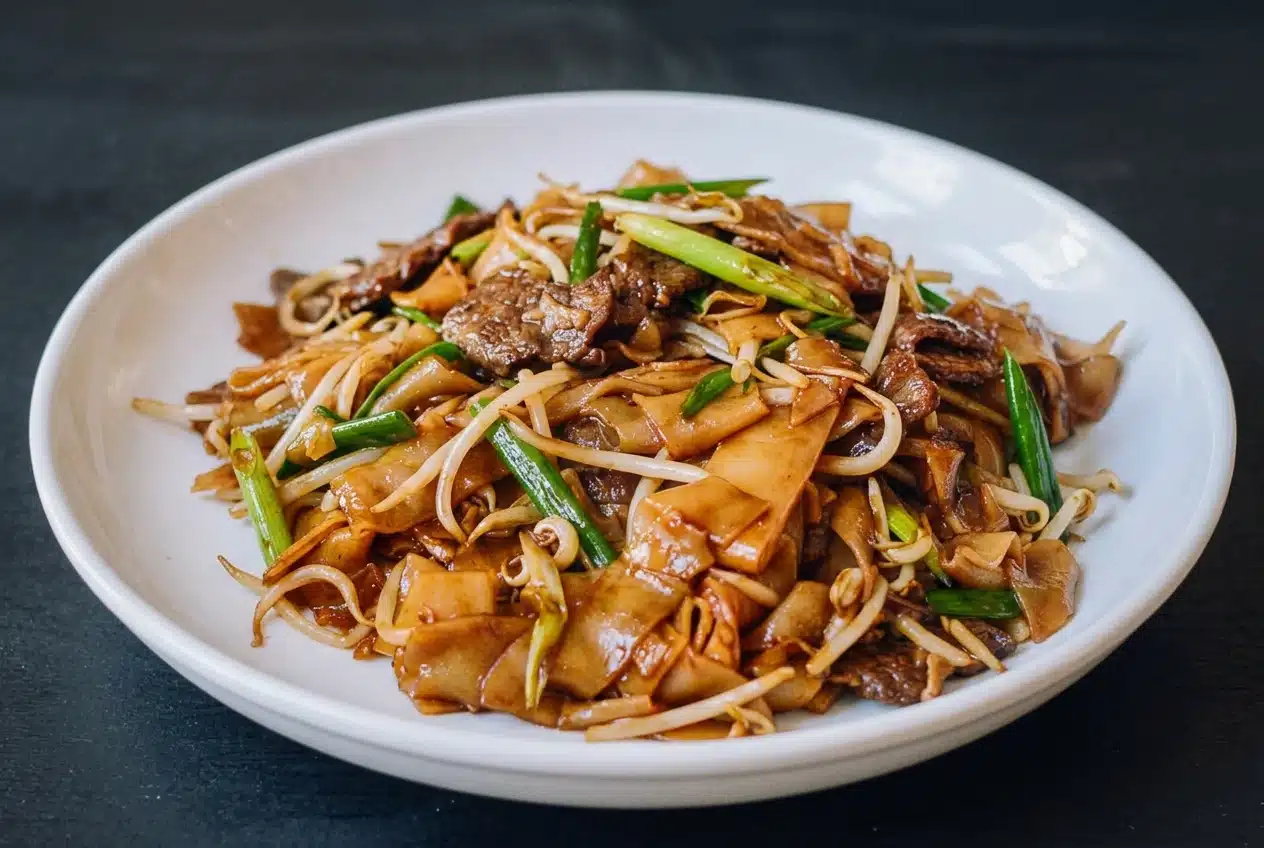
Beef chow fun, or gon chow ngau ho, is a Cantonese dish of wide rice noodles, tender beef, and bean sprouts stir-fried over high heat. This savory, dry-fried version delivers chewy noodles with lightly seared edges, unlike beef chao fan, which uses rice grains.
The appeal of beef chow fun is all in the contrast: silky beef, broad noodle ribbons, fragrant ginger, and sprouts that still have some snap. The sauce should coat everything without collecting in a puddle beneath the noodles.
Most of the work happens before the wok gets hot. Give the beef its marinating time, loosen the noodles carefully, and keep the seasonings within reach. The payoff is in those chewy edges.
Set the measured sauces beside the stove before heating the wok; the stir-fry moves quickly once the beef goes in.
Key Ingredients and Noodle Selection
Each ingredient contributes to the finished texture and flavor: the marinade tenderizes and seasons the beef, rice noodles provide chew, soy sauces add savory depth and color, and ginger, scallions, and sprouts bring aroma and crunch.
- 10 oz. flank steak ((225g, sliced into 1/8 thick pieces))
- 1 1/2 tablespoons water
- 1/4 teaspoon baking soda ((optional))
- 1 teaspoon cornstarch
- 2 teaspoons oyster sauce
- 2 teaspoons Shaoxing wine
- 1 teaspoon soy sauce
- 12 oz. fresh wide rice noodles
- 3 tablespoons vegetable oil
- 4 scallions ((split in half vertically and cut into 3-inch pieces))
- 3 thin slices ginger
- 2 tablespoons Shaoxing wine
- 2 tablespoons soy sauce
- 2 teaspoons dark soy sauce
- 1/2 teaspoon sesame oil
- 1/4 teaspoon sugar
- salt and white pepper ((to taste))
- 4 to 6 ounces fresh mung bean sprouts
Fresh Sheets vs. Dried Wide Rice Noodles
Look for wide, flat rice noodles labeled ho fun, hor fun, or shahe fen. Fresh noodles may come as folded sheets or precut strips. Sheets need cutting; precut noodles don’t. Both should feel pliable before they enter the stir-fry.
Cold, compressed noodles can feel firm and brittle. Don’t pull hard on stuck layers. The noodle-preparation step below includes a brief blanch and ice bath for stiff fresh noodles, followed by thorough draining. That last part matters: water clinging to the noodles works against searing.
Choosing and Velveting the Beef
Flank steak is the cut used here. Slice across the visible grain so each piece contains shorter muscle fibers and is easier to bite through. Skirt steak or sirloin are optional cut choices, but the same thin, against-the-grain slicing matters.
The marinade does more than season. Water supplies moisture, cornstarch forms a light coating, and optional baking soda helps tenderize the beef. Oyster sauce, soy sauce, and Shaoxing wine bring savory depth before the meat reaches the wok. This treatment is often called velveting.
I’d pay more attention to the direction of the grain than to making every slice look identical; cutting across those fibers makes a real difference to the bite.
Sauce Balance and Aromatics
Regular soy sauce provides the main salty, savory seasoning. In Chinese cooking, “light soy sauce” commonly distinguishes this style from dark soy sauce; it doesn’t necessarily mean reduced sodium. Dark soy sauce contributes deeper color and a rounded flavor.
Oyster sauce enriches the beef marinade, while Shaoxing wine adds aroma both there and during stir-frying. Sesame oil supplies a fragrant finish, and sugar softens the sharper salty notes without making the noodles taste sweet.
Ginger perfumes the cooking oil. Scallions add a mellow onion flavor, and mung bean sprouts bring freshness and a crisp-tender contrast. Taste before adding the finishing salt because the sauces already season the dish.
Dried Wide Rice Noodles (Pantry Alternative)
Wide dried rice noodles are an optional alternative when fresh ho fun isn’t available. Chinese dried shahe fen and other broad rice-noodle ribbons offer a closer shape than thin rice sticks, though their chew will differ from fresh noodles.
Use the dried-noodle soaking option in the preparation step below rather than treating dried noodles like fresh sheets. Allow extra planning time for that soak; the listed recipe timing assumes fresh noodles.
How to Make Authentic Beef Chow Fun at Home
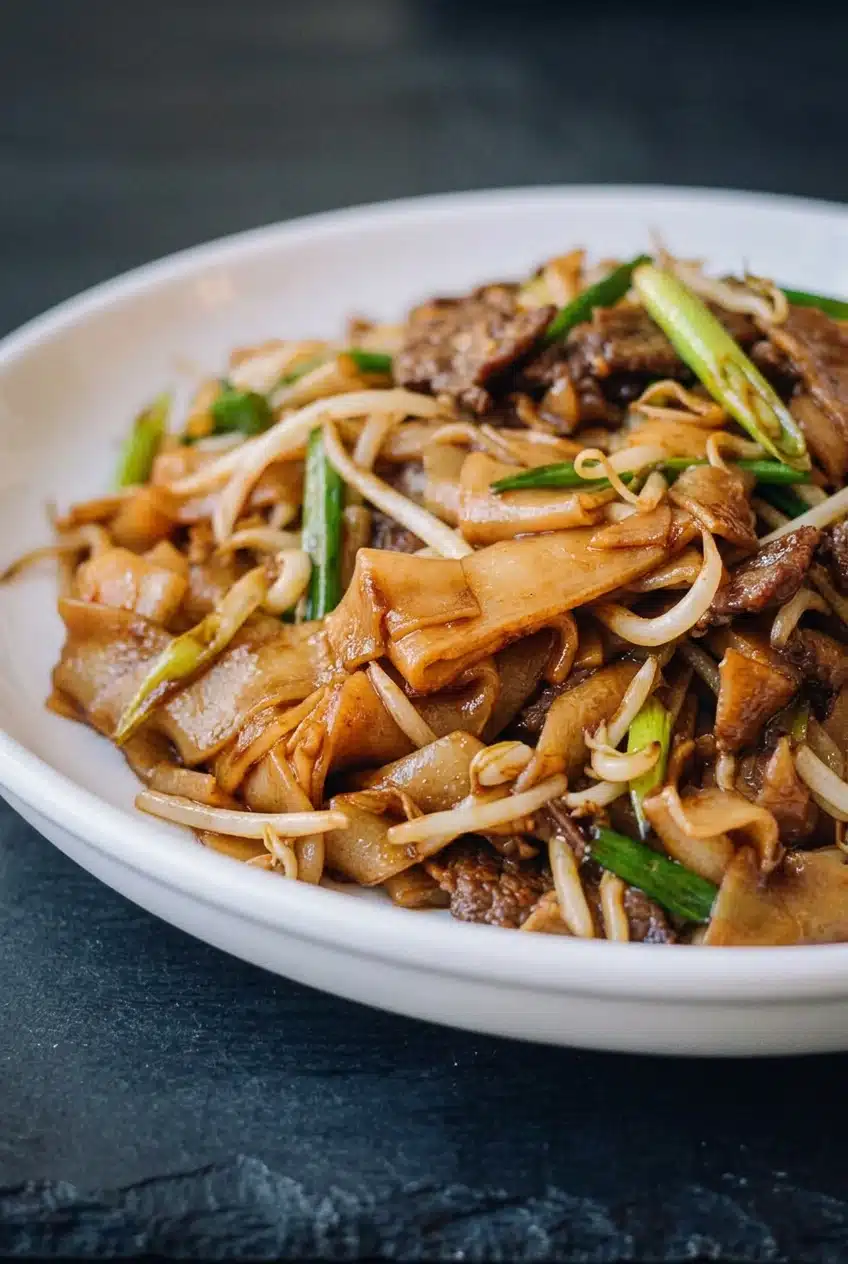
Prepare the beef and noodles first, then cook in a continuous sequence. Searing the beef separately gives it a browned exterior before it returns to the noodles, while adding sprouts last preserves their texture.
Prep: 45 minutes. Cook: 5 minutes. Total: 50 minutes. Yield: 4 servings. Dried noodles require the additional soaking time described below.
- Coat the sliced flank steak with the water, optional baking soda, cornstarch, oyster sauce, Shaoxing wine, and soy sauce, then allow at least 30 minutes for marinating.
The seasoning mixture should cling lightly to the beef. - Cut fresh noodle sheets into strips about 1 inch wide, leaving precut strips as they are.
Avoid forcing apart any layers that feel rigid or tightly stuck. - For stiff fresh noodles, boil water in the wok, immerse the noodles for 30 seconds, transfer them to an ice bath, and drain thoroughly; for dried noodles instead, soak in hot water for a few hours or cold water overnight.
The fresh noodles should loosen without leaving excess water to carry into the stir-fry. - Bring the wok to smoking over high heat, coat its interior with 1 1/2 tablespoons vegetable oil, and sear the beef before transferring it out.
Look for browned surfaces on the meat rather than a pale, steamed appearance. - Pour the remaining 1 1/2 tablespoons vegetable oil into the wok, cook the ginger in it for about 15 seconds, and follow with the scallions.
The ginger should release its fragrance into the hot oil. - Distribute the noodles across the wok, stir-fry over high heat for about 15 seconds, and pour the Shaoxing wine along the hot outer edge.
The noodles should sizzle as the wine releases its aroma. - Return the beef along with the soy sauce, dark soy sauce, sesame oil, and sugar, using a metal wok spatula to scrape underneath and lift the noodles through the seasonings.
Aim for evenly colored ribbons without chopping through them. - Taste a noodle before adjusting with salt and white pepper, then stir-fry the bean sprouts just until tender and serve immediately.
The sprouts should retain a little snap against the chewy noodles.
The smoky, toasted character associated with wok cooking is called wok hei. A home burner won’t necessarily reproduce a restaurant wok’s intensity, but browned beef, lightly seared noodle edges, and a dry finish are useful goals. You don’t need dramatic airborne tossing to mix well; controlled lifting with the spatula does the job.
Common Mistakes and Wok-Heat Troubleshooting
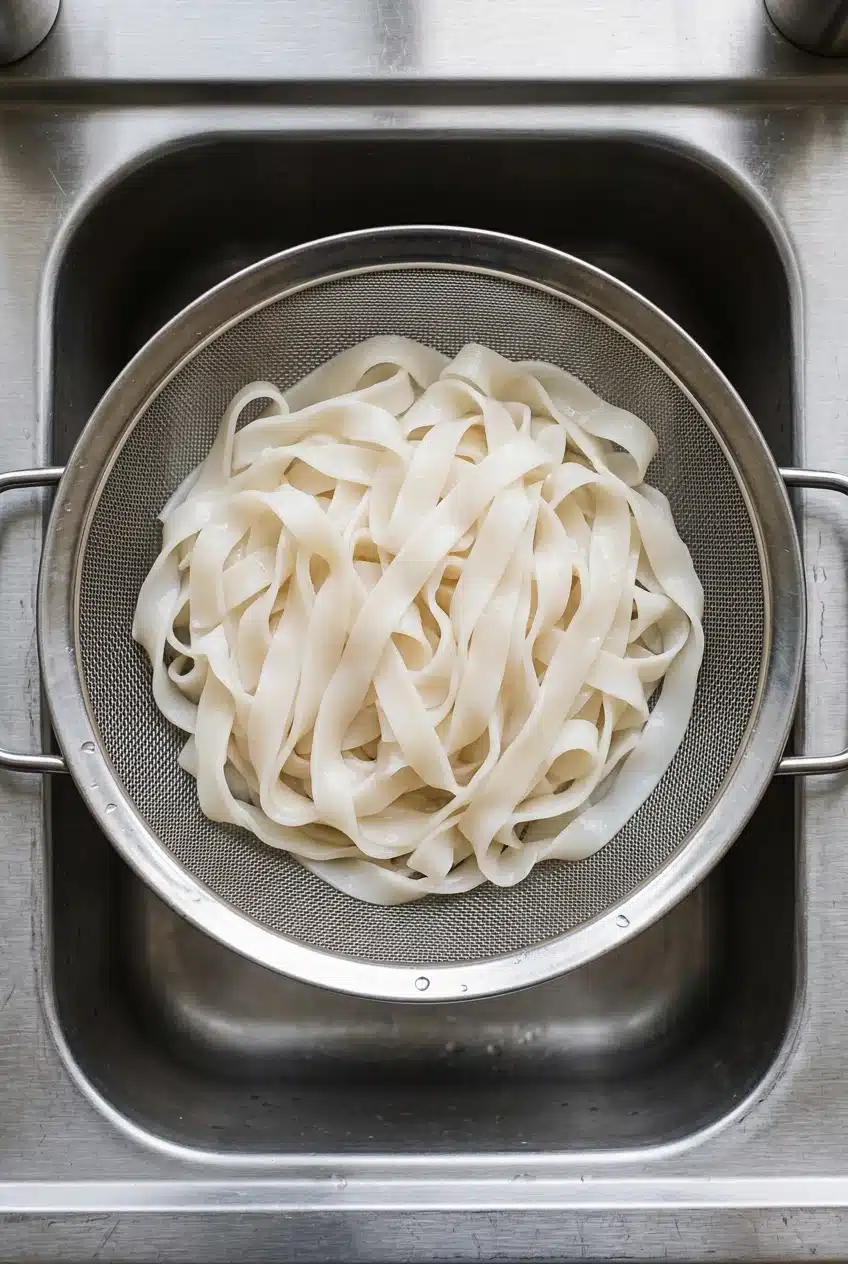
Noodles usually tear or turn soggy because of their condition before cooking, excess moisture, or rough handling. Deal with stiffness before the stir-fry rather than trying to separate a compressed block in the hot wok.
- Short, broken strands: Firm noodles resist bending and snap when pulled; use the fresh-noodle loosening step when needed instead of tugging them apart.
- Uneven sauce coverage: Tangled ribbons hide unseasoned patches; lift from underneath so the noodles turn through the sauce without aggressive stirring.
- Overly salty noodles: Soy and oyster sauces already contribute seasoning; taste before adding the finishing salt.
Preventing Pan Crowding and Soggy Noodles
- Watery noodles: Water left after loosening dilutes the seasoning and encourages steaming; drain the noodles thoroughly as directed.
- A crowded wok: A dense mound traps moisture and limits contact with the hot surface; avoid increasing the recipe beyond what your wok can comfortably hold.
- Soft sprouts: Adding them too early sacrifices their crunch; keep them for the final stage and stop when they’re just tender.
Home burners vary in how quickly they recover heat after food enters the wok. A strong initial sizzle that fades into wet bubbling suggests the food is releasing moisture faster than the burner can evaporate it. The goal is manageable pan contact, not simply turning up the heat and stirring harder.
How to Rescue Sticking Noodles Mid-Cook
- Noodles catching underneath: Slide the metal wok spatula along the bottom to release them, then lift the loosened portion upward into the rest.
- Ribbons tearing during rescue: Sideways stirring pulls against the stuck section; work underneath it rather than dragging the whole mound across the wok.
Some contact with the hot surface creates seared spots. Don’t confuse that with a reason to leave a stuck layer untouched, and don’t chop at it. Scraping underneath and lifting gives you better control.
Popular Variations and Substitutions
Keep these optional directions separate from the dry-fried recipe above. A different noodle, sauce, or protein changes the finished character, even when the ginger-and-scallion flavor stays familiar.
Dry-Fried vs. Wet Gravy Beef Chow Fun
Dry-fried chow fun has a thin coating of seasoning and no substantial pool of sauce. Wet gravy-style chow fun takes a different direction, with broth and starch contributing a more generous, spoonable sauce.
Neither style uses the same noodles as beef lo mein, which features wheat-based egg noodles with a different texture and a softer, saucier coating. Choose chow fun when you want broad rice-noodle ribbons and that distinctive chew.
Gluten-Free, Wine, and Protein Swaps
For an optional Shaoxing wine alternative, dry sherry offers a different wine aroma, while broth takes the flavor in a non-wine direction. Neither will taste identical to Shaoxing wine. Dietary and protein changes also call for a review of the sauces, not just the main ingredient.
Gluten-Free Adaptation (Tamari & Gluten-Free Oyster Sauce)
- Wheat-free tamari: An optional direction for replacing the soy sauces, though the finished color and flavor may differ.
- Gluten-free oyster sauce: An optional alternative to conventional oyster sauce; check the product label rather than assuming all versions are alike.
- Other packaged ingredients: Review the noodles, wine, and remaining seasonings for your dietary needs before treating the whole dish as suitable.
Vegetarian / Tofu Protein Swap
Firm tofu or tempeh can replace the flank steak as an optional meatless direction, with a different bite and flavor. Changing the beef alone doesn’t make the complete dish vegetarian: the oyster sauce and other packaged seasonings also need review.
Organizing Ingredients Before Cooking
Organize the components around the cooking order rather than trying to measure while the wok is hot. Keep the beef marinade ingredients distinct from the sauces that go directly into the noodles, especially since soy sauce and Shaoxing wine appear in both places.
Use the marinating stage to organize the ginger, cut scallions, noodle seasonings, and sprouts. Give noodle preparation its own attention: fresh sheets, stiff fresh strips, and dried ribbons need different handling, even though they eventually enter the same stir-fry.
For unused packaged noodles, follow the package’s storage directions. Plan to enjoy the cooked dish immediately for its best texture; leftover storage and reheating require appropriate food-handling guidance, and a hot pan shouldn’t be treated as a way to correct uncertain storage.
What to Serve with the Noodles
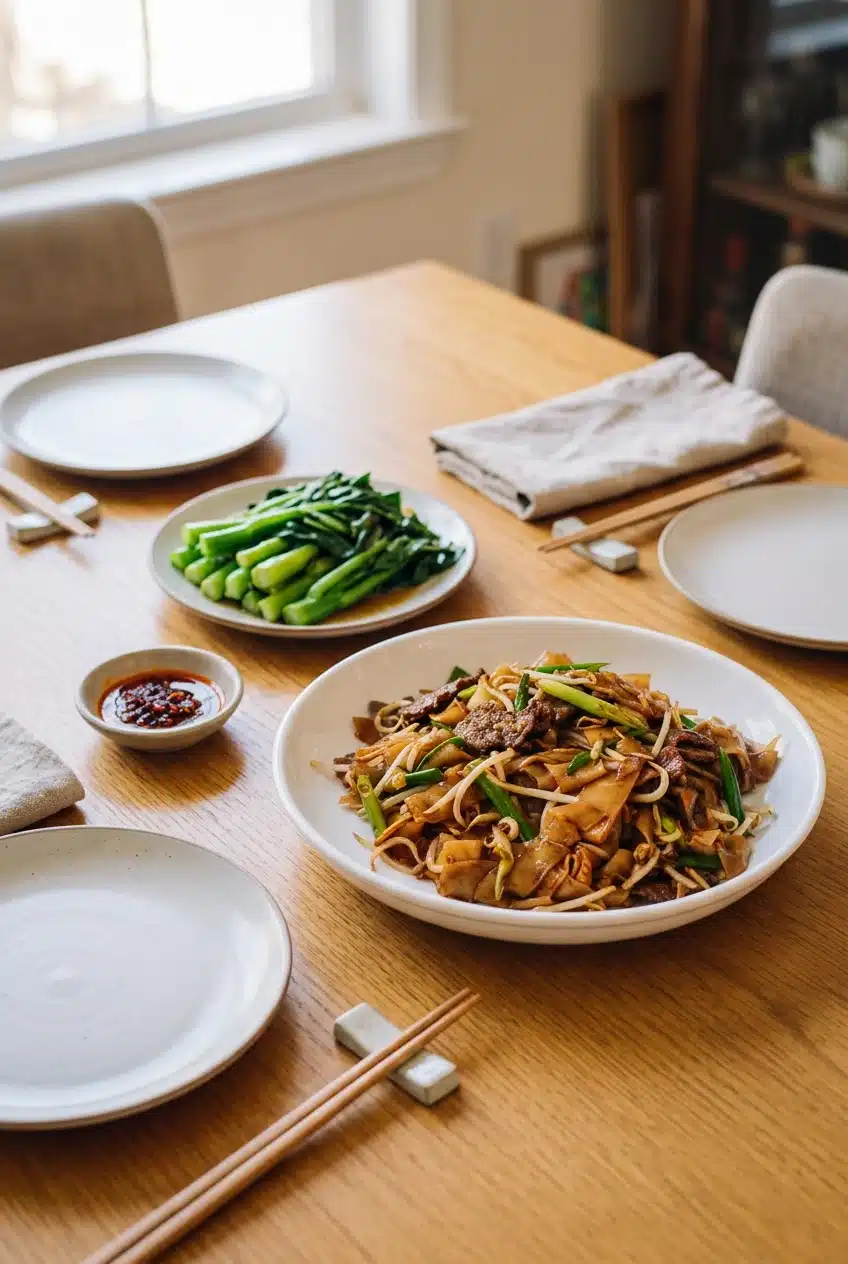
Bring the noodles to the table family-style as soon as cooking finishes. Their chewy texture and the sprouts’ snap are most appealing before the dish sits.
- For heat: Offer chili oil or Chiu Chow chili sauce on the side so everyone can choose their own level.
- For a vegetable pairing: Chinese broccoli or pea shoots provide a lighter contrast to the savory noodles.
- For a fuller Cantonese-style meal: Add a light soup without another heavily sauced main competing for attention.
Bringing Restaurant-Style Noodles to Your Kitchen
Tender, thinly sliced beef, pliable noodles, and a hot wok give this dish its savory dry-fried character. Gentle lifting keeps those broad ribbons intact while the sauce coats them.
Watch the final sprouts closely and stop while they still have a little crunch. Then get the noodles to the table while the ginger is fragrant and the edges are freshly seared.
Frequently Asked Questions
What Noodles Are Used for Beef Chow Fun?
Use wide, flat fresh rice noodles called ho fun, hor fun, or shahe fen, sold as sheets or precut strips. Wide dried rice noodles are an optional alternative; use the soaking direction in the method rather than the fresh-noodle blanching option.
How Do You Keep Chow Fun Noodles from Sticking or Breaking?
Loosen stiff fresh noodles before stir-frying and drain them thoroughly. Use the specified hot wok and oil, then scrape underneath and lift with the spatula instead of stirring forcefully through the ribbons.
Can You Make Beef Chow Fun Without a Wok?
Yes, a large skillet is an optional alternative, though the method above uses a wok and its heat directions apply to that cookware. Don’t apply the smoking-hot wok instruction indiscriminately to nonstick cookware; follow your pan manufacturer’s heat limits.
What Is the Difference Between Beef Chow Fun and Beef Lo Mein?
Chow fun uses broad rice noodles; lo mein uses wheat-based egg noodles. This chow fun is dry-fried with a thin coating of sauce, while lo mein generally has a softer, saucier finish.
Is Beef Chow Fun Healthy and How Should Leftovers Be Stored Safely?
A “healthy” label depends on your needs and the rest of your meal; this recipe doesn’t promise a particular health benefit. For leftovers, use food-handling guidance specific to cooked beef and rice noodles rather than guessing a storage limit or assuming reheating corrects improper storage.
Beef Chow Fun

Equipment
- wok
- Metal wok spatula
Ingredients
- 10 oz. flank steak 225g, sliced into 1/8 thick pieces
- 1 1/2 tablespoons water
- 1/4 teaspoon baking soda optional
- 1 teaspoon cornstarch
- 2 teaspoons oyster sauce
- 2 teaspoons Shaoxing wine
- 1 teaspoon soy sauce
- 12 oz. fresh wide rice noodles
- 3 tablespoons vegetable oil
- 4 scallions split in half vertically and cut into 3-inch pieces
- 3 thin slices ginger
- 2 tablespoons Shaoxing wine
- 2 tablespoons soy sauce
- 2 teaspoons dark soy sauce
- 1/2 teaspoon sesame oil
- 1/4 teaspoon sugar
- salt and white pepper to taste
- 4 to 6 ounces fresh mung bean sprouts
Instructions
- Coat the sliced flank steak with the water, optional baking soda, cornstarch, oyster sauce, Shaoxing wine, and soy sauce, then allow at least 30 minutes for marinating. The seasoning mixture should cling lightly to the beef.
- Cut fresh noodle sheets into strips about 1 inch wide, leaving precut strips as they are. Avoid forcing apart any layers that feel rigid or tightly stuck.
- For stiff fresh noodles, boil water in the wok, immerse the noodles for 30 seconds, transfer them to an ice bath, and drain thoroughly; for dried noodles instead, soak in hot water for a few hours or cold water overnight. The fresh noodles should loosen without leaving excess water to carry into the stir-fry.
- Bring the wok to smoking over high heat, coat its interior with 1 1/2 tablespoons vegetable oil, and sear the beef before transferring it out. Look for browned surfaces on the meat rather than a pale, steamed appearance.
- Pour the remaining 1 1/2 tablespoons vegetable oil into the wok, cook the ginger in it for about 15 seconds, and follow with the scallions. The ginger should release its fragrance into the hot oil.
- Distribute the noodles across the wok, stir-fry over high heat for about 15 seconds, and pour the Shaoxing wine along the hot outer edge. The noodles should sizzle as the wine releases its aroma.
- Return the beef along with the soy sauce, dark soy sauce, sesame oil, and sugar, using a metal wok spatula to scrape underneath and lift the noodles through the seasonings. Aim for evenly colored ribbons without chopping through them.
- Taste a noodle before adjusting with salt and white pepper, then stir-fry the bean sprouts just until tender and serve immediately. The sprouts should retain a little snap against the chewy noodles.