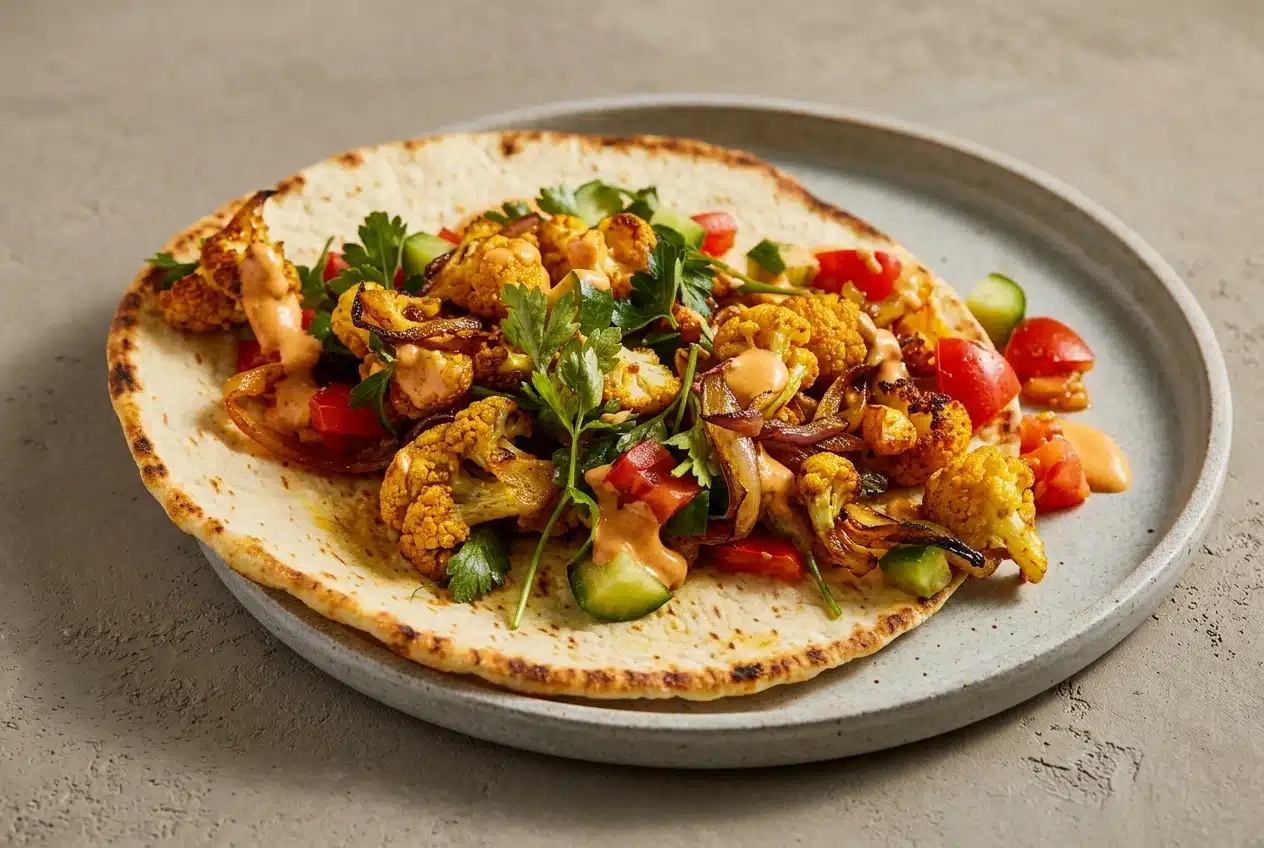
Cauliflower shawarma pairs warm-spiced roasted cauliflower and red onions with creamy spicy tahini. The florets turn tender with crisp edges, ready for warm pita wraps or grain bowls with juicy tomatoes, crunchy cucumber, and briny olives.
This cauliflower shawarma takes its flavor cues from shawarma seasoning rather than spit-roasted meat. Cumin, coriander, paprika, and turmeric coat the vegetables, while lemon-garlic tahini brings a bright, gently fiery finish.
The contrast makes dinner work: warm roasted vegetables, cool chopped toppings, and sauce that reaches into every crevice. Give the florets room to brown. Those edges are worth it.
Cut the florets to similar sizes so their stems become tender without the smaller pieces scorching.
Key Ingredients and Shawarma Spice Profile
Each ingredient contributes something useful: cauliflower provides tender bite, onion adds roasted sweetness, oil carries the aromatic spices, and tahini supplies richness. Lemon, herbs, and chopped vegetables balance that warmth with acidity and freshness, while bread gathers everything together.
- 5 tablespoons extra-virgin olive oil, plus more as needed
- 1 ¼ teaspoons ground cumin
- 1 ¼ teaspoons sweet paprika
- ¾ teaspoon fine sea or table salt, plus more as needed
- 1 teaspoon ground coriander
- ¼ teaspoon ground turmeric
- ¼ teaspoon freshly ground black pepper
- Pinch of ground cayenne
- 1 large head cauliflower (about 2 ½ pounds), trimmed and cut into bite-size florets
- 1 large red onion, cut into ¼-inch wedges
- Pita or flatbread, for serving
- ¼ cup coarsely chopped parsley, plus more for serving
- Chopped tomato, cucumber and olives, for serving
- 1 tablespoon fresh lemon juice, plus more to taste
- 1 to 2 teaspoons harissa paste or other hot sauce, or a large pinch of Urfa or Aleppo pepper, plus more to taste
- 1 fat garlic clove, finely grated, passed through a press or minced
- ¼ teaspoon fine sea or table salt
- ⅓ cup tahini
- ⅓ cup ice water, plus more as needed
Cauliflower, Red Onion, and Fresh Toppings
Fresh cauliflower offers plenty of surfaces for browning, while red onion wedges soften into sweet petals with darkened tips. Parsley, tomato, cucumber, and olives bring freshness and briny contrast. Warm pita or flatbread holds the vegetables and catches the tahini.
Warm Shawarma Spices and Olive Oil
Cumin supplies earthy depth, coriander adds citrusy warmth, and sweet paprika gives rounded pepper flavor. Turmeric colors the coating, while black pepper and cayenne add bite. Whisking these spices into olive oil distributes them evenly instead of leaving dry patches on the florets.
Spicy Lemon-Garlic Tahini Components
Tahini gives the sauce its sesame richness; lemon balances it, and finely grated garlic spreads flavor throughout. Harissa adds chili depth, with hot sauce, Urfa pepper, or Aleppo pepper as listed alternatives. Ice water adjusts the texture from paste-like to pourable.
Step-by-Step Method for Roasted Cauliflower Shawarma
Allow about 45 minutes total for 2 servings. Prepare the sauce while the vegetables roast, then warm the bread near the finish so everything reaches the table together.
- Set one oven rack in the upper third and another in the lower third, then preheat to 425°F.
The upper position is for browning the vegetables; the lower position will warm the bread. - In a large mixing bowl, whisk the olive oil with cumin, paprika, salt, coriander, turmeric, black pepper, and cayenne, then toss in the cauliflower and onion before distributing them across a rimmed baking sheet.
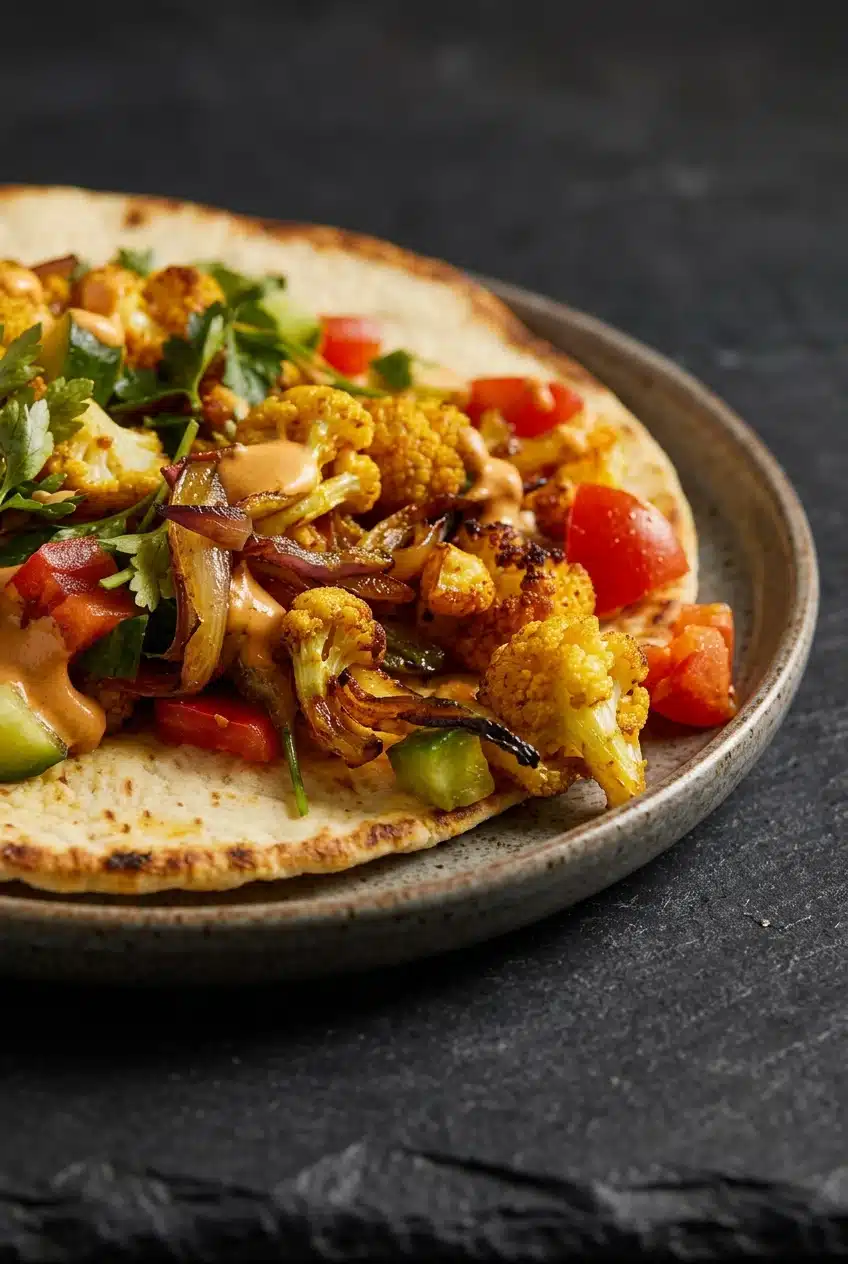
A uniform spice coating and a single layer give the vegetables even exposure to the heat. - Place the sheet on the upper rack and roast for 30 to 40 minutes, turning the vegetables once or twice and adding a drizzle of olive oil if they appear dry.
Check for golden surfaces, lightly crisp edges, and tender stems before taking the pan out. - While the vegetables roast, combine the lemon juice, 1 teaspoon harissa, garlic, and salt in a small bowl and leave for 1 to 2 minutes.
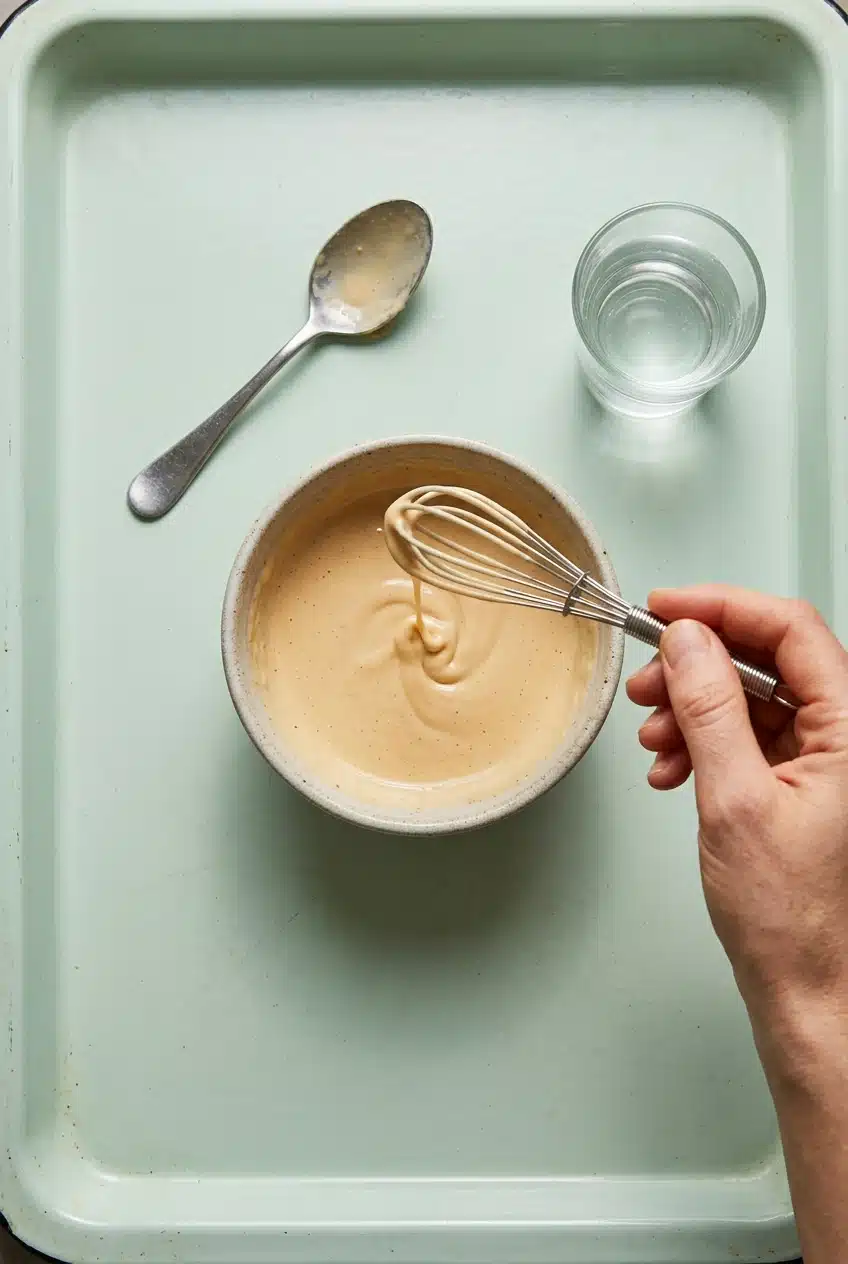
This brief lemon bath mellows the garlic before it joins the sesame paste. - Whisk the tahini into the garlic mixture, then incorporate ice water in 1-tablespoon additions.
Stop when the sauce flows in a smooth ribbon, using less or more than the listed water as the tahini’s thickness requires. - Taste the sauce and adjust with additional harissa, lemon juice, or salt as desired.
A creamy sesame flavor with lively acidity and balanced heat signals that it is ready. - During the final 5 minutes of vegetable roasting, warm the pita or flatbread on the lower rack, either directly on the rack or on another baking pan.
The bread should feel warm and flexible for folding around the filling. - Finish the roasted cauliflower and onions with parsley and bring them to the table with the warmed bread, tahini, tomato, cucumber, and olives.
The fresh toppings provide a cool, juicy contrast to the hot, aromatic vegetables.
Expert Tips for Deeply Charred Florets and Smooth Tahini
Maximizing Sheet-Pan Caramelization
- Pale, soft florets: crowding holds moisture around the vegetables; spread them out rather than piling them together.
- Uneven browning: rounded pieces have less pan contact; cut larger florets to expose a flat surface.
- Broken edges: frequent stirring interrupts browning and knocks pieces apart; use a wide spatula and turn sparingly.
- Dry-looking surfaces: check during roasting and use the additional olive oil allowed in the ingredient list.
Mastering Smooth, Drizzle-Ready Tahini
- A stiff mixture: tahini can become thick as the lemon mixture incorporates; continue the gradual ice-water whisking rather than stopping at the paste stage.
- An overly heavy drizzle: brands differ in thickness, so judge the ribbon falling from the whisk rather than treating the water amount as a fixed target.
- Harsh garlic: allow the garlic its brief rest in lemon juice before adding tahini.
I look for a sauce that falls from the whisk without needing a shake; it coats the florets without weighing down the filling.
Optional Post-Roast Citrus or Sumac Finish
For an optional tangier finish, choose fresh lemon or sumac. Lemon brings juicy acidity, while sumac contributes a dry, tart accent. Neither is needed for browning, and both belong outside the main seasoning mixture.
How to Serve in Pitas or Grain Bowls
Choose bread for a handheld dinner or a bowl when you want the toppings spread out.
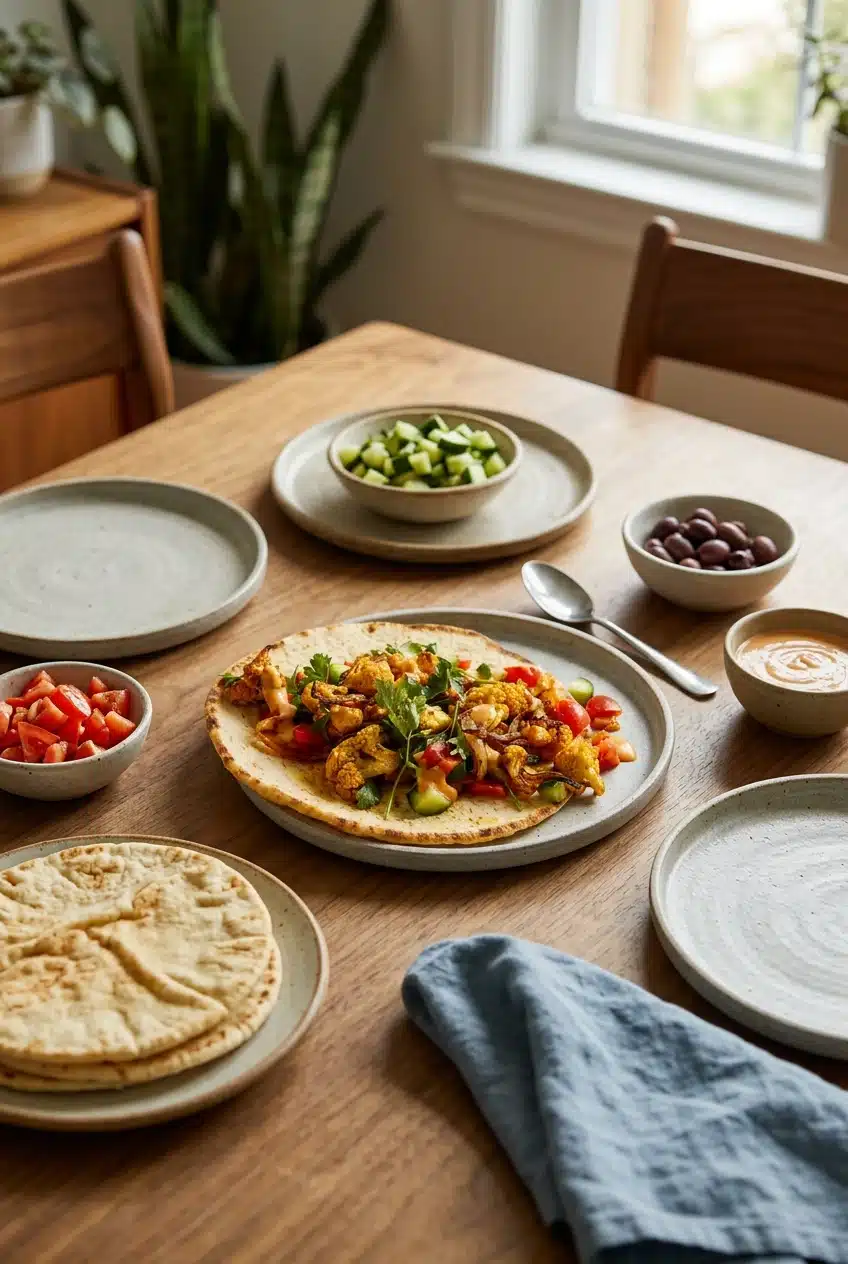
- Warm pita or flatbread: fill with cauliflower, onions, parsley, tomato, cucumber, olives, and spicy tahini.
- Build-your-own platter: set the warm vegetables and bread beside separate bowls of sauce and toppings so everyone can adjust their filling.
- Grain or greens bowl: use optional cooked quinoa, rice, or romaine, with hummus, pickled red onions, or mint for another layer of flavor.
For a mixed-menu dinner, a chicken shawarma bowl offers a poultry option alongside the same bowl-style presentation.
Popular Variations and Customizations
These optional directions change the presentation or flavor without replacing the oven-floret method above.
Cauliflower Shawarma Grain Bowl With Chickpeas
Chickpeas add a hearty, pleasantly firm bite to a bowl with quinoa or rice. Optional greens, hummus, or extra vegetables broaden the texture contrast. Keep those additions separate from the measured cauliflower-and-onion mixture rather than assuming the pan has room for everything.
Whole Roasted Cauliflower Shawarma
A whole head makes a dramatic centerpiece, but it isn’t interchangeable with bite-size florets. Florets offer more browned edges and fit naturally into wraps; a whole head emphasizes presentation and needs a dedicated whole-cauliflower method.
Considering an Air Fryer Version
An air fryer is an appealing small-portion option, but the instructions here apply to oven roasting. Use a dedicated air-fryer method rather than treating the oven temperature and roasting window as direct conversions.
Cooling Yogurt Sauce & Mild Spice Swaps
Cucumber-mint yogurt sauce offers an optional cool, tangy direction in place of spicy tahini. For a milder sesame sauce, choose less chili heat while retaining the lemon-garlic balance. Neither choice changes the cauliflower seasoning above.
Component Preparation and Storage
Organize the roasted cauliflower and onions, chopped toppings, bread, and tahini as separate components. Keeping them apart protects the bread from soaking up sauce and lets you add the cool vegetables when assembling the meal.
For leftovers, keep the vegetables, fresh toppings, and sauce covered and chilled in separate containers, with bread stored separately. Assemble only the portion you’re serving rather than storing filled, dressed pitas.
Final Thoughts on Homemade Shawarma
The payoff is in the contrast: golden-brown, slightly crisp cauliflower, sweet roasted onion, warm spices, and creamy tahini with a lemony kick. Tender stems and browned edges are the cues to watch.
Serve everything in warm bread or arrange it over grains with your preferred toppings. Keep the sauce within reach so each serving gets a generous drizzle.
Frequently Asked Questions
How Do You Keep Roasted Cauliflower Shawarma From Getting Soggy?
Spread the coated vegetables in a single layer rather than a heap. Use the upper oven rack and stir only once or twice so the surfaces have time to brown.
Why Does Tahini Sauce Thicken Before Turning Creamy?
Tahini can initially stiffen when mixed with the lemon mixture; that thick stage doesn’t mean the sauce has failed. Whisk in ice water gradually until it becomes smooth and pourable.
What Is a Good Substitute for Harissa in the Tahini Sauce?
The listed alternatives are another hot sauce, Urfa pepper, or Aleppo pepper. Taste as you adjust because their heat and tang differ.
Can I Add Chickpeas to the Sheet Pan With the Cauliflower?
Chickpeas are an optional bowl addition, not part of the measured roasting mixture. Don’t crowd the cauliflower to fit them onto the same pan; the vegetables need space to brown.
Can You Cook Cauliflower Shawarma in an Air Fryer?
An air-fryer version requires its own cooking guidance. Keep the oven instructions here for the sheet-pan version rather than transferring the settings directly.
How Should Leftover Cauliflower Shawarma Components Be Stored?
Keep the roasted vegetables, fresh toppings, and tahini covered and chilled separately. Keep bread separate and add sauce and toppings when assembling, rather than storing dressed wraps.

Cauliflower Shawarma

Equipment
- Large Mixing Bowl
- Rimmed baking sheet
- Small bowl
- Whisk
Ingredients
- 5 tablespoons extra-virgin olive oil plus more as needed
- 1 ¼ teaspoons ground cumin
- 1 ¼ teaspoons sweet paprika
- ¾ teaspoon fine sea or table salt plus more as needed
- 1 teaspoon ground coriander
- ¼ teaspoon ground turmeric
- ¼ teaspoon freshly ground black pepper
- Pinch of ground cayenne
- 1 large head cauliflower (about 2 ½ pounds), trimmed and cut into bite-size florets
- 1 large red onion cut into ¼-inch wedges
- Pita or flatbread for serving
- ¼ cup coarsely chopped parsley plus more for serving
- Chopped tomato, cucumber and olives for serving
- 1 tablespoon fresh lemon juice plus more to taste
- 1 to 2 teaspoons harissa paste or other hot sauce or a large pinch of Urfa or Aleppo pepper, plus more to taste
- 1 fat garlic clove finely grated, passed through a press or minced
- ¼ teaspoon fine sea or table salt
- ⅓ cup tahini
- ⅓ cup ice water plus more as needed
Instructions
- Set one oven rack in the upper third and another in the lower third, then preheat to 425°F. The upper position is for browning the vegetables; the lower position will warm the bread.
- In a large mixing bowl, whisk the olive oil with cumin, paprika, salt, coriander, turmeric, black pepper, and cayenne, then toss in the cauliflower and onion before distributing them across a rimmed baking sheet. A uniform spice coating and a single layer give the vegetables even exposure to the heat.
- Place the sheet on the upper rack and roast for 30 to 40 minutes, turning the vegetables once or twice and adding a drizzle of olive oil if they appear dry. Check for golden surfaces, lightly crisp edges, and tender stems before taking the pan out.
- While the vegetables roast, combine the lemon juice, 1 teaspoon harissa, garlic, and salt in a small bowl and leave for 1 to 2 minutes. This brief lemon bath mellows the garlic before it joins the sesame paste.
- Whisk the tahini into the garlic mixture, then incorporate ice water in 1-tablespoon additions. Stop when the sauce flows in a smooth ribbon, using less or more than the listed water as the tahini’s thickness requires.
- Taste the sauce and adjust with additional harissa, lemon juice, or salt as desired. A creamy sesame flavor with lively acidity and balanced heat signals that it is ready.
- During the final 5 minutes of vegetable roasting, warm the pita or flatbread on the lower rack, either directly on the rack or on another baking pan. The bread should feel warm and flexible for folding around the filling.
- Finish the roasted cauliflower and onions with parsley and bring them to the table with the warmed bread, tahini, tomato, cucumber, and olives. The fresh toppings provide a cool, juicy contrast to the hot, aromatic vegetables.