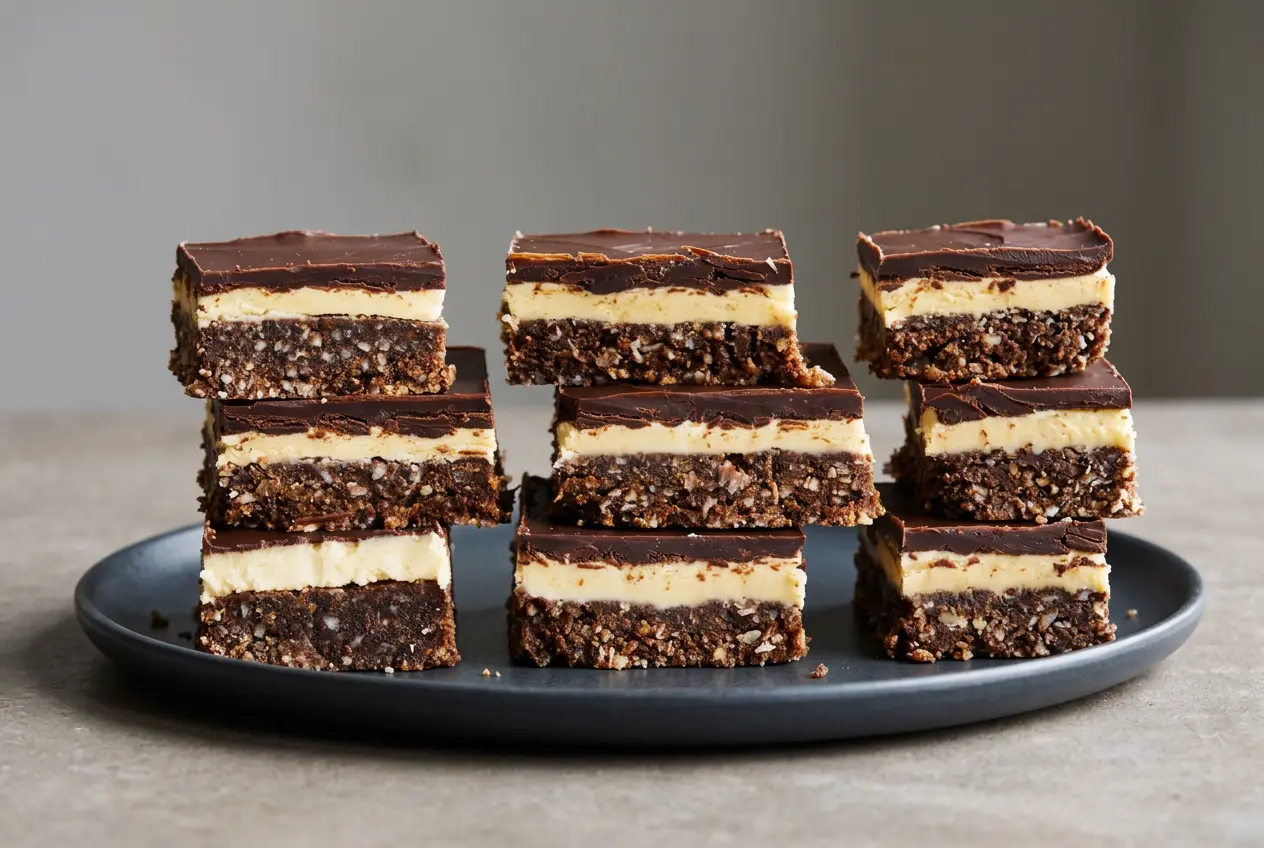
Nanaimo bars are a Canadian dessert with three no-bake layers: a chocolate, coconut, and nut crumb crust, yellow custard buttercream, and chocolate glaze. This recipe walks you through cooking the crust mixture, whipping the filling, and chilling each layer for distinct textures.
Rich, sweet, and chocolatey, nanaimo bars deliver crunch beneath a soft, creamy center. They need no oven, though the egg-containing crust mixture does cook gently on the stovetop.
The assembly is manageable when you work one layer at a time and let the refrigerator do its part. The real reward is that creamy middle.
Leave parchment hanging over opposite sides of the pan so you can lift the finished block without digging into the corners.
Key Ingredients and Smart Substitutions
Each ingredient contributes to the contrast: crumbs and egg help bind the crust, coconut and nuts add texture, custard powder flavors the creamy filling, and chocolate and butter form a smooth topping. Unsweetened coconut and optional salt balance the sweetness.
- ½ cup/115 grams unsalted butter (1 stick), cut into pieces
- ¼ cup/50 grams granulated sugar
- 1 large egg
- 3 tablespoons cocoa powder
- 1 teaspoon vanilla extract
- 2 cups/235 grams graham cracker crumbs
- 1 cup/85 grams unsweetened shredded coconut
- ½ cup/50 grams finely chopped walnuts, almonds or pecans (or a mixture)
- ¼ cup/60 grams unsalted butter (½ stick), at room temperature
- 3 tablespoons heavy cream
- 2 tablespoons custard powder, such as Bird’s
- 2 cups/245 grams confectioners’ (icing) sugar
- 4 ounces/115 grams semisweet chocolate, broken into ½-inch (1 ¼-centimeter) pieces
- 2 tablespoons unsalted butter
- Flaky sea salt, for sprinkling (optional)
Chocolate, Coconut, and Nut Base Ingredients
Graham cracker crumbs give the crust structure, while coconut adds chew and nuts provide crunch. Unsweetened coconut keeps the filling’s sweetness from overwhelming every bite; sweetened coconut would make a sweeter bar. Digestive biscuit crumbs are an optional international alternative, with a different flavor and crumb texture.
Bird’s Custard Powder and US Pantry Substitutes
Bird’s is a starch-based, vanilla-flavored custard powder that gives the buttercream its characteristic flavor and pale yellow color. Check international grocery sections or online retailers, since local availability varies.
Cook-and-serve vanilla pudding powder, not instant, or cornstarch with vanilla extract are possible fallback directions. Neither is a tested equivalent here, and flavor, color, and texture may differ. Choose custard powder for the intended result.
Chocolate Glaze and Flaky Sea Salt
Semisweet chocolate supplies the topping’s cocoa flavor, while butter helps it spread smoothly. Optional flaky sea salt adds small savory contrasts rather than changing the sweetness throughout the filling.
How to Make Nanaimo Bars Step by Step
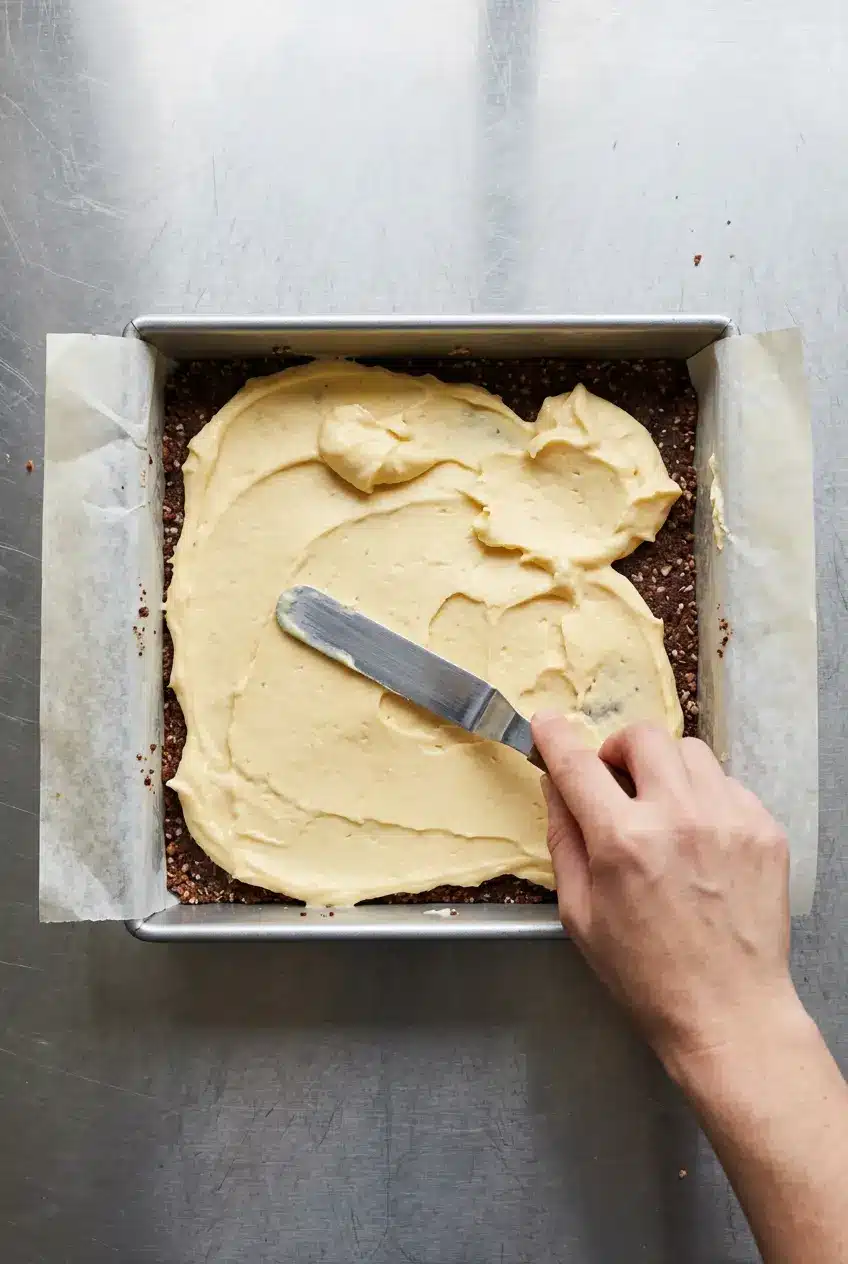
Allow about 2 hours overall for assembly and chilling. This recipe makes 16 bars; prepare the filling while the crust firms up.
- Fit parchment into an 8-by-8-inch (20-by-20-centimeter) metal pan, leaving about 2 inches (5 centimeters) extending above two opposite edges.
These exposed ends will form handles for lifting out the finished block. - Set a double boiler, or a heatproof bowl over boiling water, on the stove and whisk together the crust butter, granulated sugar, egg, cocoa, and vanilla.
Once the butter melts, keep whisking for 1 to 2 minutes until the glossy mixture gains a little thickness, then take it off the heat. - Fold the graham crumbs, coconut, and chopped nuts into the warm cocoa mixture.
All the crumbs should look moistened, with a sandy texture that holds together when pressed. - Pack the crumb mixture across the lined pan with your fingers, keeping the thickness even, then refrigerate for at least 15 minutes.
The crust should feel firm before you cover it with buttercream. - Use a stand mixer’s paddle to beat the room-temperature filling butter at medium speed for about 1 minute, then blend in the cream and custard powder, scraping the bowl’s sides and bottom.
The mixture should look evenly blended and pale yellow. - Mix in 1 cup confectioners’ sugar on low, followed by the remaining sugar, scraping underneath the mixture as needed, then beat at medium-high for 2 to 3 minutes.
The finished buttercream should feel light and look fluffy and smooth. - Place spoonfuls of buttercream over the chilled crust, level them gently with an offset spatula, and refrigerate for about 30 minutes.
The filling needs to set before it can support the chocolate layer. - Melt the topping chocolate and butter over low heat in a small heavy saucepan or double boiler, stirring frequently for 2 to 3 minutes, then remove from the heat.
The glaze should look uniform and satiny, without unmelted chocolate pieces. - Pour the glaze over the chilled filling, promptly spread it edge to edge with an offset spatula, and add flaky salt if desired.
A light touch helps keep the chocolate on top rather than dragging buttercream into it. - Refrigerate the pan for about 25 minutes to firm the topping.
The chocolate should be hardened before you lift the block. - Lift the block using the parchment handles and divide it into 16 squares measuring 2 inches (5 centimeters) across.
The cut edges should reveal a firm crumb layer beneath the creamy filling and chocolate cap.
Cooking and Pressing the No-Bake Crumb Base
Whisk continuously during the stovetop stage so the egg mixture heats evenly. After adding the crumbs, look for a damp, packable texture resembling wet sand, then press thoroughly into the corners.
Whipping the Yellow Custard Buttercream
Room-temperature butter blends more readily with the cream and powder. Scrape beneath the paddle’s reach so dense sugar pockets don’t remain at the bottom.
Pouring and Smoothing the Chocolate Topping
Use low heat and stop heating once the glaze is melted. Spread promptly over the set filling, using broad, gentle strokes rather than repeatedly scraping the same spot.
What Makes Classic Canadian Bars So Special
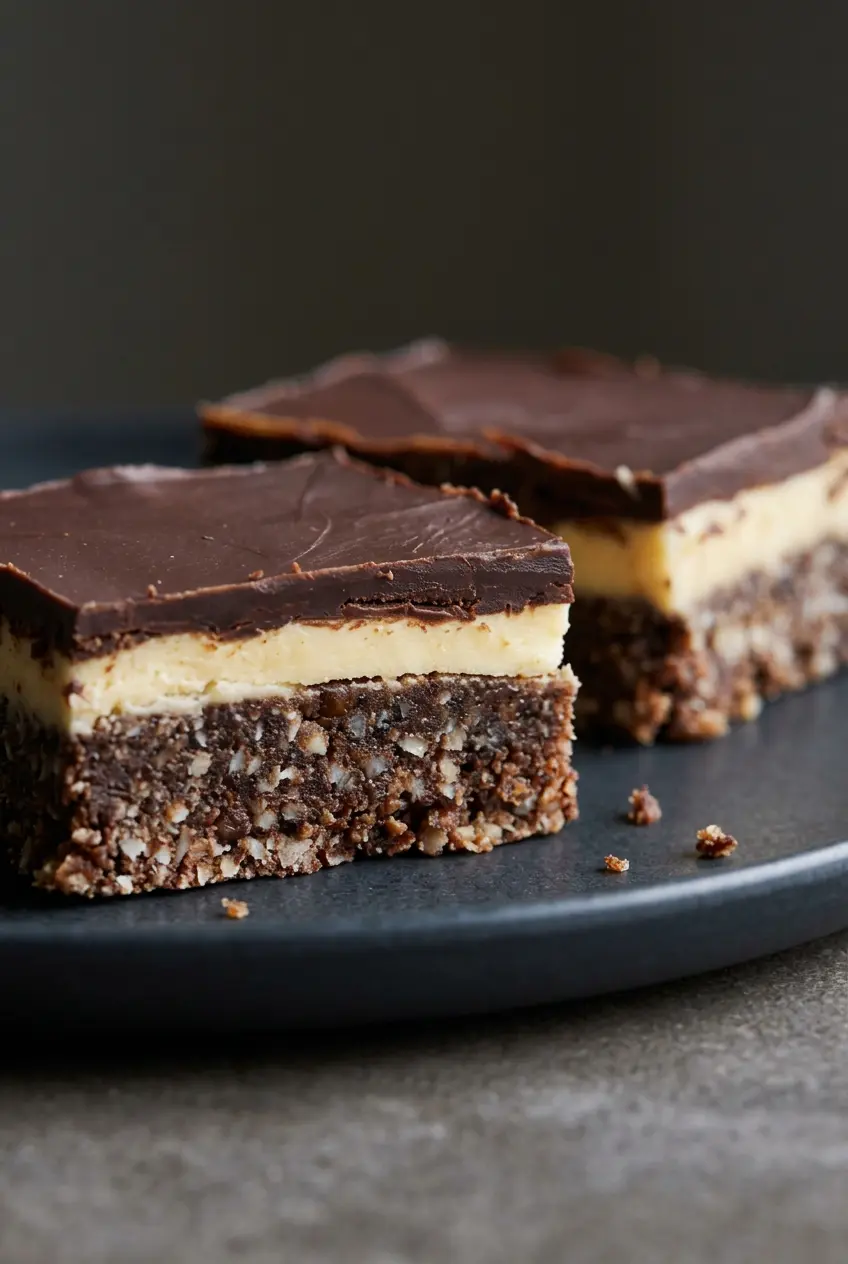
Named for Nanaimo on Vancouver Island in British Columbia, these bars are pronounced nuh-NYE-moh. Their appeal comes from the contrast between the chocolate-coconut-nut crust, yellow custard buttercream, and smooth chocolate topping.
The coconut, graham crumbs, nuts, and chocolate may feel familiar if you enjoy Hello Dolly bars, but the custard-flavored middle gives these squares a distinct character.
Expert Tips for Flawless Layers and Clean Slices
Most layer problems come from spreading over a soft surface or forcing a knife through hard chocolate.
- Crumbly crust: Insufficient binding or loose pressing can leave weak spots; whisk until the cocoa mixture thickens slightly and pack the crumbs evenly.
- Blended layers: Soft filling and overly hot chocolate can smear together; chill each layer until firm and avoid overheating the glaze.
- Cracked topping: As optional slicing guidance, lightly score just-set chocolate or use a warm, dry knife after bringing the block toward serving temperature.
- Uneven filling: Dragging a large mound across the crust can disturb it; distribute spoonfuls first, then use the offset spatula gently.
I favor a light hand with the offset spatula here; pressing harder tends to move the filling instead of leveling the chocolate.
Popular Nanaimo Bar Variations and Customizations
Keep these optional flavor directions separate from the recipe above.
Almond, Walnut, or Pecan Base Options
- Almonds: A firmer crunch and mild, clean nuttiness.
- Walnuts: An earthy, slightly bitter contrast to the sweet filling.
- Pecans: A buttery flavor and more delicate crunch.
A mixture is also welcome, as the ingredient list allows.
Peanut Butter and Mint Flavor Spins
Peanut butter suggests a nuttier creamy middle, while mint gives the chocolate pairing a cool contrast. These are flavor ideas, not tested adaptations here. For a dedicated chocolate and peanut butter dessert, try peanut butter bars.
Bittersweet Chocolate & Flaky Sea Salt Balance
Bittersweet chocolate offers a darker, less sweet direction than the specified semisweet topping. Optional flaky salt adds contrast to either style without reducing the sugar in the buttercream.
How to Serve These Bars
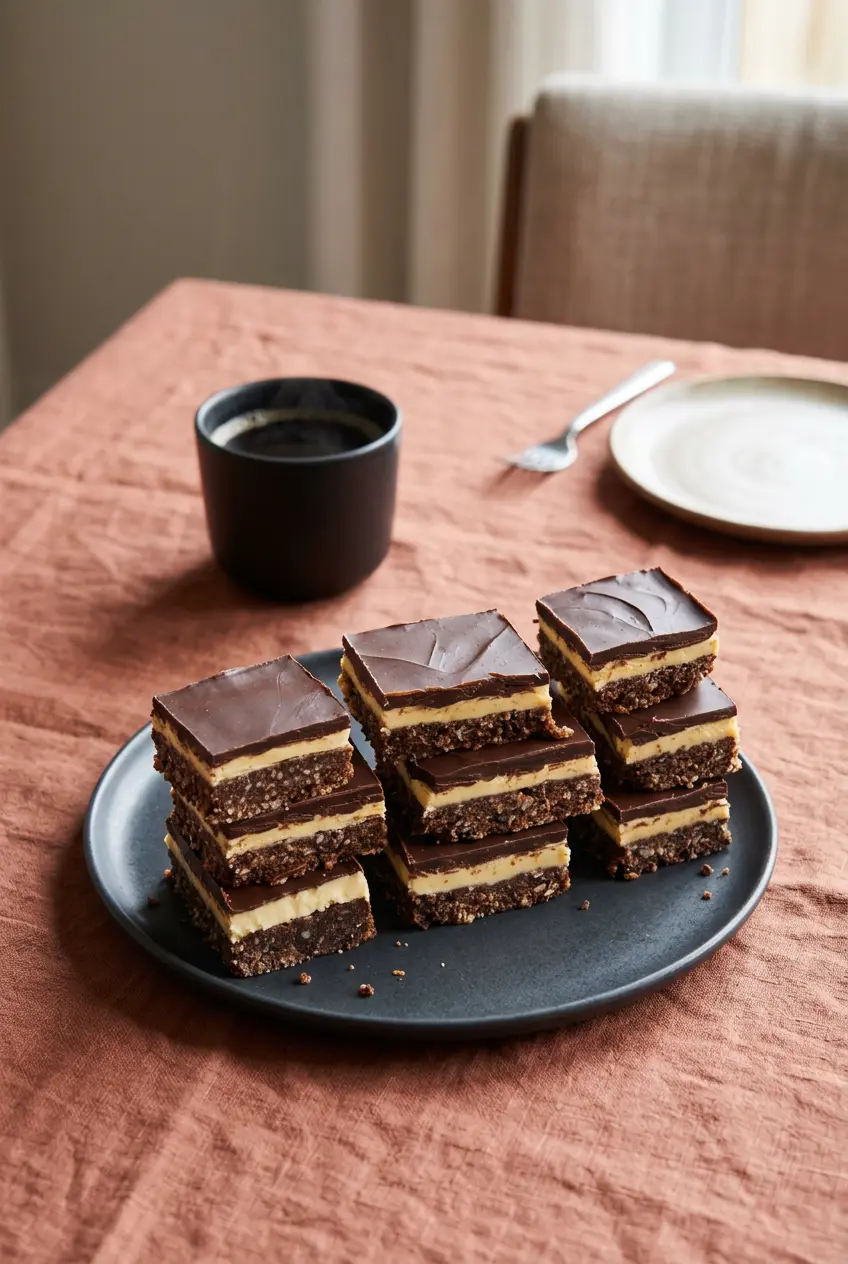
Keep the bars refrigerated until serving preparations, then bring them to room temperature as directed for a softer bite. Their richness suits modest squares or a bite-sized holiday presentation.
Unsweetened black coffee, espresso, or hot tea balances the sweet filling. On a festive dessert tray, cranberry bliss bars offer a fruity contrast.
Make-Ahead, Storage, and Freezing Guide
Plan the assembly around the chilling stages rather than trying to spread all the layers at once. Keep finished bars refrigerated until you’re ready to prepare them for serving.
For freezing, wrap the bars well before placing them in the freezer. Keep refrigerated bars and wrapped frozen portions organized separately; the room-temperature serving direction is not a thawing method.
Final Thoughts on Making Classic Bars
A firm, textured crust, fluffy custard buttercream, and smooth chocolate top make these squares worth assembling layer by layer.
Give each layer its chilling time and let the offset spatula do the gentle work. Bring the bars toward room temperature for that creamy bite.
Frequently Asked Questions
What Can I Use Instead of Bird’s Custard Powder in the US?
Cook-and-serve vanilla pudding powder or cornstarch with vanilla are possible, untested fallbacks here. Custard powder remains the intended choice for flavor and yellow color.
How Do You Pronounce Nanaimo Bars?
Say “nuh-NYE-moh,” emphasizing the middle syllable. The name comes from Nanaimo, British Columbia.
Are Nanaimo Bars Available in the USA or at Costco?
Availability varies by retailer, location, and season. Check your local bakery or Costco inventory rather than assuming they carry them.
What Do Americans Call Nanaimo Bars?
They generally use the same name, Nanaimo bars. “Three-layer chocolate custard squares” describes the dessert but isn’t a separate established name.
How Do I Cut Nanaimo Bars Without Cracking the Chocolate Top?
Optional light scoring while the topping is just set can help guide later cuts. A warm, dry knife and a block brought toward serving temperature can reduce cracking.
Is the Egg in a No-Bake Nanaimo Bar Crust Cooked?
Yes, the egg heats with the butter, sugar, cocoa, and vanilla over the double boiler; “no-bake” means no oven. Slight thickening alone does not verify temperature; egg-based mixtures should reach 160 °F to reduce food-safety risk.
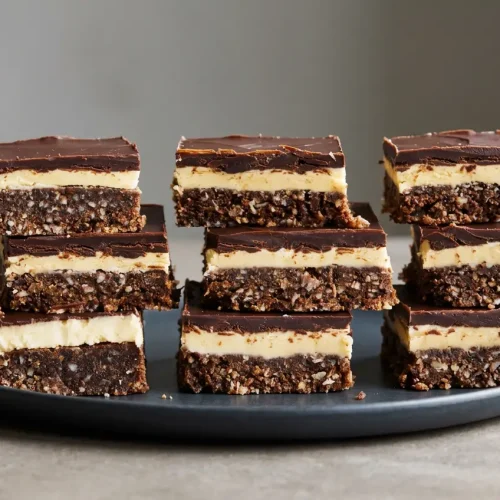
Nanaimo Bars

Equipment
- 8-by-8-inch metal pan
- Parchment Paper
- Double Boiler
- Stand mixer
- Offset spatula
Ingredients
- ½ cup/115 grams unsalted butter (1 stick), cut into pieces
- ¼ cup/50 grams granulated sugar
- 1 large egg
- 3 tablespoons cocoa powder
- 1 teaspoon vanilla extract
- 2 cups/235 grams graham cracker crumbs
- 1 cup/85 grams unsweetened shredded coconut
- ½ cup/50 grams finely chopped walnuts, almonds or pecans (or a mixture)
- ¼ cup/60 grams unsalted butter (½ stick), at room temperature
- 3 tablespoons heavy cream
- 2 tablespoons custard powder such as Bird’s
- 2 cups/245 grams confectioners’ (icing) sugar
- 4 ounces/115 grams semisweet chocolate broken into ½-inch (1 ¼-centimeter) pieces
- 2 tablespoons unsalted butter
- Flaky sea salt for sprinkling (optional)
Instructions
- Fit parchment into an 8-by-8-inch (20-by-20-centimeter) metal pan, leaving about 2 inches (5 centimeters) extending above two opposite edges. These exposed ends will form handles for lifting out the finished block.
- Set a double boiler, or a heatproof bowl over boiling water, on the stove and whisk together the crust butter, granulated sugar, egg, cocoa, and vanilla. Once the butter melts, keep whisking for 1 to 2 minutes until the glossy mixture gains a little thickness, then take it off the heat.
- Fold the graham crumbs, coconut, and chopped nuts into the warm cocoa mixture. All the crumbs should look moistened, with a sandy texture that holds together when pressed.
- Pack the crumb mixture across the lined pan with your fingers, keeping the thickness even, then refrigerate for at least 15 minutes. The crust should feel firm before you cover it with buttercream.
- Use a stand mixer’s paddle to beat the room-temperature filling butter at medium speed for about 1 minute, then blend in the cream and custard powder, scraping the bowl’s sides and bottom. The mixture should look evenly blended and pale yellow.
- Mix in 1 cup confectioners’ sugar on low, followed by the remaining sugar, scraping underneath the mixture as needed, then beat at medium-high for 2 to 3 minutes. The finished buttercream should feel light and look fluffy and smooth.
- Place spoonfuls of buttercream over the chilled crust, level them gently with an offset spatula, and refrigerate for about 30 minutes. The filling needs to set before it can support the chocolate layer.
- Melt the topping chocolate and butter over low heat in a small heavy saucepan or double boiler, stirring frequently for 2 to 3 minutes, then remove from the heat. The glaze should look uniform and satiny, without unmelted chocolate pieces.
- Pour the glaze over the chilled filling, promptly spread it edge to edge with an offset spatula, and add flaky salt if desired. A light touch helps keep the chocolate on top rather than dragging buttercream into it.
- Refrigerate the pan for about 25 minutes to firm the topping. The chocolate should be hardened before you lift the block.
- Lift the block using the parchment handles and divide it into 16 squares measuring 2 inches (5 centimeters) across. The cut edges should reveal a firm crumb layer beneath the creamy filling and chocolate cap.