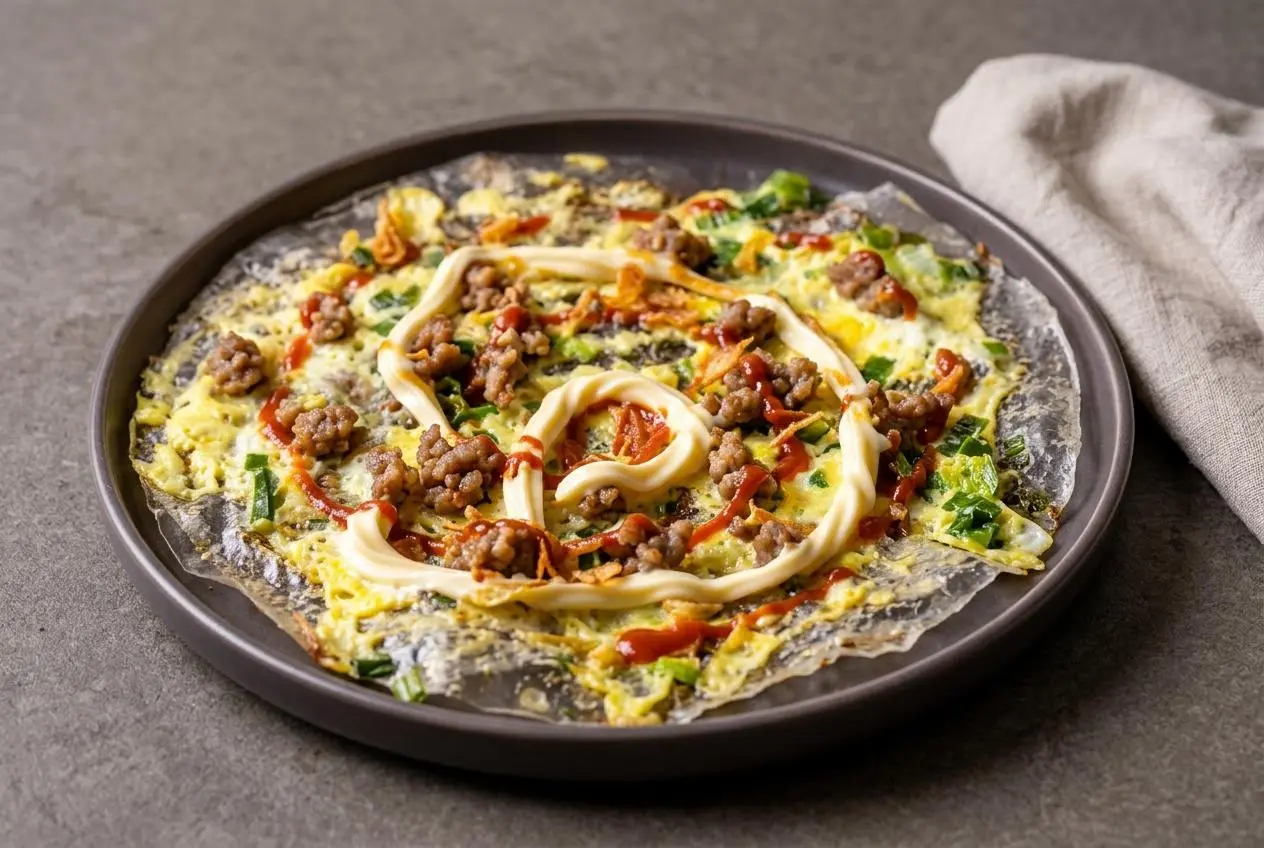
Vietnamese pizza, or banh trang nuong, is a grilled rice-paper snack associated with Da Lat. This stovetop version layers a crisp double-sheet crust with egg, scallion oil, seasoned pork, chili sauce, mayonnaise, and fried shallots.
The first bite delivers a delicate crackle, followed by rich pork and creamy, spicy sauce. Rice paper takes the place of dough, so there’s no kneading or rising involved.
The trick is controlling moisture and keeping the thin crust against the hot pan. Prepare the toppings first, then cook each pizza fresh. The crunch starts between the sheets.
Set your spoon, beaten eggs, cooked pork, scallion oil, and finishing sauces within reach before heating the grill pan.
What Is Vietnamese Pizza or Banh Trang Nuong?
Banh trang means rice paper, and banh trang nuong means grilled rice paper. Closely associated with Da Lat street food, this snack uses a thin, crisp wrapper rather than a bread crust.
Whisked egg forms the binding layer instead of tomato sauce. Toppings vary from vendor to vendor, so there isn’t one fixed combination. Here, two sheets support seasoned ground pork and scallion oil, making a practical adaptation for a home stove.
Essential Ingredients and Why They Work
Rice paper supplies structure and crunch, egg binds the toppings, and scallion oil adds aroma and richness. Seasoned pork brings savory depth, while sriracha, mayonnaise, and fried shallots balance heat, creaminess, and crisp texture.
Ground Pork Topping
- 1/2 lb ground pork
- 1/2 tsp salt
- 1/4 tsp white pepper
- 1/2 tsp granulated sugar
- 1 tsp fish sauce
Scallion Oil
- 2 stalks green onions, minced
- 1/2 cup vegetable oil
Other Ingredients
- 8 pieces rice paper
- 3 eggs
- 1/4 cup fried shallots
- 1/4 cup sriracha
- 1/4 cup Kewpie mayonnaise
Rice Paper and Egg Base
Choose sturdy rice paper, such as Three Ladies Brand sheets, that can hold the egg and pork without tearing. Two sheets offer more support than one, particularly when you press and lift the finished pizza.
The egg spreads into a thin binding layer that helps hold the toppings against the crust. Rice paper itself replaces the dough, but don’t assume the complete dish is gluten-free without checking the rice paper and condiment labels.
Savory Ground Pork and Scallion Oil
Fish sauce adds savory depth, sugar rounds out the saltiness, and white pepper brings gentle warmth. Salt seasons the pork throughout rather than leaving all the flavor to the finishing sauces.
Scallion oil supplies the aromatic richness that butter brings to some street-style versions. Hot oil releases the green onions’ fragrance with a quick sizzle. Preparing both components before starting the crust keeps you from scrambling while the rice paper crisps.
Sauces and Crispy Finishers
Sriracha cuts through the rich pork and oil with chili heat. Kewpie mayonnaise adds a creamy contrast, while fried shallots contribute toasted flavor and another layer of crunch. Add the shallots after cooking so they don’t scorch on the pan.
I keep the rice paper stack away from the scallion oil and egg bowls so stray splashes don’t soften the unused sheets.
How to Make Vietnamese Pizza Step by Step
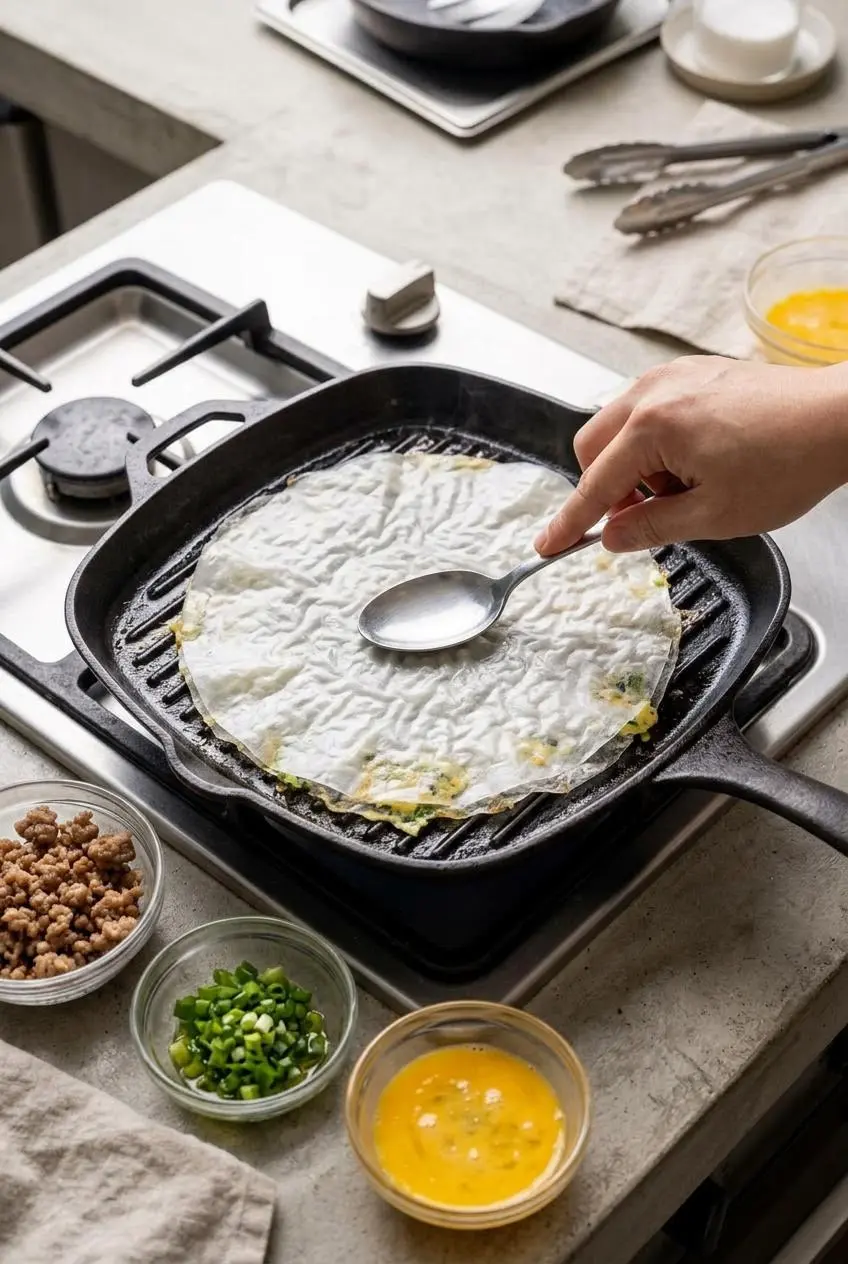
Finish the toppings before beginning the rice-paper crusts. The main sequence is crisp, spread, top, and remove, with the opaque crust providing your most useful checkpoint.
Prep time: 30 minutes. Cook time: 30 minutes. Equipment: cast iron grill pan.
Prepare your toppings
- Combine the pork with salt, white pepper, sugar, and fish sauce, then cook the mixture in a large pan until browned and cooked through; reserve it nearby.
The pork should form browned crumbles ready to distribute over the crust. - Warm the vegetable oil over high heat for 1–2 minutes, then pour it onto the minced green onions and reserve the mixture.
The onions should sizzle as the hot oil releases their aroma. - Beat the eggs in a bowl until the whites and yolks blend evenly, then keep the bowl ready.
A uniform mixture spreads more evenly than streaks of unbeaten white.
Now you’re ready to make your pizzas!
- Arrange every prepared topping beside the stove and bring the grill pan to high heat.
Keep everything close enough to add without leaving the pan unattended. - Dampen one face of a rice-paper sheet, attach a second dry sheet directly to that damp face, and lay the pair on the hot pan.
The moisture belongs inside the sandwich, leaving both exposed surfaces dry. - Sweep the rounded back of a spoon over the sheets in steady circles, applying gentle pressure against the pan.
Even contact helps flatten curling edges and prevents pockets of trapped air. - Continue heating the crust until its translucent appearance changes to white and opaque.
The sheets should stiffen before receiving the moist toppings. - Spread 2–3 spoonfuls of scallion oil across the crust, follow with 2–3 spoonfuls of beaten egg, and distribute both to the edges before cooking for about 10 seconds.
The egg should form a thin layer and begin setting rather than collecting in deep puddles. - Distribute 2–3 spoonfuls of cooked pork over the egg layer, then lift the pizza off the grill pan.
Scatter the crumbles evenly instead of piling them in the center. - Apply thin drizzles of sriracha and Kewpie mayonnaise, then scatter fried shallots over the surface.
The finish should leave visible patches of pork and egg beneath the sauces. - Continue assembling and cooking pizzas in the same sequence until either the rice paper or toppings run out.
Look for the same opaque, stiffened crust on each round before adding its toppings.
Pro Tips and Troubleshooting for a Crispy Crust
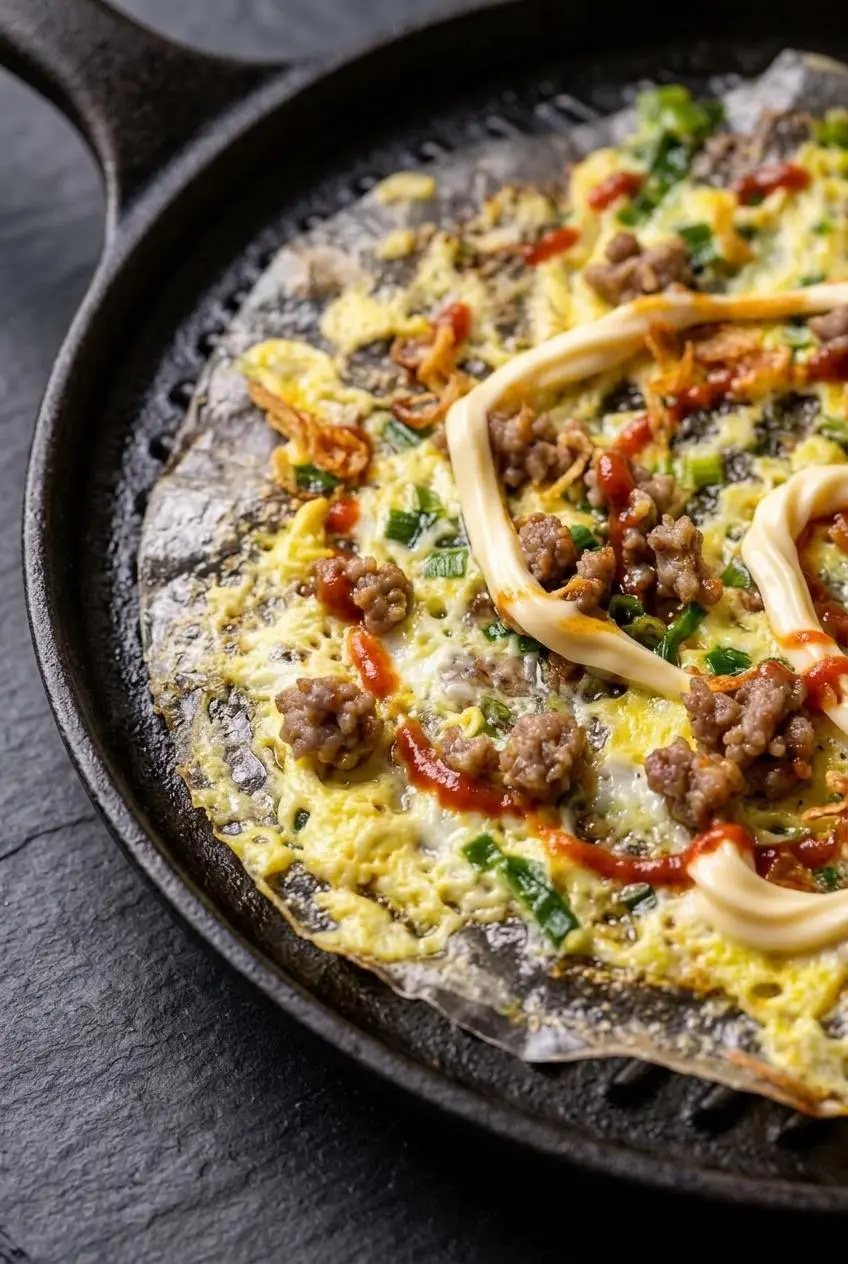
A crisp crust depends on dry outer surfaces, steady contact, and enough heat to stiffen the rice paper before the toppings weigh it down.
Best Pans to Use Without a Charcoal Grill
- Cast iron grill pan: The ridges create uneven contact points, making circular spoon pressure especially useful.
- Flat cast iron skillet: Its broad surface supports more of the crust at once and retains heat well.
- Non-stick pan: A suitable pan offers broad contact and easy release, but follow its manufacturer’s heating limits rather than automatically using high heat.
- Flat-bottomed wok: The smaller contact area requires extra attention around the outer edges of the rice paper.
- Charcoal grill: This street-food approach provides direct heat, but uneven coals and hot spots demand close watching.
Use the first crust as a heat check. It should begin turning milky white, stiffening, and lightly blistering in under a minute rather than lingering translucent and bendy. Treat that as a diagnostic cue, not a fixed cooking deadline.
If you enjoy using that same heat-retaining cookware for a dough crust, cast iron skillet pizza offers a different way to put the pan to work.
How to Stop Rice Paper from Curling or Staying Chewy
- Curling edges: Uneven contact lets the edges lift; use gentle circular spoon pressure to guide them back toward the pan.
- Trapped air bubbles: Gaps between sheets interrupt heating; press across the whole surface rather than holding the spoon in one spot.
- Chewy center: Weak heat or wet outer surfaces can delay crisping; keep moisture inside the two sheets and wait for opacity.
- Soggy toppings: Heavy, wet additions overwhelm the thin crust; distribute them lightly and spread the egg without puddles.
- Burnt bottom: Prolonged high heat after topping scorches the shell; have the pork ready and remove the pizza promptly at the indicated stage.
- Runny egg: Uneven coverage or inconsistent heat can leave wet patches; spread the egg thinly and check its setting rather than relying on elapsed time alone.
Browned color alone doesn’t establish that ground pork is fully cooked; check doneness with a food thermometer. Likewise, the brief egg-cooking interval isn’t a guarantee for every pan, and visibly runny egg needs further cooking before serving.
Custom Rice Paper Toppings and Tasty Variations
Keep optional toppings light enough for the delicate shell to support. These flavor directions are separate from the pork-and-scallion-oil method above.
Vegetarian Vietnamese Pizza or Banh Trang Nuong Chay
- Crumbled tofu: Seasoned tofu replaces pork with a tender, savory topping.
- Mushrooms: Cook them until their released moisture evaporates so they don’t soften the crust.
- Vegetarian seasoning: Replace fish sauce with soy or mushroom seasoning; removing pork alone doesn’t make the dish meatless.
Keeping the egg and mayonnaise makes this a vegetarian adaptation, not automatically a vegan one. Check condiment ingredients when cooking for a particular diet.
Da Lat Street-Style With Quail Eggs, Butter, and Peanuts
- Quail eggs or butter: These offer another street-style direction for the egg layer and richness.
- Dried shrimp: They add concentrated savory flavor, but introduce shellfish concerns.
- Pork floss or toasted crushed peanuts: A light sprinkle before the final drizzle adds texture; flag peanuts when serving others.
Vendors use different combinations, so these are possibilities rather than one universal Da Lat formula.
Chili Crisp and Quick Skillet Ideas
- Chili crisp: Use it as an optional spicy finish, keeping its oil from pooling over the crust.
- Garlic-ginger pork: This is another aromatic direction for a separate skillet variation.
- Single-sheet shell: One sturdy sheet creates a lighter crust, but tears more readily under generous toppings than the double-sheet version.
Cheesy Fusion and High-Heat Oven Variations
- Mozzarella: Keep the layer modest so the cheese doesn’t weigh down the rice paper.
- Salami: Thin pieces add a salty, rich accent without needing a heavy covering.
- Thai basil or cilantro: Fresh herbs brighten rich toppings when added at the finish.
A high-heat outdoor oven is a separate approach requiring its own tested directions. Don’t transfer this stovetop method directly to that equipment.
Serving Crisp Rice Paper Pizza and Prepping Toppings Ahead
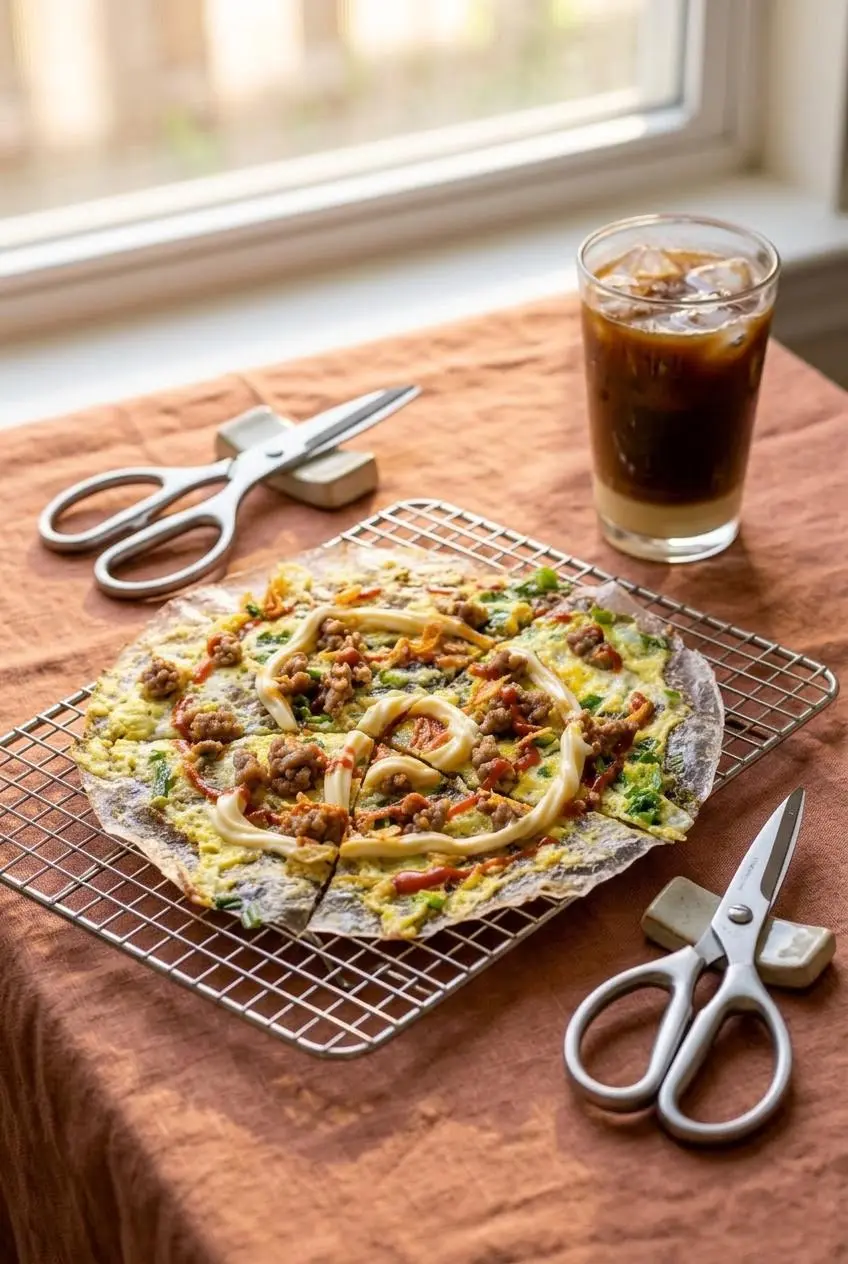
For the best crunch, prepare components separately and assemble each pizza close to serving. An assembled crust gradually absorbs moisture from its toppings.
Fold It Hot or Cut It Into Wedges
Fold the hot pizza in half for handheld snacking, or use kitchen shears to cut wedges. If you need to set it down, a wire rack lets steam escape beneath the crust instead of collecting against a plate.
Serve it as an appetizer or party snack, with a fresh herb salad or iced Vietnamese coffee alongside if you like.
Keep Pork and Scallion Oil Separate Until Assembly
Prepare the pork and scallion oil before cooking the crusts. If holding them for later use, refrigerate them promptly in separate covered containers rather than storing an assembled pizza. Keep homemade scallion oil chilled, not on the counter.
Leave unused rice paper dry and protected from moisture. Separate components make fresh assembly easier without promising a particular assembly time or storage window.
Re-Crisp Leftovers Without a Microwave
Refrigerate leftovers in a covered container, expecting the crust to soften. For reheating, a dry skillet or air fryer offers a better route to renewed crunch than a microwave.
Watch closely so the thin shell doesn’t burn while the toppings heat through. The crust may regain some crispness, but it won’t necessarily match a freshly cooked pizza.
Conclusion
A crackling rice-paper shell makes a satisfying contrast to savory pork, fragrant scallion oil, and creamy chili-sauce drizzles.
Keep moisture between the sheets, leave the outside dry, and wait for an opaque crust before topping. Cook each pizza fresh, and enjoy the crunch while it’s at its best.
Frequently Asked Questions
What Is Vietnamese Pizza or Banh Trang Nuong?
It’s a grilled rice-paper snack closely associated with Da Lat, Vietnam. Egg binds savory toppings to the crisp shell; this version uses pork, scallion oil, sauces, and fried shallots.
Which Side of the Rice Paper Goes on the Pan When Using Two Sheets?
A dry outer surface touches the pan. Dampen one face of the first sheet and attach the second sheet to it, trapping moisture inside rather than soaking both exposed sides.
What Pan Can I Use if I Do Not Have a Grill Pan or Charcoal Grill?
A flat cast iron skillet, suitable non-stick pan, or flat-bottomed wok can work. Maintain contact with the heated surface, watch for opaque rice paper, and respect non-stick cookware’s heating limits.
Can You Make Vietnamese Pizza Ahead of Time or Reheat Leftovers?
Prepare the components separately and keep pork and scallion oil refrigerated in separate covered containers until needed. Assemble fresh for better crunch, or re-crisp refrigerated leftovers in a dry skillet while heating the toppings through.
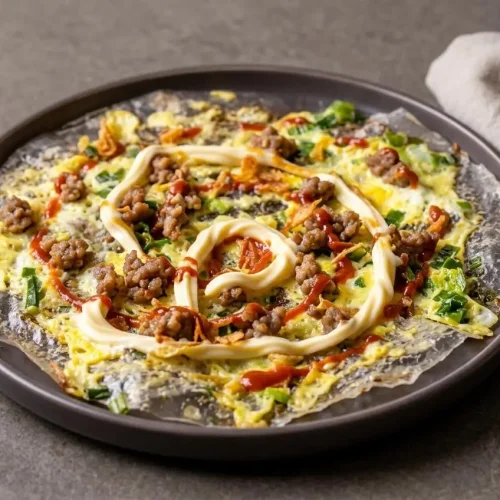
Vietnamese Pizza

Equipment
- Cast Iron Grill Pan
Ingredients
Ground Pork Topping
- 1/2 lb ground pork
- 1/2 tsp salt
- 1/4 tsp white pepper
- 1/2 tsp granulated sugar
- 1 tsp fish sauce
Scallion Oil
- 2 stalks green onions minced
- 1/2 cup vegetable oil
Other Ingredients
- 8 pieces rice paper
- 3 eggs
- 1/4 cup fried shallots
- 1/4 cup sriracha
- 1/4 cup Kewpie mayonnaise
Instructions
Prepare your toppings
- Combine the pork with salt, white pepper, sugar, and fish sauce, then cook the mixture in a large pan until browned and cooked through; reserve it nearby. The pork should form browned crumbles ready to distribute over the crust.
- Warm the vegetable oil over high heat for 1–2 minutes, then pour it onto the minced green onions and reserve the mixture. The onions should sizzle as the hot oil releases their aroma.
- Beat the eggs in a bowl until the whites and yolks blend evenly, then keep the bowl ready. A uniform mixture spreads more evenly than streaks of unbeaten white.
Now you’re ready to make your pizzas!
- Arrange every prepared topping beside the stove and bring the grill pan to high heat. Keep everything close enough to add without leaving the pan unattended.
- Dampen one face of a rice-paper sheet, attach a second dry sheet directly to that damp face, and lay the pair on the hot pan. The moisture belongs inside the sandwich, leaving both exposed surfaces dry.
- Sweep the rounded back of a spoon over the sheets in steady circles, applying gentle pressure against the pan. Even contact helps flatten curling edges and prevents pockets of trapped air.
- Continue heating the crust until its translucent appearance changes to white and opaque. The sheets should stiffen before receiving the moist toppings.
- Spread 2–3 spoonfuls of scallion oil across the crust, follow with 2–3 spoonfuls of beaten egg, and distribute both to the edges before cooking for about 10 seconds. The egg should form a thin layer and begin setting rather than collecting in deep puddles.
- Distribute 2–3 spoonfuls of cooked pork over the egg layer, then lift the pizza off the grill pan. Scatter the crumbles evenly instead of piling them in the center.
- Apply thin drizzles of sriracha and Kewpie mayonnaise, then scatter fried shallots over the surface. The finish should leave visible patches of pork and egg beneath the sauces.
- Continue assembling and cooking pizzas in the same sequence until either the rice paper or toppings run out. Look for the same opaque, stiffened crust on each round before adding its toppings.