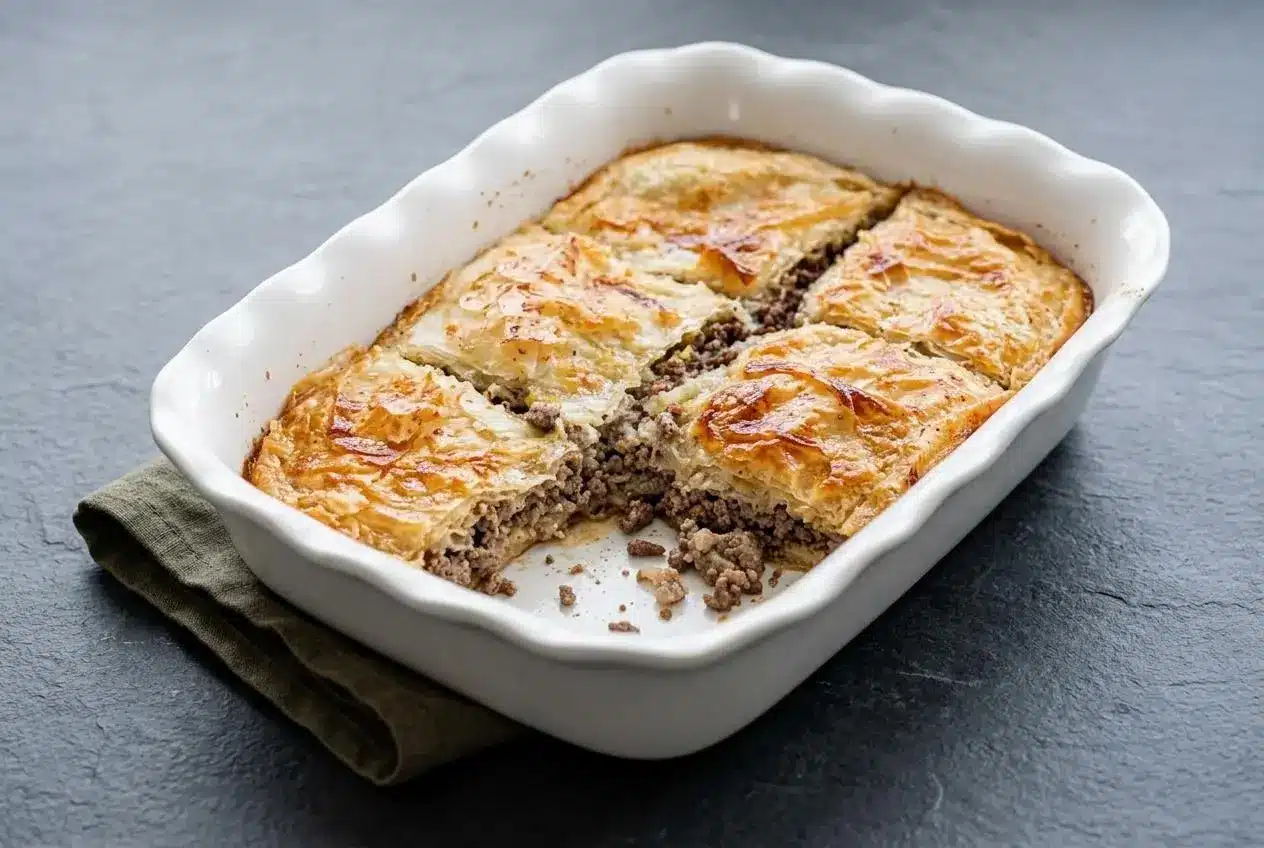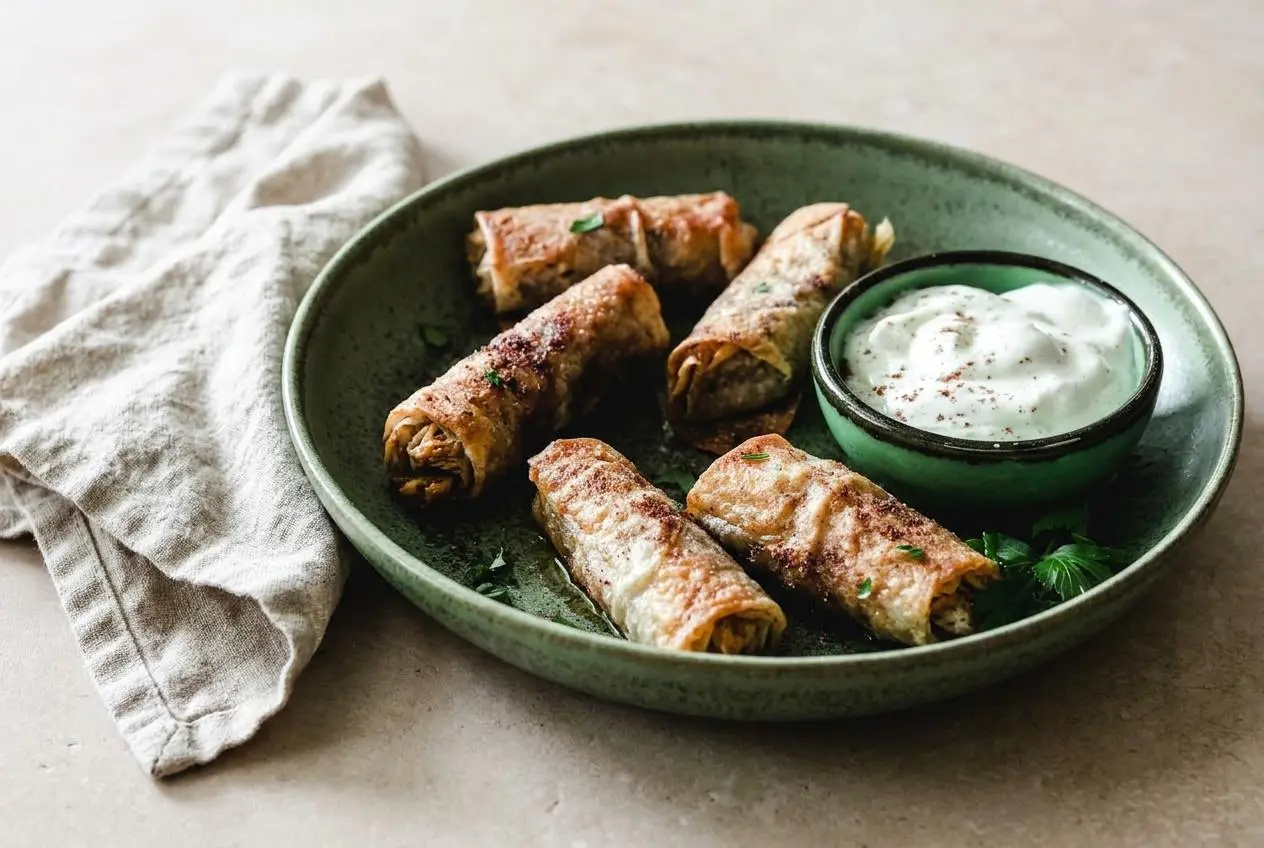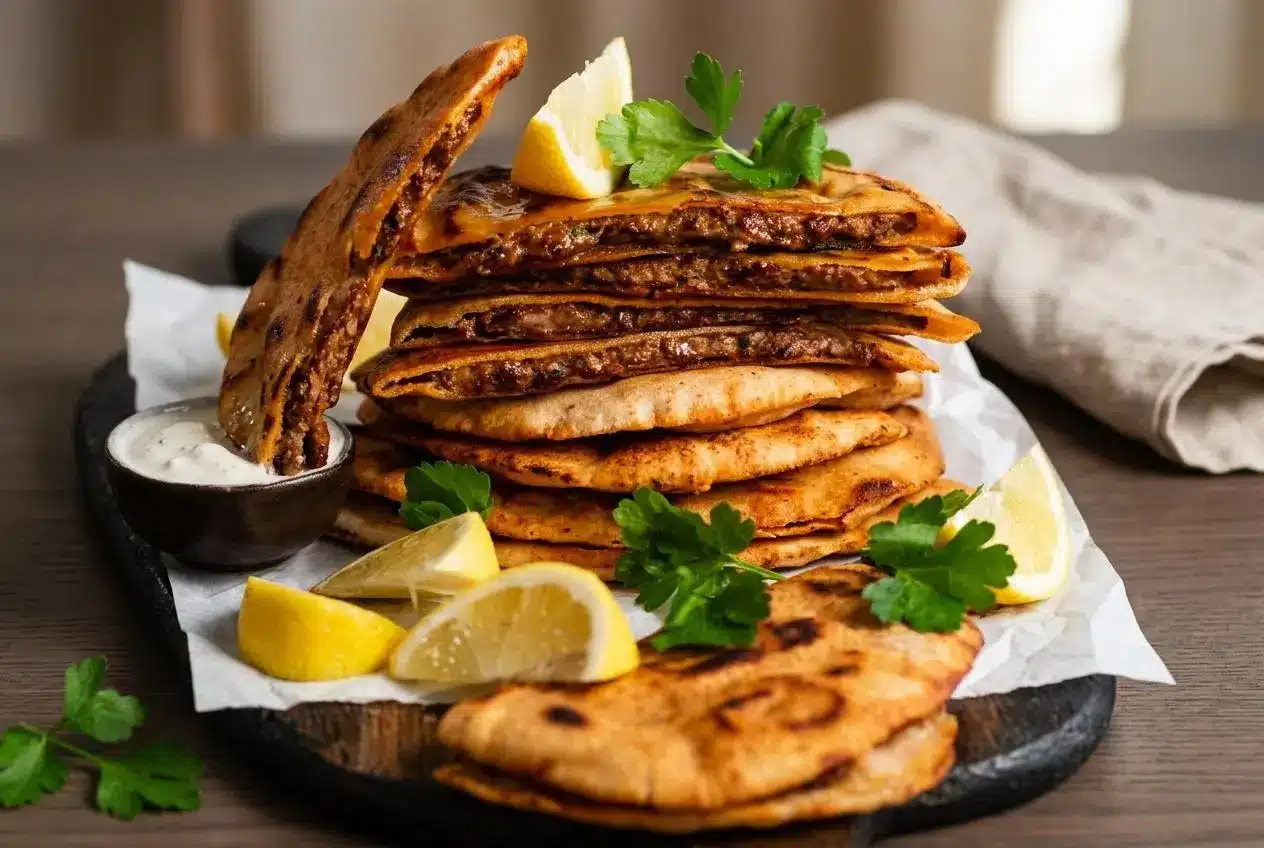
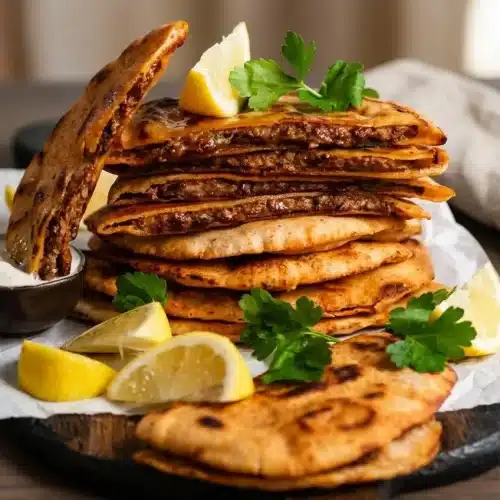
Arayes are pita pockets stuffed with raw, spiced ground beef or lamb, then cooked until the bread turns crisp and the filling cooks through. This arayes recipe pairs golden pita and juicy kofta filling with a creamy whipped tahini yogurt sauce.
The meat juices flavor the bread from within while the skillet crisps the outside. Grated onion blends into the filling without leaving chunky pieces that struggle to soften during the quick cooking time.
Allow about 15 minutes for prep and 15 minutes for cooking to make 10 filled pita halves. The contrast is the draw: warm spices, crackly bread, and a tangy sesame dip. Keep those pockets thin.
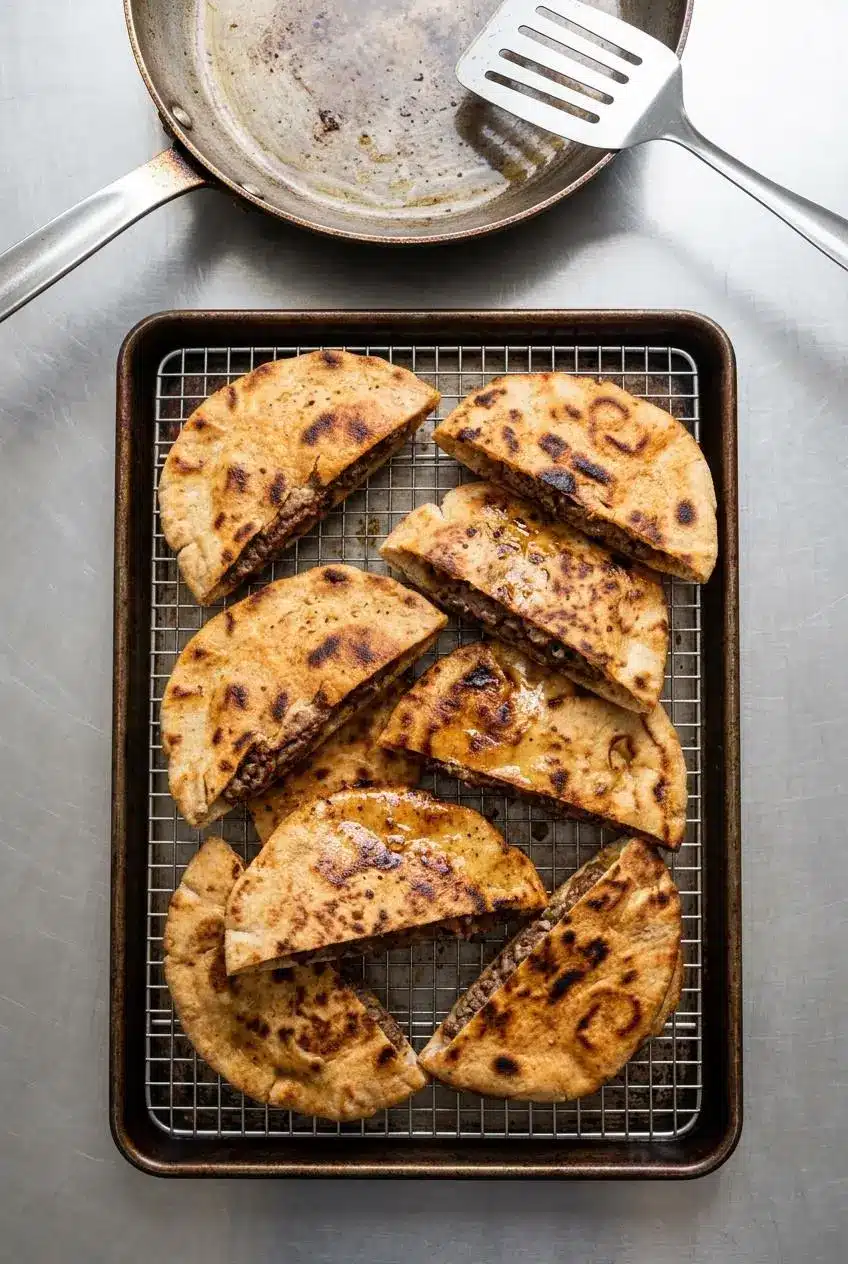
Set a wire rack over a tray before cooking so each finished batch has somewhere to release steam.
Key Ingredients and Smart Substitutions
Pita provides the crisp shell, meat supplies richness, and grated onion contributes moisture. Garlic and spices build aroma, while yogurt, tahini, and lemon balance the savory filling with tang and sesame flavor.
- 5 pita bread, the thin pocket type, ~15cm/6′ diameter (250g/8oz pack), cut in half
- Olive oil spray (or brush with olive oil)
Spiced meat filling
- 1/2 brown onion
- 500g/ 1 lb lamb or beef mince (ground meat)
- 2 garlic cloves, finely grated
- 1 tbsp finely chopped parsley, optional
- 3 tsp ground coriander
- 3 tsp ground cumin
- 1 1/2 tsp smoked paprika (sub plain paprika)
- 3/4 tsp ground allspice (sub mixed spice)
- 1/2 tsp cayenne pepper (reduce/omit for less spicy)
- 1 1/4 tsp cooking/kosher salt
Whipped tahini yogurt sauce
- 1 cup plain yogurt
- 2 tbsp tahini (or Chinese sesame paste)
- 1 tbsp lemon juice
- 1 garlic clove, finely grated
- 1/2 tsp cooking/kosher salt
I grate the onion directly into the mixing bowl so its pulp and flavorful juices stay together.
Choosing the Best Pita Bread and Protein
Thin, approximately 6-inch pocket pitas suit these portions and the quick skillet method. Look for bread with a pocket you can separate, rather than a thick, pocketless round.
Thicker Greek-style pocket pitas take longer to crisp and can brown before a thick filling finishes cooking. Large Lebanese flatbreads give you more room, but require a different portioning approach. Pocketless bread belongs in the optional folded adaptations below.
Lamb gives the filling a richer, more distinctive flavor. Beef tastes milder; 80/20 ground beef offers enough fat to help the filling stay juicy. Very lean beef can dry out, so avoid extending cooking beyond doneness.
There isn’t a fixed bread-to-fat formula. Rendered fat, onion moisture, filling thickness, and cooking speed all affect the result. Thicker bread won’t automatically solve a wet filling, and thin bread needs prompt cooking rather than a long wait after stuffing.
The Kofta Spice Blend and Whipped Tahini Sauce
Grating the onion creates fine pulp that disperses through the meat and softens more readily than large chopped pieces. Keep its juices. Even mixing and thin portions manage that moisture without sacrificing flavor.
Cumin contributes earthy warmth, coriander adds a citrusy note, and paprika brings color and smoky depth. Allspice rounds out the seasoning, cayenne supplies heat, and the optional parsley adds freshness. You don’t need Baharat for this blend.
The sauce provides a cooling contrast: yogurt brings tang, tahini supplies sesame richness, and lemon sharpens both. Brief warming followed by another whisk gives it a soft, whipped consistency without turning it into a hot sauce.
How to Make Crispy Arayes Step-by-Step
Stuff the pockets with raw seasoned meat, not cooked crumbles. Aim for an approximately 1/4-inch filling layer, with no thick mound in the middle, so the bread and meat cook at a similar pace.
Spiced meat filling
- Use a standard box grater to shred the onion directly over a mixing bowl, retaining the liquid.
The bowl should contain juicy pulp rather than coarse onion chunks. - Work the remaining filling ingredients into the onion with your hands until thoroughly combined.
The spices should look evenly distributed, without streaks of unseasoned meat. - Portion the mixture into 10 pieces, about 55 to 60g per portion, 1/4 cup, and press each into a half-moon slightly smaller than a pita half.
Keep the thickness consistent across each portion to encourage even cooking. - Ease apart each pita pocket, slip a meat portion inside, then close the bread and press the filling toward the edges.
The stuffed half should feel evenly flat rather than bulging at its center.
Cooking Arayes
- Set the oven to 50°C/120°F and arrange a wire rack over a tray for the finished batches.
The raised surface lets moisture escape beneath the bread. - Bring a large frying pan to medium-high heat, spray both pita surfaces with olive oil, and cook 2 or 3 halves at a time for about 2 minutes per side while applying gentle spatula pressure.
Listen for sizzling and look for a golden, crisp crust, remembering that bread color alone doesn’t confirm the filling is done. - Move each cooked batch onto the prepared rack in the oven while cooking the remaining pockets.
Leave the pieces unstacked so trapped steam doesn’t soften their undersides. - Arrange the cooked arayes on a platter, cutting each half into smaller pieces if desired, and accompany them with the whipped tahini sauce.
Bring them out while the bread still has its crisp bite.
Whipped tahini sauce
- Whisk the sauce ingredients together in a heatproof bowl, microwave on high for 15 seconds, then whisk again and serve slightly warm or at room temperature.
The finished dip should have the soft consistency of gently whipped cream.
Press lightly with the spatula to improve contact with the pan, not to squeeze the filling flat by force. A steady sizzle and increasingly firm crust tell you the exterior is crisping.
The low oven is for a brief batch-to-serving pause, not extended food-safe hot holding. Finish cooking promptly and serve once all the pockets are ready.
Expert Tips and Troubleshooting Common Mistakes
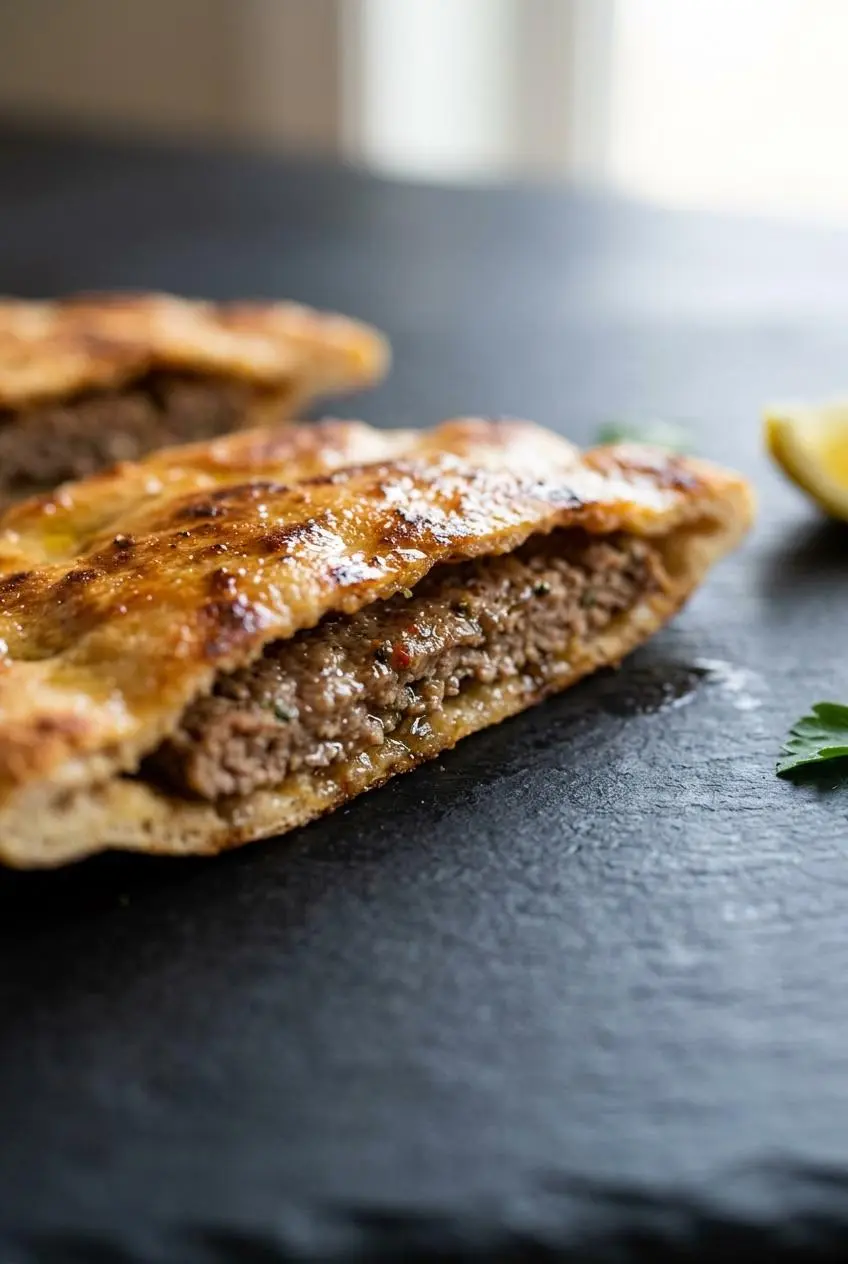
When the bread and filling finish at different times, thickness or moisture is usually the first thing to check.
- Soggy centers: Overstuffing or leaving assembled pockets waiting allows moisture to collect. Use the measured portions, spread them evenly, and cook promptly without discarding the onion juices.
- Soft bottoms after cooking: A flat plate or stacked pile traps steam. Transfer finished pieces to the rack and leave space around them.
- Greasy crusts: Oil pooled in the skillet can soak into the bread. Lightly spray or brush the pita itself instead.
- Brown bread with undercooked filling: A thick meat layer or unusually thick pita needs more cooking than the exterior can tolerate. Reduce the heat as needed and continue checking the center.
- Uneven browning: Crowding limits pan contact. Cook in batches that sit flat, using gentle spatula pressure.
Opening Stiff Pita Pockets Without Tearing
If the bread resists opening, wrap it in a slightly damp paper towel and microwave for 15 to 30 seconds. It should become pliable, not wet or soaked.
Start at the cut edge and gently separate the layers with your fingers or a blunt butter knife. Stop when you meet resistance rather than pulling hard on a thin flap.
Checking the Filling When the Pita Is Golden
For beef filling, check that the center reaches a minimum internal temperature of 160°F (71°C). Insert an instant-read thermometer through the exposed meat edge so the tip measures the filling rather than just the hot bread.
Check lamb filling with a thermometer as well, using the applicable ground-meat cooking guidance. Neither bread color, meat pinkness, clear juices, nor elapsed skillet time proves doneness.
An Optional 60-Second Open-Edge Sear
For extra browned-meat flavor, hold the exposed filling edge against the skillet vertically for 60 seconds before cooking the flat sides. Use tongs to steady it.
This optional technique adds surface browning. It doesn’t seal in juices or replace checking the center.
Oven, Air Fryer, Grill, and Flavor Variations
The skillet method gives you direct control over browning. Other equipment and flavor changes are optional, and their timing won’t necessarily match the thin-pocket skillet version.
Stovetop vs Oven vs Air Fryer vs Outdoor Grill
- Stovetop: Use medium-high heat and about 2 minutes per side as the starting point for small batches. Direct contact creates a crisp crust, but filling thickness determines when the center finishes.
- Oven: A 400°F to 425°F oven and a wire rack offer a batch-cooking approach. Avoid resting the bread directly on parchment, which can trap moisture underneath; there isn’t an established baking duration for these portions.
- Air fryer: A 375°F setting offers circulating heat for smaller batches. Arrange pockets without overlap and monitor both surfaces; appliance differences mean there isn’t a fixed cooking or turning schedule here.
- Outdoor grill: Grilling adds smoky flavor and charred patches. Exact heat settings and timing depend on the grill, so monitor the bread closely and check the filling rather than copying the skillet timing.
For the most predictable result, use the detailed skillet directions above. With any alternate method, verify meat doneness independently of crispness.
Outdoor Grilling and Exposed-Edge Browning
Bread can char quickly over a grill while the center still needs cooking. Move pockets to a less intense area if their surfaces darken too fast.
You can brown the exposed meat edge first for extra flavor, then cook the flat sides. Keep checking the filling; grill marks aren’t a doneness test.
Palestinian and Levantine Flavor Options With Baharat and Pomegranate Molasses
Regional interpretations vary, so treat these as flavor directions rather than a single required formula:
- Baharat or Lebanese 7-spice: Adds a different balance of warm spices; blends vary, so don’t assume an equal-volume swap for all the listed seasonings.
- Pomegranate molasses: Contributes concentrated tartness and sweetness that contrasts with rich meat.
- Tomato paste: Adds concentrated savory tomato flavor without the bulk of diced tomatoes.
Wet additions change the filling’s moisture and can affect crispness. Keep these experiments separate from the measured filling above.
Vegetarian Filling and Gluten-Free Pita Options
- Mushrooms: Offer savory flavor but release moisture, so they need a separately developed filling rather than a direct raw-meat replacement.
- Plant-based mince: Follow the product’s cooking directions; its texture and cooking behavior may differ from beef or lamb.
- Gluten-free pocket pita: Choose bread with a usable pocket and handle gently, since it may tear or brown differently.
These adaptations don’t share the same established portions or cooking times as the meat-filled pockets.
What to Serve With Arayes and Storage Guide
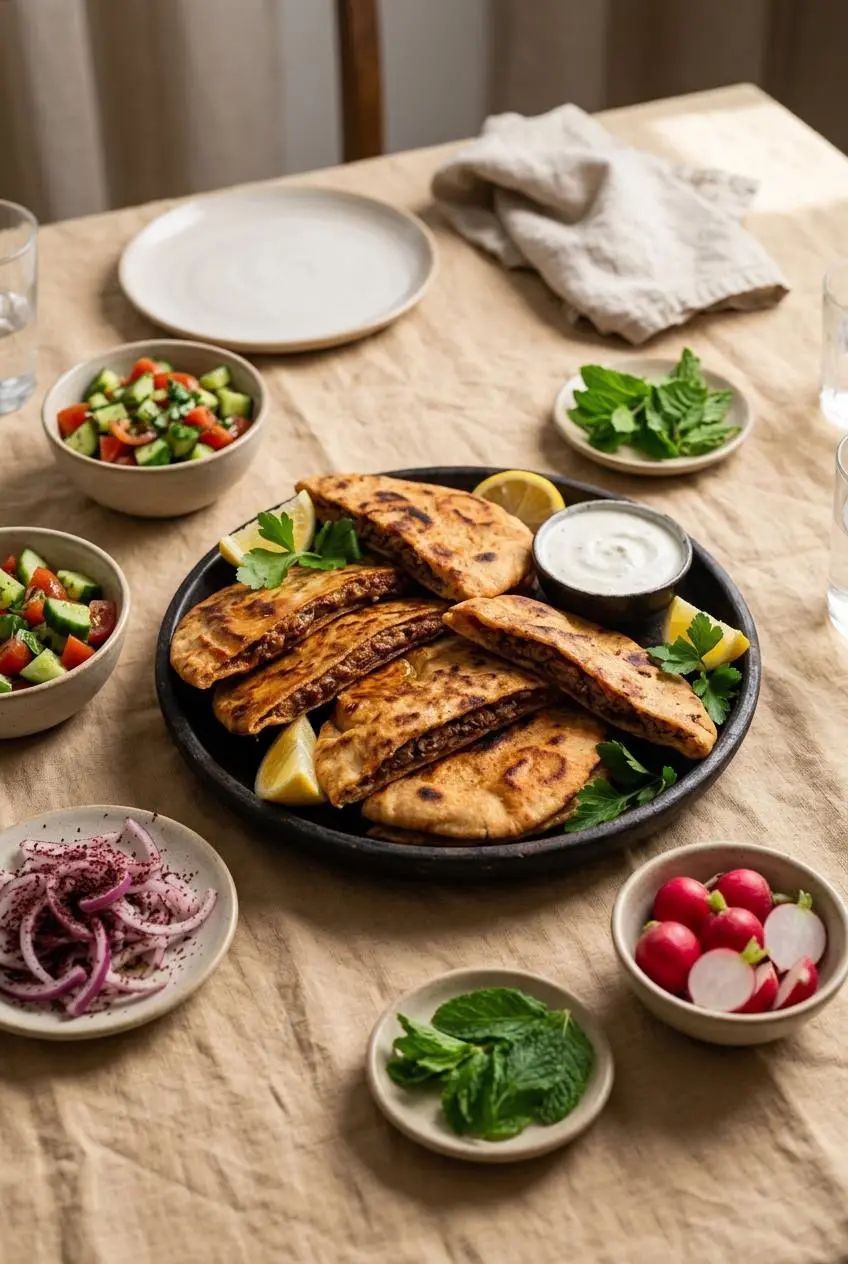
Balance the rich filling with cool dip, acidity, and fresh crunch, then keep any leftovers separate from those fresh accompaniments.
Whipped Tahini Dip and Fresh Mezze Sides
Start with the whipped tahini yogurt sauce. Add fattoush, cucumber-tomato Shirazi salad, or a crisp Greek salad for a refreshing contrast to the meat.
Optional toum garlic sauce adds punch, while sumac onions, radishes, and mint bring tartness and crunch. Cut the cooked pita halves into smaller wedges for a shared mezze platter, keeping dips alongside rather than spooned over the crust.
Handling Raw Stuffed Pita Before Cooking
Cook assembled pockets promptly rather than leaving them on the counter. If cooking is interrupted, keep the raw stuffed bread covered and chilled, separate from ready-to-eat foods.
Don’t apply cooked-leftover storage advice to uncooked ground-meat pockets. For the best texture, avoid assembling more than you’re ready to cook.
Refrigerating and Reheating Without Losing the Crunch
Refrigerate cooked leftovers promptly in a covered container, keeping the sauce and salads separate. Don’t leave the platter out while clearing the rest of the meal.
For texture, use an oven, toaster oven, or skillet to heat leftovers thoroughly and restore some crispness. A rack allows steam to escape underneath; microwaving won’t recreate the dry, crisp crust.
Conclusion
Crisp pita, juicy spiced filling, and tangy tahini yogurt make arayes a satisfying skillet meal. Grated onion and an even layer of meat give each bite flavor without bulky filling.
Keep the portions thin, coat the bread lightly, and let finished batches release steam on a rack. Serve the dip alongside and enjoy the crunch while it’s at its best.
Frequently Asked Questions
Do You Cook the Meat Before Stuffing Arayes?
No. Fill the pita with raw seasoned meat and spread it thinly so it cooks quickly inside the bread. Check the filling with a thermometer rather than relying on the cooking time alone.
How Do You Keep Arayes Crispy and Prevent Them From Getting Soggy?
Use thin, even filling, lightly coat the bread with oil, and cook promptly after assembly. Keep the onion juices in the mixture and place cooked pockets on the rack instead of stacking them.
How Do I Open Pita Pockets Without Tearing Them?
Warm stiff bread briefly in a slightly damp paper towel until pliable, then gently separate the layers from the cut edge. The bread should feel flexible, not soaked.
How Should You Handle Arayes Before Cooking?
Keep raw stuffed pockets covered and chilled if you can’t cook them immediately. Avoid leaving assembled bread waiting on the counter, where the wet filling also weakens the pita.
What Can I Use Instead of Pocket Pita Bread?
Single-layer flatbread, large Lebanese bread, or flour tortillas can work as optional folded adaptations. Spread a thin layer of filling over half, fold the bread over, and monitor cooking carefully because these breads may brown differently and won’t necessarily follow the same timing.
Arayes Recipe

Equipment
- standard box grater
- rack on a tray
- Large frying pan
- Spatula
- Heatproof bowl
Ingredients
- 5 pita bread the thin pocket type, ~15cm/6′ diameter (250g/8oz pack), cut in half
- Olive oil spray (or brush with olive oil)
Spiced meat filling
- 1/2 brown onion
- 500 g / 1 lb lamb or beef mince (ground meat)
- 2 garlic cloves finely grated
- 1 tbsp finely chopped parsley optional
- 3 tsp ground coriander
- 3 tsp ground cumin
- 1 1/2 tsp smoked paprika (sub plain paprika)
- 3/4 tsp ground allspice (sub mixed spice)
- 1/2 tsp cayenne pepper (reduce/omit for less spicy)
- 1 1/4 tsp cooking/kosher salt
Whipped tahini yogurt sauce
- 1 cup plain yogurt
- 2 tbsp tahini (or Chinese sesame paste)
- 1 tbsp lemon juice
- 1 garlic clove finely grated
- 1/2 tsp cooking/kosher salt
Instructions
Spiced meat filling
- Use a standard box grater to shred the onion directly over a mixing bowl, retaining the liquid. The bowl should contain juicy pulp rather than coarse onion chunks.
- Work the remaining filling ingredients into the onion with your hands until thoroughly combined. The spices should look evenly distributed, without streaks of unseasoned meat.
- Portion the mixture into 10 pieces, about 55 to 60g per portion, 1/4 cup, and press each into a half-moon slightly smaller than a pita half. Keep the thickness consistent across each portion to encourage even cooking.
- Ease apart each pita pocket, slip a meat portion inside, then close the bread and press the filling toward the edges. The stuffed half should feel evenly flat rather than bulging at its center.
Cooking Arayes
- Set the oven to 50°C/120°F and arrange a wire rack over a tray for the finished batches. The raised surface lets moisture escape beneath the bread.
- Bring a large frying pan to medium-high heat, spray both pita surfaces with olive oil, and cook 2 or 3 halves at a time for about 2 minutes per side while applying gentle spatula pressure. Listen for sizzling and look for a golden, crisp crust, remembering that bread color alone doesn’t confirm the filling is done.
- Move each cooked batch onto the prepared rack in the oven while cooking the remaining pockets. Leave the pieces unstacked so trapped steam doesn’t soften their undersides.
- Arrange the cooked arayes on a platter, cutting each half into smaller pieces if desired, and accompany them with the whipped tahini sauce. Bring them out while the bread still has its crisp bite.
Whipped tahini sauce
- Whisk the sauce ingredients together in a heatproof bowl, microwave on high for 15 seconds, then whisk again and serve slightly warm or at room temperature. The finished dip should have the soft consistency of gently whipped cream.