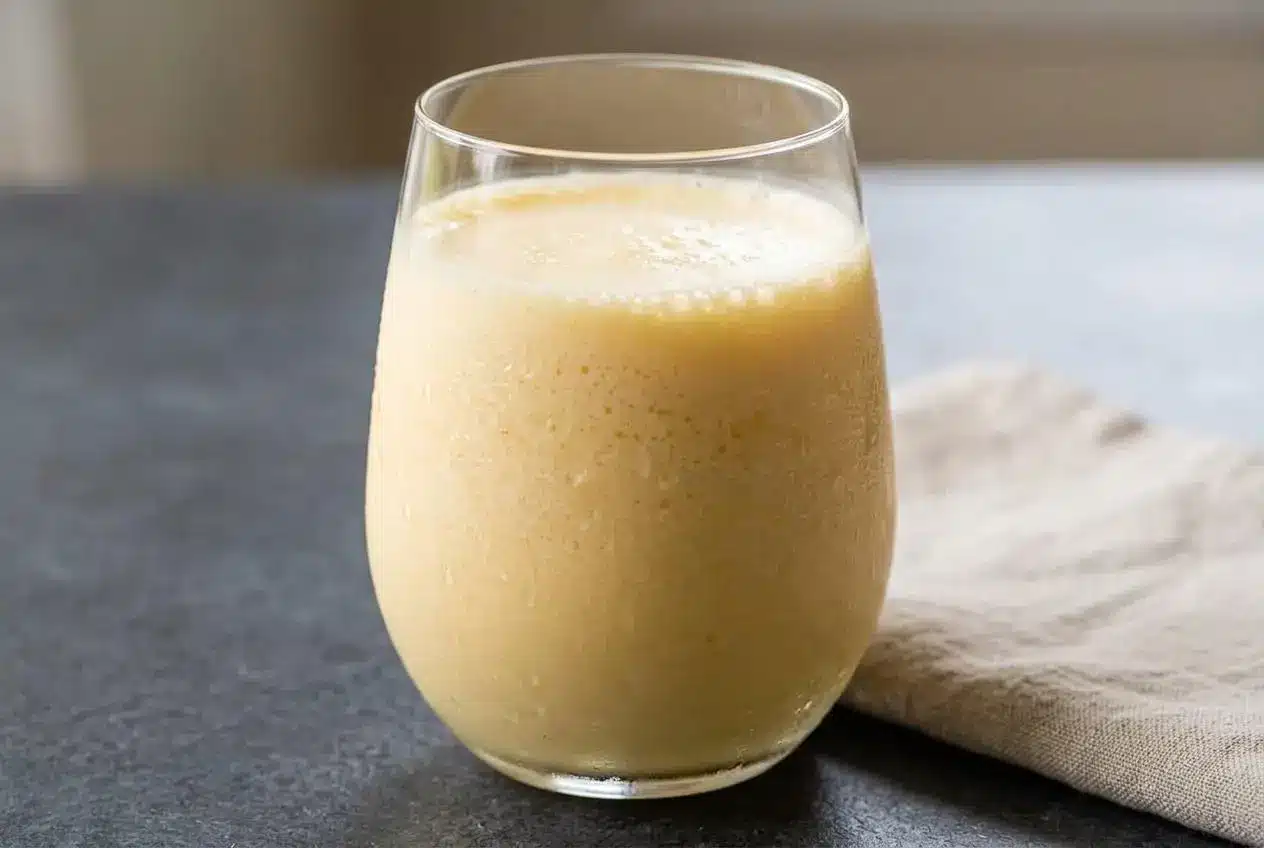
This orange julius recipe blends frozen orange juice concentrate, whole milk, sugar, vanilla extract, and ice into a cold, frothy creamsicle drink in 5 minutes. Blend the orange mixture first, then add ice for a smooth texture with a foamy top.
A homemade Orange Julius lands somewhere between orange juice and a milkshake, with bright citrus, mellow vanilla, and plenty of airy foam. It has that familiar mall-style flavor without needing ice cream.
The milk gives it creamy body, while concentrated orange juice keeps the citrus from disappearing beneath the ice. Two separate blends give you better control over sweetness and slushiness. The foam starts before the ice goes in.
Set out your glasses before blending so you can pour while the drink is still thick and frothy.
Ingredients and Smart Substitutions
Orange concentrate supplies tang and body, milk adds richness, sugar balances the citrus, vanilla brings a creamsicle aroma, and ice creates the frosty texture. Each ingredient helps the drink taste rounded rather than sharply acidic or diluted.
- 6 oz. frozen orange juice concentrate (half a can)
- 1 1/2 cups whole milk
- 1/4 cup granulated sugar
- 2 teaspoons vanilla extract
- 12 ice cubes
The concentrate goes into the blender undiluted. The 6 ounces represent half of a 12-ounce can; check the package size rather than assuming every container holds the same amount. Semi-frozen concentrate delivers bold orange flavor and keeps the mixture cold without introducing extra water.
Milk softens the citrus edge, and sugar balances its tartness. Vanilla ties those flavors together, giving the drink its dessert-like character. Pure vanilla extract is a good choice here because its flavor stands out in an uncooked drink; some imitation extracts can leave a sharper aftertaste.
Ice does more than chill the mixture. Once finely crushed, it creates the spoonable slush that distinguishes this drink from a glass of orange milk.
I’d scoop the concentrate while it’s slushy and barely scoopable rather than letting it melt completely, so it contributes cold body from the start.
The Secret Ingredient for Classic Mall Foam
Powdered egg whites are the classic foam-building ingredient associated with mall-style Orange Julius drinks. They help hold the air introduced during blending, but you don’t need them for this egg-free version to turn frothy.
For an optional foam boost, add pasteurized egg white powder during the first blend, following its package directions for uncooked use. Meringue powder is another option when labeled for that use, although its added sugar and flavorings may change the drink’s sweetness.
Choose pasteurized eggs or egg products for uncooked shakes rather than raw, unpasteurized shell eggs to reduce foodborne illness risk. Check the product label instead of assuming every baking powder is interchangeable.
Best Milk and Sugar Choices
Milk choices change the body more noticeably than they change the orange flavor. Keep these swaps optional:
- Whole milk: Gives this version its rich, rounded creamsicle texture.
- 2% milk: Makes a slightly lighter drink that still has creamy body.
- Unsweetened oat milk: Offers a relatively neutral dairy-free option, though thickness and froth vary by brand.
- Canned coconut milk: Adds richness and a distinct coconut flavor for a tropical version; stir it smooth before measuring.
- Granulated sugar: Works well when you dissolve it in the liquid mixture before adding ice.
- Powdered sugar: Dissolves readily and often contains cornstarch, which can subtly affect body; it isn’t a direct volume-for-volume match for granulated sugar.
How to Make an Orange Julius Step by Step
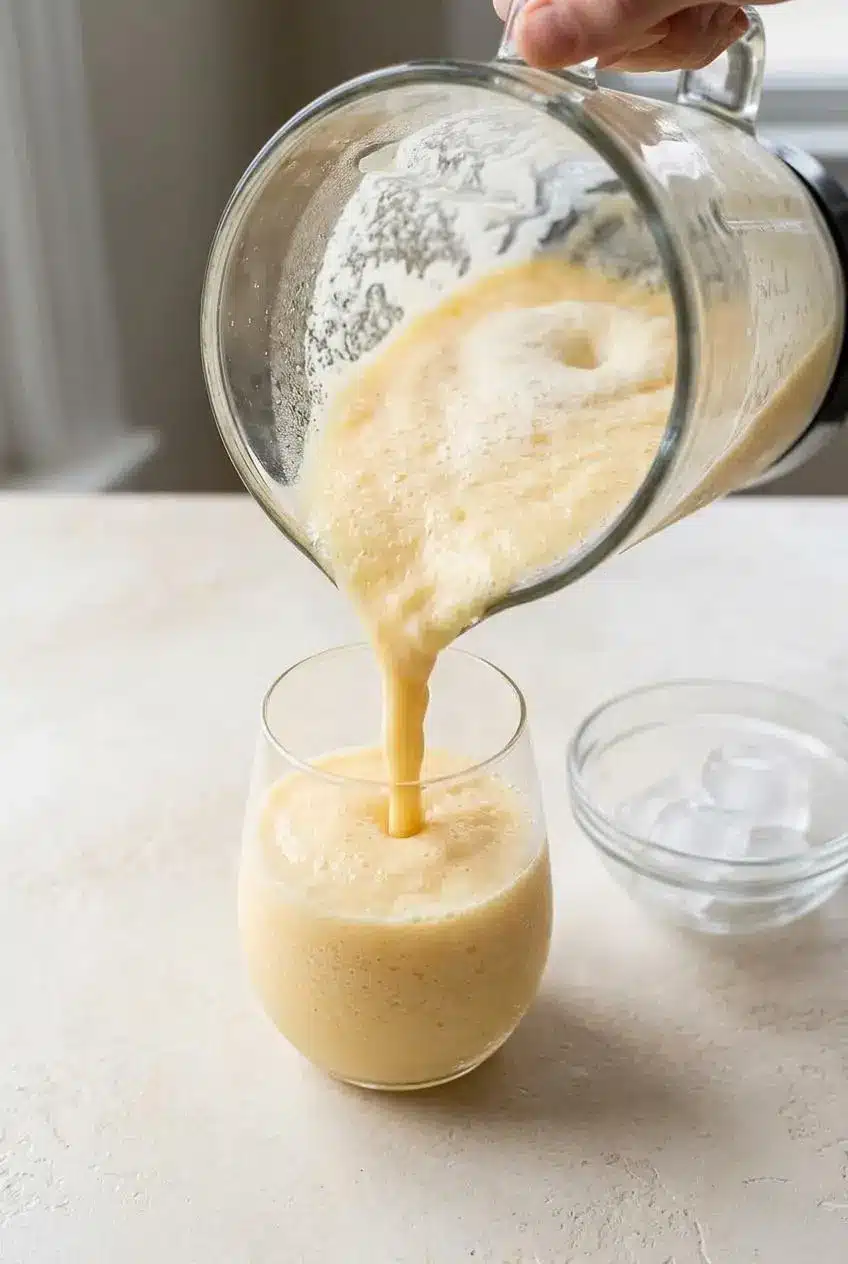
Allow 5 minutes total for this blender drink, which makes 3 servings. The key is to smooth out the orange mixture before asking the blades to crush ice.
- Process the orange concentrate, milk, sugar, and vanilla together in a blender on high speed until the mixture looks uniform.
A smooth, lightly foamy surface with no visible concentrate streaks signals that the liquid is ready for ice. - Crush 10 ice cubes into the mixture, blend toward a creamy slush, add the remaining cubes as needed, then pour into glasses and serve immediately.
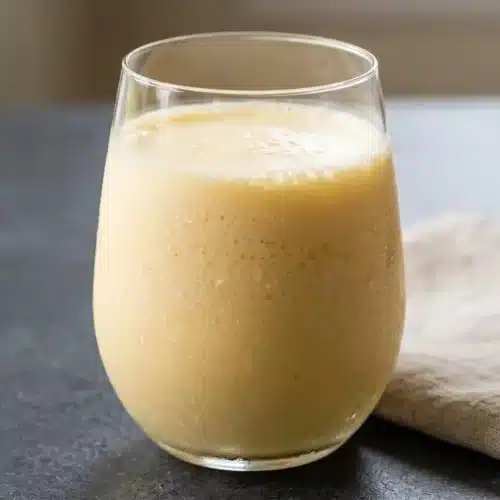
The sharp ice rattle should fade as the texture becomes smooth and pale orange, with a thick frothy cap on top.
The first blend gives granulated sugar a chance to dissolve without ice competing for the blades. If you notice a sandy texture, keep working on that liquid stage before moving on.
During the second blend, listen as well as look. Large pieces of ice make a sharp clattering sound; finely crushed ice produces a more even hum. A moving vortex shows that the blender is circulating the mixture instead of spinning beneath a stationary pocket of slush.
Ice tray size matters. Ten large cubes may thicken the drink more than twelve small ones, so treat texture as the deciding cue rather than forcing in every cube.
Tips for Frothy Texture and Troubleshooting
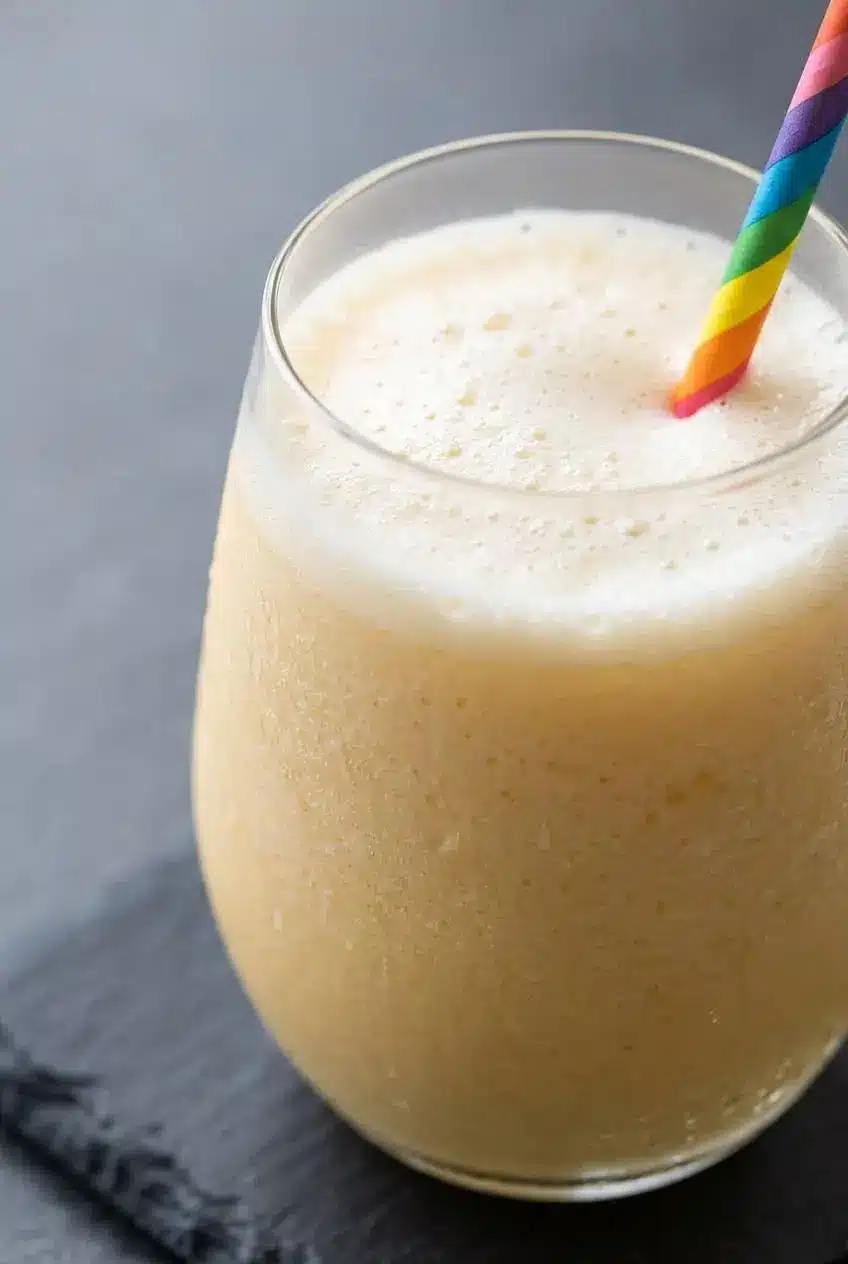
Skipping added water protects both flavor and body. Milk gives the mixture more substance than a milk-and-water combination, helping it carry finely crushed ice, although any blended ice drink will thin and separate as it sits.
Stop once the ice is finely crushed and the drink looks creamy. A high-speed blender may reach that point sooner than a standard blender, so watch the pitcher rather than relying on a fixed blending time.
- Too thin: Melted concentrate or undersized ice cubes may leave the mixture loose; blend in more ice gradually, checking between additions.
- Too icy: Large ice fragments usually need more blending; if the mixture won’t circulate, a splash of milk can help it move.
- Separating quickly: Added water and coarse ice can worsen the texture; omit water and blend until the ice is finely dispersed.
- Grainy: Sugar probably didn’t dissolve during the first blend; give the liquid mixture more attention before introducing ice next time.
- Blades spinning without movement: Stop the machine before adjusting the contents, then follow your blender’s instructions for handling a stalled mixture.
For an optional brighter flavor, add finely grated orange zest and a tiny pinch of fine sea salt during the liquid blend. Use just the colored peel, avoiding the bitter white pith. The zest strengthens the orange aroma, while salt can soften the impression of sweetness without making the drink taste salty.
Flavor Variations and Concentrate-Free Options
Changing the fruit changes the texture, so expect these optional versions to taste a little different from the concentrate-based drink.
To use an entire 12-ounce can, double every ingredient and make two separate batches. That uses the full can without crowding a standard blender pitcher or leaving too little room for the mixture to expand as it foams.
How to Make It Without Frozen Concentrate
Fresh oranges or chilled orange juice can make an orange-vanilla blender drink, but neither replaces concentrate directly. They contain more water relative to their orange flavor, so the result will be lighter and less intensely citrusy.
For fresh oranges, remove the peel, seeds, and as much white pith as practical. Blend the fruit with sugar, vanilla, and less milk than the listed version, then add ice gradually. Expect some pulp unless your blender processes the membranes very finely.
For bottled juice, choose chilled orange juice and hold back some milk at first. Blend the liquid ingredients, taste for citrus strength, then work in ice. Add milk only as needed to help the mixture circulate.
A little fresh zest strengthens the aroma without adding liquid. Frozen banana can supply body, though it also introduces banana flavor; extra ice alone eventually dilutes the citrus. There isn’t a dependable one-for-one substitution here, so adjust in stages rather than chasing thickness with ice.
If you peel fresh oranges, save the peel for candied orange peel instead of adding bitter pieces to the blender.
Banana, Strawberry, and Pineapple Variations
- Banana orange: Replace part of the ice with frozen ripe banana for a thicker, sweeter drink with a smoothie-like texture.
- Strawberry orange: Use frozen strawberries in place of some ice for a citrus-berry flavor and rosy color.
- Pineapple or mango: Replace some ice with frozen fruit and optionally choose coconut milk for a tropical version.
Add fruit gradually so the mixture keeps circulating. Because fruit contributes sweetness as well as thickness, expect the balance to shift from the classic orange-vanilla flavor.
Serving Ideas and Leftover Texture
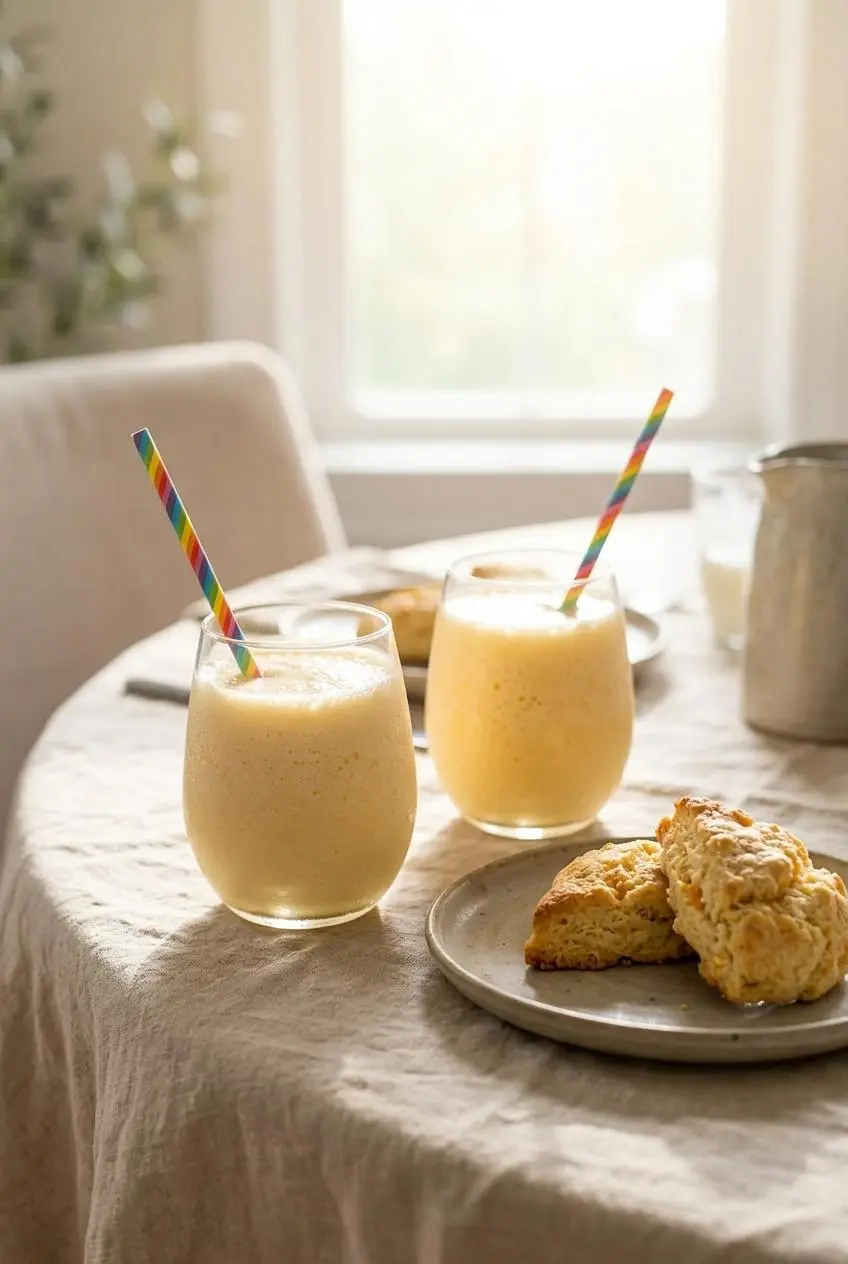
Pour immediately into chilled tall glasses and use wide straws that can handle the slushy texture. The foam and finely crushed ice are at their best straight from the blender.
Serve it as a summer afternoon refresher, a kids’ party treat, or a weekend brunch drink alongside fresh orange scones. For a gathering, blend successive batches rather than letting a large pitcher wait.
Refrigeration won’t preserve the freshly blended texture. As the ice melts and the foam settles, the drink becomes thinner and may separate into layers. If you’re holding a leftover portion, keep it covered and chilled, but expect a different texture rather than the same frothy slush.
For unused concentrate, follow the package’s storage directions and keep it undiluted for another batch. Measuring out only what you need helps avoid unnecessary handling of the remainder.
Conclusion
A cold, creamy Orange Julius takes just 5 minutes and a blender. Skip added water, then blend the milk, sugar, concentrate, and vanilla before adding ice for the smoothest start.
Once you’ve made the classic version, try a little orange zest and a tiny pinch of salt for a brighter finish. Have the glasses ready and enjoy it while the froth is high.
Frequently Asked Questions
What Was the Secret Ingredient in the Original Orange Julius Recipe?
Powdered egg whites are the foam-building ingredient associated with classic mall-style versions. For an optional homemade variation, use pasteurized egg white powder labeled for uncooked use, or suitable meringue powder. This version creates froth through blending without either addition.
How Do You Make an Orange Julius Without Frozen Orange Juice Concentrate?
Use peeled, seeded fresh oranges or chilled orange juice, holding back some milk initially. Add zest for stronger orange aroma and blend in ice gradually. Frozen banana adds body, but changes the flavor; expect a lighter citrus result without concentrate.
Can I Make This Orange Julius Recipe Dairy-Free?
Yes. Replace the whole milk with the same amount of unsweetened oat milk for a relatively neutral flavor, or canned coconut milk for a richer tropical version. Stir coconut milk smooth first, and expect froth to vary by product.
Can You Store Leftover Orange Julius in the Refrigerator?
You can keep a leftover portion covered and chilled, but refrigeration won’t maintain its slushy texture. The ice melts and the foam settles, leaving a thinner drink. Blend only what you plan to serve for the best result.
Orange Julius Recipe

Equipment
- KitchenAid 5-Speed Blender
- AmazonBasics Stemless Wine Glasses
- Weemium – 200 pack Paper Drinking Straws – 10 Color Rainbow Stripes
Ingredients
- 6 oz. frozen orange juice concentrate half a can
- 1 1/2 cups whole milk
- 1/4 cup granulated sugar
- 2 teaspoons vanilla extract
- 12 ice cubes
Instructions
- Process the orange concentrate, milk, sugar, and vanilla together in a blender on high speed until the mixture looks uniform. A smooth, lightly foamy surface with no visible concentrate streaks signals that the liquid is ready for ice.
- Crush 10 ice cubes into the mixture, blend toward a creamy slush, add the remaining cubes as needed, then pour into glasses and serve immediately. The sharp ice rattle should fade as the texture becomes smooth and pale orange, with a thick frothy cap on top.