Skip to content

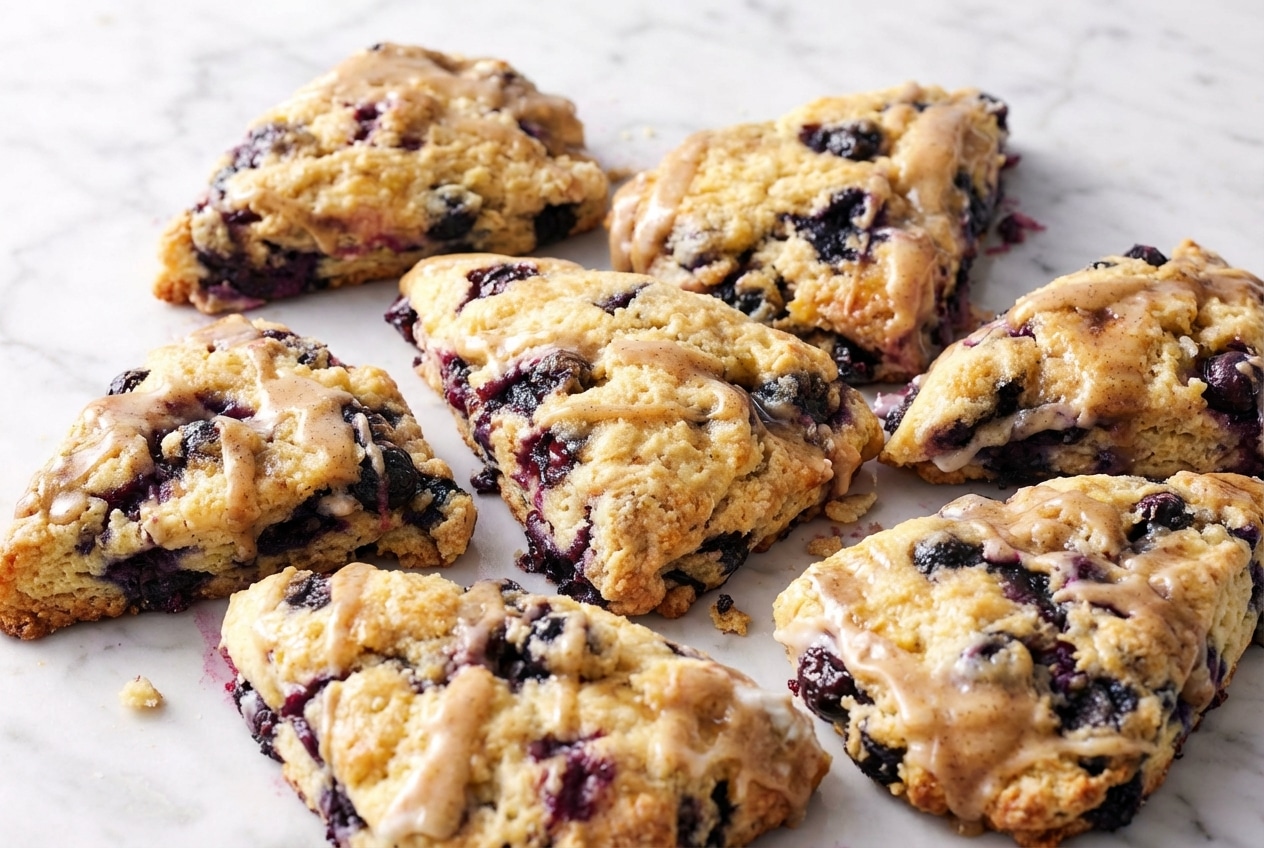
On a quiet weekend morning in my American kitchen, I love baking something that makes the whole house smell like sunshine. These orange scones are my answer to that craving, all buttery layers and bright citrus, with a glaze that sets into a sweet, crackly veil.
If you want a bakery-style rise without the dreaded dry, “hockey puck” bite, this is for you. The little secret is citrus sugar, rubbed by hand until it turns perfumed and plush, so the orange flavor tastes woven into every crumb.
Why You Will Love This Recipe
Citrus sugar, not just zest: I rub the orange zest into the sugar until it’s damp and intensely fragrant, so the essential oils perfume the dough instead of sitting in little bitter flecks.
Flaky layers you can hear: With cold butter and a simple fold, you get those craggy tops and tender sheets inside, the kind that practically shatter under a knife.
Balanced, not dry: The baking powder leavening plus the vinegar reaction keeps the crumb moist and light, while the confectioners’ sugar glaze adds a crisp finish.
Brunch energy all week: Once you learn the shaping, it’s easy to stash wedges for later, and if you love bright citrus desserts, an orange dreamsicle salad feels like the same sunny mood.
Ingredients and Substitutions
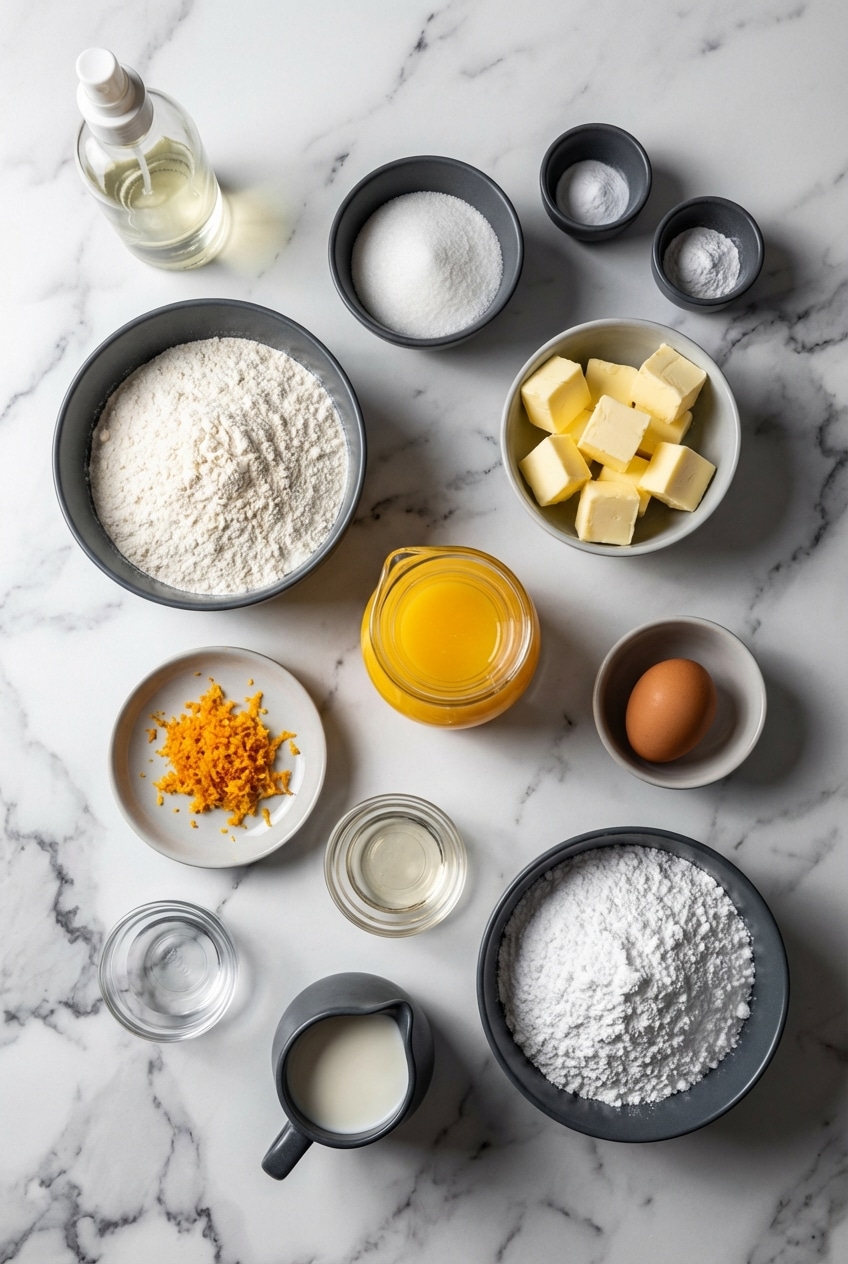
These orange scones rely on cold fat, bright zest, and a quick acid base lift. Keep everything cool, and you’ll be rewarded with tall, tender pastries and a glossy citrus glaze.
Ingredients
- cooking spray
- 1 ⅓ cups all-purpose flour
- 2 tablespoons white sugar
- ½ teaspoon baking soda
- ¼ teaspoon baking powder
- ¼ teaspoon salt
- ½ stick cold unsalted butter
- 2 ½ tablespoons orange zest
- 6 tablespoons orange juice
- 1 medium egg
- 1 ½ tablespoons white vinegar
- 1 tablespoon milk
Glaze:
- ½ cup confectioners’ sugar
- 2 tablespoons confectioners’ sugar
- 4 teaspoons orange juice
- 1 tablespoon orange zest
Ingredient Notes & Substitutions
Oranges: Navel oranges give the most aromatic zest, and Valencias are great when you want more juice. Zest first, then juice, it’s far easier to get clean, fragrant zest.
Orange zest: A Microplane zester makes a fine, fluffy zest that melts into the citrus sugar. Thicker shreds can taste a little chewy, and they do not perfume the dough as evenly.
Butter: Keep it ice-cold, period. I’ve had my best batches when the butter stays in distinct bits, because those cold pieces create steam pockets and true layers.
All-purpose flour: Measure gently so you do not pack the cup, since extra flour stiffens the dough and pushes you toward a dry scone. If you have a scale, weighing is the calm, foolproof way.
White vinegar: This is not for tang, it’s for lift. The vinegar reacts with baking soda so the dough aerates quickly, which is why you want to bake soon after mixing.
Glaze consistency: If you want a bold white cap, keep it thick so it drips slowly. A thinner glaze tastes fine but tends to melt in and “disappear.”
How to make orange scones
Prep the pan and build the citrus sugar
- Heat the oven to 425 degrees F (220 degrees C). Line a baking sheet with aluminum foil and coat it with cooking spray so the bottoms release cleanly.
- In a bowl, rub the orange zest into the white sugar with your fingertips until the sugar feels slightly moist and smells like you just peeled an orange. This is the moment your kitchen starts to wake up.
Mix the dry base and cut in the butter
- Whisk together the flour, the citrus sugar, baking soda, baking powder, and salt until everything looks evenly snowy. Even mixing helps the baking powder leavening work consistently.
- Work the cold unsalted butter into the flour using a pastry cutter until you see coarse crumbs plus a few pea-sized bits. Those larger pieces are your future flaky layers, so do not crush them all down.
Bring the dough together, shape, and bake
- Make a well in the center, then whisk the orange juice, egg, and white vinegar until smooth and glossy. Pour it into the well and stir just until the dough turns shaggy and sticky, it should look a little messy.
- Tip the dough onto a lightly floured surface and knead gently about 10 times, just enough to bring it together. Pat it into a 6×8-inch rectangle, cut into 4 squares, then slice each square diagonally so you end with 8 triangles.
- Set the triangles on the baking sheet with a little space between them, then brush the tops with milk and sprinkle with the remaining 1 tablespoon sugar. Bake for about 10 minutes, until deeply golden at the edges and set on top.
Glaze and finish
- While the scones bake, stir 1/2 cup plus 2 tablespoons confectioners’ sugar with the orange juice until thick and smooth, then fold in the orange zest. The glaze should drip slowly off the back of a spoon, like satin.
- Dunk the warm scones into the glaze so the tops are fully coated, then let them stand for 5 minutes so the glaze sets into a delicate shell.
Secrets for Scone Success
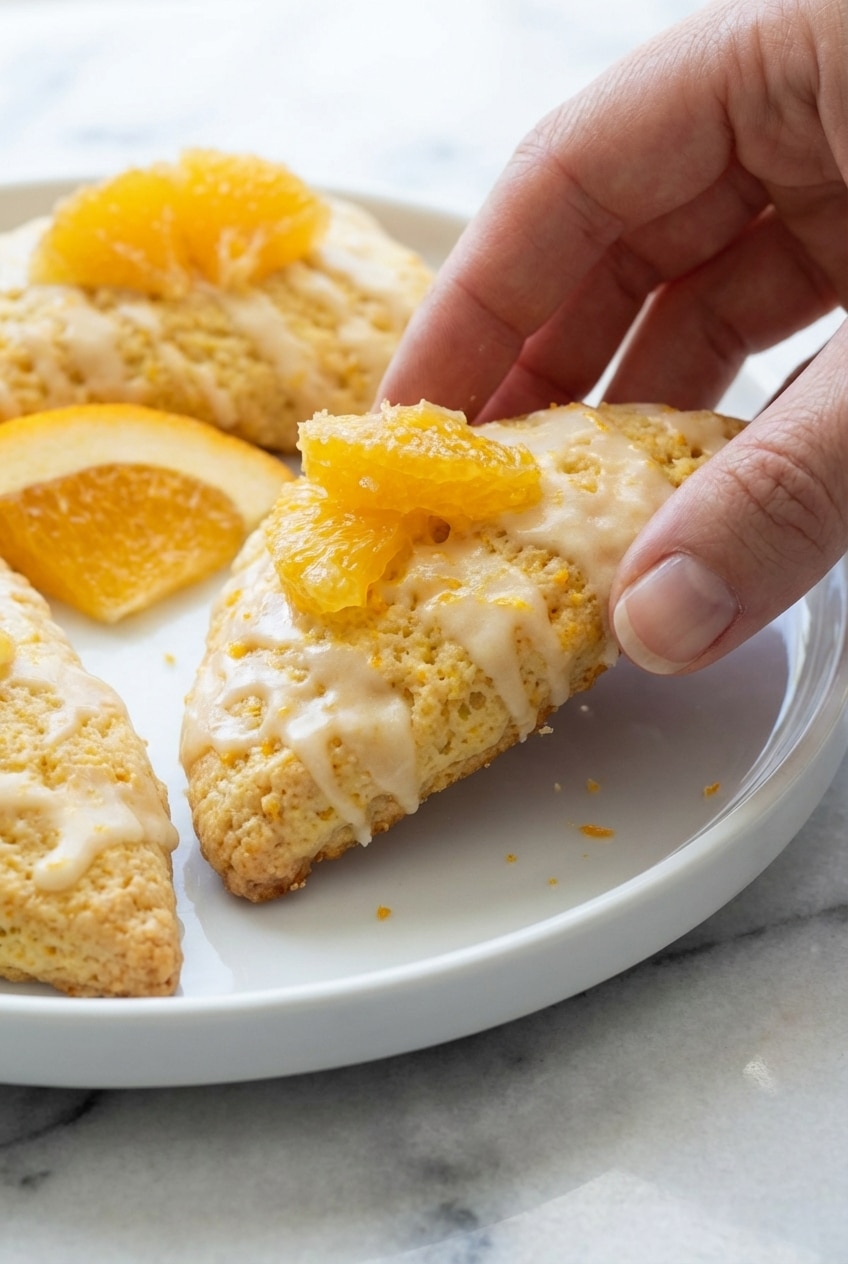
The “magic number” for orange scones is 204 degrees F inside, because that’s where the crumb finishes baking without drying out. When I started using an instant-read thermometer, my batches stopped being a guessing game.
Cold butter is the engine of flakiness, because the water in the butter turns to steam fast in a hot oven. That steam pushes apart layers you created while mixing, giving you that tall, rugged scone profile.
The lift here also comes from a quick acid-base reaction between baking soda and vinegar. The bubbles are simple chemistry, and the science is nicely summarized in this chemical reaction explanation from Stanford University.
Pro Tips & Troubleshooting
Pro Tips
- Freeze the butter briefly, then grate it in for quick, even distribution and extra flakes.
- Keep your hands light and quick, warm palms melt butter faster than you think.
- Stop mixing when the dough looks craggy, that rough look bakes up tender.
- A pastry cutter helps you control texture without overworking the flour.
- Citrus zest behaves best when it’s rubbed into sugar first, similar to the approach I use when baking a moist cranberry orange bread with big orange aroma.
Common Mistakes to Avoid
- Overworking the dough until smooth, which overdevelops gluten development and toughens the bite.
- Using warm ingredients, because softened butter can make scones spread instead of rise.
- Adding lots of bench flour while kneading, which quietly dries out the dough.
- Relying on bottled orange juice, since it tastes flatter and less fragrant than fresh.
Serving & Storage

Serving Ideas
I love these warm with Earl Grey, the bergamot plays beautifully with orange. For a richer brunch plate, a spoonful of clotted cream turns each bite into dessert.
If you want something truly decadent, a swipe of a homemade orange butter recipe melts right into the flaky layers. The orange-on-orange effect tastes like a bakery treat you paid too much for.
Storage and Make-Ahead
Orange scones are best the day they’re baked, when the edges are crisp and the centers are soft. Keep leftovers airtight at room temperature for up to 2 days, and expect the glaze to soften a bit.
For bake-on-demand mornings, freeze the unbaked wedges on a tray until firm, then bag them well. Bake from frozen, adding 2 to 3 minutes to the total baking time, and glaze after baking for the cleanest finish.
To revive a day-old scone without drying it out, warm it in a toaster oven at 300 degrees F for 5 minutes. The outside perks back up and the citrus aroma comes right back.

Flaky Orange Scones

Equipment
- Baking Sheet
- Aluminum Foil
- Pastry Cutter
- Microplane zester
- Pastry brush
Ingredients
- cooking spray
- 1 1/3 cups all-purpose flour
- 2 tablespoons white sugar
- 1/2 teaspoon baking soda
- 1/4 teaspoon baking powder
- 1/4 teaspoon salt
- 1/2 stick cold unsalted butter
- 2 1/2 tablespoons orange zest
- 6 tablespoons orange juice
- 1 medium egg
- 1 1/2 tablespoons white vinegar
- 1 tablespoon milk
Glaze:
- 1/2 cup confectioners’ sugar
- 2 tablespoons confectioners’ sugar
- 4 teaspoons orange juice
- 1 tablespoon orange zest
Instructions
Prep the pan and build the citrus sugar
- Heat the oven to 425 degrees F (220 degrees C). Line a baking sheet with aluminum foil and coat it with cooking spray so the bottoms release cleanly.
- In a bowl, rub the orange zest into the white sugar with your fingertips until the sugar feels slightly moist and smells intensely of fresh citrus.
Mix the dry base and cut in the butter
- Whisk together the flour, the prepared citrus sugar, baking soda, baking powder, and salt until the mixture is evenly combined.
- Work the cold unsalted butter into the flour using a pastry cutter until you see coarse crumbs and a few pea-sized bits of butter remaining.
Bring the dough together, shape, and bake
- Make a well in the center of the dry ingredients. Whisk the orange juice, egg, and white vinegar together, pour into the well, and stir just until a shaggy, sticky dough forms.
- Tip the dough onto a lightly floured surface and knead gently about 10 times. Pat into a 6×8-inch rectangle, cut into 4 squares, then slice each square diagonally to create 8 triangles.
- Place the triangles on the prepared baking sheet. Brush the tops with milk and sprinkle with the additional tablespoon of sugar. Bake for 10 minutes until the edges are golden and the tops are set.
Glaze and finish
- Stir the confectioners’ sugar with the orange juice until smooth and thick, then fold in the orange zest.
- Dunk the warm scones into the glaze to coat the tops. Let them stand for 5 minutes until the glaze sets into a delicate shell.
Notes
Nutrition
Conclusion
What makes these orange scones special is not just the glaze, it’s that citrus sugar step that perfumes the dough from the inside out. Keep the butter cold, handle the dough gently, and you’ll get tall, flaky layers with a bright, buttery crumb.
Once you’ve baked them once, little variations become second nature, a pinch of cardamom, or a handful of dried cranberries. Put the kettle on, and let your kitchen smell like an orange grove for a while.