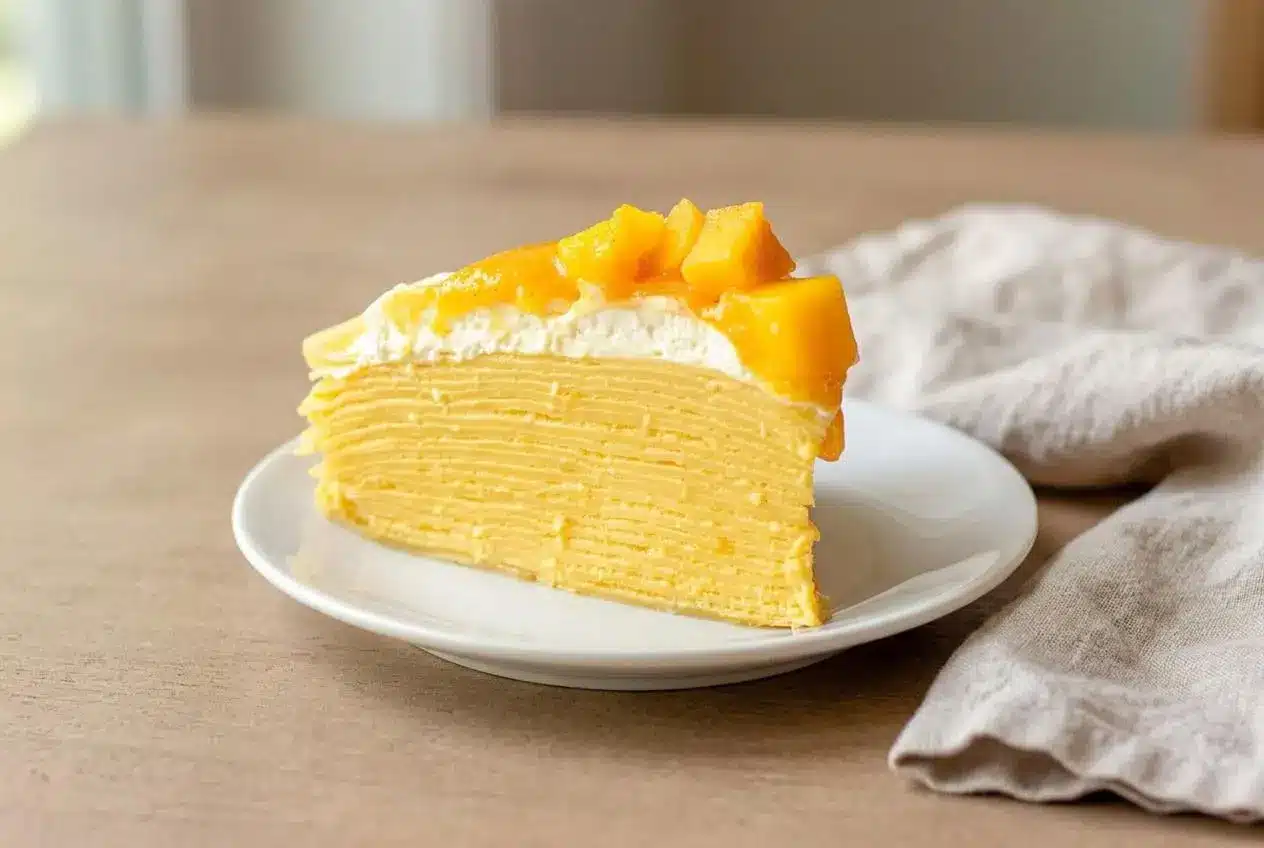
A mango crepe cake is a no-oven dessert made from 20 to 21 thin crepes layered with spiced mango and coconut cream cheese filling. Chill the stack for 3 to 4 hours, then finish with whipped cream, mango coulis, and chopped mango.
Stacking paper-thin crepes turns a skillet project into a celebration cake. This mango crepe cake pairs silky layers with tropical fruit, warm cinnamon, and tangy cream cheese, giving each chilled forkful a balance of richness and brightness.
You won’t need an oven, but you will need patience at the stove and time for chilling. Thin, even filling layers help the cake hold together and cut neatly without squeezing cream onto the plate. The mango-coconut layers make the wait worthwhile.
Set out clean plates for cooling the crepes before you heat the pan.
Key Ingredients and Why Each One Matters
Mango supplies fruit flavor, citrus balances sweetness, and cornstarch gives the coulis body. Flour and eggs form flexible crepes, while cream cheese supports the filling and chilled heavy cream creates a soft topping.
For The Mango Coulis
- 2 mangoes (I recommend Honey but any will work, just make sure they’re good quality and flavorful)
- 2 cups (500 ml) water
- 1 teaspoon ground cinnamon
- 1/8 teaspoon ground cloves
- 1/2 cup (100 g) white granulated sugar
- 1 tbsp (15 ml) lime juice (or lemon juice)
- 1 tbsp (7 g) cornstarch (dissolved in 1 tablespoon water)
For The Crepes
- 2 and 1/2 cups (310 g) all-purpose flour
- 1/2 cup (100 g) white granulated sugar
- 3 and 1/2 cups (625 ml) whole milk
- 4 eggs
- 2 tbsp (30 ml) unsalted butter (melted and cooled)
For The Filling
- one 8-oz package (225 g) cream cheese
- 1 cup (125 g) powdered sugar
- 2 cups (250 g) prepared mango coulis (room temperature or chilled)
- 1/4 cup (60 g) shredded coconut
- 1/2 teaspoon coconut extract (or to taste)
For Topping
- 1/2 cup (125 ml) heavy cream (chilled)
- 1 tbsp (15 g) powdered sugar
- 1/2 cup (60 g) prepared mango coulis (room temperature or chilled)
- 1 mango (chopped)
Choose flavorful, low-fiber mangoes. Honey mangoes, also sold as Ataulfo or Champagne mangoes, have sweet, creamy flesh with little stringiness. They puree smoothly and make tidy topping pieces. Other varieties work, too, but cooking cannot turn bland fruit into deeply flavorful coulis.
Give the coulis enough body. Dissolving cornstarch in water helps it disperse without forming dry lumps. Heating that slurry with the mango puree thickens the fruit mixture, so it contributes flavor without making the cream cheese filling excessively loose. Cinnamon and cloves add warmth; lime or lemon juice keeps the sweetness from feeling heavy.
Use the dairy at the right temperature. Slightly softened cream cheese beats more smoothly than a cold, firm block. Regular full-fat cream cheese gives the filling richness and body. The heavy cream belongs in the topping, not the filling, and should stay chilled until whipping.
Keep the crepes flexible. Milk moistens the flour, eggs provide structure, and melted butter adds richness. Cool the butter before blending it into the batter. Shredded coconut adds texture to the filling, while coconut extract strengthens its aroma, so taste before adding more.
I check that the coulis feels cool all the way through before mixing it with cream cheese, not just cool around the bowl’s edge.
How to Make the Mango Crepe Cake Step by Step

Prepare the fruit first so it can cool while you cook the crepes. This cake serves 8 and makes an approximately 6-inch round, depending on your pan.
- Combine the mangoes, water, cinnamon, and cloves in a medium pot, bring to a boil over medium heat, then cover and simmer over medium-low heat for 23 to 30 minutes.
The fruit should soften enough for the flesh to separate readily from the seed. - Drain and discard the cooking liquid, cut the mango flesh away from the seeds, puree it in a blender or food processor, then return it to the empty pot.
A smooth puree gives the finished filling a silky texture rather than noticeable fruit strands. - Stir the sugar, citrus juice, and dissolved cornstarch into the puree over medium-low heat for 4 to 5 minutes, stirring continuously, then transfer to a clean bowl to cool to room temperature.
The finished coulis should look glossy and thick enough to coat a spoon. - Blend or whisk the flour, milk, eggs, sugar, and cooled melted butter until the batter is smooth.
No dry flour pockets should remain in the mixture. - Heat a small non-stick pan over medium heat, lightly grease it with butter or non-stick spray, then pour in about 1/4 cup batter and immediately tilt the pan to spread it.
A gentle sizzle and an even, thin coating indicate that the batter is spreading across the heated surface. - Cook the first side for 50 to 60 seconds, turn with a spatula, cook the second side for 10 to 15 seconds, and transfer to a clean plate, repeating with the remaining batter.
Look for a set surface and slightly lifting edges before flipping, with approximately 20 to 21 crepes altogether. - Beat the cream cheese, powdered sugar, and coconut extract with a mixer until fluffy, then mix in the cooled coulis and shredded coconut, adjusting the extract to taste if desired.
The filling should look evenly blended and hold a spreadable consistency. - Alternate completely cooled crepes with thin, even layers of filling on a serving plate, then cover and refrigerate for at least 3 to 4 hours or overnight.
Keep the stack level as you build it, with filling distributed beyond the center rather than piled into a mound. - Beat the chilled heavy cream with the topping’s powdered sugar to soft peaks, then spoon it over the chilled cake and finish with the reserved coulis and chopped mango just before serving.
Stop whipping when lifted peaks bend gently at their tips.
Simmer and Thicken the Spiced Mango Coulis
The coulis has two distinct cooking stages: soften the fruit, then thicken its puree. Discard the simmering liquid rather than blending it into the mango. During thickening, stir across the bottom and corners of the pot to keep the mixture moving and limit large splatters.
Blend and Cook Thin French Crepes
Swirl as soon as the batter touches the pan, before it sets in place. Slide the spatula under a dry edge rather than poking through the center. Cooking this many crepes takes patience; arrange them on your cooling plates so heat can escape before assembly.
Whip the Cream Cheese Coconut Filling
Beat the cream cheese mixture smooth before adding the fruit. Mango coulis should be room temperature or chilled, never warm. Check the crepes, too: trapped warmth between layers can loosen otherwise well-made filling.
Stack, Chill, and Decorate the Cake
An offset spatula helps spread filling without dragging the delicate crepes. Leave a tiny bare border to allow for gentle spreading under the stack’s weight. Refrigeration firms the filling, so save the whipped topping and fresh mango for serving rather than decorating a still-soft cake.
Expert Tips and Troubleshooting for Crepe Cakes
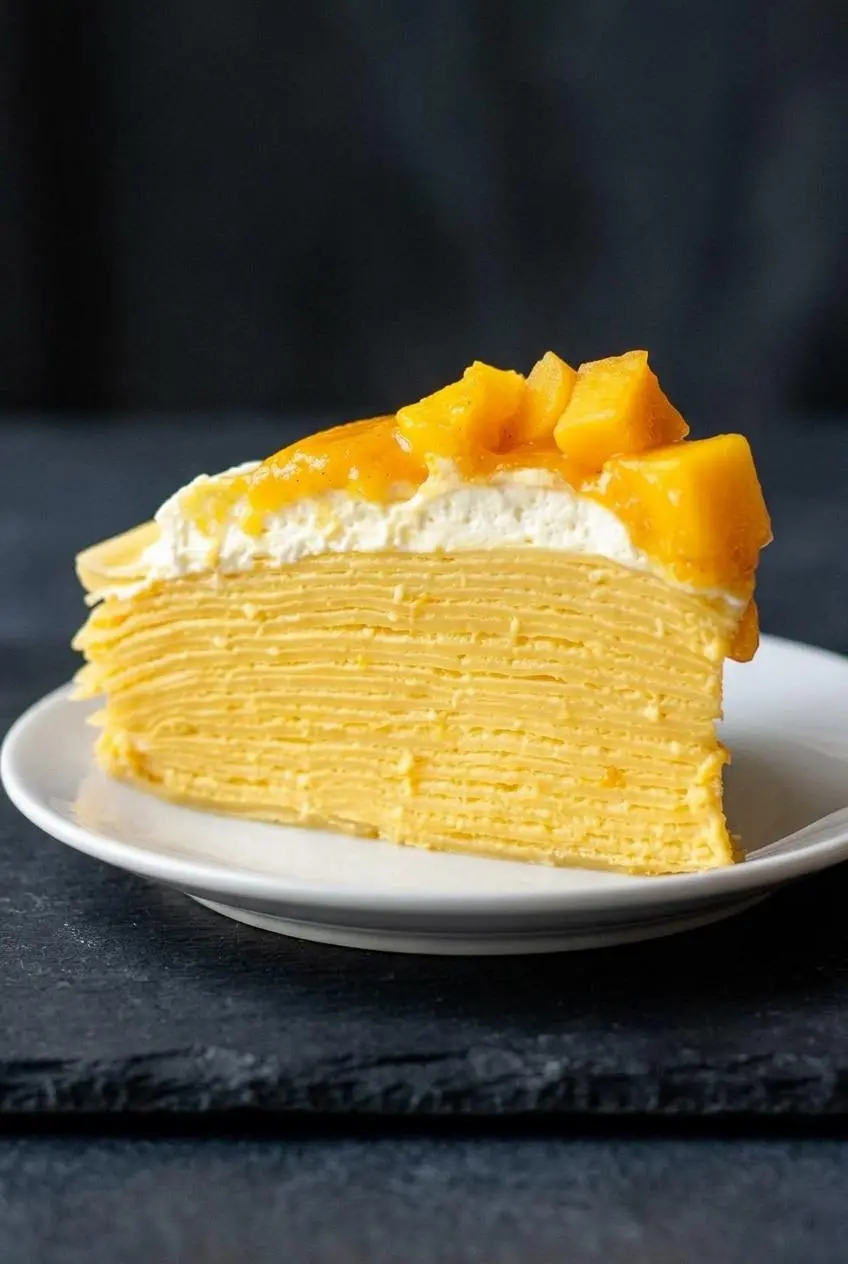
A level stack starts with consistent crepes and restrained filling, not pressure from your hands.
For smoother batter, optionally pass it through a fine-mesh sieve and let it rest before cooking. Straining removes lumps; resting lets flour absorb moisture and allows some mixing bubbles to settle. Neither replaces waiting until each crepe sets before flipping.
Pan diameter matters. The same 1/4 cup of batter spreads thinner across a wider base, while a narrower base produces a thicker crepe. Use the flat cooking surface, not the rim, to judge size. Aim for consistent coverage rather than stretching batter so thin that it leaves gaps.
Test the pan with a tiny drop of water before greasing it: a gentle sizzle suggests it is heating, while violent sputtering signals excessive heat. Let the surface dry before adding fat and batter. The immediate tilt-and-swirl motion also works for thin Swedish pancakes.
Divide cooled crepes into three roughly equal stacks and mentally reserve filling for each. Spread beyond the center, keep the edge border narrow, and rotate crepes with slightly thicker sides so those thicker areas don’t accumulate in one spot.
- Torn crepes: Turning before the surface sets can rip them; wait for dry edges and support the crepe with the spatula.
- Tiny holes: Touch a drop of batter onto the gap while the crepe is still in the pan, then let the patch set.
- Rubbery edges: Excessive cooking dries them out; watch the setting cues and reduce heat if edges become crisp.
- Runny filling: Warm coulis or insufficiently thickened puree can loosen it; cool the mixture thoroughly and avoid assembling while it flows.
- Domed or sliding layers: Center-heavy filling creates an unstable stack; redistribute it while assembling and chill fully before cutting.
Delicious Variations and Flavor Upgrades
Keep these optional versions separate from the cream cheese and spiced coulis method above. Changing the filling changes both flavor and how firmly the cake holds its shape.
The Toasted Coconut and Lime Zest Upgrade
Toast the shredded coconut in a dry skillet, stirring until golden and fragrant, then cool completely before folding it into the filling. Add fresh lime zest for a brighter citrus aroma. Toasting gives the coconut a nuttier flavor and a little crunch against the cold cream cheese.
If coconut is the flavor you especially enjoy here, fluffy coconut cake offers a baked alternative for another occasion.
Japanese Bakery Style Mango Mille Crepe Cake
For a lighter-textured version, replace the cream cheese-coconut filling with stabilized whipped cream prepared using a separate, established recipe. Arrange very thin slices of fresh Honey mango every few layers. Keep slices flat and avoid overlapping piles, which create bumps that grow as the cake gets taller.
Mango Crepe Roll (Yum Cha Style)
Use individual cooled crepes for a yum cha-inspired dessert instead of a tall cake. Place a log of whipped cream and a thick piece of fresh mango in the center, fold in the sides, and roll into a snug parcel. These emphasize fresh fruit and cream rather than spiced coulis.
Tangy Mango Curd and Store-Bought Crepe Shortcut
Prepared crepes can save the skillet work when you want a quicker assembly. Choose soft, flexible crepes of similar diameter and layer them with fully cooled mango curd made using a separate egg-yolk curd recipe. A drizzle of dark and white chocolate adds a richer finish.
Make-Ahead Timeline, Storage, and Serving Ideas

The most useful make-ahead option is to assemble the cake and let it chill overnight, then decorate just before serving.
- Prepare and cool: Make the coulis first, then cook the crepes while the fruit mixture cools.
- Fill and assemble: Check that both components are cool before beating the filling and building the stack.
- Chill and finish: Cover the assembled cake, refrigerate overnight if convenient, and whip the topping when you’re ready to decorate.
Keep the cake covered in the refrigerator, using a cake container or a cover that won’t press against its surface. Refrigerate leftovers promptly after serving. This dairy-filled cake needs chilled storage; avoid treating it like an unfrosted cake that can sit on the counter.
Adding the chopped mango at serving time keeps its surface looking fresh and limits fruit juice collecting around the whipped cream. Make only the topping you need for presentation rather than repeatedly handling a decorated cake.
For neat wedges, cut with a sharp knife and wipe the blade with a warm damp cloth between cuts. Dry it before the next slice so you don’t introduce water onto the cream. Lift each wedge with a cake server rather than pulling it sideways through the neighboring layers.
Serve chilled with hot coffee or jasmine tea. Fresh mint leaves make an optional garnish, and smaller wedges suit the rich cream cheese filling particularly well.
Conclusion
Thin crepes, fragrant mango coulis, and coconut cream cheese make a rewarding layered dessert without turning on the oven. The careful work happens at the skillet; the refrigerator handles the setting.
Cool the components, spread the filling evenly, and give the assembled cake its full chill before slicing. Try the toasted coconut and lime zest version when you want an extra-bright tropical finish.
Frequently Asked Questions
How Do You Keep a Mango Crepe Cake From Sliding Apart?
Cool the crepes and coulis completely before assembly. Spread thin, level filling layers with a tiny bare border, then refrigerate until the stack firms up before cutting. Don’t press down hard on the cake to level it.
Can You Make a Mango Crepe Cake Ahead of Time?
Yes. Assemble it before serving and use the overnight chilling option to split up the work. Keep it covered in the refrigerator, then add freshly whipped topping, coulis, and chopped mango just before serving.
What Is the Best Type of Mango for a Crepe Cake?
Honey mangoes, also called Ataulfo or Champagne mangoes, are an excellent choice because their creamy flesh has little stringy fiber. Choose ripe, flavorful fruit for both the puree and topping. Other mango varieties work if their flesh is smooth and sweet.
How Should You Store Leftover Mango Crepe Cake?
Keep leftovers covered in the refrigerator in a container that protects the topping from being crushed. Return the cake to chilled storage promptly after serving, and avoid leaving cut portions out while you finish the rest of the meal.
Mango Crepe Cake

Equipment
- Medium pot
- Food processor or blender
- small non-stick pan
- Spatula
- Mixer
Ingredients
For The Mango Coulis
- 2 mangoes (I recommend Honey but any will work, just make sure they’re good quality and flavorful)
- 2 cups water (500 ml)
- 1 teaspoon ground cinnamon
- 1/8 teaspoon ground cloves
- 1/2 cup white granulated sugar (100 g)
- 1 tbsp lime juice (15 ml) (or lemon juice)
- 1 tbsp cornstarch (7 g) (dissolved in 1 tablespoon water)
For The Crepes
- 2 and 1/2 cups all-purpose flour (310 g)
- 1/2 cup white granulated sugar (100 g)
- 3 and 1/2 cups whole milk (625 ml)
- 4 eggs
- 2 tbsp unsalted butter (30 ml) (melted and cooled)
For The Filling
- one 8-oz package cream cheese (225 g)
- 1 cup powdered sugar (125 g)
- 2 cups prepared mango coulis (250 g) (room temperature or chilled)
- 1/4 cup shredded coconut (60 g)
- 1/2 teaspoon coconut extract (or to taste)
For Topping
- 1/2 cup heavy cream (125 ml) (chilled)
- 1 tbsp powdered sugar (15 g)
- 1/2 cup prepared mango coulis (60 g) (room temperature or chilled)
- 1 mango (chopped)
Instructions
- Combine the mangoes, water, cinnamon, and cloves in a medium pot, bring to a boil over medium heat, then cover and simmer over medium-low heat for 23 to 30 minutes. The fruit should soften enough for the flesh to separate readily from the seed.
- Drain and discard the cooking liquid, cut the mango flesh away from the seeds, puree it in a blender or food processor, then return it to the empty pot. A smooth puree gives the finished filling a silky texture rather than noticeable fruit strands.
- Stir the sugar, citrus juice, and dissolved cornstarch into the puree over medium-low heat for 4 to 5 minutes, stirring continuously, then transfer to a clean bowl to cool to room temperature. The finished coulis should look glossy and thick enough to coat a spoon.
- Blend or whisk the flour, milk, eggs, sugar, and cooled melted butter until the batter is smooth. No dry flour pockets should remain in the mixture.
- Heat a small non-stick pan over medium heat, lightly grease it with butter or non-stick spray, then pour in about 1/4 cup batter and immediately tilt the pan to spread it. A gentle sizzle and an even, thin coating indicate that the batter is spreading across the heated surface.
- Cook the first side for 50 to 60 seconds, turn with a spatula, cook the second side for 10 to 15 seconds, and transfer to a clean plate, repeating with the remaining batter. Look for a set surface and slightly lifting edges before flipping, with approximately 20 to 21 crepes altogether.
- Beat the cream cheese, powdered sugar, and coconut extract with a mixer until fluffy, then mix in the cooled coulis and shredded coconut, adjusting the extract to taste if desired. The filling should look evenly blended and hold a spreadable consistency.
- Alternate completely cooled crepes with thin, even layers of filling on a serving plate, then cover and refrigerate for at least 3 to 4 hours or overnight. Keep the stack level as you build it, with filling distributed beyond the center rather than piled into a mound.
- Beat the chilled heavy cream with the topping’s powdered sugar to soft peaks, then spoon it over the chilled cake and finish with the reserved coulis and chopped mango just before serving. Stop whipping when lifted peaks bend gently at their tips.