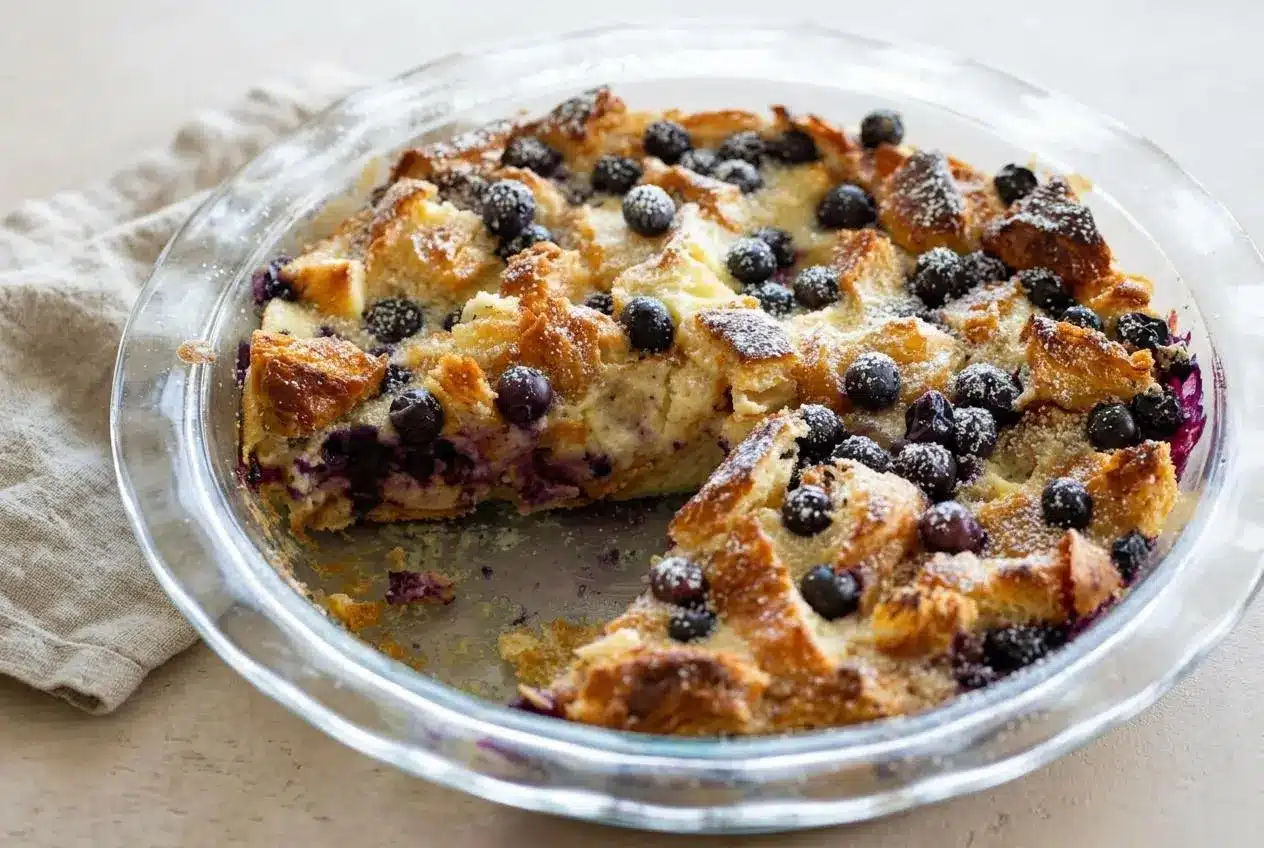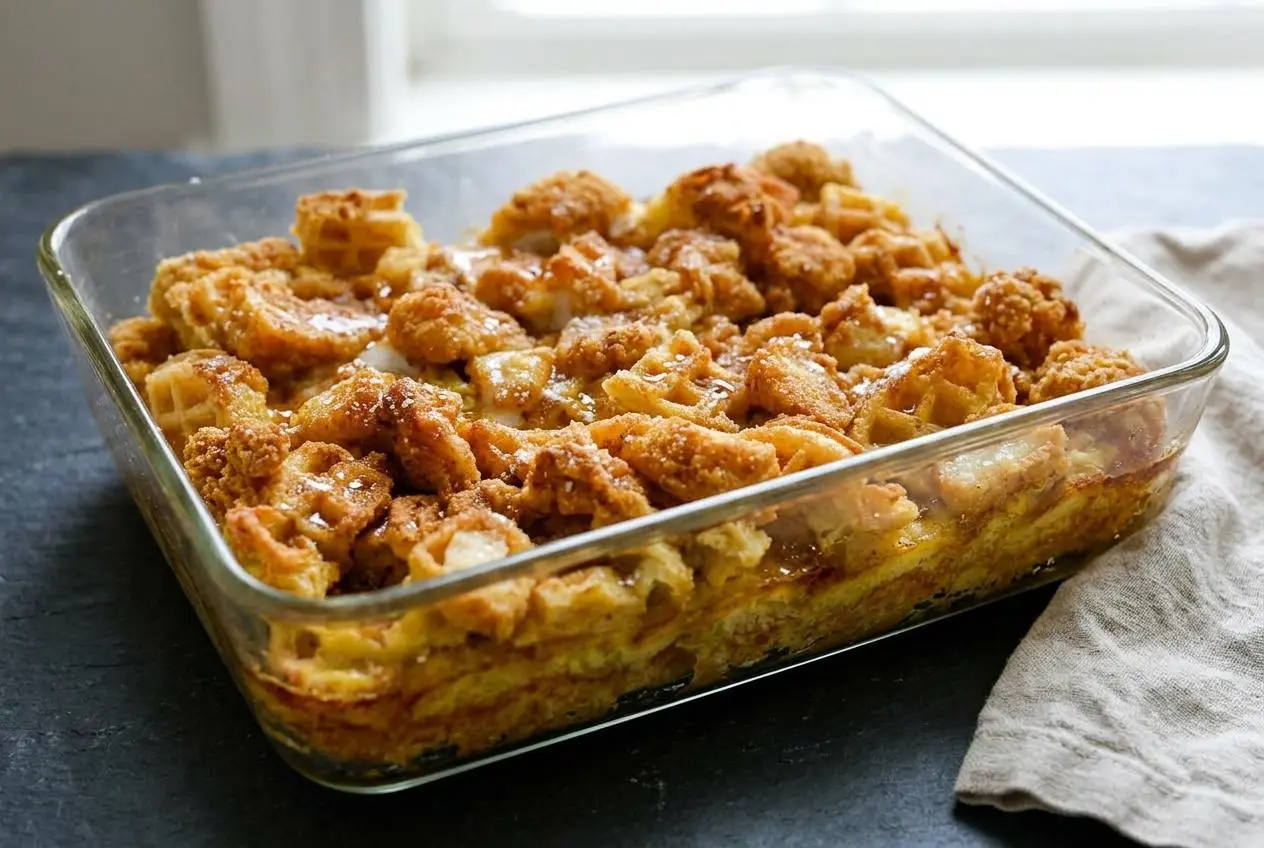
For golden edges and a custardy center, bake toasted waffle cubes and bite-size breaded chicken in a maple egg mixture at 350°F for 50 to 60 minutes. This sweet-and-savory casserole serves four and works for brunch or breakfast for dinner.
This chicken and waffles casserole brings the familiar combination into one sliceable bake. Toasted waffles soak up the custard, while breaded chicken adds savory flavor and a contrasting bite.
You get the comfort of a weekend breakfast without juggling separate batches at serving time. The exposed waffle edges brown while the middle stays soft. Save those crunchy corner pieces.
Toast the waffles until their surfaces feel dry and crisp before cutting them.
Ingredients You Need and Why Each One Matters
Waffles provide texture, chicken brings savory flavor, eggs give the casserole structure, milk keeps the custard tender, and maple syrup balances the breading with sweetness.
- 8 Frozen waffles
- ½ bag popcorn chicken (12 ounces)
- 6 eggs
- ¾ cup milk
- ¼ cup maple syrup
Waffles: Frozen buttermilk waffles offer a lightly tangy flavor and familiar texture. Belgian waffles have deeper pockets and thicker centers, so their pieces may absorb the custard differently. Either way, toast first: drying the surface helps the waffles retain some structure once the liquid goes in. They should feel crisp, not brittle or burned.
Chicken: Choose fully cooked frozen breaded chicken for this method, and check the package rather than assuming every breaded product is precooked. The chicken options give noticeably different results:
- Popcorn chicken: Its small pieces distribute easily, giving each serving plenty of breaded bites.
- Breaded tenders or nuggets: Cut them into 1-inch pieces for a similar balance of chicken and coating.
- Leftover chicken: Use cooked shredded chicken for a softer, unbreaded option, and tuck the strands into the custard so exposed ends don’t dry out.
Eggs and milk: Eggs bind everything into portions you can lift with a spatula. Milk loosens that egg mixture and keeps it from becoming too firm. Whole milk adds richness; half-and-half is an optional richer substitute, not a required change.
Maple syrup: Pure maple syrup brings a distinct maple flavor alongside the sweetness. Pancake syrup tastes different, so pure maple is the better choice when you want that flavor to come through clearly.
I’d soften stubborn frozen chicken just enough to cut without forcing the knife; crunchy breading isn’t worth a slipping blade.
How to Make the Chicken and Waffles Casserole Step by Step
Plan on about 10 minutes of prep and 50 to 60 minutes of baking. Use a 7×9-inch or 8×8-inch casserole dish so the custard isn’t spread too thin or piled too deep.
- Coat the bottom and sides of a 7×9-inch or 8×8-inch casserole dish with cooking spray, and set the oven to 350°F.
An even coating helps the egg mixture release from the corners when you lift out portions. - Use a toaster to crisp the waffles, or place them on a baking sheet in the warming oven for 2 to 3 minutes, then cut them into bite-size chunks.
Look for a dry, lightly crisp surface that will hold up better when the custard reaches it. - Cut the chicken into 1-inch bites, using a 30-second microwave warm-up first only if the frozen pieces resist the knife.
The pieces should be manageable to cut without crushing the coating or forcing the blade. - Distribute the waffle chunks across the prepared dish, then scatter the chicken among them.
A fairly even mix prevents one serving from holding mostly waffles while another holds mostly chicken. - Beat the eggs, milk, and maple syrup together in a bowl, optionally including a pinch of salt or cinnamon, then pour the mixture across the filled dish.
The custard should look evenly blended, without separate streaks of egg white pooling around the waffles. - Bake the casserole at 350°F for 50 to 60 minutes, checking the center as the end of the baking window approaches.
The middle should no longer look liquid or jiggle loosely, and the exposed waffle edges should turn golden brown. - Allow the casserole to cool slightly before cutting and serving with extra maple syrup if desired.
The brief rest helps the custard hold together so portions lift more neatly from the dish.
Pour the custard across the whole surface rather than into one corner. The waffles create pockets where liquid can collect, so even distribution matters more than pressing everything down firmly.
Expect a tender interior, not an entirely crunchy casserole. Any breading that sits in custard will soften; the exposed pieces supply the crisp contrast.
Expert Tips and Troubleshooting for Crisp Texture
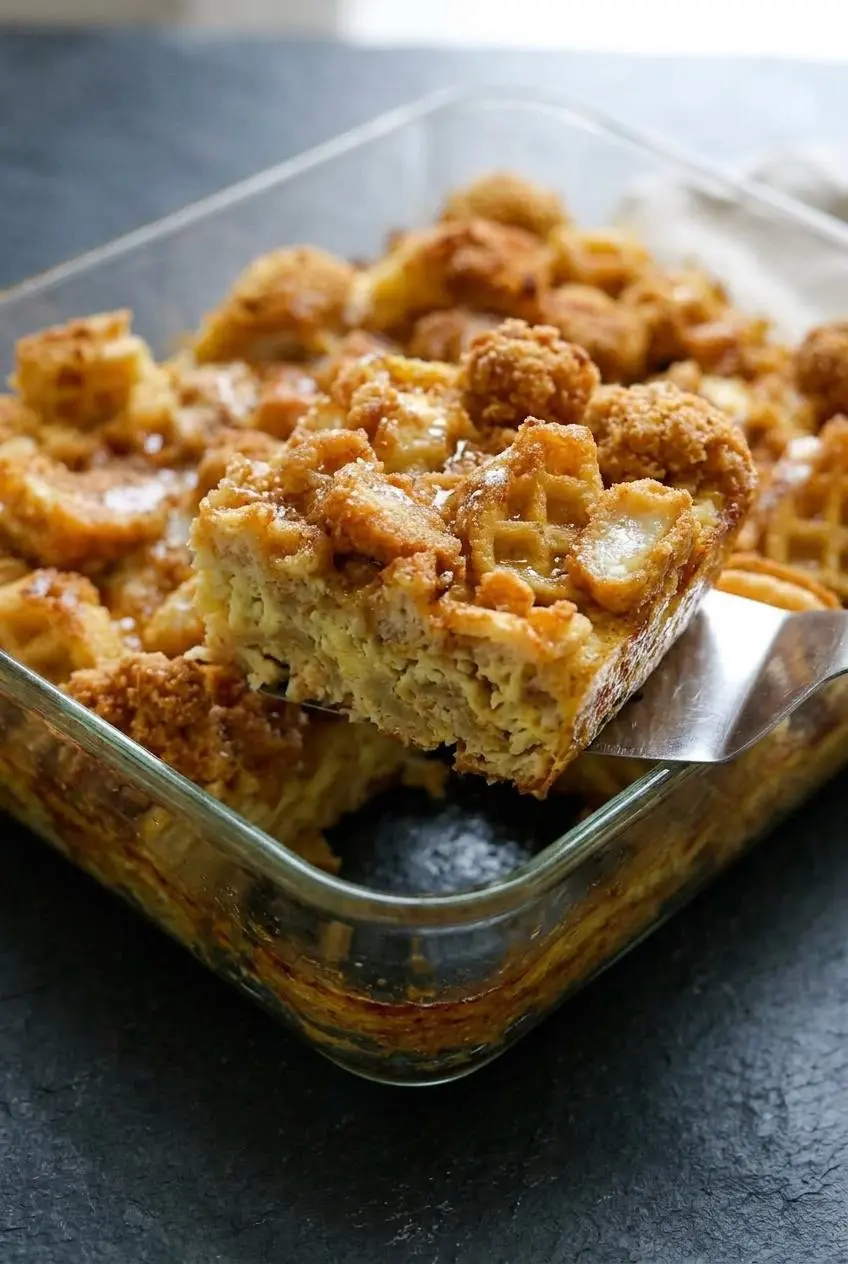
The most useful texture adjustment is controlling which pieces touch the custard and which remain exposed to oven heat.
How to Keep the Chicken and Waffles from Getting Soggy
For an optional crispness upgrade, heat fully cooked frozen chicken using its package directions before assembly. You can also use freshly cooked homemade popcorn chicken. Keep some pieces near the surface instead of burying every bit of breading.
For a more pronounced crunchy top, mix part of the chicken among the waffles and reserve the rest to scatter over the custard after pouring. This changes the assembly slightly but leaves the ingredient amounts alone.
The microwave shortcut serves a different purpose: it makes frozen chicken easier to cut. It doesn’t crisp the coating.
- Soggy breading: Too much chicken sat beneath the liquid; keep more pieces exposed next time and add finishing sauces at the table.
- Mushy waffles: The waffles started too soft; toast them thoroughly before cubing rather than relying on the casserole bake to dry them.
- Dark or dry edges: The surface is browning ahead of the center; loosely shield the browned areas with foil while the middle finishes baking.
- Loose egg center: The custard needs more baking, especially in a crowded dish; continue cooking and check the center rather than judging only by the top color.
Scaling Up from an 8×8 Pan to a 9×13 Baking Dish
For a double batch, use 16 waffles, 24 ounces of popcorn chicken, 12 eggs, 1½ cups milk, and ½ cup maple syrup in a 9×13-inch baking dish. That gives approximately eight servings.
Don’t put doubled ingredients into the smaller dish. A deeper pile makes it harder to set the center before the edges become dry. The larger dish keeps the layer closer to the intended depth, though you should still judge doneness by the center rather than assume an identical baking time.
Best Sauces, Toppings, and Flavor Variations
Choose your finish based on whether you want the casserole sweeter, spicier, or more savory. These additions are optional and stay separate from the ingredient list and method above.
Hot Honey and Spicy Southern Style
Drizzle hot honey over individual portions for a sweet finish with lingering heat. Keeping it at the table lets everyone control the spice and keeps the entire pan from becoming sticky.
For warmth throughout the casserole, optionally whisk cinnamon and cayenne into the custard. Use a light hand so the maple flavor still comes through. A drizzle of plain maple syrup remains a good choice when you want sweetness without heat.
Warm Herbed Honey Butter and White Gravy
Warm white country gravy makes the dish feel more savory, especially with plenty of black pepper. Spoon it over each portion just before eating rather than soaking the whole casserole.
For a buttery finish, gently melt butter with honey, then add rosemary, thyme, and smoked paprika. Keep the herbs finely chopped so the drizzle spreads evenly instead of leaving large herb pieces on the waffles.
Savory Cheddar and Bacon Game-Day Casserole
- Cheddar: Scatter shredded cheddar over the assembled casserole for a melted, savory topping.
- Bacon: Add cooked, crisp bacon pieces for a smoky contrast, reserving some for serving if you want more crunch.
- Party portions: Let the baked custard settle before cutting smaller squares, and serve sauces separately to keep the pieces easier to handle.
If the chicken-and-bacon combination is the main attraction, chicken bacon ranch casserole offers another savory direction for a casual gathering.
Make-Ahead, Storage, Freezing, and Reheating Guide
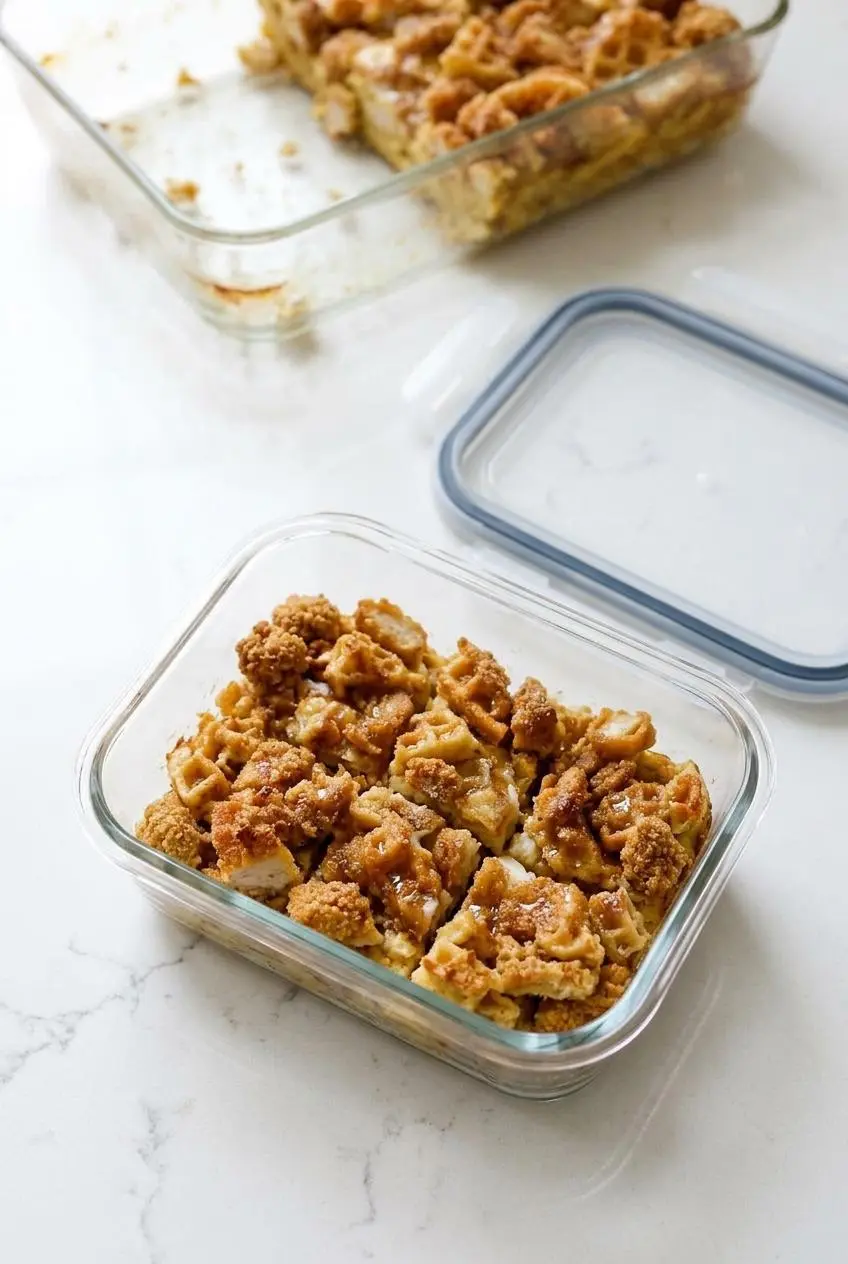
For the best contrast between soft custard and crisp edges, assemble the casserole close to baking. There isn’t a tested overnight holding schedule here, so don’t rely on an extended soak to improve the texture. It will soften the waffles and breading.
After baking, divide leftovers into shallow containers and refrigerate promptly rather than leaving the full dish out to cool completely. Keep finishing sauces separate so they don’t soak into the topping during storage.
Refrigerate cooked leftovers for 3 to 4 days, or wrap portions securely and freeze for up to 3 months. Thaw frozen portions in the refrigerator, then reheat until the center reaches 165°F, using these leftover storage and reheating practices to reduce handling risks.
An oven or air fryer works better than a microwave when restoring exposed edges matters. Arrange portions with space around them, follow your appliance’s reheating directions, and check the center with a food thermometer. Shield the top if it browns before the middle heats through.
The microwave is convenient, but expect softer waffles and breading. Neither method will return custard-soaked pieces to their freshly toasted texture.
What to Serve with Chicken and Waffles Casserole
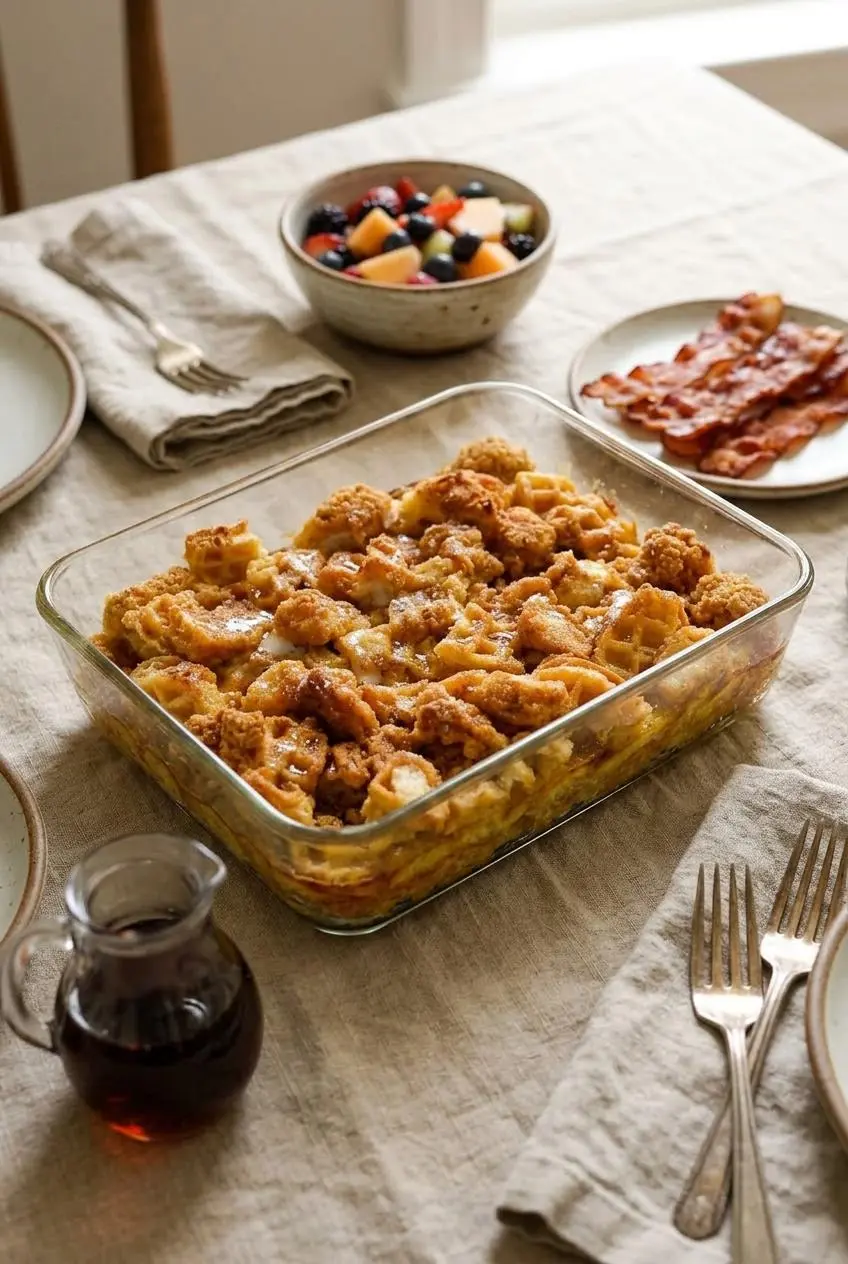
Fresh, tangy sides balance the rich custard better than another heavily sauced dish.
- Weekend or holiday brunch: Serve fresh fruit salad and plain or tangy yogurt alongside warm casserole portions.
- A hearty Southern-style spread: Add crisp baked bacon or savory breakfast sausage patties, with syrup and gravy offered separately.
- Breakfast for dinner: Keep the accompaniments light with fruit and yogurt, letting the casserole be the main event.
- Game day: Serve smaller squares with sauce on the side, and provide forks because the center stays tender.
Bring out toppings in separate bowls so each person can choose a sweet or savory finish without covering every crisp edge in the pan.
Conclusion
This five-ingredient bake combines maple sweetness, savory chicken, and tender egg custard in a dish that’s easy to portion for brunch or dinner.
Toast the waffles first, leave some chicken near the surface for crunch, and finish each serving with maple syrup or hot honey. Give the pan a brief rest, then enjoy those golden edges while they’re warm.
Frequently Asked Questions
Can You Make Chicken and Waffles Casserole Ahead of Time Overnight?
An overnight assembly schedule hasn’t been established for this version. For better texture, assemble close to baking rather than leaving toasted waffles and breaded chicken soaking in the custard. Keep refrigerated components chilled until you’re ready to use them.
Can You Freeze Chicken and Waffles Casserole?
Yes, baked portions can be wrapped securely and frozen using the storage guidance above. Cool leftovers promptly, package them in manageable portions, and expect the custard-soaked waffles to remain softer after reheating.
What Kind of Sauce Is Good for Chicken and Waffles Casserole?
Pure maple syrup is the classic sweet finish. Hot honey adds heat, herbed honey butter adds richness, and white country gravy makes the serving more savory. Add any sauce just before eating to protect the crisp edges.
Can I Use Shredded Chicken or Chicken Tenders Instead of Popcorn Chicken?
Yes. Fully cooked breaded tenders or nuggets cut into 1-inch pieces give the closest texture. Cooked, unbreaded chicken also works, but tuck the meat into the custard to keep exposed strands from drying out.
How Do You Reheat Leftover Chicken and Waffles Casserole So It Stays Crispy?
Use an oven or air fryer for the best chance of restoring crisp exposed edges, and check the center with a thermometer as described above. The microwave warms portions conveniently but softens the waffles and coating. Add sauce after reheating.
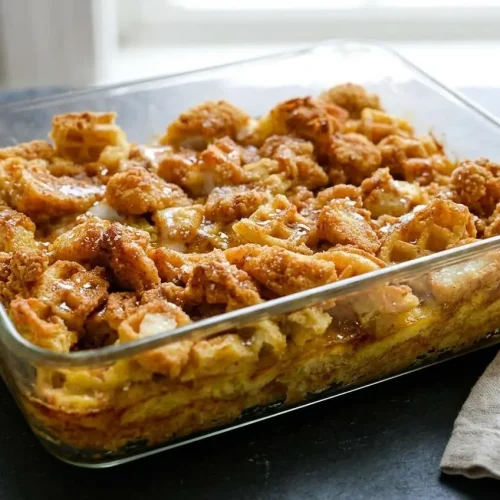
Chicken and Waffles Casserole

Equipment
- 7×9 inch or 8×8 inch casserole dish
- Toaster
- Baking Sheet
- Mixing Bowl
- Whisk
Ingredients
- 8 Frozen waffles
- ½ bag popcorn chicken (12 ounces)
- 6 eggs
- ¾ cup milk
- ¼ cup maple syrup
Instructions
- Coat the bottom and sides of a 7×9-inch or 8×8-inch casserole dish with cooking spray, and set the oven to 350°F. An even coating helps the egg mixture release from the corners when you lift out portions.
- Use a toaster to crisp the waffles, or place them on a baking sheet in the warming oven for 2 to 3 minutes, then cut them into bite-size chunks. Look for a dry, lightly crisp surface that will hold up better when the custard reaches it.
- Cut the chicken into 1-inch bites, using a 30-second microwave warm-up first only if the frozen pieces resist the knife. The pieces should be manageable to cut without crushing the coating or forcing the blade.
- Distribute the waffle chunks across the prepared dish, then scatter the chicken among them. A fairly even mix prevents one serving from holding mostly waffles while another holds mostly chicken.
- Beat the eggs, milk, and maple syrup together in a bowl, optionally including a pinch of salt or cinnamon, then pour the mixture across the filled dish. The custard should look evenly blended, without separate streaks of egg white pooling around the waffles.
- Bake the casserole at 350°F for 50 to 60 minutes, checking the center as the end of the baking window approaches. The middle should no longer look liquid or jiggle loosely, and the exposed waffle edges should turn golden brown.
- Allow the casserole to cool slightly before cutting and serving with extra maple syrup if desired. The brief rest helps the custard hold together so portions lift more neatly from the dish.