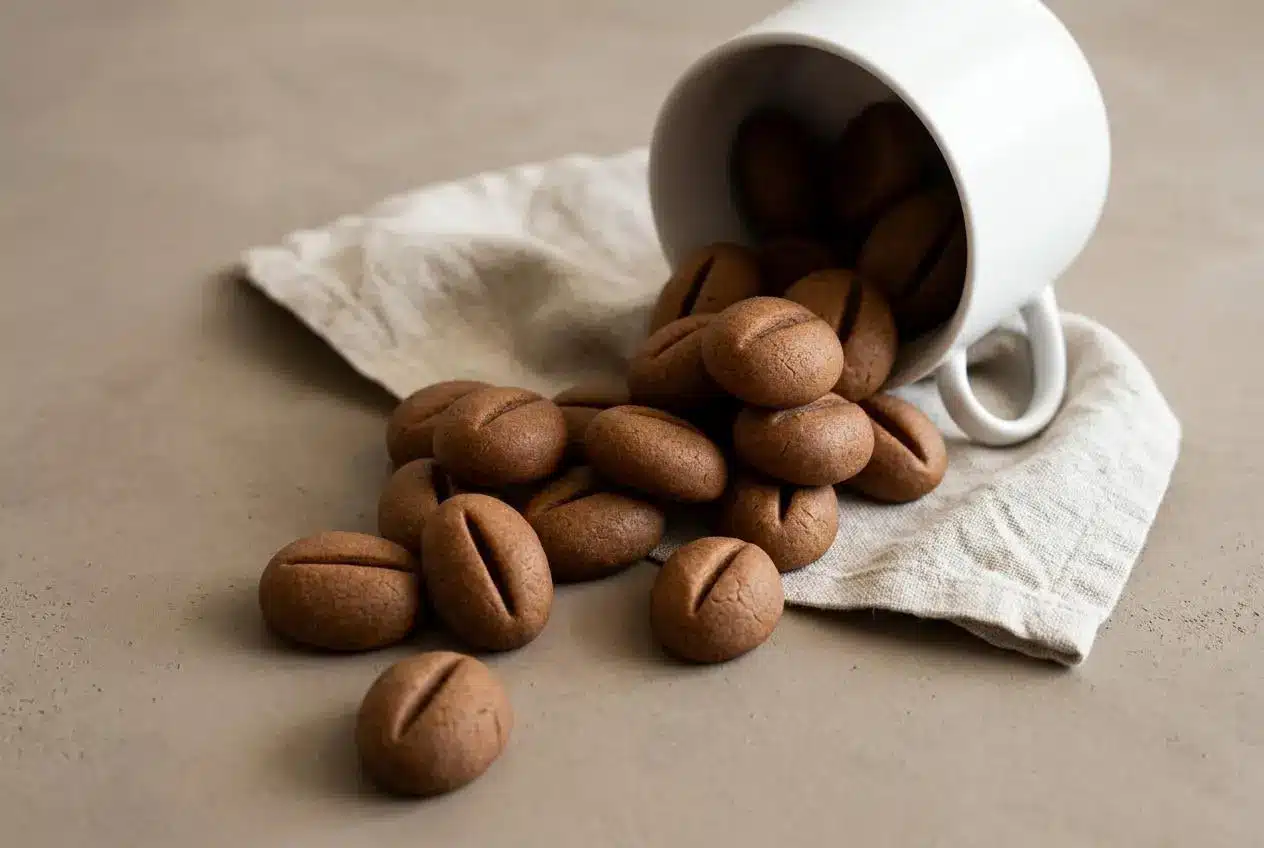
These coffee bean cookies are tiny mocha shortbread bites with crisp edges and a tender, melt-in-your-mouth center. Dissolved instant coffee and cocoa flavor the dough, while oval shaping and a pressed center line give each cookie its roasted coffee bean look.
The coffee aroma arrives before the first bite, followed by cocoa and buttery sweetness. These cookies suit anyone who enjoys a little bitterness in dessert rather than an overwhelmingly sugary finish. Each one is small enough to sit beside an espresso cup, with a rounded shape that makes a homemade batch feel especially giftable.
The dough takes some hands-on attention, but no complicated decorating. A crumbly mixing stage is normal, and the refrigerator does much of the shape-saving work. Press the crease with care, and the little beans emerge with their character intact. That center line is the satisfying part.
Clear space in the refrigerator for your baking sheet before you start shaping.
Ingredients & Smart Substitutions
Coffee and cocoa bring roasted flavor and color, butter and yolk add richness, and the flour, cornstarch, and powdered sugar build a delicate crumb. Milk dissolves the coffee so its flavor blends evenly throughout the dough.
- 1 tbsp instant coffee
- 2 tsp milk
- 1 cup cake flour
- 2 tbsp cocoa powder
- 3 tbsp corn starch
- ⅓ cup unsalted butter (room temperature)
- 1 egg yolk
- 7 tbsp powdered sugar
Key Ingredients & Why They Matter
Cake flour and cornstarch help create a tender, shortbread-style bite. Powdered sugar blends smoothly into the butter without the noticeable crystals of granulated sugar. Together, they support a delicate texture and neatly shaped cookies, though chilling still matters.
Butter should yield to gentle pressure without looking oily or melted. The yolk contributes richness and helps the crumbly mixture bind. Cocoa rounds out the concentrated coffee flavor with a chocolate finish.
I make sure the coffee mixture looks smooth before adding it to the butter; undissolved granules can leave concentrated bitter specks.
Coffee Options: Instant Coffee vs. Espresso Powder vs. Brewed
- Instant coffee: Use the listed 1 tablespoon with 2 teaspoons warm milk for concentrated coffee flavor.
- Instant espresso powder: An optional starting point is 1½ to 2 teaspoons dissolved in the same milk quantity; intensity varies by brand.
- Brewed espresso: Replace both coffee granules and milk with 2 teaspoons cooled, strongly brewed espresso, expecting a milder coffee impression.
Use dissolvable espresso powder, not ground espresso beans. Avoid adding a larger pour of brewed coffee, which would change the dough’s moisture balance.
Easy DIY Cake Flour Substitute
Measure 1 level cup all-purpose flour, remove 2 tablespoons, and replace them with 2 tablespoons cornstarch. Sift thoroughly, then measure the recipe’s cup from this mixture. Keep the separately listed 3 tablespoons cornstarch, too; the substitution does not replace that ingredient.
How to Make & Shape the Coffee Bean Cookies Step-by-Step
Plan for about 40 cookies, with 10 minutes of prep, an hour of chilling, 12 to 14 minutes of baking, and 10 minutes of cooling.
- Heat the milk in a microwave-safe bowl for 20 seconds, then whisk in the instant coffee.
Keep whisking until the liquid looks smooth, without visible granules. - Pass the cake flour, cornstarch, and cocoa through a sieve into a large bowl and reserve.
The combined dry mixture should look evenly colored and free of cocoa lumps. - Work the softened butter with a whisk in a separate bowl, incorporate the powdered sugar, then whisk in the yolk.
Stop when the mixture looks pale and creamy rather than continuing to whip it fluffy. - Blend the dissolved coffee into the butter mixture until no streaks remain.
The pale mixture should take on an even, light mocha color. - Sift the reserved dry mixture over the wet mixture, stir to form crumbs, then gather and press everything together by hand.
The initially loose crumbs should become a smooth dough that holds together. - Form a long dough log, cut it into roughly ½-inch portions weighing about 8 g each, and roll each portion between your palms into an oval.
Each piece should be about 1 teaspoon of dough with a rounded bean shape. - Indent each oval lengthwise with a toothpick or butter knife, arrange on a parchment-lined or cooking-spray-greased baking sheet, and refrigerate for about 1 hour.
Press only halfway into the dough so the crease stays deep without splitting the cookie. - Set the oven to 325°F and allow it to preheat.
The shaped dough should remain chilled while the oven comes to temperature. - Move the chilled sheet into the preheated oven and bake for 12 to 14 minutes.
Look for dry surfaces and set edges rather than waiting for pronounced browning. - Allow the cookies to cool for 10 minutes before handling.
The tender cookies firm as they cool, making them less likely to break.
Mixing the Mocha Shortbread Dough
The coarse-crumb stage does not automatically mean the dough needs liquid. Gentle pressure and the warmth of your hands help the butter bring those crumbs together. Press and gather rather than kneading vigorously.
Shaping Realistic 8-Gram Coffee Beans
Use weight as your guide if the cut pieces vary in size. Smooth surface cracks before pressing the crease, and keep both ends rounded rather than pinching them into points.
Chilling and Baking to Lock in the Crease
Chilling firms the butter and helps preserve the rounded outline. These dark cookies offer little obvious color change, so inspect their edges and surface near the beginning of the baking window.
Expert Tips & Troubleshooting
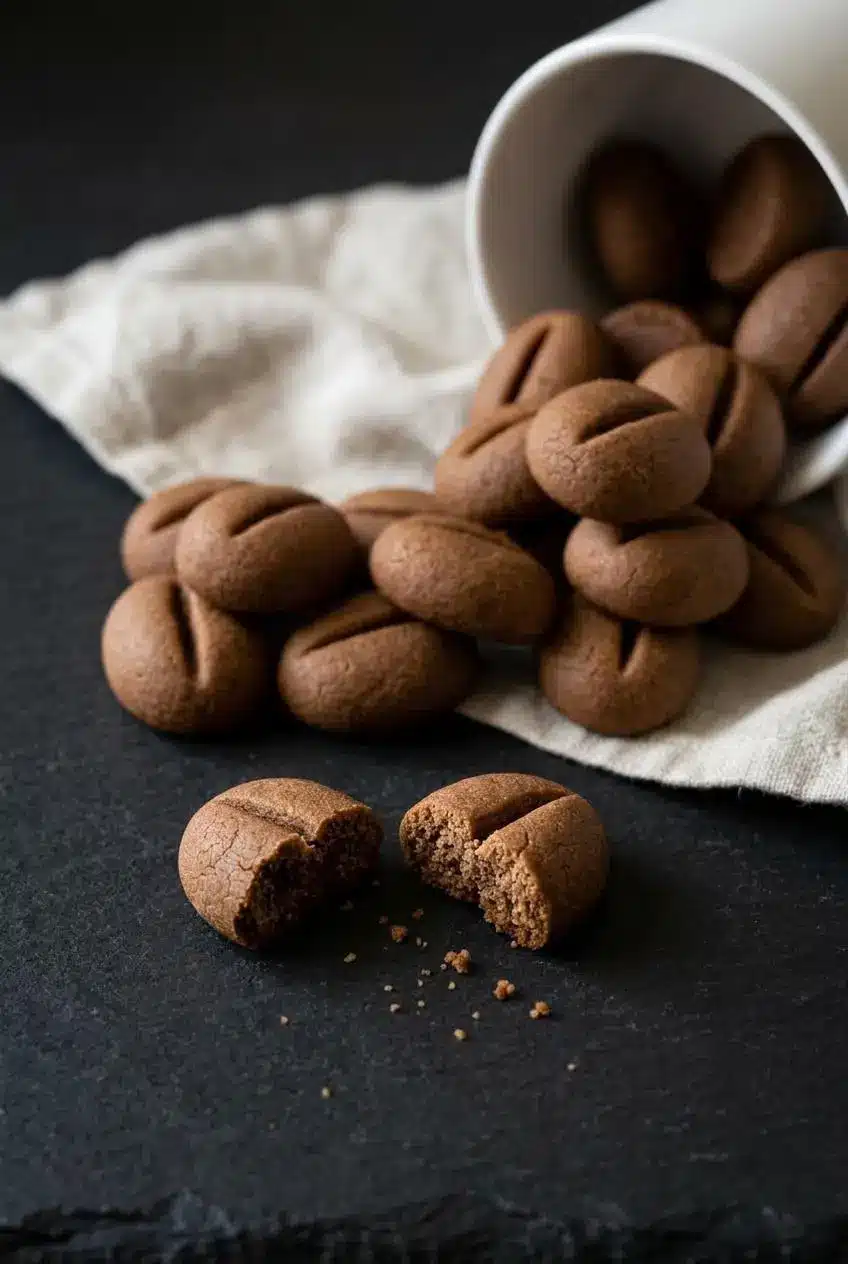
Correct the dough’s texture before shaping the whole batch. A smooth oval should hold its outline without crumbling at the ends or sticking heavily to your palms.
- Dough falls apart: Press it together with warm hands first, especially if loose crumbs remain at the bottom of the bowl. If it still refuses to bind, add milk sparingly rather than pouring it in.
- Dough feels sticky: Warm butter can make portioning messy. Refrigerate the dough briefly until it feels manageable, then shape it without adding extra flour.
- Cookies spread flat: Keep the shaped-cookie chill and avoid starting with melted butter. Whisk the butter mixture only until creamy, not until heavily aerated.
- The crease disappears: A shallow mark can soften during baking. Press a distinct lengthwise indentation halfway down, but leave an intact layer of dough beneath it.
- Ovals crack: The dough may need more gentle pressing before rolling. Gather the piece into a cohesive mass, then smooth its surface between your palms.
- Cookies turn hard: Waiting for dark brown edges can overbake cocoa dough. Check within the stated baking window and look for dry, set edges instead.
Butter handling deserves the same care as it does in classic shortbread cookies: soft enough to blend, but not greasy. If the dough starts leaving an oily film on your hands, cool it rather than fighting through the remaining shapes.
Delicious Variations & Serving Ideas
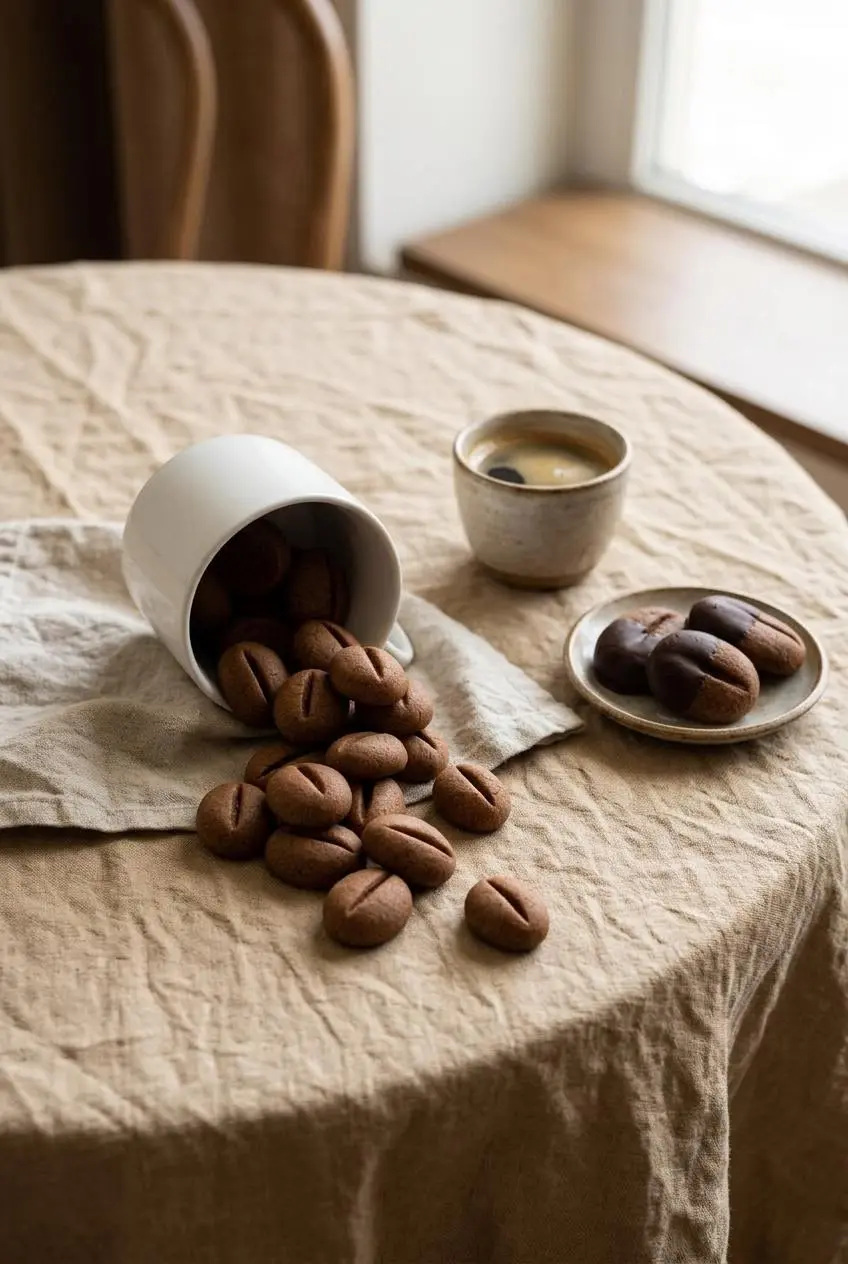
Finish a batch with chocolate or spice for a different coffee-shop flavor. Keep these additions optional, and remember that changes within the dough can alter its texture and spread.
Chocolate-Covered Coffee Bean Cookies
Dip half of each completely cooled cookie into melted dark chocolate, then let the coating set on parchment. Hold the bare end gently so the tender cookie does not snap. For a lighter finish, drizzle chocolate over the tops instead, leaving the center crease visible.
Vegan & Egg-Free Adaptation
For an egg-free experiment, replace the yolk with unsweetened applesauce or a flaxseed binder. For a vegan version, also choose stick-style plant-based butter and unsweetened dairy-free milk. These substitutions are not identical to yolk and dairy butter, so expect possible changes in tenderness, moisture, and spreading. Bake a small trial portion before committing the entire batch.
Old-Fashioned Spiced Mocha & Serving Pairings
- Cinnamon mocha: Finish cooled cookies with a light cinnamon dusting for warm spice without changing the dough.
- Espresso finish: Dust very lightly with fine instant espresso powder; a heavy layer can taste sharply bitter.
- Rounded flavor: Optional vanilla and a little fine sea salt can soften the bitter impression of coffee and cocoa.
- Molasses flavor: A touch of molasses gives an old-fashioned note, but its moisture can soften the dough and affect the crease.
Serve a small handful beside hot espresso, morning drip coffee, or iced cold brew. For a sweeter café-style pairing, try banana iced coffee. Let the cookies cool completely before arranging them on a dessert tray or packing them into airtight glass jars and decorative tins. Use snug packaging to limit movement, and keep chocolate-coated cookies apart until their coating has set so the finished beans stay neat.
Storage & Texture Protection

Let the cookies cool completely before closing them in an airtight container. Trapped warmth creates condensation, which can soften the crisp exterior even when the cookies looked dry coming out of the oven.
Choose a dry container with a well-fitting lid and keep it away from heat and humidity. Separate chocolate-dipped cookies with parchment once their coating has set, and avoid packing them so tightly that the rounded shapes or center creases get crushed.
Keep these crisp cookies separate from moist baked goods in gift tins. Their delicate texture benefits from dry surroundings, while sturdy packaging protects the small beans during transport.
Conclusion
These mocha shortbread bites reward careful shaping with crisp edges, a tender crumb, and a recognizable coffee bean crease. Even portions and thoroughly chilled dough make the biggest difference.
Enjoy them plain to appreciate the coffee flavor, or half-dip the next batch in dark chocolate. Give them time to cool, then put the coffee on.
Frequently Asked Questions
Can I Use Espresso Powder or Brewed Coffee Instead of Instant Coffee?
Yes. Try 1½ to 2 teaspoons instant espresso powder dissolved in 2 teaspoons warm milk. Alternatively, replace both the instant coffee and milk with 2 teaspoons cooled, strongly brewed espresso, expecting a milder result.
How Do I Make Coffee Bean Cookies Without Cake Flour?
Measure 1 level cup all-purpose flour, remove 2 tablespoons, and replace them with 2 tablespoons cornstarch. Sift thoroughly before measuring for the recipe, and retain the separately listed cornstarch.
Can I Make These Cookies Egg-Free or Vegan?
You can experiment with applesauce or a flaxseed binder instead of the yolk. For vegan cookies, also use plant-based butter sticks and dairy-free milk. The texture and spread may differ, so try a small test batch.
Can I Use White or Brown Sugar Instead of Powdered Sugar?
Powdered sugar is the better choice for a smooth, delicate crumb. White or brown granulated sugar is not a direct texture-equivalent swap and may change spreading, sweetness, and how clearly the cookies hold their shape.
How Do I Keep Coffee Bean Cookies From Spreading in the Oven?
Use the powdered sugar and cornstarch as directed, avoid over-whipping the butter, and chill the shaped cookies before baking. Keep the dough cold until the oven reaches the specified temperature.
Coffee Bean Cookies

Equipment
- Microwave-safe Bowl
- butter knife
- Toothpick
- Baking Sheet
- Parchment Paper
Ingredients
- 1 tbsp instant coffee
- 2 tsp milk
- 1 cup cake flour
- 2 tbsp cocoa powder
- 3 tbsp corn starch
- ⅓ cup unsalted butter room temperature
- 1 egg yolk
- 7 tbsp powdered sugar
Instructions
- Heat the milk in a microwave-safe bowl for 20 seconds, then whisk in the instant coffee. Keep whisking until the liquid looks smooth, without visible granules.
- Pass the cake flour, cornstarch, and cocoa through a sieve into a large bowl and reserve. The combined dry mixture should look evenly colored and free of cocoa lumps.
- Work the softened butter with a whisk in a separate bowl, incorporate the powdered sugar, then whisk in the yolk. Stop when the mixture looks pale and creamy rather than continuing to whip it fluffy.
- Blend the dissolved coffee into the butter mixture until no streaks remain. The pale mixture should take on an even, light mocha color.
- Sift the reserved dry mixture over the wet mixture, stir to form crumbs, then gather and press everything together by hand. The initially loose crumbs should become a smooth dough that holds together.
- Form a long dough log, cut it into roughly ½-inch portions weighing about 8 g each, and roll each portion between your palms into an oval. Each piece should be about 1 teaspoon of dough with a rounded bean shape.
- Indent each oval lengthwise with a toothpick or butter knife, arrange on a parchment-lined or cooking-spray-greased baking sheet, and refrigerate for about 1 hour. Press only halfway into the dough so the crease stays deep without splitting the cookie.
- Set the oven to 325°F and allow it to preheat. The shaped dough should remain chilled while the oven comes to temperature.
- Move the chilled sheet into the preheated oven and bake for 12 to 14 minutes. Look for dry surfaces and set edges rather than waiting for pronounced browning.
- Allow the cookies to cool for 10 minutes before handling. The tender cookies firm as they cool, making them less likely to break.