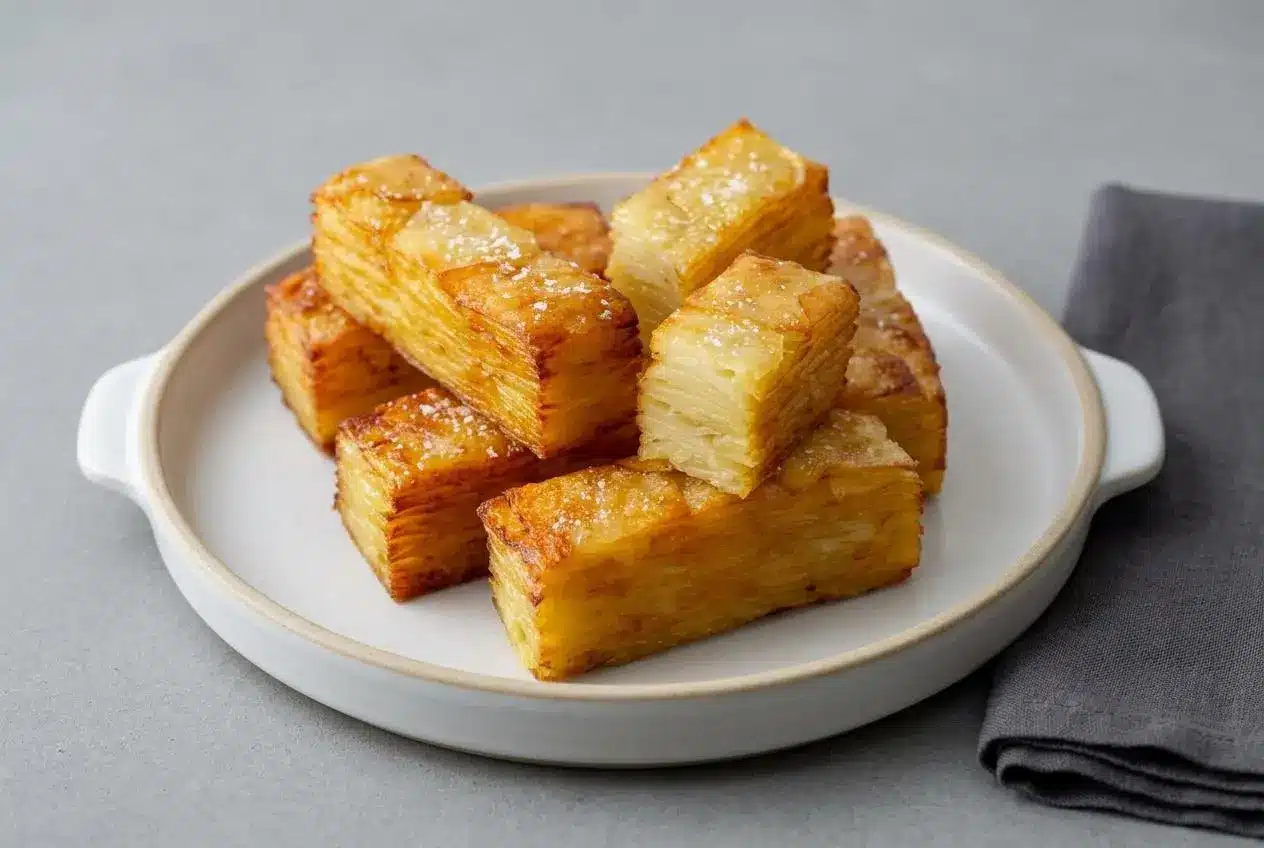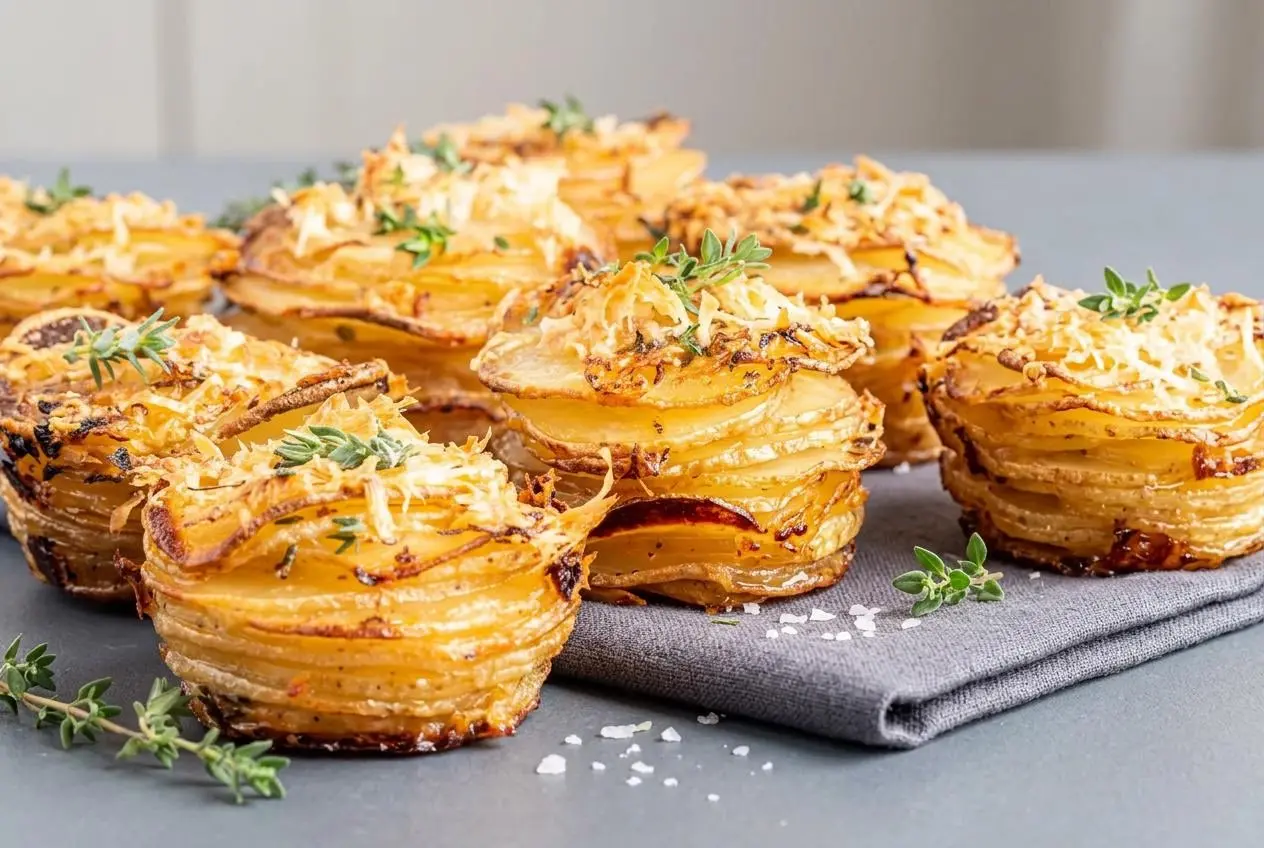
Crispy golden edges and buttery tender layers make parmesan potato stacks worth the slicing. Coat 1/8-inch Yukon Gold rounds with garlic butter, thyme, and Parmesan, then bake them in a greased 12-cup muffin tin at 400°F for 45 to 50 minutes.
These individual potato stacks turn thinly sliced potatoes into a side dish with crisp, cheesy edges and soft centers. The muffin cups support the layers as they roast, while garlic and fresh thyme give the butter a savory aroma.
They look right at home beside a holiday roast, but they’re equally welcome with weeknight chicken. Most of the cooking time is hands-off, and you don’t need a mandoline. The real payoff is that golden cheese skirt.
Keep the potato slices evenly thick so the middle softens before the exposed edges get too dark.
Key Ingredients and Why Each One Matters
Potatoes give the stacks structure, butter adds richness, and Parmesan helps bind the layers while browning at the edges. Garlic and thyme supply aroma, while sea salt and cracked pepper balance the creamy potato centers.
- ½ cup unsalted butter
- 3 large cloves garlic (pressed or grated)
- ½ teaspoon sea salt
- ¼ teaspoon freshly cracked black pepper
- 10 medium Yukon gold potatoes (cut into 1/8 inch thick slices)
- 2 tablespoons chopped fresh thyme
- ¾ cup grated parmesan cheese (divided)
- Flaky sea salt and additional freshly cracked black pepper (for topping)
- 2 tablespoon thyme leaves (for garnish)
This recipe fills 12 muffin cups and serves 4 generously, allowing about 3 individual stacks per person. Choose potatoes whose rounds fit comfortably inside your muffin cups rather than folding against the sides.
Best Potatoes to Use: Yukon Gold vs. Russet
- Yukon Gold: Thin, tender skins can stay on after scrubbing. Their moderate starch content and creamy flesh help the slices retain distinct layers while taking on the butter.
- Russet: Peel the thicker skins before slicing. The higher-starch flesh absorbs butter readily and produces a fluffier center, but the cooked rounds can break more easily.
Yukon Golds are the better fit when neat, stable stacks matter most. Russets offer a softer, flourier texture, the same quality that works well in fluffy twice baked potatoes.
Why Freshly Grated Parmesan and Unsalted Butter Matter
Finely grated Parmesan spreads between the slices, helping them cling together. Grate it fresh when possible; packaged shredded cheese may contain anti-caking coatings that make melting less even. The cheese around the rim should form a delicate, browned crust.
Unsalted butter leaves room for the salty Parmesan and finishing salt. Pressed garlic distributes through the butter without bulky pieces, while chopped thyme brings herbal flavor between the layers.
I prefer a wide bowl and clean hands for coating the slices; it’s easier to separate clinging rounds and reach both sides than with a spoon.
How to Make Parmesan Potato Stacks Step by Step
Even coating matters as much as neat stacking. Separate the rounds as you toss so you don’t leave dry patches hidden in the middle, and reserve the topping cheese before assembly.
- Set the oven to 400°F and generously grease a 12-cup muffin tin.
A continuous coating across the bottoms and sides helps the browned cheese release later. - Prepare uniform 1/8-inch potato rounds, leaving the sliced surfaces unrinsed.
The rounds should feel slightly starchy rather than washed clean, which helps the cooked layers hold together. - Whisk the melted butter, pressed or grated garlic, sea salt, and cracked pepper in a large bowl, then turn the potato slices through the mixture.
Separate any rounds stuck together so each surface looks lightly glossy with seasoned butter. - Scatter ½ cup of the Parmesan and the chopped thyme over the coated potatoes, then gently redistribute the slices.
Small flecks of cheese and herbs should reach throughout the bowl rather than collecting on the uppermost rounds. - Build the stacks inside the prepared cups up to the top rim, distribute the butter left in the bowl among them, and finish with the remaining ¼ cup Parmesan.
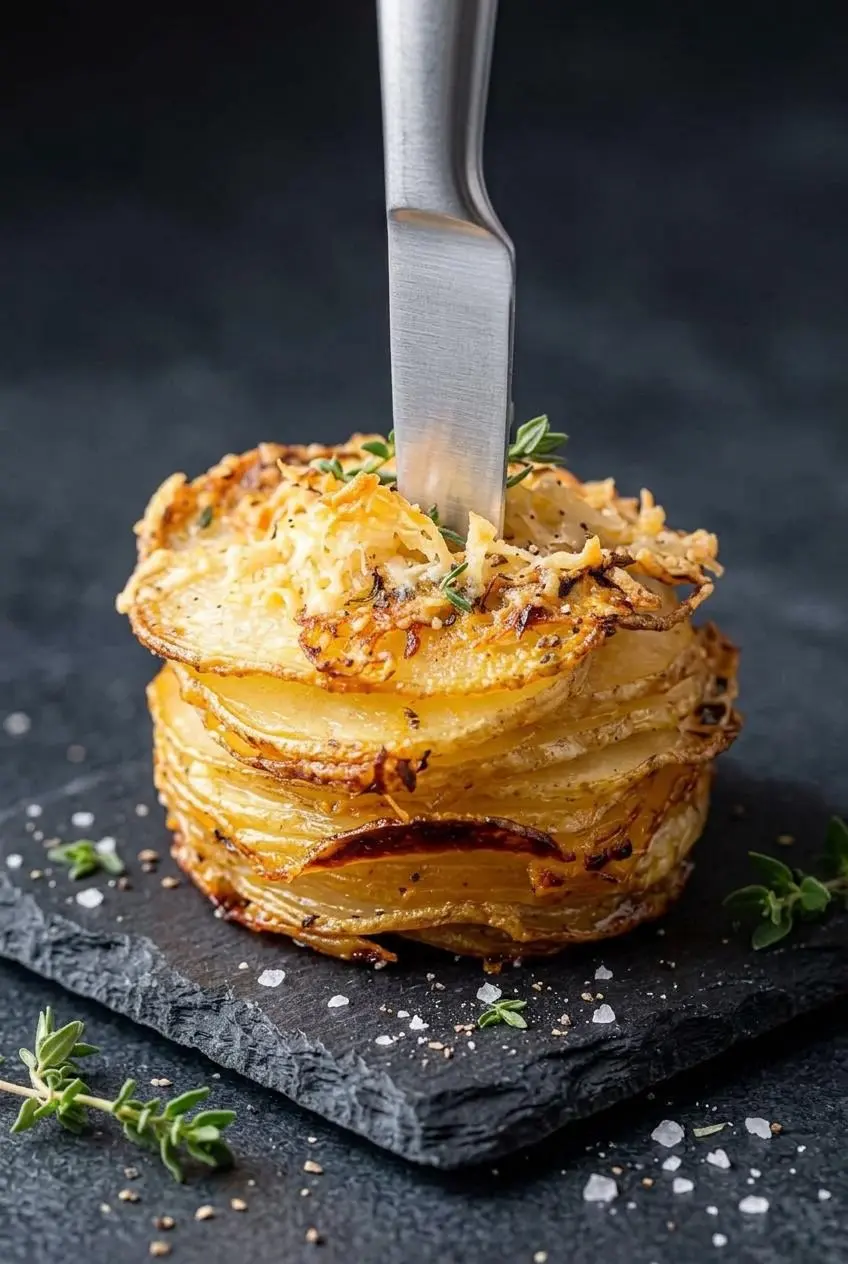
Keep the layers level and supported by the cups, allowing for some settling as the potatoes roast. - Bake for 45 to 50 minutes, checking the center of the thickest stack with a paring knife near the end.
Look for sizzling butter, golden edges, and a lacy cheese skirt, with no firm resistance when the knife enters the center. - Leave the baked stacks in their cups for 5 minutes before easing them out with a thin spatula or spoon.
The pause lets the potatoes absorb some pooled butter and helps the tender layers stay together. - Arrange the stacks on a platter and finish with flaky sea salt, additional cracked pepper, and the thyme leaves.
The fresh garnish adds herbal aroma against the warm, browned cheese.
Use tenderness, not color alone, to judge the finish. A dark top can hide a firm center, especially if some slices are thicker than others. Test through the middle of the stack rather than just beneath its crisp upper edge.
Expect the stacks to settle as they cook. Filling each cup to its rim gives you a substantial finished portion without building an unstable tower above the pan. When lifting, support the bottom instead of pulling on the top slice.
Expert Tips and Troubleshooting for Crispy Stacks
Most stack problems come from uneven slicing, missing surface starch, or lifting before the layers have settled.
The No-Rinse Starch Rule for Stable Stacks
Scrub whole potatoes before cutting, but don’t rinse or soak the rounds afterward. Washing the cut surfaces removes starch that helps the layers adhere during baking. Parmesan assists with binding, but it can’t fully replace that starchy coating.
Aim for 1/8 inch, not translucent, paper-thin rounds. Extremely thin edges can darken before you get a satisfying tender center. Stack to the rim with only a slight mound, keeping the rounds centered so they settle neatly.
Mandoline vs. Knife Slicing and Sheet Pan Workarounds
A mandoline makes quick, consistent slices; use its hand guard and follow the manufacturer’s handling instructions. A sharp chef’s knife also works. Give the potato a stable resting surface and cut deliberately rather than rushing.
Without a muffin tin, arrange the coated rounds in stacks on a generously greased rimmed baking sheet. Insert a wooden toothpick vertically through each center to limit sliding. The unsupported sides may spread more, so prioritize stability over height and remove the picks before serving.
For the same flavor profile without thin slicing or stacking, garlic parmesan potato wedges offer another sheet-pan option.
Preventing Burnt Garlic, Dark Cheese Tops, and Sticking Bottoms
- Dark tops, firm centers: Loosely tent the pan with foil if the cheese browns too early, checking around the 30-minute mark.
- Stuck bottoms: Grease every cup generously, allow the full rest, and loosen the edges before sliding a thin utensil underneath.
- Bitter garlic: Keep garlic distributed in the butter rather than leaving clumps exposed on top; optionally warm the garlic, thyme, and a pinch of nutmeg gently in the butter over low heat before tossing, without browning the garlic.
- More bottom crunch: As an optional change, dust the greased cups lightly with finely grated Parmesan for a cheese-crisp underside.
Delicious Variations and Flavor Swaps
Keep these changes separate from the garlic-butter method above. Added cream softens the texture, while cheese and herb swaps change the flavor without needing a different shape.
Creamy Au Gratin Parmesan Potato Stacks
For a velvety version, gently simmer heavy cream with garlic, fresh thyme, and a pinch of ground nutmeg. Spoon the infused cream over the layered potatoes before baking, leaving room in the cups rather than filling them with liquid.
This variation trades some exposed-edge crunch for a richer, softer interior. Think of it as individual portions inspired by classic potatoes au gratin, rather than expecting the exact crispness of the butter-coated stacks. Keep the cream at a gentle simmer instead of a hard boil, and check center tenderness before serving.
Roasted Garlic, Gruyere, and Rosemary Swap
Roasted garlic gives the stacks a mellow sweetness, while Gruyere adds a nutty flavor. Choose one of these optional directions rather than combining every change:
- Roasted garlic and Gruyere: Work soft roasted garlic into the butter, replace half the Parmesan with shredded Gruyere, and swap thyme for finely chopped rosemary.
- Extra garlic and cheddar: Increase the garlic to taste and replace part of the Parmesan with sharp cheddar for a more assertive, tangy finish.
- Olive oil and herbs: Replace half the melted butter with extra-virgin olive oil and add lemon zest for a brighter flavor with less butter richness.
Rosemary tastes stronger and feels firmer than thyme, so chop it finely. With any cheese swap, taste the finished stacks before adding the flaky salt.
Make-Ahead, Storage, and Reheating Guide
For the best color and texture, slice the potatoes close to assembly. Exposed cut surfaces oxidize and turn brown; butter coats those surfaces, but it doesn’t provide a dependable storage limit or eliminate browning.
For advance preparation, grate the cheese, chop the herbs, and prepare the muffin tin separately. Keep prepared perishable ingredients covered and chilled, then slice and coat the potatoes when you’re ready to bake. This avoids soaking the rounds and losing their useful surface starch.
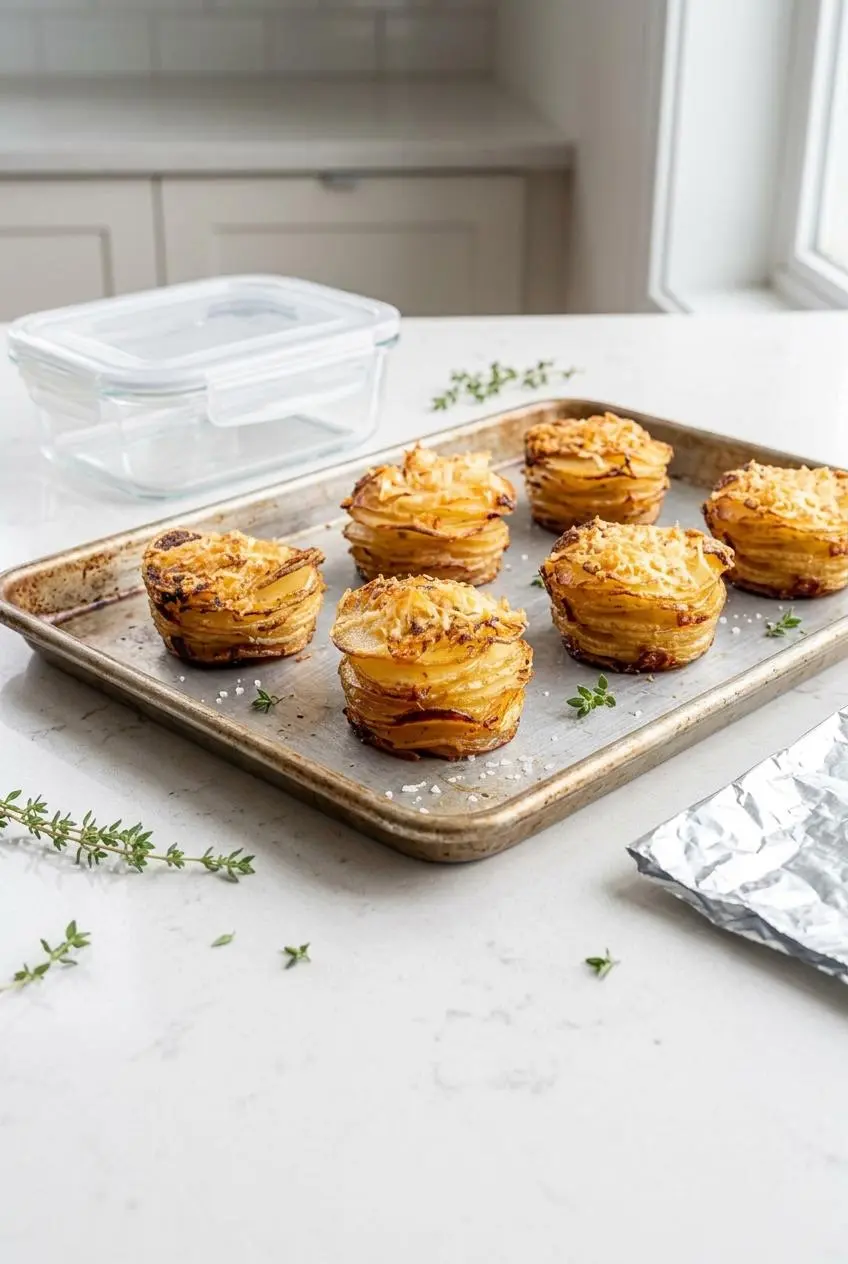
Refrigerate leftovers promptly in a covered container. Keep the stacks upright where possible, and don’t compress them beneath other food. Store any reserved fresh thyme separately so you can add it after warming.
To restore the edges, place the stacks apart on a baking sheet and reheat in a hot oven until heated through. Leave space for moisture to escape, and protect the tops loosely with foil if they darken before the centers warm. A microwave can warm the potatoes, but it won’t restore the same crisp exterior.
If you need a scoopable side rather than individual portions for a larger gathering, consider a cheesy potato casserole when planning the menu.
What to Serve with Parmesan Potato Stacks
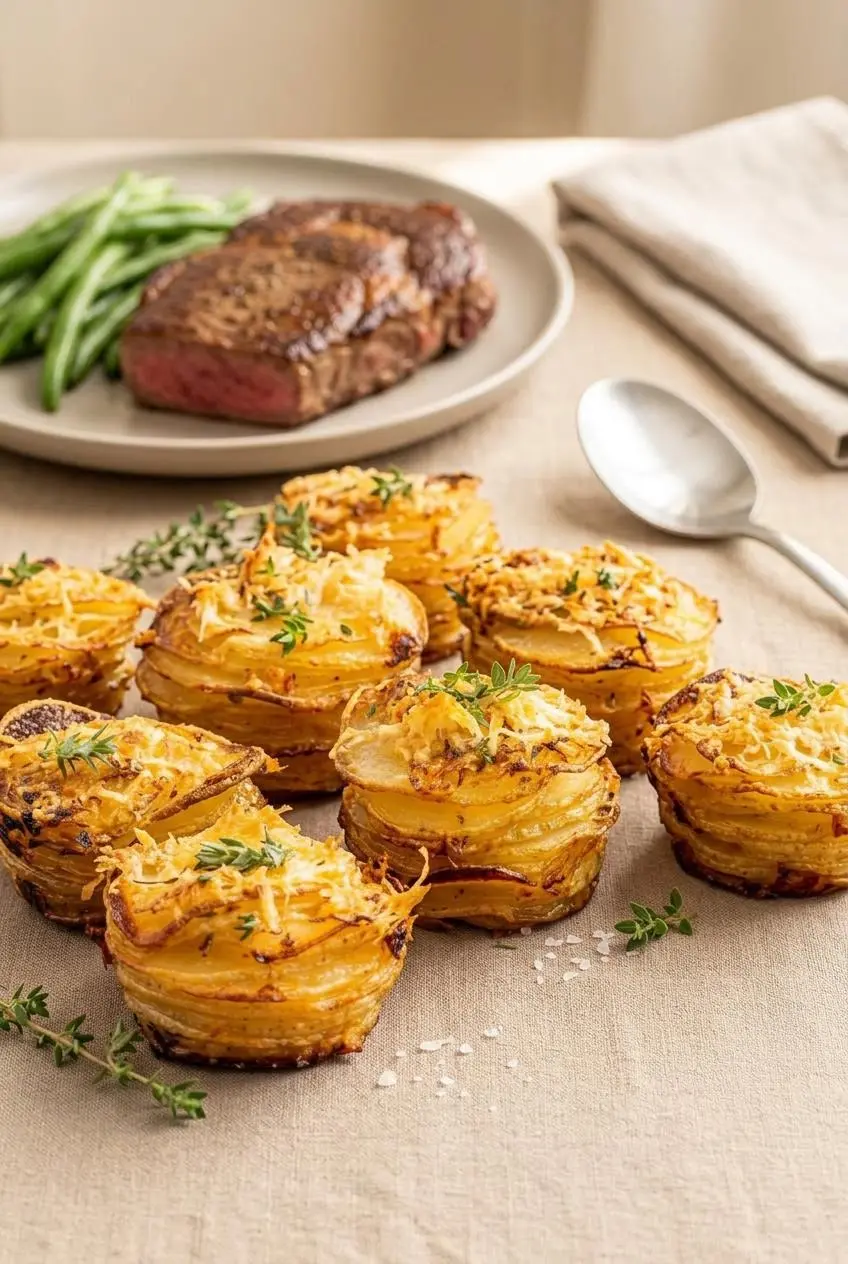
These buttery stacks work best with a main dish that leaves room for their garlic and cheese flavor, plus something fresh or green to balance the plate.
- Holiday dinner: Pair with boneless prime rib, roasted turkey breast, or glazed ham; the browned potato edges contrast nicely with tender carved meat.
- Weeknight meal: Serve beside pan-seared steak or herb-roasted chicken breast with green beans, broccoli, or a crisp salad.
- Vegetable-focused plate: Add roasted mushrooms, a mushroom pot pie, or a substantial green salad with a bright dressing.
Serve the stacks upright rather than covering them with gravy or sauce. Passing sauce separately preserves the crisp cheese edges and lets everyone choose how much richness to add.
Conclusion
Golden cheese edges and buttery centers make these stacks a satisfying change from a scoop of potatoes. Leave the sliced surfaces unrinsed, and give the baked stacks their 5-minute rest before lifting.
Once you’re comfortable with the method, try the warm garlic-nutmeg butter or creamy gratin variation. Whichever direction you choose, let tender centers and browned edges guide the finish.
Frequently Asked Questions
Do I Need a Mandoline Slicer to Make Parmesan Potato Stacks?
No. A sharp chef’s knife can produce the 1/8-inch rounds you need. A mandoline speeds up slicing, but consistent thickness matters more than which equipment you use.
Can I Make Potato Stacks Without a Muffin Tin?
Yes. Build the coated stacks on a greased rimmed baking sheet. Secure each center vertically with a wooden toothpick, keep the stacks stable, and remove the picks before serving.
How Do I Keep Potato Stacks from Falling Apart When Removing Them?
Don’t rinse the sliced potatoes; their surface starch helps the layers adhere. Rest the baked stacks for 5 minutes, loosen their edges, and support the bottoms with a thin spatula or spoon.
Can You Prepare Parmesan Potato Stacks Ahead of Time?
Prepare the cheese, herbs, and pan separately, then slice the potatoes close to baking to limit browning. If reheating baked stacks, follow the oven method above to help restore the edges rather than relying on the microwave.
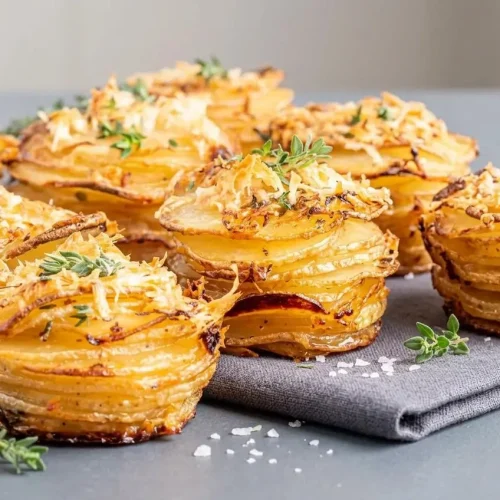
Parmesan Potato Stacks

Equipment
- Muffin Pan & Cupcake Pan, 12-Cup
- Knives
Ingredients
- ½ cup unsalted butter
- 3 large cloves garlic pressed or grated
- ½ teaspoon sea salt
- ¼ teaspoon freshly cracked black pepper
- 10 medium Yukon gold potatoes cut into 1/8 inch thick slices
- 2 tablespoons chopped fresh thyme
- ¾ cup grated parmesan cheese divided
- Flaky sea salt and additional freshly cracked black pepper for topping
- 2 tablespoon thyme leaves for garnish
Instructions
- Set the oven to 400°F and generously grease a 12-cup muffin tin. A continuous coating across the bottoms and sides helps the browned cheese release later.
- Prepare uniform 1/8-inch potato rounds, leaving the sliced surfaces unrinsed. The rounds should feel slightly starchy rather than washed clean, which helps the cooked layers hold together.
- Whisk the melted butter, pressed or grated garlic, sea salt, and cracked pepper in a large bowl, then turn the potato slices through the mixture. Separate any rounds stuck together so each surface looks lightly glossy with seasoned butter.
- Scatter ½ cup of the Parmesan and the chopped thyme over the coated potatoes, then gently redistribute the slices. Small flecks of cheese and herbs should reach throughout the bowl rather than collecting on the uppermost rounds.
- Build the stacks inside the prepared cups up to the top rim, distribute the butter left in the bowl among them, and finish with the remaining ¼ cup Parmesan. Keep the layers level and supported by the cups, allowing for some settling as the potatoes roast.
- Bake for 45 to 50 minutes, checking the center of the thickest stack with a paring knife near the end. Look for sizzling butter, golden edges, and a lacy cheese skirt, with no firm resistance when the knife enters the center.
- Leave the baked stacks in their cups for 5 minutes before easing them out with a thin spatula or spoon. The pause lets the potatoes absorb some pooled butter and helps the tender layers stay together.
- Arrange the stacks on a platter and finish with flaky sea salt, additional cracked pepper, and the thyme leaves. The fresh garnish adds herbal aroma against the warm, browned cheese.