
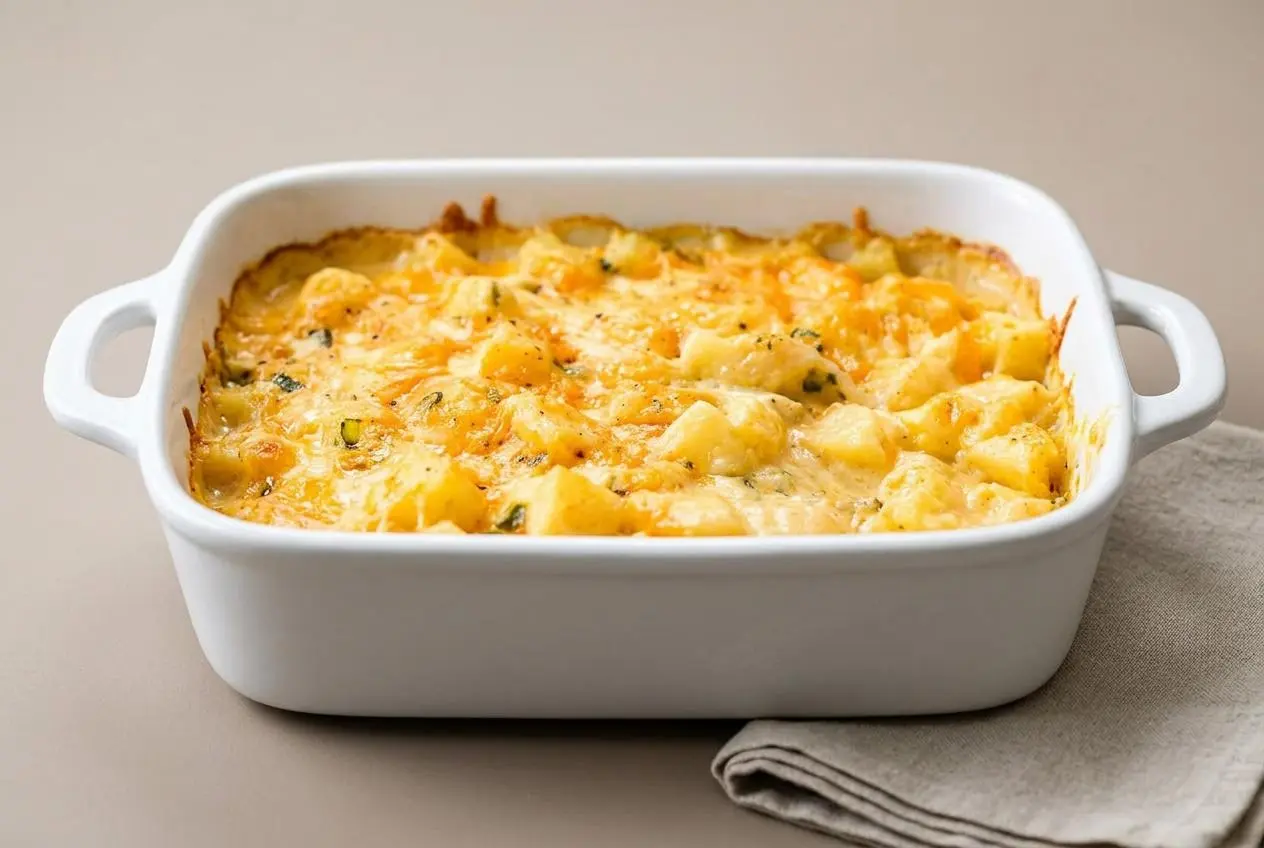
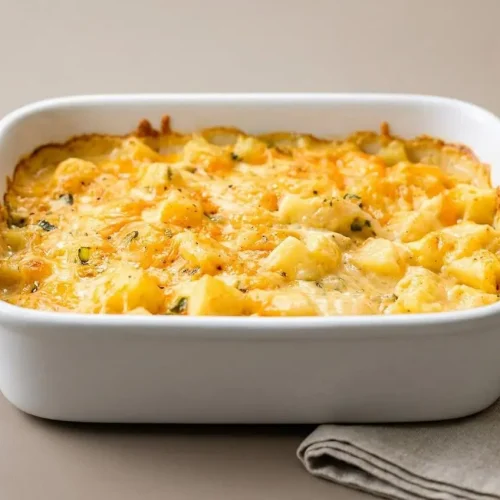
Cheesy potato casserole is a baked comfort dish of tender potatoes in a rich cheddar, sour cream, butter, and condensed soup sauce, baked uncovered at 375 °F until golden and bubbly.
This cheesy potato casserole brings together creamy potatoes and a deeply savory cheddar topping in a 9×13-inch dish that serves eight. Use fresh potatoes for distinct tender cubes or thawed country-style hash browns for a quicker route.
Toasted cheddar fills the kitchen as the edges turn crisp and the center stays velvety. The browned cheese spots are worth the wait.
Let the boiled potatoes cool slightly before mixing so they hold their shape instead of breaking apart in the sauce.
Ingredients for Cheesy Potato Casserole
Each ingredient builds the casserole’s creamy structure, savory depth, gentle tang, and browned cheese crust while helping the potatoes stay tender and scoopable.
- 3 pounds potatoes (or 30 ounces country style hash browns, thawed)
- ¼ cup melted butter
- 1 cup sour cream
- 10.5 ounces condensed cream of chicken soup (or cheddar cheese soup, 1 can)
- ¼ cup sliced green onions (or 1 teaspoon onion powder)
- 2 cups shredded cheddar cheese (divided)
Sour cream adds moisture and a mild tang that keeps the rich dairy flavors from becoming heavy. Melted butter helps the sauce feel silky, while condensed soup provides body and savory seasoning. Sharp cheddar brings the bold cheese flavor, and green onions add a fresh onion bite.
I grate cheddar from a block whenever possible because it melts into the casserole more smoothly and is less likely to clump or leave an oily layer on top.
Key Ingredients and Smart Substitutions
A couple of ingredient choices make the difference between a creamy casserole and one that feels watery or greasy. Keep the listed ingredients as written for the main dish, then use these options when you need a different potato texture or flavor profile.
Fresh Potatoes vs. Frozen Hash Browns
Fresh Russets create soft, fluffy cubes that readily absorb the cheddar mixture. Yukon Golds hold their shape a little more firmly and bring a naturally buttery texture. Peel either variety, cut it into ½-inch pieces, and parboil until the centers are tender but the cubes still resist the fork slightly.
Country-style frozen hash browns make preparation faster, but moisture control matters. Thaw them fully in the refrigerator, spread them over clean kitchen towels, and pat them very dry before folding them into the sauce. Any icy water left behind will thin the sour cream base as the casserole bakes.
If you prefer a completely smooth potato bake rather than chunky cubes or hash browns, a mashed potato casserole offers a softer, whipped texture.
Best Cheeses for Smooth Meltability
Freshly grated medium or sharp cheddar gives the best combination of flavor and smooth melting. Bagged shredded cheese often contains anti-caking starches, which can make the top look oily once the cheese gets hot. Grate the cheese while the potatoes cook, then keep ½ cup aside for the final topping.
For an optional flavor change, replace part of the cheddar with Monterey Jack for extra creaminess, Colby for a mild buttery flavor, or Gruyère for a nutty edge. Keep cheddar as the dominant cheese so the casserole still has its classic savory character.
Homemade Sauce Option Without Canned Soup
If you would rather skip condensed soup, make a thick stovetop sauce with butter, all-purpose flour, chicken broth, and milk. Cook the flour in the butter briefly, whisk in the liquids gradually, and simmer until the mixture coats a spoon before cooling it slightly and blending it with the sour cream.
This is an optional from-scratch approach, not a change to the listed casserole. The goal is the same: a thick, velvety binder that clings to the potatoes instead of pooling at the bottom of the dish.
How to Make Cheesy Potato Casserole
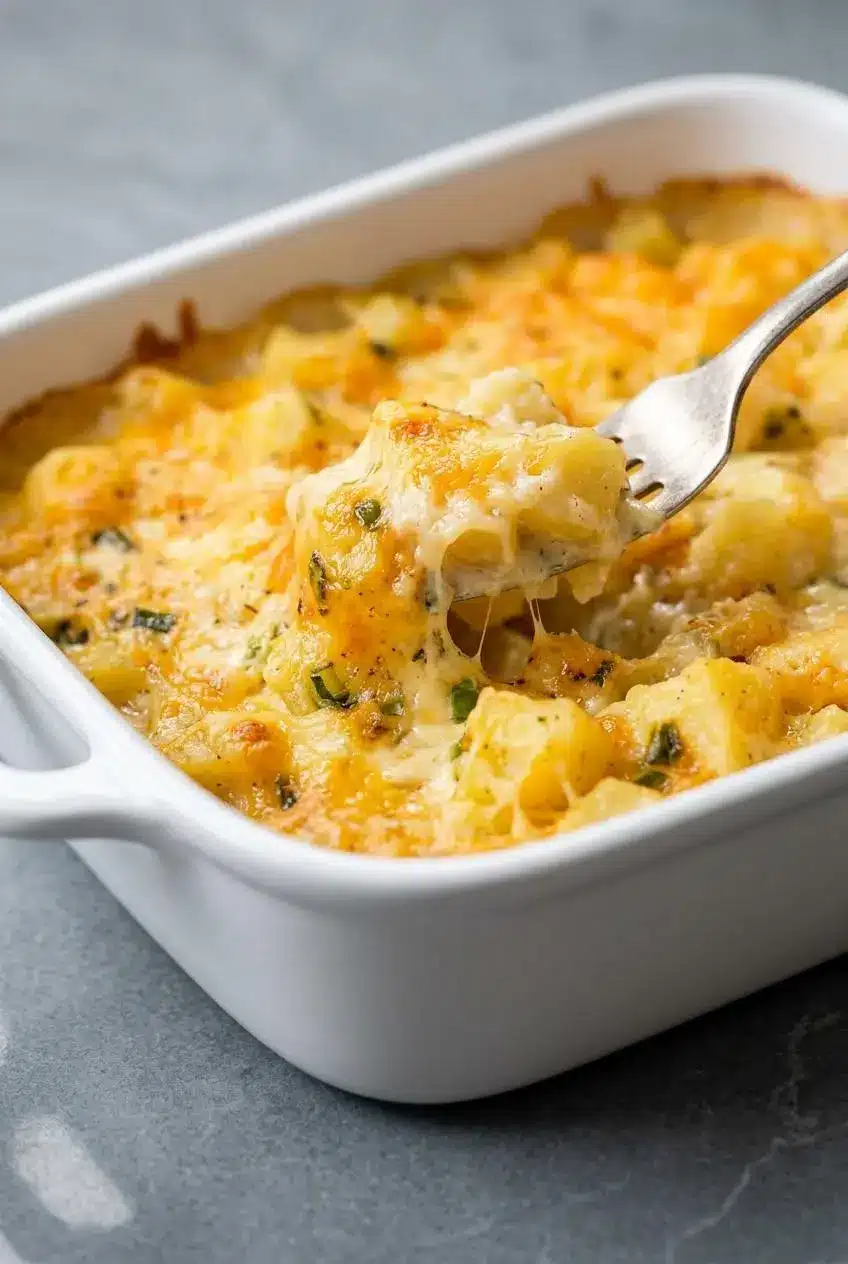
Start with a greased 9×13-inch baking dish and keep the casserole uncovered in the oven. That open heat gives the cheese a browned, crisp-edged finish rather than a soft, steamy top.
- Heat the oven to 375 °F and grease a 9×13-inch baking dish.
Coat the bottom and corners well so the creamy potatoes lift out in neat scoops. - When using baking potatoes or Russets, peel them and cut them into ½-inch cubes.
Keep the pieces close in size so they soften at the same rate. - Place the potato cubes in a medium saucepan, cover with cold salted water by 1 inch, then bring to a boil and cook gently for 12 to 14 minutes.
Drain when a fork enters easily but each cube remains intact rather than crumbly. - Whisk the melted butter, sour cream, condensed soup, and green onions in a medium bowl, then stir in 1 ½ cups of the cheddar and the slightly cooled potatoes.
The mixture should look thick and evenly coated before the potatoes go into the baking dish. - Spoon the potato mixture into the prepared dish and level the surface gently.
A light touch keeps the tender cubes from turning into mashed potatoes. - Scatter the remaining ½ cup cheddar over the top and bake for 28 to 30 minutes.
Take it out when the edges bubble and the cheese has deeply browned spots across the surface.
Prepping and Parboiling Fresh Potatoes
Beginning with cold water lets the potato centers and outer edges heat gradually together. Salt the water so the potatoes themselves pick up flavor before the rich sauce is added. Avoid overboiling: potatoes that fall apart in the saucepan will make the finished casserole dense instead of pleasantly chunky.
The best fork test is gentle resistance. The fork should slide into the center without force, but the potato cube should not split or collapse as you lift it.
Mixing the Creamy Cheese Sauce
Whisk the butter, sour cream, soup, and green onions until no streaks remain before adding the cheese and potatoes. This step distributes the tangy sour cream and savory soup evenly, so every scoop tastes balanced instead of patchy.
Fold the potatoes in with a broad spoon or spatula rather than stirring aggressively. The sauce should look thick enough to coat the cubes, not thin or runny. If using thawed hash browns, dry them again if liquid has collected while they sat.
Baking to Golden, Bubbly Perfection
Bake uncovered at 375 °F so moisture can escape and the cheddar can toast. Look for active bubbling around the sides and dark golden freckles on the cheese rather than a pale, fully melted surface.
Let the casserole stand briefly after it comes out of the oven. The sauce settles as it cools slightly, which makes serving cleaner and keeps the center creamy rather than loose.
Troubleshooting Common Casserole Mistakes
Most casserole problems come down to excess water, potatoes cooked too far or not far enough, or cheese heated in a way that makes its fat separate.
- Watery center: Thawed hash browns may still carry ice water, or boiled potatoes may not have drained fully. Pat thawed potatoes dry, drain fresh potatoes thoroughly, and return a loose casserole to the oven uncovered until excess moisture evaporates.
- Greasy cheese layer: Pre-shredded cheese can release oil as it heats, especially when it contains anti-caking additives. Use block cheddar and whisk the dairy mixture completely smooth before adding the potatoes.
- Grainy sour cream mixture: A sauce that is unevenly mixed can bake in streaks. Whisk the butter, sour cream, and soup together first, then fold in the potatoes gently.
- Potatoes still firm: Fresh cubes were likely under-parboiled or cut too large. Cover the dish with foil and continue baking until a fork reaches the center easily, then uncover it again briefly if the cheese needs more color.
- Soft top: Covering the casserole during its normal bake traps steam. Leave it uncovered from the start so the cheese can brown and the edges can crisp.
Make-Ahead, Storage, and Reheating
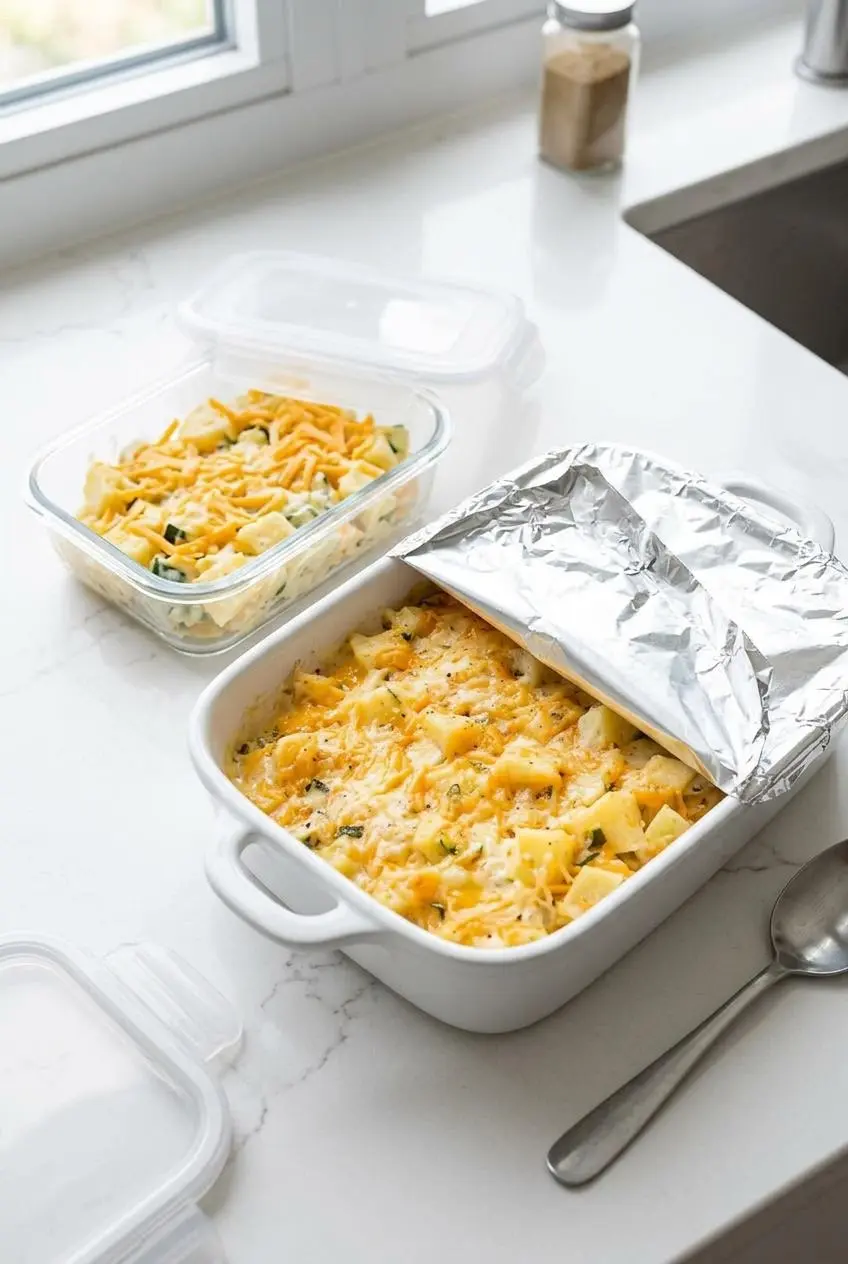
For holiday planning, assemble the casserole in the baking dish, cover it tightly, and chill it until you are ready to bake. A chilled dish may need additional oven time, so rely on the bubbling edges, browned cheese, and tender potatoes rather than rushing it.
Cool leftovers before transferring them to a covered container and refrigerate them promptly. Reheat larger portions in the oven with a loose foil cover to protect the surface from overbrowning, then remove the foil near the end if you want the cheese top to regain some crispness. Individual portions warm well in the microwave, though the edges will be softer.
Freezing can cause sour cream and cheese sauces to separate or become grainy after reheating. For the creamiest texture, make and bake this casserole fresh when possible.
Delicious Variations and Serving Ideas
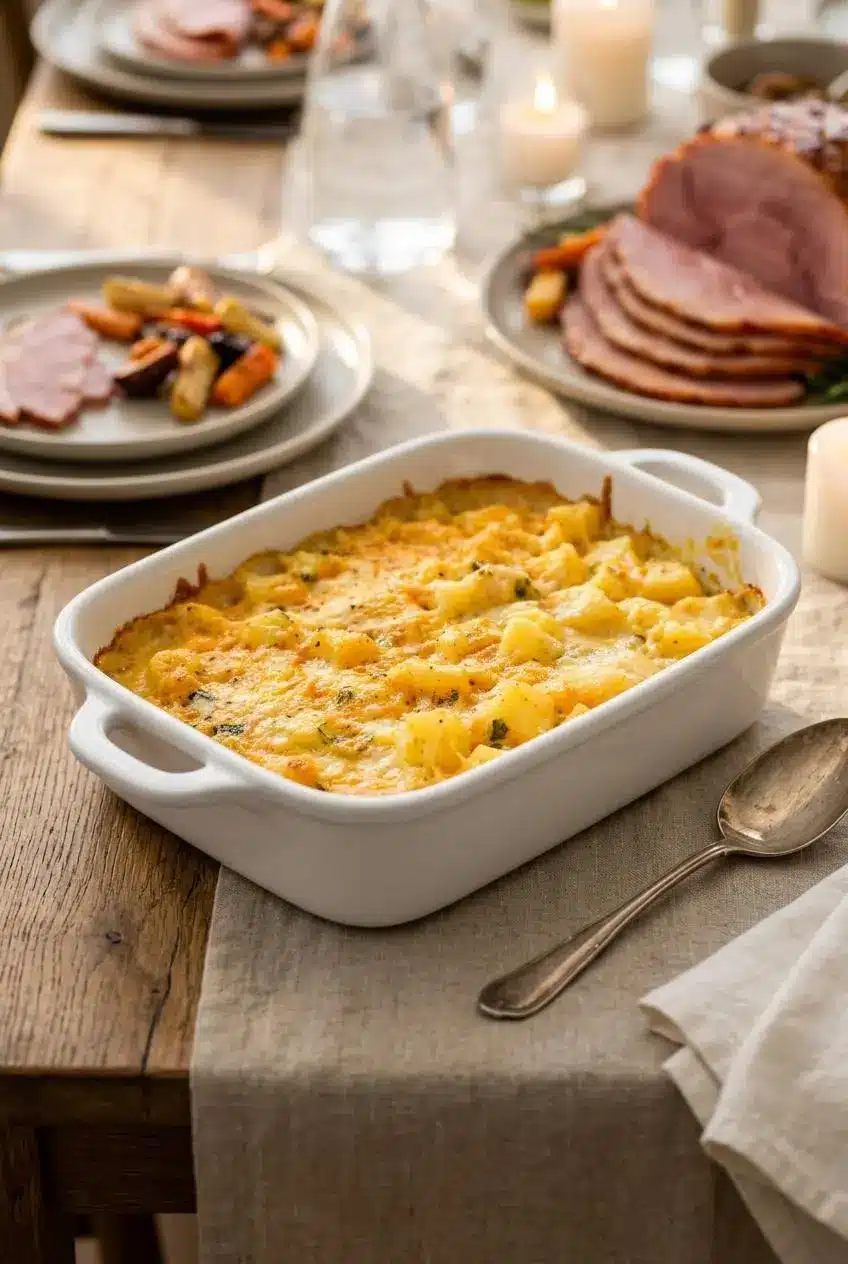
Keep the main casserole as written, then customize one portion of the dish with toppings or mix-ins if you want more crunch, smoke, heat, or hearty dinner appeal.
Crunchy Cornflake and Chip Toppings
For a classic funeral potatoes-style crust, add crushed cornflakes tossed with melted butter over the casserole during the final part of baking. They bring a light, crisp crunch that contrasts with the soft potato center.
Crushed kettle chips give a saltier, sturdier topping with more potato flavor. Add either topping late enough that it stays crisp instead of absorbing moisture from the sauce.
Hearty Meat and Veggie Add-Ins
- Diced cooked ham: Turns the side dish into a more substantial meal with salty, smoky bites.
- Crispy bacon bits: Add crunch and a deeper savory flavor against the tangy sour cream.
- Caramelized onions: Bring mellow sweetness that pairs especially well with sharp cheddar.
- Diced pickled jalapeños: Add brightness and gentle heat that cuts through the richness.
- Dijon mustard and smoked paprika: Add a sharper, smokier edge to the cheese mixture without changing its creamy texture.
If you want a full one-pan dinner built around beef and potatoes, this hamburger potato casserole is a useful next meal idea.
Best Main Dishes to Serve Alongside
This casserole fits naturally beside glazed holiday ham, roasted turkey breast, or grilled steak. Its creamy richness also works with lighter sides such as green beans, a crisp salad, or roasted vegetables.
For weekend brunch, serve it with scrambled eggs and fresh fruit. The savory cheddar and potatoes make a satisfying contrast to juicy berries, melon, or citrus.
Conclusion
Creamy cheddar, tender potatoes, and crisp browned edges make this casserole an easy fit for holidays, potlucks, brunches, and comforting weeknight dinners.
Use dry thawed hash browns or properly parboiled fresh potatoes, grate the cheddar from a block, and give the dish a brief rest before serving. Those small details keep every scoop rich and satisfying.
Frequently Asked Questions
Can I Make Cheesy Potato Casserole Ahead of Time?
Yes. Assemble the casserole in the baking dish, cover it tightly, and refrigerate it until baking time. Because the dish starts cold, it may need extra time in the oven. Bake until the potatoes are tender, the edges bubble, and the cheese is browned.
Do I Need to Thaw Frozen Hash Browns Before Baking?
Yes. Thaw frozen hash browns fully and pat them dry before mixing them into the sauce. That moisture-control step prevents melted ice from thinning the sour cream and cheese mixture into a watery casserole.
Why Did My Cheesy Potato Casserole Turn Out Greasy?
Grease usually comes from pre-shredded cheese or cheese heated until its fat separates. Freshly grate medium or sharp cheddar from a block for a smoother melt. Also whisk the butter, sour cream, and soup until fully blended before adding the cheese. A uniform sauce is less likely to split in the oven.
Can I Freeze Cheesy Potato Casserole?
Freezing can change the texture of the sour cream and cheddar mixture, leaving it grainy or separated after reheating. For the smoothest, creamiest result, prepare and bake the casserole fresh rather than relying on freezer storage.
Cheesy Potato Casserole

Equipment
- 2 QT Baking Dish
- Saucepan
Ingredients
- 3 pounds potatoes or 30 ounces country style hash browns, thawed
- ¼ cup melted butter
- 1 cup sour cream
- 10.5 ounces condensed cream of chicken soup or cheddar cheese soup, 1 can
- ¼ cup sliced green onions or 1 teaspoon onion powder
- 2 cups shredded cheddar cheese divided
Instructions
- Heat the oven to 375 °F and grease a 9×13-inch baking dish. Coat the bottom and corners well so the creamy potatoes lift out in neat scoops.
- When using baking potatoes or Russets, peel them and cut them into ½-inch cubes. Keep the pieces close in size so they soften at the same rate.
- Place the potato cubes in a medium saucepan, cover with cold salted water by 1 inch, then bring to a boil and cook gently for 12 to 14 minutes. Drain when a fork enters easily but each cube remains intact rather than crumbly.
- Whisk the melted butter, sour cream, condensed soup, and green onions in a medium bowl, then stir in 1 ½ cups of the cheddar and the slightly cooled potatoes. The mixture should look thick and evenly coated before the potatoes go into the baking dish.
- Spoon the potato mixture into the prepared dish and level the surface gently. A light touch keeps the tender cubes from turning into mashed potatoes.
- Scatter the remaining ½ cup cheddar over the top and bake for 28 to 30 minutes. Take it out when the edges bubble and the cheese has deeply browned spots across the surface.






1 thought on “Cheesy Potato Casserole”