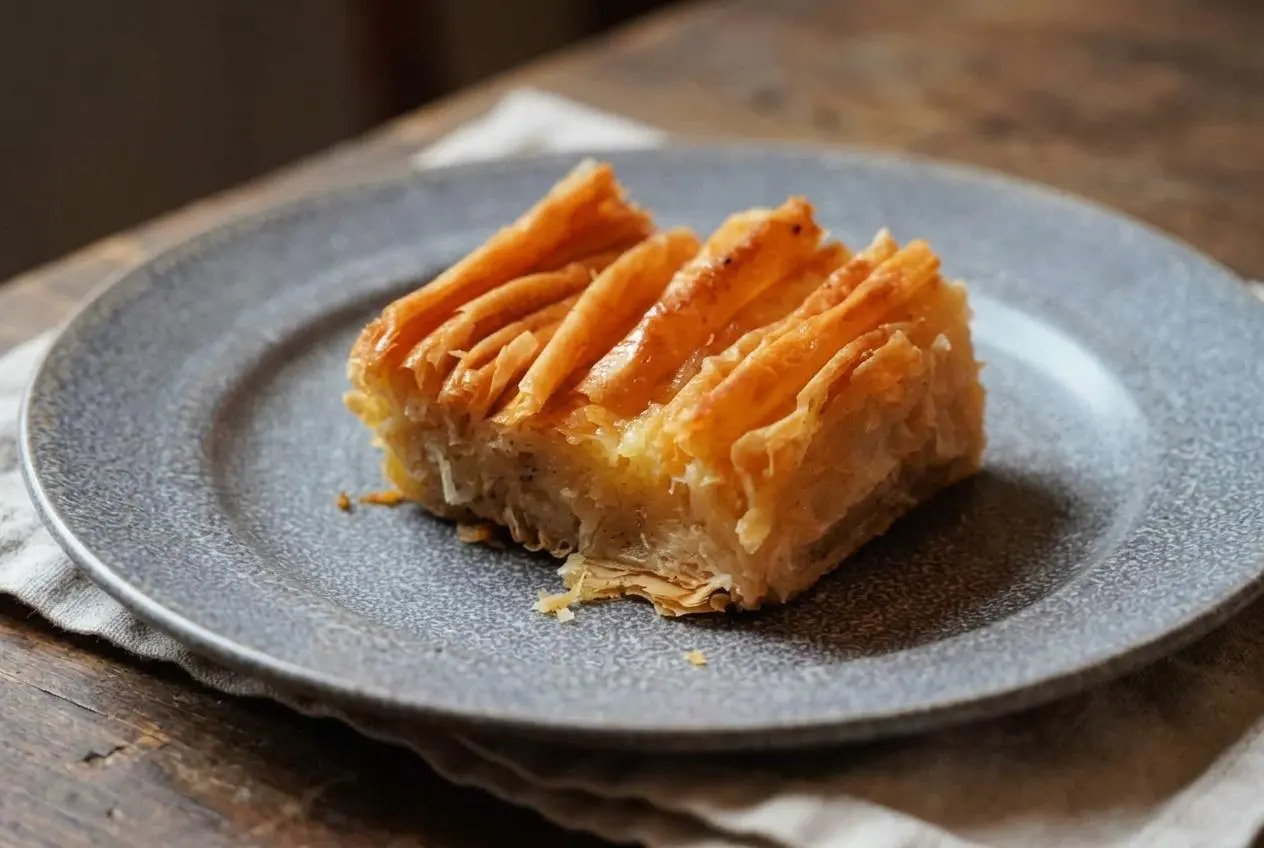
Phyllo crinkle cake is a crispy, custardy dessert inspired by Middle Eastern Muakacha. Fold thawed phyllo into accordion pleats, bake it in three stages with butter and sweet egg custard, then finish the hot pastry with sugar syrup.
The appeal of phyllo crinkle cake is the contrast: shatteringly crisp golden ridges above soft, vanilla-scented centers. The viral folding method gives delicate pastry a generous amount of texture without requiring you to brush every sheet individually.
Each bake has a purpose. First, the dry pastry toasts; next, butter coats the folds; finally, custard settles between them and sets. The syrup adds sweetness and a glossy finish. Those loose folds do the work.
Clear enough counter space to unfold the phyllo before opening its package.
Key Ingredients and What Each One Does
Phyllo creates the crisp ridges, butter adds richness, and milk and eggs form the tender custard. Sugar sweetens both the filling and finishing syrup, while vanilla supplies aroma and optional nuts add another layer of crunch.
Syrup
- 1 C. sugar (granulated)
- 1 C. water
Custard-Cake
- 1 lb. phyllo dough (1, 16 oz. package, thawed, about 18 sheets)
- 1 C. butter (melted; 2 sticks)
- 1 C. sugar (granulated)
- 1 C. milk (whole)
- 2 eggs
- 3 tsp. vanilla paste (or vanilla extract)
- 1/3 C. nuts (optional, whatever you have on hand)
A 1-pound package provides the pastry for this pan, with about 18 sheets folded in pairs. Sheet sizes and counts vary by brand, so use the package weight as your guide rather than buying extra pastry to reach a particular count. Store-bought phyllo, also labeled filo pastry, provides the thin layers this method needs.
Melted butter reaches the exposed pleats after their first toast. Pouring it over the arranged pastry avoids brushing individual sheets and gives the ridges richness as they continue baking.
Whole milk supplies moisture and body; eggs turn that liquid into a set custard. Granulated sugar sweetens the filling and dissolves while the whisked mixture rests. Keep the syrup sugar separate from the custard sugar when measuring.
Vanilla paste contributes visible flecks as well as flavor. Vanilla extract works at the listed amount, too. The nuts remain optional: add them before folding if you want crunch tucked inside the pastry rather than only on top.
I keep the unused phyllo under a barely damp kitchen towel, not a wet one, so the sheets stay flexible without becoming sticky.
How to Make the Phyllo Crinkle Cake Step by Step
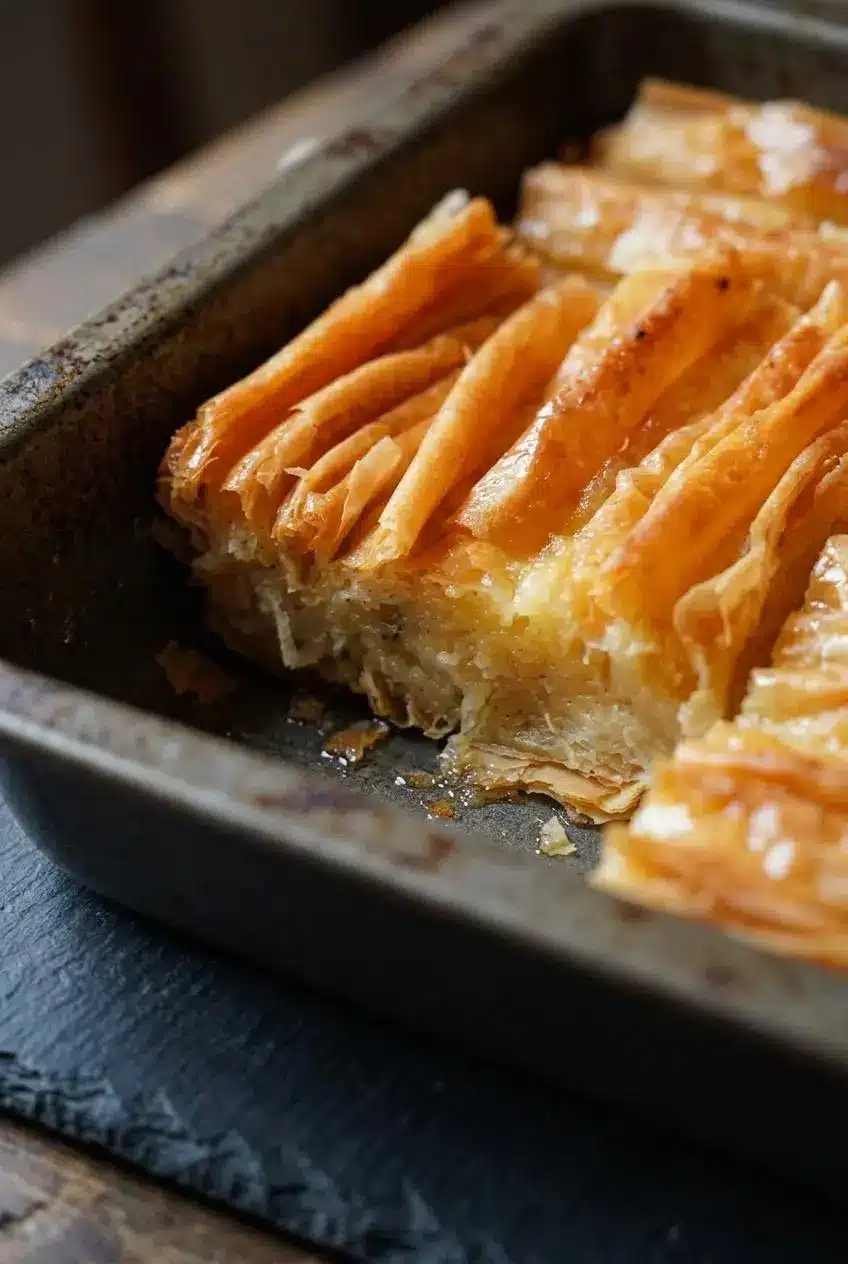
Keep the three baking stages separate, even though the cake stays at the same oven temperature throughout. Each stage prepares the folds for the next addition. This recipe serves 12.
Preheat
- Set the oven to 350°F before preparing the syrup and pastry.
The oven should reach temperature before the arranged phyllo goes in.
Simmer the Simple Syrup
Make the syrup first so it can cool while the cake bakes. Equal amounts of sugar and water create the finishing syrup; you want a clear, syrupy liquid, not amber caramel.
Syrup
- Combine the syrup sugar and water in a saucepan.
The sugar will settle into the water before heating. - Heat the saucepan over medium heat until bubbles rise, then lower the heat enough to keep the mixture from overflowing.
Maintain a controlled simmer rather than a vigorous boil. - Cook for about 12–15 minutes, stirring intermittently, until the liquid thickens into syrup.
Keep it clear, without caramelizing, and let it cool while you prepare the cake.
Accordion-Fold and Pre-Toast the Phyllo
Lift and gather the sheets gently rather than pressing sharp creases into them. The folds should stand upright with channels between them, allowing butter and custard to reach below the surface.
Prepare the Crinkle
- Set out a long baking dish or aluminum tray measuring 13 ½ x 8 ¾ inches.
The pan needs room for upright rows of loosely gathered pastry. - Take two thawed sheets together and gather them from a long edge into loose accordion pleats.
The paired sheets should form a flexible, rippled strip rather than a tightly compressed bundle. - Arrange each strip in the dish in rows, repeating with all the pastry and adding optional nuts over the sheets before folding.
Leave the pleats open enough for liquid to travel between them. - Give the unbuttered pastry its first bake for 10 minutes at 350°F, checking for a light toast.
The exposed edges should look pale ivory and papery-crisp, not deeply browned.
Bake with Melted Butter and Custard
The second bake adds buttery crispness; the third sets the filling. Pouring butter over the pre-toasted folds saves the work of brushing each sheet, while the open pleats provide paths for the custard.
Custard
- Beat the custard sugar, whole milk, eggs, and vanilla together in a bowl, then let the mixture rest.
A uniform mixture without egg streaks gives the sugar time to dissolve. - Distribute the melted butter across the toasted folds and bake for another 10 minutes.
The pastry should develop a buttery sheen and begin taking on more color. - Take the pan out and distribute the custard across the buttery pastry.
The liquid should run into the gaps rather than remain entirely on the ridges. - Bake for 30–40 minutes, checking for absorbed, set custard and golden-brown pastry.
The finished cake should have deeply golden ridges without loose custard pooling between them.
Soak with Syrup and Serve
Use the cooled syrup while the cake is still hot. Pour across the whole pan rather than concentrating the syrup in one corner; the pastry will gain a glossy finish as it absorbs the liquid.
Serve
- Finish the freshly baked cake by distributing the cooled syrup over its hot surface.
The syrup should sink into the folds and leave them glistening. - Cut the cake into portions and serve warm.
Each portion should combine crisp upper ridges with a soft, custardy interior.
Expert Tips and Common Mistakes to Avoid
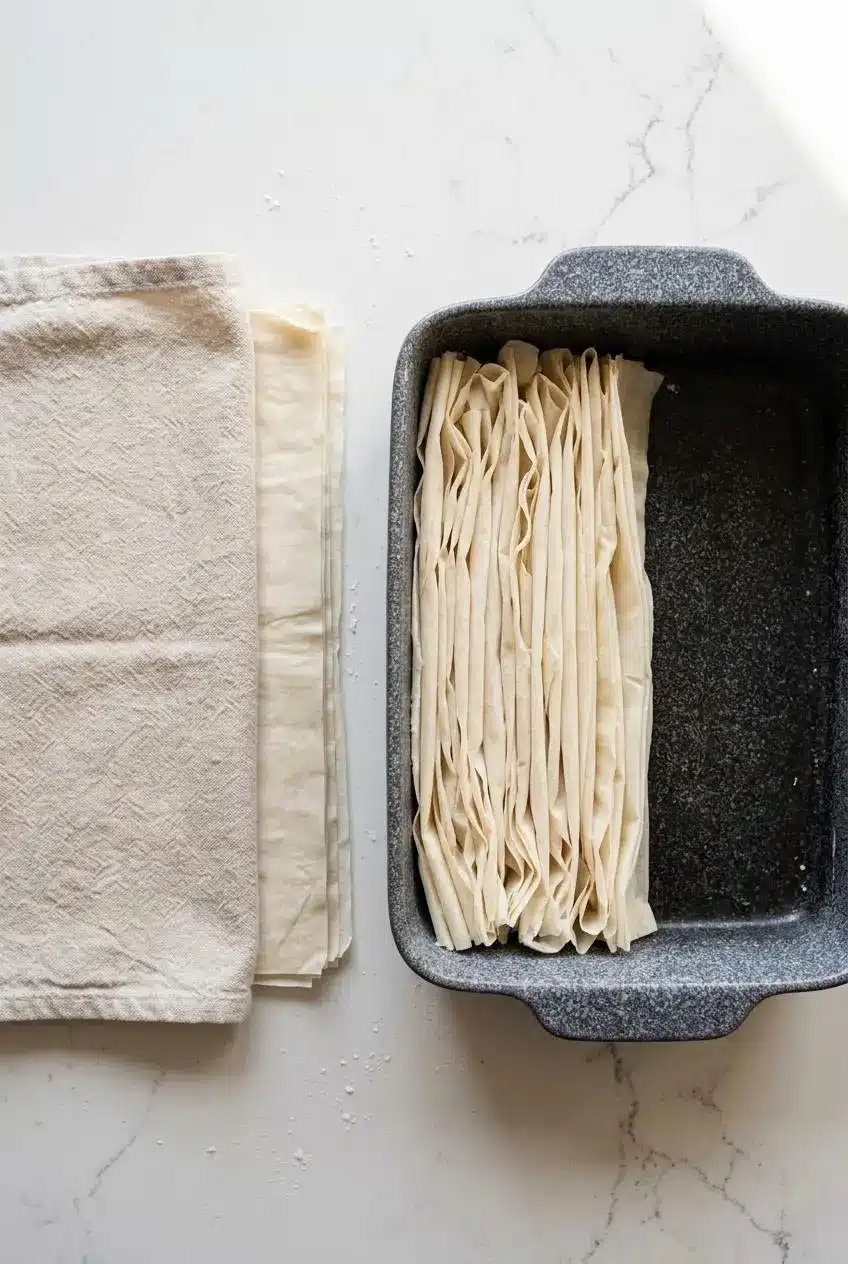
Most texture problems begin with stiff sheets or crowded folds. Follow your phyllo package’s thawing directions, and wait until the sheets separate easily before unfolding them. Don’t force apart a stiff stack or use the microwave to hurry it along.
Keep the unused pastry covered while you work. A barely damp towel protects the sheets from drying, but a wet towel can make them stick together. Uncover only the pair you’re about to fold.
Small tears aren’t a reason to discard a sheet. Gather the damaged pair gently and tuck it into the row; the crinkled arrangement conceals irregular edges. Avoid pulling on a tear, which can split the sheet further.
Choosing the Right Pan Size and Shape
- 13.5 x 8.75-inch rectangular pan: Use straight rows of paired, accordion-folded sheets, with enough room to keep the pleats open.
- 9×13-inch rectangular pan: Arrange the same package in rows, adjusting their spacing to suit the slightly different dimensions.
- 9- to 11-inch round pan: Coil paired strips from the center outward into a loose rosette; capacity varies with diameter and depth, so don’t force all the pastry into an overcrowded smaller pan.
A solid round cake pan contains liquid more readily than a springform pan, whose seams may leak. Pan changes can also affect baking, so use the set-custard and golden-ridge cues rather than assuming every shape finishes identically.
Troubleshooting Texture Issues
- Soggy bottom: Skipping the dry toast leaves the pastry less prepared for the custard. Keep that first bake, and finish with cooled syrup rather than adding another hot liquid.
- Pooled custard: Compressed folds block the liquid. Spread the rows loosely when assembling and pour across the pan.
- Rubbery filling: Excess baking can toughen the custard. Begin checking within the stated baking range and stop when it has set.
- Brittle, tearing sheets: Uncovered phyllo dries quickly. Protect the unused stack and handle each pair with a light touch.
- Overly sweet finish: Don’t cook the syrup beyond its syrupy stage, which concentrates it further. Tart berries served alongside also balance the richness.
Delicious Variations to Try
Keep these flavor changes optional and separate from the ingredient list above. Fruit adds moisture, floral flavorings can dominate quickly, and sweetened toppings change the sweetness balance.
For a citrus-spice finish, infuse the simmering syrup with fresh orange peel and a little ground cardamom. Remove the peel before pouring, then finish the cake with a light scattering of flaky sea salt.
Apple Cinnamon Crinkle Cake
Tuck thin apple slices tossed with ground cinnamon between the pleats before the first bake. Keep the fruit lightly distributed so it doesn’t compress the pastry or block the custard channels. Continue with the butter, custard, and syrup stages, checking the final texture carefully because fruit contributes moisture.
If you prefer a tender cake crumb rather than crisp pastry folds, fresh apple cake is another option for baking with apples.
Phyllo Crinkle Cake with Condensed Milk
The easiest optional change is a drizzle of warmed sweetened condensed milk instead of the finishing syrup. It gives the cake a creamy, milky sweetness rather than a clear syrup glaze. Use it as an alternative topping, not an additional full sweet finish.
Condensed milk can also form part of an adapted custard, but it contains both sugar and milk solids. It isn’t a direct replacement for whole milk, and simply adding it to the listed custard would increase sweetness. Use a custard specifically balanced for condensed milk if you want that version.
Raspberry Pistachio Muakacha
For a Muakacha-inspired variation, flavor the custard lightly with ground cardamom and either rose water or orange blossom water. Scatter fresh raspberries between the folds before the final custard bake, then finish with chopped pistachios.
The berries bring tartness, while pistachios add crunch and a nutty contrast. Use floral flavorings sparingly so they complement, rather than overpower, the vanilla and butter.
Warm Chai Spice and Honey Variation
Whisk cinnamon, ginger, cardamom, and cloves into the custard for a warm spice profile. Keep cloves restrained because their flavor can dominate the blend.
Finish with a warm honey drizzle instead of the sugar syrup. Honey adds its own aroma as well as sweetness, so choose this as a distinct finishing option rather than layering both toppings.
Serving, Storage, and Reheating Guide
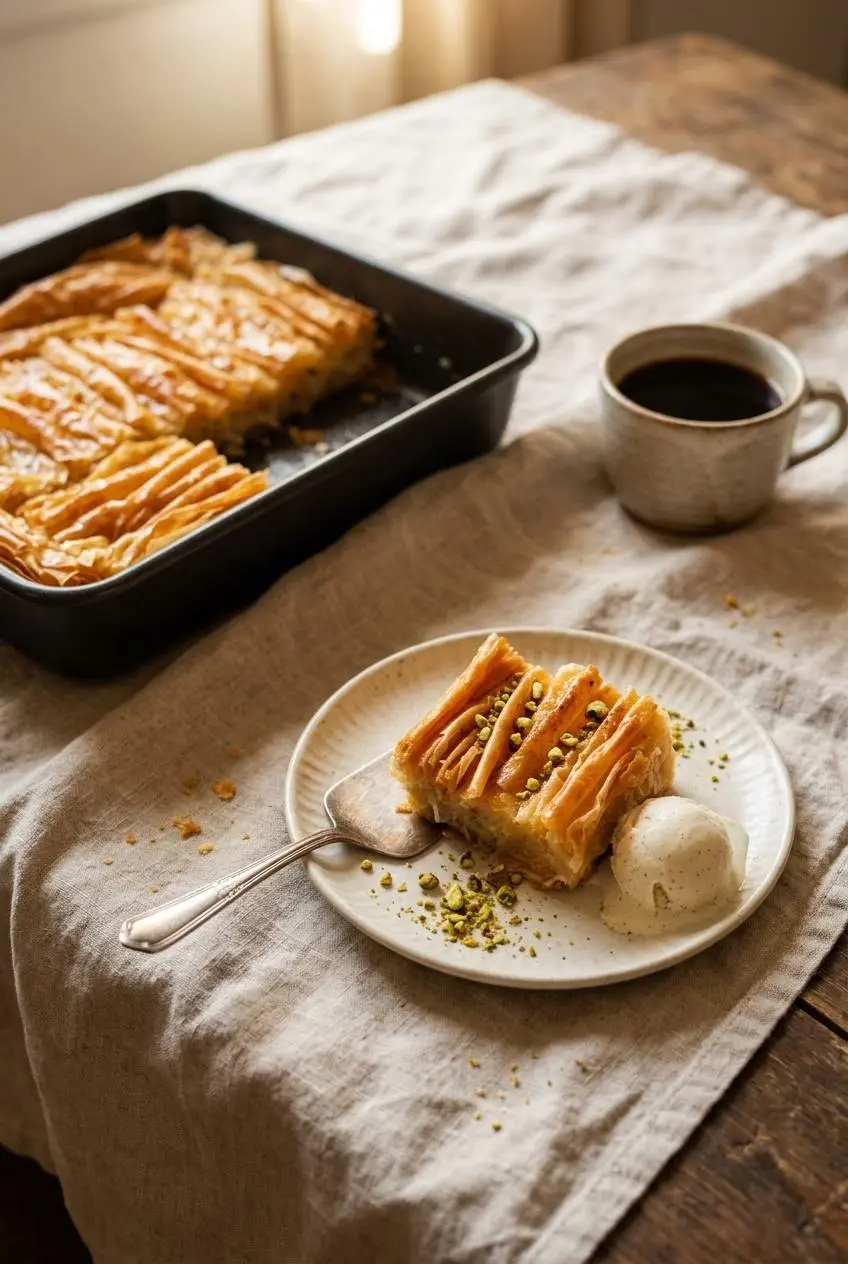
Serve the cake warm for the strongest contrast between brittle ridges and soft custard, or enjoy it at room temperature during serving. Cut with a sharp knife and lift portions with a spatula to support the softer underside.
- For added crunch: Scatter crushed toasted pistachios or walnuts over individual portions just before serving.
- For contrast: Add fresh berries alongside the cake rather than storing them on the pastry.
- For a dessert plate: Pair a warm slice with vanilla bean ice cream, strong black coffee, or mint tea.
Keep leftovers covered and refrigerated because the cake contains an egg-and-milk custard. An airtight container does not make it suitable for extended room-temperature storage. Refrigerate promptly rather than leaving the pan out after serving.
Expect the phyllo to soften as it sits against the custard and syrup. That change affects texture, so serve the freshly baked cake when crispness matters most. Keep garnishes separate and add them to the portions you’re about to eat.
To refresh a refrigerated portion, warm it uncovered in the oven and watch the ridges closely. Dry oven heat can help restore some surface crunch, though the interior will remain custardy. Avoid the microwave if a crisp top is your priority; it tends to soften the pastry instead.
Conclusion
This cake delivers golden pastry ridges, vanilla custard, and a sweet syrup finish without individually buttering every sheet. Loose folds and three distinct baking stages give each layer a chance to develop its texture.
Keep the classic vanilla version, or try orange peel, cardamom, and flaky sea salt for a fragrant finish. Serve it warm and enjoy the contrast in every slice.
Frequently Asked Questions
What Is Phyllo Crinkle Cake and How Is It Made?
It’s a crisp, custardy phyllo dessert inspired by Middle Eastern Muakacha. Fold the sheets into pleats, bake them dry, bake again with butter, then bake with egg custard. Finish the hot cake with sugar syrup and serve warm.
How Do You Scrunch Phyllo Dough?
Stack two thawed sheets and slip your fingertips beneath a long edge. Gather them toward you into loose, roughly 1- to 2-inch pleats. Transfer the strip gently, keeping space between the folds.
How Many Layers of Phyllo Do You Use?
Use one 1-pound, 16-ounce package, containing about 18 sheets for this recipe. Fold two sheets at a time and arrange all the pastry in the pan. Package counts vary, so follow the listed weight rather than a fixed sheet count.
How Do You Make Apple Crinkle Cake with Phyllo Dough?
Optionally tuck thin cinnamon-tossed apple slices between the pleats before the first bake. Continue with the butter, custard, and syrup stages, leaving room for liquid to flow.
Can I Make Phyllo Crinkle Cake with Condensed Milk?
Yes, drizzle warmed sweetened condensed milk over the baked cake instead of syrup. For a condensed-milk custard, use an adapted formula rather than adding it to the full sugar-and-milk mixture above.
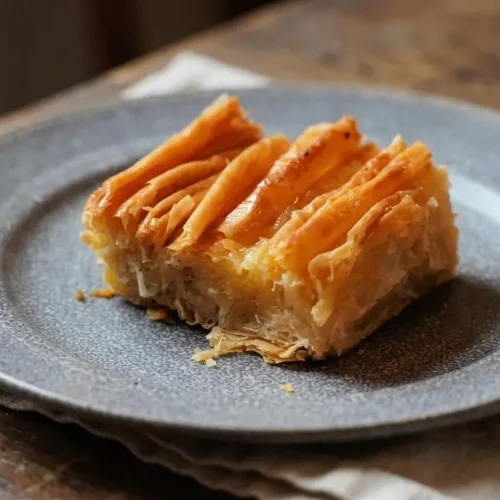
Phyllo Crinkle Cake

Equipment
- Oven
- Baking pan
- Saucepan
Ingredients
Syrup
- 1 C. sugar (granulated)
- 1 C. water
Custard-Cake
- 1 lb. phyllo dough (1, 16 oz. package, thawed, about 18 sheets)
- 1 C. butter (melted; 2 sticks)
- 1 C. sugar (granulated)
- 1 C. milk (whole)
- 2 eggs
- 3 tsp. vanilla paste (or vanilla extract)
- 1/3 C. nuts (optional, whatever you have on hand)
Instructions
Preheat
- Set the oven to 350°F before preparing the syrup and pastry. The oven should reach temperature before the arranged phyllo goes in.
Syrup
- Combine the syrup sugar and water in a saucepan. The sugar will settle into the water before heating.
- Heat the saucepan over medium heat until bubbles rise, then lower the heat enough to keep the mixture from overflowing. Maintain a controlled simmer rather than a vigorous boil.
- Cook for about 12–15 minutes, stirring intermittently, until the liquid thickens into syrup. Keep it clear, without caramelizing, and let it cool while you prepare the cake.
Prepare the Crinkle
- Set out a long baking dish or aluminum tray measuring 13 ½ x 8 ¾ inches. The pan needs room for upright rows of loosely gathered pastry.
- Take two thawed sheets together and gather them from a long edge into loose accordion pleats. The paired sheets should form a flexible, rippled strip rather than a tightly compressed bundle.
- Arrange each strip in the dish in rows, repeating with all the pastry and adding optional nuts over the sheets before folding. Leave the pleats open enough for liquid to travel between them.
- Give the unbuttered pastry its first bake for 10 minutes at 350°F, checking for a light toast. The exposed edges should look pale ivory and papery-crisp, not deeply browned.
Custard
- Beat the custard sugar, whole milk, eggs, and vanilla together in a bowl, then let the mixture rest. A uniform mixture without egg streaks gives the sugar time to dissolve.
- Distribute the melted butter across the toasted folds and bake for another 10 minutes. The pastry should develop a buttery sheen and begin taking on more color.
- Take the pan out and distribute the custard across the buttery pastry. The liquid should run into the gaps rather than remain entirely on the ridges.
- Bake for 30–40 minutes, checking for absorbed, set custard and golden-brown pastry. The finished cake should have deeply golden ridges without loose custard pooling between them.
Serve
- Finish the freshly baked cake by distributing the cooled syrup over its hot surface. The syrup should sink into the folds and leave them glistening.
- Cut the cake into portions and serve warm. Each portion should combine crisp upper ridges with a soft, custardy interior.