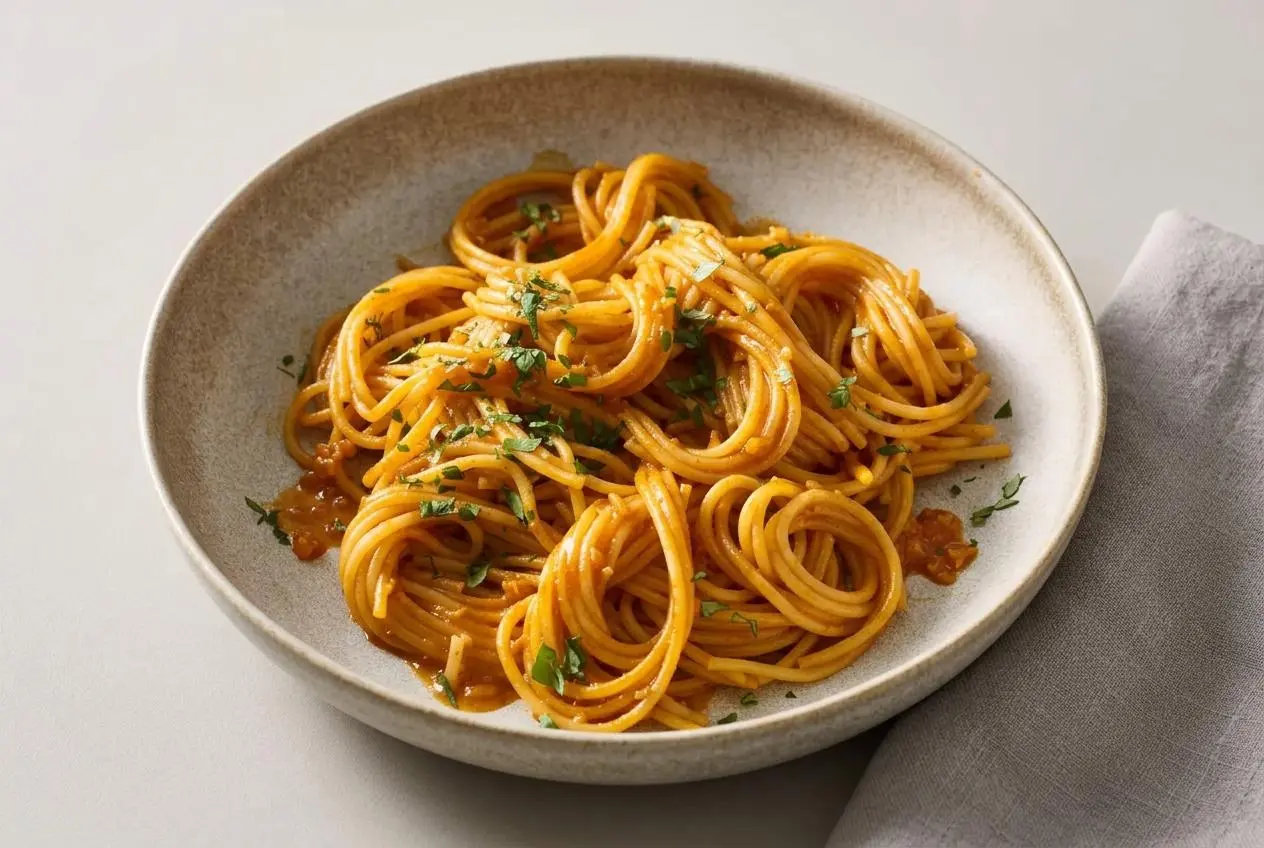
Turkish pasta, often called kiymali makarna or cheat manti, layers al dente pasta with warm spiced ground beef, cool garlic yogurt, and sizzling chili butter. This 30-minute dinner delivers the meat-and-yogurt flavors associated with Turkish manti without folding dumplings.
A bowl of turkish pasta brings together savory beef, tangy dairy, and buttery paprika in distinct layers. The garlic yogurt softens the warmth of the spices, while optional cherry tomatoes add a fresh, juicy bite.
You can cook the beef while the noodles boil, making this a practical weeknight dinner rather than a project. Keep the yogurt out of the cooking pot and finish each bowl just before serving. The butter brings everything together.
Set a measuring cup beside the colander so you remember to save pasta water before draining.
Understanding Turkish Pasta: From Manti to Kiymali Makarna
The nickname “cheat manti” describes the flavor shortcut, not the preparation of traditional Turkish dumplings. Manti, including the small dumplings associated with Kayseri, encloses a meat filling in dough. Here, the pasta and seasoned meat remain separate.
Kiymali makarna means pasta with minced meat. Yalanci manti, often translated as “false manti,” describes preparations that borrow the familiar combination of meat, garlic yogurt, and spiced butter without making filled dumplings. The viral layered bowl draws on that Turkish cooking tradition.
Each layer balances the next. Warm beef supplies savory depth, yogurt adds tang and creaminess, and hot paprika butter carries the spice across the noodles. The yogurt should feel pleasantly cool beside the meat, but refrigerator-cold dairy can cool the whole meal too quickly.
Biber salcasi, a concentrated Turkish red pepper paste, gives the meat a rounded pepper flavor. Optional dried mint adds a fragrant herbal finish, while sumac provides tartness without extra liquid. Those finishing touches make a noticeable difference to a rich bowl.
If you enjoy the combination of noodles, aromatic garlic, and butter, garlic butter pasta offers another direction for dinner. Here, the tangy yogurt and warm spices give that familiar richness a different balance.
Ingredients for Turkish Pasta
Pasta gives the toppings structure, beef and onions build savory sweetness, and garlic yogurt adds creamy tang. Paprika butter supplies richness and gentle heat, while the optional tomatoes, herbs, and sumac bring freshness and contrast.
For The Pasta
- 8 ounces pasta (I use farfalle but any shape would work)
- Kosher salt
For The Meat Sauce
- 1 lbs ground beef (93%)
- 1 medium size onion (chopped (about 1 cup))
- 1 tablespoon red pepper paste (or tomato paste)
- 1 teaspoon onion powder
- 1 teaspoon ground cumin
- 2 teaspoons sweet paprika
- ½ teaspoon kosher salt
- ¼ teaspoon ground black pepper
For The Garlic Yogurt Sauce
- 1 cup Greek yogurt (unsweetened plain (full fat or skim))
- 2 cloves garlic (minced)
- 1 tablespoon lemon juice
- ½ teaspoon kosher salt
For The Butter Sauce
- 4 tablespoons unsalted butter
- 1 teaspoon sweet paprika
- ¼ teaspoon red pepper flakes (or more to taste (such as Aleppo Pepper or Urfa Chili pepper))
- ½ teaspoon kosher salt
As Garnish (optional)
- ½ cup cherry tomatoes (cut in half)
- 4 tablespoons dried mint (or fresh parsley)
- 2 tablespoons sumac (optional)
The 93% lean beef keeps the meat topping from becoming overly greasy, though it needs attention once its juices evaporate. Onion adds moisture and sweetness; cumin, onion powder, and paprika build the warm seasoning around it.
Choose unsweetened plain Greek yogurt. Full-fat yogurt gives a rounder, richer mouthfeel, while skim yogurt also works as listed. Garlic provides the assertive flavor, and lemon juice brightens the dairy without turning it into a thin dressing.
Unsalted butter lets you control the seasoning of the drizzle. Sweet paprika contributes color and pepper flavor; red pepper flakes provide heat. Aleppo pepper or Urfa chili pepper offers another flavor profile within the listed options.
I prefer to mince the garlic very finely so its flavor spreads through the yogurt without leaving sharp chunks in individual bites.
Choosing the Best Pasta Shape for Meat and Yogurt
Choose a shape with folds, ridges, or pockets rather than worrying about one “correct” noodle. Farfalle works well because its folds catch yogurt and small crumbles of beef, while its thicker center gives each bite some firmness.
- Farfalle: Broad surfaces hold the yogurt, and the folds collect the meat topping.
- Medium shells: Their cups scoop up beef and sauce, making them especially useful for a layered bowl.
- Rigatoni: Ridges help the yogurt cling, while the hollow centers catch smaller pieces of meat.
Whatever shape you choose, stop at al dente. The noodles should remain firm enough to support thick yogurt and a generous topping instead of collapsing underneath them.
Biber Salcasi Versus Pantry Tomato Paste
Biber salcasi gives the beef concentrated red pepper flavor, with sweetness and heat that vary by the jar. Check whether yours is mild or hot before adjusting the chili flakes in the butter.
Tomato paste is the listed alternative. Replace the tablespoon of pepper paste with the same amount of tomato paste; optionally blend in a pinch of sweet paprika and red pepper flakes to move the flavor closer to a pepper-based paste. It won’t taste identical, but it keeps the meat savory and concentrated.
Stir either paste through the beef and onions so it coats the crumbles evenly. Leaving a lump of paste in the skillet creates an intensely flavored bite rather than a balanced meat topping.
How to Make Turkish Pasta
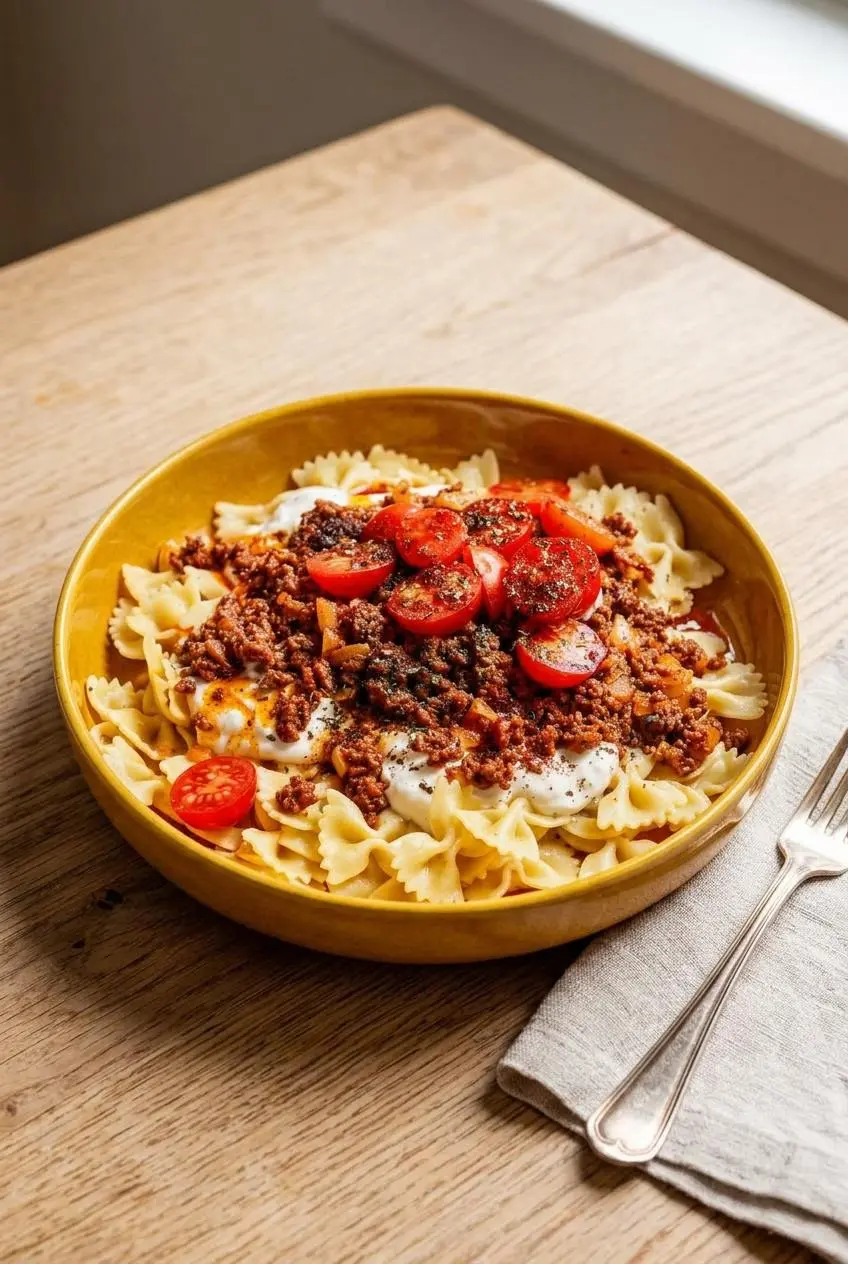
Use the pasta’s cooking time to get the beef underway, then finish the yogurt and butter before assembling. Allow 10 minutes for prep and 20 minutes for cooking, for a total of 30 minutes and 4 servings.
Have a large pot, large skillet, small saucepan, mixing bowl, whisk, and wooden spoon ready. The small saucepan matters: it gives you better control over the butter than a large, already-hot meat skillet.
- Cook the pasta in a large pot of boiling, generously salted water following the package’s al dente timing, about 9–10 minutes for farfalle, then reserve ½ cup cooking water before draining and setting the noodles aside.
A finished noodle should bend easily but still offer a firm bite at its center. - Start the beef while the pasta boils by placing it in a large skillet over medium heat and using a wooden spoon to break it into crumbles during 4–5 minutes of cooking.
The pink color should disappear as the meat releases juices and some of its fat. - Work the chopped onion, red pepper paste or tomato paste, onion powder, cumin, sweet paprika, salt, and black pepper into the beef, stirring regularly over medium heat for another 5–6 minutes, then set it aside and use reserved pasta water as needed to prevent dryness.
The onions should soften, the beef should finish cooking, and the seasoned crumbles should look moist rather than sit in a pool of liquid. - Whisk the Greek yogurt, minced garlic, lemon juice, and salt in a mixing bowl, taste for seasoning, and set the sauce aside.
The mixture should look smooth and creamy, with the garlic evenly distributed. - Prepare the drizzle immediately before serving by melting the butter over medium heat in a small saucepan, stirring in the sweet paprika, red pepper flakes, and salt, and continuing until bubbly.
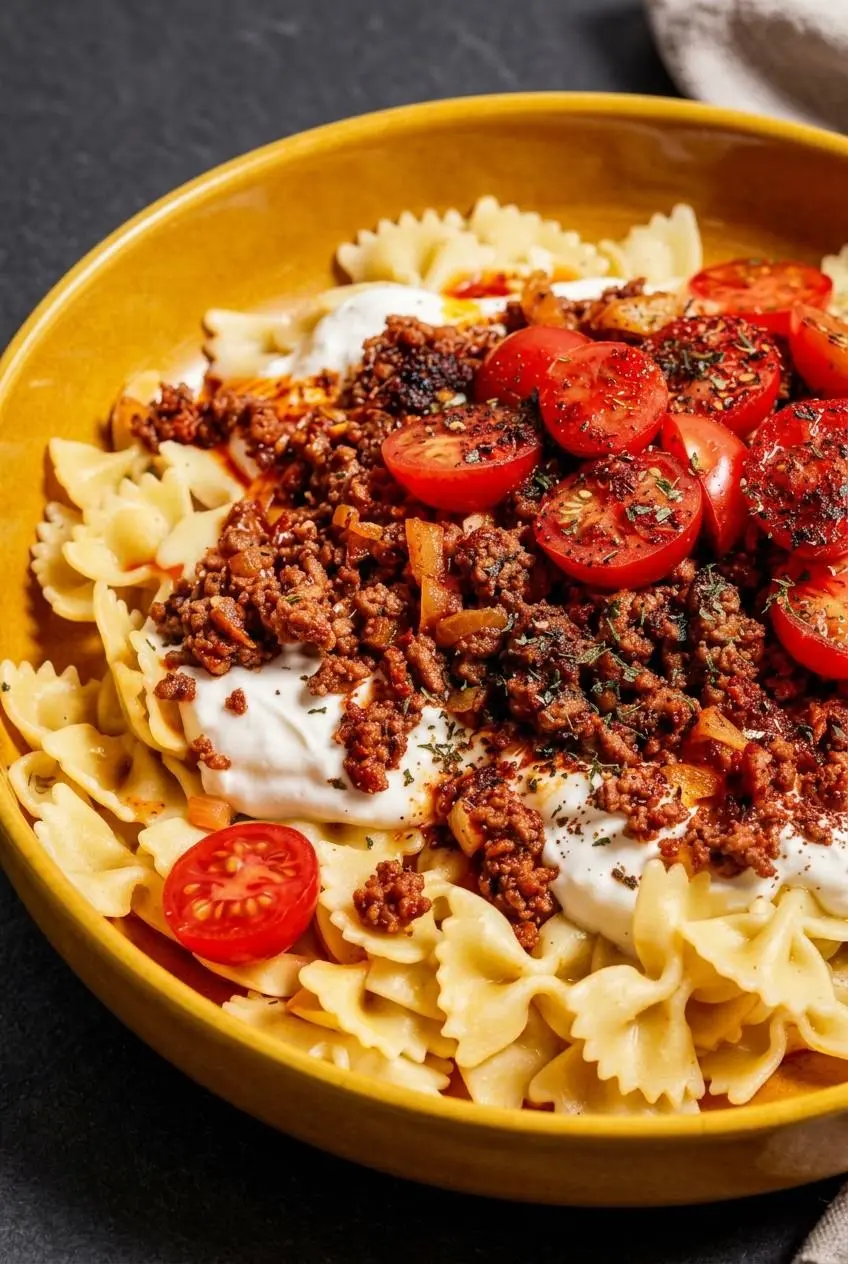
Look for fully melted butter with active bubbles and a warm pepper aroma, without darkening spices. - Divide the cooked pasta among bowls and build each serving with 4 tablespoons garlic yogurt, ⅔ cup cooked beef, and a tablespoon or more of the butter sauce.
The yogurt should coat the top noodles while the beef and reddish butter remain visible as separate layers. - Finish each bowl, if desired, with cherry tomatoes, a tablespoon of dried mint or fresh parsley, and a teaspoon of sumac if using, then serve immediately.
The optional toppings add juicy freshness, herbal aroma, and a tart contrast to the warm meat and butter.
Browning Spiced Meat to Maximize Juiciness
Let the beef supply its own cooking fat; no added oil is required. Break up large pieces, then watch the skillet as the released juices diminish. A wet simmer gradually becomes a sharper sizzle as the meat cooks in its rendered fat.
Add the onions after the initial beef cooking stage. Stir regularly once the paste and spices go in, especially around the skillet’s edges, where concentrated paste can stick.
Lean meat can turn dry before the onions soften. Add reserved pasta water gradually only if needed, stirring until it moistens the crumbles. The goal is a glossy coating, not a loose sauce that floods the yogurt.
Creating the Sizzling Chili Butter Drizzle
Keep the saucepan over medium heat and stay nearby. Butter can foam as it melts; watch for gentle bubbling rather than letting the pan become aggressively hot before stirring in the spices.
Paprika and chili flakes should smell fragrant as they warm in the butter. Take the saucepan off the heat if the spices darken rapidly. You want a pepper-scented drizzle, not browned butter or scorched paprika.
Prepare this component last and pour it promptly. A stovetop saucepan lets you watch the bubbling and spice color closely, so skip the microwave for this finishing sauce.
Mastering the Perfect Layered Bowl Assembly
Broad, shallow bowls make it easier to distribute the toppings instead of stacking everything in one tall mound. Start with warm pasta, spoon the smooth garlic yogurt across it, add hot beef, and finish with freshly bubbling butter.
Let the serving portion of yogurt lose its refrigerator chill while you cook, keeping the remainder chilled. There’s no need to heat it or stir it into the pasta pot. Less-cold yogurt preserves more of the warmth from the noodles and beef.
Keep the optional garnishes on the surface. Tomatoes bring juicy contrast, mint adds aroma, and sumac gives a tart finish. Serve as soon as the butter goes on so the layers retain their temperature contrast.
Critical Cooking Tips and Troubleshooting
Most problems come from excess heat, excess liquid, or waiting too long to assemble. Keep the yogurt separate from direct heat and use the beef and butter as your hot components.
- The bowl is lukewarm: Refrigerator-cold yogurt or pasta left waiting can cool the meal quickly; let the serving portion of yogurt lose its chill during cooking and assemble promptly with hot beef.
- The yogurt looks grainy: Whisk it thoroughly before plating; if direct heat has already caused it to separate, stop heating it and use a fresh, unheated serving rather than trying to boil it smooth.
- The butter tastes bitter: Scorched paprika cannot be repaired by lowering the heat afterward; discard the burnt drizzle and start again over more controlled heat.
- The beef is dry: Lean meat may lose moisture before the onions finish softening; stir in reserved pasta water gradually until the crumbles regain a moist coating.
- The meat topping is watery: Excess cooking liquid dilutes the flavor and runs into the yogurt; let the liquid reduce before plating and avoid adding all the reserved water automatically.
- The pasta is soft or soggy: Overcooked noodles can’t regain firmness; check early against the package timing and drain at al dente.
- The finished dish is too salty: Salt appears in several components, and reserved pasta water adds more; taste the meat and yogurt before assembly and add cooking water cautiously.
Make-Ahead, Storage, and Reheating Rules
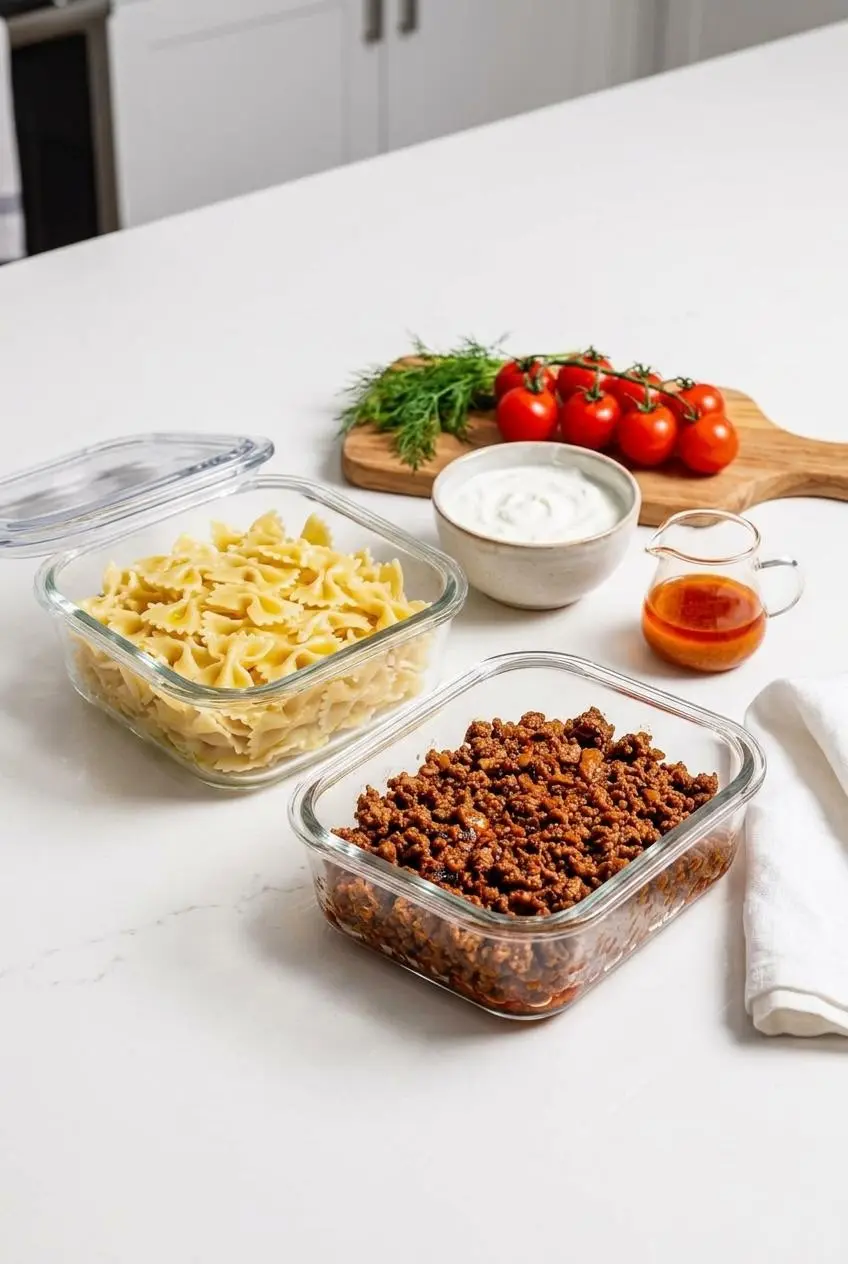
Keep the components separate if you’re preparing them ahead or saving leftovers. Pasta absorbs moisture from yogurt, while reheating dressed noodles can leave the dairy grainy and the toppings unevenly warm.
Cook ground beef to 160°F, refrigerate cooked leftovers within two hours, and store the cooked pasta and beef in separate airtight containers for up to 3 days within the recommended refrigerated leftover window. Keep the garlic yogurt covered and chilled separately, and follow the yogurt container’s use-by directions.
Reheat only the pasta and beef, gently on the stovetop or in brief microwave bursts with stirring between bursts. Add a little water if the noodles stick or the beef looks dry, and continue until the food heats thoroughly throughout.
Spoon the unheated garlic yogurt onto the reheated pasta, then add the beef and freshly prepared chili butter. Take out only the yogurt portion you need while reheating rather than leaving the entire container on the counter.
If you’ve already assembled the leftovers, you can’t fully recreate the separate layers. Reheat gently and expect some change in the yogurt’s texture; storing undressed portions is the better option.
Extra plain noodles also work in a leftover pasta frittata, giving you another use for pasta that hasn’t been coated in yogurt.
Flavorful Variations and Protein Substitutions
Keep these adaptations separate from the beef recipe above. Preserve the combination of pasta, a savory topping, garlic yogurt, and paprika butter while choosing the version that suits your dinner.
Traditional Spiced Ground Lamb Variation
Ground lamb gives the topping a deeper, richer flavor and pairs well with cumin and paprika. You can use lamb instead of beef, or a beef-and-lamb blend if you want a gentler lamb flavor.
Lamb may release more fat than the listed lean beef. Watch the skillet and remove excess rendered fat if necessary so the meat doesn’t compete with the butter drizzle for richness.
Ground turkey is another optional alternative, with a milder flavor and a tendency to need more moisture. Use cooking cues rather than assuming the beef timing applies unchanged, and cook poultry thoroughly.
Vegetarian Lentil and Mushroom Kiymali
Finely chopped brown cremini mushrooms and cooked brown lentils make a hearty meatless topping. Mushrooms provide savory depth, while lentils contribute the small, substantial pieces that work well with pasta.
Cook the mushrooms until their released liquid reduces before combining them with the onion, pepper paste, warm spices, and cooked lentils. Keep the mixture moist but not soupy, and fold gently once the lentils go in so they retain their shape.
This variation remains vegetarian with the yogurt and butter toppings. It isn’t a dairy-free version.
Gluten-Free Adaptation
- Choose a sturdy shape: Gluten-free brown rice or corn-blend shells and rigatoni offer pockets and ridges for the toppings.
- Follow the package timing: Check for a firm center rather than using the farfalle timing automatically.
- Handle gently: Drain carefully and avoid vigorous stirring that could break the noodles.
- Check packaged ingredients: Confirm that the pasta, pepper paste, and seasonings meet your gluten-free needs.
Conclusion
This 30-minute dinner brings warm spiced beef, tangy garlic yogurt, and paprika butter together without the work of making dumplings. Firm pasta and distinct layers keep every bite balanced.
Let the serving portion of yogurt lose its chill, save the butter for the final moment, and assemble while the meat is hot. Bring the bowls straight to the table and enjoy the contrast.
Frequently Asked Questions
What Is the Traditional Turkish Name for This Viral Pasta?
Kiymali makarna means pasta with minced meat. This yogurt-and-butter-topped version also goes by yalanci manti or “cheat manti” because it echoes manti flavors without enclosing the meat in dumplings.
Why Should the Garlic Yogurt Be at Room Temperature?
Yogurt straight from the refrigerator can cool the hot pasta and beef quickly. Let the serving portion lose its chill while you cook, then whisk it smooth and keep it away from direct heat; room temperature alone doesn’t guarantee that heated yogurt won’t split.
What Can I Substitute for Turkish Red Pepper Paste?
Use the same amount of tomato paste in place of biber salcasi. Optionally add a pinch of sweet paprika and red pepper flakes for a closer pepper flavor, recognizing that tomato paste brings more tomato tang.
How Do I Store and Reheat Leftovers Without Ruining the Sauce?
Refrigerate pasta, beef, and garlic yogurt in separate covered containers, following the storage guidance above. Reheat the pasta and beef thoroughly, then add the unheated yogurt and freshly prepared butter sauce to preserve the creamy texture.
Turkish Pasta

Equipment
- Large Pot
- Large Skillet
- Small saucepan
- Mixing Bowl
- Whisk
- Wooden Spoon
Ingredients
For The Pasta
- 8 ounces pasta (I use farfalle but any shape would work)
- Kosher salt
For The Meat Sauce
- 1 lbs ground beef (93%)
- 1 medium size onion (chopped (about 1 cup))
- 1 tablespoon red pepper paste (or tomato paste)
- 1 teaspoon onion powder
- 1 teaspoon ground cumin
- 2 teaspoons sweet paprika
- ½ teaspoon kosher salt
- ¼ teaspoon ground black pepper
For The Garlic Yogurt Sauce
- 1 cup Greek yogurt (unsweetened plain (full fat or skim))
- 2 cloves garlic (minced)
- 1 tablespoon lemon juice
- ½ teaspoon kosher salt
For The Butter Sauce
- 4 tablespoons unsalted butter
- 1 teaspoon sweet paprika
- ¼ teaspoon red pepper flakes (or more to taste (such as Aleppo Pepper or Urfa Chili pepper))
- ½ teaspoon kosher salt
As Garnish (optional)
- ½ cup cherry tomatoes (cut in half)
- 4 tablespoons dried mint (or fresh parsley)
- 2 tablespoons sumac (optional)
Instructions
- Cook the pasta in a large pot of boiling, generously salted water following the package’s al dente timing, about 9–10 minutes for farfalle, then reserve ½ cup cooking water before draining and setting the noodles aside. A finished noodle should bend easily but still offer a firm bite at its center.
- Start the beef while the pasta boils by placing it in a large skillet over medium heat and using a wooden spoon to break it into crumbles during 4–5 minutes of cooking. The pink color should disappear as the meat releases juices and some of its fat.
- Work the chopped onion, red pepper paste or tomato paste, onion powder, cumin, sweet paprika, salt, and black pepper into the beef, stirring regularly over medium heat for another 5–6 minutes, then set it aside and use reserved pasta water as needed to prevent dryness. The onions should soften, the beef should finish cooking, and the seasoned crumbles should look moist rather than sit in a pool of liquid.
- Whisk the Greek yogurt, minced garlic, lemon juice, and salt in a mixing bowl, taste for seasoning, and set the sauce aside. The mixture should look smooth and creamy, with the garlic evenly distributed.
- Prepare the drizzle immediately before serving by melting the butter over medium heat in a small saucepan, stirring in the sweet paprika, red pepper flakes, and salt, and continuing until bubbly. Look for fully melted butter with active bubbles and a warm pepper aroma, without darkening spices.
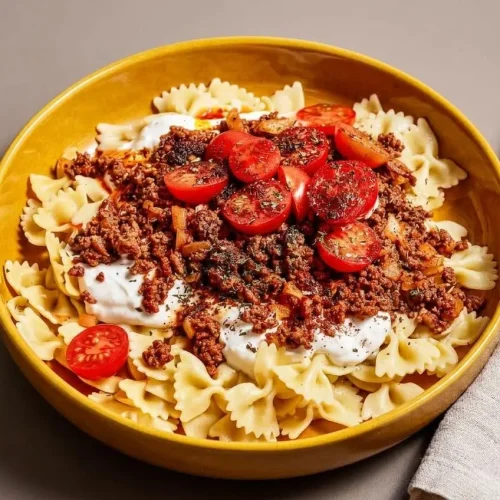
- Divide the cooked pasta among bowls and build each serving with 4 tablespoons garlic yogurt, ⅔ cup cooked beef, and a tablespoon or more of the butter sauce. The yogurt should coat the top noodles while the beef and reddish butter remain visible as separate layers.
- Finish each bowl, if desired, with cherry tomatoes, a tablespoon of dried mint or fresh parsley, and a teaspoon of sumac if using, then serve immediately. The optional toppings add juicy freshness, herbal aroma, and a tart contrast to the warm meat and butter.