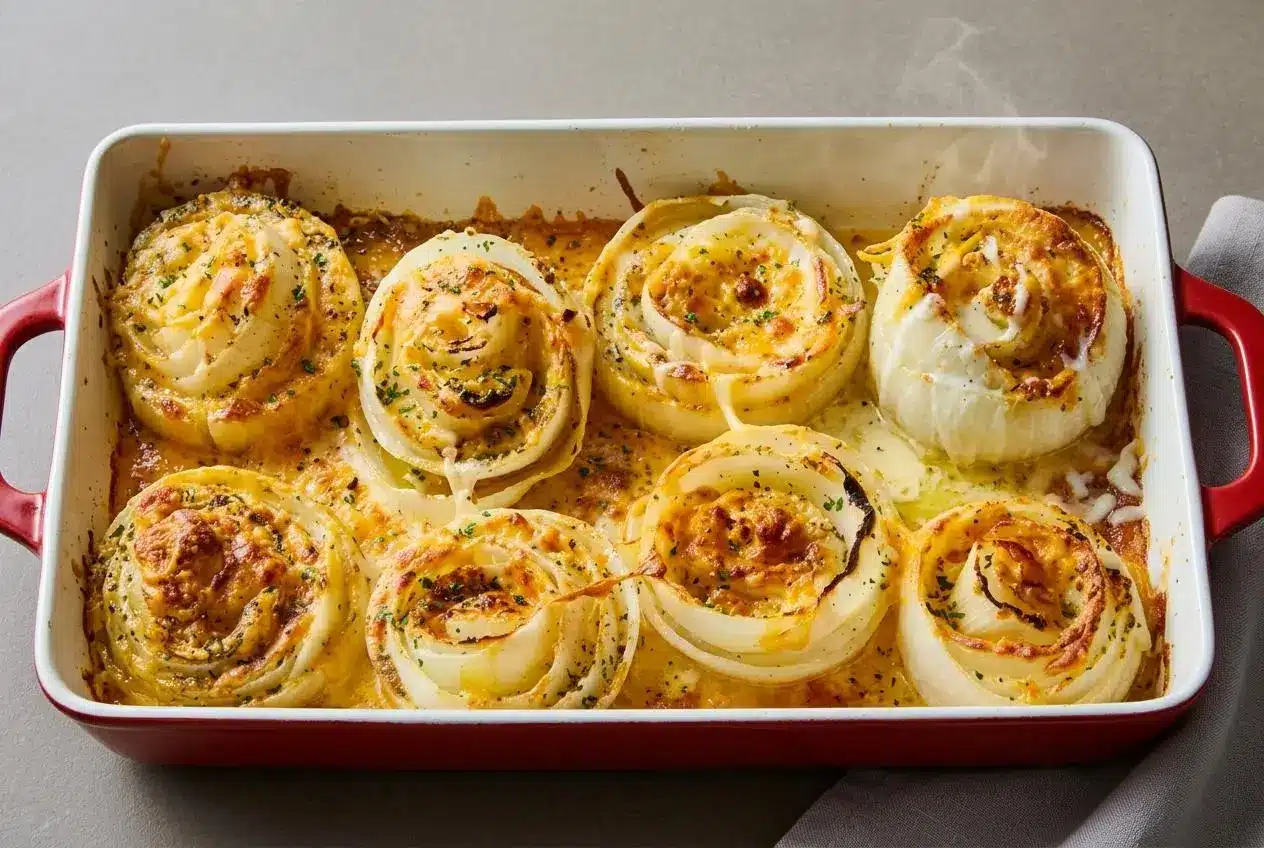
Tennessee onions are a Southern casserole of sweet onion rings baked with butter, savory seasonings, and melted cheese. This version steams the onions under foil before adding mozzarella, sharp cheddar, and Parmesan, giving you tender centers and a bubbly topping with golden spots.
A dish of tennessee onions turns sweet Vidalias into a generous, cheesy side for family dinners, cookouts, and holiday meals. As the onions soften, their sharp raw aroma gives way to the warm scent of sweet onions and melted butter.
The appeal is the contrast: silky onion rings underneath, tangy melted cheese on top. The oven does most of the work, but the timing of that cheese layer matters. Save the cheese for the finish.
Keep a fork or metal cake tester handy so you can check the onion centers before adding the topping.
What Are Tennessee Onions?
Tennessee onions put the vegetable at the center of a Southern-style baked side dish. Sweet onion rounds, separated into rings and nested back together, cook with herbs, butter, and broth before receiving a blanket of cheese.
They fit naturally on a potluck or holiday table because you can serve them straight from the baking dish. Each spoonful brings soft onions, buttery pan juices, and a savory mixture of mozzarella, cheddar, and Parmesan.
Unlike French onion soup, this casserole has no soup base or bread layer. Unlike standard roasted onions, it cooks covered for most of its time in the oven, favoring tenderness over browned edges. The onions taste mellow and sweet, but they aren’t deeply browned, skillet-caramelized onions.
That distinction helps set expectations: look for yielding onion rings beneath bubbling cheese, with some flavorful liquid at the bottom. The salty, tangy topping balances the onions’ sweetness without hiding their flavor.
Essential Ingredients and Why They Work
Sweet onions provide tenderness and mellow flavor, butter adds richness, and broth supplies moisture for the covered bake. Herbs and spices balance the sweetness, while three cheeses contribute stretch, tang, and savory depth. Cooking spray helps prevent sticking, and fresh parsley brightens the finish.
- Cooking spray
- 2 1/2 lb. sweet Vidalia onions (3 large or 4 medium), peeled
- 1 tsp. dried parsley
- 1 tsp. dry mustard
- 1 tsp. garlic powder
- 3/4 tsp. seasoned salt
- 1/2 tsp. dried oregano
- 1/2 tsp. kosher salt
- 1/4 tsp. cayenne pepper
- 1/4 tsp. freshly ground black pepper
- 1 c. shredded mozzarella
- 1 c. shredded sharp cheddar
- 1/2 c. finely grated Parmesan
- 4 tbsp. unsalted butter, cut into cubes
- 1/2 c. low-sodium vegetable broth
- Finely chopped fresh parsley, for serving
Butter coats the softened rings and enriches the pan juices. Vegetable broth provides moisture that becomes steam beneath the foil; it doesn’t seal moisture inside the onions. Low-sodium broth and unsalted butter also leave room for the seasoned salt, kosher salt, and salty cheeses.
I prefer grating the cheeses before handling the onions, so the topping is ready when the centers turn tender.
Choosing the Right Sweet Onion
Vidalias are the first choice here for their mild flavor and pleasant sweetness. Choose firm onions without soft patches, then peel away the papery skin and any tough outer layer before slicing.
Walla Walla or Texas Sweet onions make useful optional substitutes when Vidalias aren’t available. Look for onions labeled as sweet rather than relying on their color alone; a yellow-skinned onion may still be a sweet variety.
Standard yellow or white storage onions can cook tender, but their more assertive flavor changes the balance of the casserole. They aren’t an identical replacement. If you use them, expect a stronger onion flavor rather than trying to correct it with extra salt or an improvised amount of sugar.
Whatever variety you choose, keep the slices consistently 1/4 inch thick. Thickness affects cooking more directly than whether one onion is slightly larger than another.
The Ideal Three-Cheese Blend
The combination of 1 cup mozzarella, 1 cup sharp cheddar, and 1/2 cup Parmesan gives the topping distinct jobs. Mozzarella supplies a soft, stretchy melt. Sharp cheddar brings tang and a fuller cheese flavor. Finely grated Parmesan adds concentrated savory depth.
Shred the mozzarella and cheddar from blocks and grate the Parmesan finely. Packaged shredded cheeses often contain anti-caking ingredients that can affect how smoothly the shreds melt together. Fresh grating gives you better control over the topping’s texture.
Freshly grated cheese can still release oil if overheated. The more important protection is adding it only after the onions soften, then keeping the final bake and broiler finish brief.
Seasonings That Balance Sweet and Savory
Dry mustard adds a subtle savory sharpness rather than a prepared-mustard sauce flavor. Garlic powder spreads evenly over the rings, while oregano and dried parsley add herbal character to the buttery juices.
Cayenne brings a little warmth, and black pepper supplies a different, aromatic bite. Together, they keep the rich cheese topping from overwhelming the onions. Fresh parsley goes on last for color and a fresher flavor.
Mix the seasonings before coating the onions. This helps avoid pockets of cayenne or salt between rings, especially where the onion stacks overlap.
How to Make Classic Tennessee Onions Step-by-Step
The key is to finish cooking the onions before the cheese enters the oven. This recipe serves 6 to 8, with about 20 minutes of preparation and a longer covered bake. Use a 13-by-9-inch baking dish and foil that fits tightly over it.
- Heat the oven to 350°F with its rack in the middle position, and coat a 13-by-9-inch baking dish lightly with cooking spray.
The coating should cover the bottom and sides without pooling. - Place each peeled onion on its side, slice crosswise into 1/4-inch rounds, separate the rings, and nest them from largest to smallest in the dish to form four stacks.
The nested rings should resemble the sliced rounds, with smaller rings sitting inside larger ones rather than in a loose heap. - Combine the dried parsley, dry mustard, garlic powder, seasoned salt, oregano, kosher salt, cayenne, and black pepper in a small bowl, then blend the mozzarella, cheddar, and Parmesan in a medium bowl.
Both mixtures should look evenly distributed so the onions receive consistent seasoning and cheese coverage. - Coat the onions with the seasoning mixture using a gentle toss, distribute the butter cubes over them, pour the broth into the bottom of the dish, and seal the dish tightly with foil.
The butter should sit across the onions while the broth collects underneath for the covered bake. - Bake for 75 to 90 minutes, then lift away the foil carefully, test the onion centers, and spread the cheese mixture over the onions once they are tender.
A fork or metal cake tester should slide easily through the center of a stack without meeting a firm, crunchy core. - Return the uncovered dish to the oven for 5 to 7 minutes to melt the topping.
The shreds should merge into a melted layer with bubbling around the edges. - Switch on the broiler, watch the dish continuously for 1 to 2 minutes, and remove it when browned patches appear before finishing with fresh parsley.
A few golden spots are enough; the entire surface doesn’t need to turn brown.
The covered stage traps steam from the broth and onions, helping the nested centers soften. Lift the foil away from your face and let the initial rush of steam escape before checking tenderness.
Once the onions are ready, the uncovered stage lets moisture vent while the cheese melts. The broiler supplies the final browning. Don’t use it to finish cooking firm onion centers, because the topping will brown much faster than the onions soften.
Expert Tips for Success and Common Pitfalls to Avoid
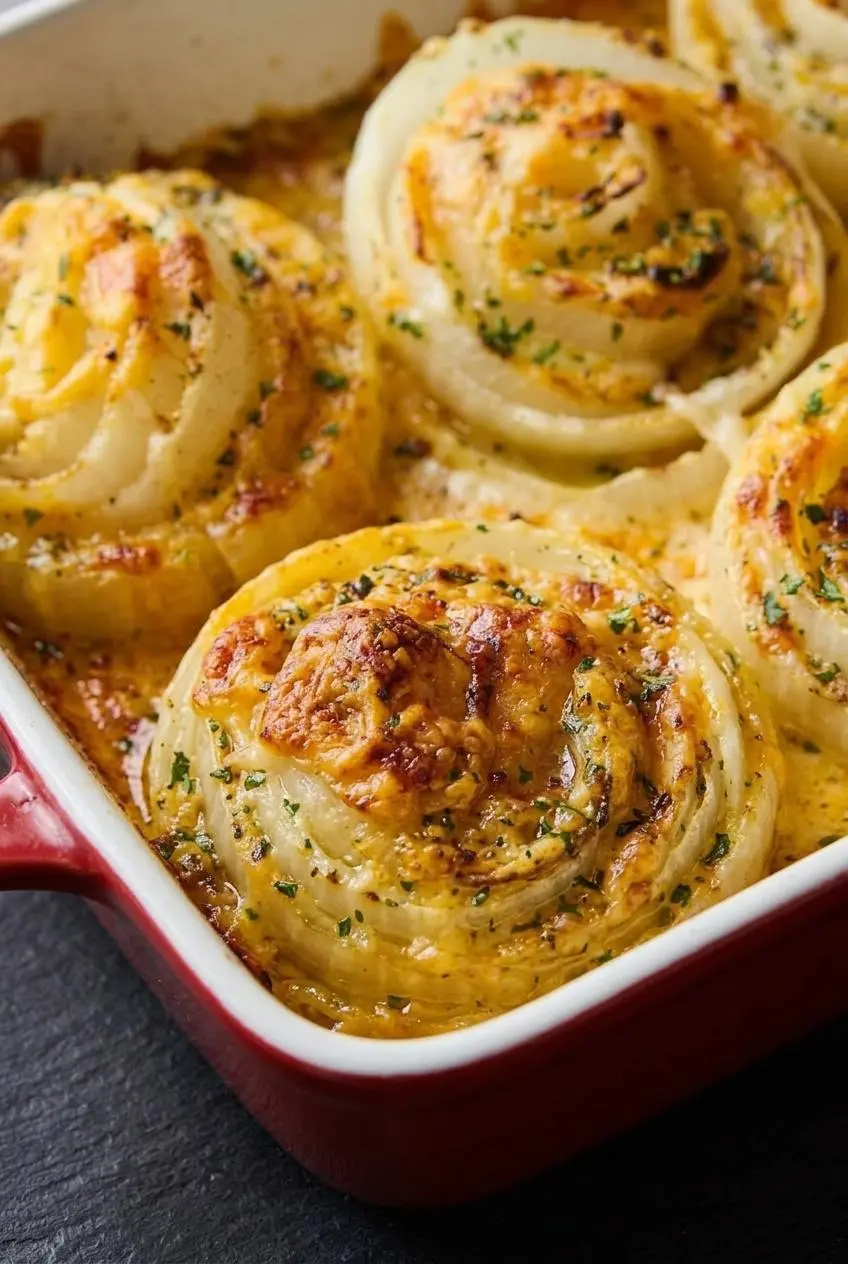
Check the onions, pan juices, and cheese separately when something looks off. Each tells you a different part of the story.
- Crunchy onion centers: Dense stacks or uneven slices may need more covered cooking within the stated range. Test a central ring, not just a soft outer edge, and hold off on the cheese until the center yields easily.
- Onions losing their shape: Very thin slices soften faster and can collapse during the long bake. Keep the rounds at 1/4 inch and toss gently rather than stirring aggressively.
- Excess liquid: Onions release moisture as they soften, so some buttery broth is expected. Let trapped steam escape when you remove the foil, and keep the cheese stage uncovered rather than sealing the dish again.
- A deeply flooded bottom: If liquid sits unusually high around the tender onions, spoon away some excess before topping them. Leave enough pan juices to keep the rings moist; the goal isn’t a dry casserole.
- Greasy or rubbery cheese: Prolonged heat can make the topping release fat or toughen. Don’t add cheese at the beginning, and stop broiling as soon as golden patches develop.
- Uneven browning: Broilers can have hot spots. Watch the whole surface and remove the dish when the fastest-browning areas are ready rather than waiting for every corner to match.
Use a baking dish rated for broiler heat. A dish suitable for ordinary baking isn’t automatically suitable for the broiler, so check its care instructions before using the final browning step.
Flavor Variations and Cheese Customizations
Keep these changes optional and separate from the main ingredient list. The covered onion bake stays the same; the variations change the seasoning or finishing layer.
- Lemon zest: Add a little fresh lemon zest to the seasoning mixture for citrus aroma that brightens the buttery onions.
- Smoked sweet paprika: Include a pinch for a gentle smoky flavor without making the dish much hotter.
- Crispy bacon: Scatter cooked, crisp bacon pieces over the finished topping for smoky crunch, remembering that bacon also adds salt.
Cajun Pepper Jack Variation
Swap pepper jack for the mozzarella if you want a spicier melting cheese. Keep the cheddar and Parmesan for tang and savory depth.
A Creole seasoning blend can replace the dried herb blend for a bolder profile. Check whether it contains salt, garlic, or cayenne before combining it with the remaining seasonings; doubling up can make the onions too salty or hot. Use the same late cheese application rather than baking pepper jack through the covered stage.
Crispy Buttered Cracker Topping
Toss crushed buttery round crackers with melted butter, then scatter them over the melted cheese before the final broiler finish. This adds a crisp contrast to the soft onion rings.
Keep the coating light enough that cheese still shows through. Cracker crumbs can brown faster than the cheese, so watch closely and stop when the crumbs turn golden. Add this topping at the finish, not under the foil, where steam would soften it.
Best Dishes to Serve Alongside Tennessee Onions
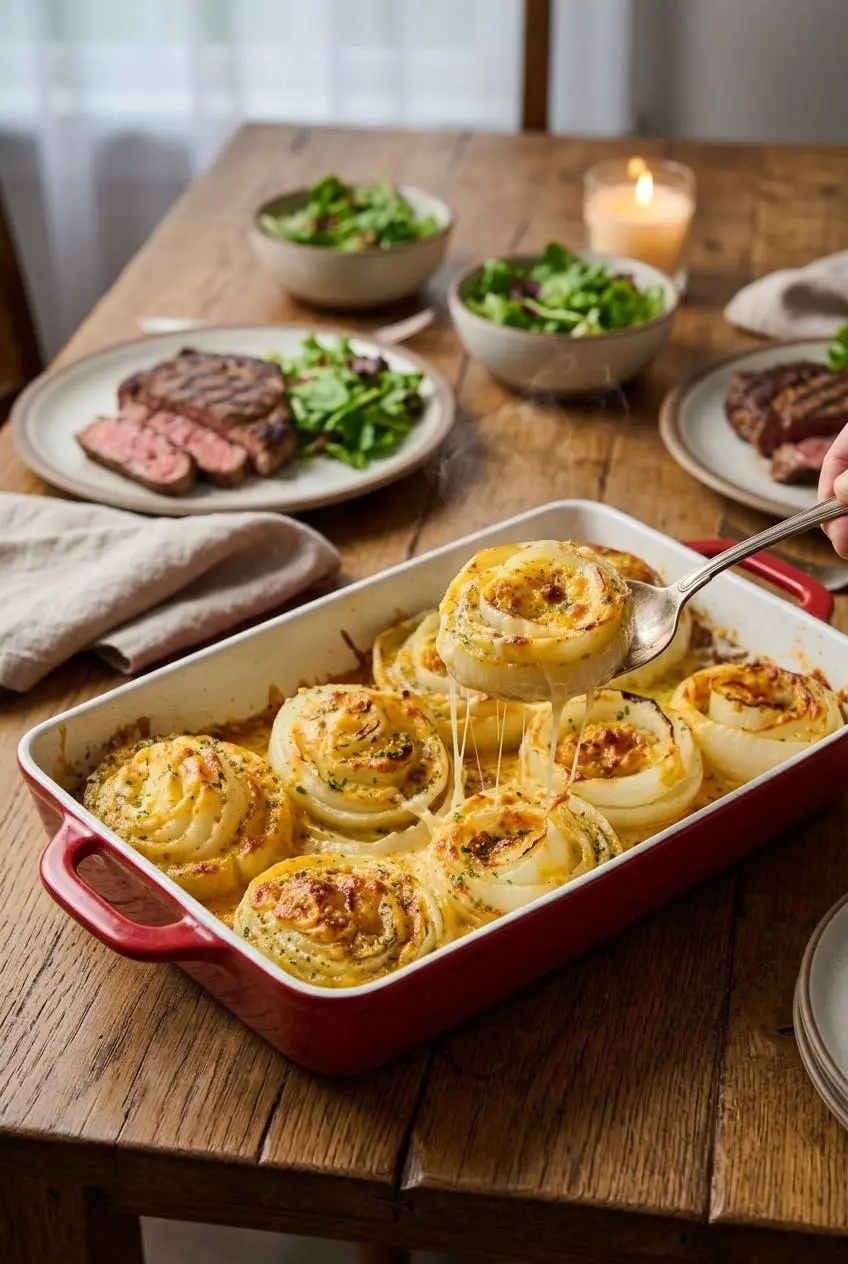
Serve the onions hot while the topping is soft and easy to spoon. Their richness works especially well beside savory meat and something fresh or crisp.
- Steak or pork chop dinner: Pair with grilled ribeye steaks or pork chops, then add a green garden salad with a bright dressing.
- Backyard barbecue: Serve beside smoked brisket or other smoked meats, using a spoon to lift the tender rings with a little of their buttery juice.
- Holiday spread: Set the dish alongside roasted ham, prime rib, or roast turkey for a cheesy vegetable side that complements the roast.
- Burger night: Spoon the warm rings over smash burgers, allowing excess pan liquid to drain so the buns don’t become soggy.
For a hearty sandwich, layer the cheesy onions over sliced roast beef in a pressed roll. Use mostly onion rings and cheese rather than pouring in the broth; you want a moist filling, not a soaked sandwich.
Make-Ahead, Storage, and Reheating Instructions
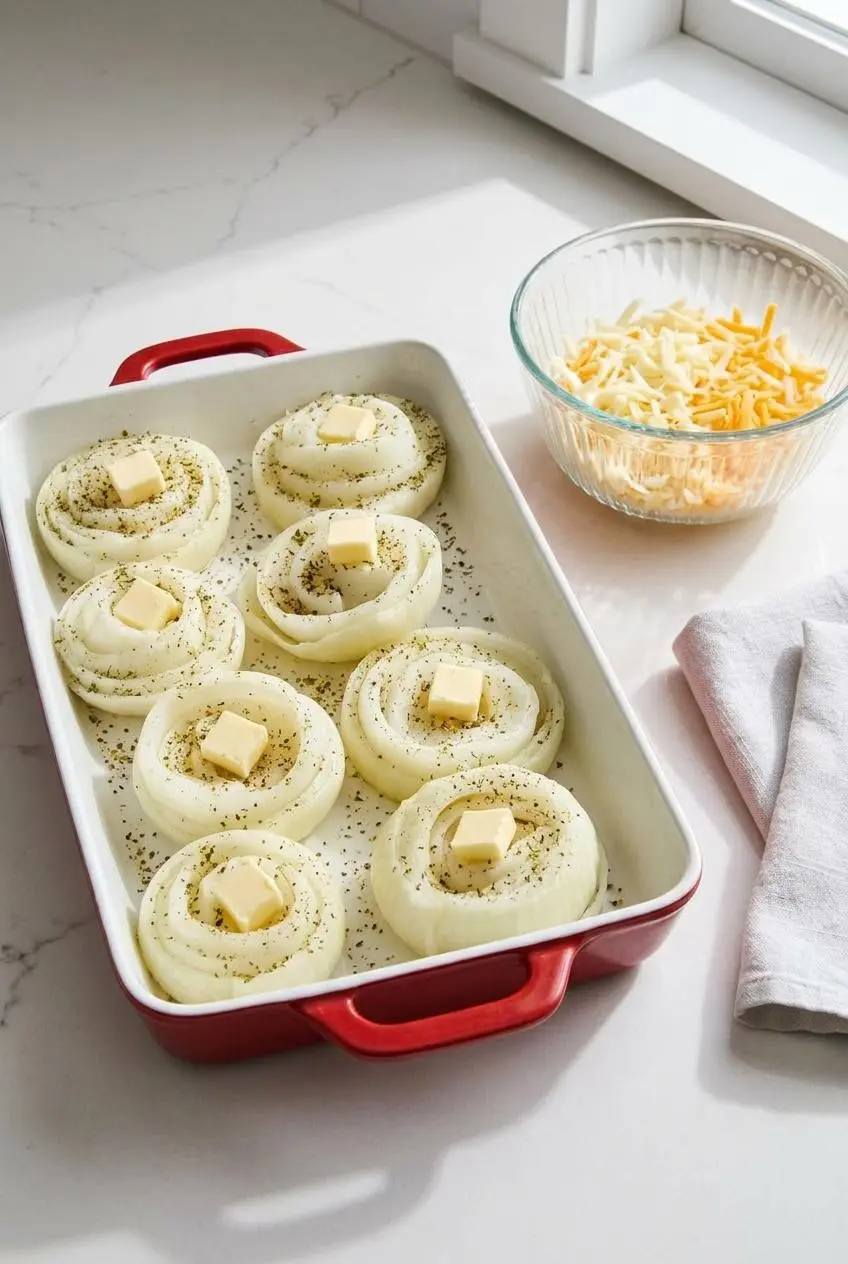
For advance preparation, keep the onion components separate from the cheese topping. Cover and refrigerate prepared onion rings and seasonings, and keep the grated cheese covered separately. Add the topping only after the onions have completed their covered bake.
If you refrigerate components in the baking dish, check the dish manufacturer’s instructions before transferring it to a hot oven. Cold cookware can require different handling, and a chilled casserole may take longer to reach the same tender-center cue.
Refrigerate leftovers promptly in a covered, shallow container rather than leaving the full baking dish on the table. Store any cracker topping separately when possible, and add fresh parsley after reheating for a fresher finish.
Reheat the portion you need in an oven-safe dish using gentle oven heat, covering it loosely to limit drying. Once the onions and center are thoroughly hot, uncover briefly if the surface needs refreshing. A melted cheese surface alone doesn’t tell you whether the middle has heated through.
Avoid aggressive microwave heating or a prolonged broiler blast, which can overheat the cheese before the onions warm evenly. If using a microwave, choose reduced power and check the center rather than judging only by bubbling edges.
Conclusion
Sweet onion rings, buttery juices, and tangy melted cheese make Tennessee onions a comforting side with plenty of character. The onions stay recognizable, while the golden topping gives every spoonful a savory finish.
Let the covered bake do the tenderizing, then give the cheese its brief turn in the oven. Check the centers, watch the broiler, and bring the dish to the table while the topping is warm and melty.
Frequently Asked Questions
What Are the Best Onions to Use for Tennessee Onions?
Vidalia onions are the first choice for their mild, sweet flavor. Walla Walla and Texas Sweet onions are useful alternatives. Standard yellow or white storage onions give the casserole a stronger onion flavor and won’t taste identical.
Can I Prepare Tennessee Onions Ahead of Time?
Yes, prepare the onion rings and seasonings ahead and keep them covered and refrigerated. Store the grated cheese separately so it stays out of the long covered bake. When baking, use the tender-center test rather than assuming chilled ingredients will follow the same timing exactly.
Why Is There Excess Liquid in My Baking Dish?
Onions release water as they soften, which combines with the broth and melted butter. Remove the foil for the cheese stage so steam can escape. If the tender onions are deeply surrounded by liquid, spoon away some excess before adding cheese, leaving moist pan juices behind.
How Do I Reheat Leftover Tennessee Onions Without Them Getting Greasy?
Use gentle heat and reheat a portion rather than repeatedly warming the whole dish. Cover loosely to limit drying, then check that the center is thoroughly hot. Avoid prolonged broiling or aggressive microwave heating, which can make the cheese release oil.
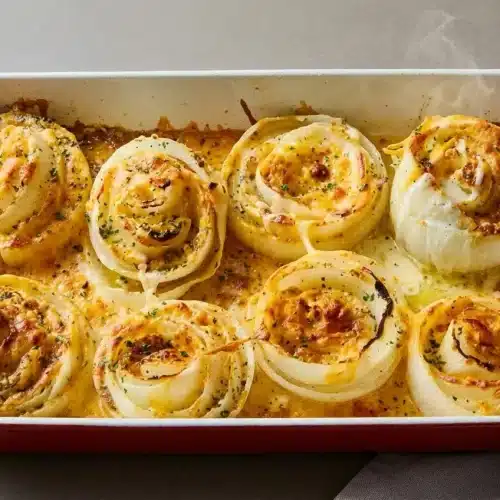
Tennessee Onions

Equipment
- 13×9 inch baking dish
- Aluminum Foil
- Cutting board
- Mixing Bowls
Ingredients
- Cooking spray
- 2 1/2 lb. sweet Vidalia onions (3 large or 4 medium), peeled
- 1 tsp. dried parsley
- 1 tsp. dry mustard
- 1 tsp. garlic powder
- 3/4 tsp. seasoned salt
- 1/2 tsp. dried oregano
- 1/2 tsp. kosher salt
- 1/4 tsp. cayenne pepper
- 1/4 tsp. freshly ground black pepper
- 1 c. shredded mozzarella
- 1 c. shredded sharp cheddar
- 1/2 c. finely grated Parmesan
- 4 tbsp. unsalted butter cut into cubes
- 1/2 c. low-sodium vegetable broth
- Finely chopped fresh parsley for serving
Instructions
- Heat the oven to 350°F with its rack in the middle position, and coat a 13-by-9-inch baking dish lightly with cooking spray. The coating should cover the bottom and sides without pooling.
- Place each peeled onion on its side, slice crosswise into 1/4-inch rounds, separate the rings, and nest them from largest to smallest in the dish to form four stacks. The nested rings should resemble the sliced rounds, with smaller rings sitting inside larger ones rather than in a loose heap.
- Combine the dried parsley, dry mustard, garlic powder, seasoned salt, oregano, kosher salt, cayenne, and black pepper in a small bowl, then blend the mozzarella, cheddar, and Parmesan in a medium bowl. Both mixtures should look evenly distributed so the onions receive consistent seasoning and cheese coverage.
- Coat the onions with the seasoning mixture using a gentle toss, distribute the butter cubes over them, pour the broth into the bottom of the dish, and seal the dish tightly with foil. The butter should sit across the onions while the broth collects underneath for the covered bake.
- Bake for 75 to 90 minutes, then lift away the foil carefully, test the onion centers, and spread the cheese mixture over the onions once they are tender. A fork or metal cake tester should slide easily through the center of a stack without meeting a firm, crunchy core.
- Return the uncovered dish to the oven for 5 to 7 minutes to melt the topping. The shreds should merge into a melted layer with bubbling around the edges.
- Switch on the broiler, watch the dish continuously for 1 to 2 minutes, and remove it when browned patches appear before finishing with fresh parsley. A few golden spots are enough; the entire surface doesn’t need to turn brown.