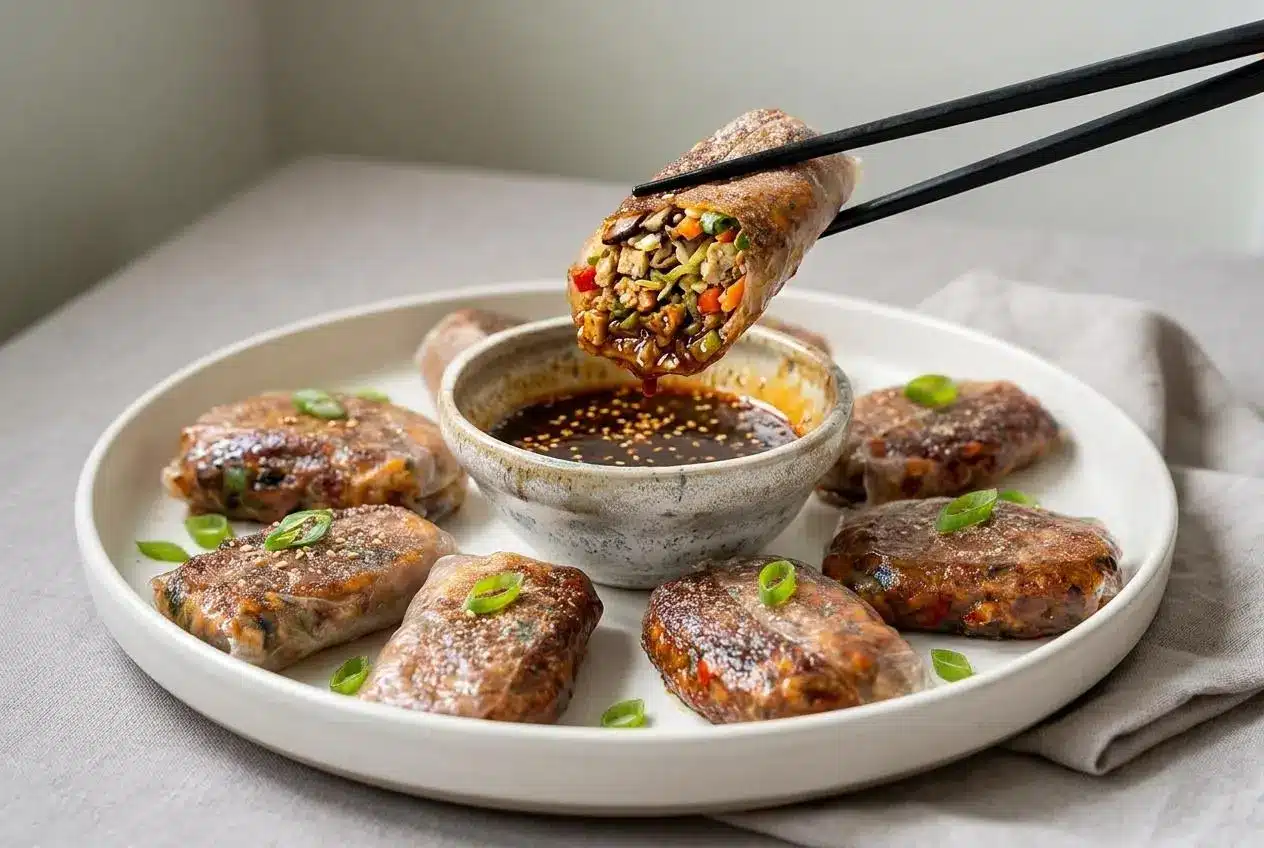
Rice paper dumplings hold cooked, seasoned filling inside briefly moistened rice paper wrappers. Pan-fry them in a lightly oiled skillet over medium heat, starting with the thicker folded side for 3 to 4 minutes, then flipping until both sides turn blistered and crisp.
These rice paper dumplings combine tofu, mushrooms, and finely chopped vegetables with an envelope-style fold. The wrapper develops a crackly surface while the layers around the savory center keep their distinctive chew.
A tangy hoisin dipping sauce brings sweetness, acidity, and chili heat to each bite. You don’t need to roll dough, but moisture control makes all the difference. The crunch starts before the skillet.
Lightly oil both your cutting board and resting plate before dipping the first wrapper.
Ingredients That Guarantee Flavor and Crunch
Tofu gives the filling substance, vegetables contribute texture and sweetness, and mushrooms add savory depth. Cornstarch helps the mixture hold together, rice paper forms the crisp shell, and the hoisin sauce balances the richness with vinegar and chili heat.
FILLING
- 1/2 medium red onion diced
- 1 green onion chopped
- 1 small carrot peeled
- 4 pieces cabbage leaves
- 5.2 oz fresh mushrooms of choice
- 1/2 small red bell pepper
- 9 oz extra firm tofu drained and pressed
- 1/2 tbsp neutral oil
- 2-3 tbsp vegetarian oyster sauce
- 1/2 tbsp dark soy sauce
- Dash of ground black pepper
- 2-3 tsp sesame oil
- 3 tbsp corn starch or more as needed
HOISIN SAUCE
- 2 tbsp hoisin sauce
- 1.5 tbsp rice vinegar adjust to taste
- 1 tbsp soy sauce
- 2-3 tsp chili oil
- 1 tsp sugar adjust to taste
- 1/2 tsp sesame seeds
- Chopped green onions
RICE PAPER
- 15 pieces rice paper
FOR COOKING
- Neutral oil
Pressing extra-firm tofu removes moisture before cooking; the skillet then evaporates what remains. Cornstarch helps bind the crumbles and vegetable juices so the filling stays compact rather than spilling through the seams. It helps prevent blowouts, but it can’t compensate for a wet filling.
Choose rice paper sheets wide enough to fold comfortably around a heaping tablespoon of filling. Very small sheets leave less overlap for sealing. Check the package rather than assuming all rice paper wrappers have the same diameter or thickness.
I look for a filling that gathers into a mound without leaving a watery puddle underneath; that matters more than its color.
Vegetables and Tofu Prep
Finely chop the vegetables without turning them into a puree. Small pieces pack neatly inside the wrapper, while long cabbage strands or large mushroom chunks can push against the folds. If using a food processor, stop while you can still distinguish the pieces.
Mushrooms and cabbage release liquid as they cook. Let that moisture evaporate before adding the tofu, then cook the tofu until the mixture looks crumbly rather than glossy with water. Cabbage contributes texture, but the wrapper supplies the main crunch.
Savory Hoisin Dipping Sauce
Hoisin brings sweetness and body, rice vinegar adds a sharp counterpoint, and chili oil gives the sauce warmth. Soy sauce rounds out the savory flavor; sesame seeds and green onions add texture and freshness.
Taste the sauce before adjusting the sugar or vinegar. Hoisin brands differ in sweetness, so aim for a dip that tastes bright enough to balance the fried wrapper. Serve it alongside the dumplings rather than pouring it over them, which softens the crust.
How to Make Rice Paper Dumplings
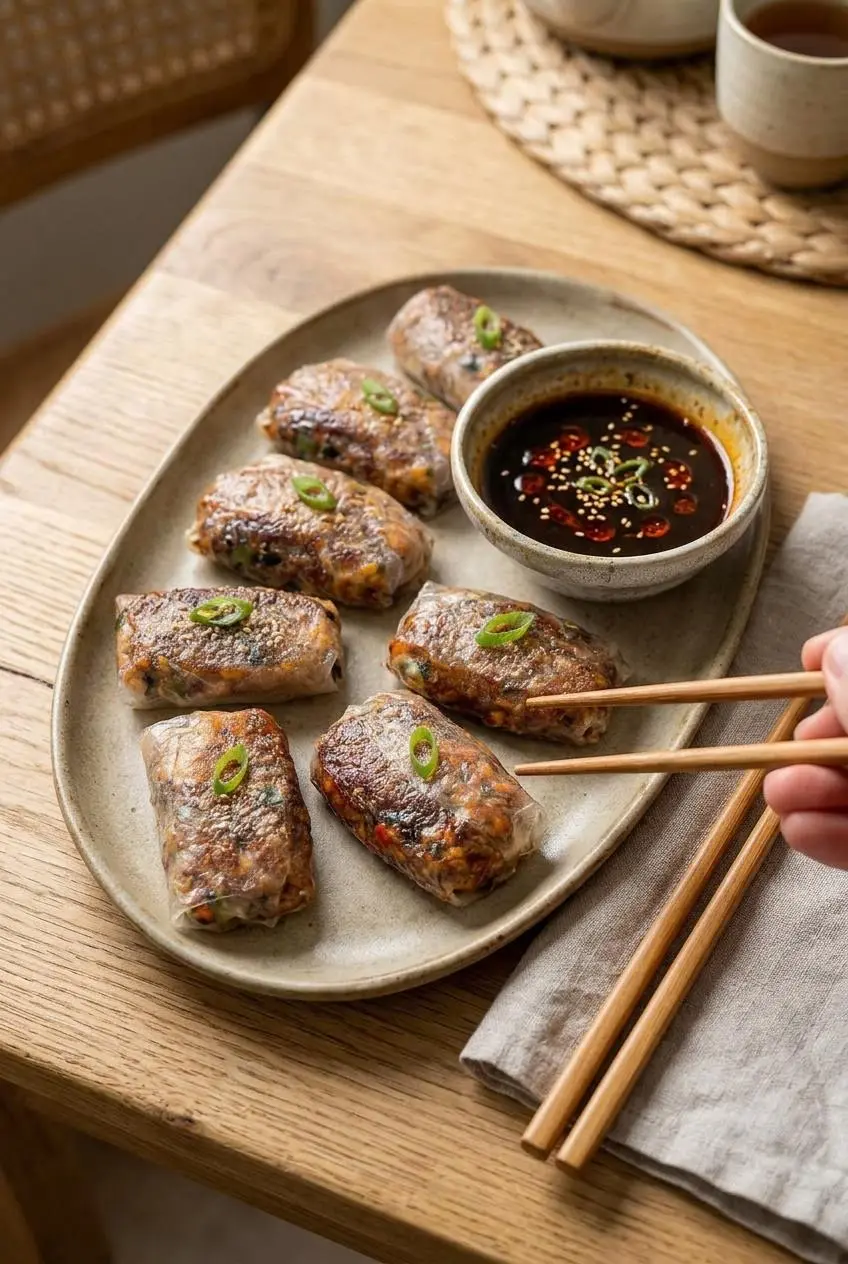
Prepare and cool the filling before handling the wrappers. This recipe makes 15 dumplings, with 45 minutes of prep and 30 minutes of cooking, for a total of 75 minutes.
PREPARE THE FILLING
- Finely mince the carrot, red onion, cabbage, mushrooms, and bell pepper by hand or with a food processor, keeping the red onion separate for sautéing.
A fine chop makes the filling easier to compress without creating a vegetable paste. - Warm the neutral oil in a large nonstick skillet over medium heat, then sauté the red onion and green onion for 1 to 2 minutes.
The onion should soften and give off a fragrant aroma without browning deeply. - Stir in the remaining minced vegetables and sauté for 3 to 4 minutes, allowing released liquid to evaporate.
The vegetables should soften, with no watery pool collecting beneath them. - Break the pressed tofu into small crumbles directly over the vegetables, then stir in the vegetarian oyster sauce, dark soy sauce, and black pepper.
The seasoning should coat the tofu and vegetables evenly. - Continue cooking over medium heat for 4 to 5 minutes to reduce the remaining tofu moisture.
The mixture should look loose and crumbly rather than wet. - Taste the filling, adjust the vegetarian oyster sauce if desired, and stir in the sesame oil.
The finished mixture should taste savory and smell lightly nutty. - Move the filling to a bowl, mix in the cornstarch, and let it cool completely before wrapping.
A spoonful pressed into a small mound should hold together instead of scattering.
HOISIN SAUCE
- Stir all the hoisin sauce ingredients together in a small bowl, adjusting the vinegar and sugar to taste.
The dip should taste sweet, tangy, savory, and pleasantly spicy.
WRAPPING THE DUMPLINGS
- Fill a large bowl with room-temperature water and lightly oil a flat work surface and resting plate.
The oil should form a thin film that keeps the hydrated wrappers from gripping the surfaces. - Briefly submerge one rice paper sheet, let excess water drain, and lay it flat on the prepared board.
Allow a few seconds for it to become flexible enough to fold without cracking. - Place 1 heaping tbsp of filling just below the center, compact it, fold the bottom over it, bring both sides inward, and fold the packet toward the top to seal; repeat to make 15 dumplings.
Each packet should feel snug, with overlapping edges, and rest separately on the oiled plate.
COOKING THE DUMPLINGS
- Heat a lightly oiled large nonstick skillet over medium heat and cook the dumplings thicker folded side down for 3 to 4 minutes, then flip and crisp the thinner side, working in 2 to 3 batches if needed.
Small bubbles and a crisp underside signal when to turn, while the thinner side may finish sooner. - Transfer the cooked dumplings out of the skillet and serve promptly.
The wrappers have their strongest crisp-and-chewy contrast immediately after frying.
FOR LEFTOVERS
- Refrigerate leftover cooked dumplings in an airtight container.
Keep them separate from the dipping sauce to protect the wrapper texture. - Reheat the dumplings in a lightly oiled skillet or air fryer until warm throughout and crisp again.
The exterior should regain some crunch without becoming hard or scorched.
How to Wrap Rice Paper Dumplings Without Tearing
Use a roughly two-second dip in room-temperature water as your starting point. The sheet should still feel slightly firm when you lift it out. It continues absorbing water on the board, so don’t wait for it to go limp in the bowl.
Wrapper thickness varies. If the sheet resists folding, pause briefly on the board rather than forcing a crease. If it stretches like a wet tissue, shorten the next dip. Hydrate one sheet at a time so you can fold it before it becomes overly sticky.
- Position the filling low: Leave enough wrapper below it to cover the mound with the first fold.
- Compact without squeezing: Gather loose crumbles together, but don’t press hard enough to puncture the softened sheet.
- Fold like an envelope: Bring the bottom up, fold both sides inward, then turn the packet toward the remaining top section.
- Keep the packet snug: Large air pockets make folding awkward, while an overstuffed wrapper puts tension on the seams.
The overlapping folds already create a thicker side, so a second full wrapper isn’t necessary for this method. Keep finished dumplings apart on the oiled plate; wet rice paper sticks readily to other wet rice paper.
Mastering the Crispy Pan-Frying Technique
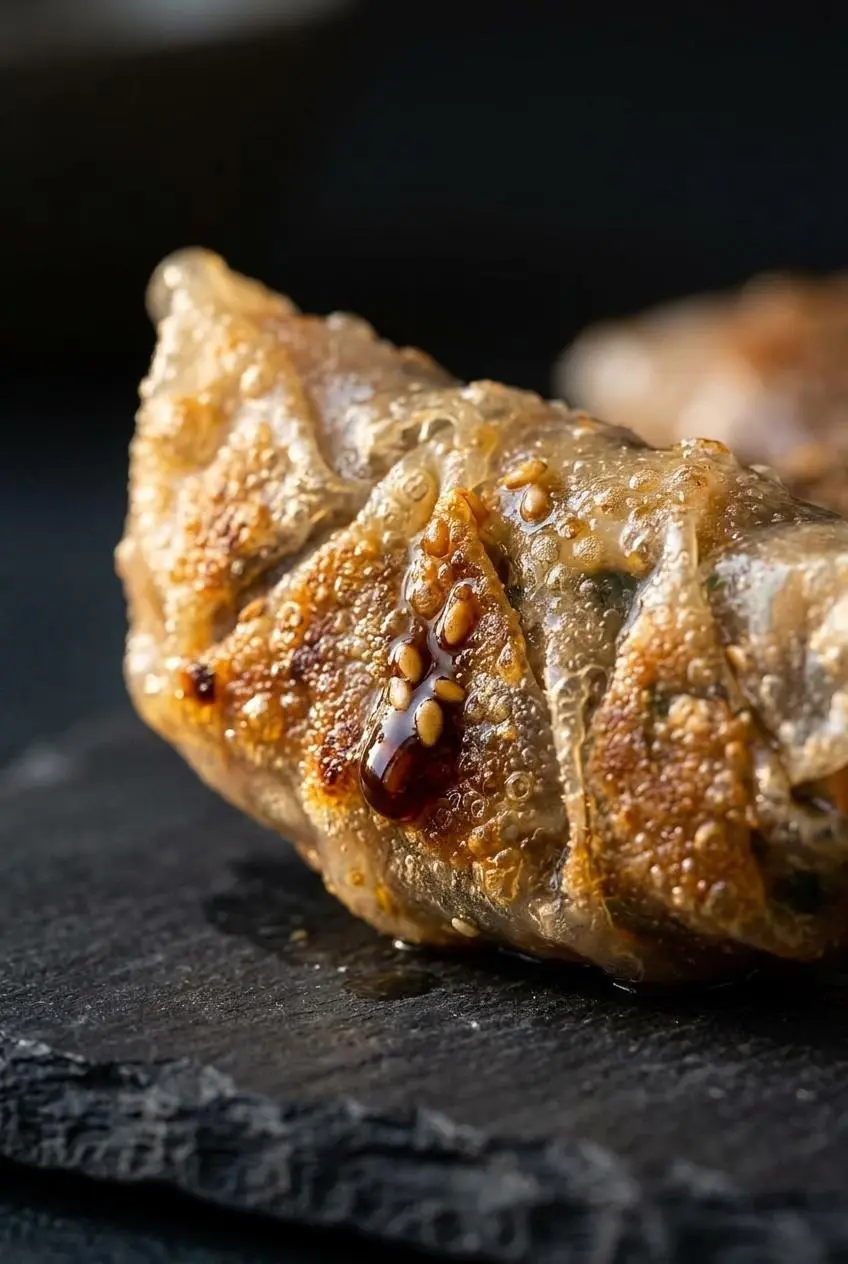
Start with the thicker folded side against the skillet. Those overlapping layers need more time to crisp than the thin sheet covering the opposite side.
Leave each dumpling undisturbed while the crust forms. Tiny bubbles should appear along the cooking surface, followed by firmer, crisp patches. Slide a spatula underneath gently to check the base rather than tugging on the soft top.
Skillet Setup and Temperature Control
Use a large nonstick skillet with a light, even coating of neutral oil. Warm it over medium heat until the oil flows easily across the surface. A dumpling should sizzle when it touches the pan; smoking oil means the skillet is too hot.
Leave at least half an inch between packets. Warm, tacky edges can bond on contact, and pulling them apart may tear both wrappers. Cook in batches instead of trying to squeeze the full yield into one pan.
Reduce the heat if the underside darkens before it crisps. If the dumplings remain pale and soft, check that the pan has warmed sufficiently and that the filling wasn’t wet. Don’t cover the skillet, since trapped steam works against the crust.
Oven and Air Fryer Alternatives
Pan-frying gives you the most direct control over the blistered bottom. These optional methods cook without that same continuous skillet contact, so expect a somewhat different crust.
- Air fryer: Lightly brush the dumplings with neutral oil and arrange them apart in the basket. Air-fry at 375°F for 8 to 10 minutes, turning halfway through and checking for crispness.
- Oven: Arrange the dumplings separately on a parchment-lined baking sheet and lightly brush with oil. Bake at 375°F for 15 to 18 minutes, checking for a golden, crisp surface.
Use the appearance and texture alongside the suggested cooking ranges. Wrapper brands and appliances vary, and neither method should leave the outside leathery or scorched.
Delicious Filling Variations
Optional fillings work best when they follow the same moisture rule: cook them first, drain excess liquid, and cool completely before wrapping. Keep them compact enough to fit without stretching the rice paper.
- Mushroom and cabbage emphasis: For a vegetable-forward variation, emphasize finely minced mushrooms and cabbage, cooking away their released juices before binding the mixture.
Savory Chicken and Scallion Filling
Ground chicken with minced ginger, garlic, and scallions makes a savory alternative to tofu. Cook the chicken completely before assembling, checking doneness with a food thermometer rather than relying on color alone.
Drain excess liquid and cool the filling before wrapping. Break up large clumps so the packet folds evenly; the final pan-fry crisps the wrapper rather than cooking raw chicken inside it.
Quick Textured Vegetable Protein Option
Rehydrated textured vegetable protein offers a dense, chewy plant-based filling. Prepare it following its package directions, remove excess water, and season with soy sauce and black pepper.
Cook off remaining moisture before cooling and wrapping. Aim for a cohesive mound, not a dry pile of loose granules or a mixture that drips when pressed.
Essential Troubleshooting and Texture Fixes
Most wrapper problems come from excess water, too much filling, or moving the dumplings before the crust develops.
- A wrapper tears during folding: It may be too dry, overhydrated, or stretched around excess filling. Cover a small tear with a briefly moistened piece of rice paper; for the next packet, adjust hydration and keep the mound compact.
- The bottom stays soggy: A cool skillet or wet filling can prevent crisping. Let the pan warm properly and cook the next filling batch until no liquid pools beneath it.
- The edges turn rubbery: Excess hydration or heavy overlapping folds can leave chewy patches. Shorten the dip if needed and distribute folds neatly rather than bunching them.
- A dumpling sticks to the pan: The crust may not have formed yet. Give it more time, then ease a thin spatula beneath the crisp edge instead of pulling at the wrapper.
- The seams burst: Overfilling puts pressure on the softened rice paper. Return to the heaping tablespoon portion and avoid forcing extra filling into the packet.
- The crust softens after cooking: Stacking hot dumplings traps moisture. Keep them in a single layer and serve the dip separately.
Storage and Crisp Reheating
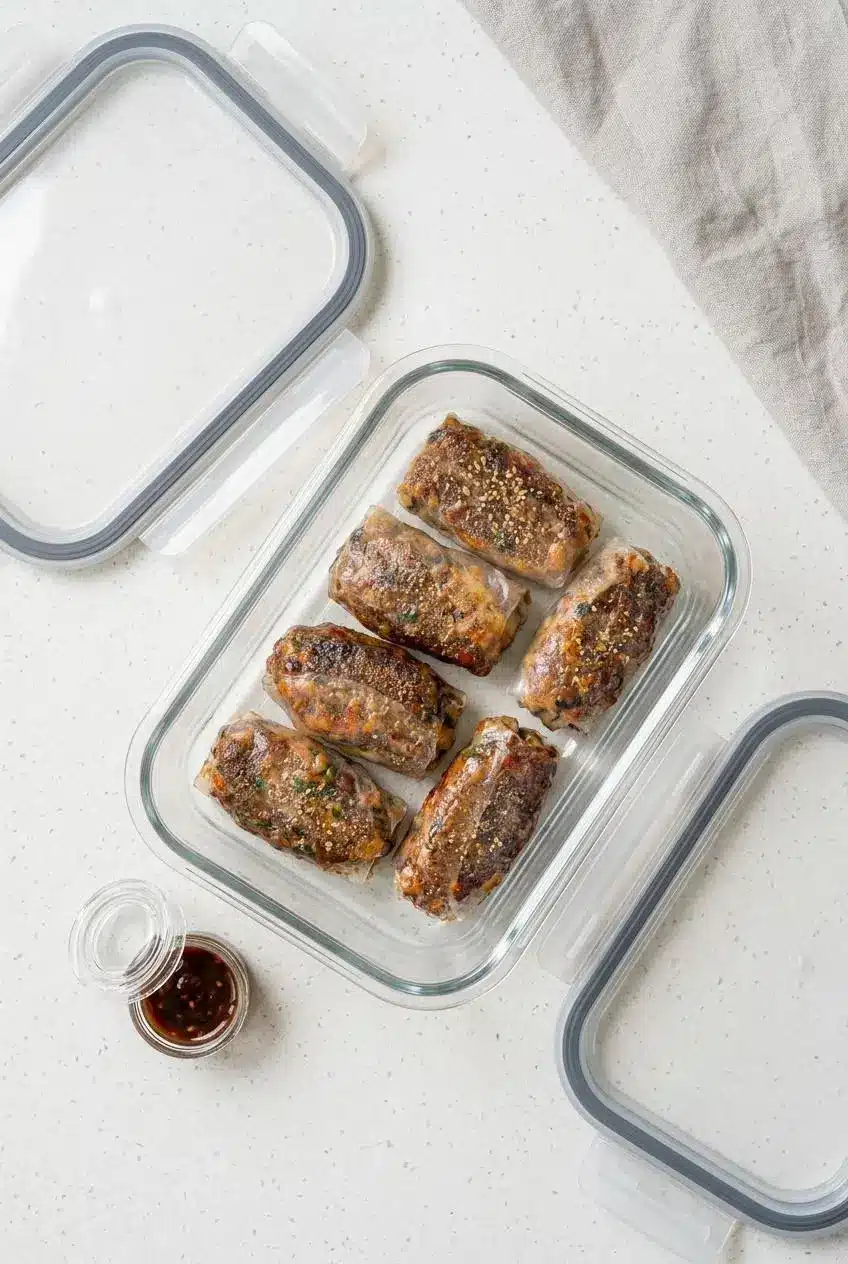
Refrigerate cooked leftovers in an airtight container and keep the dipping sauce separate. Avoid compressing the dumplings together, since softened wrappers can cling to one another.
For skillet reheating, add a light coating of oil and warm the dumplings over medium heat, turning as needed until the center is warm throughout and the surface crisps. Watch closely because an already-cooked wrapper can darken quickly.
An air fryer also works for recrisping: arrange the dumplings apart and heat until warm throughout, checking the surface frequently. Skip the microwave when crunch matters; it tends to soften the wrapper and leave it gummy or rubbery.
Conclusion
These dumplings turn a savory tofu-and-vegetable filling into a crisp, chewy packet without rolling dough. The hoisin dip adds just enough tang and heat to balance the fried shell.
Keep the filling dry, dip the wrappers briefly, and give each dumpling room in the skillet. Serve them fresh and enjoy that first crackly bite.
Frequently Asked Questions
Can You Use Rice Paper Instead of Traditional Dumpling Wrappers?
Yes. Briefly moisten rice paper, fold it around cooked filling, and pan-fry for a crisp exterior with a chewy bite. It behaves differently from wheat dough and doesn’t need rolling. For gluten-free preparation, check both the wrappers and every sauce label rather than assuming the finished dish is gluten-free.
Why Do My Rice Paper Dumplings Stick Together in the Pan?
Hydrated rice paper becomes tacky, so touching edges can fuse during cooking. Leave at least half an inch between dumplings in a lightly oiled skillet and cook in batches.
Can You Air-Fry Rice Paper Dumplings?
Yes. Lightly brush them with neutral oil and arrange them apart in the basket. Cook at 375°F for 8 to 10 minutes, flipping halfway through and checking for a crisp surface.
How Do You Store and Reheat Leftover Rice Paper Dumplings?
Refrigerate cooked dumplings in an airtight container, with the sauce stored separately. Reheat in a lightly oiled skillet or air fryer until warm throughout and crisp outside. Avoid the microwave if you want to restore crunch.
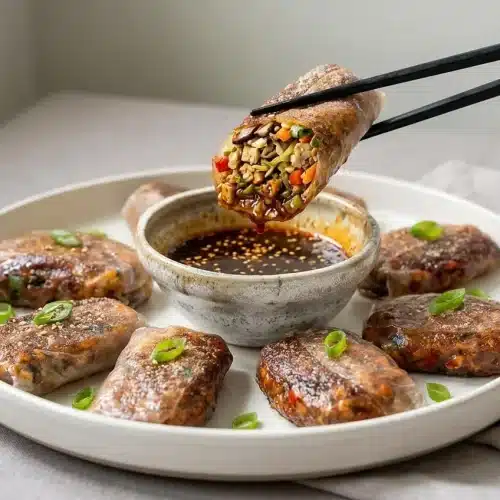
Rice Paper Dumplings

Equipment
- Food processor
- Large non stick pan or skillet
- chopping board
- large bowl
Ingredients
FILLING
- 1/2 medium red onion diced
- 1 green onion chopped
- 1 small carrot peeled
- 4 pieces cabbage leaves
- 5.2 oz fresh mushrooms of choice
- 1/2 small red bell pepper
- 9 oz extra firm tofu drained and pressed
- 1/2 tbsp neutral oil
- 2-3 tbsp vegetarian oyster sauce
- 1/2 tbsp dark soy sauce
- Dash of ground black pepper
- 2-3 tsp sesame oil
- 3 tbsp corn starch or more as needed
HOISIN SAUCE
- 2 tbsp hoisin sauce
- 1.5 tbsp rice vinegar adjust to taste
- 1 tbsp soy sauce
- 2-3 tsp chili oil
- 1 tsp sugar adjust to taste
- 1/2 tsp sesame seeds
- Chopped green onions
RICE PAPER
- 15 pieces rice paper
FOR COOKING
- Neutral oil
Instructions
PREPARE THE FILLING
- Finely mince the carrot, red onion, cabbage, mushrooms, and bell pepper by hand or with a food processor, keeping the red onion separate for sautéing. A fine chop makes the filling easier to compress without creating a vegetable paste.
- Warm the neutral oil in a large nonstick skillet over medium heat, then sauté the red onion and green onion for 1 to 2 minutes. The onion should soften and give off a fragrant aroma without browning deeply.
- Stir in the remaining minced vegetables and sauté for 3 to 4 minutes, allowing released liquid to evaporate. The vegetables should soften, with no watery pool collecting beneath them.
- Break the pressed tofu into small crumbles directly over the vegetables, then stir in the vegetarian oyster sauce, dark soy sauce, and black pepper. The seasoning should coat the tofu and vegetables evenly.
- Continue cooking over medium heat for 4 to 5 minutes to reduce the remaining tofu moisture. The mixture should look loose and crumbly rather than wet.
- Taste the filling, adjust the vegetarian oyster sauce if desired, and stir in the sesame oil. The finished mixture should taste savory and smell lightly nutty.
- Move the filling to a bowl, mix in the cornstarch, and let it cool completely before wrapping. A spoonful pressed into a small mound should hold together instead of scattering.
HOISIN SAUCE
- Stir all the hoisin sauce ingredients together in a small bowl, adjusting the vinegar and sugar to taste. The dip should taste sweet, tangy, savory, and pleasantly spicy.
WRAPPING THE DUMPLINGS
- Fill a large bowl with room-temperature water and lightly oil a flat work surface and resting plate. The oil should form a thin film that keeps the hydrated wrappers from gripping the surfaces.
- Briefly submerge one rice paper sheet, let excess water drain, and lay it flat on the prepared board. Allow a few seconds for it to become flexible enough to fold without cracking.
- Place 1 heaping tbsp of filling just below the center, compact it, fold the bottom over it, bring both sides inward, and fold the packet toward the top to seal; repeat to make 15 dumplings. Each packet should feel snug, with overlapping edges, and rest separately on the oiled plate.
COOKING THE DUMPLINGS
- Heat a lightly oiled large nonstick skillet over medium heat and cook the dumplings thicker folded side down for 3 to 4 minutes, then flip and crisp the thinner side, working in 2 to 3 batches if needed. Small bubbles and a crisp underside signal when to turn, while the thinner side may finish sooner.
- Transfer the cooked dumplings out of the skillet and serve promptly. The wrappers have their strongest crisp-and-chewy contrast immediately after frying.
FOR LEFTOVERS
- Refrigerate leftover cooked dumplings in an airtight container. Keep them separate from the dipping sauce to protect the wrapper texture.
- Reheat the dumplings in a lightly oiled skillet or air fryer until warm throughout and crisp again. The exterior should regain some crunch without becoming hard or scorched.