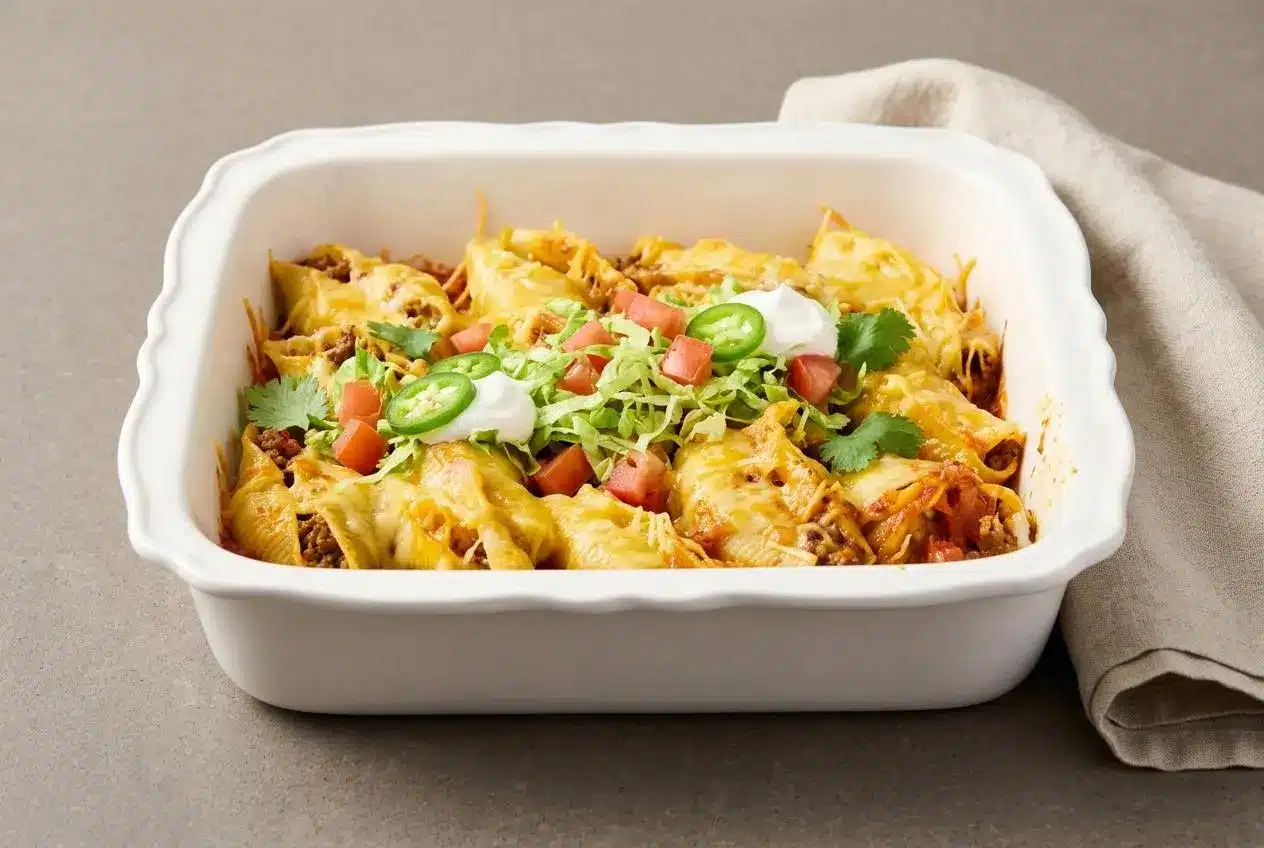
Taco stuffed shells combine tender jumbo pasta with seasoned ground beef and cream cheese, baked over salsa beneath melted Mexican-blend cheese. The result is a hearty, zesty pasta dinner with a creamy filling and plenty of room for fresh toppings.
This is the comfort of a pasta bake with the flavor of taco night. Each shell holds a spoonful of creamy beef, while salsa keeps the bottom of the casserole moist.
The filling uses individual spices, so you can understand where the warmth and flavor come from. A little attention to pasta texture makes assembly much easier. Keep those shells sturdy.
Set a measuring cup beside the colander so you remember to save the pasta water before draining.
Ingredients for Taco Stuffed Shells
Jumbo shells give the filling structure, beef adds savory depth, and cream cheese holds everything together. Tomato paste and spices build flavor, salsa supplies moisture and acidity, and shredded cheese creates the bubbling top.
- 1 tsp. kosher salt, plus more for the pasta water
- 8 oz. jumbo pasta shells (about 25)
- 1 tbsp. olive oil
- 1/2 yellow onion, diced
- 1 lb. ground beef
- 3 tbsp. tomato paste
- 1 tbsp. chili powder
- 1 1/2 tsp. ground cumin
- 1/2 tsp. paprika
- 1/2 tsp. crushed red pepper flakes
- 1/2 tsp. garlic powder
- 1/4 tsp. black pepper
- 1 (16-ounce) jar salsa
- 8 oz. cream cheese, cubed
- 2 c. shredded Mexican-blend cheese (about 8 ounces)
- Shredded lettuce, sliced fresh jalapeños, chopped tomatoes and sour cream, for topping
Tomato paste gives the beef a concentrated tomato flavor without adding much liquid. Chili powder, cumin, paprika, and garlic powder create the taco character, while red pepper flakes bring extra heat.
Cream cheese turns the crumbled meat into a cohesive, spoonable filling rather than loose beef that tumbles out. The salsa underneath serves a different purpose: it keeps the pasta in contact with moisture as it bakes.
I prefer to let the cubed cream cheese soften toward room temperature so it blends into the warm filling with less stirring.
How to Make Taco Stuffed Shells
Use a large pot, a large skillet, a wooden spoon, and a 9-by-13-inch baking dish. This recipe serves 4 to 6; the shells should stay firm enough to fill before their final bake.
- Set the oven to 350°F, then cook the shells in a large pot of boiling salted water for 1 minute less than the package’s baked-shell directions; scoop out 1 cup of cooking water before draining and rinsing the pasta under cool water.
The cooled shells should bend without collapsing, making them easier to fill. - Warm the olive oil in a large skillet over medium-high heat, soften the onion for 3 to 4 minutes, then break the beef into crumbles with a wooden spoon and cook for 5 to 7 minutes before draining excess grease.
Look for softened onion and browned, fully cooked meat rather than wet clumps. - Stir the tomato paste, chili powder, cumin, paprika, crushed red pepper flakes, garlic powder, black pepper, and 1 teaspoon salt into the beef for 1 to 2 minutes, then mix in 1/2 cup salsa and the reserved cooking water and simmer on low for about 2 minutes.
The spices should smell fragrant before the liquid goes in, and the mixture should thicken slightly during the simmer. - Blend the cream cheese into the filling over low heat until no visible cubes remain, then take the skillet off the burner and allow 5 to 7 minutes of cooling.
The mixture should look creamy and hold together on a spoon rather than separate into meat and liquid. - Coat the bottom of the 9-by-13-inch dish with the remaining salsa, spoon the beef filling into the shells, and place them opening-side up before scattering the shredded cheese over them.
Keep the shells supported by their curved bottoms so the filling stays inside. - Bake for 20 to 25 minutes, checking for bubbling salsa and a golden cheese topping.
The cheese should melt across the shells, with bubbling around the edges signaling that the casserole is hot.
Finish each serving with shredded lettuce, sliced jalapeños, chopped tomatoes, and sour cream. Add these after baking so the lettuce stays crisp and the sour cream remains cool.
Key Ingredients and Flavor Roles
The best texture comes from balancing a sturdy pasta shell, a cohesive filling, and enough sauce beneath the casserole.
Choosing the Right Pasta and Ground Beef
Choose jumbo shells, not the smaller shells used in soups or macaroni dishes. Their broad opening gives you room to spoon in the filling without stretching the pasta.
If you have extra pasta available, boiling two or three additional shells provides insurance against tears. Don’t force a badly split shell to hold a full portion of filling.
Ground beef labeled 85/15 or 90/10 works well here. Either gives you beef flavor without an excessive amount of rendered fat, but still pour off excess grease after browning. Cream cheese supplies richness later; leftover grease can make the filling slick instead of creamy.
For doneness, check the beef with a thermometer rather than relying on color alone: ground beef should reach a minimum internal temperature of 160°F.
The Role of Cream Cheese and Seasoning
Cream cheese fills the spaces between the beef crumbles and helps the mixture stay inside each shell. Cubing it encourages even melting, while low heat lets you blend it without scorching the filling.
The individual spices give you more control than a packaged taco seasoning mix. Packets vary in salt, heat, and added thickeners, so they aren’t an automatic spoon-for-spoon substitute.
The same flavor-building approach appears in homemade taco seasoning: chili powder provides the main character, cumin adds earthy warmth, and garlic powder rounds out the savory flavor. Follow the listed spices here for the intended balance.
Selecting Salsa and Shredded Cheese
A smooth or medium-chunky tomato salsa spreads readily across the baking dish. Choose a heat level you enjoy, remembering that the filling also contains red pepper flakes and the toppings include jalapeños.
Mexican-blend shredded cheese supplies a mixture of melting texture and savory flavor. Spread it evenly rather than piling it in the center, so the outer shells get their share of the topping.
If the finished dish tastes saltier than expected, fresh tomatoes, cilantro, or an optional squeeze of lime can brighten each serving. They balance the flavor, but they don’t remove salt.
Essential Success Tips and Troubleshooting
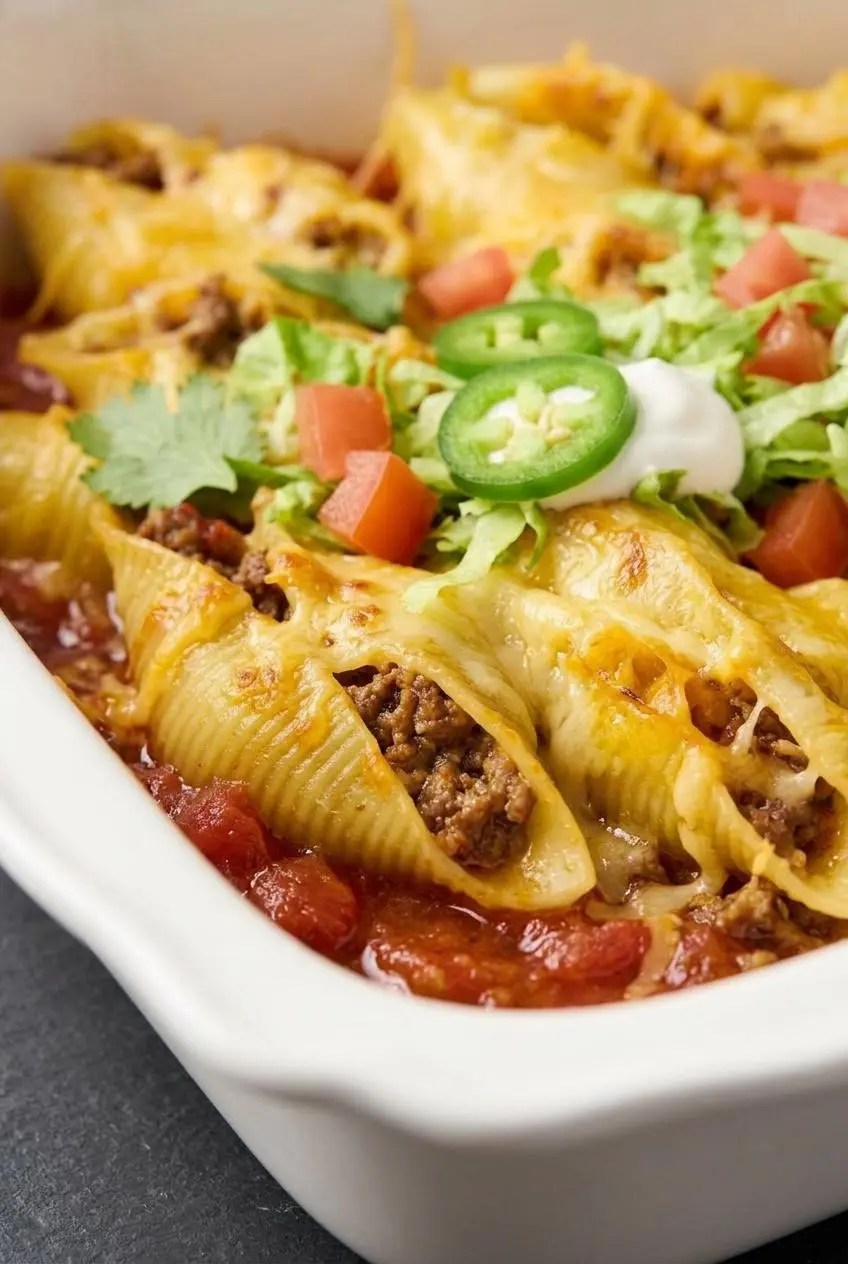
Most assembly problems start with pasta that’s too soft or filling that’s too loose. Check both before you begin stuffing.
Preventing Broken Shells With Cold Water Shocking
- Shells tear when opened: Overcooking weakens the pasta; stop at the specified under-package timing and rinse promptly under cool water.
- Shells feel sticky: They may be sitting nested together; gently separate them after rinsing rather than pulling them apart once they cling.
- Shells split while filling: Too much pressure or filling can stretch them; support each shell in your hand and use a spoon without packing the mixture tightly.
A small cookie scoop can help portion the filling neatly, but a spoon gives you more control with delicate shells. Aim for a rounded portion that sits inside the opening, not a mound that forces the sides apart.
Stopping Pasta From Sticking With a Salsa Base
- Shells stick underneath: Bare areas of the dish allow direct contact with hot pasta; spread the remaining salsa across the entire bottom before arranging the shells.
- Exposed rims turn tough: Dry oven heat can firm up uncovered pasta edges; keep the shells nestled in the salsa and avoid baking beyond the bubbling, golden stage.
- Cheese browns before the center heats: Loosely tent the dish with foil as an optional corrective measure to slow further browning.
The salsa layer helps protect the bottoms, but it won’t soften every exposed edge if the casserole stays in the oven too long. Check the dish near the earlier end of the baking range.
Fixing Watery Meat Filling
- Liquid pools around the beef: The sauce hasn’t reduced enough; let it simmer gently until slightly thickened before adding the cream cheese.
- The filling looks oily: Excess beef drippings remain; drain them after browning rather than trying to hide them with more cheese.
- The mixture slips out during stuffing: It may still be too hot and loose; use the prescribed cooling period so it becomes easier to handle.
Don’t reduce the filling until dry. It should remain moist and creamy, with enough body to sit on a spoon.
Prep, Storage, and Reheating
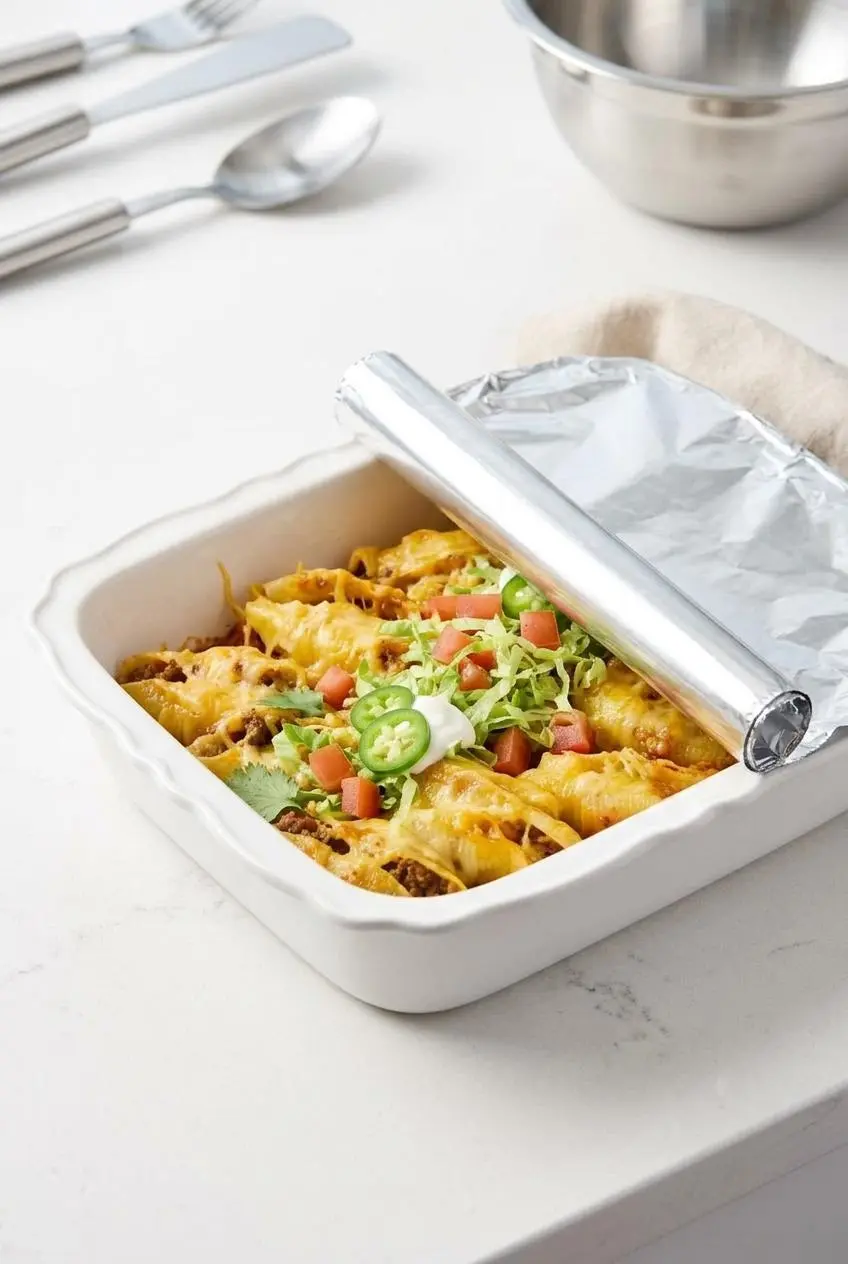
Protect the pasta’s moisture and keep fresh toppings separate whenever the casserole isn’t going straight to the table.
Refrigerator Prep for Busy Weeknights
For easier assembly, measure the spices, dice the onion, cube the cream cheese, and set out the baking dish before cooking. Keep perishable ingredients chilled until needed.
If you need to pause after assembly, cover the dish and refrigerate it rather than leaving it on the counter. A chilled casserole may need additional baking time; check that the center is hot instead of relying only on melted cheese at the surface.
Storing Portions and Fresh Toppings Separately
Refrigerate leftovers promptly in covered containers. Divide the casserole into portions rather than leaving everything in a deep baking dish to cool.
Store lettuce, tomatoes, jalapeños, and sour cream separately from the baked shells. Reheating those toppings with the pasta makes the lettuce limp and loses the cool contrast that makes each serving appealing.
Reheating Without Drying Pasta Edges
Warm oven portions in an oven-safe dish under foil, or use a microwave-safe cover for individual microwave portions. Keep some of the casserole’s salsa with each serving to protect the pasta from drying out.
In the microwave, pause to check the center and rotate the portion if it heats unevenly. Continue until the filling is hot throughout, then add fresh toppings.
Popular Variations and Custom Fillings
These optional changes keep the jumbo-shell format while taking the filling in a different direction. They’re alternatives to the beef version, not additions to its ingredient list.
Lean Ground Turkey or Chicken
Ground turkey or chicken can replace the beef for a poultry version. Break it into small crumbles, cook it thoroughly, and use the same seasoning approach.
Very lean poultry may leave less fat in the skillet. If it begins sticking during browning, an optional splash of olive oil can help; avoid overcooking it while waiting for the same deep color as beef.
Vegetarian Black Bean and Corn
For a meatless filling, combine drained black beans and drained sweet corn with the spices and cream cheese. Mash some beans lightly to help the mixture hold together while leaving others whole for texture.
Drain both additions thoroughly. Excess canning liquid makes stuffing messy, and an overloaded shell is more likely to split. Beans and corn can also serve as optional additions to the beef filling.
Salsa Verde and Pepper Jack
- Tangy green version: Replace red salsa with salsa verde for a brighter green-chile flavor.
- Spicier cheese topping: Use shredded pepper jack instead of Mexican-blend cheese, checking its heat level before adding more peppers.
- Smoky filling: Fold optional chopped fire-roasted poblano and fresh lime zest into the filling for roasted flavor and citrus aroma.
Serving Suggestions and Fresh Toppings
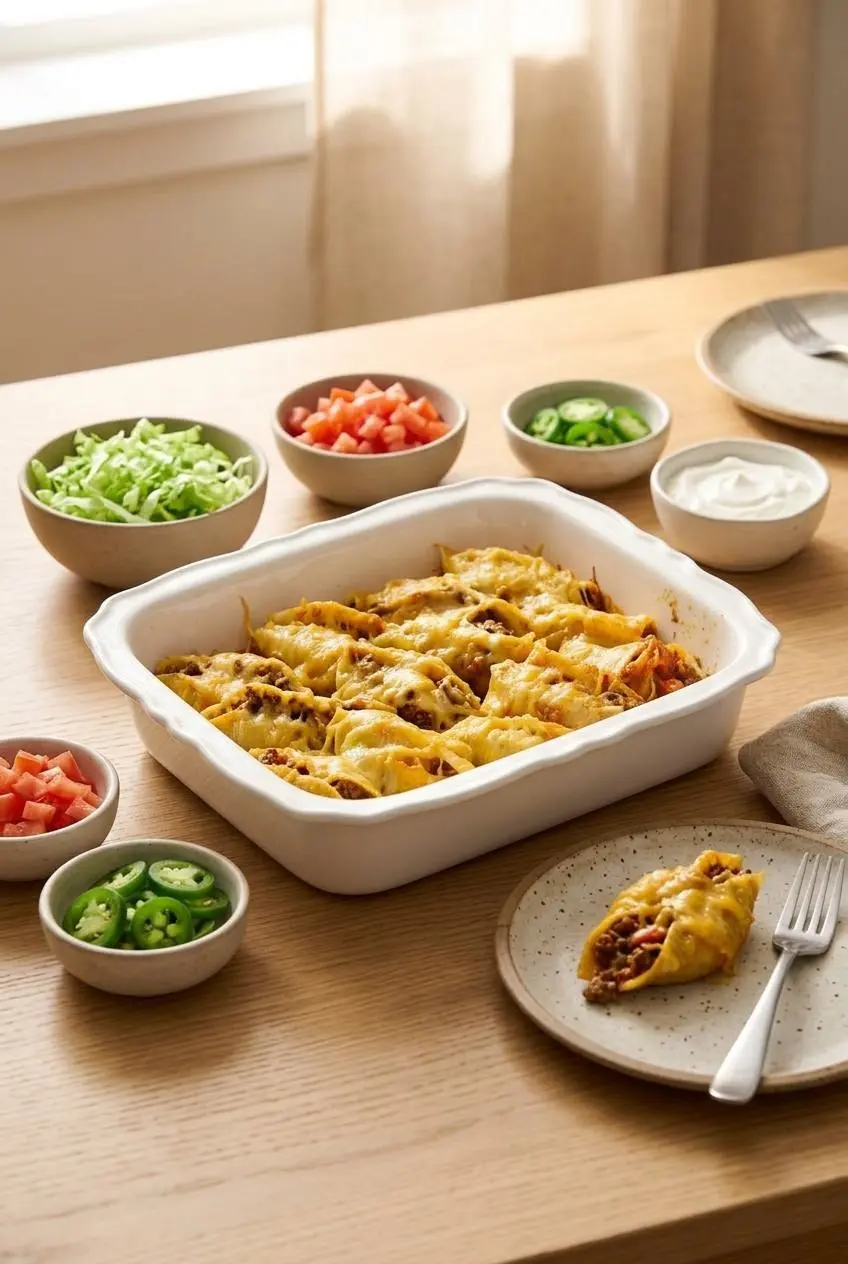
Set out toppings separately so everyone can balance the rich filling to their taste.
- For crunch: Add shredded lettuce after serving, never before baking.
- For fresh contrast: Spoon on chopped tomatoes or optional avocado and cilantro.
- For heat: Offer sliced jalapeños separately rather than covering every portion.
- For cool creaminess: Add a dollop of sour cream beside the hot shells.
A crisp romaine salad with lime vinaigrette fits nicely alongside the casserole. Warm tortilla chips add crunch without competing with the creamy filling.
Conclusion
These stuffed shells bring together seasoned beef, a creamy filling, tender pasta, and bubbling cheese in a satisfying family dinner. Firm shells and a salsa-lined dish make the assembly easier and the finished texture better.
Keep the fresh toppings within reach, and let everyone finish their own plate. For a different flavor next time, try the optional fire-roasted poblano addition. A little cool crunch makes the cheesy bites even better.
Frequently Asked Questions
How Do You Keep Jumbo Pasta Shells From Tearing?
Cook them 1 minute less than the package directs for baked shells. Rinse immediately under cool water to slow further cooking and make handling easier. Boil extra shells if available, and avoid packing the filling tightly.
How Should You Store Assembled Stuffed Shells?
Keep the assembled dish covered and refrigerated if you need to pause before baking. Leave fresh toppings separate, and check the center for thorough heating when baking a chilled casserole.
Can You Make Taco Stuffed Shells Ahead of Time?
You can organize the ingredients ahead to streamline cooking. If assembling before serving, keep the covered casserole refrigerated and allow for additional baking as needed rather than treating the usual baking range as a guarantee.
What Is the Best Way to Reheat Leftover Stuffed Shells?
Reheat covered, keeping salsa with the shells to preserve moisture. Use an oven-safe dish for oven warming or a microwave-safe cover for individual portions, check that the filling is hot throughout, and add fresh toppings afterward.
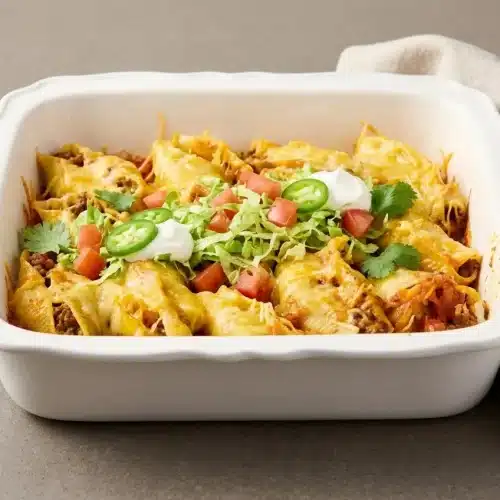
Taco Stuffed Shells

Equipment
- Large Pot
- Large Skillet
- Wooden Spoon
- 9 by 13 inch baking dish
Ingredients
- 1 tsp. kosher salt plus more for the pasta water
- 8 oz. jumbo pasta shells (about 25)
- 1 tbsp. olive oil
- 1/2 yellow onion diced
- 1 lb. ground beef
- 3 tbsp. tomato paste
- 1 tbsp. chili powder
- 1 1/2 tsp. ground cumin
- 1/2 tsp. paprika
- 1/2 tsp. crushed red pepper flakes
- 1/2 tsp. garlic powder
- 1/4 tsp. black pepper
- 1 (16-ounce) jar salsa
- 8 oz. cream cheese cubed
- 2 c. shredded Mexican-blend cheese (about 8 ounces)
- Shredded lettuce, sliced fresh jalapeños, chopped tomatoes and sour cream for topping
Instructions
- Set the oven to 350°F, then cook the shells in a large pot of boiling salted water for 1 minute less than the package’s baked-shell directions; scoop out 1 cup of cooking water before draining and rinsing the pasta under cool water. The cooled shells should bend without collapsing, making them easier to fill.
- Warm the olive oil in a large skillet over medium-high heat, soften the onion for 3 to 4 minutes, then break the beef into crumbles with a wooden spoon and cook for 5 to 7 minutes before draining excess grease. Look for softened onion and browned, fully cooked meat rather than wet clumps.
- Stir the tomato paste, chili powder, cumin, paprika, crushed red pepper flakes, garlic powder, black pepper, and 1 teaspoon salt into the beef for 1 to 2 minutes, then mix in 1/2 cup salsa and the reserved cooking water and simmer on low for about 2 minutes. The spices should smell fragrant before the liquid goes in, and the mixture should thicken slightly during the simmer.
- Blend the cream cheese into the filling over low heat until no visible cubes remain, then take the skillet off the burner and allow 5 to 7 minutes of cooling. The mixture should look creamy and hold together on a spoon rather than separate into meat and liquid.
- Coat the bottom of the 9-by-13-inch dish with the remaining salsa, spoon the beef filling into the shells, and place them opening-side up before scattering the shredded cheese over them. Keep the shells supported by their curved bottoms so the filling stays inside.
- Bake for 20 to 25 minutes, checking for bubbling salsa and a golden cheese topping. The cheese should melt across the shells, with bubbling around the edges signaling that the casserole is hot.