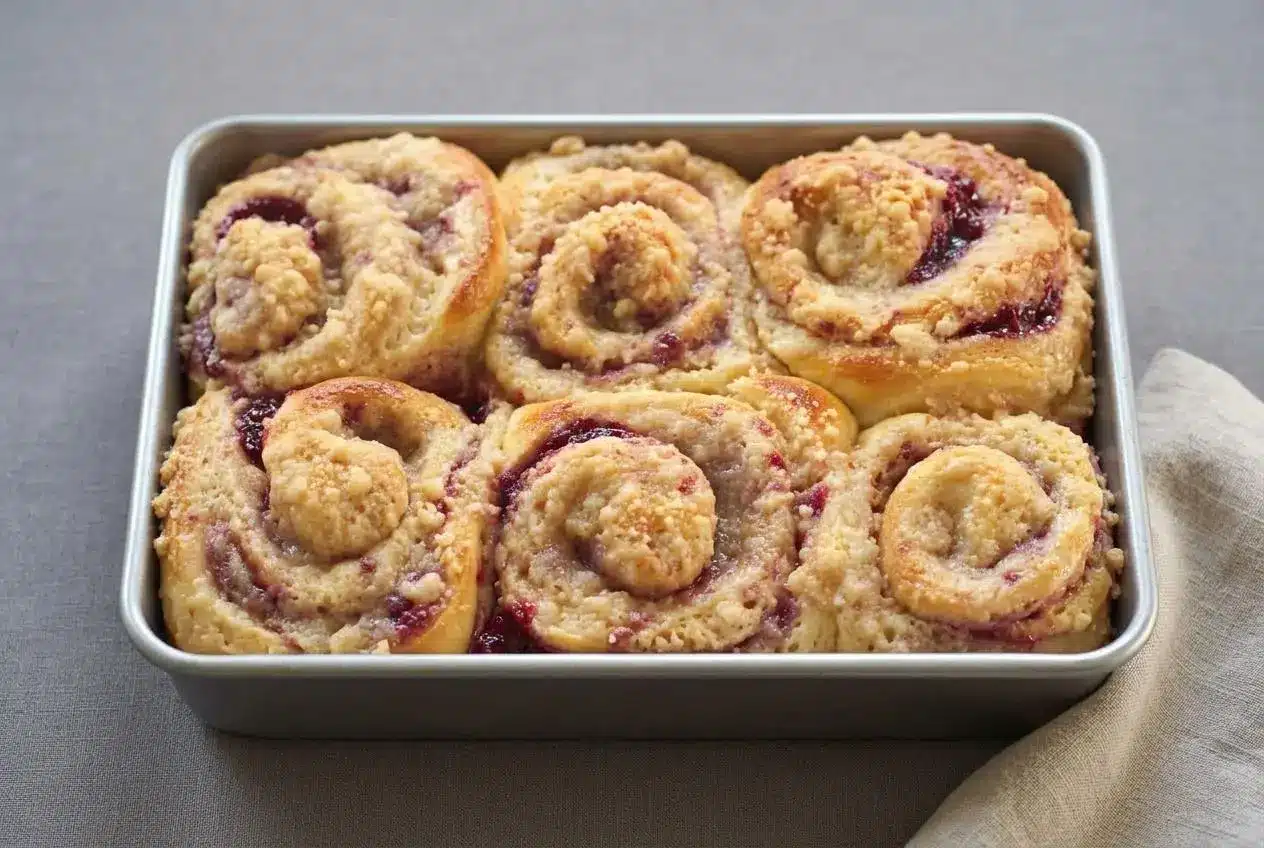
These raspberry cheesecake sweet rolls combine buttery yeast dough, tangy lemon cream cheese, and cooked raspberry jam. A cream pour keeps the rolls tender, while cinnamon crumble adds crunch. Bake until golden, then let the filling settle before pulling apart the soft spirals.
Warm buttery pastry and sweet berry aroma make these rolls feel right at home on a brunch table. The raspberry swirl runs through the center, with a cheesecake layer tucked between the dough rather than spread only on top.
This recipe makes six generous rolls with a soft crumb and a crisp, buttery finish. The dough needs two rises, but you can prepare the fillings during the first. The payoff is in those tender edges.
Check the milk with a thermometer before adding yeast; milk that feels pleasantly warm to your hand can still be too hot.
Why These Raspberry Cheesecake Rolls Work
The filling balances richness with tartness, so each bite tastes like more than sweet bread. Raspberries bring a bright berry flavor, cream cheese adds tang, and lemon zest lifts both without adding extra liquid.
The enriched dough supports that filling with eggs, milk, and butter. Adding butter after the initial kneading gives the dough a chance to develop elasticity before the fat softens its structure.
Cooking the raspberries first also matters. Reduced jam spreads more predictably than loose fruit juice, helping the dough layers stay distinct. Chilled cheesecake filling makes assembly easier because it holds its shape beneath the berry layer.
Heavy cream goes over the proofed rolls just before baking. It adds richness and moisture around the bases and edges, while the crumble supplies a contrasting crisp texture. For a fruit-focused version without the cheesecake layer, try classic raspberry sweet rolls.
Key Ingredients for Perfect Raspberry Cheesecake Rolls
Milk, eggs, and butter enrich the dough; yeast gives it lift. Raspberries and lemon balance the sweet cream cheese filling, while salt sharpens the flavors. Brown sugar, cinnamon, and butter give the crumble its aroma and texture, and heavy cream helps keep the baked edges tender.
DOUGH
- 1 tsp (4 g) granulated sugar
- 2 tsp (6 g) active dry yeast
- ½ cup (130 ml) milk, 100F – 110F (38C – 43C)
- 2 eggs, room temperature
- 3 tbsp (38 g) granulated sugar
- 1 ½ cups + 1 tbsp (315 g) all-purpose flour
- ¾ tsp (4.5 g) salt
- ¼ cup (50 g) unsalted, room temperature butter
RASPBERRY JAM
- 1 cup (140 g) raspberries, fresh
- 1/3 cup (76 g) granulated sugar
LEMONY CHEESECAKE FILLING
- 1 cup (246 g) full-fat cream cheese
- ½ cup (72 g) powdered sugar
- ½ lemon zest
- ¼ tsp (1.5 g) fine sea salt
- 1 tsp (5 ml) vanilla extract
CRUMBLE TOPPING
- 3 tbsp (36 g) brown sugar
- 1 tbsp (14 g) granulated sugar
- 3 tbsp (36 g) room temperature, unsalted butter
- 1/3 cup, packed (50 g) all-purpose flour
- ¼ tsp (pinch/ less than 1 g) cinnamon ground
- ¼ tsp (1.5 g) fine sea salt
- 1 tsp (5 ml) vanilla extract
TO BAKE
- ¼ cup (60 ml) heavy whipping cream
All-purpose flour provides the dough’s structure, while eggs contribute richness and help bind it. Use the specified flour rather than assuming bread flour will absorb liquid in exactly the same way. Avoid adding flour simply because the enriched dough feels tacky early in kneading.
Powdered sugar blends smoothly into the cheesecake filling. Vanilla rounds out its flavor, and the zest means the finely grated yellow skin of half a lemon, not the bitter white pith beneath it.
I prefer to soften the brick cream cheese before mixing, then chill the finished filling so it spreads smoothly without running across the dough.
The Secret to Non-Runny Raspberry Filling
Cook the berries until their juices become a slightly thickened jam rather than a watery sauce. Stir across the bottom of the saucepan as the mixture reduces, especially toward the end when the sugar can catch.
The jam will gain body as it cools. Let it cool before assembly so it doesn’t soften the cheesecake layer or make the dough difficult to handle. If liquid pools around the fruit, reduce it further rather than spreading that liquid into the rolls.
Frozen raspberries are an optional substitution. Cook them with the sugar into the same thick, spreadable consistency; they may release more liquid than fresh berries. This cooked-jam method does not require cornstarch or raw berries inside the spirals.
Choosing the Right Cream Cheese for Baking
Choose full-fat brick cream cheese for a substantial cheesecake layer. Whipped and spreadable tub products can have different moisture levels and textures, making them less predictable here.
Soften the cheese enough that a spatula can work through it without leaving firm lumps. Mix it thoroughly with the powdered sugar before chilling the filling. If the chilled mixture feels too firm to spread, work it gently with the spatula rather than pulling hard against the dough.
How to Make the Raspberry Cheesecake Sweet Rolls
Start with the dough, then prepare the jam, cheesecake filling, and crumble while it rises. Have a stand mixer with a dough hook, saucepan, rolling pin, offset spatula, parchment paper, and an approximately 11.4 × 7.8-inch baking dish ready.
Yield: 6 rolls. Prep: about 1 hour, plus two rises totaling 2 hours. Bake: 25 minutes. Cooling: at least 20 minutes.
- Stir the 1 tsp sugar and active dry yeast into the milk in a glass measuring cup, checking that the milk is 100–110°F (38–43°C), then leave it for 10–15 minutes.
A bubbly, sponge-like cap should develop across the surface. - Place the eggs, remaining dough sugar, flour, salt, and activated yeast mixture in the stand mixer bowl.
The ingredients will form a rough, sticky mixture before kneading develops its structure. - Run the dough hook on the lowest speed for 15 minutes, then incorporate the softened butter and continue kneading for another 10 minutes.
The dough should become smoother and more elastic as the butter blends in. - Cover the bowl with plastic wrap and allow the dough to rise for 1 hour and 30 minutes at 82°F (28°C).
Look for a noticeable increase in volume and a softer, aerated appearance. - Simmer the raspberries and jam sugar in a saucepan over medium-low heat for 10–15 minutes, adding a splash of water only if needed.
The berries should break down into a slightly thickened mixture without a large pool of loose juice. - Set the jam aside to cool, then use a spatula to blend the cream cheese, powdered sugar, zest from half a lemon, filling salt, and vanilla in a bowl before covering and refrigerating it.
The cheesecake mixture should look evenly blended without firm cheese lumps. - Work all the crumble ingredients together by hand just until combined, then refrigerate the mixture.
Stop while the topping forms uneven crumbs rather than a smooth paste. - Roll the risen dough into an approximately 14.17 × 11.4-inch (36 × 29 cm) rectangle, about 0.39 inch (1 cm) thick.
A reasonably even thickness helps the rolls bake at a similar pace. - Spread the chilled cheesecake filling with an offset spatula or spoon, gently layer the cooled jam over it, and cut the rectangle into 1.9-inch (4.83 cm) strips with a knife or clean ruler.
Keep the berry and cheesecake layers distinct rather than stirring them together. - Coil each strip into a roll, pinch its loose end closed, and press it down lightly through a piece of lightly greased parchment.
Each spiral should hold together without squeezing out the filling. - Arrange the rolls in the parchment-lined baking dish, cover with plastic wrap, and let them rise for 30 minutes.
The spirals should look fuller and puffier before baking. - Heat the oven to 355°F (180°C), remove the plastic wrap, distribute the heavy whipping cream over the rolls, scatter on the crumble, and bake for 25 minutes.
Look for golden edges, browned crumble, and bubbling berry filling. - Take the baked rolls out of the oven and place the dish on a cooling rack for at least 20 minutes.
The filling will settle as the rolls cool, making the spirals easier to separate.
Kneading and the First Dough Rise
The foamy yeast mixture gives you an early check before committing the remaining ingredients. If it stays flat, check the yeast’s condition and the milk temperature rather than hoping the dough will rise later.
After kneading, the dough should feel supple and slightly tacky. A gentle press should produce some spring back, although elasticity is a better kneading check than the finger test alone. Stretch a small piece carefully: it should thin before tearing immediately.
A proof setting can help in a cool kitchen, but check its actual temperature. Some settings run warmer than this dough needs. Keep the covered dough comfortably warm, not in a hot oven.
Spreading Fillings and Rolling the Strips
Use a light touch when spreading. Place small portions of cheesecake filling across the rectangle, then connect them with shallow spatula strokes. This puts less strain on the dough than dragging one large mound from corner to corner.
Add the cooled jam in the same way. Leave a narrow clean margin where the ends will seal, and resist adding extra filling. Cut strips across the shorter dimension of the rectangle to produce approximately six strips, then coil each one individually.
Pinch the finishing end against the outside of the roll. A loose end can open as the dough expands, allowing the filling to escape.
Clean Slicing Using Dental Floss or Thread
A sharp knife works best for this strip-and-coil method. Cut with decisive strokes instead of dragging a dull blade through the filling, and wipe the blade when sticky jam builds up.
Unflavored dental floss or clean, food-suitable thread is useful for the alternative log-and-slice shaping technique. Slide it beneath a filled dough log, cross the ends above it, and pull them apart to cut without pressing downward. That technique suits round log slices; the method here uses flat strips, so you don’t need to roll a log or use floss.
The Cream Pour and Oven Baking
Distribute the cream across all the rolls instead of pouring it into one corner. Add it after the second rise and just before the crumble, so the topping keeps its crumbly texture until baking.
If you prefer, gently take the chill off the cream before pouring; heating it is not a required step. The measured cream contributes moisture around the dough as it bakes.
Check the center rolls as well as the outside edges. A browned topping alone doesn’t confirm that the dough underneath has baked through. Gently separate two center rolls to inspect the bread: it should look set and airy rather than shiny, wet, or paste-like.
Baking Tips and Troubleshooting Common Issues
Most texture problems start with inactive yeast, extra flour, wet filling, or a rushed rise. Use these fixes to identify the problem before changing the dough.
- Yeast doesn’t foam: Check the milk temperature with a thermometer and confirm the yeast is still active; start again with fresh yeast if the mixture remains flat.
- Dough feels sticky: Finish the prescribed kneading before adding flour, since butter-rich dough often becomes easier to handle as its structure develops.
- Rolls bake up dense: Avoid heavy flouring during shaping and give both rises their full time; the second rise should leave the rolls visibly puffy.
- Dough rises slowly: Move the covered bowl to a gently warm spot or a temperature-checked proof setting, avoiding direct heat.
- Filling leaks: Reduce loose berry liquid, cool the jam, use chilled cheesecake filling, and pinch the finishing ends firmly.
- Crumble browns before the centers finish: Loosely cover the pan with foil and continue checking the center dough rather than removing the rolls solely because the topping looks done.
- Center rolls seem soggy: Distinguish creamy filling from raw dough by checking a bread layer; use thicker jam next time if fruit liquid has soaked into the spiral.
- Rolls collapse during serving: Allow the cooling period so the hot filling can settle before separating them.
Preparation, Storage, and Reheating
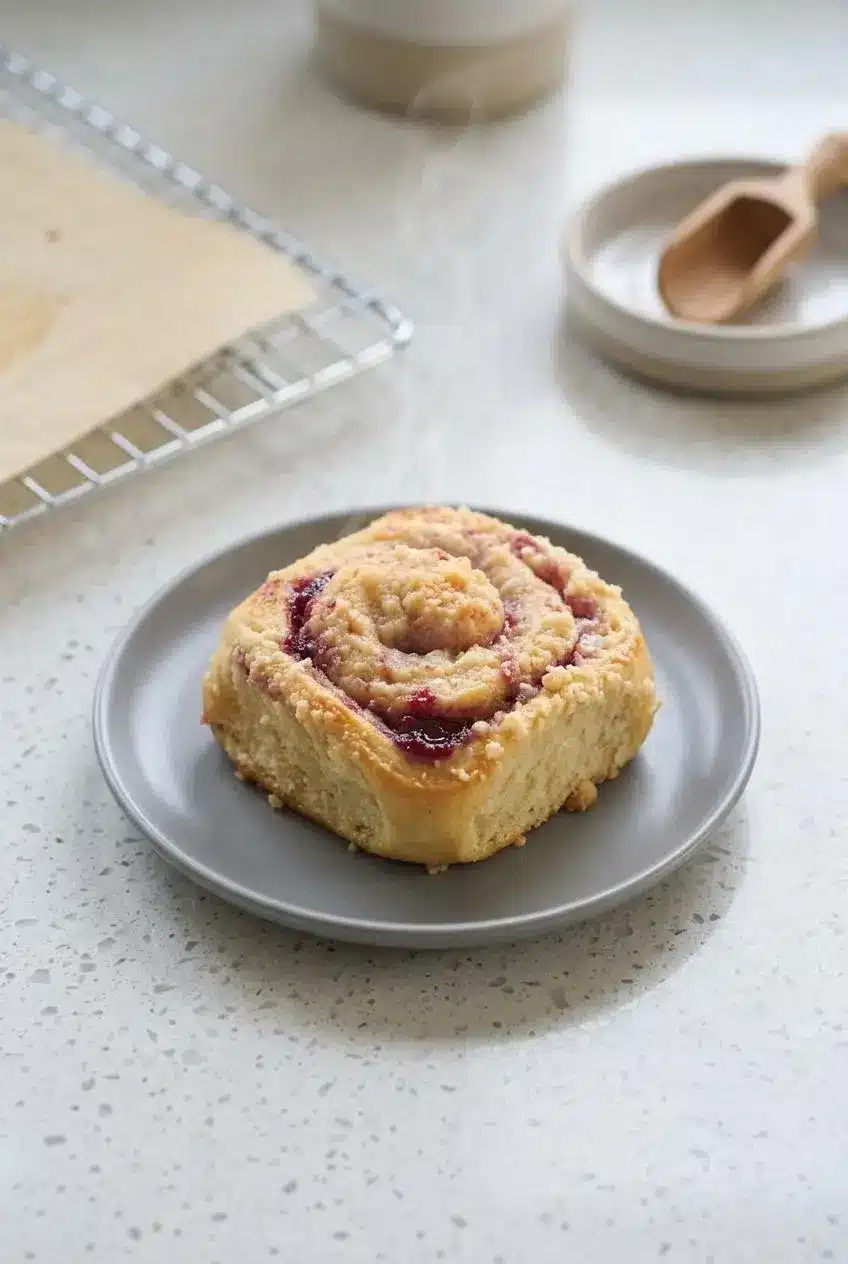
Plan around the dough’s two rises rather than treating the listed prep time as the full baking schedule. The fillings and crumble can be handled while the covered dough completes its first rise.
Planning the Dough Rises
For predictable results, follow the same-day schedule: activate the yeast, knead, complete the first rise, shape the strips, then give the assembled rolls their second rise. Prepare and chill the cheesecake filling during the first rise, and let the jam cool separately.
A refrigerated dough schedule would change the proofing conditions. Keep this method’s timing and temperature intact rather than replacing the final rise with an unverified cold-proofing schedule.
Keeping Fillings and Leftovers Chilled
Keep the cheesecake filling covered in the refrigerator until assembly, and keep the crumble chilled so it retains its texture. Refrigerate leftover baked rolls in a covered container rather than leaving them on the brunch table.
Prompt refrigeration of perishable food helps reduce handling risks. Put away the rolls you won’t serve, and avoid leaving the cream cheese filling out while you work on unrelated tasks.
Gentle Reheating Techniques
Warm only the portion you plan to eat. In the microwave, use short bursts and check between them; prolonged heating can toughen the bread and make the filling runny.
For oven warming, cover the rolls loosely with foil to limit drying and uncover toward the end if you want to restore some crumble texture. Remove them once warmed through rather than baking them a second time.
Delicious Flavor Variations and Topping Ideas
The cinnamon crumble is part of this recipe, but these optional changes offer different finishes without changing the dough.
- Silky lemon vanilla cream cheese icing: Blend softened cream cheese, powdered sugar, lemon juice, vanilla, and enough milk for a drizzle; use it instead of the crumble for a softer, tangier finish.
- Blackberry or blueberry filling: Cook the alternative berries into a thick compote, paying attention to consistency rather than assuming they release the same amount of juice.
- Orange zest: Add finely grated orange zest to the cheesecake filling for a warmer citrus aroma alongside the lemon.
- Warm spiced crumble: Add a pinch of nutmeg or ground ginger to complement the cinnamon and brown sugar.
Crumble gives the rolls a crisp contrast, while icing makes the finish smoother and sweeter. For another berry-and-cream-cheese combination, try strawberry cheesecake sweet rolls.
Serving Suggestions for Brunches and Gatherings
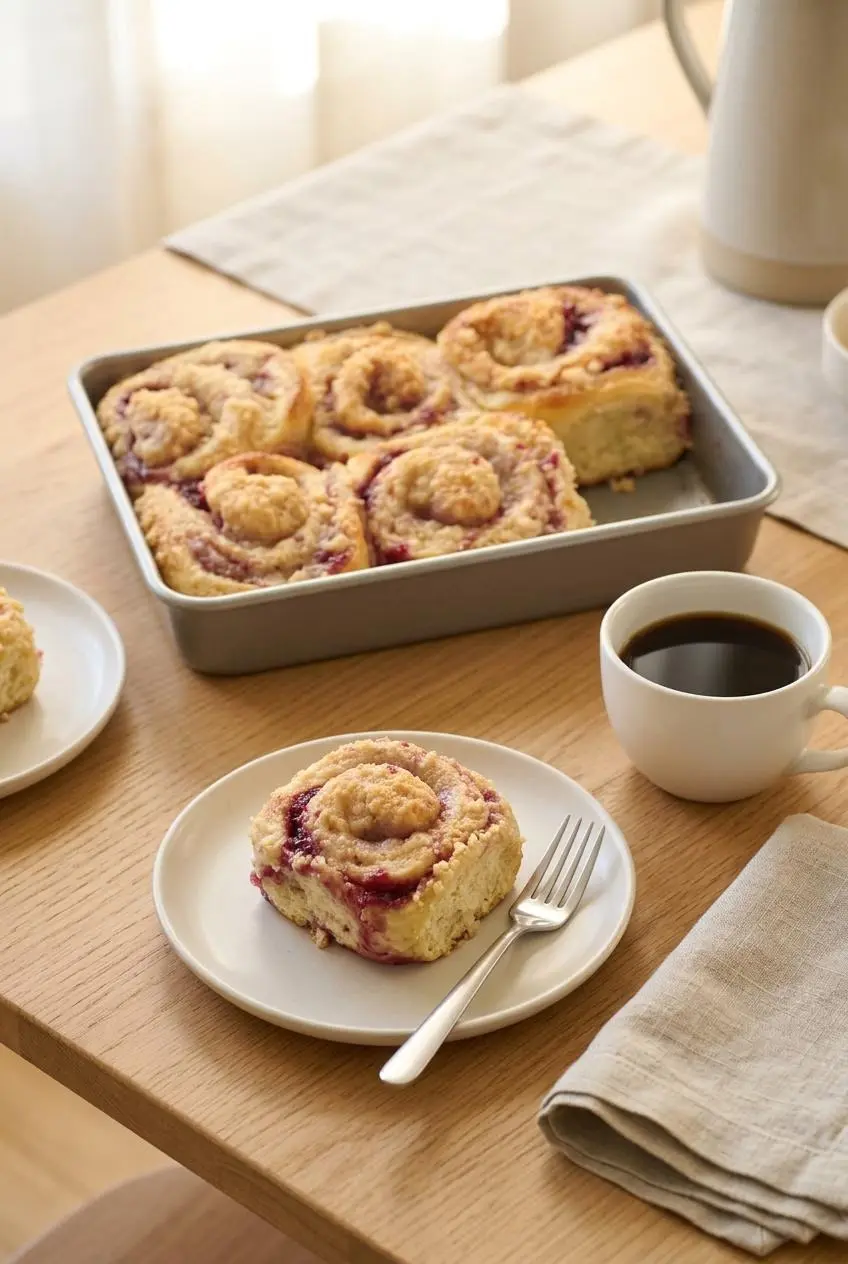
Serve the rolls warm after their cooling period, when the dough is soft but the filling no longer pours out as you cut. A small spatula helps lift each roll while keeping its creamy base intact.
Dark roast coffee, espresso, or brisk black tea balances the rich filling. For a chilled coffee pairing, iced raspberry lattes echo the berry flavor.
For a brunch buffet, offer fruit alongside the rolls and bring out manageable portions rather than leaving the entire batch sitting out. Their generous size also makes them easy to share.
Conclusion
Soft dough, lemony cheesecake filling, and concentrated raspberry jam give these rolls their balance. Check the milk temperature, finish the kneading, and keep the fillings cool enough to spread neatly.
The cream pour and buttery crumble complete the bakery-style finish. Give the rolls time to settle after baking, then enjoy those tender spirals while they’re warm.
Frequently Asked Questions
Can I Prepare These Raspberry Cheesecake Rolls Ahead?
Prepare the jam, cheesecake filling, and crumble during the first dough rise. Keep the dairy filling and crumble chilled until needed. For the dough, follow the same-day rises described above rather than substituting an unverified refrigerated schedule.
Why Did My Sweet Rolls Turn Out Dense Instead of Fluffy?
Inactive yeast, overly hot milk, excess flour, or incomplete proofing can produce dense rolls. Check for foam before mixing the dough, complete the kneading, and let the shaped rolls become visibly puffy before baking.
Should I Use Fresh or Frozen Raspberries for the Filling?
Fresh raspberries are specified here, but frozen berries can work as an optional substitution. Cook either into a thickened jam and cool it before spreading. Reduce excess liquid from frozen berries rather than adding them directly to the dough.
How Do I Store Leftover Cheesecake Sweet Rolls Safely?
Keep leftovers covered in the refrigerator because of the cream cheese filling. Put away rolls you aren’t serving promptly, and gently warm individual portions when ready to eat.
How Do I Prevent Fruit Filling From Leaking Out During Baking?
Use cooled, thickened jam and chilled cheesecake filling, and avoid adding extra filling. Leave a narrow clean sealing edge and pinch each strip’s finishing end firmly against the roll.
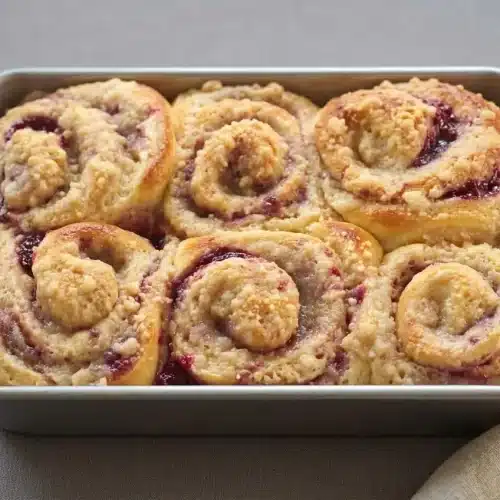
Raspberry Cheesecake Sweet Rolls

Equipment
- stand mixer fitted with dough hook attachment
- Saucepan
- Offset spatula
- baking dish 11.4 x 7.8 inches
- Cooling Rack
Ingredients
DOUGH
- 1 tsp granulated sugar 4 g
- 2 tsp active dry yeast 6 g
- 1/2 cup milk, 100F – 110F (38C – 43C) 130 ml
- 2 eggs, room temperature
- 3 tbsp granulated sugar 38 g
- 1 1/2 cups + 1 tbsp all-purpose flour 315 g
- 3/4 tsp salt 4.5 g
- 1/4 cup unsalted, room temperature butter 50 g
RASPBERRY JAM
- 1 cup raspberries, fresh 140 g
- 1/3 cup granulated sugar 76 g
LEMONY CHEESECAKE FILLING
- 1 cup full-fat cream cheese 246 g
- 1/2 cup powdered sugar 72 g
- 1/2 lemon zest
- 1/4 tsp fine sea salt 1.5 g
- 1 tsp vanilla extract 5 ml
CRUMBLE TOPPING
- 3 tbsp brown sugar 36 g
- 1 tbsp granulated sugar 14 g
- 3 tbsp room temperature, unsalted butter 36 g
- 1/3 cup, packed all-purpose flour 50 g
- 1/4 tsp cinnamon ground pinch/ less than 1 g
- 1/4 tsp fine sea salt 1.5 g
- 1 tsp vanilla extract 5 ml
TO BAKE
- 1/4 cup heavy whipping cream 60 ml
Instructions
- Stir the 1 tsp sugar and active dry yeast into the milk in a glass measuring cup, checking that the milk is 100–110°F (38–43°C), then leave it for 10–15 minutes. A bubbly, sponge-like cap should develop across the surface.
- Place the eggs, remaining dough sugar, flour, salt, and activated yeast mixture in the stand mixer bowl. The ingredients will form a rough, sticky mixture before kneading develops its structure.
- Run the dough hook on the lowest speed for 15 minutes, then incorporate the softened butter and continue kneading for another 10 minutes. The dough should become smoother and more elastic as the butter blends in.
- Cover the bowl with plastic wrap and allow the dough to rise for 1 hour and 30 minutes at 82°F (28°C). Look for a noticeable increase in volume and a softer, aerated appearance.
- Simmer the raspberries and jam sugar in a saucepan over medium-low heat for 10–15 minutes, adding a splash of water only if needed. The berries should break down into a slightly thickened mixture without a large pool of loose juice.
- Set the jam aside to cool, then use a spatula to blend the cream cheese, powdered sugar, zest from half a lemon, filling salt, and vanilla in a bowl before covering and refrigerating it. The cheesecake mixture should look evenly blended without firm cheese lumps.
- Work all the crumble ingredients together by hand just until combined, then refrigerate the mixture. Stop while the topping forms uneven crumbs rather than a smooth paste.
- Roll the risen dough into an approximately 14.17 × 11.4-inch (36 × 29 cm) rectangle, about 0.39 inch (1 cm) thick. A reasonably even thickness helps the rolls bake at a similar pace.
- Spread the chilled cheesecake filling with an offset spatula or spoon, gently layer the cooled jam over it, and cut the rectangle into 1.9-inch (4.83 cm) strips with a knife or clean ruler. Keep the berry and cheesecake layers distinct rather than stirring them together.
- Coil each strip into a roll, pinch its loose end closed, and press it down lightly through a piece of lightly greased parchment. Each spiral should hold together without squeezing out the filling.
- Arrange the rolls in the parchment-lined baking dish, cover with plastic wrap, and let them rise for 30 minutes. The spirals should look fuller and puffier before baking.
- Heat the oven to 355°F (180°C), remove the plastic wrap, distribute the heavy whipping cream over the rolls, scatter on the crumble, and bake for 25 minutes. Look for golden edges, browned crumble, and bubbling berry filling.
- Take the baked rolls out of the oven and place the dish on a cooling rack for at least 20 minutes. The filling will settle as the rolls cool, making the spirals easier to separate.