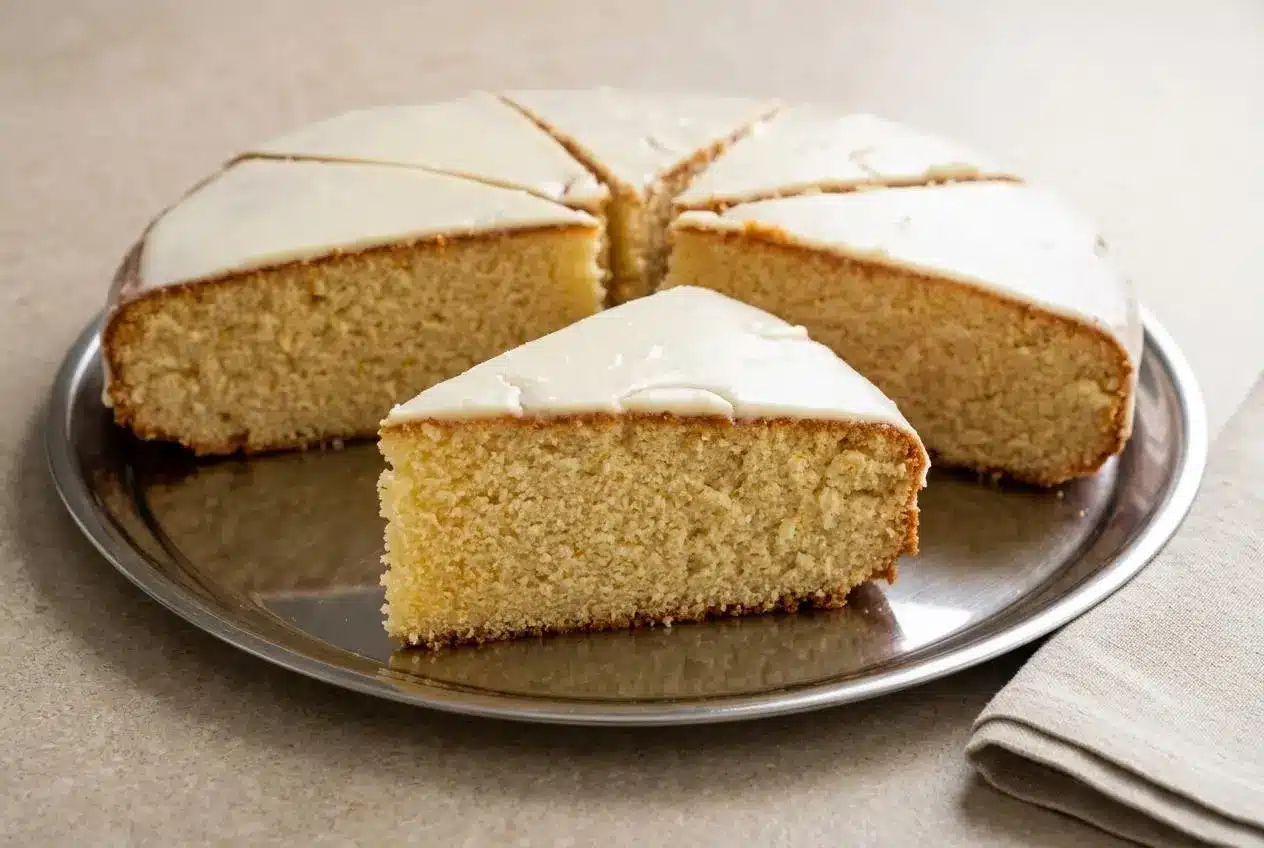
Vasilopita is a traditional Greek New Year cake or bread shared to celebrate Saint Basil. This cake version combines butter, orange zest, Greek yogurt, and whipped egg whites for a tender crumb, with a hidden coin symbolizing good fortune for whoever finds it.
When the midnight countdown ends, Vasilopita brings everyone back to the holiday table for a slice and the anticipation of finding the lucky coin. This butter-rich cake carries the fragrance of fresh orange and vanilla, with a soft texture beneath its glossy glaze.
The airy crumb comes from patient creaming and gently folded egg whites, rather than hurried mixing. Turning the cooled cake bottom-side up gives you a flat surface for decorating. The prettiest finish starts underneath.
Set out a large spatula and two sturdy plates before mixing so you’re ready for both gentle folding and turning the cooled cake.
Essential Ingredients for Authentic Greek Vasilopita
Butter and eggs build richness and texture, yogurt supplies moisture, and orange zest brings fragrance. Self-rising flour supports the cake’s structure, while sugar and vanilla balance the citrus and create a smooth, sweet finish.
For the cake
- 375g butter (13oz)
- 600g sugar (21oz, 3 cups)
- 6 eggs (divided into yolks and whites)
- a pinch of salt
- zest of 2 oranges
- 1/2 cup orange juice
- 200g yogurt, strained (7oz)
- 1 tsp vanilla extract
- 750g self-rising flour, sifted (26.5oz)
For the glaze
- 450g icing sugar (15.8oz, 3 cups)
- 5 tbsps hot water or milk
- 2 tsp vanilla extract
Butter and sugar: Creaming these together creates the foundation for a light cake. The butter should feel pliable but retain its shape, rather than look melted or oily. Give the mixer the full creaming time; the mixture should become noticeably paler and more voluminous.
Separated eggs: Yolks enrich the butter mixture, while the whites become a glossy meringue that you fold into the batter. Keep yolk out of the whites and use a clean, dry bowl and whisk. Even a well-whipped meringue needs gentle handling once it meets the flour.
Strained yogurt and orange juice: Thick Greek-style yogurt contributes moisture and pleasant acidity. Orange juice adds citrus flavor, but zest supplies the strongest orange fragrance. Grate the colored outer peel without digging into the bitter white pith.
Self-rising flour: This flour supplies structure and already contains leavening. Don’t add extra baking powder or substitute plain all-purpose flour without a separately developed adjustment. Sifting helps you incorporate it without chasing stubborn lumps through the batter.
Icing sugar: In US stores, look for powdered or confectioners’ sugar. It blends into the hot liquid to make a thick vanilla glaze, rather than the grainy coating granulated sugar would produce.
I prefer butter that yields easily to a fingertip but still holds its shape; it creams more evenly than butter with a glossy, melted surface.
How to Bake Vasilopita Step-by-Step
Allow 45 minutes for preparation and approximately 60 minutes for baking, plus complete cooling before glazing. The cake yields 16 pieces. Use an electric mixer with whisk and paddle attachments, a spatula, and a 30–35 cm (12–14 inch) nonstick cake pan.
- Separate the eggs, then whisk the whites with the pinch of salt in a clean, dry mixer bowl and transfer the whipped mixture to another bowl.
Stop when the whites look thick and glossy and hold a firm peak as you lift the whisk. - Wash and dry the mixer bowl, fit the paddle or creaming attachment, and beat the butter with the sugar for about 20 minutes.
The mixture should become very pale, generously aerated, and soft enough to resemble whipped cream. - Beat in the yolks individually, letting each disappear into the butter mixture before adding another, then mix in the orange juice, vanilla, orange zest, and yogurt.
The batter should look evenly combined, with orange zest distributed throughout. - Use a spatula to incorporate one-third of the sifted flour, then gently fold in one-third of the whipped whites, repeating this alternating sequence twice more.
Sweep down through the batter and lift from underneath, stopping when no dry flour pockets or large white streaks remain. - Preheat a conventional oven with top and bottom heat to 200 °C / 390 °F, or set a convection oven to 180 °C / 356 °F.
The oven needs to reach its starting temperature before the filled pan goes inside. - Butter and flour a 30–35 cm (12–14 inch) nonstick cake pan, or line it with parchment, then transfer the batter and level it with a spatula.
A smooth, evenly spread surface helps the cake bake without a mound of batter on one side. - Place the pan on the lower-third rack, immediately reduce the temperature to 175 °C / 350 °F conventional or 160 °C / 320 °F convection, and bake for approximately 60 minutes without opening the door during the first 30 minutes.
The finished cake should have an evenly colored crust and a set center. - Check the center near the end of baking with a wooden skewer or toothpick, continuing to bake if wet batter clings to it.
A clean tester signals that the center has cooked through. - Cool the cake completely, turn it out onto a plate, then use a second plate to turn it upright again.
The cake should feel cool throughout before you handle it further, since a warm crumb can break during turning. - Wrap a cleaned, rinsed, and dried coin tightly in clean aluminum foil, gently lift the cooled cake to insert it vertically through the base, then turn the cake bottom-side up onto its serving platter.
The flat underside should now face upward, with the wrapped coin concealed inside the crumb. - Stir the icing sugar, hot water or milk, and vanilla together with a spatula, adding a little more hot water only if needed.
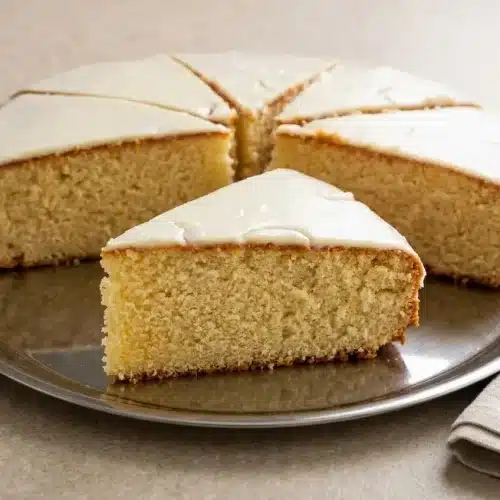
The glaze should look glossy and lump-free, with a thick, glue-like consistency rather than a freely running stream. - Spread the glaze across the flat cake surface with a flat spatula and mark the coming year into the coating if desired.
An evenly spread layer should cover the surface without immediately flowing off the edges.
For the folding stage, turn the bowl as you work rather than repeatedly stirring in one spot. Bring the heavier mixture up from the bottom and lay it over the whites. You’re combining the batter, not beating it smooth at all costs.
For an optional citrus boost, rub the orange zest into the measured granulated sugar with your fingertips before creaming. Stop when the sugar smells distinctly orange. Add that scented sugar at the usual creaming stage, and don’t add the zest again later.
Choose your finish after the cake has cooled completely:
- Vanilla glaze: Use the glaze above for a glossy coating and a flat surface on which to mark the year.
- Powdered sugar and stencil: Skip the glaze and lightly sift powdered sugar over a year-shaped stencil, then lift it straight up to keep the edges clean.
- Toasted almond lettering: If desired, arrange toasted almonds into the year on top of the glaze; keep this decoration optional and account for guests’ allergies.
The Vasilopita Tradition and Coin Ritual
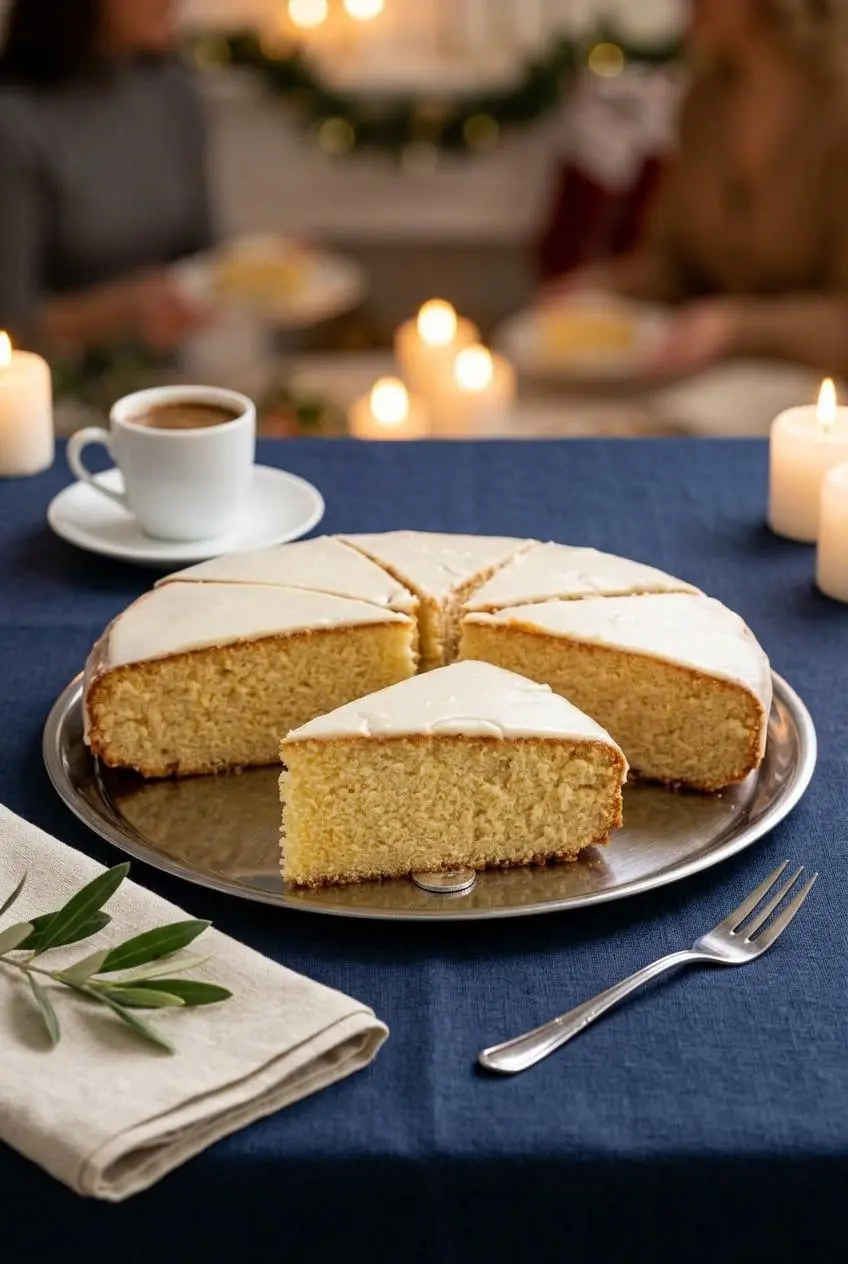
The hidden coin, often called the flouri, turns sharing the cake into a New Year ritual. Tradition associates finding it with good luck and prosperity. The celebration also honors Saint Basil the Great, whose feast falls on New Year’s Day.
The Miracle of Saint Basil
An Orthodox legend tells of Saint Basil of Caesarea helping return gold and jewelry collected from townspeople. To distribute the valuables, he had them enclosed in small loaves, which went back to the families.
Different tellings vary in their details, but charity, generosity, and gratitude remain at the center. The coin in today’s cake recalls that story. Present it as a meaningful tradition, rather than a literal promise of wealth.
Safe Coin Preparation
If you include a coin, wash it thoroughly with warm soapy water, rinse it well, and dry it before wrapping it tightly in clean aluminum foil. Check that the wrapping fully encloses the coin and has no loose edges. This preparation does not make a nonfood object edible or remove the choking concern.
Insert the wrapped coin vertically through the base only after the cake has cooled completely. This keeps the decorated surface undisturbed and avoids baking the coin in the batter.
Tell every guest that the cake contains a coin before serving. Inspect children’s portions and remove the coin and foil before anyone eats the winning slice. For a gathering with small children, consider leaving the coin outside the cake and awarding it symbolically instead.
Ceremonial Cutting Protocol
Families commonly cut the cake just after midnight or during a gathering on New Year’s Day. In a traditional Orthodox household, the head of the household makes the sign of the cross over the cake with a knife before dividing it.
Customs vary by family and region, but one traditional sequence is:
- First slice: Jesus Christ.
- Second slice: The Virgin Mary.
- Third slice: Saint Basil the Great.
- Fourth slice: The household.
- Fifth slice: The poor and travelers.
- Remaining slices: Family members from oldest to youngest, followed by guests.
Announce whom each slice represents as you cut. Decide on your family’s order beforehand so everyone can enjoy the ceremony without debating it over the cake. A cup of Greek coffee or warm tea makes a fitting accompaniment.
Baking Tips and Texture Troubleshooting
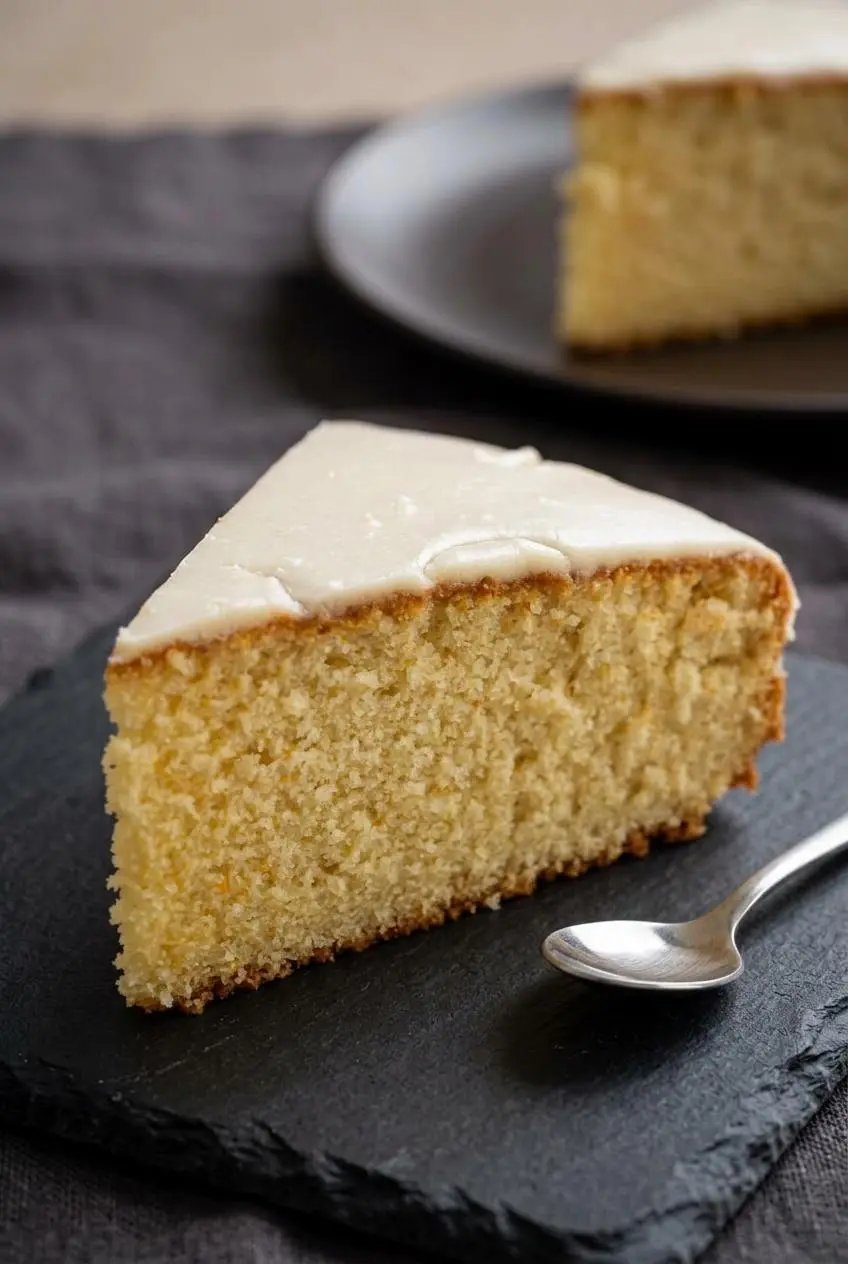
The most useful clues are the texture of the creamed butter, the airiness of the folded batter, and whether the center has finished baking. Correct those stages before trying to hide a problem under the glaze.
Preventing Sinking and Cracking
- Sunken center: Underbaking or rough handling of the whipped whites can leave the middle without enough structure. Fold gently, keep the oven closed during the initial baking period, and check the center rather than judging by crust color alone.
- Dense streaks: Uneven folding can leave heavy pockets beneath an otherwise airy crumb. Reach the bottom of the bowl with each sweep and rotate the bowl to incorporate the mixture evenly.
- Rubbery texture: Vigorous mixing after adding flour can make the cake tough. Switch to the spatula at that stage and stop once the flour and whites have incorporated.
- Deep cracks or a pronounced dome: Excessive oven heat can contribute to uneven baking. Use an oven thermometer to check the setting, and remember to reduce the heat when the pan goes in.
- Dry crumb: Baking beyond the clean-skewer stage can dry the cake. Treat the stated baking time as an approximate endpoint and check doneness near the end.
- Broken cake during turning: Handling it while warm can tear the crumb. Wait for complete cooling and use plates broad enough to support the whole cake.
A shallow crack doesn’t mean the cake has failed. The underside becomes the decorated top, so modest surface imperfections disappear when you turn it onto the platter.
For glaze that runs off, first check that the cake is completely cool. Then check the glaze itself: it should spread under the spatula rather than pour like syrup. Add extra hot water cautiously, since too much quickly turns a thick coating into a thin drizzle.
Cake Style versus Tsoureki Bread
This cake-style version, sometimes called Vasilopita keik, uses creamed butter, eggs, and self-rising flour. Its tender, aerated crumb is closer to a classic yellow cake than to a kneaded holiday bread.
Tsoureki-style Vasilopita is a different preparation. It uses yeast, kneading, and rising to create a chewy sweet bread with long, pull-apart strands. Mahlab and mastic often give that version its distinctive aroma.
Both forms can carry the New Year coin tradition, but their methods aren’t interchangeable. Adding yeast or kneading this cake batter won’t turn it into tsoureki; choose a dedicated bread preparation if that’s the texture you want.
Preparation and Storage Guide
Plan around complete cooling, not just the oven timer. The stated preparation and baking time doesn’t include the cooling needed before turning, inserting the coin, or glazing.
You can separate baking from decorating: finish the cake, let it cool completely, then glaze it when you’re ready to complete the presentation. Don’t glaze while the center still feels warm, even if the crust has cooled.
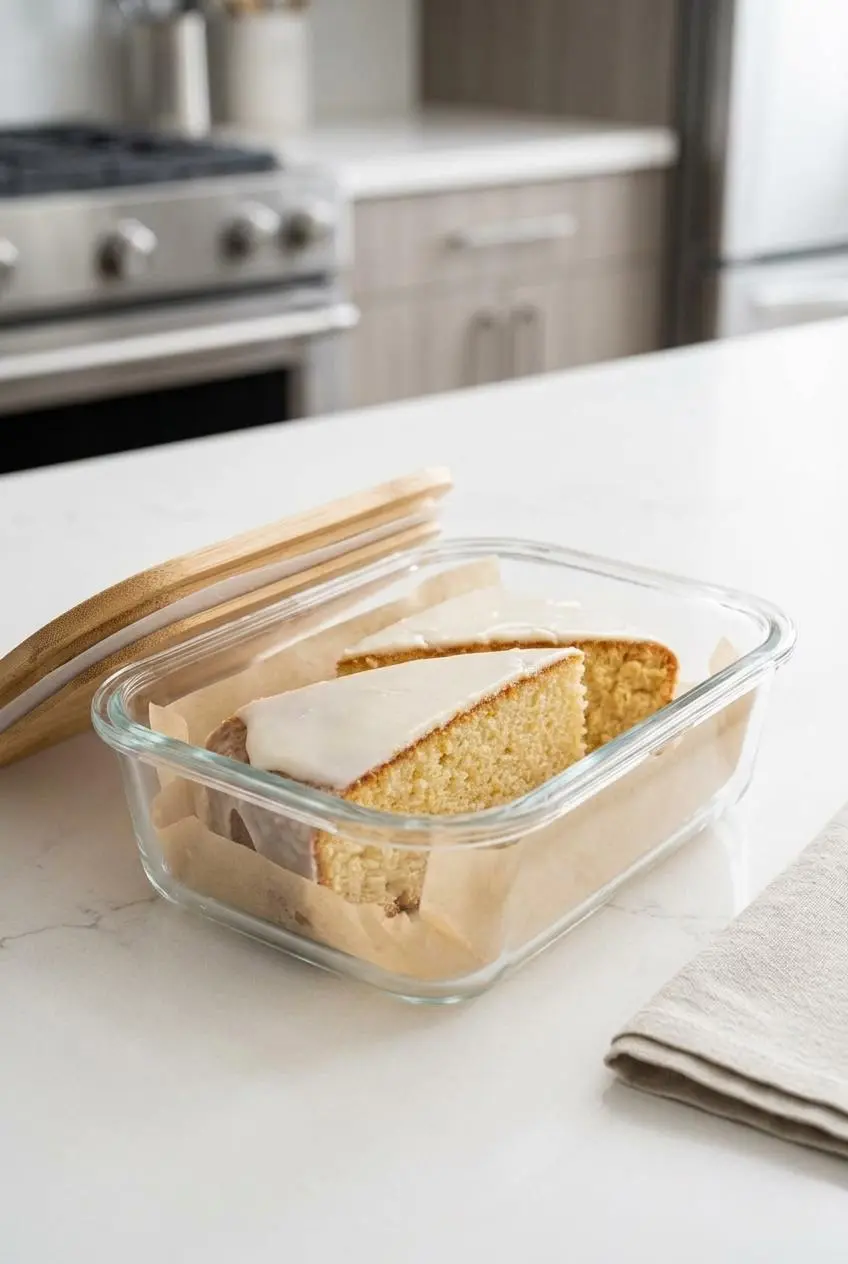
Cover the cooled cake in a well-fitting cake carrier or container to protect the crumb from drying. Avoid sealing it while warm, which can trap condensation and make the surface damp. Keep the covering from touching the glaze so the year decoration stays intact.
For leftover slices, use a covered container that protects the cut surfaces. Store them away from heat and direct sunlight, handle them with clean utensils, and avoid leaving the cake uncovered between servings.
Conclusion
A fragrant Greek New Year cake starts with patient butter creaming, gentle meringue folding, and complete cooling before the glaze goes on. Those details give the orange-scented crumb and glossy finish their best chance to shine.
Share the symbolic slices, explain the coin tradition, and make the celebration your own. Wishing you a joyful, healthy, and fortunate New Year, with room at the table for everyone.
Frequently Asked Questions
What Is the Meaning Behind the Coin in Vasilopita?
The coin recalls the legend of Saint Basil returning valuables to townspeople inside baked loaves. The tradition celebrates charity and generosity. Finding the coin symbolizes good luck and prosperity for the coming year.
In What Order Should Vasilopita Be Cut?
A traditional sequence begins with Christ, the Virgin Mary, Saint Basil, the household, and the poor and travelers. Family members follow from oldest to youngest, then guests. Family and regional customs vary, so agree on your sequence before cutting.
Why Did My Vasilopita Sink in the Middle?
The center may have been underbaked, even if the crust looked ready. Rough folding can deflate the whipped whites and leave a heavier batter. Opening the oven too early can disturb baking; follow the closed-door period in the method and test the center near the end.
Can I Make Vasilopita Ahead of Time?
You can separate baking and decorating, allowing the cake to cool completely before finishing it. Keep the cooled cake covered to protect its texture, then add the glaze when you’re ready to decorate. Allow additional time beyond preparation and baking for cooling; don’t rush that stage to meet the serving time.
Vasilopita

Equipment
- Electric mixer with whisk and paddle attachments
- Non stick cake tin 30-35cm (12-14 inch)
- Parchment Paper
- Spatula
- Wooden skewer or toothpick
Ingredients
For the cake
- 375 g butter (13oz)
- 600 g sugar (21oz, 3 cups)
- 6 eggs (divided into yolks and whites)
- pinch salt
- 2 oranges, zest of
- 1/2 cup orange juice
- 200 g yogurt, strained (7oz)
- 1 tsp vanilla extract
- 750 g self-rising flour, sifted (26.5oz)
For the glaze
- 450 g icing sugar (15.8oz, 3 cups)
- 5 tbsps hot water or milk
- 2 tsp vanilla extract
Instructions
- Separate the eggs, then whisk the whites with the pinch of salt in a clean, dry mixer bowl and transfer the whipped mixture to another bowl. Stop when the whites look thick and glossy and hold a firm peak as you lift the whisk.
- Wash and dry the mixer bowl, fit the paddle or creaming attachment, and beat the butter with the sugar for about 20 minutes. The mixture should become very pale, generously aerated, and soft enough to resemble whipped cream.
- Beat in the yolks individually, letting each disappear into the butter mixture before adding another, then mix in the orange juice, vanilla, orange zest, and yogurt. The batter should look evenly combined, with orange zest distributed throughout.
- Use a spatula to incorporate one-third of the sifted flour, then gently fold in one-third of the whipped whites, repeating this alternating sequence twice more. Sweep down through the batter and lift from underneath, stopping when no dry flour pockets or large white streaks remain.
- Preheat a conventional oven with top and bottom heat to 200 °C / 390 °F, or set a convection oven to 180 °C / 356 °F. The oven needs to reach its starting temperature before the filled pan goes inside.
- Butter and flour a 30–35 cm (12–14 inch) nonstick cake pan, or line it with parchment, then transfer the batter and level it with a spatula. A smooth, evenly spread surface helps the cake bake without a mound of batter on one side.
- Place the pan on the lower-third rack, immediately reduce the temperature to 175 °C / 350 °F conventional or 160 °C / 320 °F convection, and bake for approximately 60 minutes without opening the door during the first 30 minutes. The finished cake should have an evenly colored crust and a set center.
- Check the center near the end of baking with a wooden skewer or toothpick, continuing to bake if wet batter clings to it. A clean tester signals that the center has cooked through.
- Cool the cake completely, turn it out onto a plate, then use a second plate to turn it upright again. The cake should feel cool throughout before you handle it further, since a warm crumb can break during turning.
- Wrap a cleaned, rinsed, and dried coin tightly in clean aluminum foil, gently lift the cooled cake to insert it vertically through the base, then turn the cake bottom-side up onto its serving platter. The flat underside should now face upward, with the wrapped coin concealed inside the crumb.
- Stir the icing sugar, hot water or milk, and vanilla together with a spatula, adding a little more hot water only if needed. The glaze should look glossy and lump-free, with a thick, glue-like consistency rather than a freely running stream.
- Spread the glaze across the flat cake surface with a flat spatula and mark the coming year into the coating if desired. An evenly spread layer should cover the surface without immediately flowing off the edges.