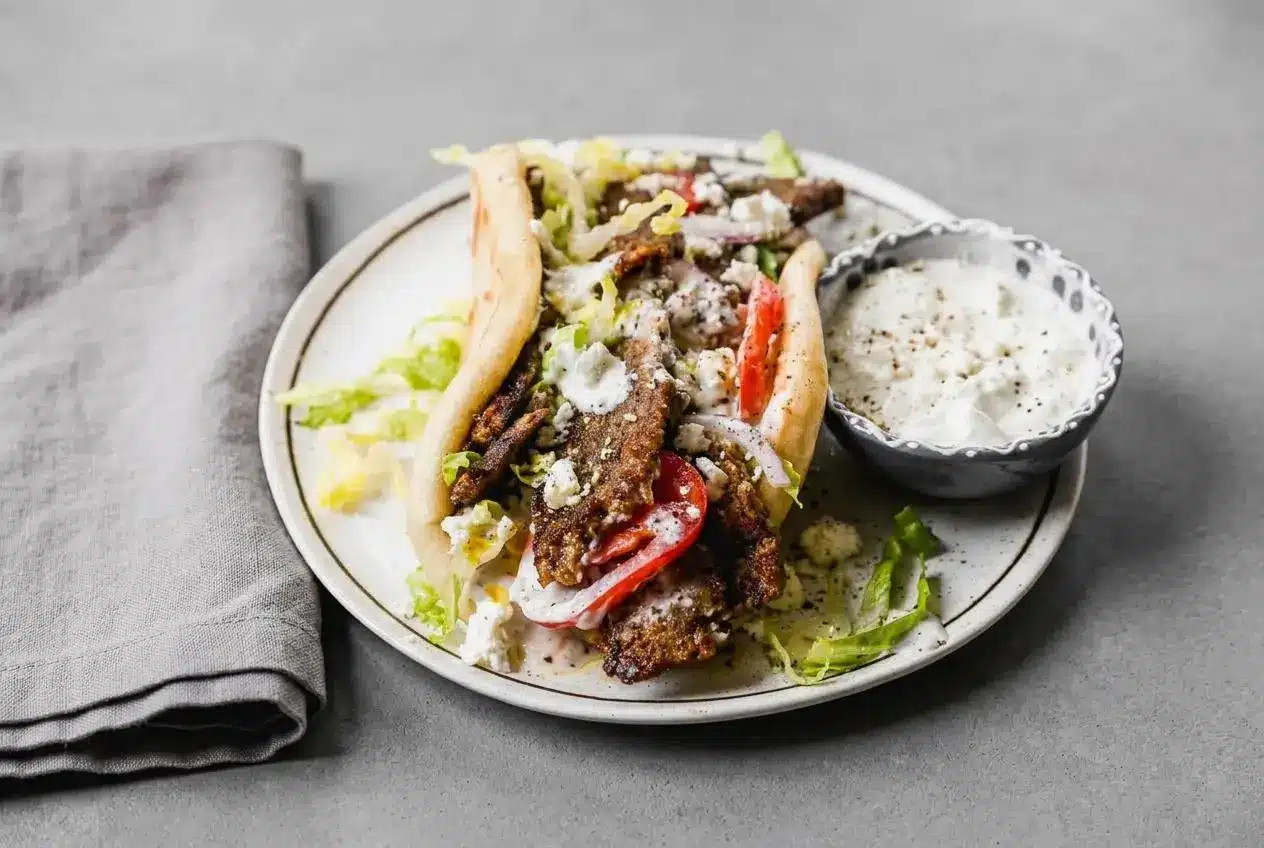
Seasoned ground lamb and beef are kneaded into a dense mixture, baked in a loaf pan, chilled for clean slicing, then seared until crisp before being tucked into warm pita with tzatziki.
These lamb gyros bring the savory, spiced flavor of a Greek-American diner sandwich into a regular home kitchen. The key is building a firm meat mixture that can be sliced thin instead of crumbling.
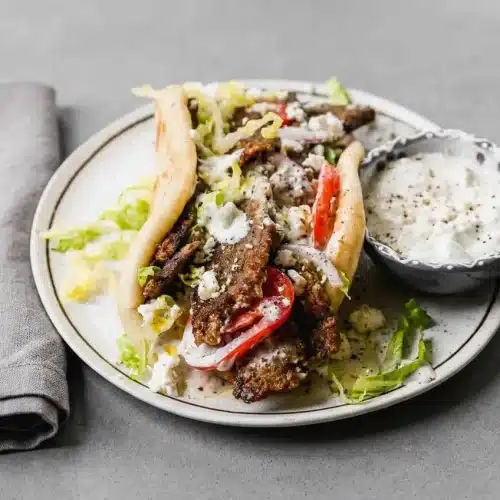
Sizzling lamb, cool garlicky tzatziki, and warm pita make every bite hit the right contrast. Those dark, crisp edges are worth the wait.
Finely chop the onion and garlic until they are nearly paste-like so they disappear smoothly into the meat.
Essential Ingredients for Homemade Lamb Gyros
Each ingredient contributes to the rich meat texture, warm spice profile, crisp freshness, or cool tangy balance that makes a gyro wrap satisfying.
- 1 lb ground lamb
- 1 lb ground beef (, 80/20)
- 1 onion (, small )
- 5 cloves garlic (, minced)
- 1/4 cup breadcrumbs
- 1 Tablespoon Dried oregano
- 2 teaspoons ground cumin
- 2 teaspoons kosher salt
- 1 teaspoon Aleppo pepper (, or sub paprika and a dash of cayenne)
- ½ teaspoon freshly ground black pepper
- 8 pieces Pita bread (, warmed)
- 1 cup Tzatziki sauce (, homemade or store-bought)
- 3 campari or roma tomatoes (, sliced)
- 1 red onion (, thinly sliced)
- 1 romaine heart (, finely chopped)
- 1/2 cup feta cheese crumbles (, optional)
- Hot sauce (, optional)
The lamb and beef create a rich but balanced gyro meat, while breadcrumbs help hold onto the juices released during baking. Salt and firm kneading work together to create a tight meat bind without eggs. Oregano, cumin, Aleppo pepper, garlic, and onion give the loaf its warm, savory character.
I prefer a small onion here because it adds moisture without making the meat mixture overly wet or loose.
The Meat Blend: Lamb and Beef Ratios
Using equal amounts of ground lamb and 80/20 beef gives the meat both bold lamb flavor and a more balanced texture. Lamb brings richness and a distinct savory depth, while the beef adds enough structure to help the baked loaf slice into narrow strips.
All-lamb gyro meat can be delicious, but it tends to feel richer and can render more fat. The beef keeps the flavor rounded and helps the strips hold together when they hit a hot skillet.
Aromatic Herbs, Spices, and Binders
Process the onion and garlic very finely so their moisture spreads evenly through the ground meat rather than leaving noticeable chunks. That even distribution matters when you want thin slices that bend slightly instead of breaking.
Breadcrumbs absorb juices as the loaf bakes, helping the finished meat stay cohesive. Dried oregano gives the familiar herbaceous Greek-American flavor, cumin adds earthy warmth, and Aleppo pepper brings gentle peppery fruitiness. Paprika with a small dash of cayenne works well when Aleppo pepper is unavailable.
Salt does more than season the mixture. As you knead, it helps the meat become tacky and paste-like, which is what gives the loaf its dense, sliceable texture.
Pita, Tzatziki, and Fresh Vegetable Toppings
Warm pita should be soft and flexible enough to fold around the meat without splitting. Thick, pocketless Greek-style pita works especially well, but any warmed pita bread from the ingredient list will do the job.
Cool tzatziki softens the bold spices, while sliced tomatoes, thin red onion, and chopped romaine add freshness and crunch. Feta and hot sauce stay optional, so each wrap can lean creamy, spicy, or extra tangy as you like.
Step-by-Step Guide to Cooking Tender Gyro Meat
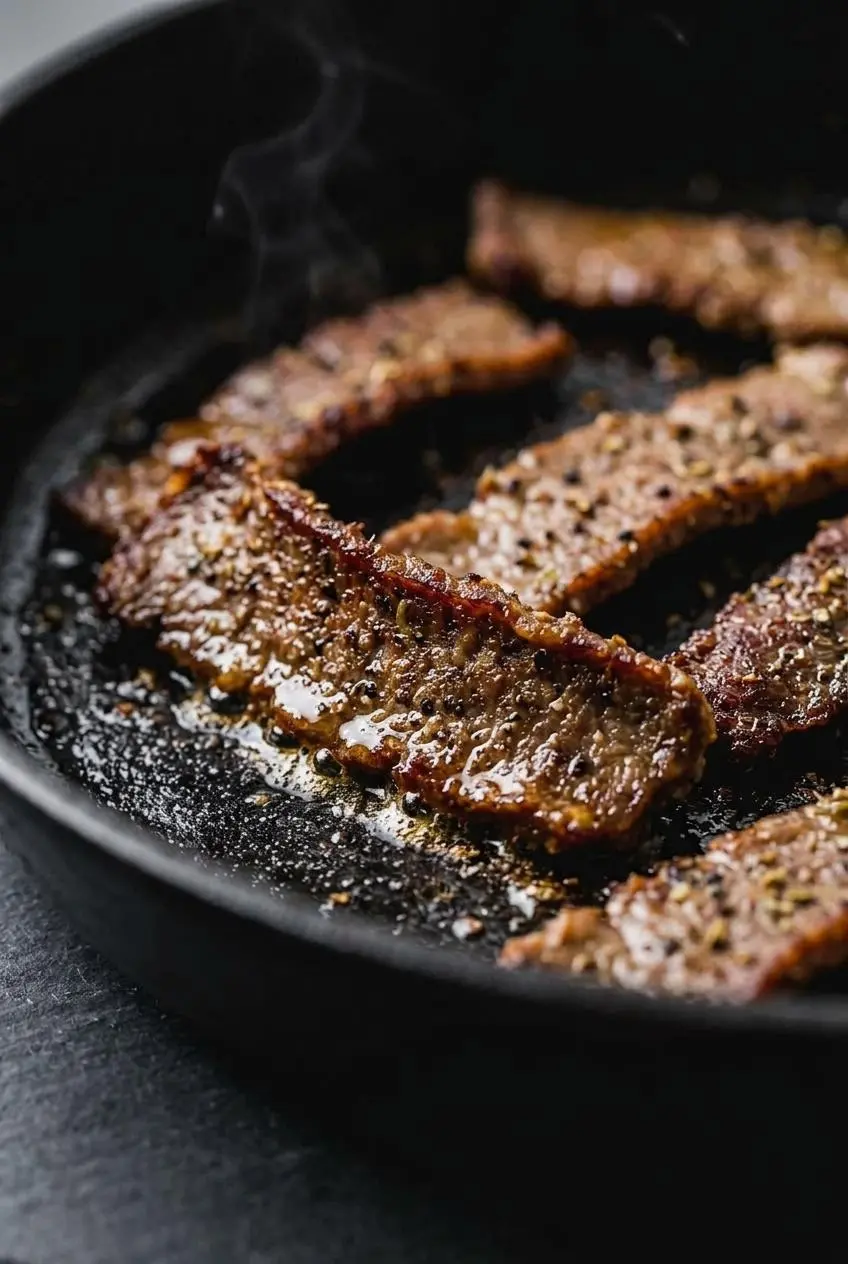
The loaf-pan method creates the compact texture needed for thin gyro strips, while a final skillet sear gives the meat its deep browned edges.
- Process the onion and garlic until very finely chopped, then combine them in a bowl with the lamb, beef, breadcrumbs, oregano, cumin, salt, Aleppo pepper, and black pepper.
Work the mixture firmly with clean hands until it looks pale, sticky, and tightly bound rather than loose and crumbly. - Pack the meat firmly into a 9×5 inch loaf pan and bake at 325 degrees F for about 50-60 minutes, until the center reaches 165 degrees on a thermometer.
Let the loaf rest for 20 minutes, then chill it for a few hours or overnight until it feels firm enough to slice cleanly. - Lift the chilled loaf from the pan and set aside the rendered drippings before cutting the meat into strips about 1/8 inch thick.
A sharp knife should glide through the cold loaf and leave neat, narrow ribbons rather than ragged pieces. - Heat a griddle, cast iron skillet, or skillet over medium-high heat and lightly coat the surface with reserved drippings or a little oil.
Sear the strips in a single layer for 1-2 minutes per side, until the edges sizzle and turn deep mahogany and crisp. - Fill each warmed pita with browned gyro meat, tomato, red onion, romaine, tzatziki, and feta if using.
The pita should stay warm and pliable while the tzatziki cools the hot, crisp meat.
Blending and Kneading the Meat Emulsion
Don’t stop mixing when the seasonings merely look distributed. Keep mashing and pressing the meat until it changes from a rough ground-meat mixture into a sticky mass that clings lightly to your hands. That texture tells you the proteins have developed enough binding power for clean slicing.
If the mixture still looks grainy or separates easily when pressed, it needs more kneading. A dense loaf is the goal here, not a loose meatball mixture.
Baking the Loaf to Perfect Doneness
Pressing the meat tightly into the loaf pan removes air pockets that can weaken the finished slices. Smooth the top and push the mixture firmly into the corners so the loaf cooks evenly from edge to center.
Once baked, let the loaf rest before chilling. Some fat will collect in the pan, so save it separately for browning the strips later. Those drippings give the skillet-seared meat a fuller lamb flavor without needing extra seasoning.
Chilling, Thin Slicing, and Skillet Crisping
Chilling is what turns the baked loaf from tender to reliably sliceable. A cold loaf holds its shape under the knife, letting you cut strips thin enough to mimic shaved rotisserie meat without specialized equipment.
Use a hot cast-iron skillet if you have one, and avoid moving the strips too soon. Give the first side time to brown before flipping. The best pieces develop crisp, dark edges while the center stays tender.
If you prefer the broiler, arrange the slices flat on a lined baking sheet and broil briefly until browned. Keep a close eye on them because the thin edges can darken quickly.
Troubleshooting Common Gyro Meat Challenges
Most gyro problems come down to mixing, chilling, or pan crowding. Small adjustments make a big difference in the final texture.
Preventing Crumbly Slices That Fall Apart
- The slices break apart: The meat likely was not kneaded long enough. Mix until the raw mixture becomes tacky and paste-like before pressing it into the pan.
- The loaf crumbles under the knife: It was probably sliced while still warm. Chill it until firm, then use a sharp knife and steady downward cuts.
- The strips tear in the skillet: Slice them evenly and let the first side brown before trying to flip them. A thin metal spatula helps lift delicate strips.
Avoiding Greasy Loaves and Skillet Steaming
- The loaf seems greasy: Let it rest after baking, then separate the rendered fat from the meat before slicing. Reserve only enough drippings to lightly coat the skillet.
- The strips turn pale instead of crisp: The pan is likely crowded. Cook in batches so each strip touches the hot surface.
- The meat feels tough: High heat works best for a quick sear, not a long cook. Pull the strips once the edges are browned and crisp.
Make-Ahead and Reheating Instructions
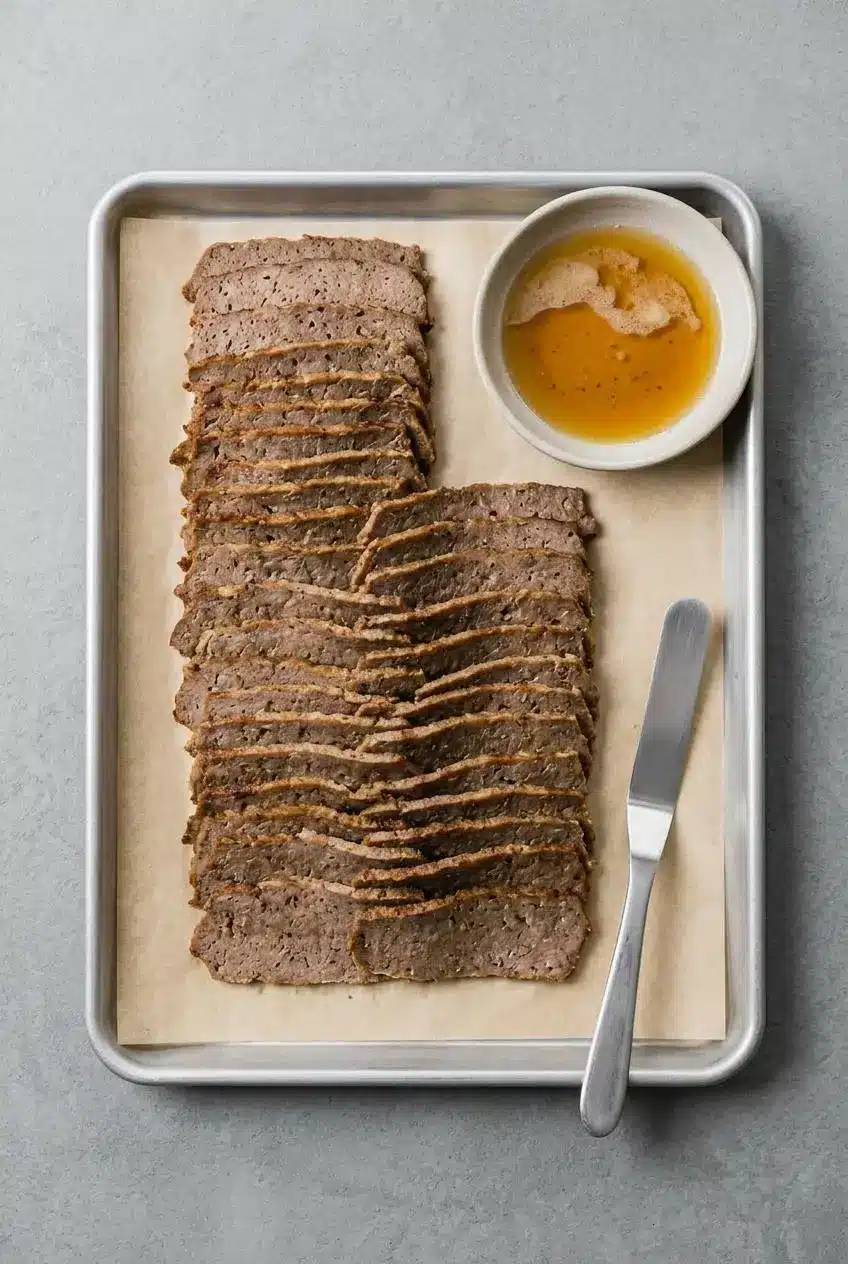
You can bake the gyro loaf earlier the same day or the day before, then chill it before slicing. Keep the loaf covered and chilled until you are ready to cut and crisp the strips, which protects the firm texture needed for clean slices.
For leftovers, keep the meat separate from pita, romaine, tomatoes, and tzatziki so the wrap components stay fresh. Reheat only the portion you plan to serve in a hot skillet with a light coating of reserved drippings or olive oil. The skillet restores browned edges far better than microwaving the strips.
If the meat has been chilled, slice it before reheating whenever possible. Thin strips warm quickly and are less likely to dry out than a large piece of loaf.
Serving Suggestions and Greek Street-Food Variations
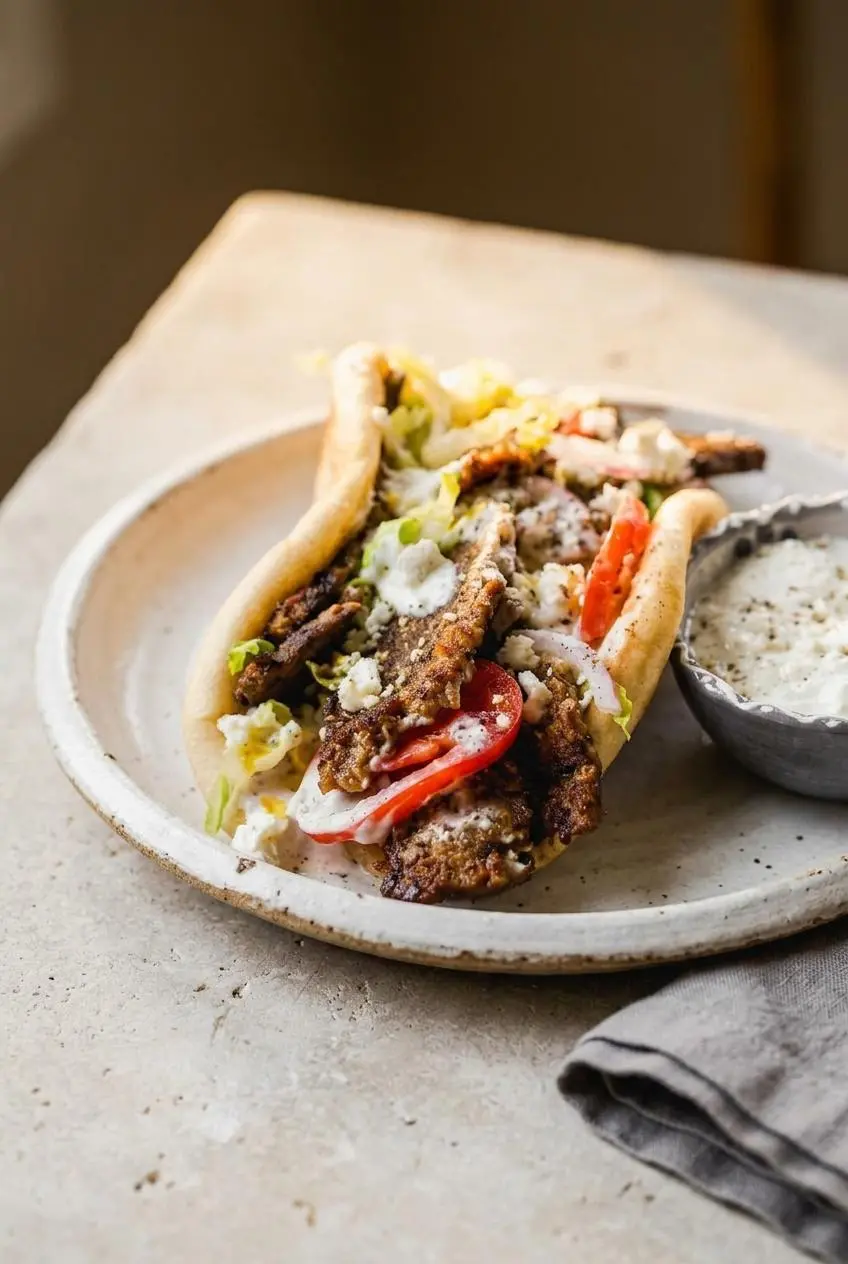
Build each pita while the meat is still hot so the contrast between crisp lamb and cool tzatziki stays sharp. Spread tzatziki over the warm pita, add the browned strips, then layer on tomatoes, red onion, romaine, and optional feta.
For extra savory depth, lightly brush the warmed flatbread with a little reserved lamb drippings before warming it in a skillet. Use a light hand so the pita stays soft enough to fold.
Roasted Sliced Lamb Shoulder Gyros
For a whole-muscle alternative, use boneless lamb shoulder or leg instead of the ground-meat loaf. Marinate the lamb with olive oil, lemon juice, garlic, dried oregano, and black pepper, then roast until tender enough to carve into thin slices.
This version has a more traditional roasted-meat bite and less of the compact diner-style texture. Slice the lamb across the grain, then briefly brown the pieces in a skillet if you want crisp edges.
Quick Leftover Roast Lamb Gyros
Cold roast lamb makes a fast gyro filling when sliced thin and flashed in a hot pan. Add dried oregano and a splash of lemon juice as it warms, then pull it from the heat as soon as the edges brown so it stays tender.
A leftover roast lamb leg works particularly well for this approach because the chilled meat slices neatly before it goes into the skillet.
Greek Street-Style Gyro Bowls and Platters
Skip the pita and serve the crisp meat over lemon-herb rice or roasted oregano potatoes with tomatoes, cucumber, red onion, romaine, tzatziki, and feta. A cool cucumber-tomato side keeps the platter bright against the rich lamb.
For a street-cart-style wrap, tuck a handful of hot fries inside the pita with the meat and tzatziki. Serve extra crispy steak fries alongside if you want a fuller dinner.
Conclusion
Homemade gyro meat gets its signature texture from thorough kneading, firm loaf-pan baking, and complete chilling before slicing. A hot skillet then turns those thin strips deeply browned and crisp at the edges.
Take your time with the chill, keep the skillet uncrowded, and build the pita while everything is at its best. Dinner will feel a little more special.
Frequently Asked Questions
What Cut of Lamb Is Best for Homemade Gyros?
Ground lamb shoulder works especially well for a loaf-style gyro because it has enough richness to stay flavorful through baking and skillet crisping. For roasted, thinly carved gyros, choose boneless lamb shoulder or boneless leg. Both can be seasoned, roasted until tender, and sliced across the grain.
Do Authentic Greek Gyros Use Lamb or Pork?
In Greece, street gyros are most often made with pork or chicken. Lamb appears in other Greek dishes, but it is less typical for everyday gyro stands. The seasoned lamb-and-beef loaf is strongly associated with Greek-American restaurants and diners, where it became a familiar gyro style.
Why Does My Gyro Meat Fall Apart When Sliced?
The two usual causes are under-kneading and slicing while the loaf is warm. Knead until the mixture feels sticky and dense, then chill the baked loaf until firm. Use a sharp knife and cut thin, steady slices. Sawing aggressively through a soft loaf can tear the meat instead of producing neat strips.
How Do You Reheat and Crisp Gyro Meat Slices?
Heat a skillet over medium-high heat and add a light coating of reserved drippings or olive oil. Lay the strips flat and cook for 1-2 minutes per side. Work in batches so the slices sear instead of steam. Remove them when the edges are sizzling, browned, and crisp.
Lamb Gyros

Equipment
- Food processor
- 9×5-inch Loaf Pan
- griddle or cast iron skillet
- Meat Thermometer
Ingredients
- 1 lb ground lamb
- 1 lb ground beef 80/20
- 1 onion small
- 5 cloves garlic minced
- 1/4 cup breadcrumbs
- 1 Tablespoon Dried oregano
- 2 teaspoons ground cumin
- 2 teaspoons kosher salt
- 1 teaspoon Aleppo pepper or sub paprika and a dash of cayenne
- ½ teaspoon freshly ground black pepper
- 8 pieces Pita bread warmed
- 1 cup Tzatziki sauce homemade or store-bought
- 3 campari or roma tomatoes sliced
- 1 red onion thinly sliced
- 1 romaine heart finely chopped
- 1/2 cup feta cheese crumbles optional
- Hot sauce optional
Instructions
- Process the onion and garlic until very finely chopped, then combine them in a bowl with the lamb, beef, breadcrumbs, oregano, cumin, salt, Aleppo pepper, and black pepper. Work the mixture firmly with clean hands until it looks pale, sticky, and tightly bound rather than loose and crumbly.
- Pack the meat firmly into a 9×5 inch loaf pan and bake at 325 degrees F for about 50-60 minutes, until the center reaches 165 degrees on a thermometer. Let the loaf rest for 20 minutes, then chill it for a few hours or overnight until it feels firm enough to slice cleanly.
- Lift the chilled loaf from the pan and set aside the rendered drippings before cutting the meat into strips about 1/8 inch thick. A sharp knife should glide through the cold loaf and leave neat, narrow ribbons rather than ragged pieces.
- Heat a griddle, cast iron skillet, or skillet over medium-high heat and lightly coat the surface with reserved drippings or a little oil. Sear the strips in a single layer for 1-2 minutes per side, until the edges sizzle and turn deep mahogany and crisp.
- Fill each warmed pita with browned gyro meat, tomato, red onion, romaine, tzatziki, and feta if using. The pita should stay warm and pliable while the tzatziki cools the hot, crisp meat.